
Is a Walker or Wheelchair FSA/HSA Eligible?
General information only — not tax advice. Confirm your own situation with your plan administrator and a tax professional.
In this guide
- The two gates most people only count as one
- Mobility equipment: usually the straightforward case
- Bathroom safety: where portable and permanent split
- The rule that stops many caregivers using their own account
- When you need a letter of medical necessity
- FSA and HSA are not interchangeable on timing
- What to keep, and for how long
- FAQs
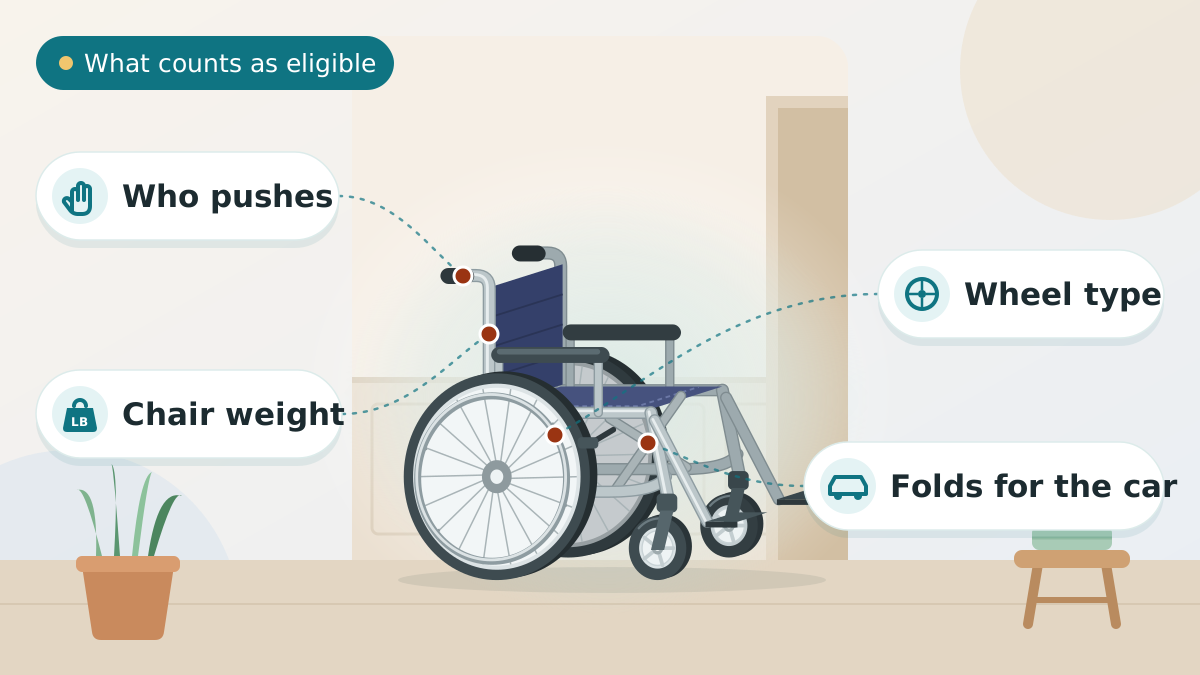
Most equipment that helps someone move safely is a qualified medical expense — but two separate gates decide whether your money actually comes back, and the second one catches families out.
Key takeaways
- There are two gates, not one: the IRS decides what CAN qualify, and your plan administrator decides what actually gets reimbursed. An item can clear the first and still be refused at the second.
- Equipment bought mainly for medical care generally qualifies — walkers, rollators, canes, wheelchairs, knee scooters and transfer equipment sit comfortably inside that definition.
- You can usually only spend your own account on yourself, your spouse and your tax dependents. A parent who fails the dependent test ONLY because their income was too high may still count.
- Dual-use items — things a healthy person might also buy — commonly need a letter of medical necessity before an administrator will pay.
- Portable equipment and permanent home modifications are treated differently. A shower chair is a purchase; a mounted grab bar may be treated as a home improvement.
- Keep the itemised receipt showing what the item was, not just the card total. Reimbursement is refused on documentation far more often than on eligibility.
Quick answer
Can I buy a walker or wheelchair with FSA or HSA money?
Usually yes. The IRS treats equipment whose main purpose is medical care as a qualified medical expense, and mobility aids prescribed or needed for a medical condition fall squarely within that. The practical obstacles are rarely the equipment itself — they are whether the person you are buying for counts under your account, whether the item is dual-use enough to need a letter of medical necessity, and whether your receipt shows what you actually bought.
The two gates most people only count as one
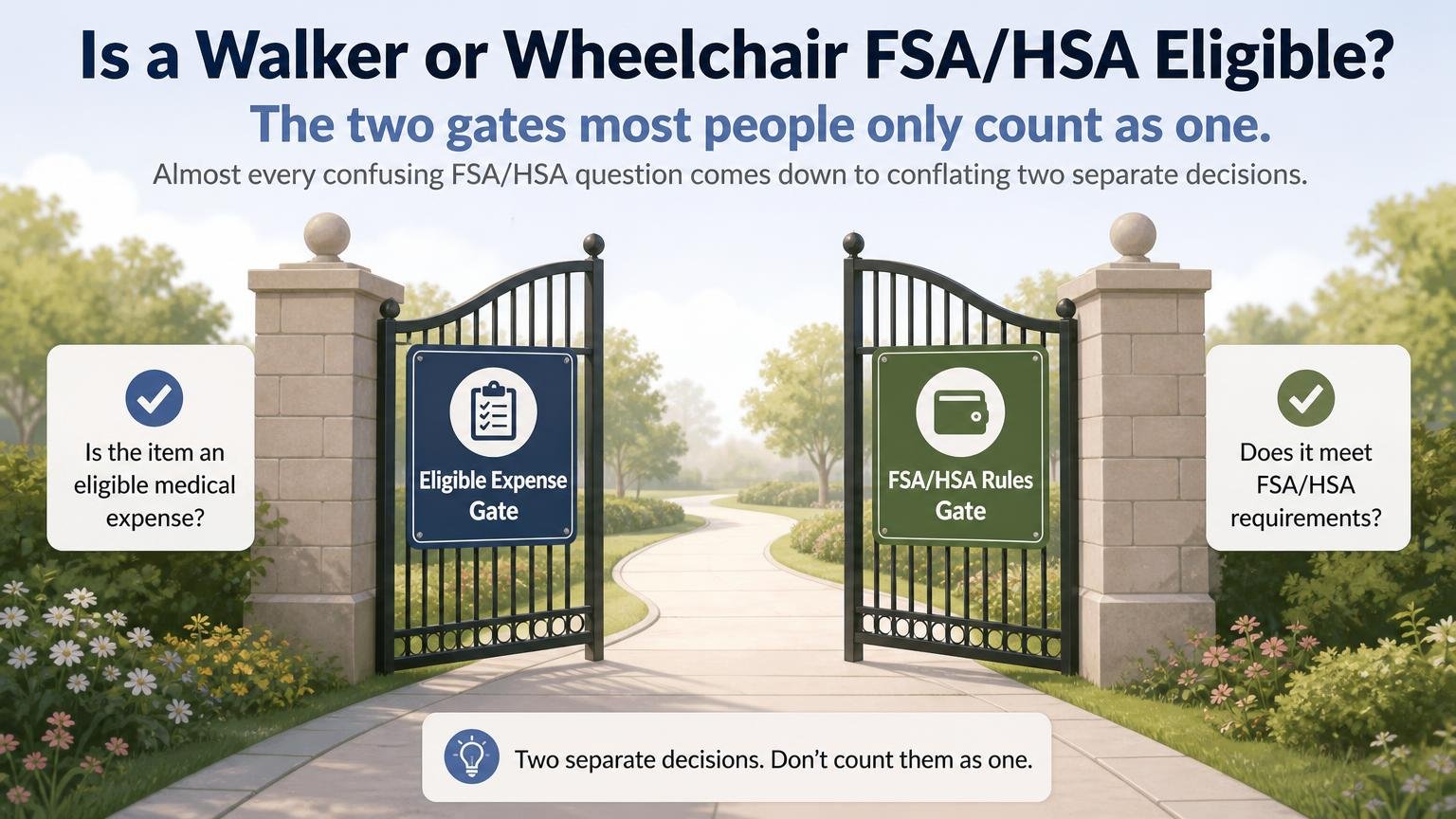
Almost every confusing FSA/HSA question comes down to conflating two separate decisions.
The first gate is the IRS definition. Publication 969 says qualified medical expenses for these accounts are the expenses that would generally qualify for the medical expense deduction, and points to Publication 502 for what those are. Publication 502 defines medical care as costs for the diagnosis, cure, mitigation, treatment or prevention of disease, or for treatments affecting a structure or function of the body. Equipment bought mainly for that purpose is included.
The second gate is your plan administrator. They apply that definition to your specific claim, and they are the ones who approve or refuse the money. Administrators differ, particularly on dual-use items and anything attached to a house. An item can be perfectly defensible under the IRS definition and still be refused because the paperwork did not establish the medical purpose.
Practically, this means "is X FSA eligible?" is the wrong question to ask the internet. The useful question is "what will my administrator need to see?" — and that is answerable before you buy.
Ask before you buy, not after
Most administrators will tell you in advance what they need for a specific item — often a one-line answer over chat. Five minutes there is worth more than any eligibility list, including this one.

Sponsored Pick
REHAND Ergonomic All-Terrain Folding Cane
Seniors with arthritis or joint pain who want a cushioned, ergonomic grip with all-terrain stability
Check PriceMobility equipment: usually the straightforward case
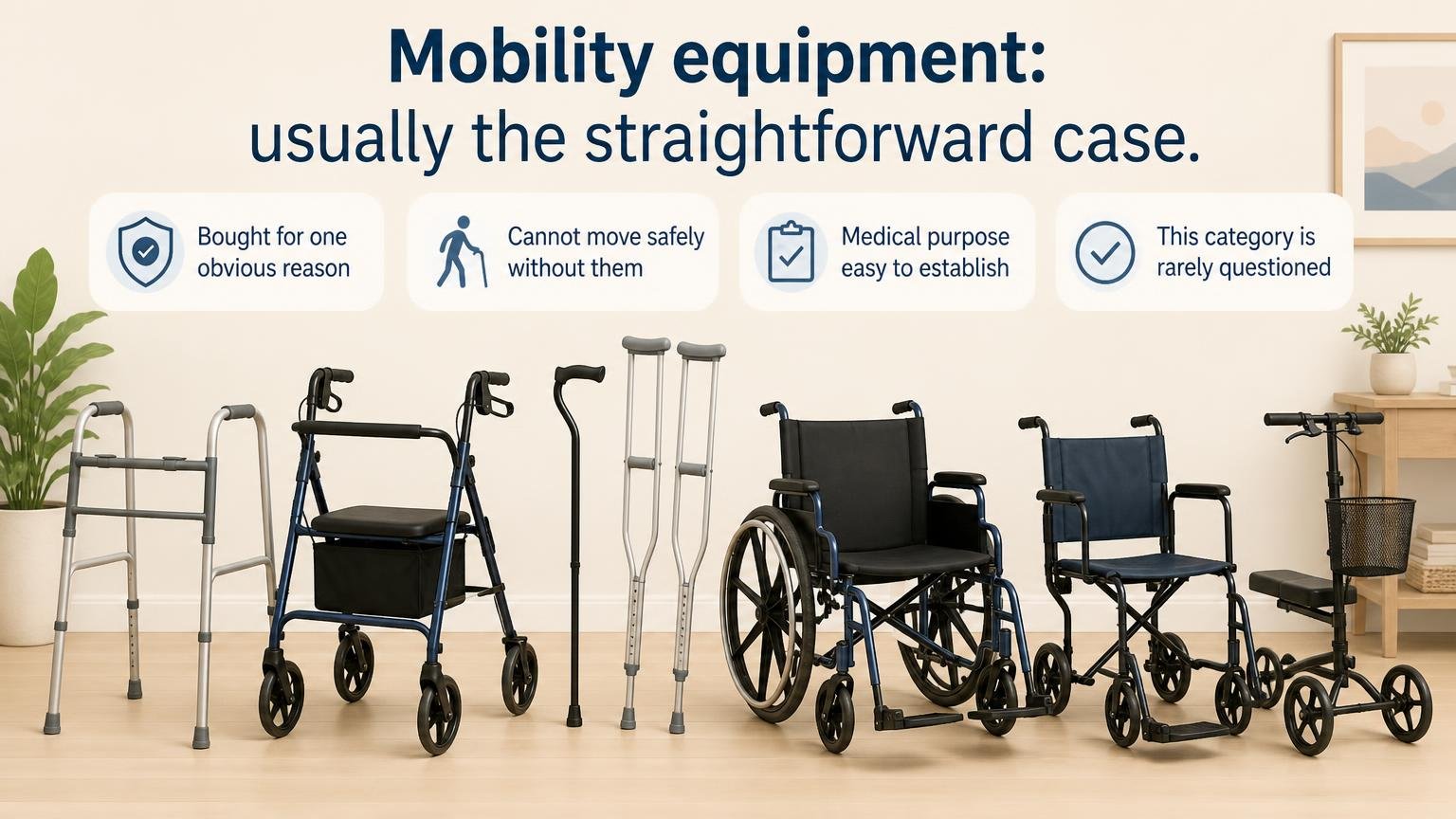
Walkers, rollators, canes, crutches, wheelchairs, transport chairs and knee scooters are bought for one obvious reason: someone cannot move safely without them. That makes the medical purpose easy to establish, and this category is rarely where families run into trouble.
Publication 502 treats the purchase price of equipment used mainly for medical care as an includible expense, and lists wheelchairs and crutches among its examples. The same logic extends to the walking aids in the same family.
Two things still catch people out:
- Buying through a general retailer where the receipt just says the store name and a total — that receipt will not carry a claim.
- Assuming Medicare and your FSA/HSA use the same rules. They do not. Medicare has its own durable medical equipment criteria, supplier requirements and prescription rules; an item Medicare declines can still be a qualified expense for your account, and vice versa.
Bathroom safety: where portable and permanent split
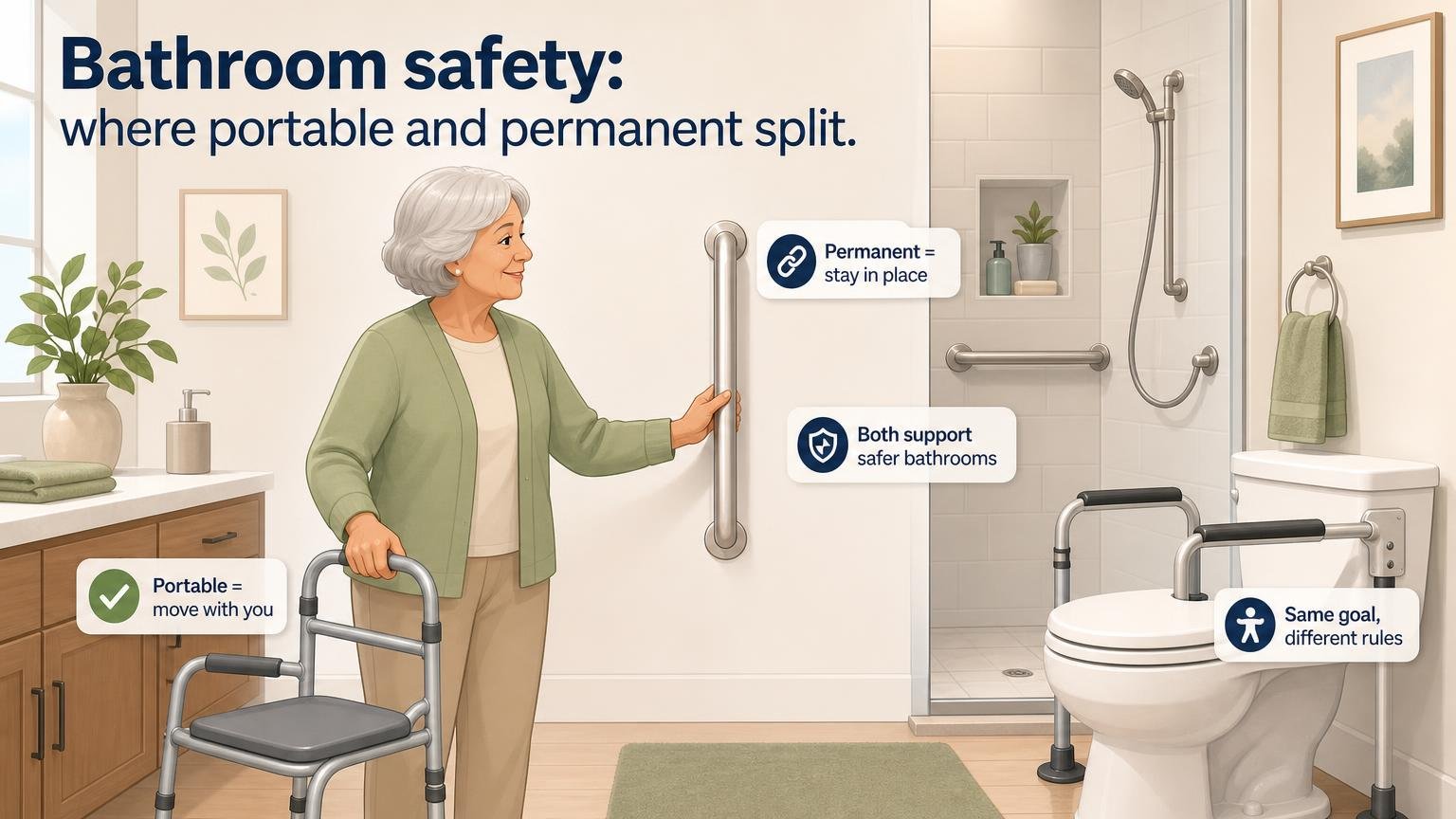
This is the category where two items that solve the same problem get treated differently.
A shower chair, a transfer bench, a raised toilet seat or a portable toilet safety frame is a purchase — equipment you could take with you if you moved. It is assessed like any other medical equipment.
A grab bar bolted into the wall is a modification to the property, and Publication 502 handles those under capital expenses. Its list of modifications that do not typically add value to a home — and so are fully includible — names, among others, installing railings and support bars in bathrooms, adding handrails or grab bars anywhere whether or not in bathrooms, widening doorways and hallways, installing ramps, modifying stairways, and grading the ground to provide access. The publication also notes that only reasonable costs to accommodate a home to a disabled condition count; extra spend for architectural or aesthetic reasons does not.
That list is written for the itemised deduction. Whether your FSA or HSA will reimburse a permanent modification is a separate and often stricter question — many administrators want a letter of medical necessity for anything installed in a house, and some will not cover permanent improvements at all. Do not assume the deduction list and the reimbursement list are the same.
Two different rulebooks
The capital-expense list above governs the medical expense deduction on a tax return. Your FSA/HSA administrator is not bound to reimburse everything on it. Confirm home modifications with them specifically before the work starts.
The rule that stops many caregivers using their own account
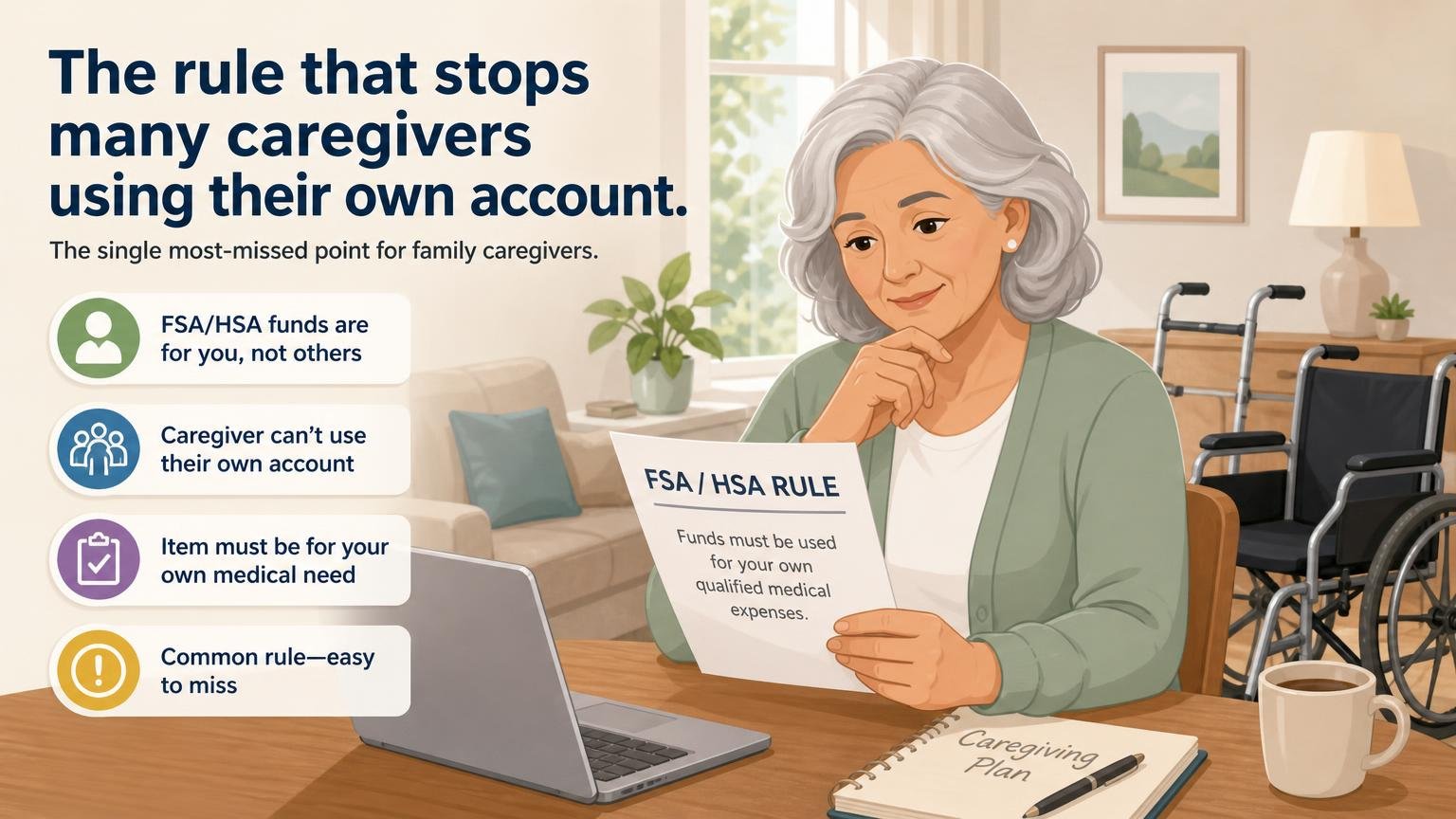
This is the single most-missed point for family caregivers, and it is worth reading carefully before you spend anything.
Publication 969 states that qualified medical expenses include those incurred by you and your spouse, all dependents you claim on your tax return, and any person you could have claimed as a dependent except that they filed a joint return, their gross income was too high, or you (or your spouse if filing jointly) could be claimed as a dependent on someone else’s return.
Read the third item again, because it is the one that helps. A parent who fails the dependent test only on the gross income threshold can still count. The other dependent tests — including that you provide more than half of their support — still have to be met, but the income ceiling that disqualifies many parents on paper is specifically carved out here.
What this means in practice:
- If your parent is your tax dependent, your account can generally pay their qualified expenses.
- If your parent would be your dependent but for their income, they may still qualify — worth checking properly rather than assuming not.
- If neither applies, your own FSA or HSA is not the route. Your parent’s own account, if they have one, is.
This is exactly the kind of question worth putting to a tax professional rather than settling from a website, because it turns on your specific support arrangements.
Do not buy first and check afterwards
A refused claim on equipment bought for someone who does not qualify under your account is not just an inconvenience — HSA distributions that are not for qualified medical expenses are taxable and may carry an additional penalty. Establish this before you spend.
When you need a letter of medical necessity
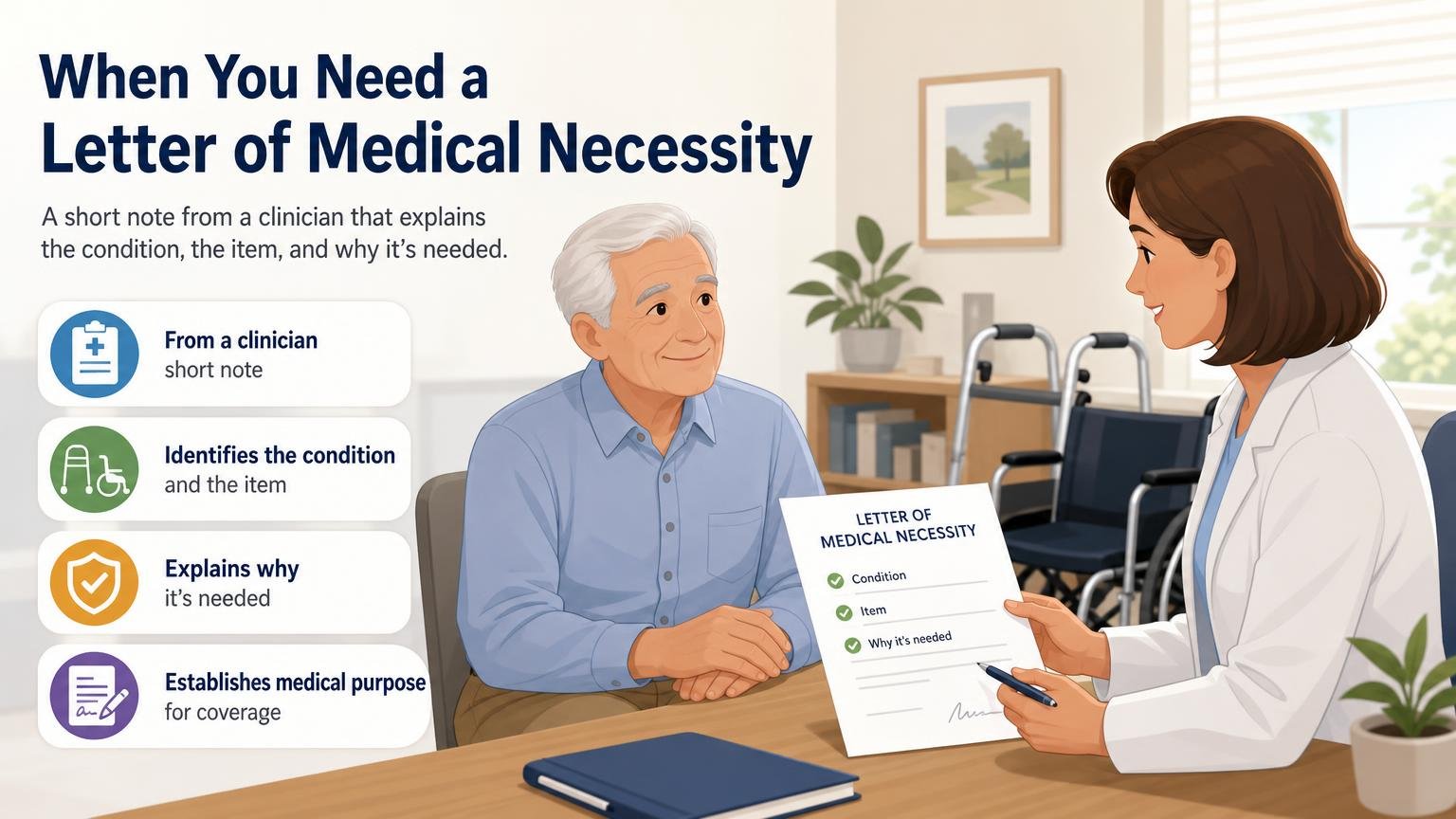
A letter of medical necessity is a short note from a clinician saying what the condition is, what the item is for, and why it is needed. It exists to establish medical purpose for something that could otherwise look like a general-comfort or general-health purchase.
You are more likely to need one where an item has an obvious non-medical use. A wheelchair does not need explaining. A recliner, a mattress, an air purifier, a stair-related modification or a piece of exercise equipment does.
A useful letter names the diagnosis or functional limitation, names the specific item, and says why that item addresses it. "Patient has advanced osteoarthritis of both knees and cannot rise safely from a standard-height seat; a lift mechanism chair is medically necessary for safe transfers" does the job. "Patient would benefit from a comfortable chair" does not.
Ask for it at an appointment you already have. Most clinicians write these routinely and will not charge for one attached to a visit.
FSA and HSA are not interchangeable on timing
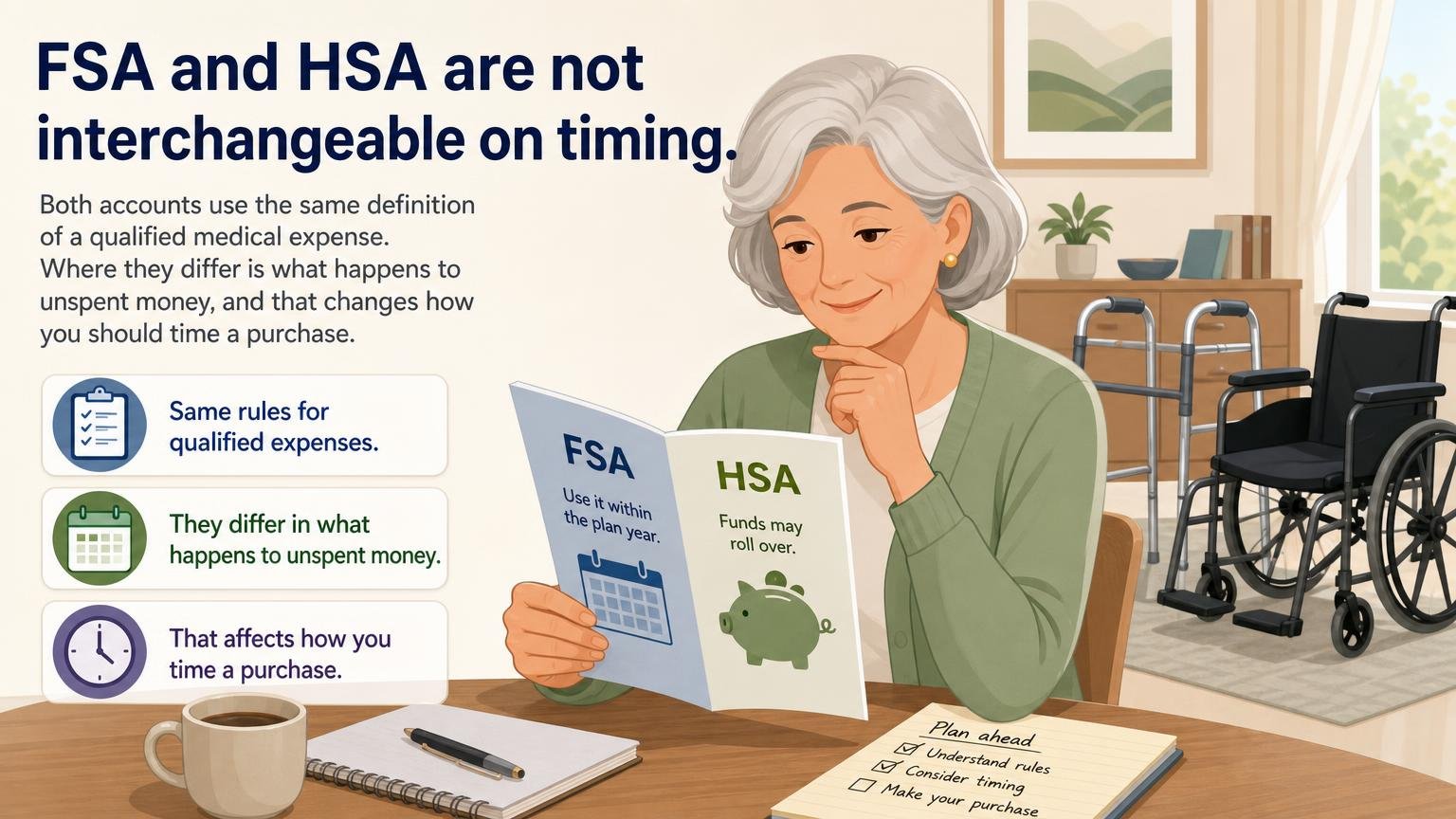
Both accounts use the same definition of a qualified medical expense. Where they differ is what happens to unspent money, and that changes how you should time a purchase.
An HSA belongs to you. Unspent funds roll over indefinitely, so there is no calendar pressure to buy.
A health FSA is generally use-it-or-lose-it within the plan year. Employers may offer either a short grace period after year end or a limited carryover into the next year, but they are not required to offer either and cannot offer both — check which, if any, your plan has.
The practical consequence: if you have FSA money and a genuine equipment need, the end of the plan year is a real deadline. If you have an HSA, waiting to buy the right item costs you nothing, and buying the wrong item in a hurry costs you plenty.
What to keep, and for how long
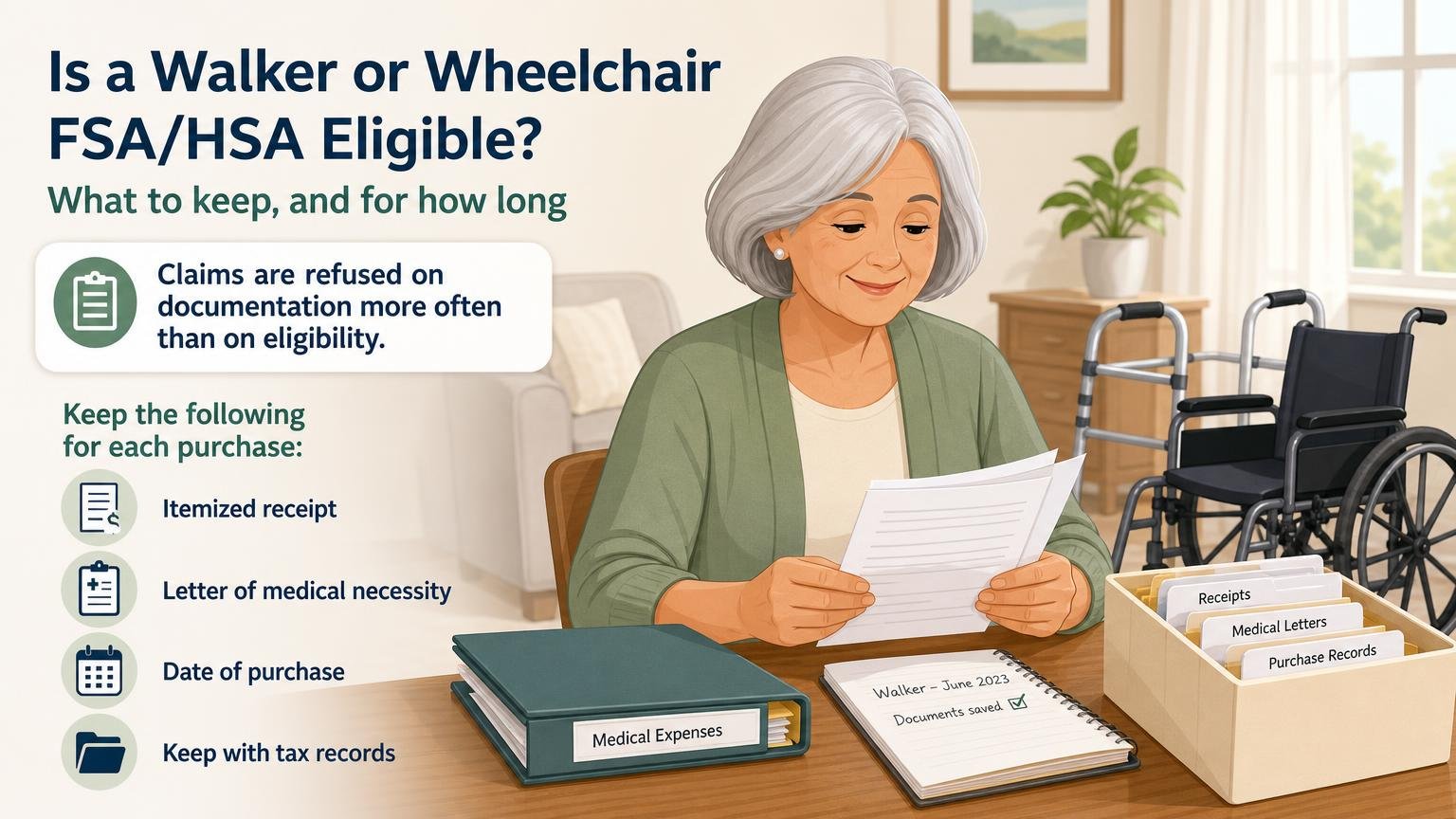
Claims are refused on documentation more often than on eligibility. Keep the following for each purchase:
- An itemised receipt showing the specific item, the date, and the amount — not just a card slip or an order total.
- The letter of medical necessity, where one was needed, with the date it was written.
- A note of what the item was for, if that is not obvious from the receipt.
HSA records matter for longer than people expect. Because an HSA can reimburse a qualified expense in a later year, the receipt supporting a distribution may be needed well after the purchase. Keep them with your tax records rather than in the box the equipment came in.
Frequently asked questions
Is a rollator FSA or HSA eligible?
Generally yes. A rollator is bought so someone can move safely, which puts it inside the IRS definition of equipment used mainly for medical care. Keep the itemised receipt, and check whether your administrator wants a prescription or letter for equipment at that price point.
Can I use my HSA to buy a walker for my mother?
Only if she is your tax dependent, or would be except that her gross income was too high, she filed a joint return, or you could be claimed as someone else’s dependent. If none of those apply, your account is not the right route — hers is, if she has one. This turns on your specific support arrangements, so confirm it with a tax professional.
Are grab bars FSA eligible?
It depends on your administrator. The IRS capital-expense list for the medical expense deduction explicitly includes adding handrails or grab bars, but that list governs the deduction, not what an FSA must reimburse. Permanent installations often need a letter of medical necessity, and some plans decline home improvements entirely. Ask before the work starts.
Do I need a prescription to use FSA or HSA money on mobility equipment?
Not always, but it helps and some administrators require it. Equipment with an obvious medical purpose is usually accepted on the receipt alone. Anything a healthy person might also buy is where a prescription or letter of medical necessity becomes the difference between reimbursement and refusal.
If Medicare will not cover a walker, does that mean my FSA will not either?
No. They are separate systems with separate rules. Medicare has its own durable medical equipment criteria, supplier requirements and documentation standards. An item Medicare declines can still be a qualified expense for an FSA or HSA.
What happens if a claim is refused after I have already spent the money?
With an FSA you will typically be asked to substantiate the claim or repay it. With an HSA, a distribution that was not for a qualified medical expense becomes taxable income and may carry an additional penalty. Both are avoidable by confirming eligibility before purchase rather than after.
Sources
- IRS. Publication 502, Medical and Dental Expenses — defines which costs count as medical care, including the capital-expense list for home modifications
- IRS. Publication 969, Health Savings Accounts and Other Tax-Favored Health Plans — qualified medical expenses, and whose expenses an account may pay
- Medicare.gov. Durable Medical Equipment (DME) Coverage
