
5 Best Mattress for Seniors
 By Kutubuddin, Founder & Senior Care Researcher Updated October 2026
In this guide
 Our pickSignature Design by Ashley Chime 12-Inch Hybrid
 Best value hybridLinenspa 10-Inch Hybrid
 Best if you need a bed rail to fitZinus 8-Inch Spring Sensation Hybrid
 Best foam for repositioningKin by Tuft & Needle 10-Inch Adaptive Foam
 Best pressure reliefLucid 10-Inch Gel Memory Foam
- What to look for
- Frequently asked questions
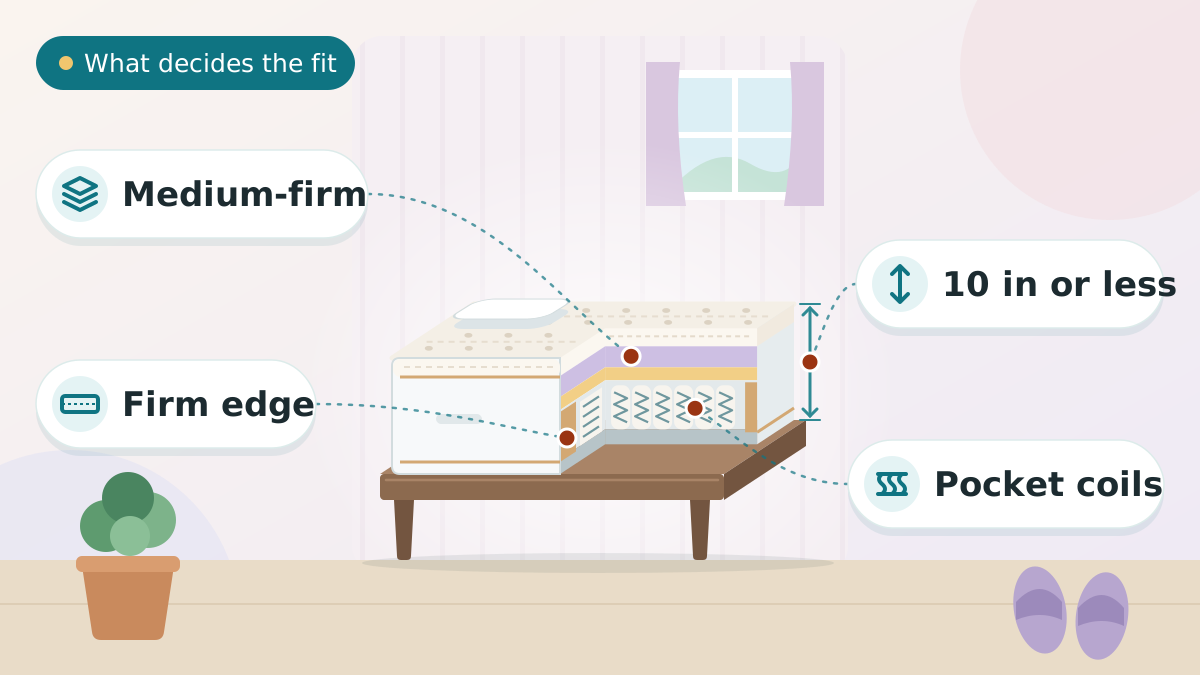
Almost every mattress guide is written for back pain or hot sleeping. Neither is the problem here. The question for an older adult is whether they can get out of the bed — which depends on the firmness of the edge they sit on, the height of the bed once the mattress is on it, and whether the surface pushes back or swallows them. Those three things are barely mentioned in mainstream mattress reviews, and they rule out the best-selling mattress on Amazon. Below are five that we would consider, chosen against those criteria, with the trade-offs stated rather than smoothed over.
We may earn a commission when you buy through links on this page. Read our affiliate disclosure.
Our Top Pick
Signature Design by Ashley Chime 12-Inch Hybrid
The only mattress here whose listing states the thing this page cares about most: **two perimeter rows of coils** for edge support.
- Reinforced perimeter is stated on the listing, not inferred
- Pocketed coils reduce motion transfer, so a restless partner wakes them less
- Thin comfort layer means it supports rather than sinks
- Medium-firm, which suits most older sleepers
Type
Hybrid, pocketed coils
Depth
12 in
Feel
Medium firm
Edge support
2 perimeter coil rows
Comfort layer
0.75 in gel memory foam
Top 5 Picks — Find Your Situation
Best forMost people, if the bed frame can take a 12-inch mattress
- Reinforced perimeter is stated on the listing, not inferred
- Pocketed coils reduce motion transfer, so a restless partner wakes them less
- Thin comfort layer means it supports rather than sinks
Watch out: At 12 inches it is the thickest here — too deep for most bed rails, and it raises the bed
- Linenspa 10-Inch HybridBest value hybrid
Best forA tight budget where a coil edge still matters
- Coil support at a price normally buying all-foam
- 10-inch depth suits most bed rails and keeps the bed lower
- Medium-firm and responsive enough to reposition on
Watch out: The listing does not claim a reinforced perimeter, unlike our top pick
- Zinus 8-Inch Spring Sensation HybridBest if you need a bed rail to fit
Best forAnyone using a bed rail, or who needs the bed to sit low
- Thinnest here, so bed rails clamp with margin
- Keeps the bed low enough for feet to reach the floor
- Fiberglass free, with a certified cover
Watch out: **The twin is rated to 250 lb** — lower than the other sizes, and twin is the size most often bought for one person. Check this against the person
- Kin by Tuft & Needle 10-Inch Adaptive FoamBest foam for repositioning
Best forSomeone who prefers foam but needs to be able to turn over
- Springs back instead of sinking, so repositioning stays easy
- 100-night trial — the only pick here with a real try-before-you-commit window
- Screened for over 10,000 chemicals and fiberglass free
Watch out: All-foam, so the edge will never be as firm as a coil perimeter
- Lucid 10-Inch Gel Memory FoamBest pressure relief
Best forPainful hips or shoulders, where cushioning matters more than pushing off
- Deepest cushioning here for painful pressure points
- Gel and bamboo charcoal aimed at sleeping cooler than plain memory foam
- Compatible with an adjustable base
Watch out: A 3-inch memory foam comfort layer is the hardest surface here to turn over on or stand up from
Signature Design by Ashley Chime 12-Inch Hybrid
Most people, if the bed frame can take a 12-inch mattress
Most mattress listings say nothing about the edge, because most buyers do not care. This one states two perimeter rows of coils, and that single detail is why it leads this page. The edge of a mattress is not a comfort feature for an older adult — it is the surface they sit on to put socks on, and the surface their hand presses into when they stand. A soft edge rolls away underneath them at exactly the wrong moment.
The construction is the other half of it. A thin gel memory foam layer over pocketed coils gives you contouring at the hip and shoulder without the slow sink that makes rolling over hard work. Compare that with the deep memory foam mattresses that dominate the bestseller lists, which are excellent at holding you still and poor at letting you move.
The trade-off is thickness. At 12 inches it is the deepest mattress on this page, which raises the bed and rules out most bed rails. If either of those matters, drop to the 10-inch Linenspa or the 8-inch Zinus and accept a less reinforced edge.
What we love
- Reinforced perimeter is stated on the listing, not inferred
- Pocketed coils reduce motion transfer, so a restless partner wakes them less
- Thin comfort layer means it supports rather than sinks
- Medium-firm, which suits most older sleepers
Things to consider
- At 12 inches it is the thickest here — too deep for most bed rails, and it raises the bed
- The linked size is King; check you are selecting the size you actually want
- A thin comfort layer is less forgiving for very bony hips than a plusher top
Right for you if
- ✓They sit on the side of the bed to dress
- ✓They share the bed with someone who moves at night
- ✓The bed frame is low enough to take a 12-inch mattress
- ✓No bed rail is fitted, or none is planned
Maybe skip it if
- !A bed rail is fitted or planned — 12 inches is too deep for most
- !They are short, or the bed is already high
- !They have very bony hips and need deeper cushioning
Getting started
- →Allow 48 hours for it to fully expand before judging the feel.
- →Measure total height once it is on the frame: sitting on the edge, their feet should be flat on the floor with knees near level with the hips.
- →If the bed ends up too high, a lower frame is a cheaper fix than a different mattress.
- →Check the size selected in the cart. These listings default to different sizes and the link may not open on the one you want.
How it compares to our runner-up
The Linenspa 10-inch is the one to choose if 12 inches is too deep — it keeps the coil unit, drops two inches, and costs considerably less. What you give up is the stated perimeter reinforcement and, by most accounts, some durability. If you expect the mattress to last a decade, the Ashley is the better buy; if the person’s needs are likely to change within a few years, the Linenspa is the more sensible spend.
How we picked
We do not own or test these mattresses, and this page makes no claim to original testing. Every specification below is quoted from the manufacturer’s own listing. The criteria come from published guidance on sleep and mobility in older adults, which converges on medium-firm support, a reinforced edge for sitting and standing, and a bed height that lets the feet reach the floor. Where a listing makes a claim we cannot check, we say so rather than repeating it.
Our picks, reviewed
Signature Design by Ashley Chime 12-Inch Hybrid
The only mattress here whose listing states the thing this page cares about most: **two perimeter rows of coils** for edge support. That reinforced edge is what holds firm when someone sits on the side of the bed to put shoes on, or pushes down on the mattress to stand. It pairs 360 individually pocketed coils with a thin gel memory foam layer rather than a thick one, so it cushions without swallowing. Medium-firm, which is where most guidance for older adults lands.
What we like
- Reinforced perimeter is stated on the listing, not inferred
- Pocketed coils reduce motion transfer, so a restless partner wakes them less
- Thin comfort layer means it supports rather than sinks
- Medium-firm, which suits most older sleepers
Keep in mind
- At 12 inches it is the thickest here — too deep for most bed rails, and it raises the bed
- The linked size is King; check you are selecting the size you actually want
- A thin comfort layer is less forgiving for very bony hips than a plusher top
- Type
- Hybrid, pocketed coils
- Depth
- 12 in
- Feel
- Medium firm
- Edge support
- 2 perimeter coil rows
- Comfort layer
- 0.75 in gel memory foam
Linenspa 10-Inch Hybrid
Coils under memory foam at a fraction of the price of the Ashley, and two inches shallower — which puts it inside the depth range most bed rails will accept. Medium-firm, so it holds its shape at the edge better than an all-foam mattress at the same price. This is the one to choose when budget is the constraint but you are not willing to give up the coil unit.
What we like
- Coil support at a price normally buying all-foam
- 10-inch depth suits most bed rails and keeps the bed lower
- Medium-firm and responsive enough to reposition on
- Also sold in other profiles if you want thicker or thinner
Keep in mind
- The listing does not claim a reinforced perimeter, unlike our top pick
- Independent reviewers report the comfort foam softening sooner than premium hybrids — treat this as a shorter-life mattress
- Marketed partly at guest and bunk beds, which tells you where it sits on durability
- Type
- Hybrid, memory foam over coils
- Depth
- 10 in
- Feel
- Medium firm
- Warranty
- 10 years, limited
- Bed rail depth
- Usually workable
Zinus 8-Inch Spring Sensation Hybrid
It is here for one reason, and it is a good one: at 8 inches it is the only mattress on this page thin enough that a bed rail can still clamp properly, with room to spare. It also keeps total bed height low, which matters if the person is short or struggles to stand. It is built to a price — the coils are interconnected rather than individually pocketed — so choose it when rail compatibility and bed height matter more than plushness.
What we like
- Thinnest here, so bed rails clamp with margin
- Keeps the bed low enough for feet to reach the floor
- Fiberglass free, with a certified cover
- 10-year limited warranty despite the price
Keep in mind
- **The twin is rated to 250 lb** — lower than the other sizes, and twin is the size most often bought for one person. Check this against the person
- Interconnected coils transfer more movement than pocketed ones
- The listing markets it at guest and youth rooms, which is an honest signal about how it is built
- Type
- Hybrid, interconnected coils
- Depth
- 8 in
- Feel
- Medium firm
- Weight limit
- 250 lb twin, 500 lb other sizes
- Certifications
- CertiPUR-US foam, OEKO-TEX cover
Kin by Tuft & Needle 10-Inch Adaptive Foam
If foam suits the person better than coils, this is the foam to choose. Tuft & Needle’s adaptive foam is designed to spring back rather than slowly mould around you, which is precisely the difference between a mattress you can turn over on and one that traps you. It also carries a 100-night trial, which matters more here than on any other pick — this is the category where you cannot tell from a photograph.
What we like
- Springs back instead of sinking, so repositioning stays easy
- 100-night trial — the only pick here with a real try-before-you-commit window
- Screened for over 10,000 chemicals and fiberglass free
- 10-inch depth works with most bed rails
Keep in mind
- All-foam, so the edge will never be as firm as a coil perimeter
- If sitting on the side of the bed to dress is part of the daily routine, one of the hybrids suits better
- Foam mattresses generally have a shorter useful life than coil units
- Type
- All-foam, adaptive
- Depth
- 10 in
- Feel
- Medium firm
- Trial
- 100 nights
- Screening
- GreenGuard Gold, CertiPUR-US
Lucid 10-Inch Gel Memory Foam
The softest surface here, and the right answer for one specific person: someone with painful hips or shoulders who spends a long time lying still, and who does not get in and out of bed unaided very often. Three inches of gel memory foam is a lot of cushioning. That is a genuine benefit for pressure relief and a genuine drawback for anyone who needs to push off it, so we have ranked it accordingly rather than pretending it is a general recommendation.
What we like
- Deepest cushioning here for painful pressure points
- Gel and bamboo charcoal aimed at sleeping cooler than plain memory foam
- Compatible with an adjustable base
- 10-inch depth still leaves room for most bed rails
Keep in mind
- A 3-inch memory foam comfort layer is the hardest surface here to turn over on or stand up from
- All-foam, so no reinforced edge to sit on
- Not the right choice if getting out of bed unaided is already difficult
- Type
- All-foam, gel memory foam
- Depth
- 10 in
- Comfort layer
- 3 in gel foam
- Feel
- Medium
- Base compatibility
- Works on adjustable bases
What to look for
The three checks that decide it
Mattress reviews are written for back pain and hot sleeping. Neither is the question here. For an older adult the question is whether they can get out of the bed, and three things decide that.
- Medium-firm. Too soft and the hip sinks, the spine bends, and standing means climbing out of a hollow. Too firm and the hip and shoulder take all the pressure. Published guidance on sleep in older adults converges on medium-firm, and every pick on this page sits at or near it.
- A reinforced edge. This is the one nobody mentions. The edge is where someone sits to put shoes on and where their hand presses when they stand. A coil perimeter holds; a foam edge compresses and rolls away. It is the single strongest argument for a hybrid over an all-foam mattress.
- Depth, and the height it creates. A 14-inch mattress on a standard frame puts the sleeping surface high enough that shorter people cannot plant their feet. Depth also decides whether a bed rail can clamp at all. Ten inches or under solves both.
The test for height is simple and takes ten seconds. Sit on the edge of the made bed. The feet should be flat on the floor with the knees roughly level with the hips. If the feet dangle, the bed is too high; if the knees are above the hips, it is too low and standing will be hard work.
Why the best-selling mattress is usually the wrong one
The mattress with the most reviews on Amazon is an all-foam memory foam model, and it is a perfectly good mattress for the wrong person.
All-foam construction has no coil unit, which means no reinforced perimeter. Sit on the edge and it compresses under you. For a younger buyer who only ever lies in the middle, that is irrelevant. For someone who sits on the side of the bed twice a day to dress, it is the most-used part of the mattress.
The second issue is the comfort layer. Memory foam works by softening under body heat and moulding around you, and the thicker that layer, the more it holds you in place. That is the reason it feels wonderful for the first ten minutes and the reason turning over at three in the morning becomes an effort. A deep memory foam mattress is optimised for staying still.
None of that makes foam wrong for everyone — our fourth and fifth picks are both foam, chosen for people it genuinely suits. It makes foam the wrong default.
Depth decides whether a bed rail still works
This is the point where a mattress purchase collides with the rest of the bedroom, and almost nobody finds out until the rail arrives.
Bed rails and bed assist handles clamp between the mattress and the frame, and every one specifies a mattress depth range it will fit. The window varies more than you would expect: mattress-bar rails commonly quote something like 8 to 12 inches, some as narrow as 7 to 11, and frame-clamping models can want 13 to 20. Buy a 14-inch pillow-top and the rail either will not tighten or will sit too low to be useful, which is worse than having none because it looks like protection and is not.
- Check the rail first if one is already fitted. The depth range is on the box and in the manual.
- If a rail is planned but not bought, keep the mattress at 10 inches or under and you keep your options open.
- The same applies to bed assist handles, which use the same clamping arrangement.
- And to adjustable bases, which usually cap at 14 inches and work better with thinner mattresses.
Our bed rails review lists the depth range each model accepts, and the bed rail safety guide covers the entrapment risks that make correct fit more than a convenience question.
Trial periods matter more here than usual
You cannot tell how a mattress will suit someone from a photograph, and the person who needs it is often the person least able to sleep on the wrong one for a year.
- Look for a trial, not just a warranty. A 10-year warranty covers manufacturing defects. It does not help if the mattress is simply too soft.
- Only one pick here has a real trial window — the Kin by Tuft & Needle, at 100 nights.
- Amazon’s standard return window is much shorter and returning a compressed mattress is not straightforward once it has expanded.
- Allow the full expansion time before judging. Most need 48 to 72 hours, and they feel firmer than they will settle at.
When a mattress is not the right product at all
There is a point past which a consumer mattress, however good, is not the thing that is needed — and it is worth naming, because the pages selling mattresses never do.
If the person spends most of the day and night in bed, or cannot reposition themselves without help, the risk is pressure injury: skin and tissue damage from sustained pressure over the hips, heels, sacrum and shoulders. That is a clinical problem and it has clinical solutions — pressure-redistributing mattresses, alternating-air overlays, and a repositioning schedule. Those are prescribed and fitted, not bought from a bestseller list.
- Ask for an occupational therapist or district nurse assessment if the person is in bed most of the day, or if any area of skin stays red after the pressure comes off.
- Do not treat a memory foam topper as a substitute. Cushioning is not the same as pressure redistribution, and a thick topper on a soft mattress makes getting out harder.
- Check heels specifically. They are the second most common site and the easiest to miss.
For everyone else — which is most people reading this — a good medium-firm mattress with a solid edge is exactly the right purchase.
If an adjustable base is also on the list
A mattress and an adjustable base are usually bought together, and the two decisions constrain each other.
Our adjustable bed base review covers the options. Most adjustable bases accept mattresses up to about 14 inches, and several manufacturers recommend 10 inches or thinner for the base to articulate properly. A thick mattress fights the bend. That rules the 12-inch Ashley out of some pairings and makes the 10-inch picks here the safer choice if a base is coming.
The other thing worth knowing before you spend: an adjustable base is not a hospital bed. It changes the angle of the mattress, not the height of the bed, and it does not take side rails. If what is actually needed is a bed that raises and lowers for transfers or caregiving, that is a different product — and unlike an adjustable base, Medicare may contribute toward it.
Frequently asked questions
Medium-firm suits most people. Too soft and the hips sink, which bends the spine and turns standing up into climbing out of a hollow. Too firm and the hip and shoulder carry all the pressure. Published guidance on sleep and mobility in older adults consistently lands on medium-firm, and it is where most of the picks on this page sit.
A hybrid, in most cases. The coil unit gives a firmer perimeter, and that edge is where someone sits to dress and pushes down to stand. It is also easier to turn over on, because coils push back while thick memory foam moulds around you and holds you in place. Foam suits people who need deeper cushioning for painful joints and who are not getting in and out of bed unaided several times a day.
Ten inches or under is the safer choice. Depth sets the total height of the bed, and a bed that is too high leaves the feet dangling when they sit on the edge, which makes standing harder and less stable. Depth also decides whether a bed rail can clamp — most specify a range around 7 to 11 inches, so a thick mattress rules them out.
It depends on depth, and it is worth checking before you buy either item. Bed rails clamp between the mattress and the frame and each model states the mattress thickness it accepts, commonly somewhere in the 7 to 11 inch range. A rail that will not tighten properly is worse than no rail, because it looks like protection and is not. If a rail is fitted or planned, stay at or under 10 inches.
One that cushions the painful joint without trapping them. That usually means medium-firm with a modest comfort layer rather than a deep one — enough give at the hip and shoulder, enough support to push off. If the pain is severe and they lie still for long periods, a deeper foam layer helps, but check honestly whether they can still get out of bed from it.
Sit on the edge of the made bed. The feet should be flat on the floor with the knees roughly level with the hips. Dangling feet mean the bed is too high, and knees above hip level mean it is too low and standing will take real effort. Check this after the new mattress is on, because a thicker mattress can push a previously fine bed out of range.
Most do not. But if someone spends most of the day and night in bed, or cannot reposition without help, pressure injury becomes a real risk and a consumer mattress is not the answer. That calls for a pressure-redistributing surface and a repositioning routine, arranged through an occupational therapist or district nurse. A memory foam topper is not a substitute.
Usually, with a caveat. Most adjustable bases accept mattresses up to about 14 inches and several manufacturers recommend 10 inches or thinner so the base can bend properly. That makes the 10-inch and 8-inch picks here the safer pairing. Check the base’s stated maximum before ordering the mattress, not after.
The final verdict
For most people the Ashley Chime 12-inch Hybrid is the right buy, because it is the only one here that states the reinforced perimeter this page is built around. Choose the Linenspa 10-inch if 12 inches is too deep or the budget is tight, and the Zinus 8-inch if a bed rail has to fit — nothing else here is thin enough. The two foam picks are for specific people rather than general recommendations: the Kin by Tuft & Needle if foam suits but turning over must stay easy, and the Lucid 10-inch if painful hips need deeper cushioning and getting up unaided is not the daily problem. Before ordering any of them, sit on the current bed and check the feet reach the floor. That one test tells you more than any review.
Our overall winner is the Signature Design by Ashley Chime 12-Inch Hybrid — our our pick for most seniors. You can check the current price on Amazon to see today’s deal.
