
5 Best Automatic Pill Dispensers for Seniors
 By Kutubuddin, Founder & Senior Care Researcher Updated October 2026
In this guide
 Best OverallLiveFine 28-Day Automatic Pill Dispenser
 Most Flexible Dosing28-Day Locking Pill Dispenser with 9 Dose Rings
 Best BudgetNo-App Locking Pill Dispenser (28-Day)
 Best for Caregiver AlertsMedReady 1700
 Best for Hearing & Vision NeedsEziMedPil 28-Day Locked Pill Dispenser
- What to look for
- Frequently asked questions
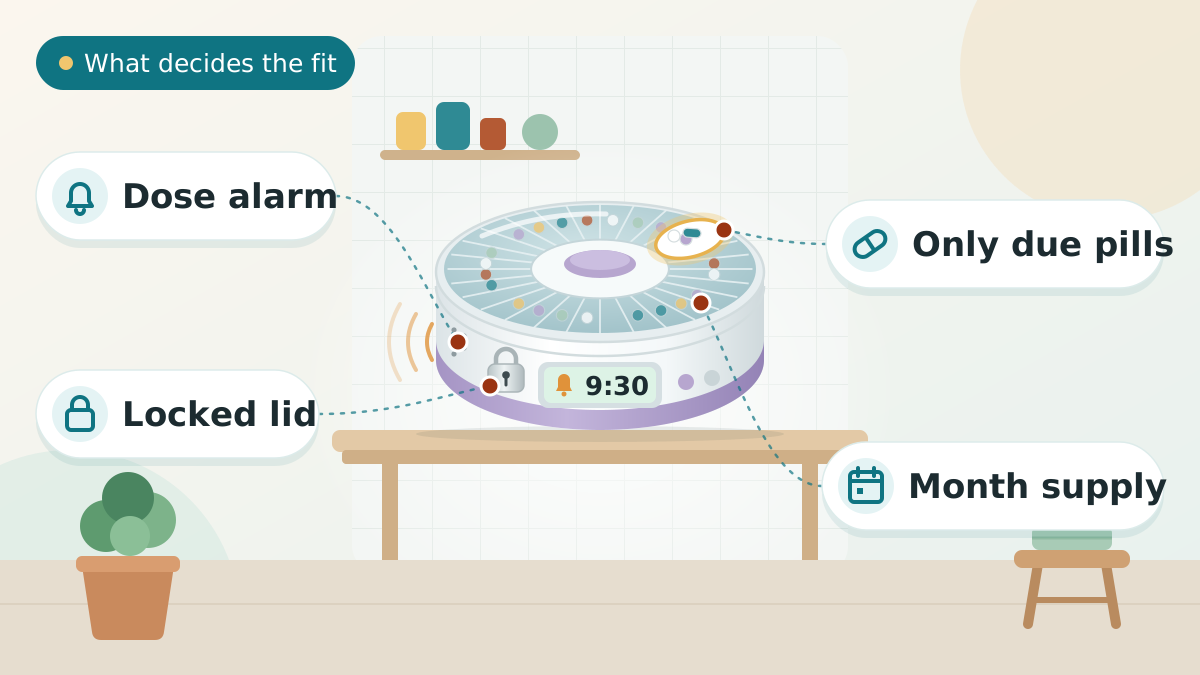
An automatic pill dispenser stores a month of medication, sounds an alarm at each dose time, and — crucially — only releases the pills that are due, which helps prevent the missed and doubled doses behind many home medication errors.
We may earn a commission when you buy through links on this page. Read our affiliate disclosure.
Top 5 Picks — Find Your Situation
#1 · Best Overall
LiveFine 28-Day Automatic Pill DispenserBest for: Most seniors who want a reliable, lockable dispenser with no monthly fees
#2 · Most Flexible Dosing
28-Day Locking Pill Dispenser with 9 Dose RingsBest for: Caregivers managing a schedule that changes, or several doses a day
#3 · Best Budget
No-App Locking Pill Dispenser (28-Day)Best for: Budget-focused caregivers and seniors who want a simple, locked, standalone dispenser with loud multi-sensory alerts and no technology to set up.
#4 · Best for Caregiver Alerts
MedReady 1700Best for: Caregivers managing a loved one's medication who want missed-dose alerts
#5 · Best for Hearing & Vision Needs
EziMedPil 28-Day Locked Pill DispenserBest for: Seniors with hearing or vision limitations, or weaker hands, who want a locked dispenser with a magnifier, loud sound-and-light alerts, and easy handling.
Many older adults take several prescriptions, so the stakes are real. The honest split in this category: simple, no-subscription dispensers you buy once on Amazon, versus smart subscription services (like Hero or MedMinder) sold direct for a monthly fee. Our overall pick is the LiveFine 28-Day, the most proven no-subscription dispenser. Below are five Amazon-available options — plus when a smart, monitored service is worth it, and one important safety limit to know.
A closer look at our top pick: the LiveFine 28-Day
LiveFine 28-Day Automatic Pill Dispenser
Best for: Most seniors who want a reliable, lockable dispenser with no monthly fees
- Capacity
- 28-day, 28 compartments
- Alarms
- Up to 9/day, 3 tones, adjustable volume
- Security
- Key-locked lid
- Power
- AA batteries or AC
Independently researched · Updated October 2026
The LiveFine earns the top spot by being the most proven dispenser that doesn't lock you into a subscription. Thousands of owners have used it to manage a month of medication, and it nails the essentials: a key-locked lid that exposes only the current dose, up to nine daily alarms with three tones and adjustable volume, and an alarm that keeps sounding for 30 minutes until the box is inverted to dispense.
It's also practical for real homes. The large LCD clearly shows the time, the next alarm, and battery status, and it runs on AA batteries or AC — so neither a power cut nor a Wi-Fi drop will stop it. There's no app to set up and no fee to pay, which makes it approachable for seniors who'd rather avoid technology entirely.
What we love
- No subscription or monthly fee
- No subscription, Wi-Fi, or app required
- Large, easy-to-read display
- Works on batteries or AC with backup
Things to consider
- Bulky and not especially attractive
- No remote monitoring on the standard model
- Loading still needs to be done carefully
Right for you if
- ✓You want a proven, lockable dispenser with no monthly fees
- ✓You'd rather avoid apps, Wi-Fi, and setup
- ✓You need a large, clear display
- ✓You take medication up to several times a day
Maybe skip it if
- !You need a caregiver alerted to missed doses — the MedReady adds that
- !You want pharmacy fill and 90-day capacity — a subscription service fits better
- !Your dosing schedule changes often — the 9-ring dispenser adapts more easily
What owners consistently report
Common praise
- +Owners repeatedly cite years of dependable, daily use
- +The large display and loud alarm are easy for seniors
- +No subscription or app is a frequently mentioned plus
Common gripes
- –It's bulky and utilitarian-looking
- –There's no remote monitoring on the standard model
- –Initial loading needs care to avoid mistakes
Getting started
- →Load it carefully against the prescription labels, one medication at a time
- →Test the alarm and dispensing action before relying on it
- →Keep the lock key somewhere the user can't double back to the supply
How it compares
The 9-ring locking dispenser is the one to choose when a schedule is complicated or changes often — its template rings let the same unit follow a routine of up to six doses a day. The LiveFine is the better pick for most: more daily alarms, a larger display, and a far longer track record. Choose LiveFine for proven all-round value, the 9-ring unit for flexible dosing.
How we picked
We compared today's most recommended automatic pill dispensers on what matters for safety and daily use: locking and tamper resistance, alarm types (audible and visual), capacity and maximum pill size, power and battery backup, and whether caregivers can be alerted to a missed dose. Our picks draw on manufacturer specs, expert reviews from NCOA, U.S. News, and pharmacist-led guides, plus Amazon owner feedback — not hands-on lab testing. We focused on no-subscription, Amazon-available dispensers, and cover smart subscription services (which are sold direct) separately.
Reviewed by Kutubuddin — who researches senior-care products and the real-world needs of caregivers and older adults.
Other picks, reviewed
28-Day Locking Pill Dispenser with 9 Dose Rings
A locked, no-subscription dispenser that adapts to more schedules than most. It comes with nine dose template rings, so the compartments can be matched to a routine of up to six doses a day and re-set when a prescription changes. It pairs a sound alarm with a flashing light, shows the time and next dose on an easy-read display, and costs a fraction of a healthcare-grade unit.
What we like
- Nine template rings fit most dosing schedules
- Sound-and-light alerts
- Locking lid keeps the rest of the month out of reach
- No subscription, app, or Wi-Fi
Keep in mind
- Less established brand than LiveFine
- No remote caregiver alerts
- Setting up the rings takes care the first time
- Capacity
- 28-day carousel
- Doses
- Up to 6/day; 9 template rings
- Alerts
- Sound alarm + flashing light
- Security
- Locking lid
- Subscription
- None
No-App Locking Pill Dispenser (28-Day)
The most affordable way to get the essentials right: a key-locked lid, a loud alarm paired with a flashing light, and no app, Bluetooth, or Wi-Fi to wrestle with. It runs entirely on its own — set the time and go — on standard AA batteries, so a power cut or a dead internet connection will not stop it. The locked transparent lid releases only the current dose, which can help reduce the risk of accidental double-dosing in households with dementia, curious grandchildren, or pets.
What we like
- Lowest-cost locked dispenser here
- No technology to set up or maintain
- Sound-and-light alerts suit mild hearing or vision loss
- Battery power works anywhere, outage or not
Keep in mind
- No remote caregiver alerts
- Generic brand — less established than LiveFine
- Up to 6 daily doses (fewer than the LiveFine's 9)
Key features
- Standalone operation — no app, Bluetooth, or Wi-Fi
- Key-locked lid releases only the current dose
- Loud alarm plus bright flashing LED (repeats until pills are taken)
- 28-day carousel with removable tray for easy refills
- Easy-read high-contrast LCD shows time and next dose
- Runs on AA batteries — keeps working during power outages
- Capacity
- 28-day carousel
- Alarms
- Up to 6/day; sound + light
- Security
- Key-locked clear lid
- Power
- AA batteries (outage-safe)
- Subscription
- None — no app/WiFi
MedReady 1700
The pick when a family member needs to know a dose was missed. The base unit is a tamper-proof, locking dispenser with a loud 85-decibel alarm and battery backup — and optional cellular or landline monitoring can alert a caregiver if a dose isn't taken, without a smartphone app to wrangle.
What we like
- Optional missed-dose alerts to a caregiver
- Loud alarm with power-outage backup
- Tamper-proof locking lid
- Simple, accessible design
Keep in mind
- Monitoring costs extra, and the linked version with the flashing-light alarm costs more than the basic unit
- Limited to four doses per day
- Plainer than smart subscription dispensers
- Capacity
- 28 compartments, ~9 pills each
- Doses
- Up to 4/day
- Alarm
- 85 dB; battery backup
- Monitoring
- Optional cellular/landline alerts
- Security
- Tamper-proof lock
EziMedPil 28-Day Locked Pill Dispenser
The standout here for anyone with limited hearing or eyesight. On top of a locked frosted lid and the usual sound-and-light alerts, it adds a built-in magnifying glass for reading dosage labels and anti-slip grips that make the dispenser easier to flip and open with weak hands. The alert pairs a beep with a flashing light — sound for low vision, light for hearing loss — and repeats until the dose is taken. Its large 28-compartment tray (up to 24 tablets each) means fewer refills.
What we like
- Magnifier and loud sound-and-light alerts genuinely aid low vision and hearing
- Anti-slip grips help arthritic or weak hands
- Very large capacity means fewer refills
- Locked lid helps guard against double-dosing; no monthly fee
Keep in mind
- Generic brand — less established than LiveFine
- No remote caregiver monitoring
- Frosted lid hides pills from view until dispensed
Key features
- Built-in magnifying glass for reading dosage labels
- Locked frosted lid for privacy and safety
- Beep plus flashing-light alerts (up to 6/day; volume high/low/mute)
- Large 28-compartment tray (up to 672 pills total)
- Anti-slip back grips for easier handling
- Easy-read high-brightness LCD; detachable tray; AA batteries included
- Capacity
- 28 slots (up to 24 pills each)
- Alarms
- Up to 6/day; sound + light
- Security
- Locked frosted privacy lid
- Extras
- Built-in magnifier; anti-slip grips
- Power
- 4 AA batteries (included)
What to look for
Locking and tamper resistance
The feature that separates a true dispenser from an organizer is a locked lid that releases only the current dose. For anyone with memory changes, this is what prevents accidental double-dosing.
Look for a key-operated lock and a tamper alarm. It also keeps medications out of reach of grandchildren or anyone who shouldn't access the full supply.
Alarms you won't miss — sound and light
An alert only works if it registers. Choose a dispenser with a loud, adjustable alarm, and ideally flashing lights as well for anyone with hearing or vision loss.
The best units keep alarming until the dose is actually dispensed, so a single missed beep doesn't mean a missed pill.
Capacity, doses per day, and pill size
Match the device to the regimen.
- Capacity: most hold a 28- to 31-day supply.
- Doses per day: confirm it covers how many times a day pills are taken (commonly up to four to nine).
- Pill size and count: check the maximum pills per compartment, especially for large supplements.
Power and backup
A dispenser that loses power is worse than none, because it creates false confidence. Check how it's powered and whether it has a backup.
Battery-powered units are portable; AC units should include battery backup so an outage doesn't interrupt dosing. Either way, keep fresh batteries on hand and watch for the low-battery warning.
Do you need caregiver alerts? (and the subscription question)
Decide how much remote oversight you need.
- Basic dispensers sound a local alarm only — fine if someone is usually nearby.
- Monitored models (like the MedReady) can alert a caregiver to a missed dose by cellular or landline.
- Smart subscription services (Hero, MedMinder, Livi) add app monitoring, larger capacity, and pharmacy fill for a monthly fee — see below.
Read more:Dementia Daily Routine for CaregiversPreventing Hospital Readmission in SeniorsSenior Living Alone Safety Checklist
Tips to Choose Automatic Pill Dispensers
Short on time? Here are the key points to weigh before choosing, each covered in detail above:
- Locking and tamper resistance
- Alarms you won't miss — sound and light
- Capacity, doses per day, and pill size
- Power and backup
- Do you need caregiver alerts? (and the subscription question)
Comparing options? See our guides to Best Blood Pressure Monitors for Seniors, Best Pulse Oximeters for Seniors, and Best Thermometers for Elderly Care.
When a dispenser helps — and when it isn't enough
An automatic dispenser is a strong fit when doses are being missed or doubled, when a senior lives alone, or in early memory changes where a locked lid prevents double-dosing.
But there's an important limit: for moderate-to-severe dementia or Alzheimer's, a dispenser is not a substitute for hands-on care. It can alert that it's time, but it can't ensure the person understands the alert or follows through safely. In that situation, a caregiver or professional support — and an elderly monitoring system — matters more than any device. Our medication management guide covers the wider plan.
Smart, subscription dispensers (Hero, MedMinder, Livi)
Beyond the one-time Amazon dispensers above, a few smart services are sold direct for a monthly fee. They're worth knowing about for complex regimens managed from a distance.
These typically let you load once for up to a 90-day supply, dispense on schedule, and send app alerts to caregivers for missed doses or low pill counts; some add cellular connectivity (helpful with no home Wi-Fi) or a pharmacy fill-and-deliver service. The trade-off is an ongoing subscription rather than a single purchase, and they're bought from the provider, not Amazon — though many are HSA/FSA-eligible. If capacity, remote monitoring, and refill help are the priority, they're often worth it.
Frequently asked questions
For most people, the LiveFine 28-Day is the best no-subscription choice: it locks so only the current dose is reachable, sounds up to nine alarms a day, and needs no Wi-Fi or app. If you want pharmacy fill, 90-day capacity, and remote monitoring, a smart subscription service like Hero or MedMinder may suit better — but those are sold direct with a monthly fee, not on Amazon.
For Alzheimer’s or dementia, the most important feature is a locked lid that hides future doses — every pick on this list locks, which helps keep future doses out of reach. In early-stage memory loss, a simple locked dispenser like the LiveFine works well. As dementia advances to moderate or severe, step up to a model that alerts a caregiver to a missed dose (like the cellular MedReady 1700), and remember that no dispenser can guarantee the person actually takes the dose — hands-on supervision becomes essential. Never use an open, unlocked organizer for someone with significant cognitive decline.
The better ones do, and it's their key advantage over a simple organizer. A locked lid releases only the dose that's due and keeps the rest of the medication secure, which can help reduce accidental double-dosing. Look for a key-operated lock and a tamper alarm if memory changes are a concern.
Some can. Basic dispensers only sound a local alarm, but monitored models like the MedReady 1700 can alert a caregiver to a missed dose by cellular or landline, and smart subscription services send app notifications for missed doses, low pill counts, and more. If you're managing medications from a distance, remote alerts are worth the extra cost or subscription.
Most automatic dispensers hold a 28- to 31-day supply across their compartments. How long that lasts depends on how many times a day pills are taken — a unit set for four daily doses fills up faster than one taking a single daily dose. Smart subscription dispensers like Hero can hold up to a 90-day supply of several medications.
Most don't. The majority of Amazon dispensers, including the LiveFine and the no-app locking dispenser, work entirely offline with onboard alarms and no app. Wi-Fi or cellular only matters if you want remote caregiver monitoring. If the home has unreliable internet, look for a model that uses cellular (like some MedReady or MedMinder options) rather than Wi-Fi.
A simple organizer is fine when the senior takes their medications consistently, someone checks in regularly, the regimen is straightforward, and there's no history of missed or doubled doses. Move up to an automatic dispenser when those conditions aren't met — especially if missed doses are becoming a pattern, the person lives alone, or early memory changes make double-dosing a risk.
They can help in early-stage memory loss, where a locked lid prevents double-dosing. But for moderate-to-severe dementia or Alzheimer's, a dispenser is not a substitute for hands-on care — it can alert that it's time, but it can't ensure the person understands the alert or takes the dose correctly. At that stage, a caregiver's supervision is essential, and you should involve the person's healthcare provider.
Generally no. Traditional Medicare typically classifies pill dispensers as personal-convenience items and doesn't cover them. Some Medicare Advantage plans may offer partial coverage, and HSA/FSA funds often can be used — many subscription dispensers are HSA/FSA-eligible. Check your specific plan before purchasing.
It depends on the model. Battery-powered dispensers keep working through an outage as long as the batteries are good. AC-powered units should have battery backup so dosing isn't interrupted — confirm this before buying, and replace backup batteries periodically. A unit that silently loses power is risky because it creates false confidence that a dose was handled.
The final verdict
For most seniors, the LiveFine 28-Day is the best automatic dispenser — proven, lockable, easy to read, and free of monthly fees. Choose the 9-ring locking dispenser if the schedule changes often, save with the no-app locking dispenser, choose the MedReady 1700 if you want a caregiver alerted to missed doses, or the EziMedPil for low vision — it adds a built-in magnifier and loud sound-and-light alerts. If you need pharmacy fill, 90-day capacity, and full remote monitoring, a subscription service like Hero or MedMinder (bought direct, monthly fee) may fit better. And remember the limit: a dispenser supports medication routines but isn't a substitute for hands-on care in advanced dementia.
Our overall winner is the LiveFine 28-Day Automatic Pill Dispenser. You can visit the official site.
Our Top 5 Picks at a Glance
Ready to choose? Here are the top 5 again.
Best Overall
LiveFine 28-Day Automatic Pill Dispenser
Most Flexible Dosing
28-Day Locking Pill Dispenser with 9 Dose Rings
Best Budget
No-App Locking Pill Dispenser (28-Day)
Best for Caregiver Alerts
MedReady 1700
Best for Hearing & Vision Needs
EziMedPil 28-Day Locked Pill Dispenser
Affiliate links — we may earn a commission.
