
4 Best Pulse Oximeters for Seniors
 By Kutubuddin, Founder & Senior Care Researcher Updated October 2026
In this guide


A pulse oximeter clips on a fingertip and estimates blood-oxygen saturation (SpO2) and pulse in seconds — a useful way for seniors with COPD, heart conditions, or a respiratory illness to track trends at home.
We may earn a commission when you buy through links on this page. Read our affiliate disclosure.
Top 4 Picks — Find Your Situation
#1 · Best Overall
Innovo Deluxe iP900APBest for: Most seniors who want reliable, easy-to-read spot checks at a fair price
#2 · Best FDA-Cleared Budget Pick
iHealth Air Bluetooth Pulse OximeterBest for: Seniors who want an FDA-cleared oximeter and a logged history to share with a clinician
#3 · Best Value
Zacurate 500 SeriesBest for: Budget-focused seniors who want simple, easy-to-read spot checks for general wellness
#4 · Best for Continuous Monitoring
Wellue O2RingBest for: Seniors with sleep apnea or COPD who want continuous or overnight oxygen tracking
Two honest caveats shape the right choice: most consumer oximeters are wellness devices, not FDA-cleared medical ones, and all of them can read less accurately on darker skin and with cold hands or poor circulation. Our overall pick is the Innovo Deluxe iP900AP, the best-performing over-the-counter model, with a perfusion index that shows whether a reading can be trusted. Below are four options from budget fingertip units to continuous overnight monitors — and clear guidance on reading them safely.
A closer look at our top pick: the Innovo Deluxe iP900AP
Innovo Deluxe iP900AP
Best for: Most seniors who want reliable, easy-to-read spot checks at a fair price
- Type
- Fingertip (spot-check)
- Shows
- SpO2, pulse, PI, waveform
- Reading quality
- Perfusion index displayed
- Display
- Bright, rotatable OLED
Independently researched · Updated October 2026
Among over-the-counter oximeters, the Innovo iP900AP consistently lands at or near the top in independent testing — and it earns the spot by being honest about its own readings. Alongside SpO2 and pulse, it shows a perfusion index and a plethysmograph waveform, so you can see whether the signal is strong enough to trust rather than guessing.
It's also built for everyday use by seniors: the bright OLED display rotates so the numbers face you from any finger, it starts reading as soon as you clip it on, and it ships with a lanyard, case, and batteries. For general home tracking, it covers the basics most seniors need for spot checks.
What we love
- Reliable readings for an OTC device
- Perfusion index helps judge reading quality
- Easy-to-read, rotating display
- Reasonable price for the features
Things to consider
- A wellness device, not FDA-cleared as medical
- Like all oximeters, less accurate with cold hands or darker skin
- Runs on AAA batteries
Right for you if
- ✓You want reliable spot checks for general wellness
- ✓You'd benefit from a perfusion index to judge reading quality
- ✓You want a bright, rotating, easy-to-read display
- ✓You don't need an FDA-cleared medical device
Maybe skip it if
- !You want an FDA-cleared device that logs readings to your phone — the iHealth Air does both
- !Readings guide the management of a serious condition — ask your clinician for a model validated across skin tones
- !You want continuous overnight monitoring — the Wellue O2Ring does that
What owners consistently report
Common praise
- +Owners cite consistent readings that match clinic checks for general use
- +The perfusion index and waveform get singled out for confirming reliability
- +The rotating display and included accessories are repeatedly praised
Common gripes
- –It's a wellness device, not FDA-cleared as medical
- –Accuracy still drops with cold hands or darker skin, like all oximeters
- –It uses AAA batteries rather than a rechargeable cell
Getting started
- →Warm the hands and remove nail polish before the first reading
- →Check the perfusion index — a low value means try again
- →Take two readings to confirm rather than trusting a single one
How it compares
The iHealth Air is the step to take if you want an FDA-cleared device and a record of readings — it is 510(k)-cleared and syncs every spot check to a phone app. The Innovo gives most home users reliable readings and a reassuring perfusion index on a bright, rotatable display. Choose the Innovo for everyday wellness tracking, the iHealth Air when you want clearance and a logged history to share with a clinician.
How we picked
We compared widely available pulse oximeters on what matters for seniors: accuracy and validation (FDA clearance and a perfusion index that signals reading quality), display readability, ease of use, and useful extras like continuous monitoring or respiratory rate. Our picks draw on manufacturer specs and expert testing from AARP, TechGearLab, and peer-reviewed accuracy studies, plus the FDA's guidance on skin-tone bias — not hands-on lab testing. Most over-the-counter oximeters are classed as wellness devices, so we note which models are FDA-cleared and validated across skin tones.
Reviewed by Kutubuddin — who researches senior-care products and the real-world needs of caregivers and older adults.
Other picks, reviewed
iHealth Air Bluetooth Pulse Oximeter

An FDA 510(k)-cleared fingertip oximeter at a wellness-device price. It shows SpO2, pulse rate and perfusion index, recharges instead of using disposable batteries, and syncs each spot check to the iHealth app over Bluetooth — so a family member or clinician can see readings across days rather than one number at a time. We found no published skin-tone validation for it, so the usual caution about readings on darker skin still applies.
What we like
- FDA 510(k)-cleared at a budget price
- Logs readings to a phone app so trends are easy to share
- Perfusion index helps judge signal quality
- Rechargeable — no batteries to replace
Keep in mind
- No published skin-tone validation that we could find
- The app is needed to see your history
- Needs charging between uses
- Type
- Fingertip (spot-check)
- Clearance
- FDA 510(k)-cleared
- Shows
- SpO2, pulse, PI
- Data
- Bluetooth sync to the iHealth app
- Power
- Rechargeable
Zacurate 500 Series
The value champion. It is a lower-cost alternative to medical-grade units such as the Masimo for general use. Seniors appreciate the large, bright display, and it works right out of the box with batteries and a lanyard included.
What we like
- Lower-cost option for general home use
- Large, easy-to-read display
- Very affordable
- Simple, one-button operation
Keep in mind
- Wellness device, not FDA-cleared as medical
- No perfusion index or app
- Best for general tracking, not condition management
- Type
- Fingertip (spot-check)
- Display
- Large, bright LED
- Use
- General wellness tracking
- Setup
- Ready out of the box
- Class
- Wellness device
Wellue O2Ring
A different tool for a different need. Instead of a single spot check, this ring tracks oxygen and pulse continuously — including overnight — and gently vibrates if levels drop below a set threshold. That makes it genuinely useful for seniors with sleep apnea or COPD who want to see what happens while they sleep.
What we like
- Continuous tracking, not just one reading
- Vibration alert when oxygen drops
- Detailed overnight reports in the app
- Comfortable, hands-free wear
Keep in mind
- Needs the app to get the full picture
- Pricier than a basic fingertip unit
- Not a substitute for a clinical sleep study
- Type
- Ring (continuous)
- Monitoring
- Continuous + overnight
- Alerts
- Vibrates on low readings
- Data
- App reports and trends
- Battery
- Rechargeable
What to look for
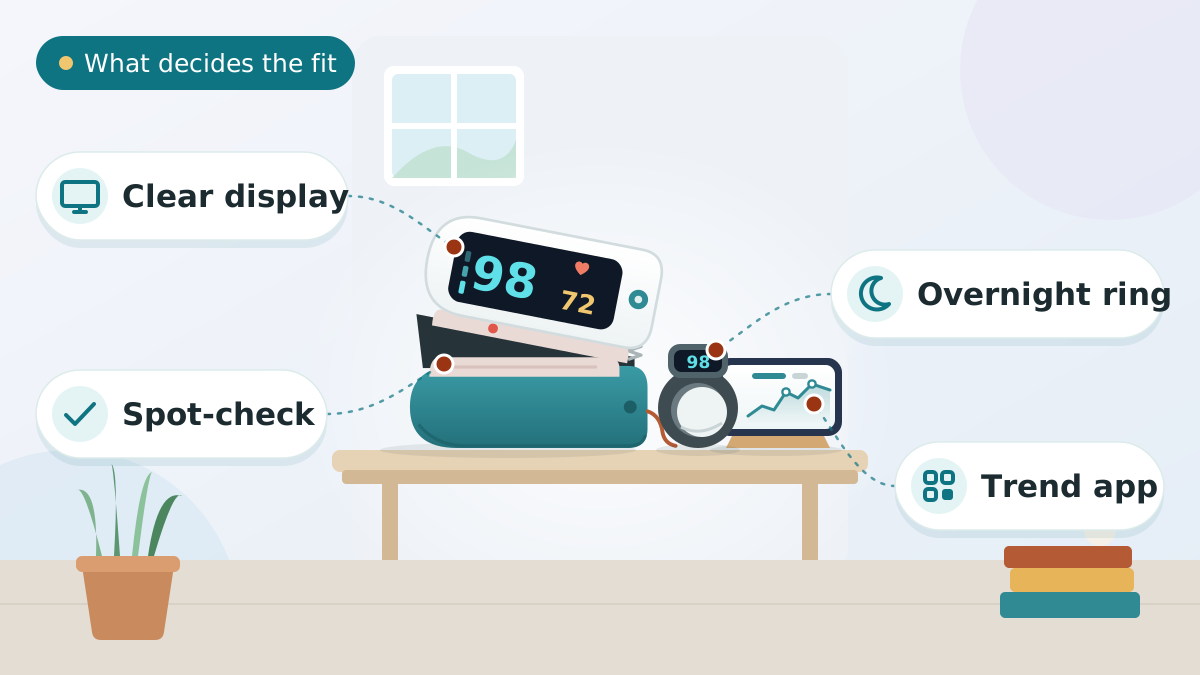
Accuracy — and the skin-tone caveat to know
Pulse oximeters are estimates, not lab tests, and accuracy varies a lot between devices. Most consumer units are classed as wellness products, not FDA-cleared medical devices.
It's also well documented, including in FDA guidance, that oximeters can read falsely high on darker skin, especially at lower oxygen levels, which can mask a real problem. The FDA has issued guidance on this. If accuracy across skin tones matters, ask your clinician or pharmacist for a model validated across skin tones (Masimo and Nonin both publish this validation), and never rely on a single reading to rule out a concern.
Look for a perfusion index
A perfusion index (PI) shows how strong the blood-flow signal is at the fingertip — in other words, whether the reading is trustworthy. It's especially helpful for seniors, who more often have cold hands or reduced circulation.
If the PI is very low, warm the hands and try again rather than trusting the number. A plethysmograph waveform (a steady, regular pulse trace) is another good signal-quality cue.
A display a senior can read
The reading only helps if it can be read easily. Look for a large, bright OLED or LED display with a rotating screen, so the numbers face the user no matter which finger is used.
Auto-on units that start reading as soon as a finger is inserted are easier for anyone with arthritis or limited dexterity.
FDA-cleared vs wellness device
Match the device to the stakes. For general wellness tracking, a well-reviewed consumer oximeter is fine and saves a lot of money.
For managing a real condition such as COPD or heart failure — where readings inform decisions — an FDA-cleared device validated across skin tones, such as those from Masimo or Nonin, is the safer choice — ask your clinician which to use.
Spot-check vs continuous monitoring
Decide whether you need an occasional check or ongoing data.
- Fingertip units give a quick spot reading whenever you want one.
- A continuous ring like the O2Ring tracks oxygen over hours, including sleep, and can alert you to overnight drops.
- Continuous monitors suit sleep apnea or COPD; spot-check units are plenty for most general use.
Read more:Common Post-Surgery Complications in SeniorsPreventing Hospital Readmission in Seniors8 Signs Your Elderly Parent Is Not Recovering Properly
Tips to Choose Pulse Oximeters
Short on time? Here are the key points to weigh before choosing, each covered in detail above:
- Accuracy — and the skin-tone caveat to know
- Look for a perfusion index
- A display a senior can read
- FDA-cleared vs wellness device
- Spot-check vs continuous monitoring
Comparing options? See our guides to Best Blood Pressure Monitors for Seniors, Best Thermometers for Elderly Care, and Best Weight Scales with Large Display for Seniors.
How to get a reliable reading
Technique changes the number as much as the device does:
- Warm cold hands first — cold fingers and poor circulation lower the signal.
- Remove dark or metallic nail polish and any artificial nails.
- Rest your hand on a table, sit still, and don't talk during the reading.
- Wait several seconds for the number to settle, and check the perfusion index or waveform if your device shows one.
- Keep bright light off the sensor, and take a couple of readings to confirm.
What the numbers mean — and when to get help
For most healthy adults, a normal SpO2 is about 95-100%. A reading of 91-94% may be worth a call to a doctor, and consistently 90% or below — or whatever threshold a clinician has set — needs prompt medical attention.
Treat a home reading as a clue, not a diagnosis. Never ignore symptoms or delay care because the number looks reassuring — especially given the skin-tone limitation. If there's shortness of breath, chest pain, confusion, or bluish lips or face, seek emergency care regardless of what the oximeter shows.
Frequently asked questions
A pulse oximeter clips onto a fingertip and estimates the oxygen saturation of your blood (SpO2) and your pulse rate using light sensors. Seniors use them to track trends when managing conditions like COPD, heart failure, asthma, or a respiratory infection. It's a monitoring tool for spotting changes over time, not a device for diagnosing illness on its own.
Good ones are reasonably accurate for tracking trends, but readings are estimates and quality varies. Most consumer oximeters are wellness devices rather than FDA-cleared medical ones, and accuracy drops with cold hands, poor circulation, movement, nail polish, and — importantly — on darker skin. For the most reliable, validated accuracy, look for a model validated across skin tones, such as those from Masimo or Nonin, and ask your clinician which to use.
For most healthy adults, a normal SpO2 is around 95-100%. Some seniors with chronic lung conditions have a lower baseline set by their doctor. As a general guide, 91-94% may warrant a call to a clinician, and consistently 90% or below needs prompt attention — but always follow the specific targets your doctor has given you.
Most are very simple — you clip it on a finger, press a button (or it starts automatically), and read the number. For easier use, choose a model with a large, bright display that rotates so the numbers face you, and an auto-on design that doesn't require fiddly buttons. Cold hands can prevent a reading, so warming up first helps.
Only if you want to log readings automatically or share trends with a doctor. A continuous device like the Wellue O2Ring uses an app to show overnight data, which is genuinely useful for sleep apnea or COPD. For occasional spot checks, a simple non-connected fingertip unit is perfectly adequate — just jot the numbers in a notebook.
Follow your doctor's advice. Many people with a stable chronic condition check once or twice a day, or whenever they feel short of breath or unwell. There's usually no need to check constantly if you feel fine, and fixating on small fluctuations can cause needless worry — focus on clear trends and any symptoms.
No — an oximeter can't diagnose any illness. It can sometimes reveal a drop in oxygen that accompanies conditions like pneumonia or COVID-19, which is why doctors have recommended home monitoring during respiratory illness. But a normal reading doesn't rule anything out, so never use it to decide against seeking care if you have symptoms.
Several things: cold hands and poor circulation, movement during the reading, dark or metallic nail polish and artificial nails, bright ambient light on the sensor, a low battery or poor sensor fit, and skin pigmentation — readings can run falsely high on darker skin. Warming the hands, sitting still, and removing nail polish improve reliability; a perfusion index display tells you if the signal is strong.
Usually not for routine home use. Traditional Medicare may cover oximetry as part of a clinical service or specific oxygen-therapy situations, but a standard home fingertip oximeter is generally an out-of-pocket purchase. Some Medicare Advantage plans, or HSA/FSA funds, may help — check your specific plan.
Fingertip units typically run on AAA batteries that last for many months of occasional use, and most power off automatically to save them. Continuous and ring-style monitors like the O2Ring use a rechargeable battery that lasts a day or more per charge. Keep spare batteries on hand, since a low battery can skew readings.
The final verdict
For most seniors, the Innovo Deluxe iP900AP is the best all-round oximeter — reliable readings, a perfusion index to confirm them, and an easy-to-read display at a fair price. Choose the iHealth Air if you want an FDA-cleared device that logs readings to your phone, and ask your clinician about a model validated across skin tones if readings guide the management of a serious condition. The Zacurate 500 Series is the budget choice for general tracking, and the Wellue O2Ring is the tool for continuous or overnight monitoring. Whatever you pick, remember a home oximeter is a trend tool, not a diagnosis — use good technique, and never delay care based on a single reading.
Our overall winner is the Innovo Deluxe iP900AP. You can check the current price on Amazon.
Our Top 4 Picks at a Glance
Ready to choose? Here are the top 4 again.
Best Overall
Innovo Deluxe iP900AP
Best FDA-Cleared Budget Pick
iHealth Air Bluetooth Pulse Oximeter
Best Value
Zacurate 500 Series
Best for Continuous Monitoring
Wellue O2Ring
Affiliate links — we may earn a commission.
