Preventing Hospital Readmission in Seniors: A Practical At-Home Recovery Plan
Last Updated: February 2026
The first 30 days after hospital discharge are critical. Nearly 1 in 5 seniors returns to the hospital within this window.
Most readmissions can be prevented with careful planning at home. Small steps make a big difference.
This guide shows you how to manage medications, spot warning signs early, prevent falls, and communicate with doctors. These strategies help your loved one heal safely at home.

Careful planning prevents readmission
Caregiver-Reviewed Recovery Guidance
This guide is based on hospital discharge best practices, Medicare readmission data, and real caregiver experiences.
Important: This is educational information only. It does not replace medical advice from your loved one's healthcare team. Always follow your doctor's specific discharge instructions.
Key Points to Remember
First 30 days matter most: Nearly 20% of seniors are readmitted within a month.
Medication errors are common: Confusion about new prescriptions causes many readmissions.
Watch for warning signs: Fever, confusion, and weakness need immediate attention.
Falls are preventable: Most post-hospital falls happen at home and can be avoided.
Follow-up appointments save lives: Seeing the doctor within 7-14 days reduces readmission risk.
You can do this: With the right plan, most seniors recover safely at home.
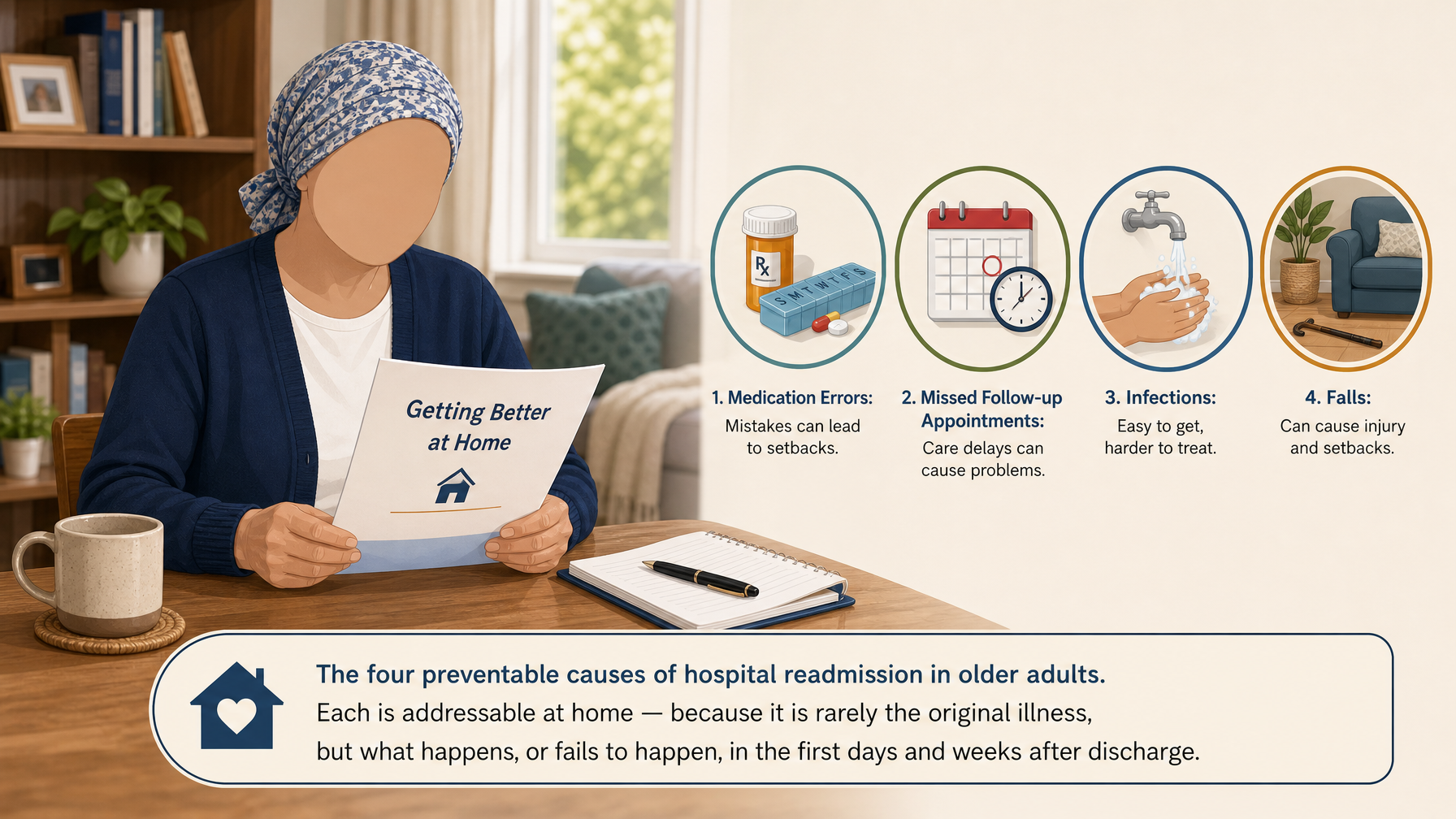
Why Seniors Are Readmitted to the Hospital
Understanding the most common causes helps you prevent them. Here's what sends seniors back:
1. Medication Errors
Why it happens: Hospitals change medications. Seniors take old pills by mistake. Doses get confused. Side effects go unnoticed.
The result: Dangerous drug interactions, worsening conditions, or new health problems.
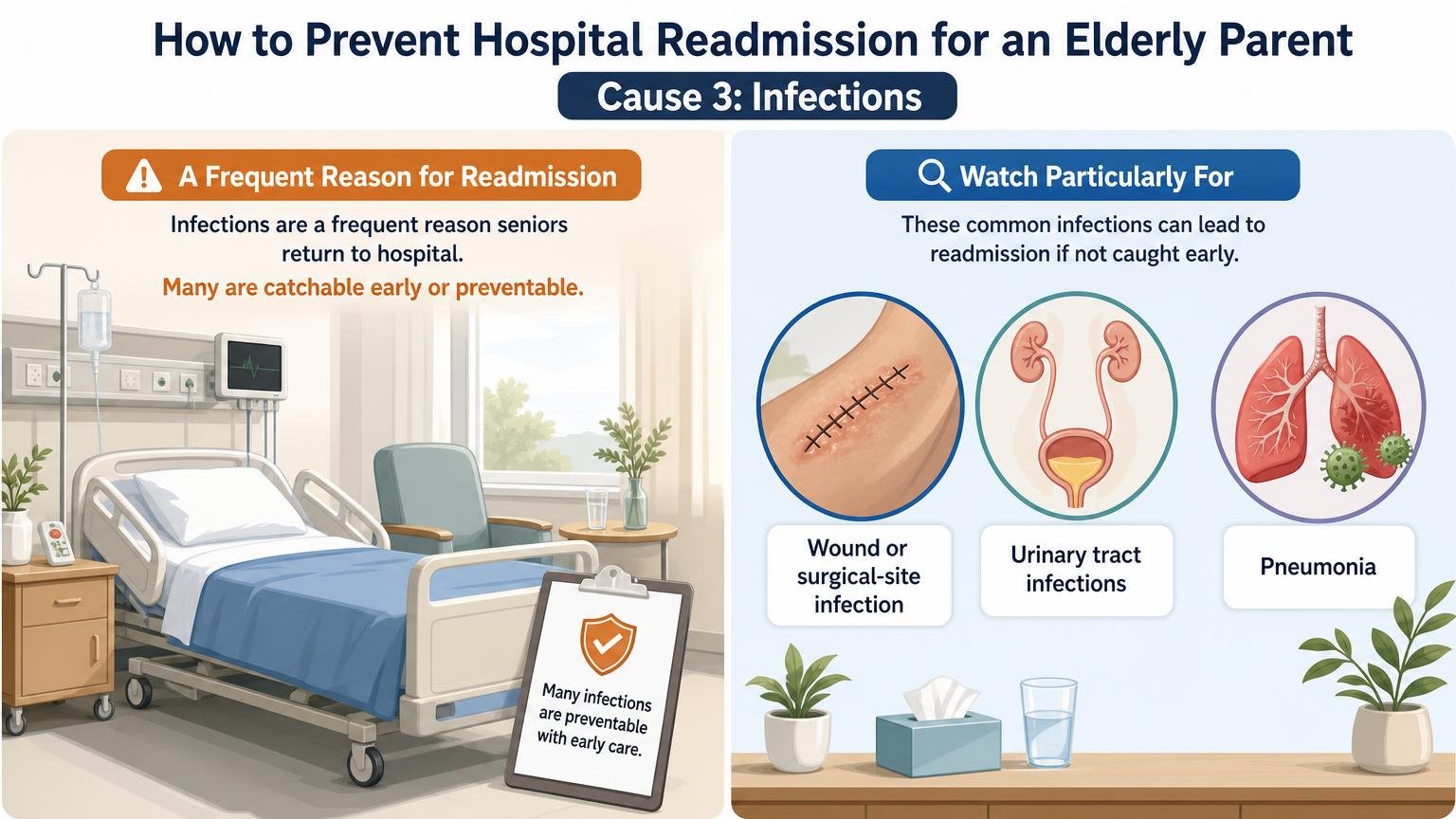
2. Infection
Why it happens: Weakened immune system after illness. Surgical wounds. UTIs from catheters. Pneumonia from bed rest.
The result: Fever, confusion, rapid decline requiring emergency care.
3. Dehydration
Why it happens: Poor appetite. Difficulty drinking enough. Fear of bathroom trips. Diuretic medications.
The result: Dizziness, confusion, kidney problems, falls.
4. Falls
Why it happens: Post-hospital weakness. Dizziness from medications. Unsafe home environment. Trying to do too much too soon.
The result: Fractures, head injuries, or complications requiring hospitalization.
5. Poor Follow-Up Care
Why it happens: No follow-up appointment scheduled. Transportation problems. Confusion about discharge instructions.
The result: Complications go undetected until they become emergencies.
6. Worsening Chronic Conditions
Why it happens: Heart failure, COPD, or diabetes not properly managed at home. Missed medications. Poor diet.
The result: Original condition flares up, requiring emergency treatment.
Good news: All of these causes are preventable with careful planning and monitoring. For a complete recovery framework, read our Post-Hospital Recovery at Home Guide.
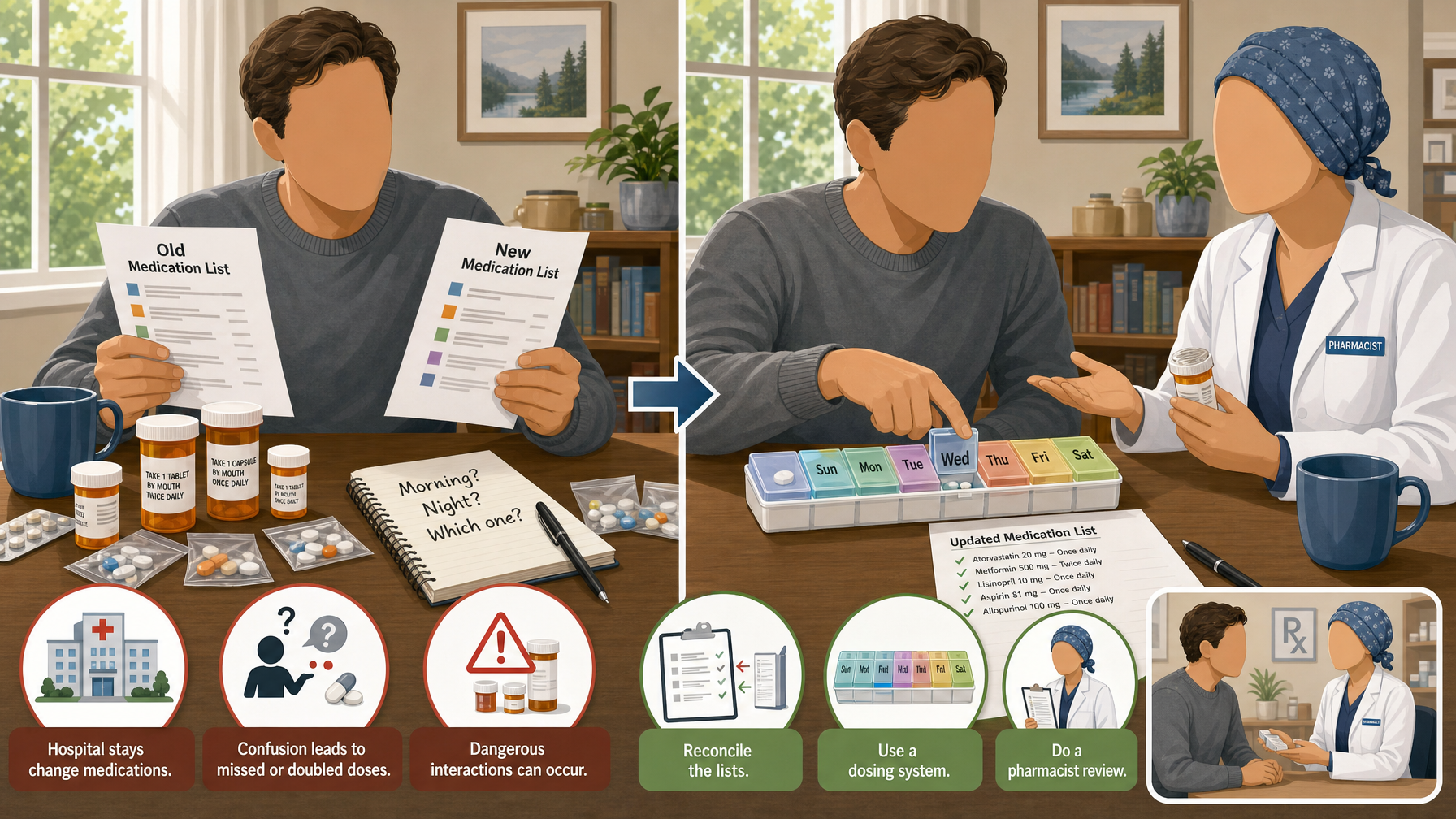
Proper medication management prevents most readmissions
The First 7 Days After Discharge: Your Action Plan
The first week is the most critical. Follow these steps to set up for success:
Review Discharge Paperwork Immediately
Before leaving the hospital, make sure you understand everything. Ask the nurse or discharge planner to explain:
- What was treated: The diagnosis and procedures performed
- Medication changes: What's new, what stopped, what changed doses
- Activity restrictions: What they can and cannot do
- Warning signs: Symptoms that require immediate medical attention
- Follow-up plan: When and where to see the doctor
Caregiver tip: Take photos of all discharge papers with your phone. You can reference them anytime.
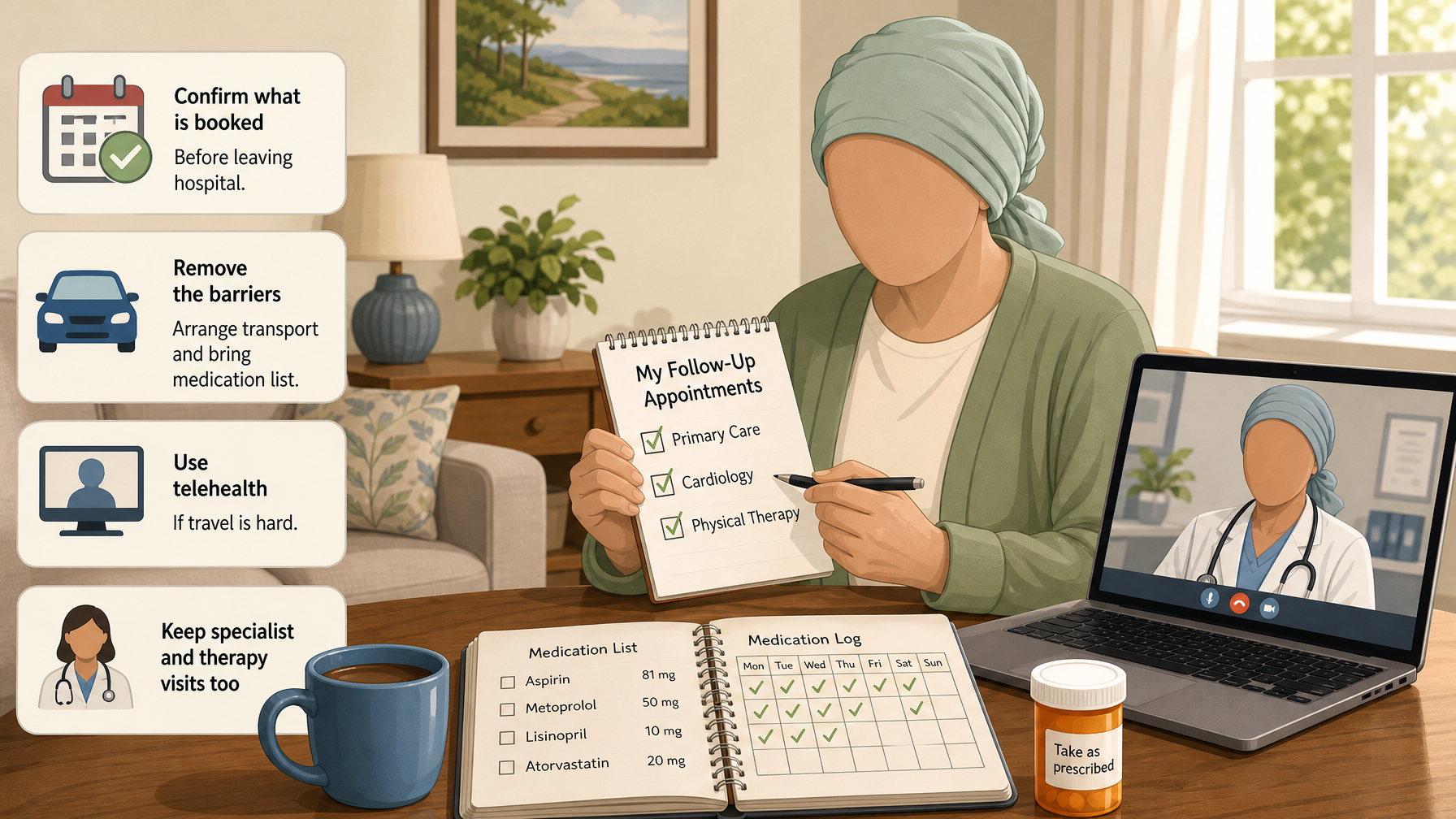
Schedule Follow-Up Appointment Within 7-14 Days
This is the single most important step. Seniors who see their doctor within two weeks have much lower readmission rates.
Schedule Before You Leave
Ask the hospital to make the appointment before discharge. Don't wait until you get home.
Arrange Transportation
Line up a ride now. Many seniors miss appointments due to transportation issues.
Set Multiple Reminders
Put it on the calendar. Set phone alarms. Write it on the fridge.
Prepare Questions
Write down concerns as they come up during the week.
Confirm All Medication Changes
Medication confusion is the #1 cause of preventable readmissions. Take these steps immediately:
Get a complete medication list
Ask for a printed list showing medication name, dose, frequency, and purpose.
Compare with old medications
Gather all pill bottles from home. Check which ones to stop and which to continue.
Fill prescriptions right away
Don't wait. Go to the pharmacy on the way home from the hospital.
Ask the pharmacist to review everything
Pharmacists can spot potential problems and explain how to take each medication.
Monitor Symptoms Closely
Small changes can signal big problems. Watch for these warning signs every day:
Fever over 100.4°F
Increased confusion or disorientation
Shortness of breath or chest pain
Swelling in legs or feet
Not eating or drinking
Extreme weakness or fatigue
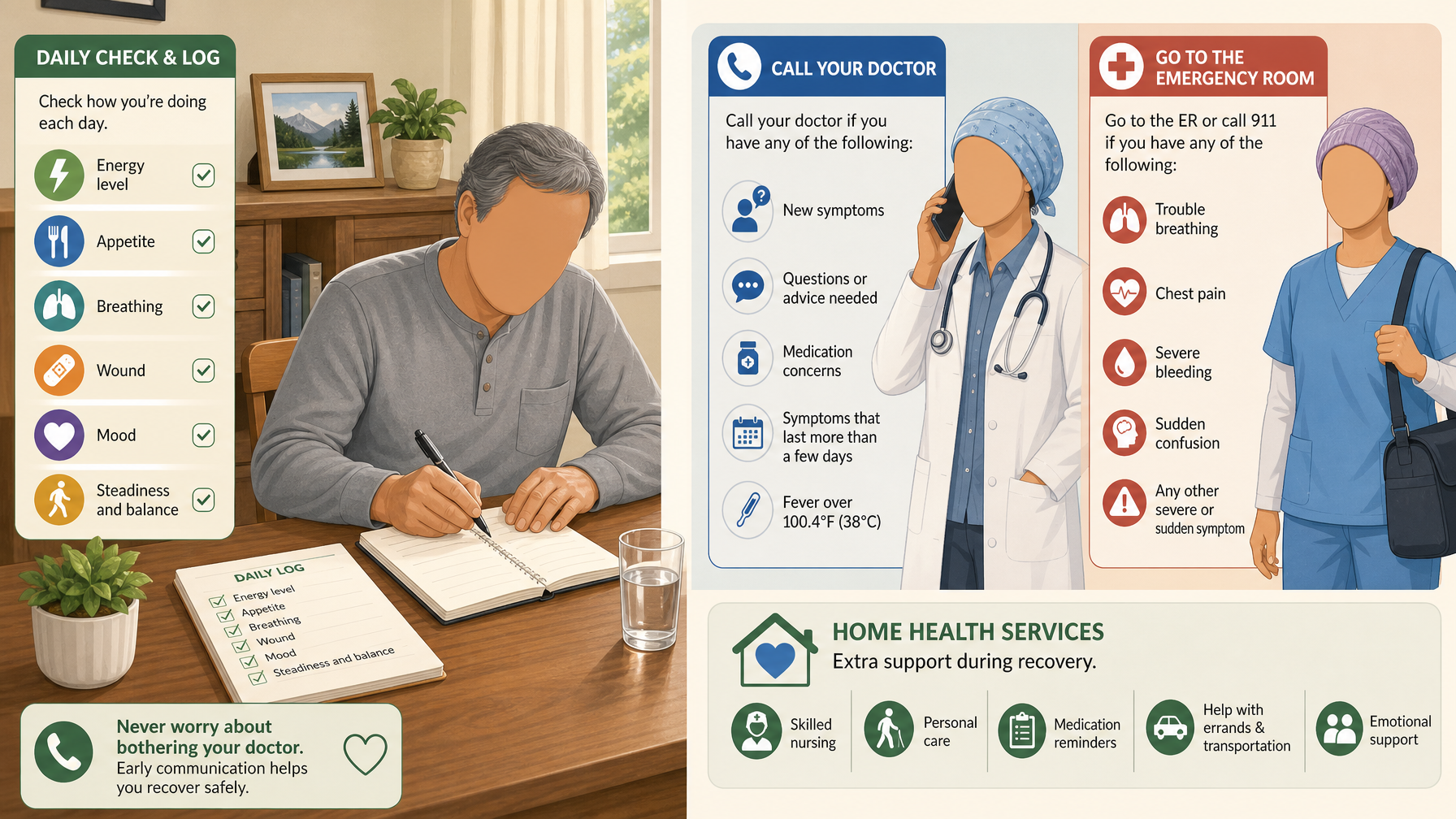
When to Call the Doctor During the First Week
Don't hesitate to call. It's better to ask about something small than to wait until it becomes an emergency.
Call Immediately If:
- • Fever over 101°F
- • Severe pain not controlled by medication
- • Difficulty breathing
- • Chest pain or pressure
- • Sudden confusion or unresponsiveness
- • Vomiting or unable to keep down fluids
- • Signs of infection at surgical site
Call Same Day If:
- • Low-grade fever (100-101°F)
- • Increased swelling or redness
- • Not eating or drinking for 24 hours
- • New or worsening pain
- • Dizziness or lightheadedness
- • Questions about medications
- • Any symptom that worries you
Medication Management Is Critical
Up to 50% of medication errors happen during transitions from hospital to home. Here's how to prevent them:
Create an Updated Medication List
Make a clear chart showing all current medications. Include:
Medication Name
Both generic and brand names if available
Dose and Strength
Example: 10 mg, 500 mg, 1 tablet
When to Take It
Specific times: 8 AM, 2 PM, 8 PM, bedtime
With or Without Food
Some medications must be taken with meals
What It's For
Blood pressure, pain, infection, etc.
How Long to Take It
Some are temporary, others are ongoing
Side Effects to Watch For
Dizziness, nausea, confusion, etc.
Prescribing Doctor
Who to call with questions
Watch for Side Effects
New medications can cause problems. Call the doctor if you notice:
- Dizziness or lightheadedness when standing
- Nausea or vomiting after taking medication
- Increased confusion or drowsiness
- Rash or itching (possible allergic reaction)
- Diarrhea or constipation that's new
- Rapid heartbeat or irregular pulse
Use a Pill Organizer
A weekly pill organizer prevents missed doses and double-dosing. Here's how to use one safely:
- Fill it once a week on the same day
- Use good lighting to avoid mistakes
- Double-check each compartment before closing
- Keep the organizer visible where you'll see it
- Set phone alarms for medication times
Never Stop Medications Without Asking the Doctor
Even if your loved one feels better, don't stop medications early. Stopping antibiotics too soon can cause infections to return. Stopping blood pressure medication suddenly can be dangerous. Always check with the doctor first.
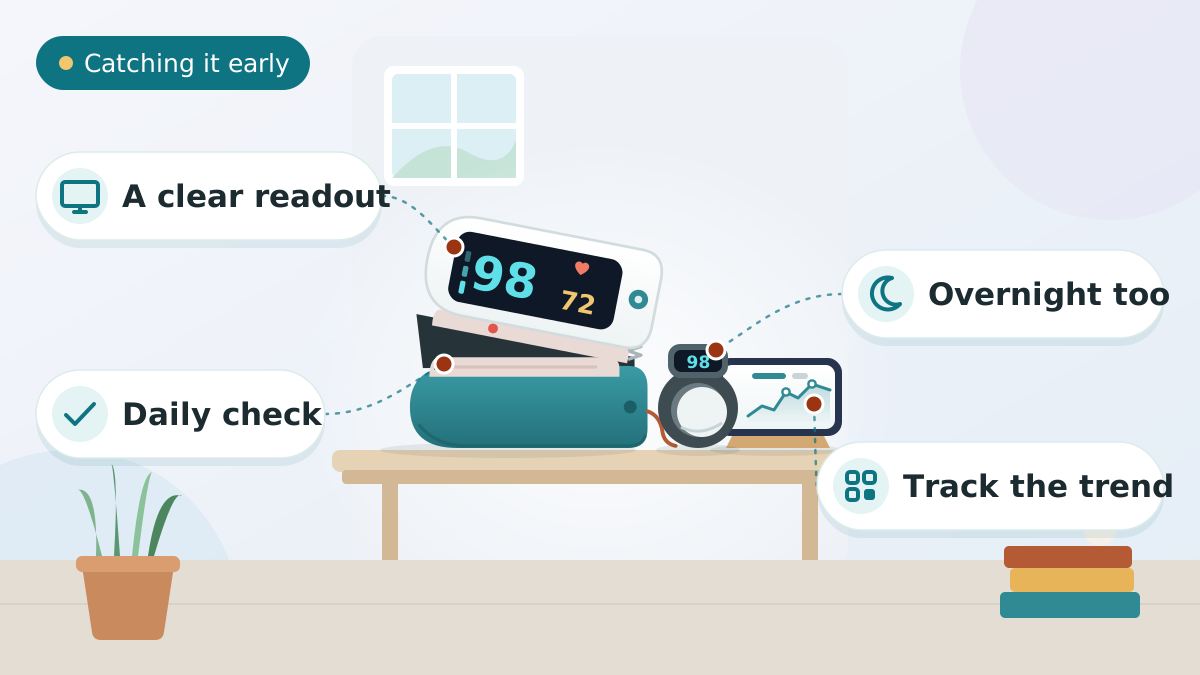
Regular monitoring catches problems before they become emergencies
Early Warning Signs That Need Immediate Attention
Catching problems early prevents readmission. Call the doctor right away if you see these signs:
Fever
What to watch for: Temperature over 100.4°F, chills, sweating, feeling hot to the touch.
Why it matters: Fever often signals infection. In seniors, infections can become serious quickly.
Increased Confusion
What to watch for: Not recognizing family, forgetting where they are, unusual agitation, seeing things that aren't there.
Why it matters: Sudden confusion can signal infection, medication problems, or dehydration.
Shortness of Breath
What to watch for: Breathing faster than normal, gasping for air, unable to speak in full sentences, lips or fingernails turning blue.
Why it matters: Can indicate heart failure, pneumonia, or blood clots.
Swelling
What to watch for: Legs, ankles, or feet becoming puffy. Shoes suddenly too tight. Pressing on skin leaves a dent.
Why it matters: May signal heart failure, kidney problems, or blood clots.
Not Eating or Drinking
What to watch for: Refusing meals for more than 24 hours, drinking less than 4 cups of fluid daily, dry mouth, dark urine.
Why it matters: Dehydration and malnutrition slow healing and increase infection risk.
Extreme Weakness
What to watch for: Cannot get out of bed, legs giving out, too weak to hold a cup, sleeping 20+ hours a day.
Why it matters: Severe weakness increases fall risk and may indicate complications.
Go to the Emergency Room If:
Real Caregiver Stories
These caregivers prevented readmission by staying alert:
Carol, 58 - Mother's Heart Surgery
"Mom came home with six new medications. I made a chart showing what to take and when. On day 4, she seemed confused and tired. I called the doctor right away. One medication was causing low blood pressure. They adjusted it, and she improved within hours. That phone call saved us from going back to the ER."
What helped: Medication chart and calling doctor at first sign of trouble
David, 62 - Father's Hip Replacement
"Dad was determined to walk on his own too soon. I set up grab bars in the bathroom and kept his walker next to his bed. On night 3, he tried to get up without it. I heard him and helped him back to bed. We made a rule: no walking without the walker for two weeks. He stayed safe and healed perfectly."
What helped: Safety equipment and clear rules about mobility
Patricia, 55 - Husband's Pneumonia
"My husband came home weak and barely eating. I tracked his food and water intake every day. By day 5, he had only drunk 3 cups of water total. I called the doctor, and they sent a home health nurse. She gave him IV fluids at home. His appetite came back, and he avoided going back to the hospital."
What helped: Tracking intake and calling for home health support
Preventing Falls During Recovery
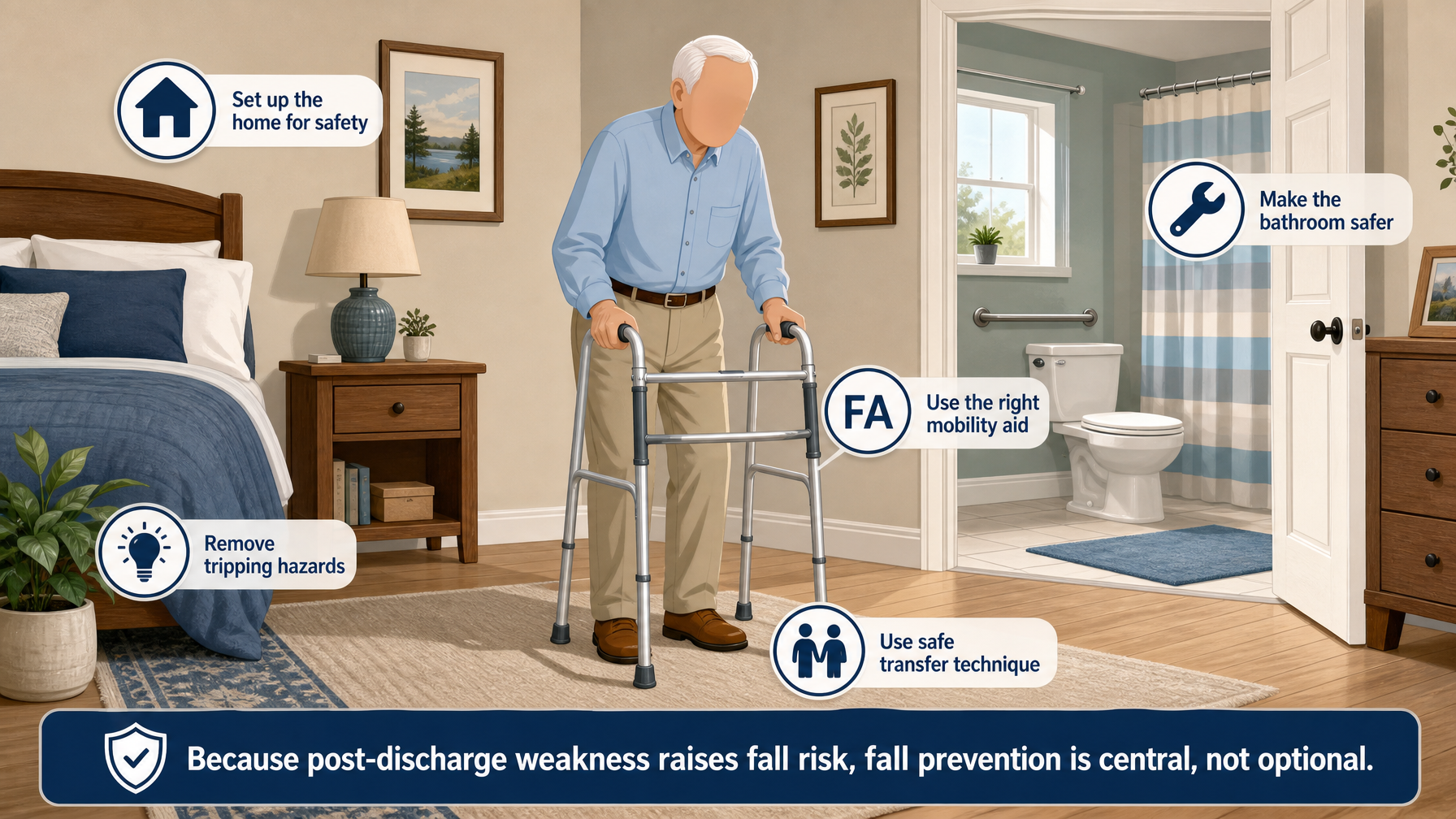
Falls are a leading cause of hospital readmission. Post-hospital weakness makes seniors especially vulnerable. Here's how to keep them safe:
Clear All Walkways
Before your loved one comes home, walk through the house and remove hazards:
Remove throw rugs
Even small rugs can cause trips
Clear clutter from floors
Shoes, bags, cords, magazines
Tape down electrical cords
Use cord covers or tape them to baseboards
Move furniture if needed
Create wide, clear paths for walkers
Remove pets from walkways
Dogs and cats can cause trips
Secure loose carpet edges
Use double-sided tape or tacks
Keep floors dry
Wipe up spills immediately
Arrange furniture for support
Place sturdy furniture along walking paths
Improve Lighting Throughout the Home
Poor lighting causes falls, especially at night. Make these changes:
Install night lights
Place them in hallways, bathrooms, and bedrooms
Use motion-sensor lights
They turn on automatically when someone walks by
Replace dim bulbs
Use brighter bulbs in all rooms
Keep a flashlight by the bed
In case of power outages
Light the path to the bathroom
Most nighttime falls happen on bathroom trips
Install light switches at both ends
Of hallways and stairways
Use Proper Assistive Devices
Don't let pride prevent safety. Most post-hospital seniors need temporary support:
Walker or Rollator
Provides maximum stability. Essential for the first 2-4 weeks after major surgery or illness.
Shop Walkers →Grab Bars
Install in bathroom near toilet and shower. Prevents falls during transfers.
Shop Grab Bars →Shower Chair
Sitting while bathing prevents exhaustion and slipping. Critical for first month.
Shop Shower Chairs →Supervise Transfers and Bathroom Trips
Most falls happen during transfers: getting in and out of bed, chairs, or the toilet. Stay nearby during these high-risk moments:
Getting Out of Bed
- • Sit on edge of bed for 30 seconds first
- • Use bed assist handle if available
- • Stand slowly to avoid dizziness
- • Reach for walker before taking steps
Using the Toilet
- • Install grab bars on both sides
- • Use raised toilet seat if needed
- • Keep walker within arm's reach
- • Stay nearby to help if needed
Sitting in Chairs
- • Use chairs with armrests
- • Back up until legs touch the seat
- • Lower slowly using armrests
- • Avoid low, soft chairs
Nighttime Bathroom Trips
- • Turn on lights before getting up
- • Use motion-sensor night lights
- • Consider bedside commode for first week
- • Never rush in the dark
Don't Let Them Walk Alone for the First 2 Weeks
Even if they seem steady, post-hospital weakness can cause sudden dizziness. Stay within arm's reach during all walking and transfers for at least the first two weeks.
Safe mobility equipment prevents falls during recovery
Preventing Infection and Dehydration
These two complications are common but preventable. Here's how to protect your loved one:
Preventing Infection
Wash Hands Frequently
Before and after helping with care. Before handling medications or food. After bathroom use.
Keep Wounds Clean and Dry
Follow discharge instructions exactly. Change dressings as directed. Watch for redness, swelling, or drainage.
Monitor for UTI Signs
Burning with urination, strong odor, sudden confusion. UTIs are very common after hospitalization.
Encourage Deep Breathing
Prevents pneumonia. Have them take 10 deep breaths every hour while awake.
Limit Visitors If Sick
Anyone with a cold or flu should stay away during the first two weeks.
Preventing Dehydration
Offer Fluids Every Hour
Small sips throughout the day work better than large amounts at once. Aim for 6-8 cups daily unless doctor says otherwise.
Make Water Accessible
Keep a water bottle or cup within arm's reach at all times. Use cups with handles and lids to prevent spills.
Offer Variety
Water, juice, broth, popsicles, gelatin. Different options encourage drinking.
Watch for Dehydration Signs
Dark urine, dry mouth, dizziness, confusion, reduced urination. Call doctor if you see these.
Track Daily Intake
Write down how many cups they drink. Share this with the doctor at follow-up.
Check With Doctor About Fluid Restrictions
Some conditions like heart failure or kidney disease require limiting fluids. Always follow your doctor's specific instructions about how much to drink.
Follow-Up Appointments and Doctor Communication
Good communication with healthcare providers prevents readmission. Here's how to make the most of follow-up care:
Prepare for the Follow-Up Appointment
Don't just show up. Bring these items and information:
Bring These Documents
- • Hospital discharge paperwork
- • Complete medication list
- • Insurance cards
- • Your symptom tracking log
- • List of questions
Questions to Ask
- • Is recovery progressing normally?
- • When can activity levels increase?
- • Are medications working correctly?
- • What symptoms should worry us?
- • When is the next appointment?
Share This Information
- • Any new symptoms or concerns
- • Medication side effects
- • Pain levels and patterns
- • Eating and drinking habits
- • Sleep quality
- • Mobility and activity level
Communication Tips
- • Write down the doctor's answers
- • Ask them to repeat if unclear
- • Bring a second person if possible
- • Request written instructions
- • Get direct phone number for questions
When to Call Between Appointments
Don't wait for the next appointment if something concerns you. Call the doctor's office if:
Any new symptom appears
Even if it seems minor
Existing symptoms worsen
Pain increases, swelling grows, etc.
Medication questions arise
Side effects, confusion about dosing
Recovery seems slower than expected
Not improving after 1-2 weeks
They refuse to eat or drink
For more than 24 hours
A fall occurs
Even if no visible injury
You feel overwhelmed
Ask about home health services
Anything worries you
Trust your instincts
Caregiver tip: Keep the doctor's office number and after-hours line saved in your phone. Know who to call for urgent questions.
What to Tell the Doctor
Be specific when describing symptoms. Vague descriptions make diagnosis harder. Use this format:
Vague (Not Helpful)
- • "She's not doing well"
- • "He seems off"
- • "Something's wrong"
- • "She's confused"
Specific (Very Helpful)
- • "She has a fever of 101.2°F since this morning"
- • "He's dizzy when standing for the past 2 days"
- • "Her surgical site is red and warm to touch"
- • "She doesn't recognize me and thinks it's 1985"
Include these details: When it started, how often it happens, what makes it better or worse, and how it compares to yesterday.
Daily Recovery Checklist
Use this simple checklist every day for the first 30 days:
Morning Check
- Give morning medications on time
- Check for fever or confusion
- Encourage breakfast and fluids
- Help with bathing or hygiene
Midday Check
- Give lunch medications
- Monitor pain levels
- Encourage light activity or rest
- Track food and fluid intake
Evening Check
- Give evening medications
- Check surgical sites or wounds
- Review the day's symptoms
- Prepare for safe nighttime bathroom trips
Before Bed
- Give bedtime medications
- Turn on night lights
- Place walker or cane within reach
- Keep phone nearby for emergencies
Common Mistakes That Lead to Readmission
Avoid these mistakes that send seniors back to the hospital:
Skipping Follow-Up Appointments
Why it's risky: Doctors need to check healing progress and adjust medications. Missing appointments means problems go undetected.
Do this instead: Schedule the follow-up before leaving the hospital. Put it on the calendar. Set phone reminders.
Continuing Old Medications
Why it's risky: Hospitals often stop or change medications. Taking old pills alongside new ones can cause dangerous interactions.
Do this instead: Review the discharge paperwork with a pharmacist. Ask which medications to stop and which to continue.
Ignoring Small Warning Signs
Why it's risky: A low-grade fever or slight confusion can quickly become a serious infection or complication.
Do this instead: Call the doctor about any change, even if it seems minor. Early intervention prevents emergencies.
Letting Them Walk Alone Too Soon
Why it's risky: Post-hospital weakness makes falls extremely common. A fall can cause fractures or head injuries requiring readmission.
Do this instead: Use a walker or cane. Stay nearby during transfers. Install grab bars in the bathroom.
Not Asking for Help
Why it's risky: Caregiver exhaustion leads to mistakes. You cannot watch someone 24/7 alone.
Do this instead: Ask family to help. Request home health services. Use respite care if needed.
When Home Health Services Can Help
Medicare often covers home health visits after hospitalization. These services reduce readmission risk significantly:
Skilled Nursing
- Wound care and dressing changes
- Medication management and education
- Vital sign monitoring
- IV therapy if needed
Physical Therapy
- Safe walking and transfer training
- Strength and balance exercises
- Proper use of mobility aids
- Fall prevention strategies
Occupational Therapy
- Daily living skills training
- Home safety assessment
- Adaptive equipment recommendations
- Energy conservation techniques
Home Health Aide
- Bathing and personal care
- Light housekeeping
- Meal preparation
- Companionship and supervision
Medicare Coverage: If you're homebound and need skilled care, Medicare Part A or B may cover home health services. Ask the hospital discharge planner about eligibility.
Proper nutrition and hydration support healing
Tracking Recovery Progress
Keep a simple log to share with doctors. Track these daily:
What to Track
Medications taken
Time and dose for each medication
Temperature
Check morning and evening if recovering from infection
Food and fluid intake
Rough estimate of meals and cups of water
Bathroom patterns
Frequency and any changes
Pain levels
Rate 1-10 and note location
Activity level
How much they walked or moved
Sleep quality
Hours slept and any nighttime issues
Any new symptoms
Even small changes matter
Tracking Tips
Use a Simple Notebook
Keep it by the bedside. Write down observations as they happen.
Take Photos
If there's a wound or rash, take daily photos to show the doctor.
Set Phone Reminders
Alarms help you remember medication times and temperature checks.
Bring the Log to Appointments
Doctors need this information to adjust treatment plans.
Recovery Timeline: What to Expect
Every person heals differently, but here's a general timeline for post-hospital recovery:
Days 1-3: Highest Risk Period
Your loved one will be very weak and tired. They may sleep most of the day. This is normal.
Focus on: Medication schedule, preventing falls, watching for fever or confusion, ensuring they drink fluids.
Days 4-7: Adjustment Week
Energy may improve slightly. Appetite should start returning. Pain should be manageable.
Focus on: Follow-up appointment, establishing daily routine, gentle movement, monitoring wound healing.
Weeks 2-4: Gradual Improvement
Strength slowly returns. They may start doing more activities. Mood often improves.
Focus on: Building stamina, continuing therapy exercises, maintaining medication schedule, preventing setbacks.
After 30 Days: Continued Recovery
Readmission risk drops significantly. Most seniors feel much stronger. Some may still need ongoing support.
Focus on: Maintaining gains, transitioning to long-term care plan, addressing any lingering issues.
Remember: Everyone Heals at Their Own Pace
Some seniors bounce back quickly. Others need months. Both are normal. Don't compare your loved one to others.
More Helpful Guides
Learn more ways to support safe recovery at home:
Medical Disclaimer
This guide provides educational information only. It is not medical advice and does not replace professional healthcare guidance.
Always follow your doctor's specific discharge instructions. Every patient's situation is different. Your healthcare team knows your loved one's medical history and needs.
Call your doctor or go to the emergency room if you have any concerns about your loved one's recovery. Do not delay seeking medical care because of information in this guide.
This content is for caregivers supporting seniors after hospital discharge. It is based on general medical guidelines and caregiver experiences, but individual circumstances vary.
Frequently Asked Questions
Ready to Support Safe Recovery?
Get the complete post-hospital care roadmap