
Skilled Nursing Facilities: What Medicare Actually Covers

This is the one level of care Medicare actually pays for — but only under specific conditions, for a limited time, and one classification mistake by the hospital can void it entirely.
Key takeaways
- Skilled nursing means round-the-clock licensed medical care — wound care, IV medication, rehab therapy — not the custodial help assisted living provides
- Medicare Part A covers up to 100 days per benefit period, but only when specific conditions are met, not automatically after any hospital stay
- The biggest trap: your hospital stay must be classified as formal "inpatient" admission, not "observation status," or the SNF benefit doesn’t apply at all
- Days 1–20 are covered in full; days 21–100 require a daily coinsurance; day 101 onward is entirely out of pocket
- This is short-term, rehabilitation-focused coverage — Medicare does not cover an ongoing, long-term nursing home stay once the skilled-care need ends
Quick answer
Does Medicare cover a nursing home?
Only under specific, limited conditions, and only for skilled nursing — not long-term custodial nursing home care. Medicare Part A covers up to 100 days in a Medicare-certified skilled nursing facility, but only after a qualifying 3+ day inpatient hospital stay, only if you’re admitted within 30 days of discharge, and only while you still need daily skilled nursing or rehabilitation. Once that skilled need ends, or day 100 is reached, Medicare coverage stops.
What "skilled nursing" actually means
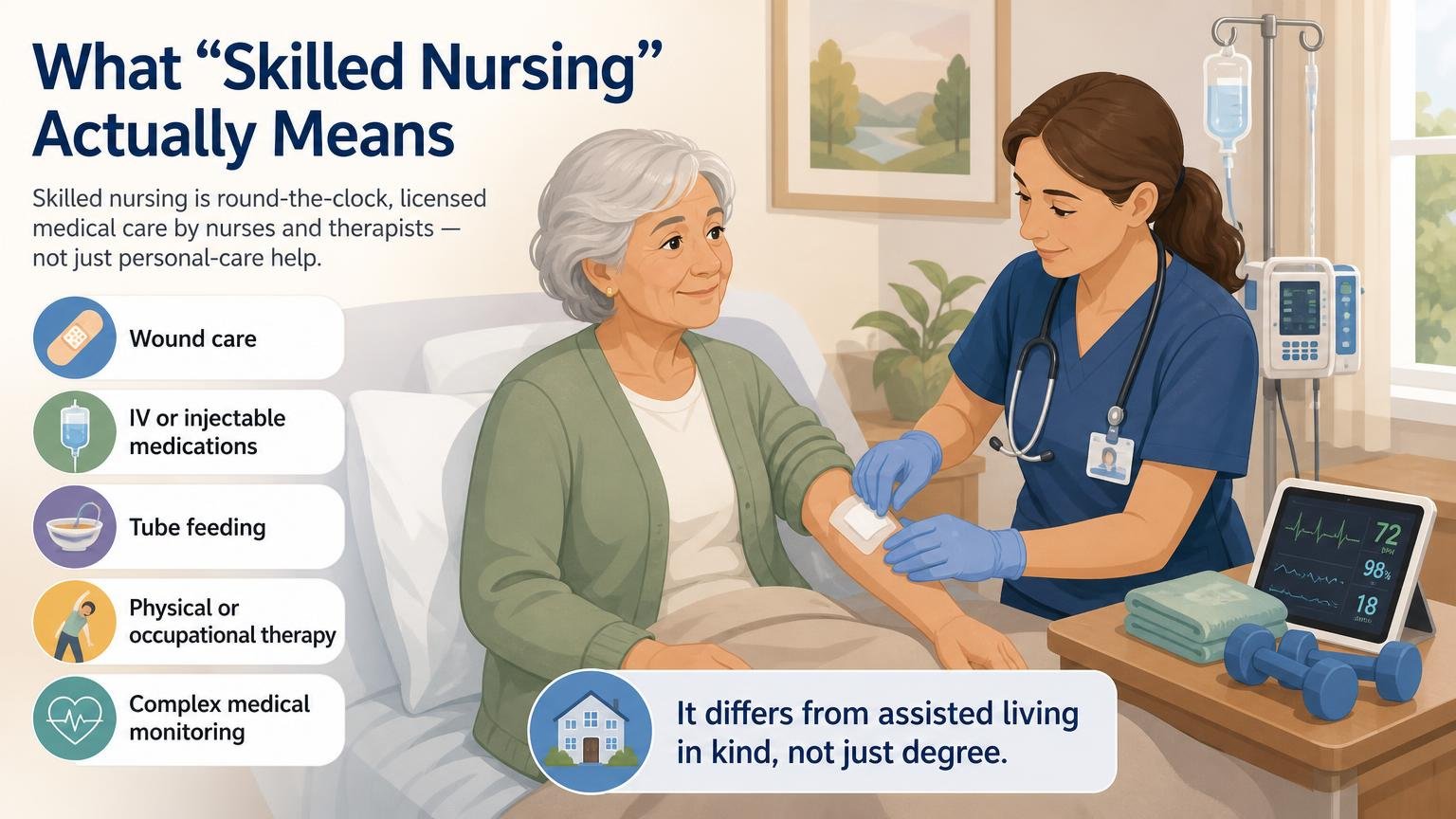
Skilled nursing is round-the-clock, licensed medical care: wound care, IV or injectable medications, tube feeding, physical or occupational therapy, and complex medical monitoring that requires a nurse or therapist, not just personal-care help. It differs from assisted living in kind, not just degree — assisted living provides help with daily tasks; skilled nursing provides actual medical treatment delivered by licensed staff.
Skilled nursing facilities also provide short-term rehabilitation after a hospital stay — this is the most common way people actually encounter one, and it’s where Medicare’s coverage applies.
The exact conditions Medicare requires
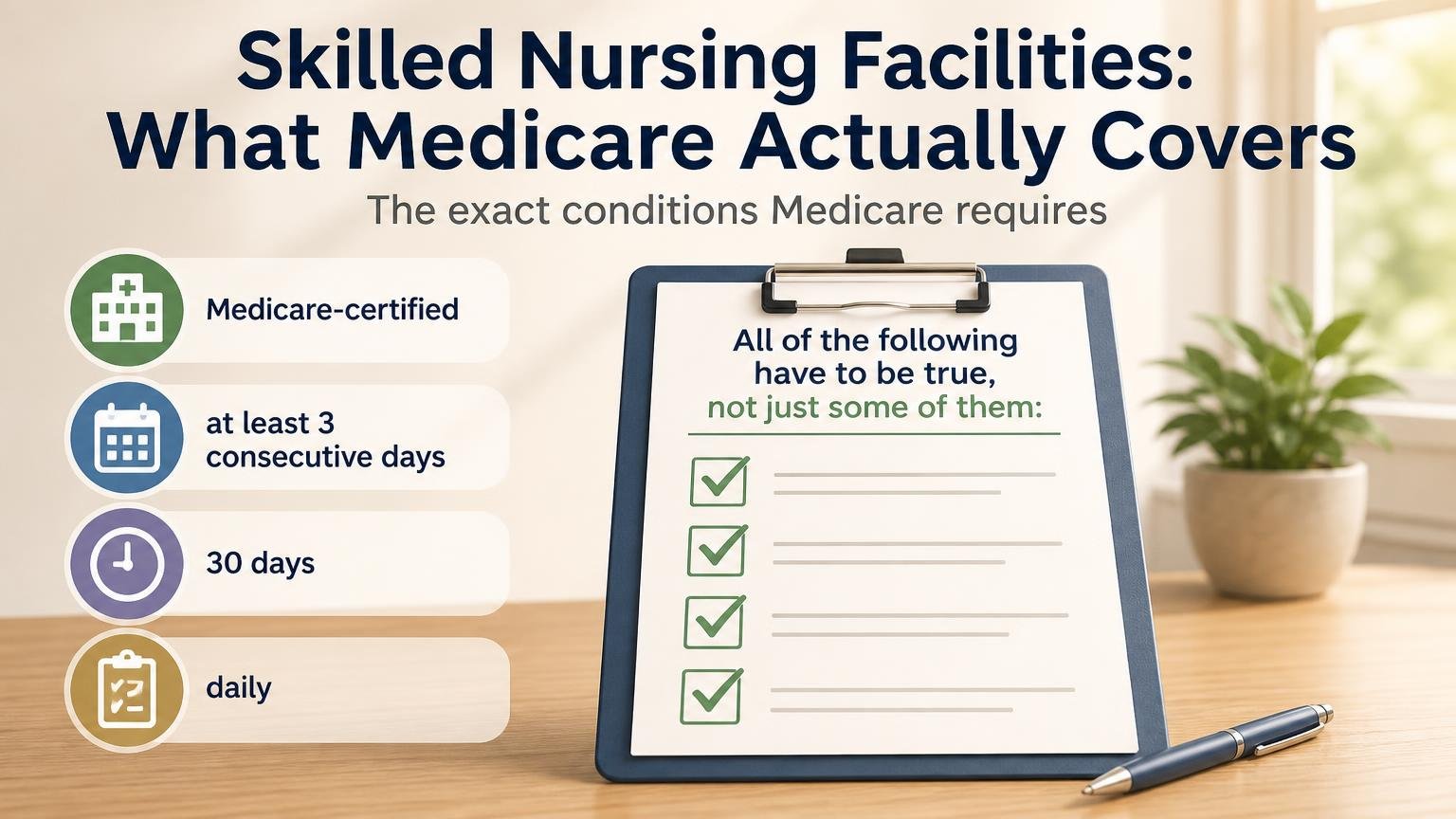
All of the following have to be true, not just some of them:
- A qualifying inpatient hospital stay of at least 3 consecutive days — not counting the day of discharge, and not counting time spent under "observation status" (more on that below).
- Admission to a Medicare-certified skilled nursing facility within 30 days of that hospital discharge.
- A doctor certifies you need daily skilled nursing care or skilled rehabilitation services.
- The care given actually requires the involvement of skilled nursing or therapy staff — care that could be given by non-professional staff doesn’t qualify, even if it happens inside a skilled nursing facility.
Miss any one of these and Medicare doesn’t cover the stay — including the single most common reason families are caught off guard, covered next.
The trap that catches families off guard: observation status
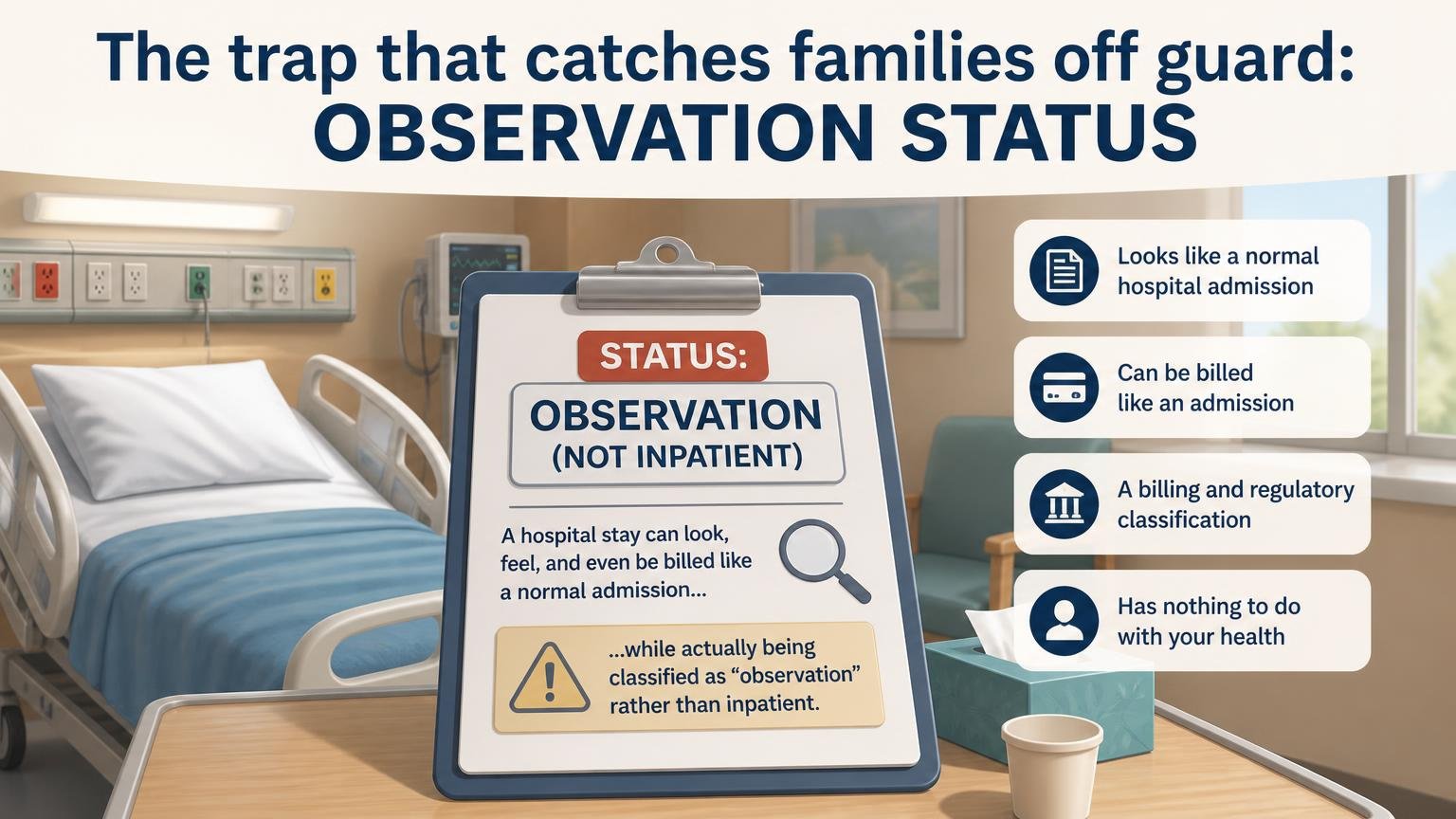
A hospital stay can look, feel, and even be billed like a normal admission while actually being classified as "observation" rather than formal inpatient status — a distinction made by the hospital for billing and regulatory reasons that has nothing to do with how sick someone is or how many nights they spend in a bed. Observation status does not count toward the 3-day qualifying stay, at all, no matter how many nights were spent in the hospital.
This has caught enough families off guard that it’s worth asking directly, while still in the hospital: "Am I formally admitted as an inpatient, or am I under observation?" The hospital is required to tell you if you ask, and for stays that may lead to a nursing facility, this single question can be the difference between a covered stay and a fully out-of-pocket one.
What you actually pay, days 1 through 100+
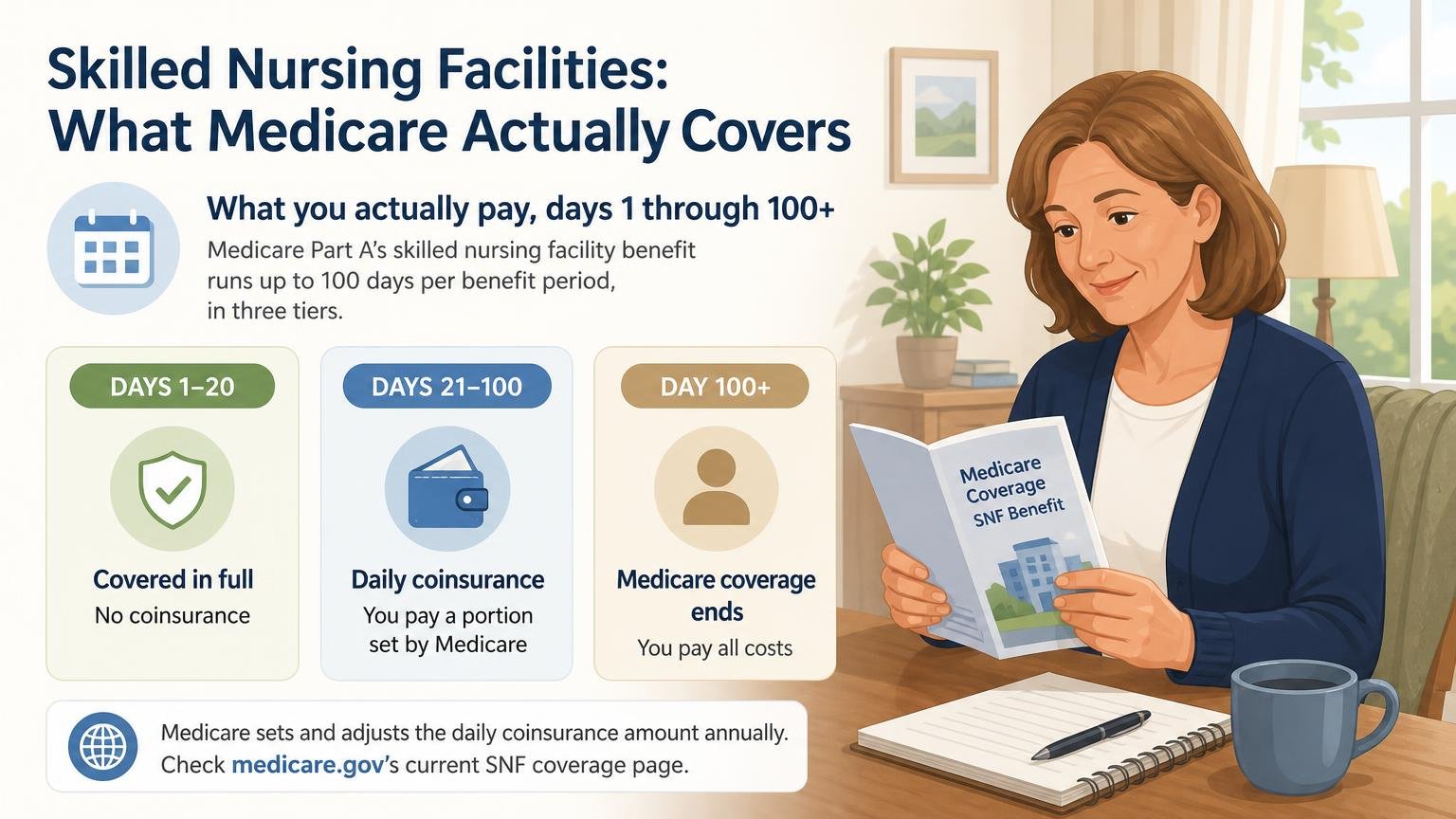
Medicare Part A’s skilled nursing facility benefit runs up to 100 days per benefit period, in three tiers: days 1–20 are covered in full, no coinsurance. Days 21–100 require a daily coinsurance amount that Medicare sets and adjusts annually — check medicare.gov’s current SNF coverage page for this year’s exact figure rather than relying on a number that will be out of date by the time you need it. Day 101 onward, you pay the full cost yourself.
A Medigap (Medicare Supplement) policy can cover some or all of the days 21–100 coinsurance, if you have one — worth checking your specific policy. If your break in skilled care lasts 60 days or more, your benefit period resets and a new 100-day benefit becomes available, but that requires a fresh qualifying hospital stay to trigger it again.
When Medicare coverage ends, and what comes after
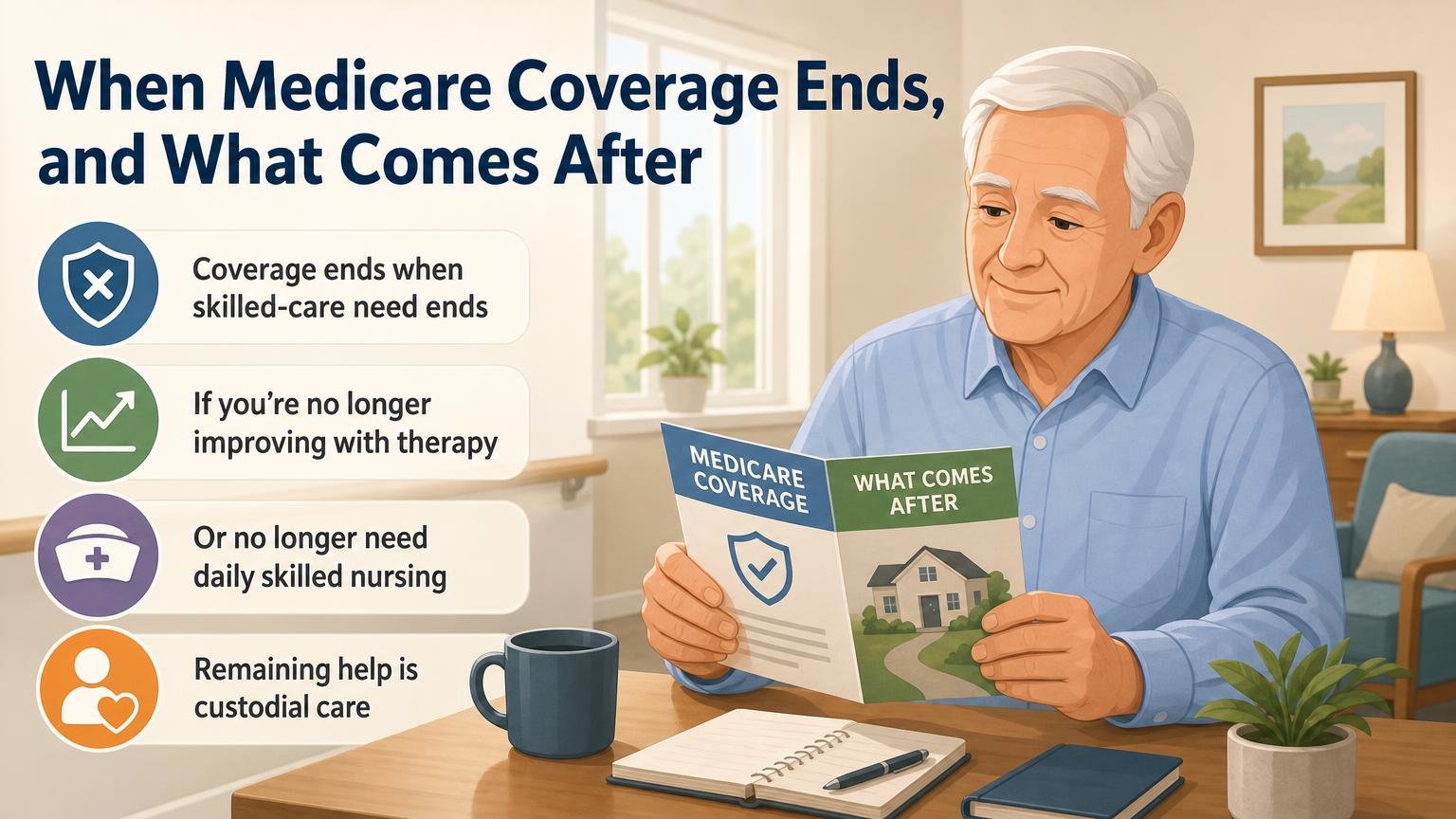
Medicare coverage stops when the skilled-care need itself ends — if you’re no longer improving with therapy, or no longer need daily skilled nursing, coverage can end well before day 100, even if you still need help with daily activities. That remaining help is custodial care, and Medicare does not cover it, in a skilled nursing facility or anywhere else.
If ongoing nursing-home-level custodial care is needed after the skilled benefit ends, that becomes a private-pay or Medicaid question, not a Medicare one — Medicaid covers long-term nursing home care for those who qualify financially, which is a genuinely different and more involved eligibility process than the Medicare rules above.
For the far more common outcome — recovering enough to go home — our guides on what to expect after hospital discharge, post-hospital care setup, and preventing hospital readmission cover that transition directly.
Frequently asked questions
Does Medicare pay for a nursing home?
Only for skilled nursing under specific conditions, and only short-term — not for long-term custodial nursing home care. You need a qualifying 3+ day inpatient hospital stay (observation status doesn’t count), admission to a Medicare-certified facility within 30 days, and a certified daily need for skilled nursing or rehab. Coverage runs up to 100 days per benefit period, with full coverage for days 1–20 and a daily coinsurance for days 21–100.
What is the difference between observation status and inpatient admission?
Observation status is a hospital billing classification for monitoring a patient without a formal inpatient admission — it can look identical to a normal hospital stay, including an overnight bed, but it does not count toward the 3 consecutive days Medicare requires to qualify for skilled nursing facility coverage. Ask the hospital directly which status you’re under if a nursing facility stay might follow; they’re required to tell you.
How many days will Medicare pay for skilled nursing?
Up to 100 days per benefit period, structured in tiers: days 1–20 are fully covered, days 21–100 require a daily coinsurance that changes annually (check medicare.gov for the current figure), and day 101 onward is entirely out of pocket. Coverage can also end earlier than day 100 if you no longer need daily skilled care.
What happens when Medicare skilled nursing coverage ends but more help is still needed?
Any ongoing help beyond that point is custodial care, which Medicare doesn’t cover regardless of setting. The options become private pay, long-term care insurance if you have it, or Medicaid for those who qualify financially — Medicaid nursing-home eligibility is a separate, more involved process from the Medicare rules that apply to short-term skilled care.
Sources
- Medicare.gov. Skilled Nursing Facility (SNF) Care Coverage
- Medicare.gov. Durable Medical Equipment (DME) Coverage
