
Post-Surgery Home Setup Guide (Hip & Knee Recovery)

Practical guidance for families; not medical advice. Follow the surgical team’s specific precautions and activity restrictions, which take priority.
The best time to prepare for surgery recovery is before the operation. A well-set-up home means an older adult comes back to a safer, reachable space with fewer fall hazards — which can help protect the new joint and ease the recovery.
Key takeaways
- Set the home up before the surgery — the person will return tired, sore, and much less mobile.
- Create a recovery station on the main floor with everything within easy reach, avoiding stairs early on.
- Fall-proof aggressively — a fall onto a new hip or knee is a serious setback; clear paths, lighting, and rugs.
- Prepare the bathroom (raised toilet, grab bars, shower chair) and bedroom for limited mobility.
- Have the prescribed mobility equipment ready and follow the surgeon’s movement precautions exactly.
Quick answer
How do I set up the home for hip or knee surgery recovery?
Prepare before the operation. Create a recovery station on one level with essentials within reach and a supportive chair, fall-proof the home (clear paths, remove rugs, add lighting), and set up the bathroom with a raised toilet seat, grab bars, and a shower chair. Ready the bedroom for limited mobility, have the prescribed walker and equipment on hand, and follow the surgeon’s movement precautions exactly. Stock up on food and set up help for the first weeks.
Prepare before the operation
The single most valuable principle of surgery recovery is to set everything up before the operation, while the person is still mobile and you have time to think clearly. After hip or knee surgery they will come home tired, in pain, and dramatically less able to move around — bending, reaching, climbing stairs, and getting up and down all become hard or restricted. Walking into a home that is already safe and reachable makes the difference between a smooth recovery and a stressful, risky one.
This guide focuses on the home setup for orthopedic (hip and knee) recovery. Pair it with the broader post-hospital recovery at home and what to expect after discharge guides, and always follow the surgical team’s specific precautions.
Follow your surgical team’s instructions
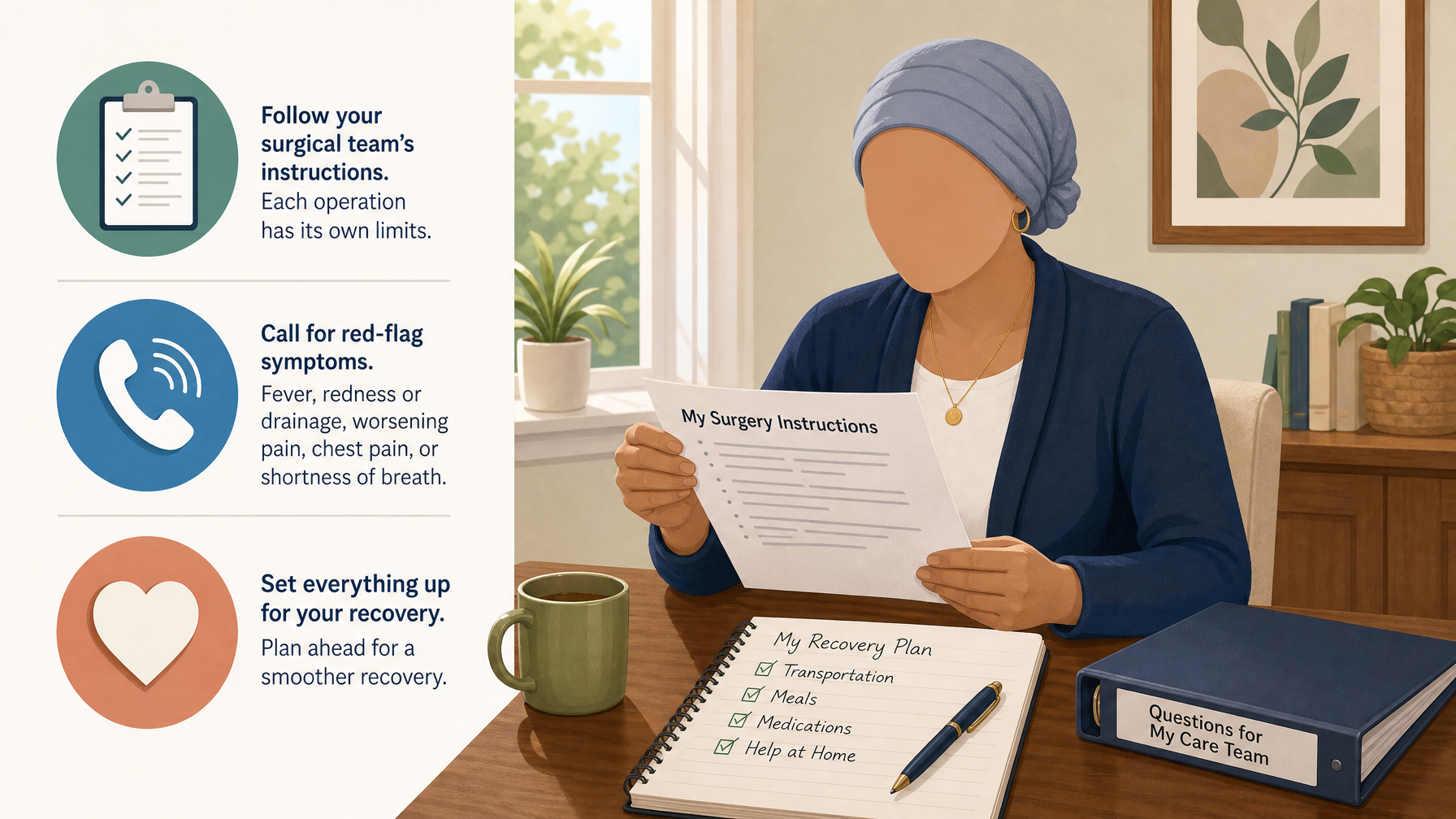
Every operation has its own limits on lifting, bending, weight-bearing, showering, and wound care. Always follow the specific instructions from your surgeon or discharge team over any general guidance here. Call them, or your local emergency number, for red-flag symptoms such as fever, spreading redness or drainage at the incision, worsening pain, chest pain, or shortness of breath.

Bonus: Health Tracker Pack
An ElderlyDaily original
Bringing someone home from the hospital?
Post-Hospital Recovery Planner
- Discharge snapshot: care team, who to call and when, insurance and documents
- Medication reconciliation, a master list, a daily record and refills
- Daily recovery log, vitals log, and a symptom and pain log
One-off purchase. Instant download.
Fillable PDF · 38 pages · US Letter + A4

Sponsored Pick
HOMLAND Adjustable Toilet Seat Riser Frame
A heavier user, or any bathroom where a clamp-on seat has shifted or the toilet itself feels loose
Check PriceCreate a recovery station
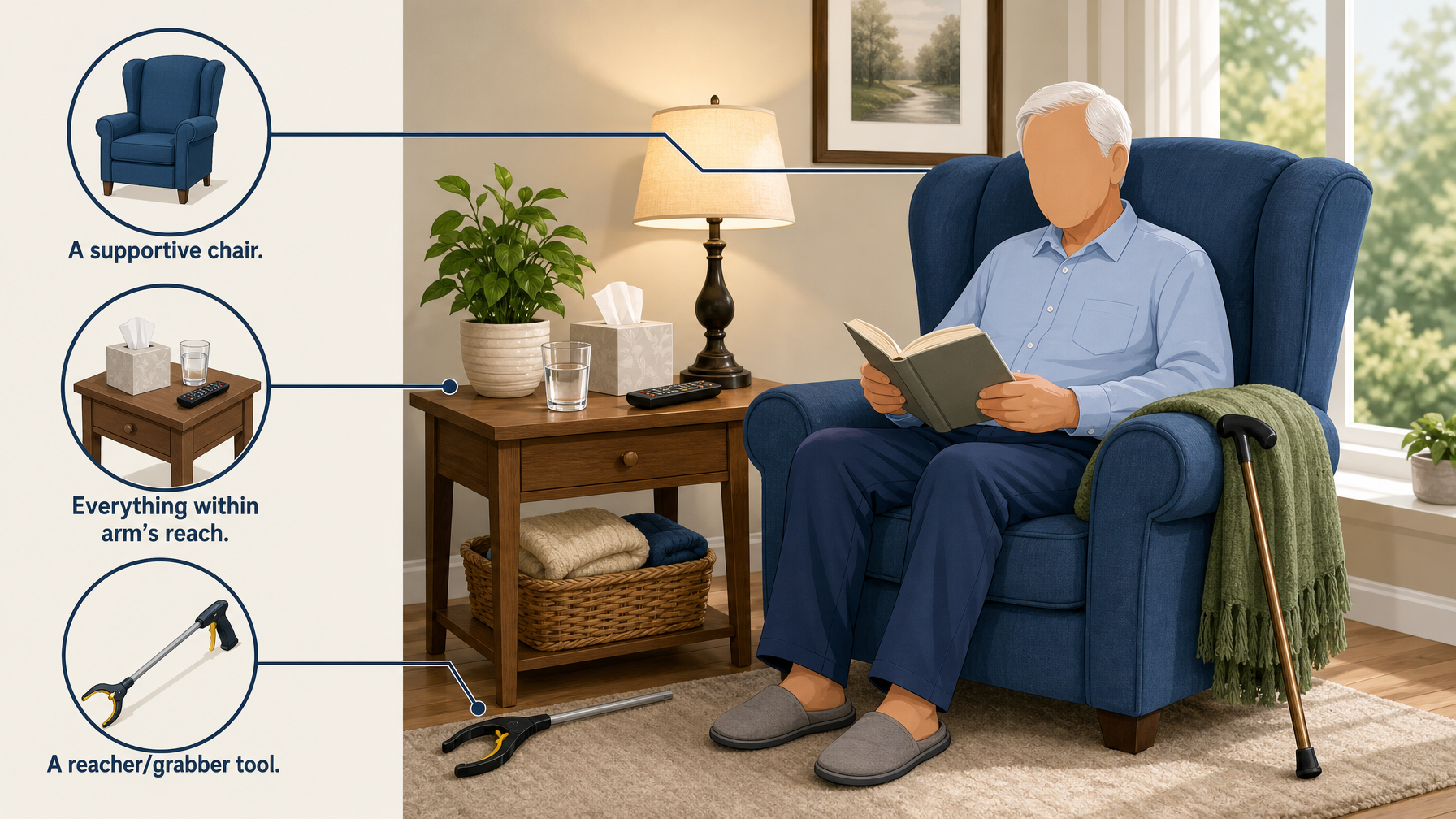
Set up a comfortable base on the main floor, ideally avoiding stairs in the early days, with everything the person needs within easy reach so they are not tempted to bend, stretch, or move unsafely:
- A supportive chair — firm, with armrests to push up from, at a height that makes standing easier (too-low, soft seats are hard and unsafe after hip/knee surgery). A pressure-relief cushion adds comfort for long sitting.
- Everything within arm’s reach — water, medications, phone and charger, tissues, remote, glasses, and a way to call for help.
- A reacher/grabber tool so they can pick things up without bending — important when bending is restricted; see grabber tools.
- Avoid stairs early — if the bedroom or only bathroom is upstairs, consider setting up a temporary sleeping and living area downstairs.
Good to know
Chair and bed height matter enormously after hip or knee surgery. Surfaces that are too low make standing painful and unsafe and may breach hip precautions — raise them (firmer cushions, bed risers) so the person can rise with hips above knees.
Fall-proof the whole home
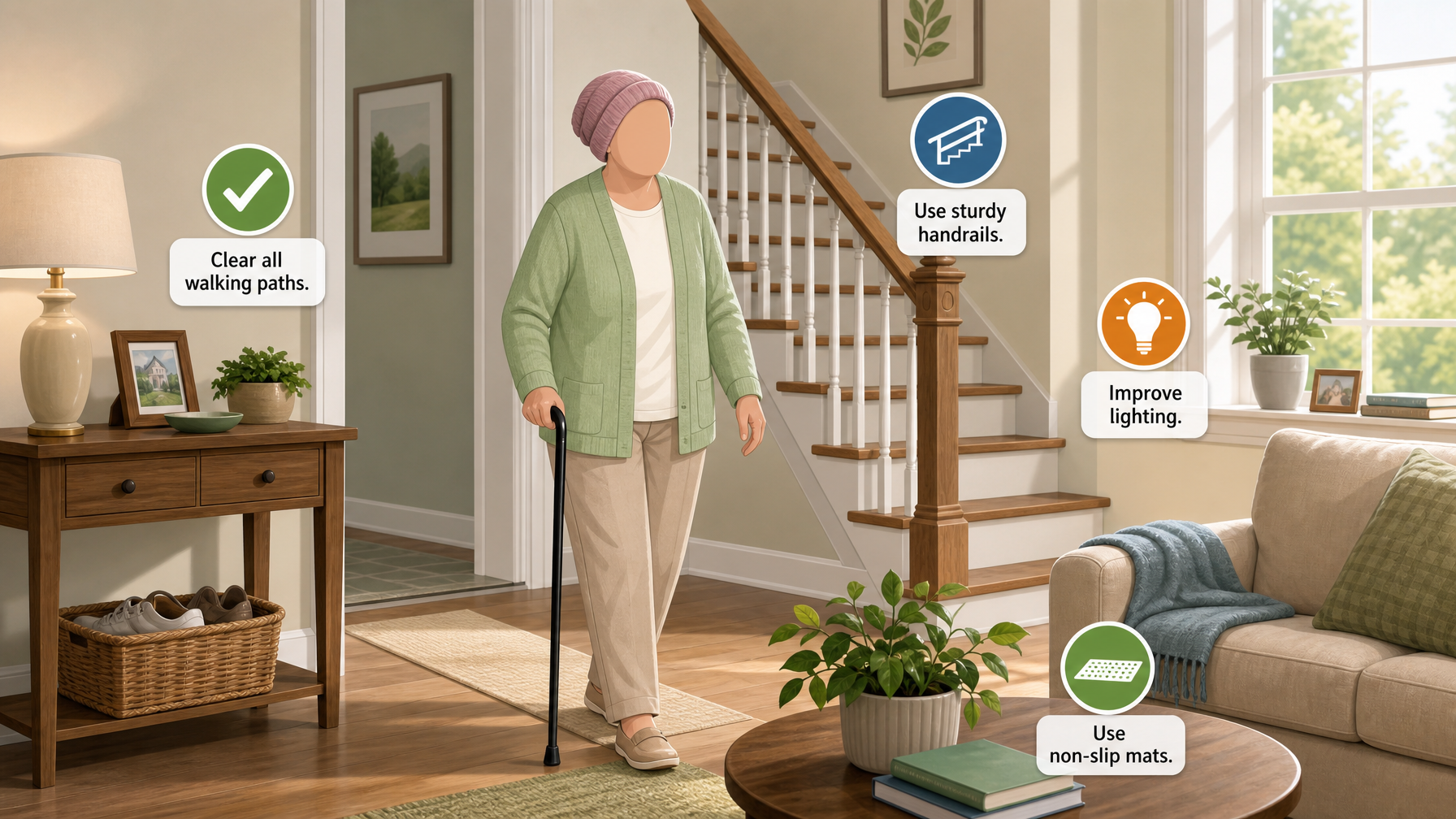
A fall onto a freshly operated hip or knee is one of the worst setbacks in recovery, so fall-proofing is not optional — it is central. Work through the home:
- Clear all walking paths of clutter and cords, creating wide, unobstructed routes for a walker.
- Remove or securely fix loose rugs and mats — the classic trip hazard, and doubly dangerous with a walker.
- Improve lighting everywhere, with night lights on the route to the bathroom for night-time safety.
- Tidy pet and trip hazards, and consider taping down or removing thresholds.
- Add support where needed — grab bars and secure handrails, especially on any stairs that must be used.
Our senior home safety guide and fall prevention guide give the full room-by-room approach.
Set up the bathroom
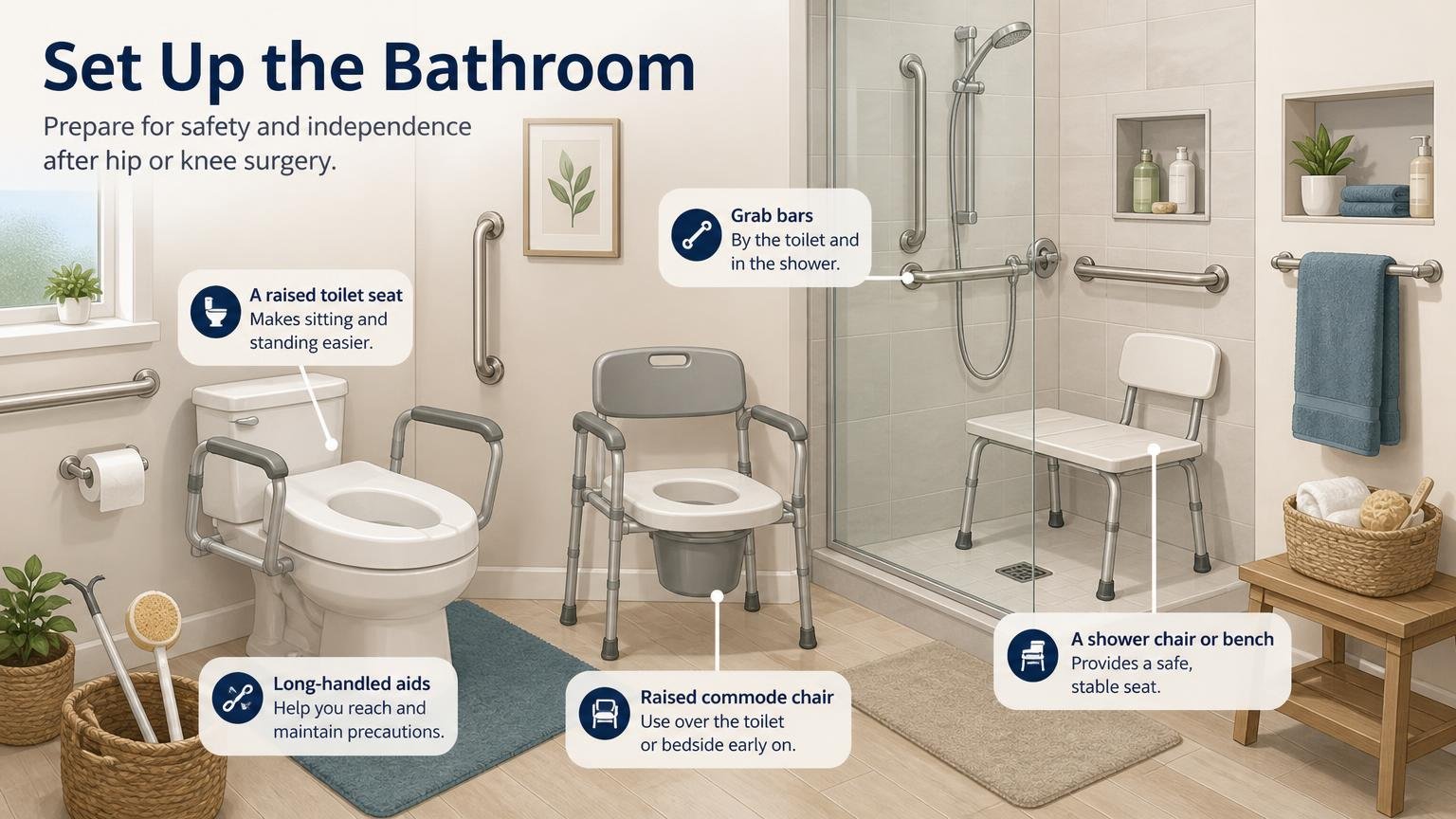
The bathroom is high-risk after hip or knee surgery — low toilets and slippery, tight spaces are exactly the challenges a new joint cannot handle. Prepare it well:
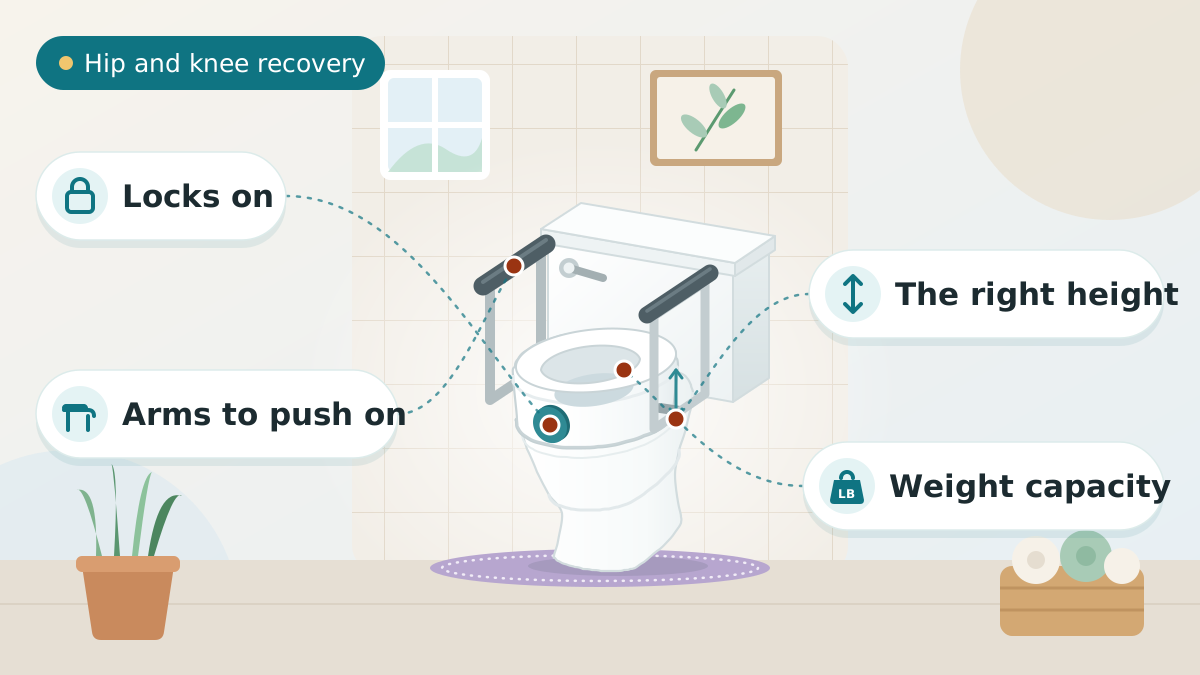
- A raised toilet seat (often with arms) — sitting too low can breach hip precautions and is hard on a new knee; raising it makes toileting safe and possible. A raised commode chair is another option, including as a bedside commode early on.
- Grab bars by the toilet and in the shower/bath — see grab bars for seniors and suction grab bars (though bolted bars are more secure for bearing weight).
- A shower chair or bench so they can wash seated — see shower chairs for seniors — plus a handheld shower head and non-slip mats.
- Long-handled aids — a long-handled sponge and sock aid help with washing and dressing when bending is restricted; see dressing aids.
Ready the bedroom
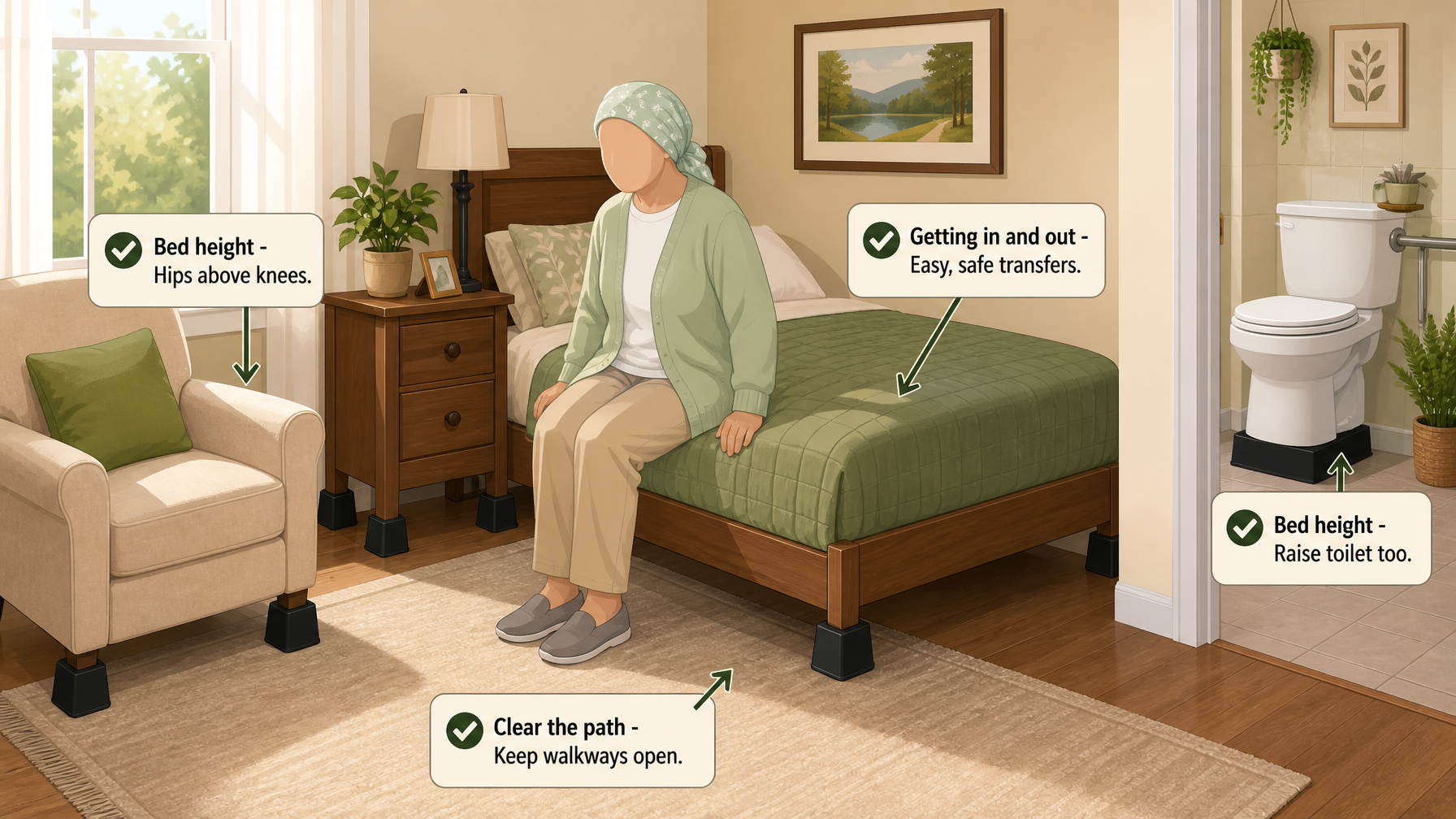
Set the bedroom up for limited mobility and safe getting in and out of bed:
- Bed height — the bed should be high enough to sit and rise from easily (hips above knees); bed risers help if it is too low.
- Clear the path from bed to door and bathroom, well lit with a night light, for safe night-time trips.
- Getting in and out — a bed assist handle or, where appropriate and safe, a bed rail provides support; see safe bedroom setup.
- Essentials within reach — phone, water, medications, and a way to call for help by the bed.
Equipment, supplies, and support
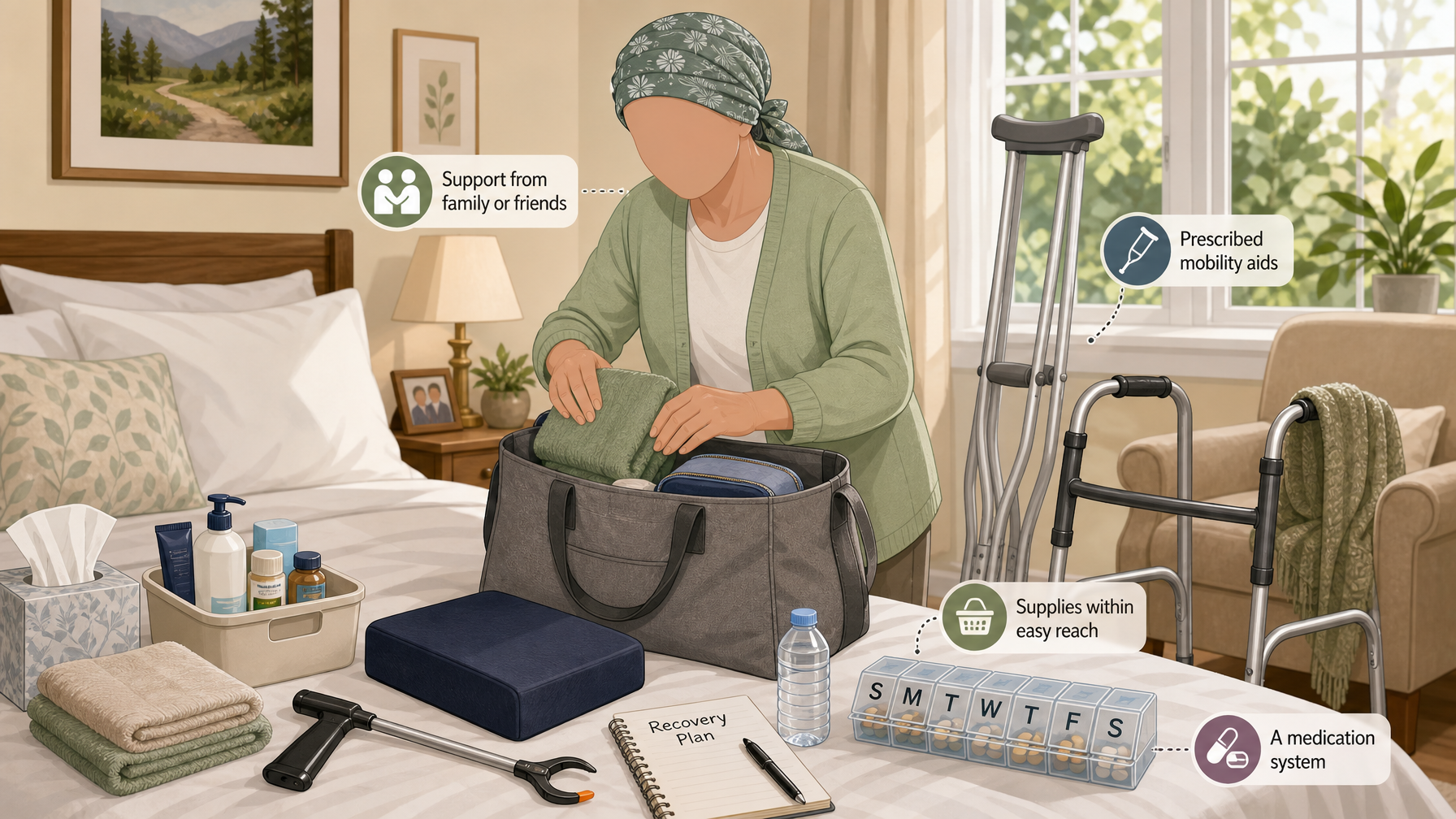
Finally, have the practical essentials ready before the day of surgery:
- Prescribed mobility aids — usually a walker initially (and later perhaps a cane); have it fitted and ready, and see walker vs cane.
- Ice packs, dressings, and any prescribed supplies for the wound and swelling, following the surgical team’s instructions.
- A medication system ready for the new post-op regimen, including any blood thinners — see medication management.
- Food and household prep — stock easy meals, and arrange help with cooking, shopping, and cleaning for the first weeks.
- Help lined up — arrange family, friends, or care support for the early period when the person cannot manage alone, and consider a medical alert device.
With the home ready, focus can shift to the recovery itself — and to watching for problems; see post-surgery complications in the elderly.
Frequently asked questions
How do I prepare my home for hip or knee surgery recovery?
Set up before the operation: create a recovery station on one level with essentials within reach and a supportive, higher chair; fall-proof the home (clear paths, remove rugs, add lighting); set up the bathroom with a raised toilet seat, grab bars, and a shower chair; ready the bedroom for limited mobility; have the prescribed walker and supplies on hand; and arrange food and help for the first weeks.
What equipment do I need after hip or knee replacement?
Commonly a walker (fitted and ready), a raised toilet seat (often with arms), grab bars, a shower chair and handheld shower head, long-handled aids (reacher, sponge, sock aid) for when bending is restricted, a bed assist handle if getting in and out of bed is hard, ice packs and prescribed wound supplies, and a medication system for the new regimen. Follow your surgical team’s specific list.
Why does chair and bed height matter after surgery?
After hip or knee surgery, surfaces that are too low make standing painful and unsafe and can breach hip precautions (which often limit how far the hip may bend). Raising chairs and the bed — so the person can rise with hips above knees, using armrests to push up — makes getting up safer and easier, and can help protect the new joint.
How do I prevent falls during surgery recovery?
Fall-proof the whole home before surgery: clear and widen walking paths for a walker, remove or fix loose rugs, improve lighting with night lights on the route to the bathroom, tidy trip hazards, and add grab bars and secure handrails. A fall onto a new hip or knee is a serious setback, so aggressive fall prevention is central to a safe recovery.
Should I set up a downstairs recovery area?
Often yes, at least early on. If the bedroom or only bathroom is upstairs, setting up a temporary sleeping and living area on the main floor avoids risky stair-climbing while mobility is most limited. Keep everything within reach there, with a supportive higher chair, and reintroduce stairs gradually as the surgical team allows.
What should I do before the day of surgery?
Complete the home setup (recovery station, fall-proofing, bathroom and bedroom), have the prescribed mobility aids fitted and ready, stock easy meals and supplies, set up a medication system for the new regimen including any blood thinners, and line up help for the early weeks. Preparing everything in advance means the person returns to a safe, ready home.
