
Managing Chronic Conditions at Home: A Caregiver Guide

Educational guidance, not medical advice. Always follow the care plan from the person’s doctors for their specific conditions, and seek prompt help for warning signs.
Most older adults live with one or more chronic conditions. Managing them well at home — medications, monitoring, routines, and knowing the warning signs — keeps the person stable, comfortable, and out of hospital.
Key takeaways
- Most seniors live with one or more chronic conditions (like diabetes, heart disease, or COPD); good home management keeps them stable and out of hospital.
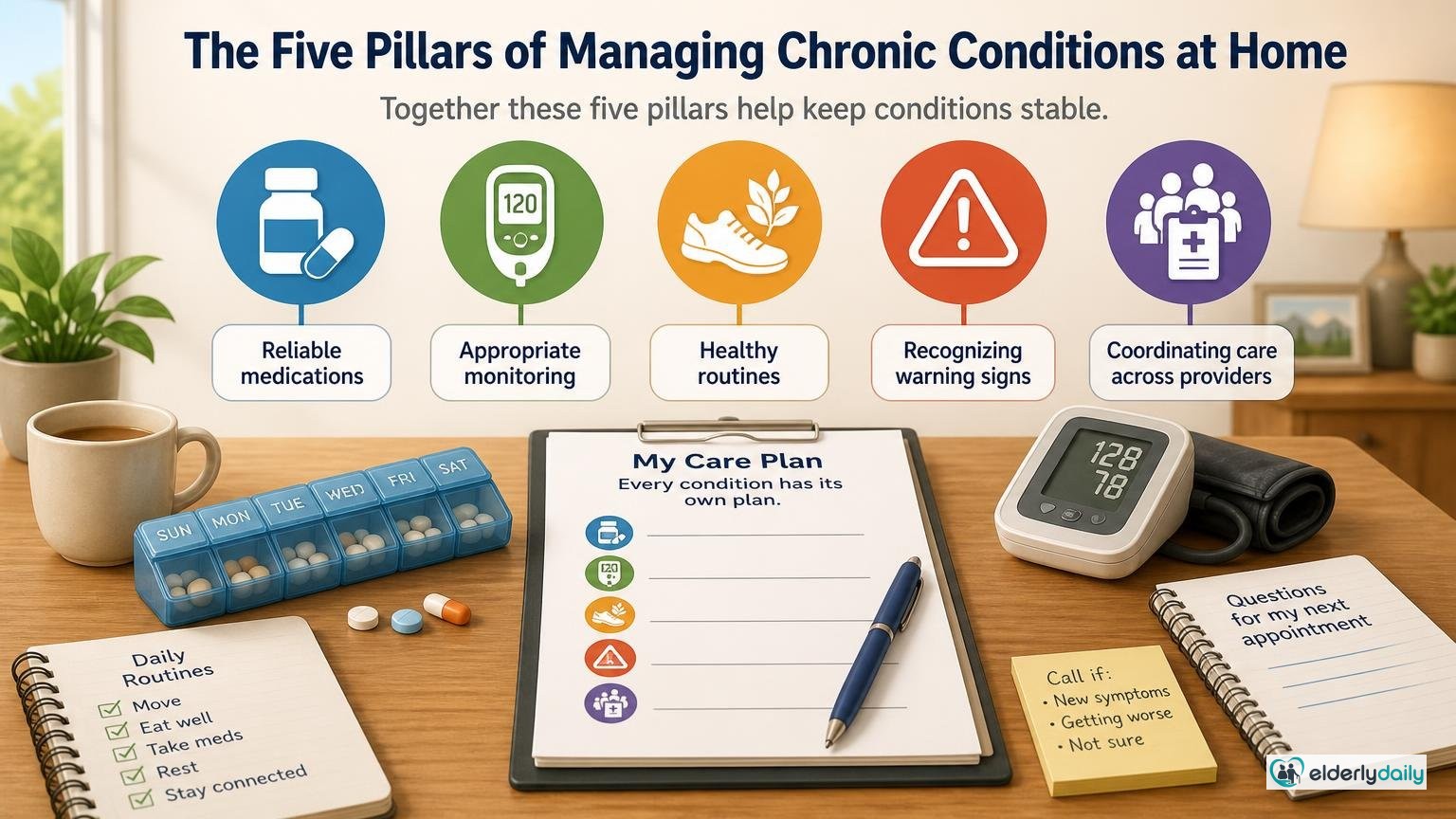
- The pillars: reliable medications, appropriate monitoring, healthy routines, recognizing warning signs, and coordinating care.
- Know the warning signs for each condition — what means call the doctor versus go to the ER — and act early.
- Monitoring (blood pressure, blood sugar, weight, oxygen as relevant) helps catch changes before they become crises.
- Coordinate care across doctors and keep good records — and support the person’s wellbeing, not just their conditions.
Quick answer
How do I manage a senior’s chronic conditions at home?
Build management on five pillars: reliable medication management; appropriate monitoring (blood pressure, blood sugar, weight, or oxygen as relevant to their conditions); healthy routines (diet, activity, sleep) that follow the care plan; recognizing warning signs and acting early (knowing what means call the doctor vs the ER); and coordinating care across their doctors with good records. Follow each condition’s specific care plan, and support the whole person, not just their conditions.
The role of home management
The majority of older adults live with at least one chronic condition — such as high blood pressure, diabetes, heart disease, COPD, arthritis, or kidney disease — and many have several. These conditions are managed, not cured, and most of that management happens day to day at home. Doing it well can help keep the person stable and comfortable and reduce the flare-ups and complications that can lead to hospital.
A caregiver plays a central role in that home management. This guide covers the general framework that applies across conditions — medications, monitoring, routines, warning signs, and coordination. Always layer it over the specific care plan from the person’s doctors for their particular conditions, which takes priority.
An ElderlyDaily original
Want all of it in one organized binder?
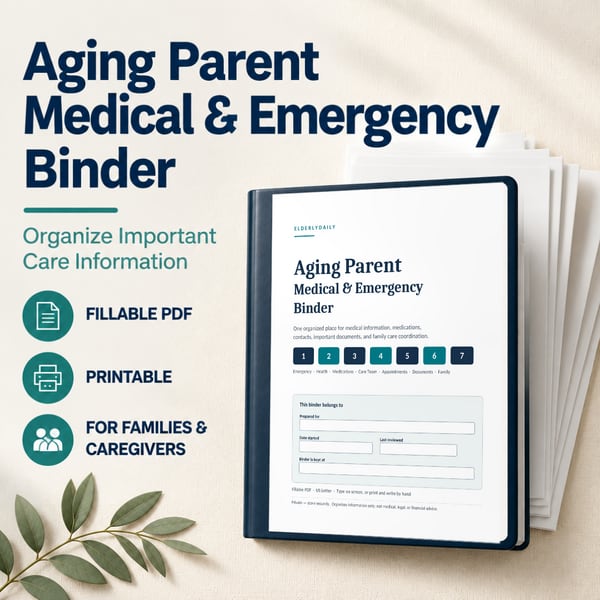
Aging Parent Medical & Emergency Binder
- Medical history, medications and emergency contacts in one place
- Seven sections: emergency, health, medications, care team, appointments, documents and family
- Type into it on screen, or print it and fill it in by hand
One-off purchase. Instant download.
Fillable PDF · US Letter

Sponsored Pick
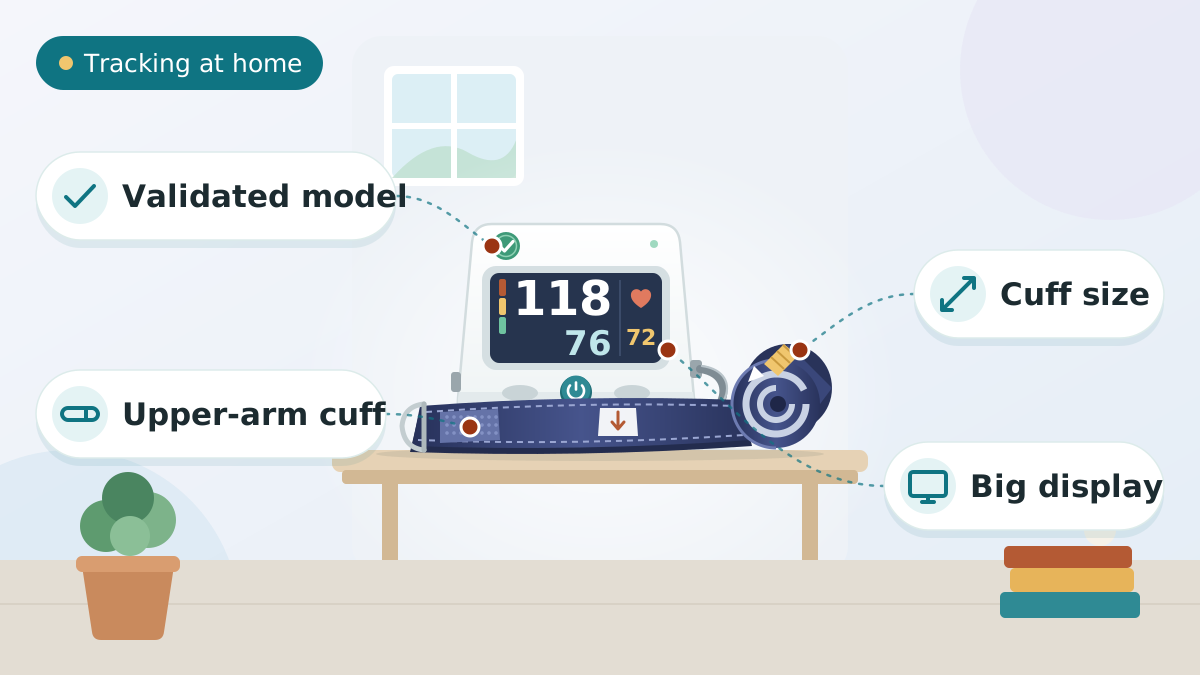
Greater Goods Bluetooth Blood Pressure Monitor
Budget-focused buyers who still want a clinically validated, easy-to-read monitor
Check PricePillar 1: Reliable medications
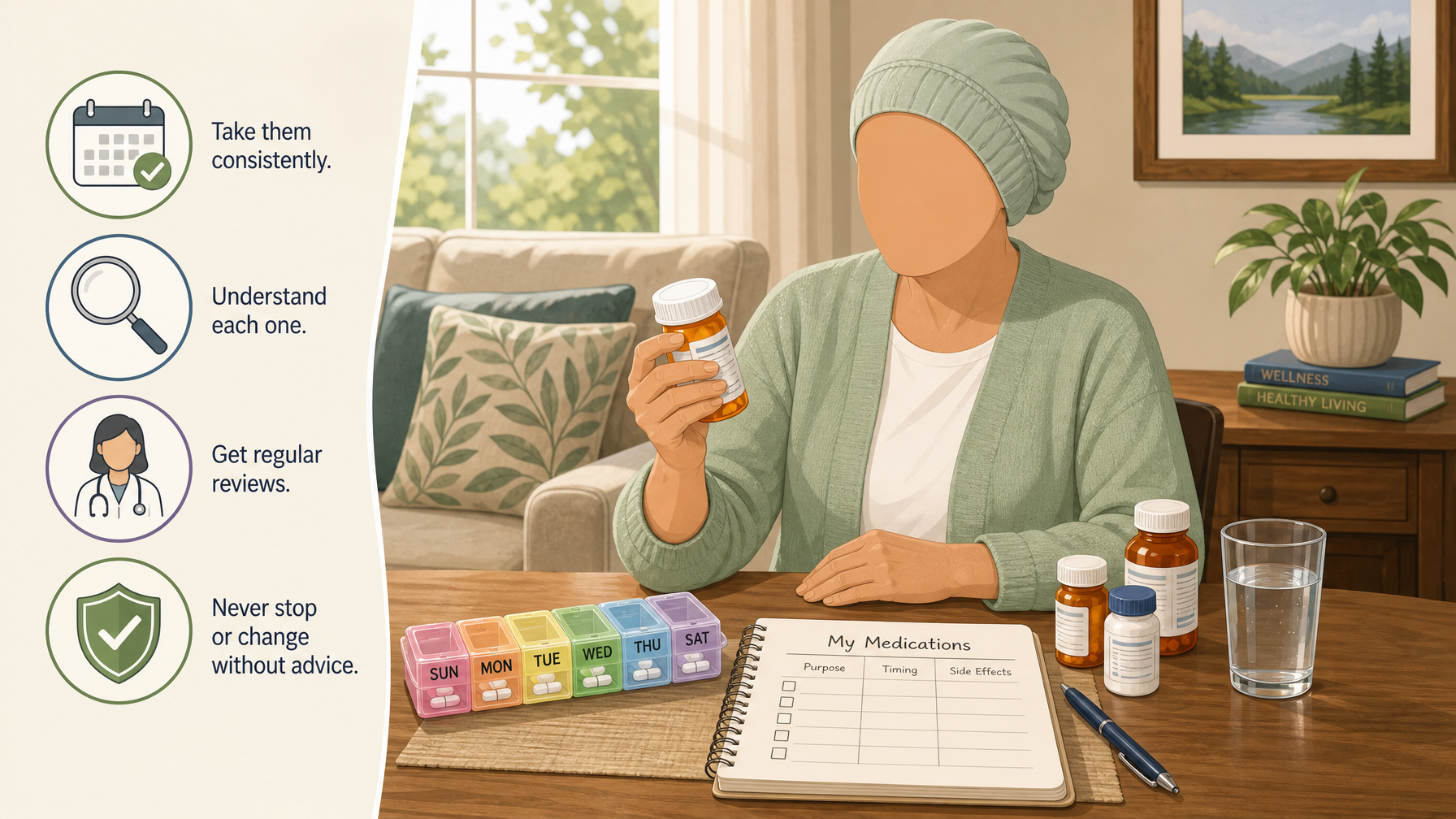
Chronic conditions are often controlled by medications that must be taken consistently and correctly, so reliable medication management is foundational:
- Take them consistently — many chronic-condition medications only work if taken regularly and on schedule; use a pill organizer or dispenser.
- Understand each one — its purpose, timing, and side effects.
- Get regular reviews — as conditions and needs change, so should the regimen; a pharmacist or doctor review keeps it right.
- Never stop or change without advice, even if the person feels well — many conditions are silent when controlled.
Pillar 2: Monitoring
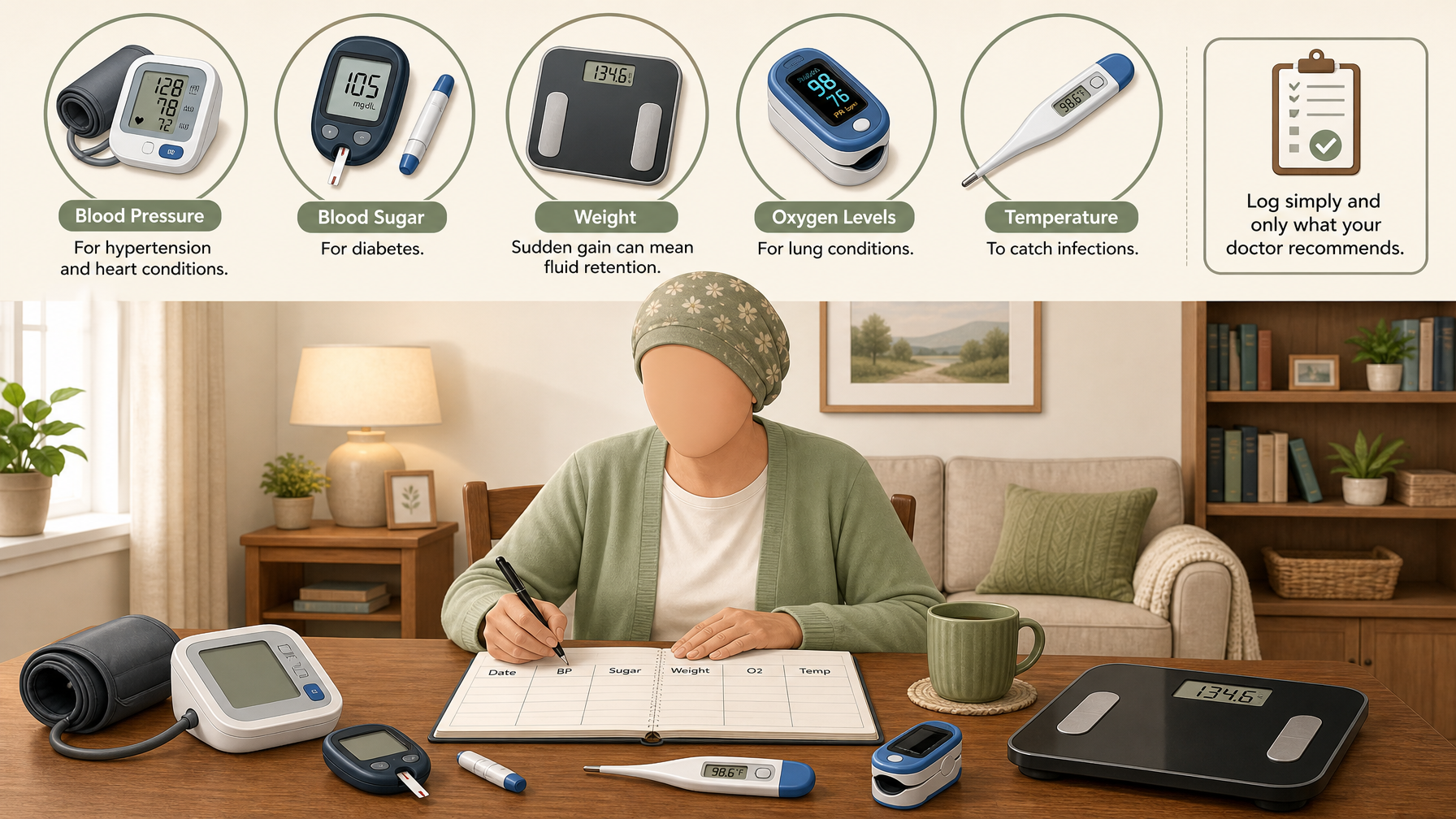
Tracking relevant measurements at home helps catch changes early, before they become emergencies — following the doctor’s guidance on what to monitor and the target ranges:
- Blood pressure — for hypertension and heart conditions; a home blood pressure monitor with a clear display, used as advised.
- Blood sugar — for diabetes, checked as prescribed, with attention to diet and medication timing.
- Weight — for heart failure especially, where a sudden gain can signal fluid retention; a large-display scale makes daily weighing easy.
- Oxygen levels — for lung conditions, a pulse oximeter where advised.
- Temperature — a thermometer to catch fever, a sign of infection that can destabilize conditions.
- Keep a simple log — recording readings reveals trends and is invaluable at appointments.
Good to know
Monitor only what the doctor recommends, and know the target ranges and what to do outside them. Purposeful monitoring catches problems early; anxious over-monitoring without a plan just causes worry — ask the care team what to track and when to act.
Pillar 3: Healthy routines
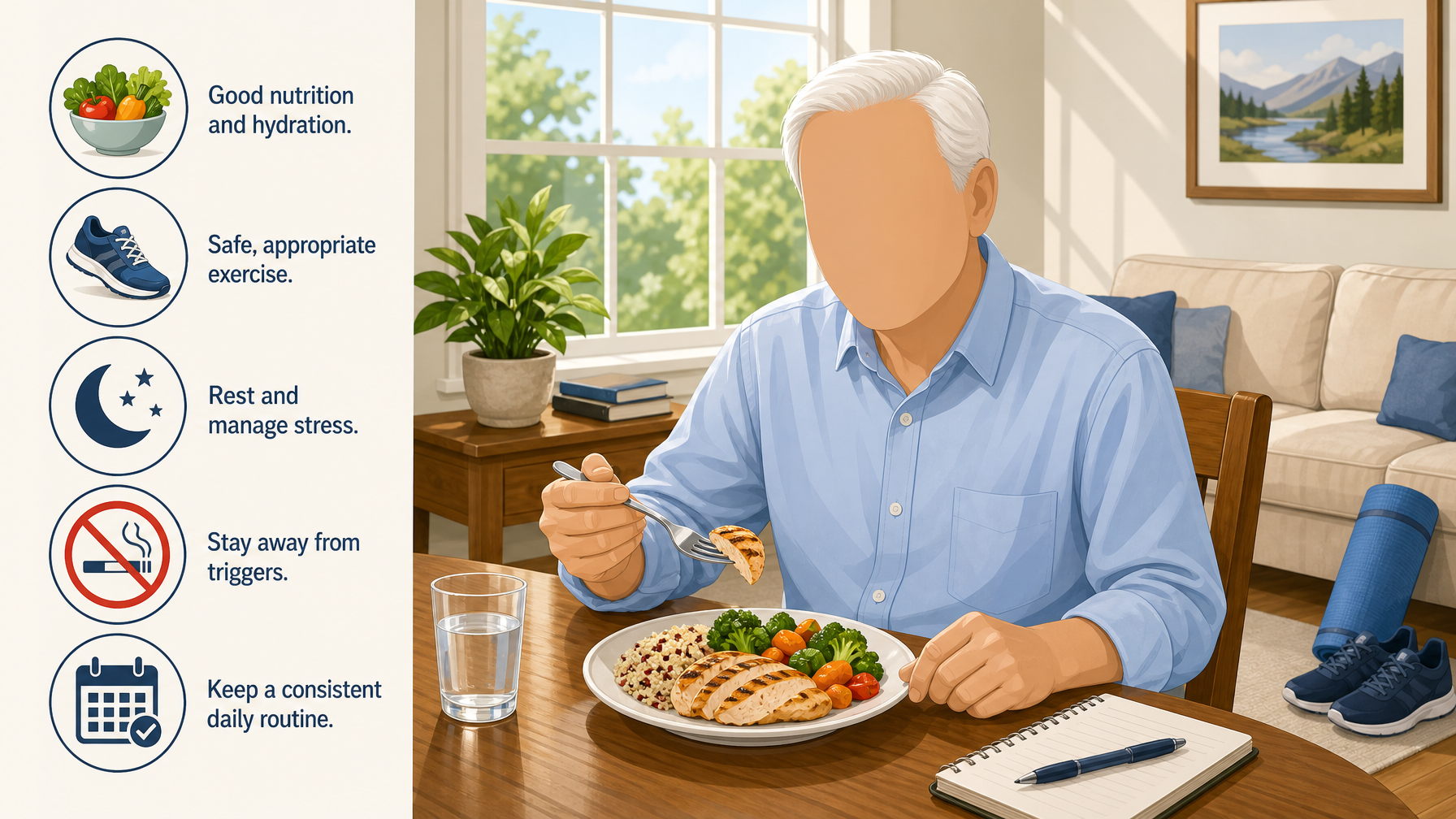
Daily habits strongly influence how well chronic conditions are controlled:
- Diet — following any condition-specific guidance (for example, around salt, sugar, or fluids), ideally with a dietitian’s input; good nutrition and hydration support overall health.
- Physical activity — safe, appropriate exercise benefits most chronic conditions; see how caregivers can help seniors exercise safely.
- Sleep and stress — both affect chronic conditions; support good sleep and manage stress.
- Avoid worsening factors — such as smoking, or triggers specific to the condition.
- Keep a consistent daily routine that builds these habits in naturally.
Pillar 4: Recognize warning signs
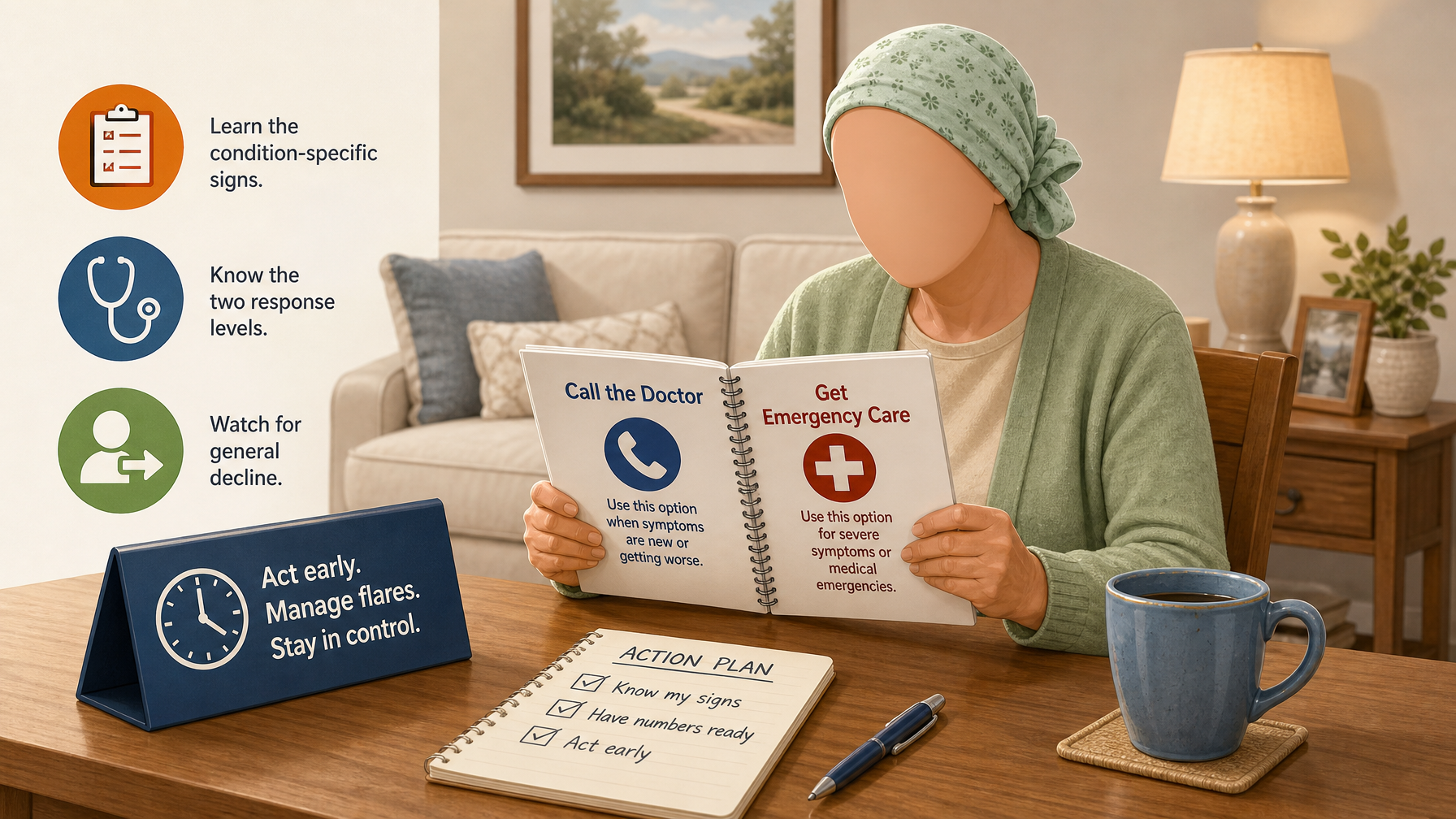
Knowing the warning signs for the person’s specific conditions — and acting early — can help reduce crises and hospital admissions:
- Learn the condition-specific signs — ask the care team what a flare-up or worsening looks like for each condition (for example, breathlessness or weight gain in heart failure, high or low blood sugar symptoms in diabetes, increased breathlessness or sputum in COPD).
- Know the two response levels — what means "call the doctor" versus "go to the ER," with the numbers to hand.
- Watch for general decline — new confusion, reduced eating, increasing weakness, or "not being themselves," which can signal a worsening condition or infection.
- Act early — catching a flare-up early often means it can be managed at home rather than in hospital; see preventing readmission.
Some situations are emergencies — chest pain, severe breathlessness, stroke signs, collapse — needing immediate emergency care.
Safety first
For each of the person’s conditions, ask the doctor exactly which symptoms mean call for help urgently versus go to the ER, and keep that written down. Knowing the specific red flags — and acting on them early — can help catch problems before they become a crisis.
Pillar 5: Coordinate care and support the person
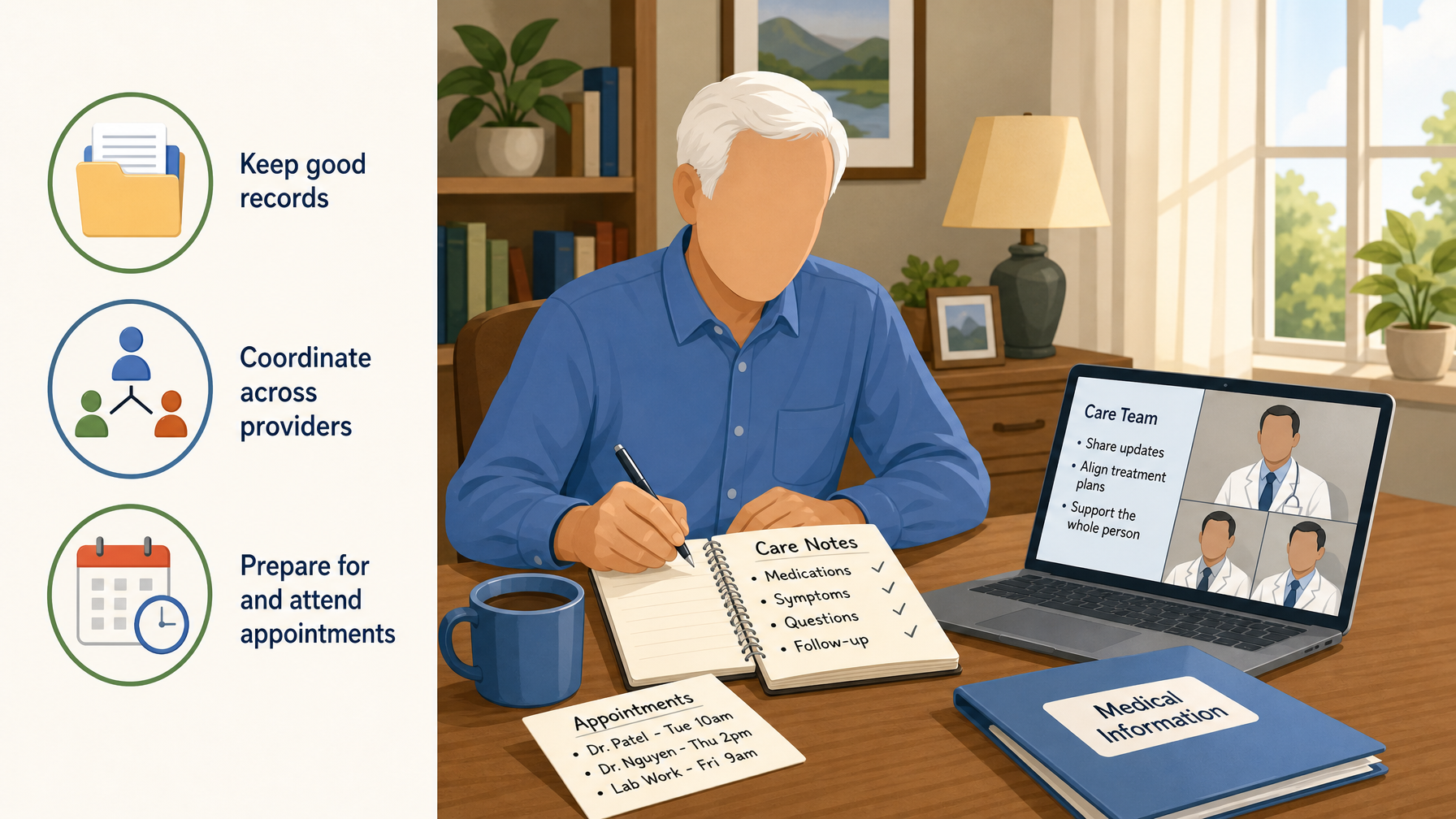
With multiple conditions often come multiple doctors, so coordination matters — and so does the person behind the conditions:
- Keep good records — an up-to-date medication list, condition list, monitoring log, and appointment notes, brought to every visit.
- Coordinate across providers — make sure the different doctors know the full picture; a primary doctor often oversees this, and you can help join the dots.
- Prepare for and attend appointments — with questions and your records ready.
- Use available support — home health services, disease-specific organizations, and community resources.
- Support the whole person — chronic illness affects mood, independence, and identity; tend to emotional wellbeing and quality of life, not just the medical numbers, and look after yourself too (caregiver burnout is real).
Frequently asked questions
How do I manage a senior’s chronic conditions at home?
Build management on five pillars: reliable medication management, appropriate monitoring (blood pressure, blood sugar, weight, or oxygen as relevant), healthy routines (diet, activity, sleep) following the care plan, recognizing condition-specific warning signs and acting early, and coordinating care across doctors with good records. Always follow each condition’s specific care plan and support the whole person.
What should I monitor for a senior with chronic conditions?
Monitor what the doctor recommends for their specific conditions and know the target ranges — commonly blood pressure (hypertension, heart disease), blood sugar (diabetes), weight (heart failure, where sudden gain signals fluid retention), oxygen levels (lung conditions), and temperature (to catch infection). Keep a simple log of readings, which reveals trends and helps at appointments.
How do I know if a chronic condition is getting worse?
Learn the condition-specific warning signs from the care team (such as breathlessness or weight gain in heart failure, or high/low blood sugar symptoms in diabetes), and watch for general decline like new confusion, reduced eating, or increasing weakness. Know which symptoms mean call the doctor versus go to the ER, and act early — catching a flare-up early often keeps it manageable at home.
How can I prevent hospital admissions for chronic conditions?
Keep medications reliable and reviewed, monitor as advised to catch changes early, maintain healthy routines, and — most importantly — recognize warning signs and act on them early, when a flare-up can often be managed at home. Coordinate care across doctors, keep good records, and use home health support. Early action on the specific red flags can help avoid crises.
How do I coordinate care across multiple doctors?
Keep good, up-to-date records — a medication list, condition list, monitoring log, and appointment notes — and bring them to every visit so each provider sees the full picture. A primary doctor often oversees overall care, and you can help join the dots between specialists. Prepare questions for appointments, and use home health services and disease-specific organizations for support.
How do I support someone emotionally with a chronic illness?
Chronic illness affects mood, independence, and identity, so tend to the person’s emotional wellbeing and quality of life, not just their medical numbers — support their independence and the activities they value, watch for low mood, and involve them in their own care. Use available support resources, and look after your own wellbeing too, since caregiving for chronic conditions is demanding.
