
Post-Hospital Care Setup Guide: Equipment & Home Safety

Practical guidance for families; not medical advice. Follow the discharge plan and any equipment recommendations from the hospital team.
The day of discharge is not the day to start preparing. A ready home — the right equipment, a safe layout, organized medications, and help lined up — can help turn a fragile homecoming into a recovery that actually works.
Key takeaways
- Set the home and care up before discharge day, not after — the first days home are the highest-risk period.
- Get the essential equipment ready — mobility aids, bathroom safety, a recovery station, and a medication system.
- Make the home safe room by room, prioritizing fall prevention.
- Organize medications and the care plan — reconcile the new medication list and know the follow-ups and warning signs.
- Line up help and coordinate care — you should not do the first weeks alone; arrange support and know who to call.
Quick answer
How do I set up the home before an elderly parent comes back from hospital?
Prepare before discharge day. Get essential equipment ready (mobility aid, bathroom safety, a recovery station, medication system), fall-proof the home room by room, organize the new medications and know the follow-up appointments and warning signs, and line up help for the first weeks. Confirm the discharge plan before you leave the hospital, and have a way to summon help (a medical alert device) ready.
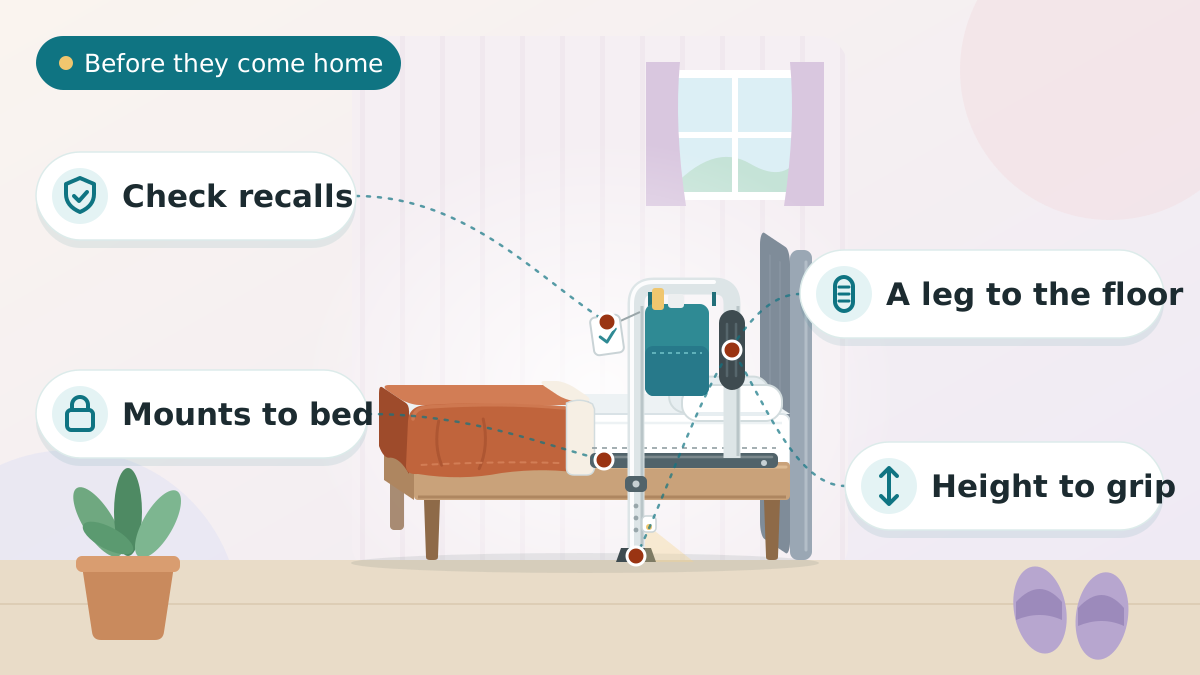
Prepare before discharge day
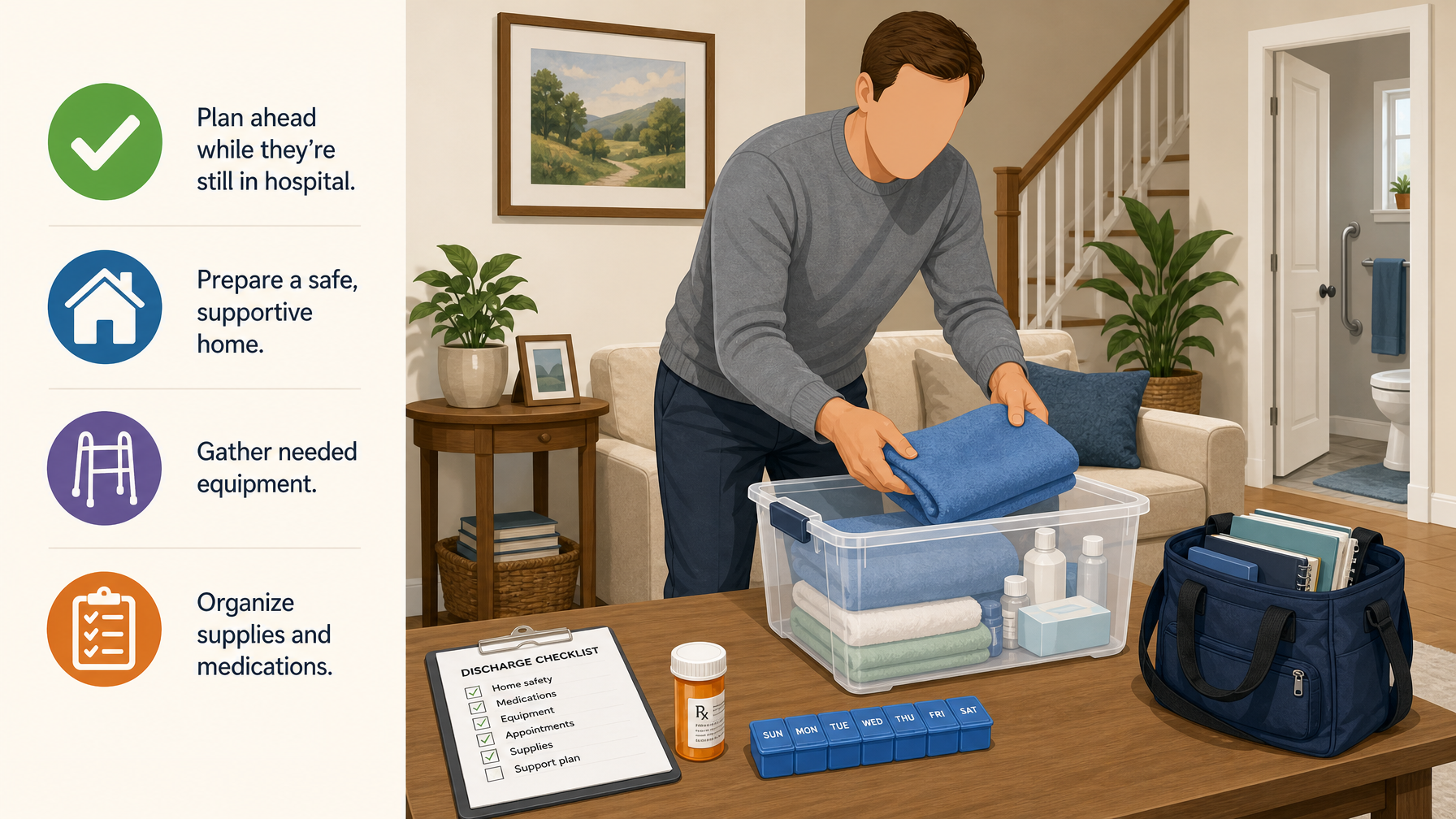
The transition from hospital to home is the highest-risk window in recovery, and much of that risk comes from an unprepared home meeting a person who is suddenly weak and needs support. The fix is simple in principle: get everything ready before they come home, ideally while they are still in hospital and you have time.
This is a practical setup checklist — equipment, home safety, medications, and coordinating help. It complements the "what happens next" guidance in what to expect after hospital discharge and the ongoing care in post-hospital recovery at home. For orthopedic surgery specifically, see the post-surgery home setup guide.
Bonus: Health Tracker Pack
An ElderlyDaily original
Bringing someone home from the hospital?
Post-Hospital Recovery Planner
- Discharge snapshot: care team, who to call and when, insurance and documents
- Medication reconciliation, a master list, a daily record and refills
- Daily recovery log, vitals log, and a symptom and pain log
One-off purchase. Instant download.
Fillable PDF · 38 pages · US Letter + A4

Sponsored Pick
HOMLAND Adjustable Toilet Seat Riser Frame
A heavier user, or any bathroom where a clamp-on seat has shifted or the toilet itself feels loose
Check PriceStart with the discharge plan
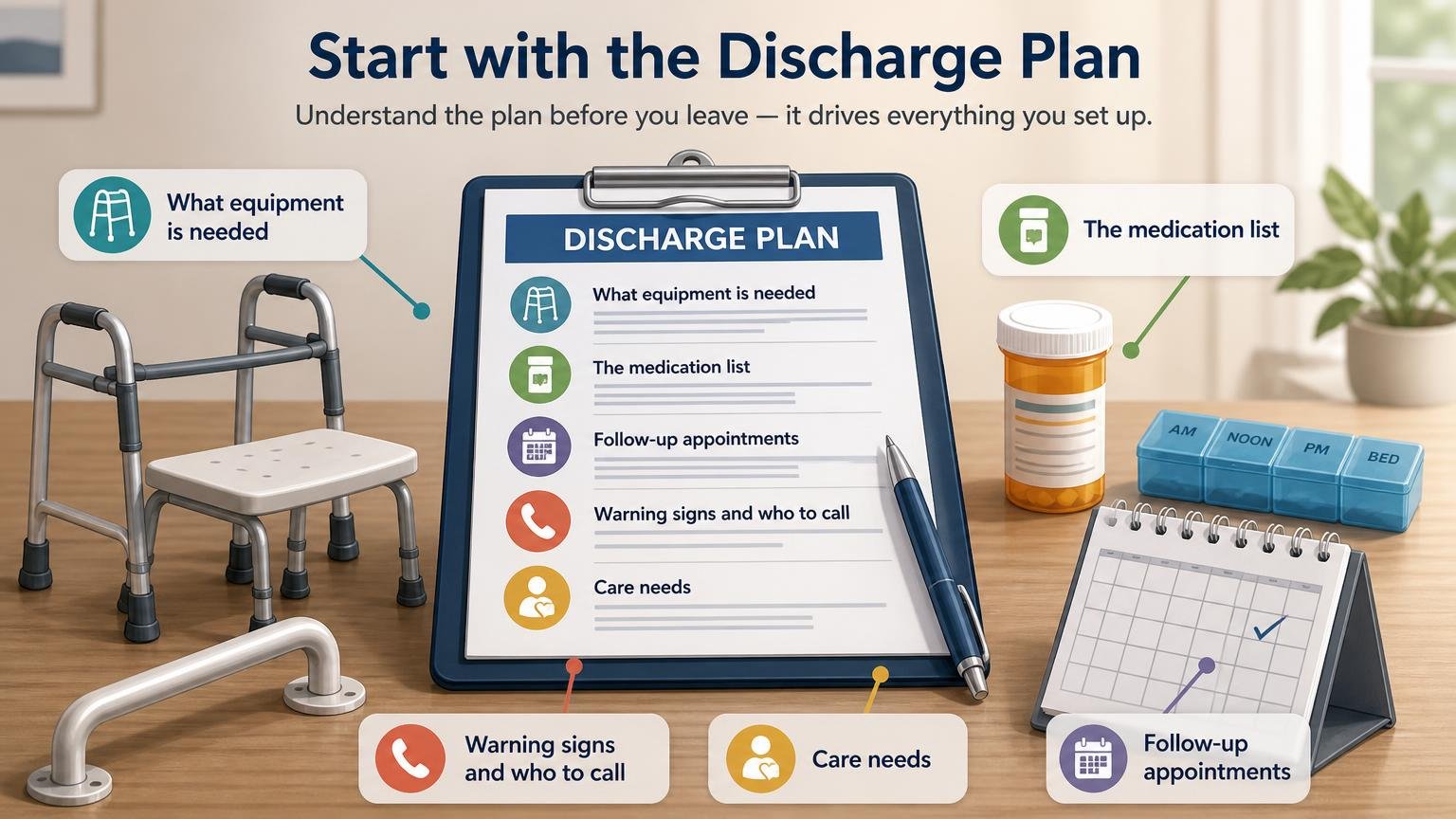
Before leaving the hospital, make sure you understand the plan, because it drives everything you set up:
- What equipment is needed — ask the team (and any physical/occupational therapist) what mobility aids and safety equipment they recommend, and whether any is being provided or delivered.
- The medication list — the new, reconciled list; what changed, started, or stopped.
- Follow-up appointments and any home health or therapy visits.
- Warning signs and who to call — exactly what means "call the doctor" versus "go to the ER," with numbers.
- Care needs — how much help the person will need with daily tasks, so you can arrange it.
Good to know
Ask the hospital team specifically what equipment they recommend and what they will provide. Some items may be arranged or funded through the discharge process — worth knowing before you buy everything yourself.
Essential equipment checklist
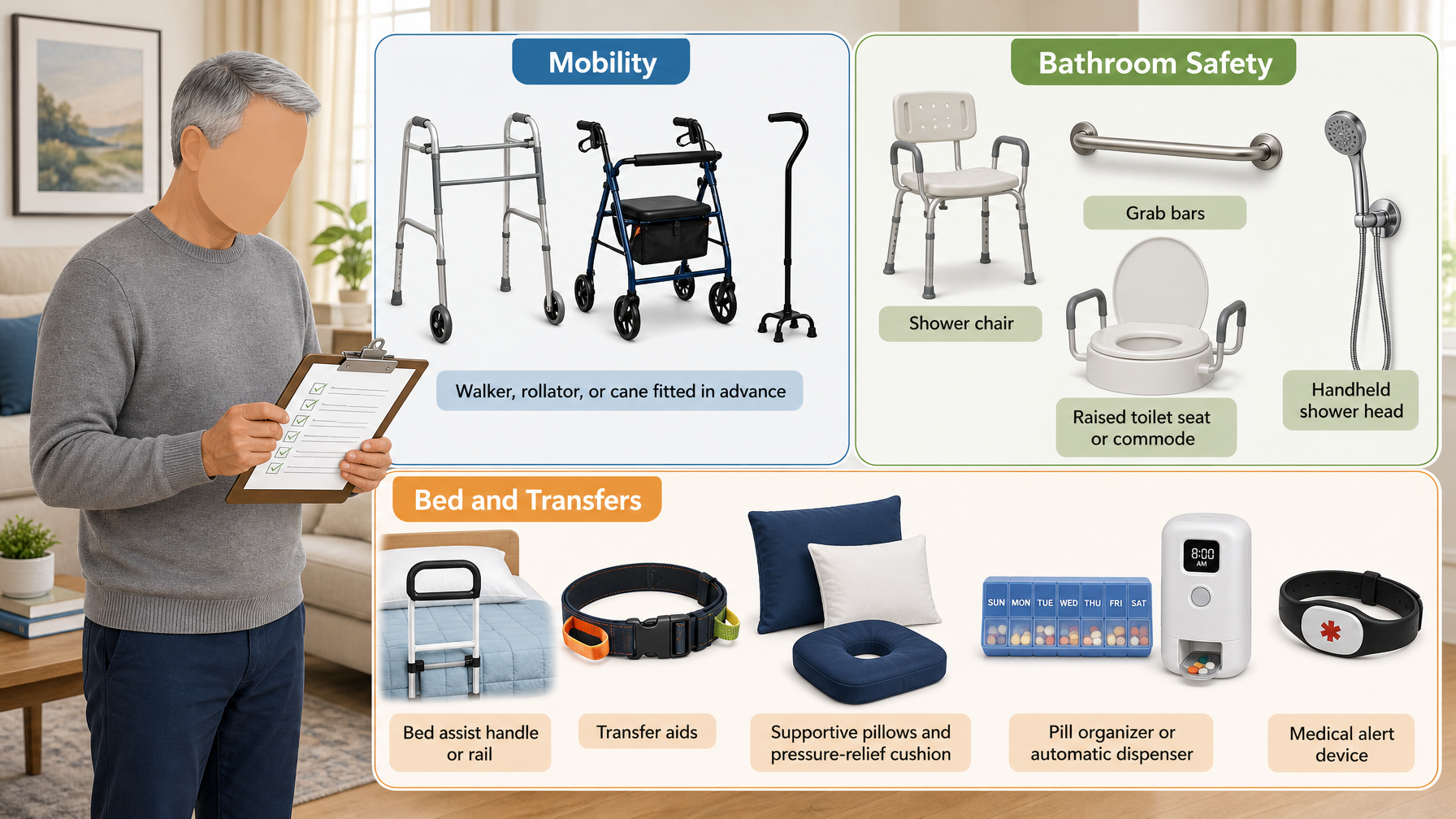
Based on the person’s needs, have the relevant items ready:
- Mobility — the prescribed walker, rollator, or cane, fitted and ready; see walker vs cane.
- Bathroom safety — a shower chair, grab bars, a raised toilet seat or commode, and a handheld shower head.
- Bed and transfers — a bed assist handle or rail where appropriate, and any transfer aids; learn safe transfer techniques.
- Comfort and skin — supportive pillows and a pressure-relief cushion for more sitting or bed time.
- Medication system — a pill organizer or automatic dispenser.
- Emergency call — a medical alert device, especially if they are alone at times.
Make the home safe, room by room
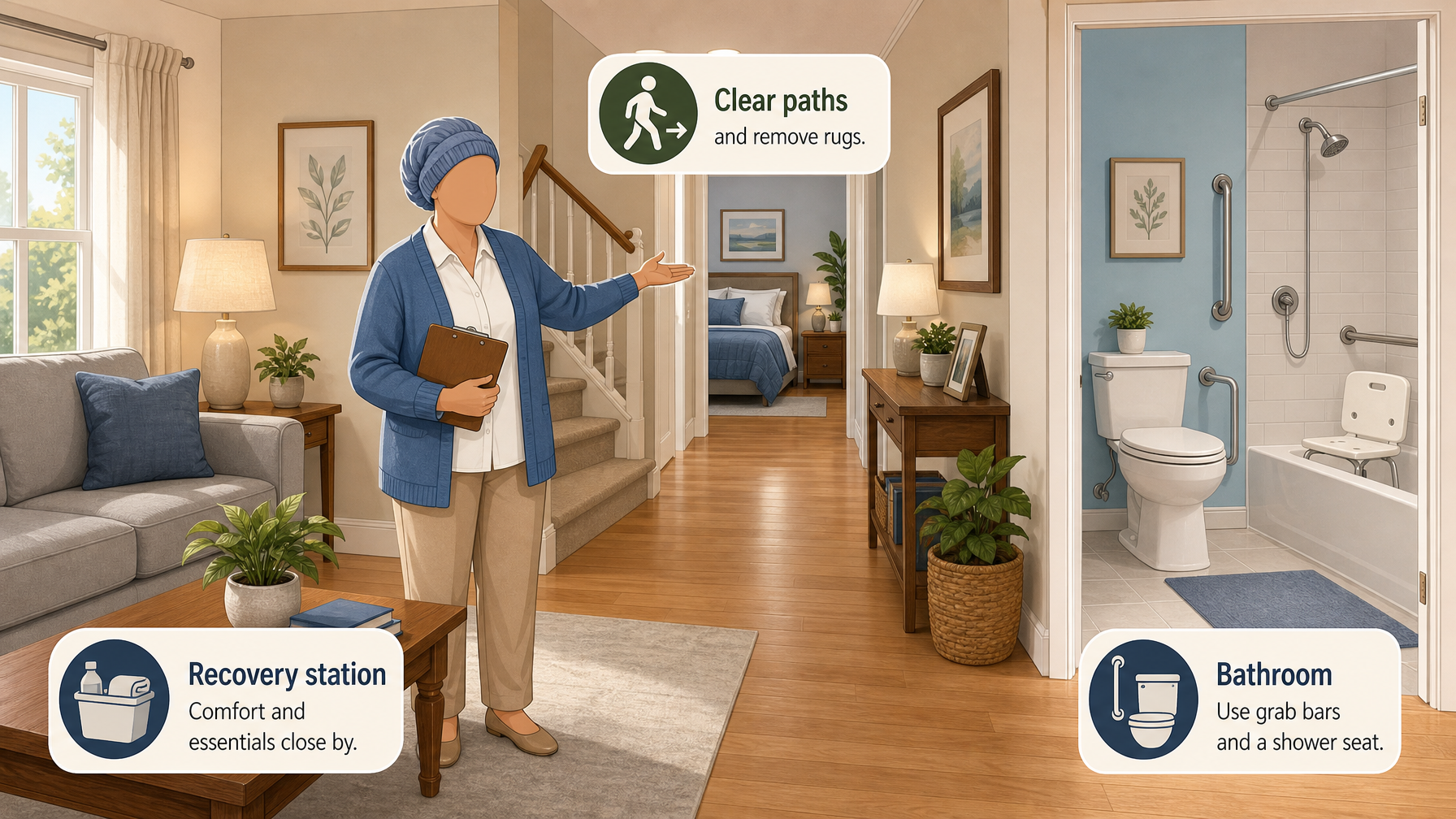
Reducing fall hazards is the priority, since the person will be weak. Work through the home — our senior home safety guide is a full walkthrough:
- Recovery station — a comfortable, supportive chair on the main floor with essentials within reach; avoid stairs early if possible.
- Clear paths and remove rugs — wide, unobstructed, well-lit routes, especially to the bathroom; add night lights for night-time safety.
- Bathroom — set up per bathroom fall prevention.
- Bedroom — a safe bedroom setup with a clear, lit path and essentials by the bed.
- General — secure hazards, ensure working smoke/CO alarms, and reduce clutter throughout; the wider approach is in fall prevention.
Medications and supplies
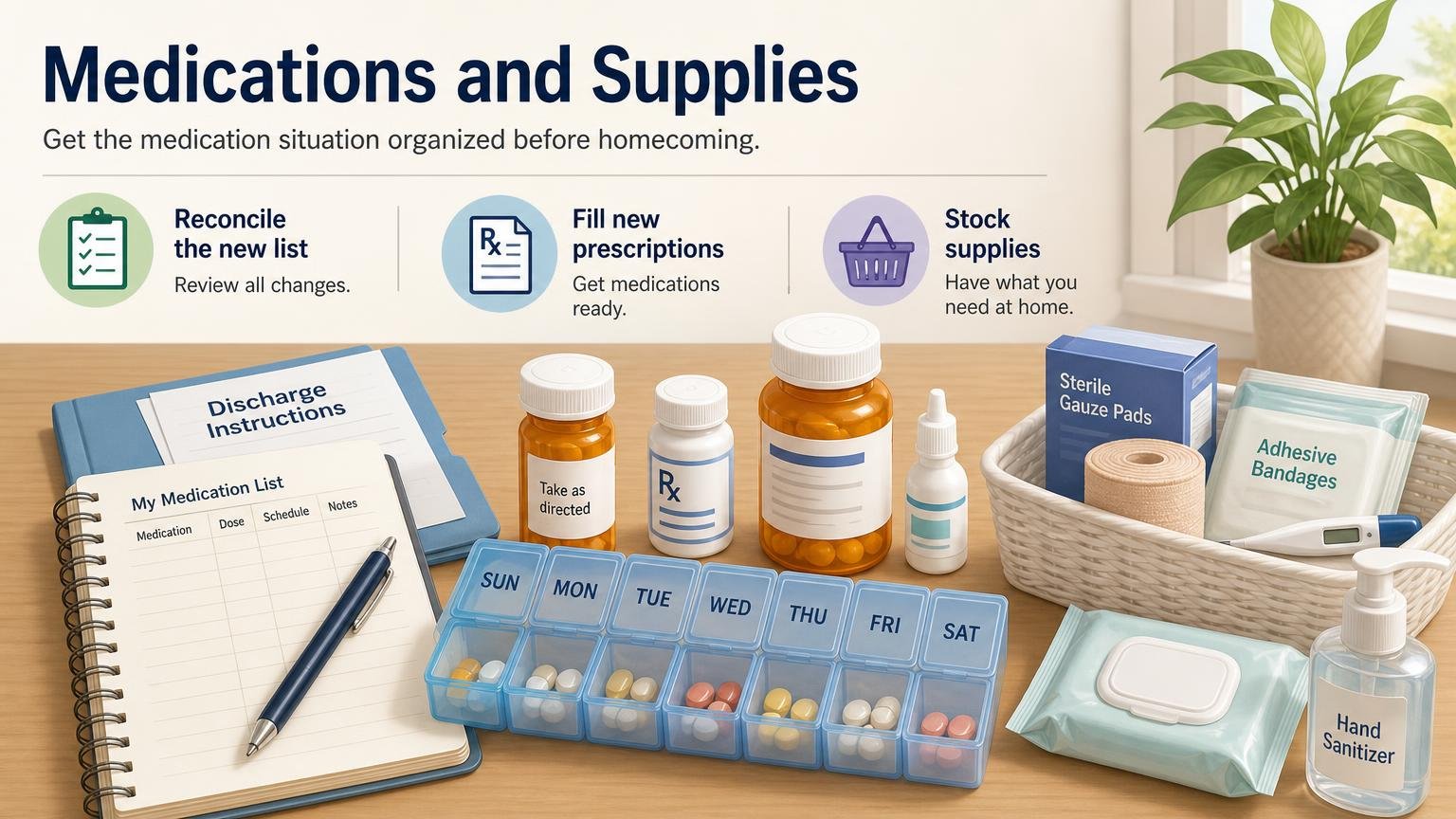
Get the medication situation organized before homecoming, since errors here can lead to readmission:
- Reconcile the new list against what they took before, resolving conflicts with the pharmacist — see medication management.
- Fill new prescriptions and set up the pill organizer or dispenser before they come home.
- Stock supplies — any wound-care items, incontinence supplies if needed, and everyday essentials.
- Prepare food — stock easy, nutritious meals and drinks for the first days; see the nutrition guidance in post-hospital recovery at home.
Line up help and coordinate care
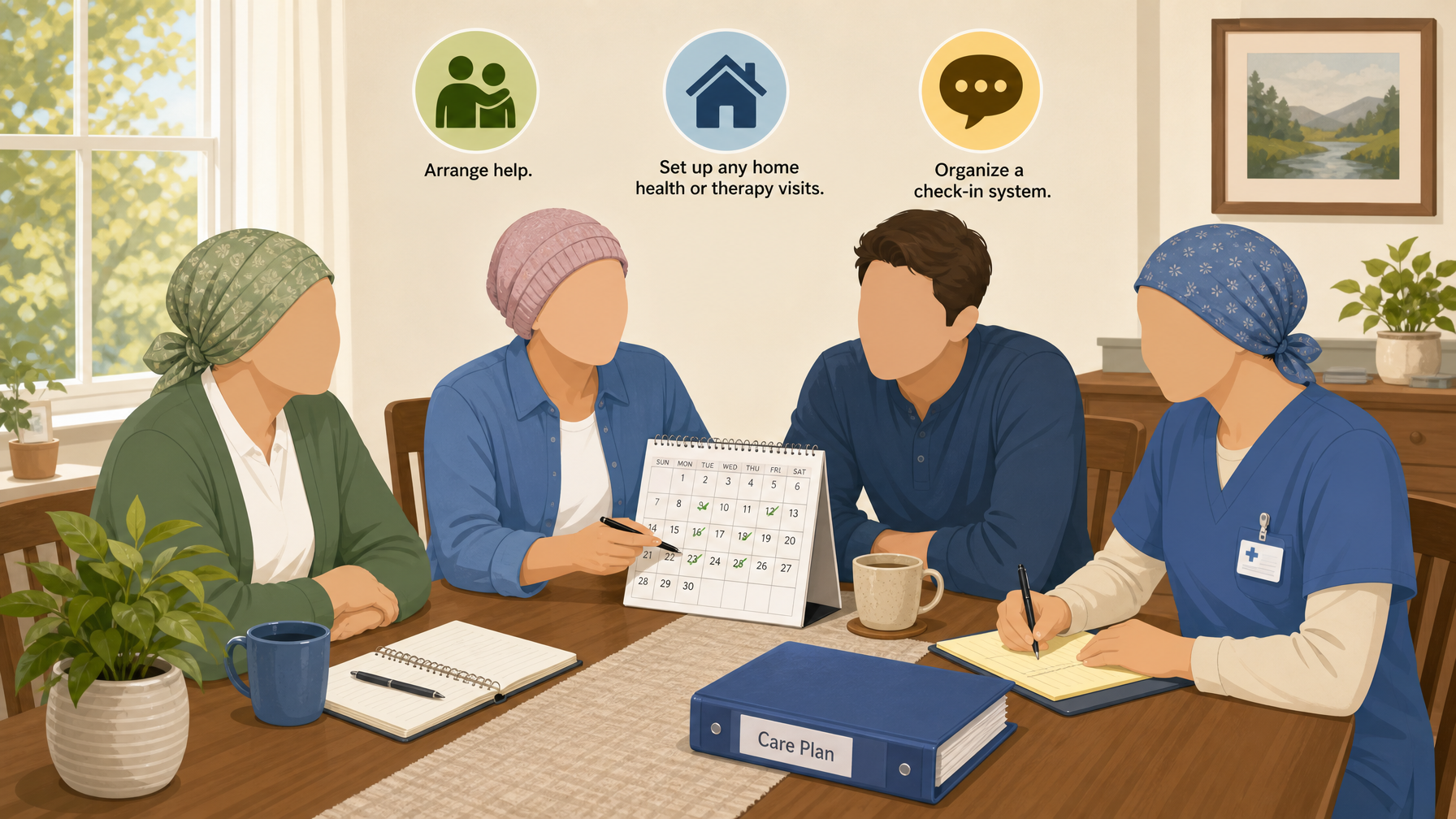
Finally, arrange the human support — the first weeks are demanding and you should not carry them alone:
- Arrange help — family, friends, or paid care for the early period when the person cannot manage alone; make a rota if several people are helping.
- Set up any home health or therapy visits included in the discharge plan.
- Organize a check-in system and know the warning signs and who to call; keep a simple daily log of medications, meals, and how they are doing.
- Plan the homecoming itself — safe transport, and having someone there to settle them in.
- Protect yourself — coordinating recovery is exhausting; share the load and guard against caregiver burnout.
With the home ready, the focus can move to the recovery and to watching for problems — see signs an elderly parent is not recovering properly and preventing readmission.
Frequently asked questions
How do I prepare my home before a parent returns from hospital?
Prepare before discharge day: confirm the discharge plan (equipment, medications, follow-ups, warning signs), get essential equipment ready (mobility aid, bathroom safety, a recovery station, a medication system), reduce fall hazards room by room, organize the new medications, stock supplies and food, and line up help for the first weeks. A ready home makes the high-risk homecoming much safer.
What equipment do I need when someone comes home from hospital?
It depends on their needs, but commonly a prescribed mobility aid (walker, rollator, or cane), bathroom safety equipment (shower chair, grab bars, raised toilet seat or commode, handheld shower head), bed and transfer aids, supportive and pressure-relief cushions, a medication organizer or dispenser, and a medical alert device. Ask the hospital team what they recommend and what they will provide.
Why is the first week after discharge so important to prepare for?
The days right after discharge are the highest-risk period for setbacks and readmission, as monitoring drops from constant hospital observation to home care while the person is still weak and unsteady. Setting up equipment, safety, medications, and help in advance can help support the recovery.
How do I organize medications for someone coming home from hospital?
Reconcile the new discharge list against what they took before and resolve conflicts with the pharmacist, fill new prescriptions and set up a pill organizer or automatic dispenser before they come home, and learn each medication’s purpose and side effects. Medication errors can lead to readmission, so getting this organized in advance matters.
Should I arrange help for when my parent comes home?
Yes — the first weeks are demanding and are safer and more sustainable with support. Arrange family, friends, or paid care for the early period, set up any home health or therapy visits from the discharge plan, organize a check-in system, and plan safe transport home. Sharing the load also protects you from caregiver burnout.
What is the difference between this and the post-surgery setup guide?
This guide covers setting up the home and care after any hospital stay, focusing on equipment, room-by-room safety, medications, and coordinating help. The post-surgery home setup guide focuses specifically on orthopedic (hip and knee) recovery, with joint precautions, chair and bed height, and long-handled aids. Use both together when the hospital stay involved surgery.
