Common Post-Surgery Complications in Seniors: What Caregivers Should Watch For

Last Updated: February 2026

Most seniors recover well from surgery. But older adults face higher risks for complications. Early detection makes all the difference.

You do not need to be a medical expert. You just need to know what to watch for. Small changes can signal big problems.

This guide shows you the warning signs that matter. It tells you when to call the doctor and when to go to the emergency room.

Knowledge reduces fear. When you know what to look for, you can act fast and help your loved one heal safely.

Senior woman recovering at home with caregiver support

Early detection improves outcomes

Caregiver-Reviewed Recovery Safety Guidance

This guide is written to help family caregivers recognize post-surgical complications early. It is based on common medical guidelines and caregiver experiences.

Important: This is educational information only. It is not a substitute for medical advice. Always follow your surgeon's specific instructions and call with any concerns.

Key Points to Remember

Most seniors recover well: Complications are not guaranteed. Awareness helps prevention.

First 48-72 hours are critical: Watch closely during the first few days home.

Fever means infection risk: Any fever over 100.4°F needs medical attention.

Sudden confusion is serious: Delirium can signal infection, medication issues, or blood clots.

Trust your instincts: If something feels wrong, call the doctor.

Prevention is possible: Many complications can be avoided with proper home care.

Why Seniors Face Higher Post-Surgical Risk

Older adults heal differently than younger people. Understanding why helps you provide better care.

Slower Healing

Skin and tissue repair takes longer with age. Blood flow to wounds decreases. The immune system responds more slowly to injury.

Chronic Health Conditions

Diabetes slows wound healing. Heart disease affects circulation. Lung problems increase pneumonia risk. These conditions complicate recovery.

Medication Complexity

Most seniors take multiple medications. New surgical medications can interact with existing drugs. Side effects are more common and more severe.

Reduced Mobility

Limited movement after surgery increases blood clot risk. Staying in bed too long causes muscle loss and pneumonia. Getting up safely is harder.

Weakened Immune Response

The immune system weakens with age. Infections develop faster and spread more easily. Symptoms may be subtle or atypical.

Anesthesia Sensitivity

Older brains are more sensitive to anesthesia. Confusion and delirium are more common. Memory problems may last weeks.

Good news: Most complications can be prevented or treated successfully when caught early. Your careful monitoring makes all the difference.

For a complete recovery framework, read our Post-Hospital Recovery at Home Guide.

Healthcare professional monitoring senior patient after surgery

Regular monitoring helps catch problems early

Signs of Infection

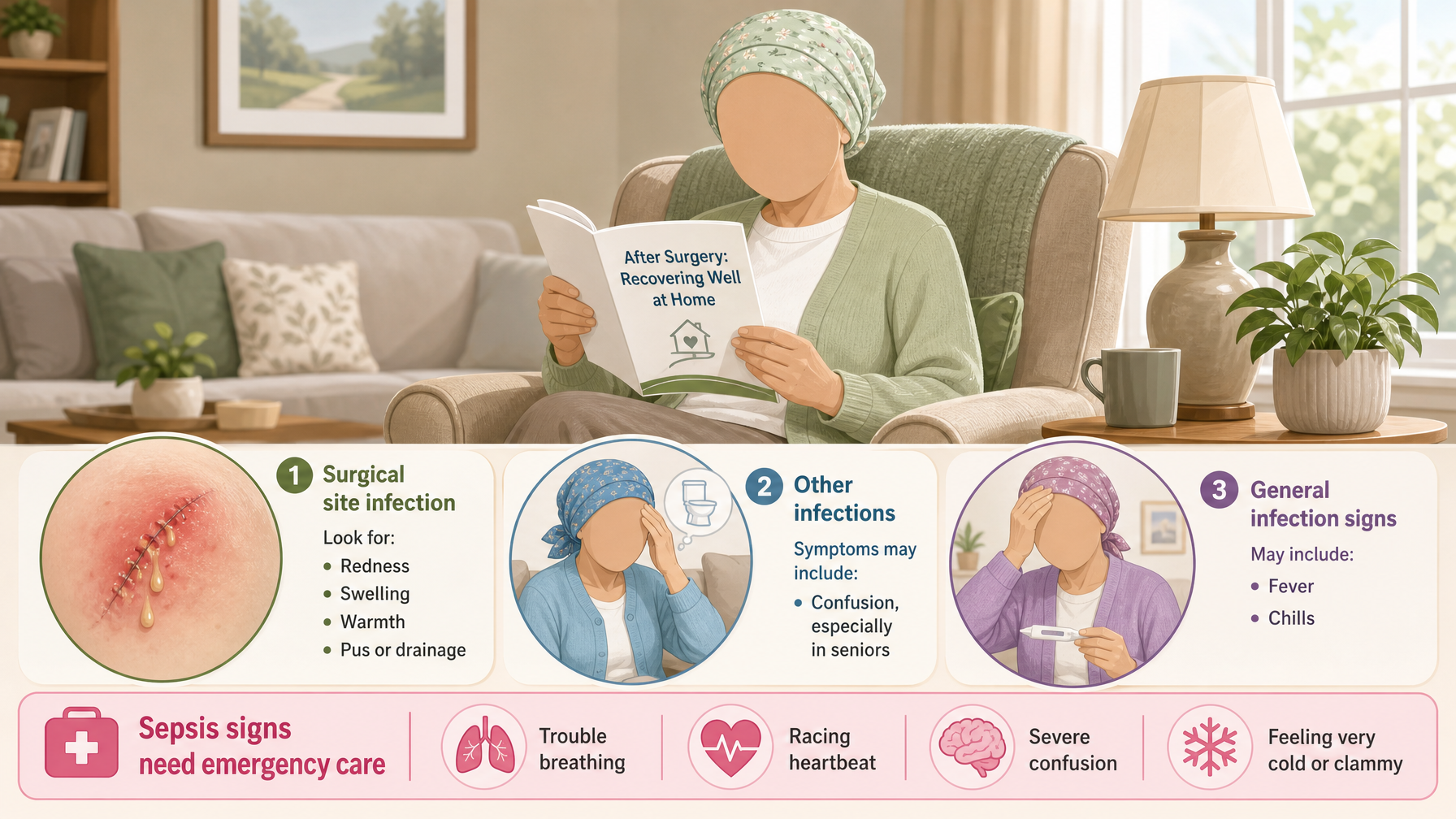
Surgical site infections are the most common post-operative complication. Early detection prevents serious problems.

Call Doctor Immediately If You See

Fever Over 100.4°F

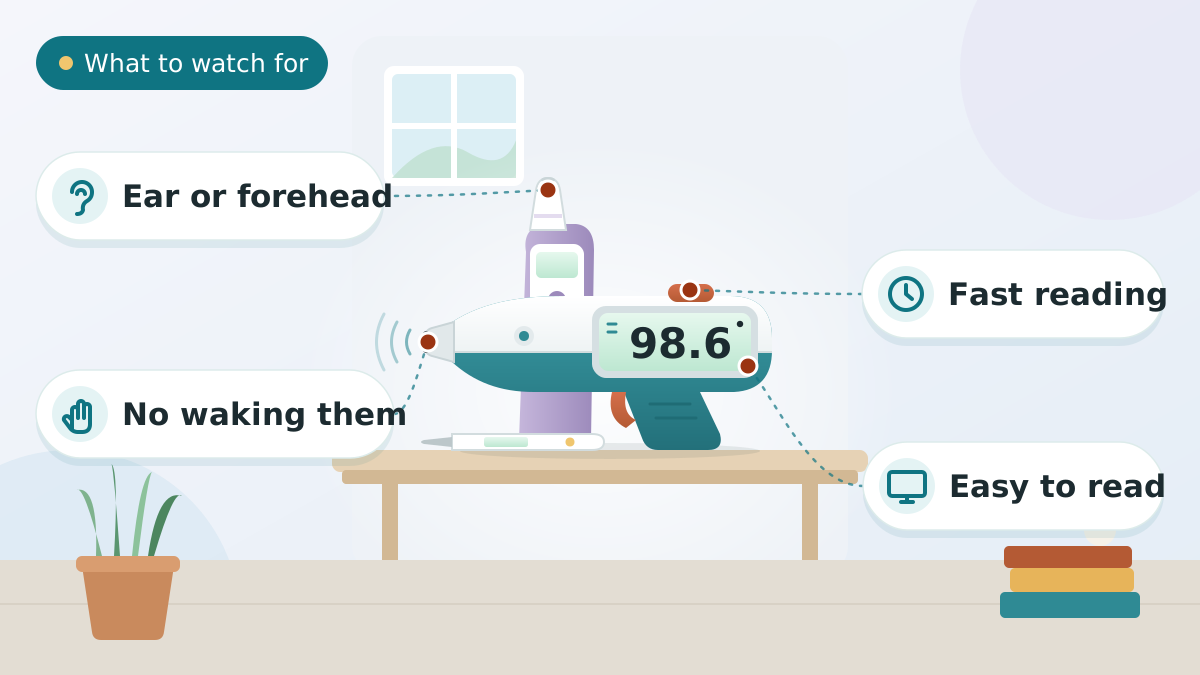
Any fever after surgery needs medical attention. Take temperature twice daily.

Increasing Redness Around Incision

Redness spreading beyond the immediate wound area signals infection.

Swelling That Gets Worse

Some swelling is normal. But increasing swelling after day 2-3 is concerning.

Pus or Cloudy Drainage

Clear or light pink drainage is normal. Yellow, green, or cloudy fluid means infection.

Worsening Pain

Pain should gradually improve. Pain that increases after day 2-3 may signal infection.

Sudden Confusion

In seniors, confusion is often the first sign of infection. Do not dismiss it as normal aging.

How to Check the Incision Properly

Wash your hands first: Always clean hands before looking at or touching the wound
Use good lighting: Check in bright light so you can see clearly
Look at the whole area: Check 2-3 inches around the incision
Check twice daily: Morning and evening checks catch changes early
Take photos: Pictures help you see if redness is spreading
Smell for odor: Foul smell is a clear infection sign

Take Temperature Twice Daily

Check temperature every morning and evening for the first two weeks. Write it down. Even a low-grade fever (100.4°F) needs a call to the doctor.

For more on infection signs in seniors, read UTI Signs in Seniors.

Real Caregiver Stories

These caregivers caught complications early and prevented serious problems:

Carol, 68 - Hip Replacement

"On day three after Mom came home, I noticed her incision looked redder. She had a low fever of 100.6°F. I called the surgeon right away. They saw her that afternoon and started antibiotics. The infection cleared up in a week. The surgeon said catching it early saved Mom from going back to the hospital."

What helped: Daily incision checks and taking temperature twice daily

David, 71 - Knee Surgery

"Dad seemed confused on the second night home. He did not know where he was. I thought it was just the pain medication. But I called the on-call nurse anyway. She said to bring him to the ER. Turns out he had a urinary tract infection that was causing delirium. They treated it and he was back to normal in two days."

What helped: Not dismissing sudden confusion as normal

Patricia, 65 - Abdominal Surgery

"My husband complained his left calf hurt on day five. It looked a little swollen. I remembered the discharge nurse said to watch for leg swelling. We went to urgent care. They found a small blood clot and started treatment right away. The doctor said waiting even one more day could have been dangerous."

What helped: Remembering discharge instructions about leg swelling

Blood Clots and Circulation Problems

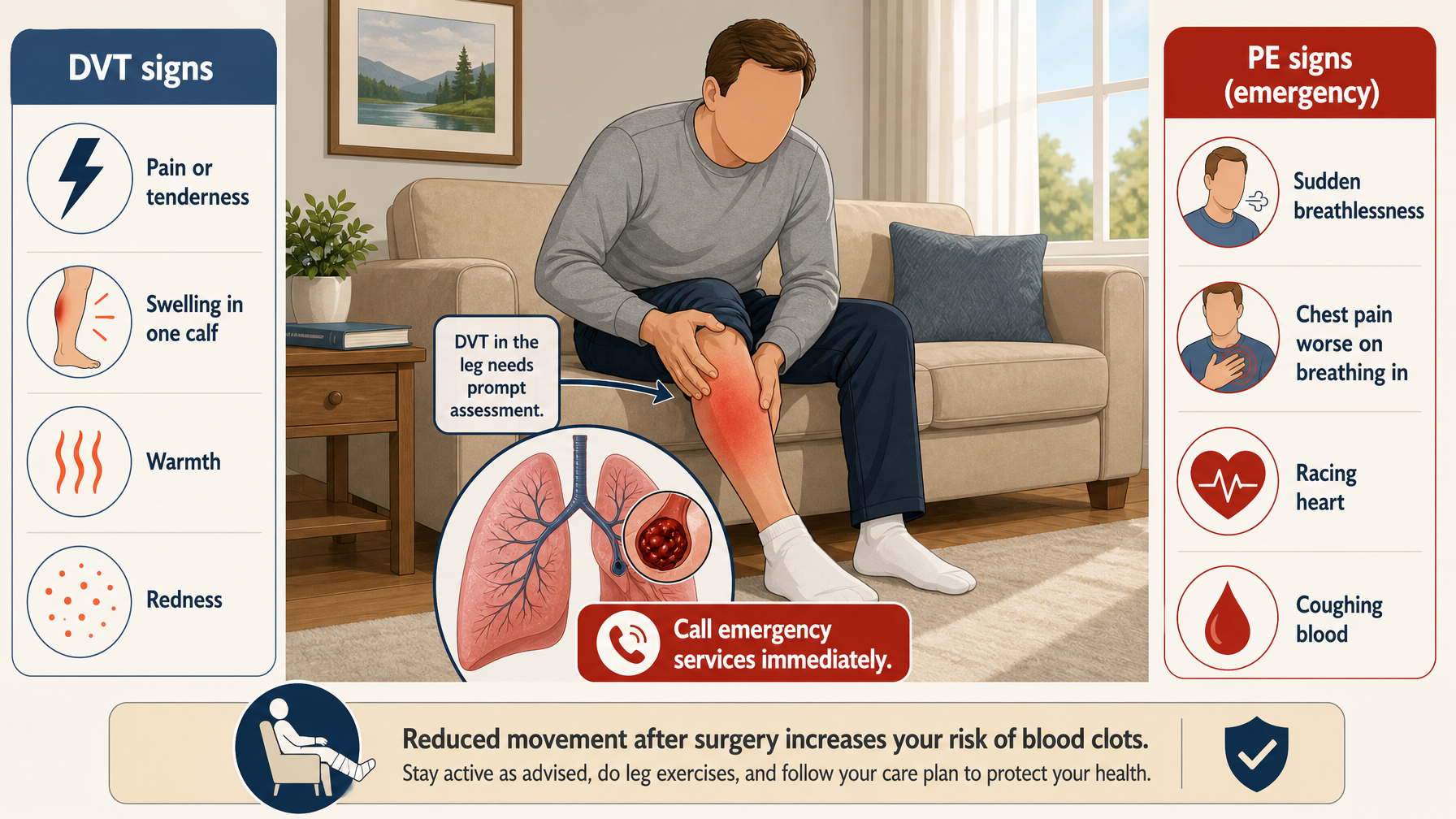
Blood clots are a serious risk after surgery. They usually form in the legs but can travel to the lungs. This is called a pulmonary embolism and is life-threatening.

Leg Blood Clot Signs (DVT)

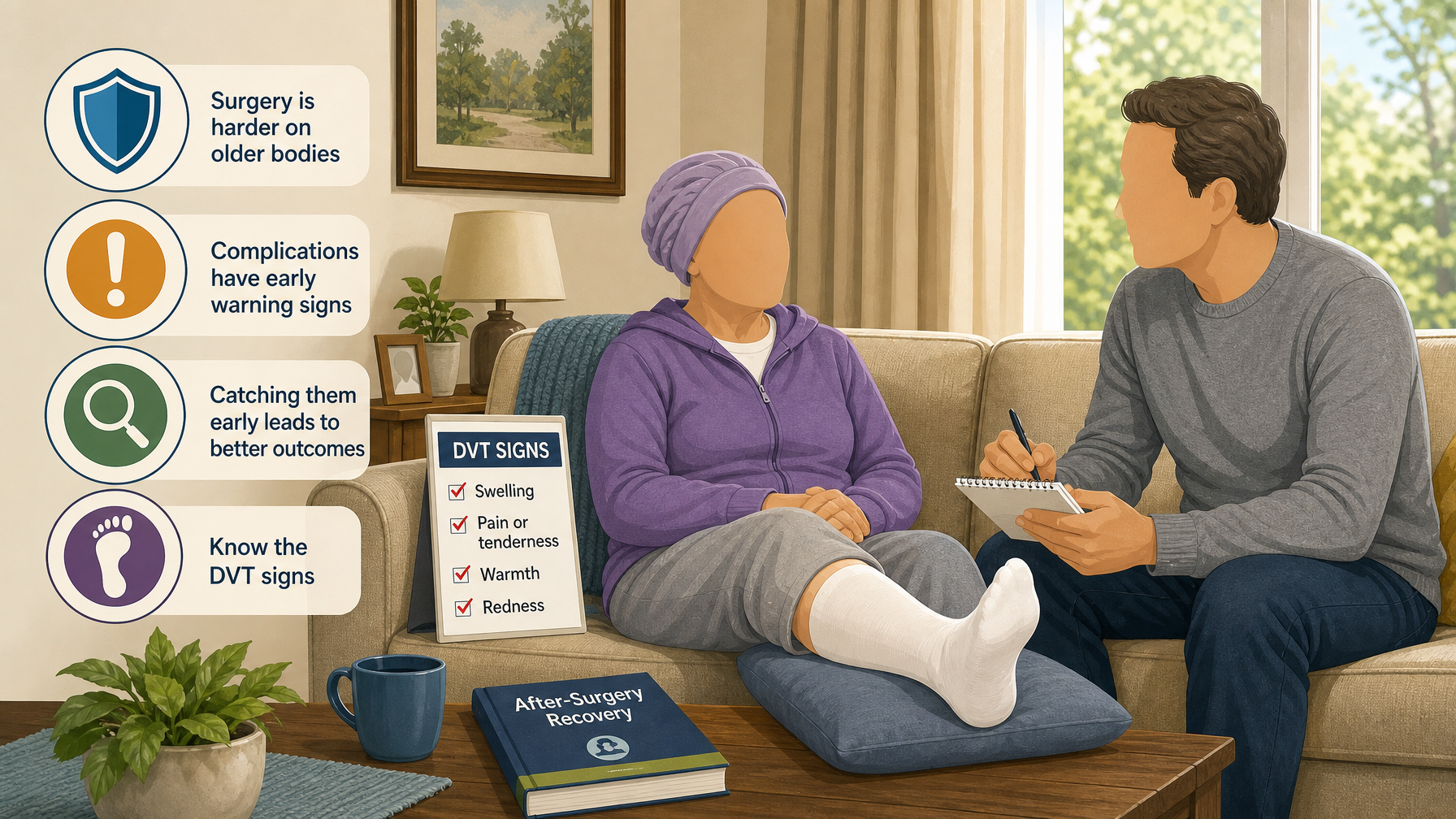
  • Swelling in one leg: One calf or thigh larger than the other
  • Calf pain or tenderness: Feels like a cramp that will not go away
  • Warmth in one leg: Affected leg feels warmer to touch
  • Red or discolored skin: Leg may look red, purple, or pale

Action: Call doctor same day. Do not massage the leg.

Lung Blood Clot Signs (PE)

  • Sudden shortness of breath: Breathing becomes difficult quickly
  • Chest pain: Sharp pain that worsens with deep breaths
  • Rapid heart rate: Heart beating fast for no clear reason
  • Coughing up blood: Even small amounts

EMERGENCY: Call 911 immediately

How to Prevent Blood Clots

Move legs often: Ankle pumps and leg lifts every hour while awake
Get up and walk: Short walks 3-4 times daily, even just across the room
Wear compression stockings: If prescribed by doctor
Stay hydrated: Dehydration thickens blood
Take blood thinners: Exactly as prescribed
Elevate legs: When sitting, prop feet up on a stool

For more on post-surgical weakness and mobility, read Weakness After Hospitalization.

Senior doing gentle leg exercises after surgery with caregiver

Gentle movement helps prevent blood clots

Delirium and Cognitive Changes

Post-operative delirium affects up to 50% of seniors after surgery. It is not the same as dementia. It comes on suddenly and is often reversible.

What Is Delirium?

Delirium is sudden confusion that comes and goes. It is caused by:

  • • Anesthesia effects
  • • Pain medications (especially opioids)
  • • Infection
  • • Dehydration
  • • Sleep deprivation
  • • Unfamiliar environment

Warning Signs of Delirium

  • Sudden confusion: Not knowing where they are or what day it is
  • Hallucinations: Seeing or hearing things that are not there
  • Agitation or restlessness: Trying to get out of bed unsafely
  • Sleep-wake reversal: Sleeping all day, awake all night
  • Mood swings: Rapid changes from calm to angry or fearful

How to Help Reduce Delirium

Keep familiar items nearby: Photos, favorite blanket, clock
Maintain day-night routine: Open curtains during day, dim lights at night
Orient frequently: Remind them where they are and why
Limit visitors: Too many people can be overwhelming
Ensure glasses and hearing aids: Sensory deprivation worsens confusion
Encourage fluids: Dehydration causes confusion
Manage pain: Uncontrolled pain increases delirium risk
Stay calm: Speak slowly and reassuringly

Delirium vs Dementia

Delirium: Sudden onset, fluctuates throughout day, usually reversible. Dementia: Gradual onset, steady symptoms, progressive. If your loved one has dementia, they are at higher risk for delirium after surgery.

For more on cognitive changes in seniors, read Signs Dementia Is Getting Worse.

How Anesthesia Affects Seniors

Anesthesia can cause temporary confusion in older adults. Here is what is normal and what is not:

Normal After Anesthesia

  • Mild grogginess: Feeling sleepy or foggy for 24-48 hours
  • Slight confusion: Forgetting what day it is or asking repeated questions
  • Nausea: Feeling sick to stomach for the first day
  • Gradual improvement: Getting clearer each day

Call Doctor If You See

  • Severe confusion: Not recognizing family or surroundings
  • Hallucinations: Seeing or hearing things that are not there
  • Getting worse: Confusion increasing after day 2-3
  • Extreme agitation: Trying to pull out tubes or get out of bed unsafely

Important: Confusion lasting more than 3 days or getting worse may signal delirium, infection, or medication problems. Always call the doctor.

Dehydration and Poor Nutrition

Seniors often do not feel thirsty or hungry after surgery. But dehydration and poor nutrition slow healing and increase complication risk.

Signs of Dehydration

  • Dark yellow urine: Should be pale yellow
  • Dry mouth and lips: Tongue may look coated
  • Dizziness when standing: Especially getting out of bed
  • Confusion or drowsiness: More than expected from medications
  • Reduced urine output: Less than 3-4 times daily
  • Sunken eyes: Eyes look hollow or tired

Signs of Poor Nutrition

  • Eating less than half of meals: For more than 2 days
  • Weight loss: Losing more than 5 pounds in first week
  • Extreme weakness: Too weak to get out of bed
  • Nausea or vomiting: Cannot keep food or liquids down
  • Wound not healing: Poor nutrition slows tissue repair
  • Constipation: No bowel movement for 3+ days

How to Encourage Fluids and Food

Hydration Strategies:

  • Offer fluids every hour: Small sips add up
  • Provide variety: Water, juice, broth, popsicles, gelatin
  • Use a straw: Makes drinking easier from bed
  • Keep water nearby: Within easy reach at all times

Nutrition Strategies:

  • Small frequent meals: 5-6 small meals instead of 3 large ones
  • Protein priority: Eggs, yogurt, chicken, fish help healing
  • Favorite foods: Comfort foods encourage eating
  • Nutritional drinks: Ensure or Boost if meals are too hard

Fluid Restrictions

Some seniors with heart or kidney problems have fluid restrictions. Always follow your doctor's specific instructions about how much to drink.

For more on recovery nutrition, read Signs Elderly Parent Not Recovering Properly.

Senior woman eating nutritious meal during recovery

Good nutrition speeds healing

Preventing Falls After Surgery

Falls are the leading cause of post-surgical complications in seniors. Weakness, pain medications, and unfamiliar equipment all increase fall risk.

High-Risk Situations

Nighttime Bathroom Trips

Pain medications cause drowsiness. Darkness increases fall risk. This is when most falls happen.

First Time Standing

Blood pressure drops when standing after lying down. Dizziness is common. Always sit first, then stand slowly.

Reaching for Items

Stretching or bending can cause loss of balance. Keep everything within easy reach.

Wet Bathroom Floors

Water from showering or hand washing creates slip hazards. Use bath mats and wipe up spills immediately.

Walking Without Assistive Device

Seniors often overestimate their strength. Use walker or cane every time, even for short distances.

Rushing to Answer Phone or Door

Hurrying causes falls. Let calls go to voicemail. Put a note on door asking visitors to wait.

Fall Prevention Checklist

Clear all walkways: Remove rugs, cords, clutter
Install night lights: Bathroom path and bedroom
Add grab bars: Bathroom and hallways
Use walker or cane: Every single time they walk
Non-slip footwear: Shoes with rubber soles, no slippers
Supervise transfers: Be present for bed, chair, toilet
Keep phone nearby: So they do not rush to answer
Bedside commode: For nighttime bathroom needs
Proper lighting: Bright lights in all rooms
Review medications: Some cause dizziness or drowsiness

One Fall Leads to More

Seniors who fall once are 2-3 times more likely to fall again. A fall during surgical recovery can cause serious injury and delay healing. Prevention is critical.

For complete fall prevention strategies, read our Mobility and Fall Prevention Guide.

Daily Symptom Monitoring Checklist

Check these items twice daily during the first two weeks after surgery:

Morning Check (8-10 AM)

  • Temperature: Take with thermometer
  • Incision: Look for redness, swelling, drainage
  • Pain level: Ask to rate 1-10
  • Mental clarity: Are they oriented and alert?
  • Appetite: Did they eat breakfast?
  • Leg swelling: Check both calves

Evening Check (6-8 PM)

  • Temperature: Take again before dinner
  • Incision: Second daily check
  • Pain level: Is pain controlled or worsening?
  • Fluid intake: Did they drink enough today?
  • Bowel/bladder: Any changes or problems?
  • Breathing: Any shortness of breath?

Keep a Written Log

Write down temperatures, pain levels, and any concerns. This helps you spot patterns and gives doctors important information if problems develop.

When to Call the Doctor or Seek Emergency Care

Knowing when to call for help can save lives. Here is a clear guide:

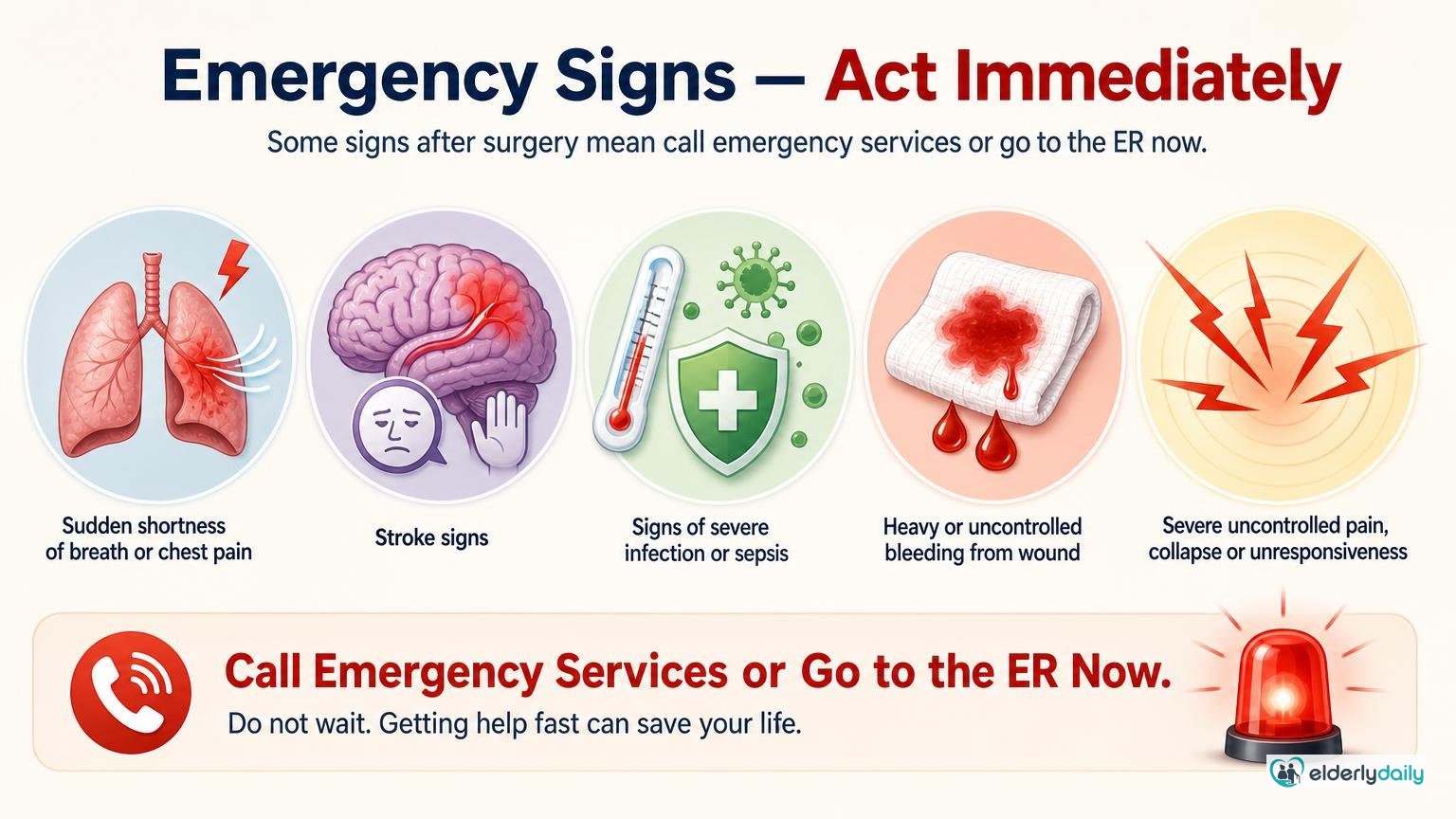
Call 911 or Go to ER Now

  • Chest pain: Any chest pain or pressure
  • Severe shortness of breath: Cannot catch breath or speak full sentences
  • Uncontrolled bleeding: Blood soaking through bandages
  • Sudden inability to move limb: Arm or leg suddenly weak or numb
  • Severe confusion or unresponsiveness: Cannot wake them or they do not recognize you
  • Fever over 103°F: Very high fever needs immediate care
  • Seizure: Any seizure activity

Call Doctor Same Day

  • Fever 100.4-103°F: Any fever needs evaluation
  • Increasing incision redness: Spreading beyond wound edges
  • New or worsening pain: Pain that is not controlled by medications
  • Leg swelling or pain: One leg more swollen than the other
  • Cannot urinate: No urination for 6-8 hours
  • Vomiting: Cannot keep down food or medications
  • New confusion: Sudden mental changes

What to Tell the Doctor

When you call, have this information ready:

Medical Information:

  • • Type of surgery and date
  • • Current medications and doses
  • • Allergies
  • • Other health conditions
  • • Recent vital signs (temperature, blood pressure)

Symptom Details:

  • • When symptoms started
  • • How severe (rate 1-10)
  • • What makes it better or worse
  • • Any other new symptoms
  • • What you have tried already

Trust Your Instincts

If something feels wrong, call the doctor. You know your loved one best. Medical professionals would rather you call unnecessarily than wait too long.

For more on preventing complications, read Preventing Hospital Readmission.

Medication-Related Complications

Pain medications and antibiotics can cause side effects in seniors. Watch for these problems:

Opioid Pain Medications

Medications like oxycodone, hydrocodone, or morphine can cause:

Common Side Effects:

  • • Severe constipation
  • • Drowsiness or confusion
  • • Nausea and vomiting
  • • Dizziness when standing

Call Doctor If:

  • • No bowel movement in 3 days
  • • Extreme sleepiness
  • • Slow or shallow breathing
  • • Cannot wake them up

Antibiotics

Antibiotics prevent infection but can cause digestive problems:

Common Side Effects:

  • • Diarrhea or loose stools
  • • Stomach upset
  • • Loss of appetite
  • • Yeast infections

Call Doctor If:

  • • Severe diarrhea (5+ times daily)
  • • Blood in stool
  • • Severe stomach pain
  • • Rash or hives

Blood Thinners

Medications to prevent blood clots require careful monitoring:

What to Watch:

  • • Easy bruising
  • • Bleeding gums
  • • Nosebleeds
  • • Blood in urine or stool

Call Doctor If:

  • • Any unusual bleeding
  • • Large bruises appear
  • • Bleeding that will not stop
  • • Severe headache

For complete medication safety guidance, read our Medication Management Guide.

Pneumonia Risk After Surgery

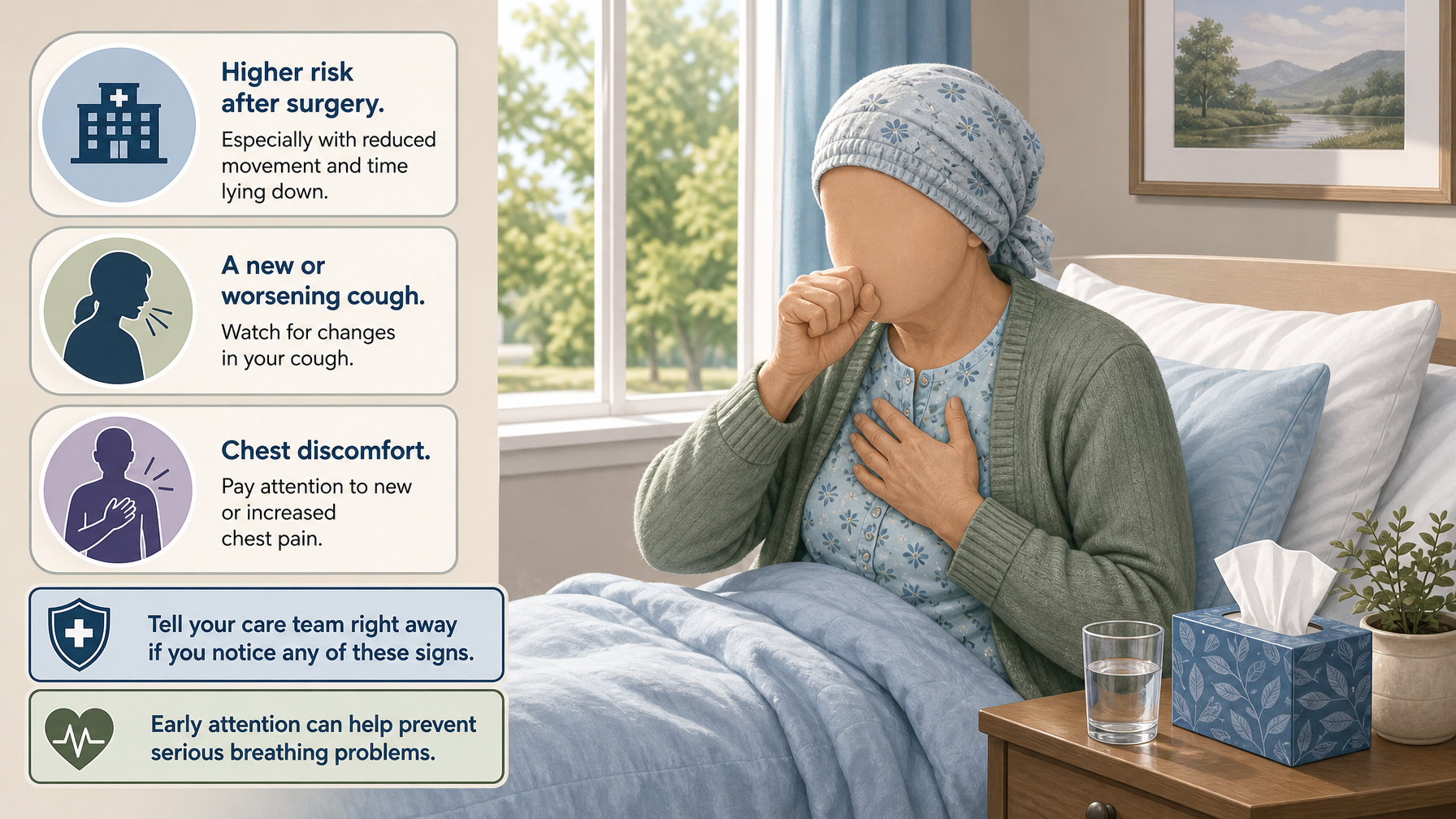
Pneumonia is one of the most common post-surgical complications in seniors. It develops when fluid builds up in the lungs.

Warning Signs of Pneumonia

New or worsening cough: Especially with mucus
Shortness of breath: Breathing faster or harder than normal
Fever: Temperature over 100.4°F
Chest pain: Especially when breathing deeply
Extreme fatigue: Too weak to get out of bed
Confusion: Sudden mental changes

How to Prevent Pneumonia

Deep breathing exercises: Use incentive spirometer as directed
Sit up often: Do not stay flat in bed all day
Move around: Walk short distances several times daily
Stay hydrated: Fluids help clear lungs
Cough when needed: Do not suppress productive coughs
Keep visitors healthy: No sick visitors during recovery

Wound Healing Problems

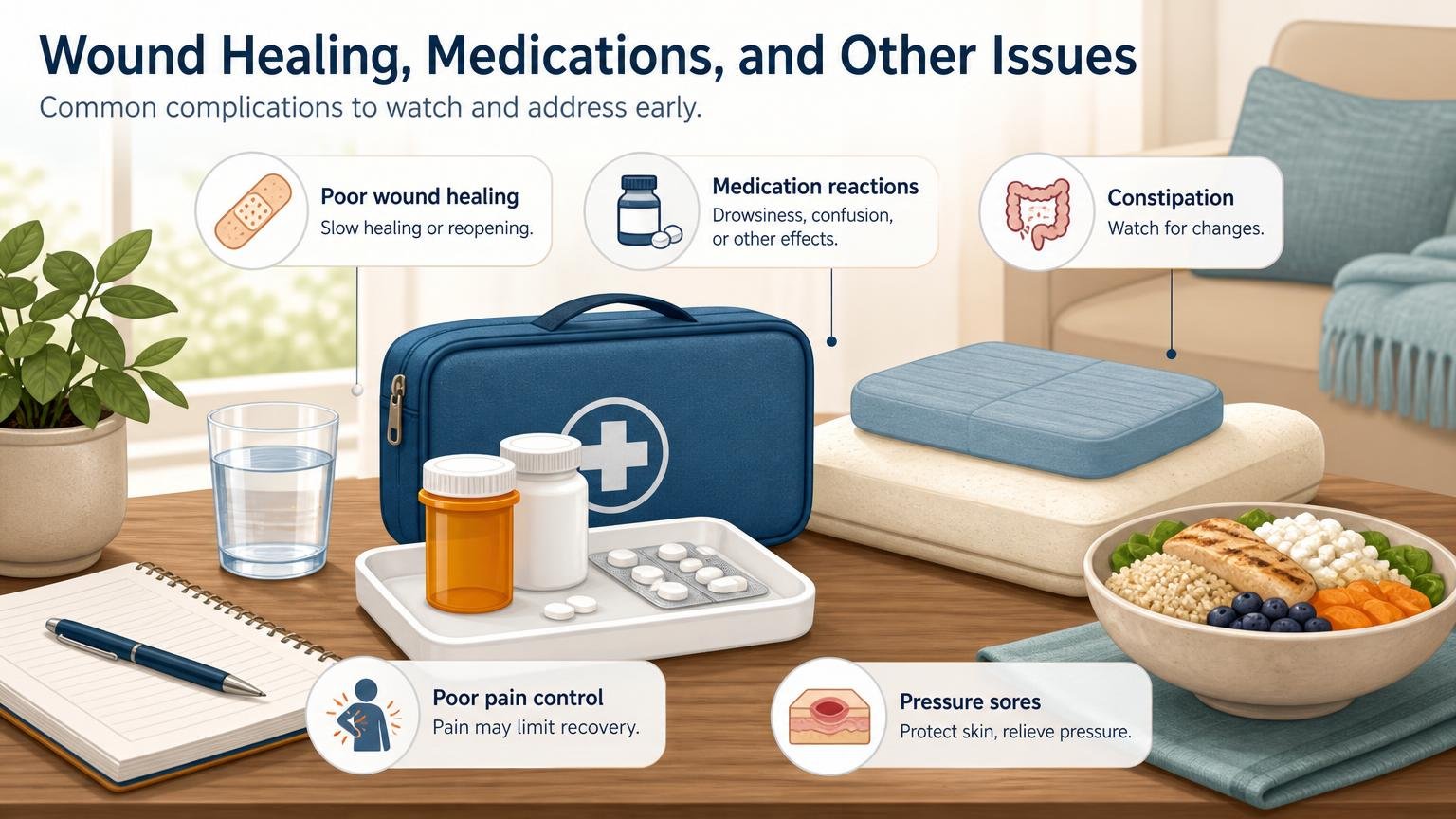
Surgical wounds should heal steadily. Watch for signs of poor healing:

Infection Signs

  • • Increasing redness
  • • Warmth around incision
  • • Pus or cloudy drainage
  • • Foul odor
  • • Red streaks from wound

Wound Opening

  • • Stitches or staples pulling apart
  • • Edges separating
  • • Tissue visible inside
  • • Increased drainage
  • • Wound getting larger

Slow Healing

  • • No improvement after 1 week
  • • Wound looks the same
  • • Continued drainage
  • • Scab keeps falling off
  • • Pain not decreasing

Proper Wound Care at Home

Wash hands first: Always clean hands before touching wound
Follow instructions: Change dressings exactly as directed
Keep dry: Protect from water unless told otherwise
Watch for changes: Check incision twice daily
Do not remove strips: Let steri-strips fall off naturally
Call with questions: Never guess about wound care

Urinary Problems After Surgery

Surgery and anesthesia can affect bladder function. Some urinary changes are temporary, but others need treatment.

Usually Temporary

  • Difficulty starting urination: Common for 24-48 hours
  • Frequent urination: May last several days
  • Mild burning: Should improve within 2-3 days
  • Small leaks: Especially after catheter removal

Call Doctor If

  • Cannot urinate at all: For more than 6-8 hours
  • Blood in urine: More than light pink tinge
  • Severe burning: Pain that is getting worse
  • Fever with urinary symptoms: May signal UTI

For more on urinary issues after hospitalization, read Temporary Incontinence After Hospitalization.

Senior walking with physical therapist after surgery

Early mobility reduces complication risk

Common Mistakes That Increase Risk

Avoid these mistakes that can lead to complications:

Letting Them Stay in Bed All Day

Why it is risky: Increases pneumonia risk, blood clots, and muscle weakness.

Do this instead: Help them sit up in a chair for meals. Walk short distances 3-4 times daily, even just to the bathroom.

Ignoring Small Warning Signs

Why it is risky: Small problems become big ones fast in seniors.

Do this instead: Call the doctor about any new symptom. Better to call unnecessarily than wait too long.

Not Following Medication Schedule

Why it is risky: Missed antibiotics allow infection. Skipped pain medication makes movement harder.

Do this instead: Use a pill organizer. Set phone alarms. Keep a written medication log.

Skipping Follow-Up Appointments

Why it is risky: Doctors need to check healing progress and remove stitches or staples.

Do this instead: Schedule follow-up before leaving hospital. Put it on the calendar. Arrange transportation in advance.

Not Preparing the Home Before Discharge

Why it is risky: Falls are the leading cause of post-surgical complications.

Do this instead: Set up bedroom, bathroom, and walking paths before they come home. Get equipment in advance.

Equipment That Reduces Complication Risk

These tools help prevent falls, support mobility, and make recovery safer:

Recovery Timeline: What to Expect

Understanding normal recovery helps you spot problems. Here is a general timeline:

Days 1-3: Highest Risk Period

What is normal: Pain, fatigue, mild confusion, nausea, difficulty sleeping

What to watch for: Fever, severe pain, inability to urinate, extreme confusion, shortness of breath

Focus: Monitor vital signs closely. Follow medication schedule. Watch incision. Encourage gentle movement.

Days 4-7: Adjustment Week

What is normal: Gradual pain reduction, improved appetite, better sleep, increased mobility

What to watch for: Wound opening, leg swelling, persistent fever, worsening pain

Focus: Attend follow-up appointment. Continue monitoring. Gradually increase activity. Watch for infection signs.

Weeks 2-4: Steady Improvement

What is normal: Continued strength gains, reduced pain medication, better independence

What to watch for: Plateau in recovery, new symptoms, depression or withdrawal

Focus: Physical therapy if ordered. Nutrition support. Monitor for signs of not recovering properly.

After 30 Days: Continued Recovery

What is normal: Most daily activities resumed, minimal pain, good energy levels

What to watch for: Persistent weakness, ongoing pain, new complications

Focus: Full recovery may take 3-6 months. Continue safe practices. Stay in touch with doctor.

For detailed recovery expectations, read What to Expect After Hospital Discharge.

When Home Care Is Not Enough

Sometimes seniors need more support than family can provide. Consider professional help if:

Home Health Services

Medicare may cover:

  • Skilled nursing: Wound care, medication management, IV antibiotics
  • Physical therapy: Strength and mobility training at home
  • Occupational therapy: Help with daily activities
  • Home health aide: Personal care assistance

Signs You Need Help

  • Complex wound care: Drains, packing, or frequent dressing changes
  • Multiple medications: Difficult schedule or IV medications
  • Transfer difficulty: Cannot safely move from bed to chair
  • Caregiver exhaustion: You cannot provide 24/7 care alone
  • Medical complexity: Multiple health conditions requiring monitoring

Medicare Coverage: If your loved one is homebound and needs skilled care, Medicare Part A or B may cover home health services. Ask the discharge planner or call Medicare at 1-800-MEDICARE.

More Helpful Guides

Learn more about post-surgical recovery and complication prevention:

Frequently Asked Questions

Medical Disclaimer

This guide provides general educational information about common post-surgical complications in seniors. It is not medical advice and should not replace professional medical care.

Always follow your surgeon's specific instructions. Every surgery and every patient is different. Your doctor's guidance takes priority over general information.

Call your doctor or seek emergency care if you have any concerns about your loved one's recovery. Do not wait or try to diagnose problems yourself.

This information is not intended to diagnose, treat, cure, or prevent any disease or medical condition. Consult qualified healthcare professionals for personalized medical advice.

Need a Complete Recovery Plan?

Get step-by-step guidance for safe recovery at home