
What to Expect After Hospital Discharge for an Elderly Parent

Educational guidance for caregivers, not medical advice. Always follow the discharge instructions from the hospital team and contact them with questions.
Discharge day can feel like being handed a fragile situation with little instruction. Knowing what is normal, what is not, and how to prepare the home turns a stressful handover into a manageable recovery.
Key takeaways
- The first week home is the highest-risk period for setbacks and readmission — extra attention now prevents problems later.
- Get a clear discharge plan before you leave: medications, follow-up appointments, warning signs, and who to call.
- Some temporary weakness, tiredness, poor appetite, and mild confusion are common early on; a worsening of any of these is a red flag.
- Prepare the home for safety and reduced mobility before pickup — falls after discharge are common and serious.
- Know the signs recovery is off-track and act early — don’t wait for the next appointment.
Quick answer
What should I expect after my elderly parent is discharged from the hospital?
Expect a fragile first week: some weakness, fatigue, reduced appetite, and mild confusion are normal as they recover, but any worsening is a warning sign. Before leaving, get a clear discharge plan — medication list, follow-up appointments, wound or care instructions, and warning signs with a number to call. Prepare the home for safety and limited mobility, watch closely, and don’t hesitate to contact the care team early. See preventing readmission.
Why the first week matters most

The transition from hospital to home is one of the most vulnerable moments in an older person’s health. In the hospital, everything was monitored; at home, that responsibility shifts — often to family — usually with a rushed handover and a stack of paperwork. It is no coincidence that a large share of readmissions happen in the first days and weeks after discharge.
The good news is that many early setbacks can be reduced with preparation and vigilance. This guide covers what to expect, what to set up, and — crucially — how to tell an ordinary rough patch from a sign that something is wrong. For the deeper prevention playbook, pair it with how to prevent hospital readmission.
An ElderlyDaily original
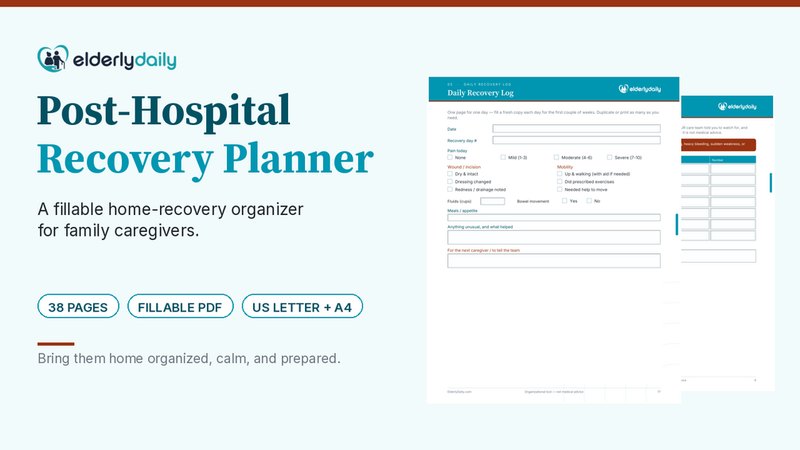
Bringing someone home from the hospital?
Post-Hospital Recovery Planner
One-off purchase · Instant download · Fillable PDF · 38 pages · US Letter + A4

Sponsored Pick
LiveFine 28-Day Automatic Pill Dispenser
Most seniors who want a reliable, lockable dispenser with no monthly fees
Check PriceGet a clear discharge plan before you leave

Do not leave the hospital without understanding the plan. Ask the discharge nurse or team to walk you through each of these, and take notes:
- Medications: an up-to-date list — what changed, what stopped, what is new, doses, and timing. Reconcile it against what they took before; medication errors at discharge can contribute to readmission. See medication management.
- Follow-up appointments: which doctors, by when, and whether they are already booked. Missed follow-ups drive setbacks.
- Warning signs: exactly what symptoms mean "call the doctor" versus "go to the ER," and the phone numbers for each.
- Care instructions: wound or incision care, activity limits, diet, equipment, and any therapy (physical or occupational).
- Equipment and services: any home health visits, medical equipment being delivered, or aids you need to have ready.
Good to know
Ask for the "teach-back": have them explain each instruction and then repeat it back in your own words to confirm you have it right. It is your right to leave understanding the plan — do not be rushed.
What is normal in early recovery

Recovery is rarely a straight line, and some difficulties are expected as the body and mind recover from illness and a hospital stay:
- Weakness and fatigue — even a short stay causes deconditioning; getting tired quickly is common. See weakness after hospitalization.
- Reduced appetite for a while, with energy and interest in food gradually returning.
- Some mild confusion or "not quite themselves" in the first days, especially after anesthesia or in the very frail — this should steadily improve.
- Disturbed sleep and a day/night rhythm that takes time to reset.
- Unsteadiness on the feet — hence the raised fall risk that makes home safety essential.
The theme is that these should be stable or improving. The moment any of them clearly worsens, treat it as a signal — covered next.
Red flags: when to call, when to go to the ER

Knowing the difference between a rough patch and an emergency is the most valuable thing a caregiver can carry through the first week. Contact the care team promptly for:
- Worsening weakness, confusion, or fatigue — a decline rather than slow improvement.
- Fever, or signs of infection at a wound (increasing redness, swelling, warmth, discharge, or spreading).
- New or worsening pain, or pain not controlled by the prescribed plan.
- Not eating or drinking, or signs of dehydration.
- New incontinence or confusion, which can signal a UTI or other acute problem.
Call emergency services for chest pain, difficulty breathing, sudden severe weakness or one-sided numbness, a serious fall, or any symptom the discharge sheet flags as an emergency. A fuller list is in signs an elderly parent is not recovering properly.
Safety first
When unsure whether a symptom is serious, call the care team or a nurse line rather than waiting for the next appointment. Catching a complication early can help avoid a readmission.
Prepare the home before pickup

Ideally set the home up before you bring them back, because they will arrive tired and less steady than usual:
- Reduce fall risk: clear walking paths, remove loose rugs, improve lighting, and set up the bedroom and bathroom for safety — falls after discharge are common and can undo the recovery. See why elderly parents keep falling.
- Have mobility aids ready and correctly fitted — a walker, cane, or rollator as advised. If transfers are hard, see safe transfer techniques and helping them stand up.
- Set up a recovery station near where they will rest: water, medications, phone, tissues, and anything needed within reach.
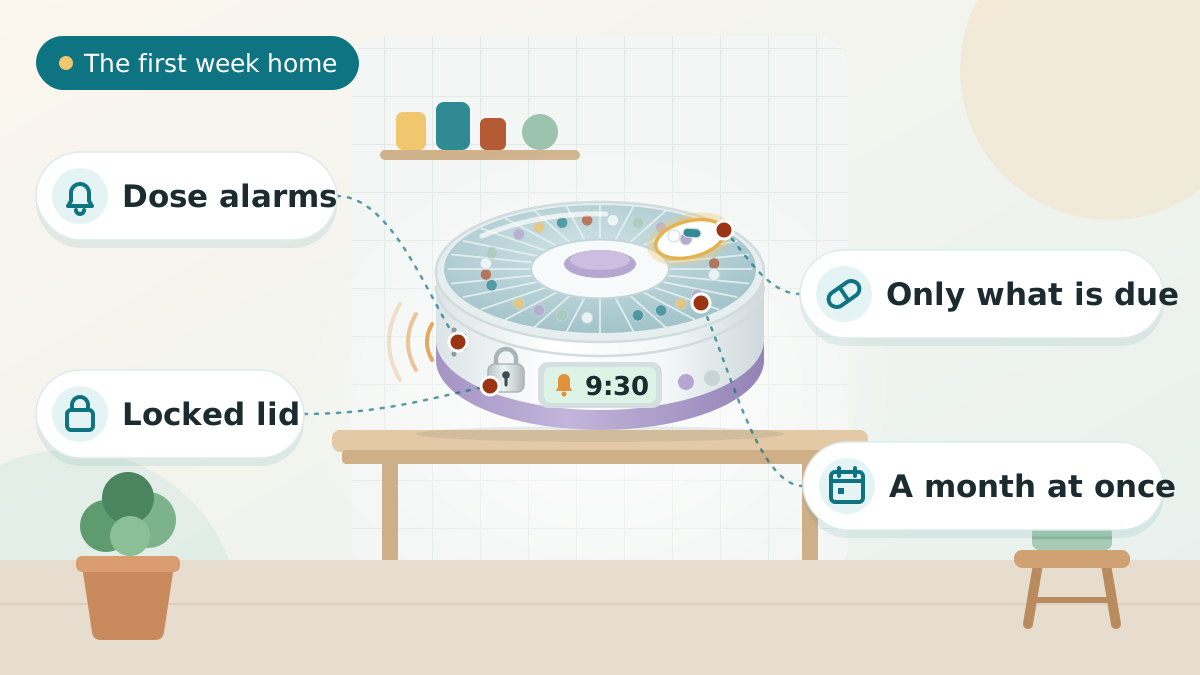
- Organize medications with a pill organizer or automatic dispenser to prevent missed or doubled doses.
- Consider a medical alert device so help is a button away if they are alone at any point.
Our post-hospital care setup guide and post-surgery home setup cover this room by room.
Getting through the first days

Once home, a calm routine helps recovery and helps you spot problems:
- Give medications exactly as the new plan says, and watch for side effects from any changes.
- Encourage gentle movement as allowed — even short, safe walks fight the deconditioning of bed rest — but respect the activity limits. See post-hospital recovery at home.
- Support eating and hydration with small, frequent, appealing meals and steady fluids.
- Keep follow-up appointments and prepare questions for them.
- Track how each day compares to the last — steady improvement is the goal; note anything that slips.
Finally, look after yourself. The first week is demanding, and burning out helps no one — share the load and use help where you can, as in preventing caregiver burnout.
Frequently asked questions
How long does recovery take after a hospital stay for an elderly person?
It varies widely with the illness, the length of stay, and baseline health, but older adults often take significantly longer than younger people — sometimes weeks to months to return to their prior level, and occasionally not fully. What matters most is the direction: steady improvement is reassuring, while worsening or a plateau with new symptoms is a reason to contact the care team.
Is it normal for an elderly person to be confused after leaving the hospital?
Some mild confusion in the first days is common, especially after anesthesia, illness, or in the very frail, and it should steadily improve. Confusion that is new, worsening, or comes with fever or new incontinence is a red flag — it can indicate delirium or an infection such as a UTI and needs prompt medical attention.
What should be in a discharge plan?
A clear discharge plan should cover the updated medication list (what changed, stopped, or is new), follow-up appointments, specific warning signs with numbers to call, wound or care instructions and activity limits, and any home health services or equipment. Ask the team to explain each and confirm your understanding before you leave.
Why is the first week after discharge so risky?
Monitoring drops from constant hospital observation to home care, often with a rushed handover, while the person is still weak and unsteady. Medication errors, missed follow-ups, infections, and falls cluster in this window — which is why preparation and early vigilance can help reduce setbacks and readmissions.
How do I prevent my parent falling after they come home?
Prepare the home before pickup: clear paths and rugs, improve lighting, and set up the bedroom and bathroom for safety. Have correctly fitted mobility aids ready, keep essentials within reach, and consider a medical alert device. Post-discharge weakness makes falls common, so treat fall prevention as a priority — see our fall prevention guide.
When should I call the doctor after discharge?
Call promptly for worsening weakness or confusion, fever or signs of wound infection, uncontrolled or new pain, not eating or drinking, or new incontinence or confusion. Call emergency services for chest pain, breathing difficulty, sudden severe weakness or one-sided numbness, or a serious fall. When unsure, a nurse line can help you decide.
