
Post-Hospital Recovery at Home: A Caregiver Guide

Educational guidance for caregivers, not medical advice. Follow the hospital’s discharge instructions and your doctor’s guidance for the specific condition.
Recovery happens at home, not in the hospital. A steady routine across medications, movement, nutrition, and rest — plus knowing when to call — is what carries an older adult back to strength.
Key takeaways
- Recovery rests on five pillars: medications, safe mobility, nutrition, rest, and watching for complications.
- Fight deconditioning with early, safe movement — bed rest weakens muscles fast, and gentle activity (as allowed) speeds recovery. See weakness after hospitalization.
- Get medications exactly right — errors after discharge can lead to readmission.
- Protein and fluids matter — the body needs both to heal, and appetite is often low, so make food easy and frequent.
- Know the signs recovery is going wrong and act early to prevent a readmission.
Quick answer
How do I care for an elderly parent recovering at home after a hospital stay?
Build a daily routine around five pillars: give medications exactly as the discharge plan says; encourage safe, gradual movement to rebuild strength (respecting activity limits); support nutrition and hydration with small, frequent, protein-rich meals; ensure good rest and sleep; and watch for complications — infection, worsening pain, confusion, or decline — calling the care team early. Prepare the home for safety and keep follow-up appointments.
Pillar 1: Get medications exactly right
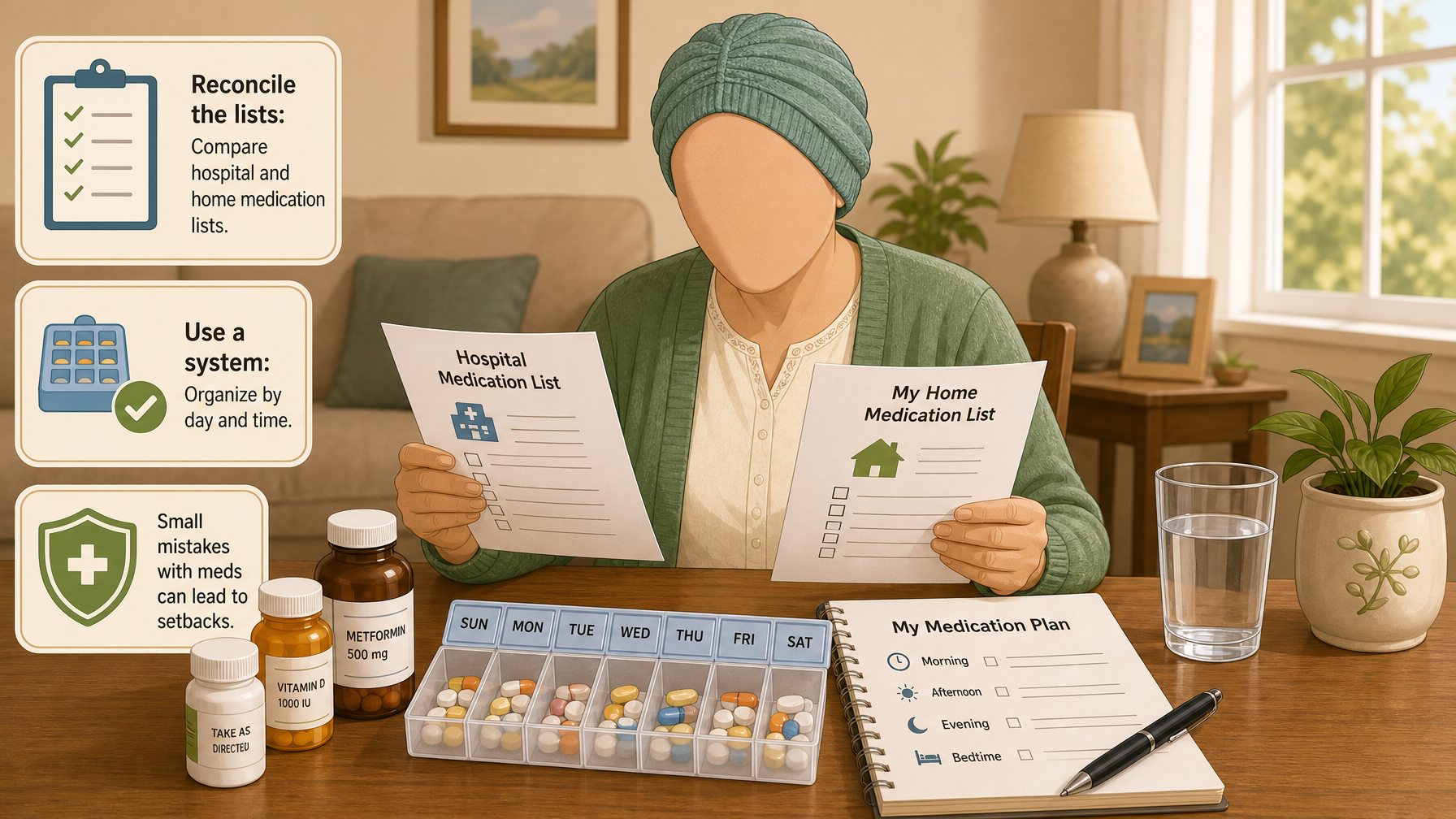
Medication management is one of the most error-prone parts of home recovery, and mistakes here can contribute to readmission. Hospital stays often change medications — new drugs added, old ones stopped or re-dosed — and it is easy to end up taking the old and the new together, or missing something important.
- Reconcile the lists: compare the discharge medication list against everything they took before, and resolve any conflicts with the pharmacist or doctor.
- Use a system: a weekly pill organizer or an automatic dispenser can help prevent missed and doubled doses — see medication management.
- Know each medication’s job and side effects, especially for new ones, and watch for reactions (dizziness, drowsiness, stomach upset).
- Do not stop or change anything without medical advice, even if they feel better.
Watch out
If a new medication seems to cause dizziness or drowsiness, that raises fall risk during an already unsteady recovery. Report it to the doctor rather than stopping it yourself.
Bonus: Health Tracker Pack
An ElderlyDaily original
Bringing someone home from the hospital?
Post-Hospital Recovery Planner
- Discharge snapshot: care team, who to call and when, insurance and documents
- Medication reconciliation, a master list, a daily record and refills
- Daily recovery log, vitals log, and a symptom and pain log
One-off purchase. Instant download.
Fillable PDF · 38 pages · US Letter + A4

Sponsored Pick
Stander Wonder Pole Plus with Rotating Double Grab Bar
Renters, anyone who cannot drill, or spots with no convenient wall
Check PricePillar 2: Rebuild strength with safe movement
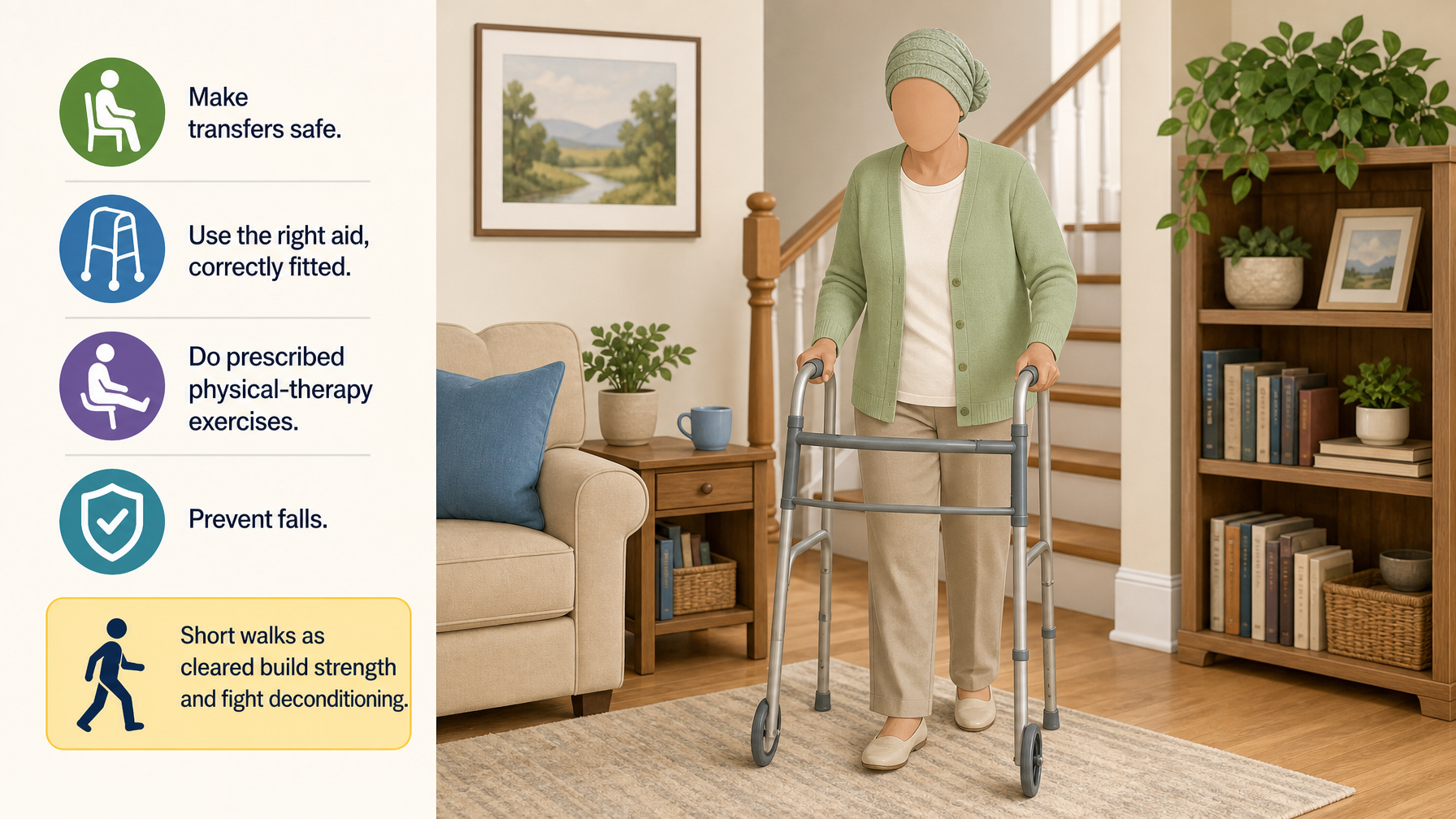
It is tempting to think rest means staying in bed, but prolonged bed rest is one of the biggest threats to recovery: muscle strength fades remarkably fast, and lost strength is slow to regain. The goal is the right balance — respecting the specific activity limits from the hospital while avoiding needless immobility.
- Move early and often within the allowed limits — regular position changes, sitting up, standing, and short walks as cleared. This fights the deconditioning covered in weakness after hospitalization.
- Make transfers safe: getting in and out of bed and chairs is high-risk when weak — see safe transfer techniques and how to help them stand up.
- Use the right aid, correctly fitted — a walker, rollator, or cane; see walker vs cane.
- Do prescribed physical-therapy exercises if any were given — they are central to regaining function.
- Prevent falls, which can undo everything — set up the bedroom and bathroom safely, and build gentle balance work back in as they steady.
Pillar 3: Nutrition and hydration for healing
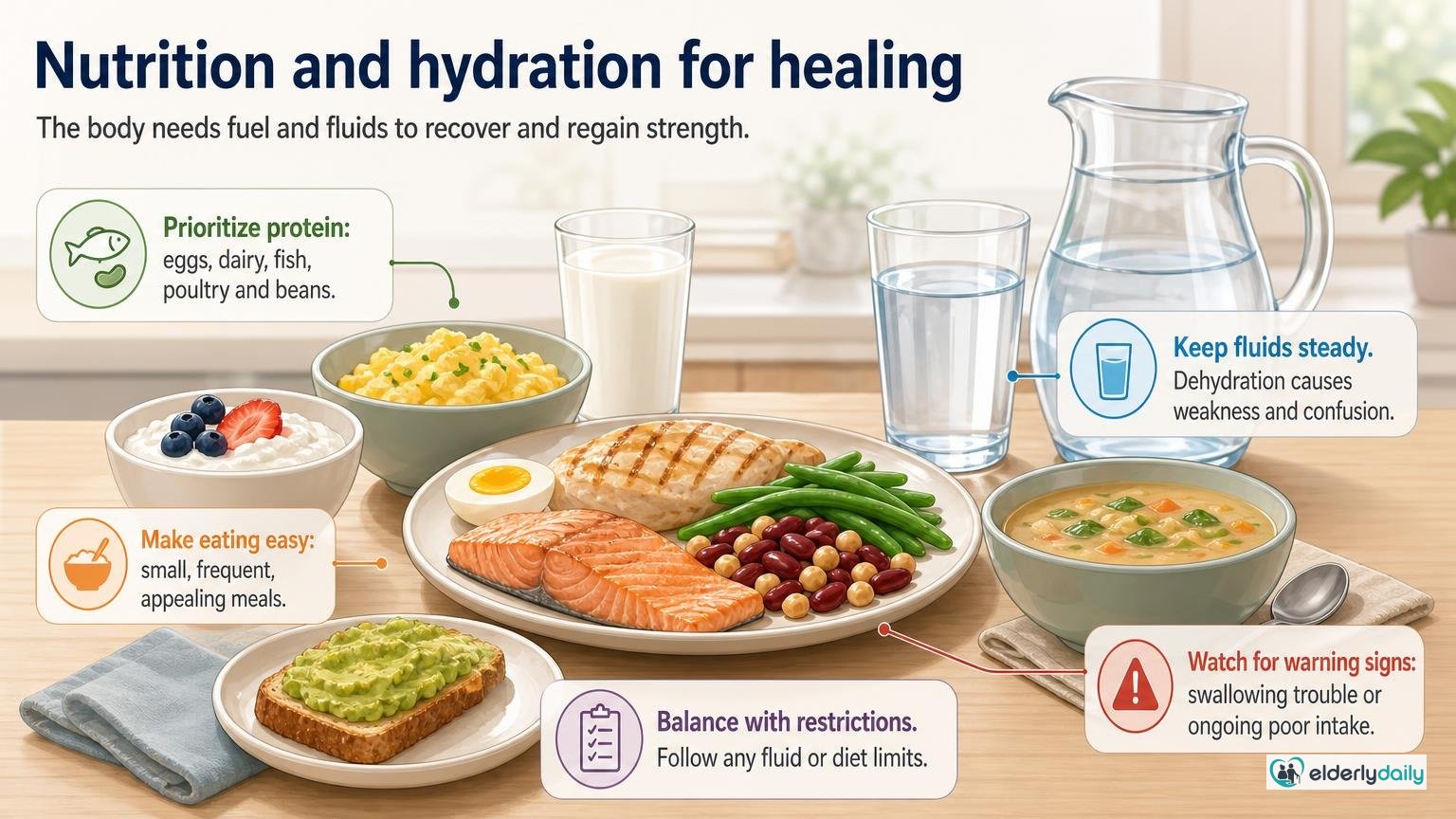
The body needs fuel and building blocks to heal, yet appetite is often poor after a hospital stay. Getting enough — especially protein and fluids — directly affects wound healing, strength, and energy.
- Prioritize protein, which the body needs to rebuild tissue and muscle — eggs, dairy, fish, poultry, beans, protein-rich snacks, or a protein or nutritional drink when eating enough solid food is difficult. Ask the doctor or a dietitian about targets for the specific situation.
- Make eating easy: small, frequent, appealing meals beat three large ones when appetite is low. Favourite foods count.
- Keep fluids steady to prevent dehydration, which causes weakness and confusion — but balance this with any fluid restrictions given.
- Watch for swallowing trouble or ongoing poor intake, and raise it with the care team; persistent poor eating is itself a warning sign.
If eating and drinking simply are not happening, do not wait it out — see signs an elderly parent is not recovering properly.
Pillar 4: Wound, skin, and rest care
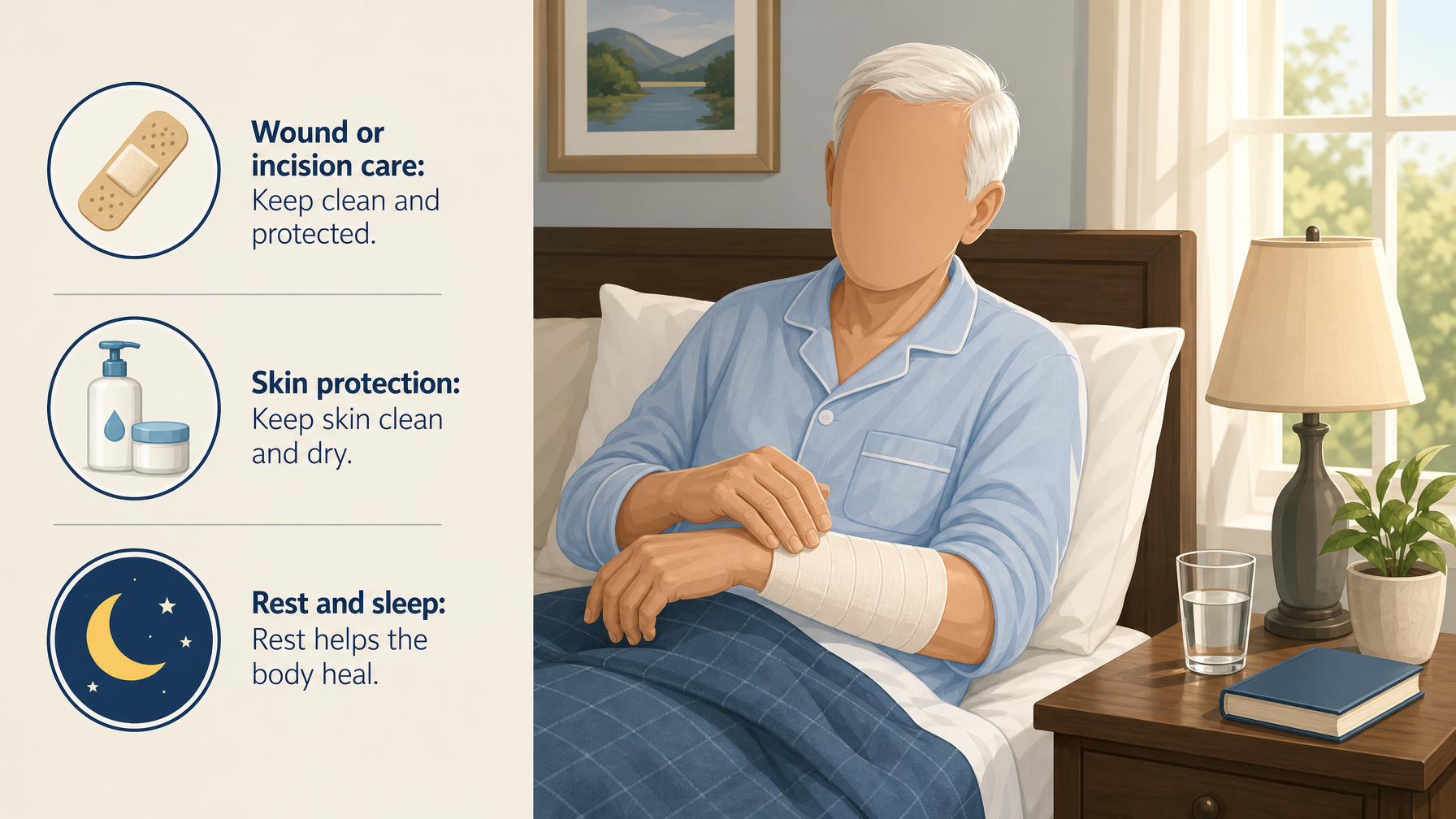
Two quieter but important parts of recovery:
- Wound or incision care (if any): follow the instructions exactly for cleaning and dressing, and watch for infection — increasing redness, swelling, warmth, discharge, or fever. Report these promptly.
- Skin protection: someone spending more time in bed or a chair is at risk of pressure sores. Encourage position changes, and use supportive cushions and pillows. If incontinence is part of the picture, protect the skin with a good routine — see managing incontinence at home.
- Rest and sleep: healing needs sleep, but hospital stays scramble sleep patterns. Support a calm day/night rhythm, daylight and gentle daytime activity, and a comfortable bed setup — see safe bedroom setup.
Pillar 5: Watch for complications
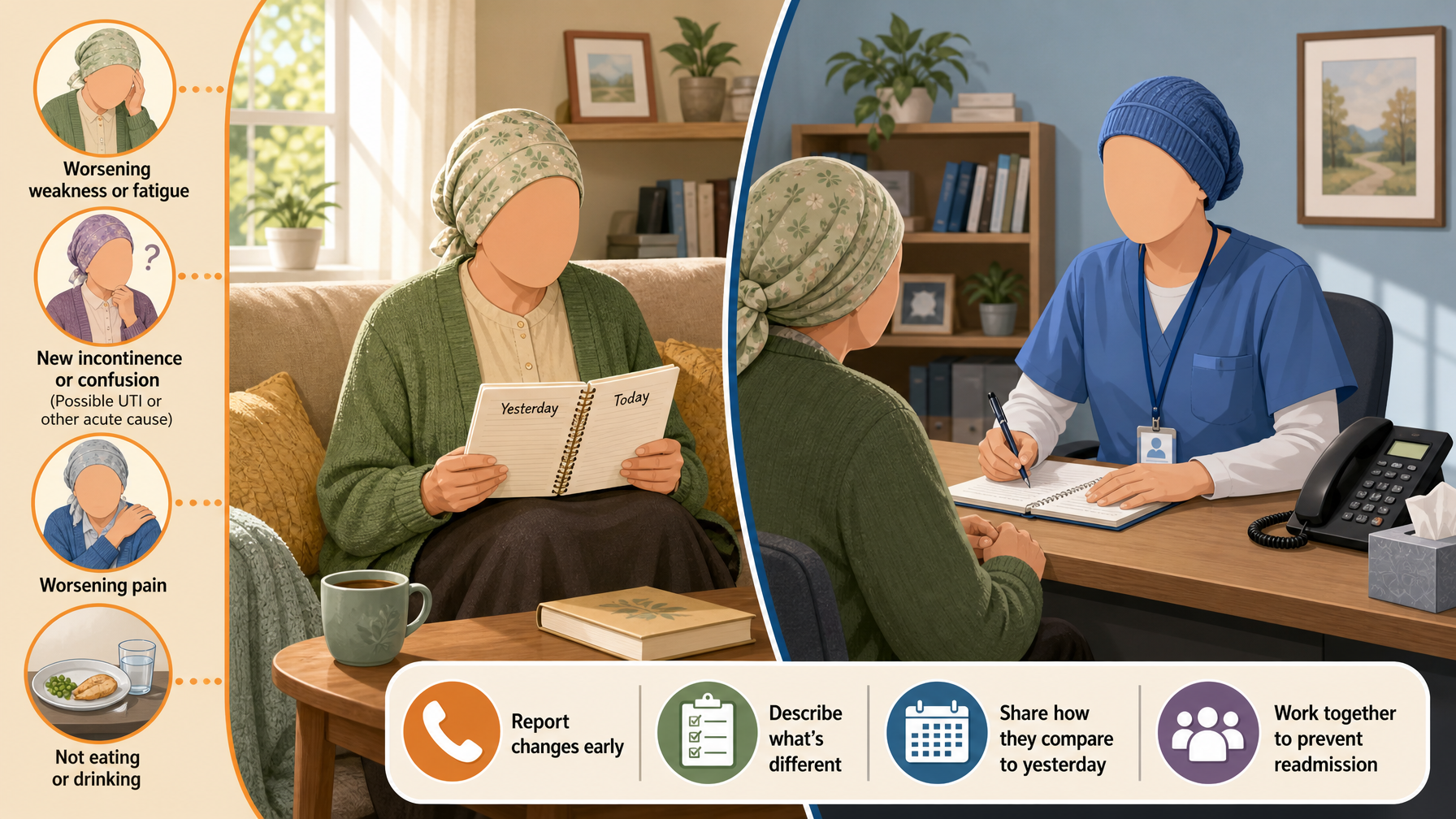
Vigilance is a pillar in its own right, because catching a problem early is what prevents a readmission. Keep a simple daily eye on how they compare to yesterday, and contact the care team for:
- Worsening weakness, confusion, pain, or fatigue — decline rather than improvement.
- Fever or wound infection signs.
- New incontinence or confusion (possible UTI or other acute cause).
- Not eating or drinking, or dehydration.
- Breathing problems, chest pain, or calf pain/swelling (possible clot) — seek urgent care for these.
Our signs an elderly parent is not recovering properly and post-surgery complications guides detail what to watch for and when to escalate.
Safety first
Trust your read of the person. "Something is off" from someone who knows them well is a legitimate reason to call the care team — caregivers often notice a decline before it shows on a chart.
Building a sustainable routine
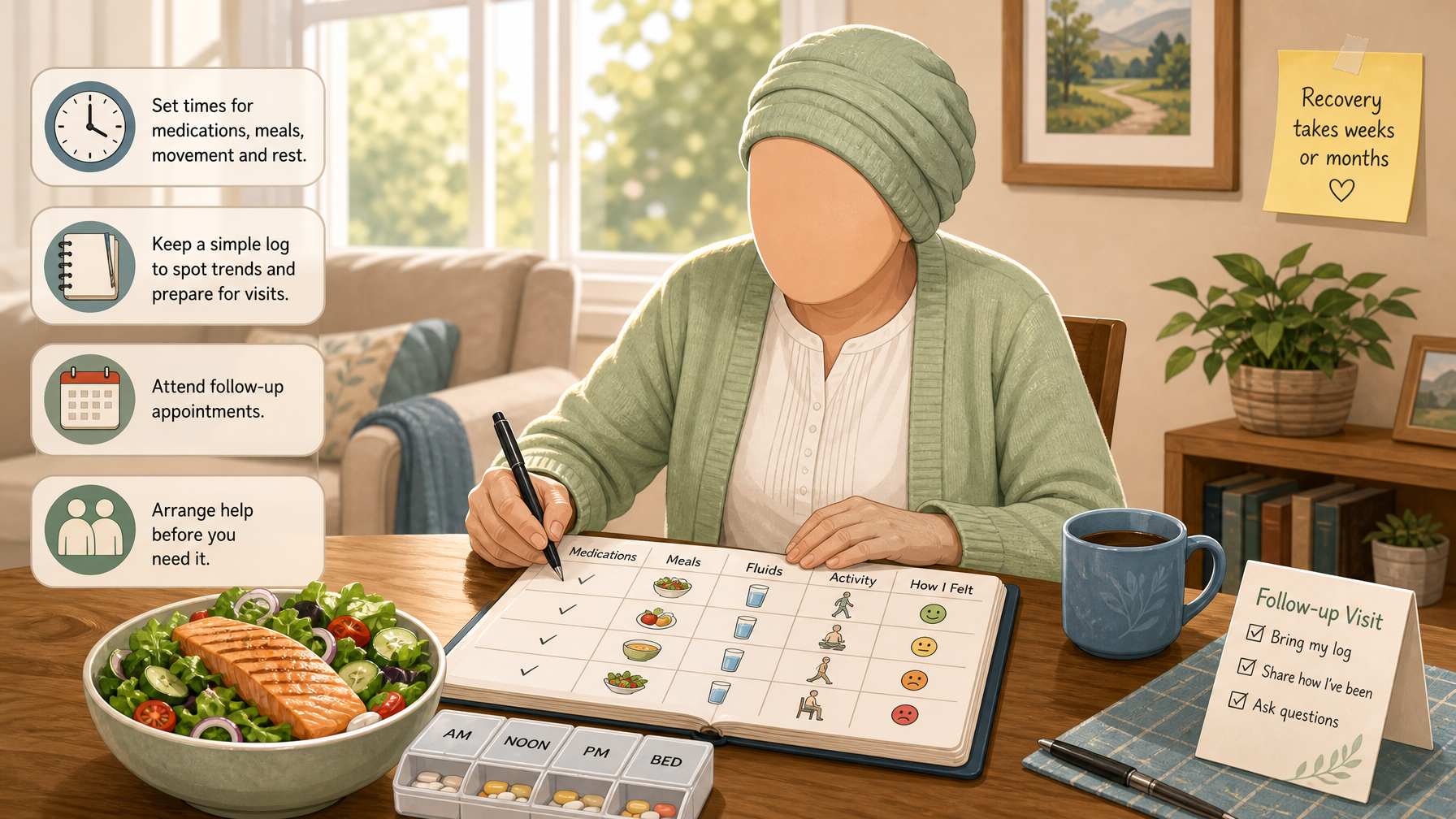
A predictable daily rhythm makes recovery smoother for the person and easier for you to manage — and easier to spot when something changes:
- Set medication times, meals, movement, and rest into a loose daily schedule.
- Keep a simple log of medications, meals, fluids, activity, and how they seem — it reveals trends and is gold at follow-up appointments.
- Prepare for and attend follow-up appointments, which are central to preventing readmission.
- Accept and arrange help — home health visits, family shifts, respite. Recovery can be long, and caregiver burnout helps no one.
Frequently asked questions
How can I help my elderly parent recover faster at home?
Focus on the five pillars: exact medication management, safe and gradual movement to rebuild strength, protein-rich nutrition and steady fluids, good rest, and close watching for complications. Preventing falls and keeping follow-up appointments are essential too. There is no shortcut, but doing these consistently gives the best and safest recovery.
Should an elderly person rest completely after a hospital stay?
No — while adequate rest matters, prolonged bed rest causes rapid muscle loss and slows recovery. The goal is safe, gradual movement within the activity limits the hospital set: regular position changes, sitting up, standing, and short walks as cleared. Prescribed physical-therapy exercises are especially important.
What should an elderly person eat to recover after hospital?
Prioritize protein (eggs, dairy, fish, poultry, beans) to rebuild tissue and muscle, and keep fluids steady to prevent dehydration. Because appetite is often low, offer small, frequent, appealing meals rather than three large ones. Ask the doctor or a dietitian about specific targets, and balance against any fluid or diet restrictions.
How do I manage my parent’s medications after discharge?
Reconcile the discharge list against what they took before and resolve conflicts with the pharmacist, use a weekly pill organizer or automatic dispenser to prevent missed and doubled doses, learn each medication’s purpose and side effects, and never stop or change anything without medical advice. Medication errors are a leading cause of readmission.
When should I be worried during home recovery?
Contact the care team for worsening weakness, confusion, pain, or fatigue; fever or wound infection; new incontinence or confusion; or not eating and drinking. Seek urgent care for breathing problems, chest pain, or calf pain and swelling. A trusted sense that "something is off" is itself a valid reason to call.
How long does home recovery take for a senior?
It depends heavily on the condition and their baseline, but older adults often need weeks to months, and recovery is rarely a straight line. Steady improvement is the reassuring sign; a plateau with new symptoms, or any worsening, warrants contacting the care team rather than waiting.
Sources
- U.S. Pharmacist. Sarcopenia: Loss of Muscle Mass in Older Adults
