
Signs an Elderly Parent Should Not Live Alone

Guidance to help families recognize risk, not a formal assessment. A doctor or geriatric care professional can assess needs and options objectively.
Deciding whether a parent can still live alone is one of the hardest calls a family makes. These are the concrete signs to watch for — and how to tell a rough patch from a real turning point.
Key takeaways
- Look for a pattern of signs over time, not one bad day — several together are the real signal.
- Key domains to watch: falls and mobility, medication management, nutrition and weight, hygiene and home upkeep, and memory and judgment.
- Some signs are urgent red flags — leaving the stove on, getting lost, a serious fall, or an inability to call for help.
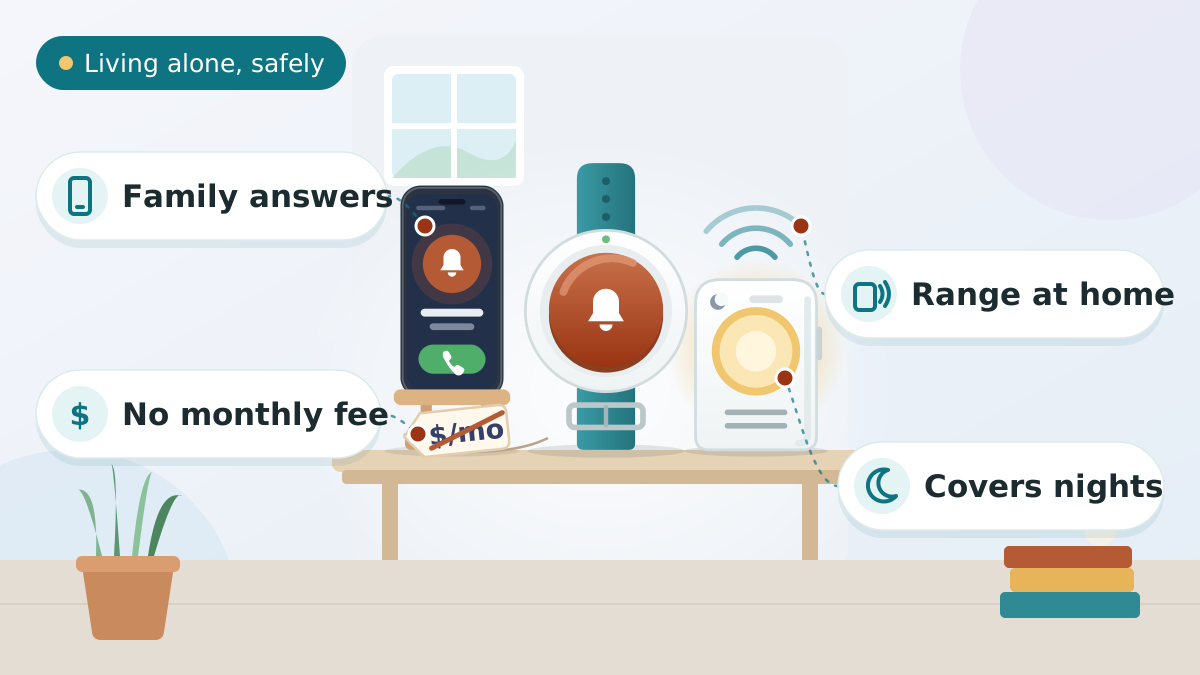
- Noticing signs does not always mean a move — often it means more support first (living alone more safely); but it always means reassess.
- Involve the parent and a professional — a doctor or care assessment brings objectivity to an emotional decision.
Quick answer
What are the signs an elderly parent should not live alone?
Watch for a pattern across key areas: repeated falls or unsteadiness, missed or muddled medications, weight loss or little food in the house, declining hygiene and a neglected home (unopened mail, unpaid bills, mess), and memory or judgment problems (getting lost, confusion, leaving the stove on). Urgent red flags include leaving appliances on, wandering, a serious fall, or no way to call for help. Several signs together mean it is time to add support or consider a move — ideally with a professional assessment.
Look for a pattern, not a single moment
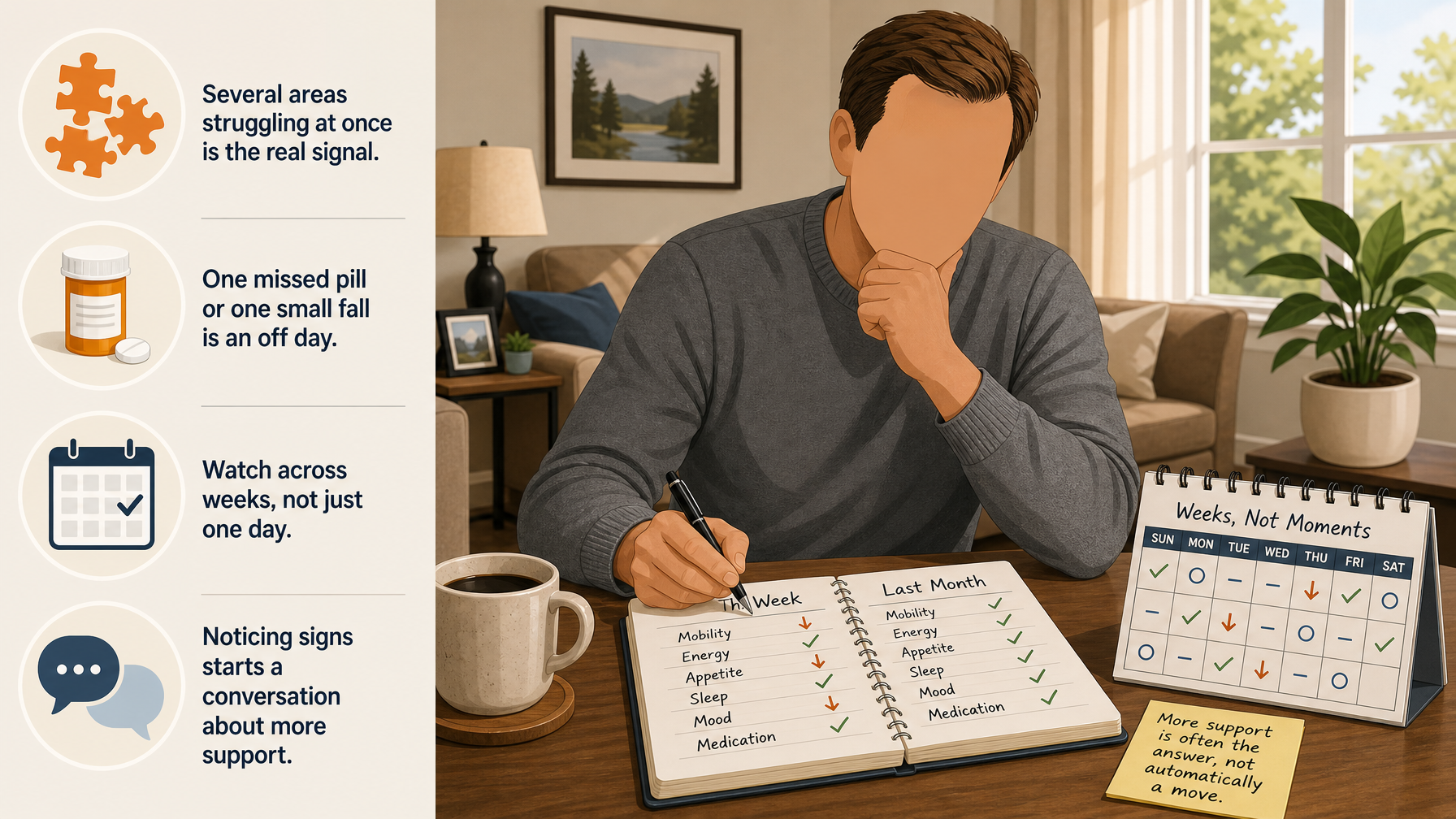
One missed pill or one small fall does not mean a parent can no longer live alone — everyone has off days. What matters is a pattern: several warning signs appearing together, or a clear change from how the person managed before. Watching over weeks, rather than reacting to a single incident, gives a truer picture.
It also helps to look across the different areas of daily life below, because problems in several domains at once are more telling than a struggle in just one. And remember that noticing signs is the start of a conversation about *more support*, which is often the answer, not automatically a move — see helping a senior live alone more safely.
An ElderlyDaily original
Want all of it in one organized binder?
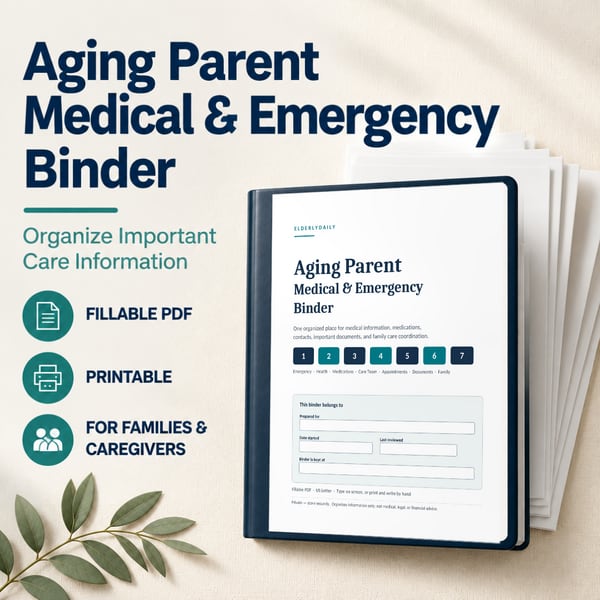
Aging Parent Medical & Emergency Binder
- Medical history, medications and emergency contacts in one place
- Seven sections: emergency, health, medications, care team, appointments, documents and family
- Type into it on screen, or print it and fill it in by hand
One-off purchase. Instant download.
Fillable PDF · US Letter
Sponsored Pick
LifeFone Medical Alert Service
One of the longer-established US monitored providers. Plans from $24.95/mo on annual billing.
See LifeFone’s PlansFalls and mobility
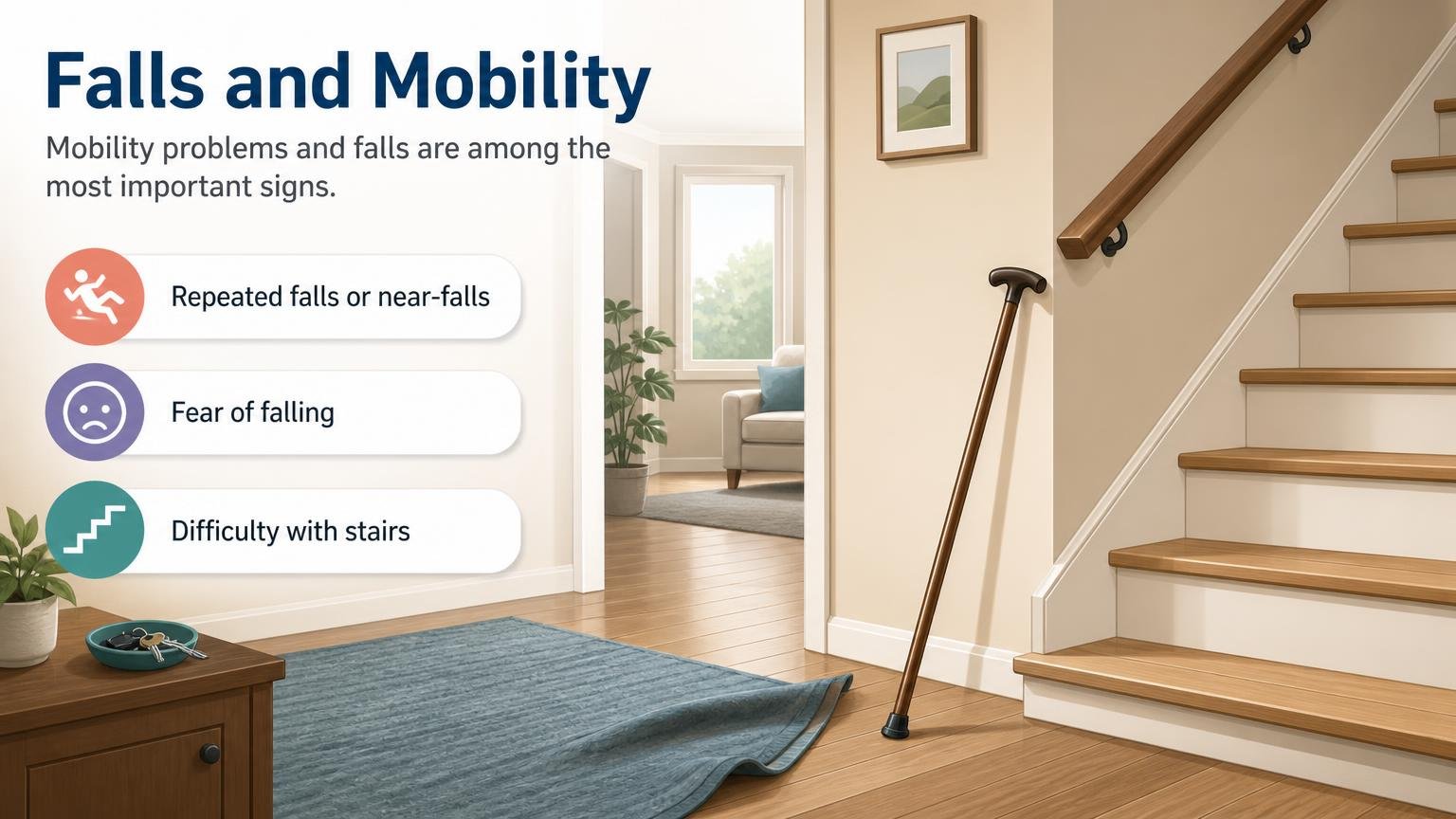
Mobility problems and falls are among the most important signs, because a fall while alone can be dangerous:
- Repeated falls or near-falls, or new unsteadiness and difficulty walking — see why an elderly parent keeps falling.
- Fear of falling that keeps them from moving around their own home.
- Difficulty with stairs, or getting in and out of bed, chairs, or the bath.
- An inability to get up after a fall, or no reliable way to call for help when alone.
If falls are the main concern, more support (mobility aids, home safety, a medical alert device) may address it — but recurring falls despite these are a strong sign to reassess.
Medication management
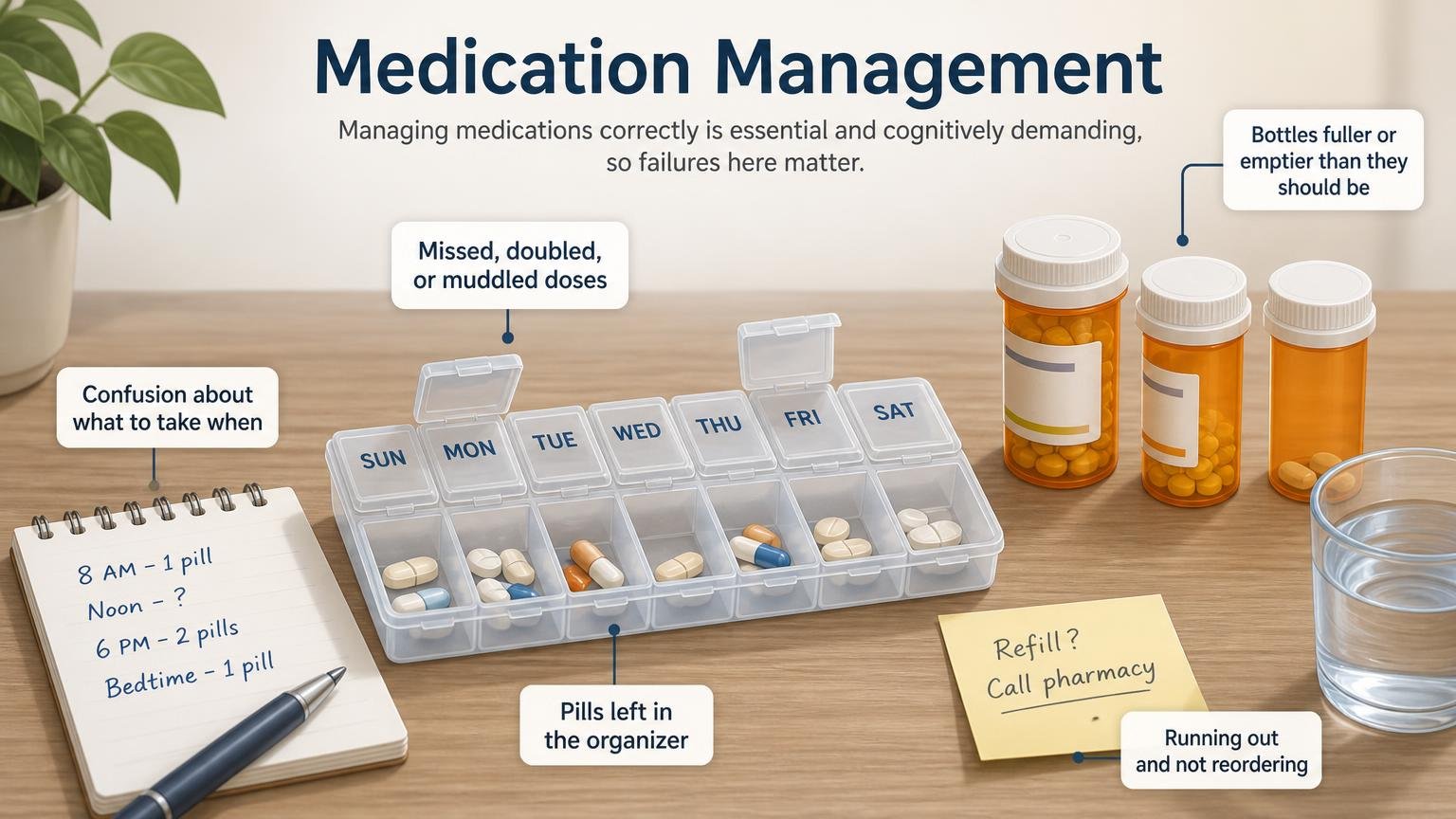
Managing medications correctly is essential and cognitively demanding, so failures here matter:
- Missed, doubled, or muddled doses — pills left in the organizer, or bottles fuller or emptier than they should be.
- Confusion about what to take when, or running out and not reordering.
- New health problems from mismanaged medication.
Sometimes a system fixes this — an automatic pill dispenser and support with medication management. But persistent inability to manage medications even with help points toward needing more care.
Nutrition and weight
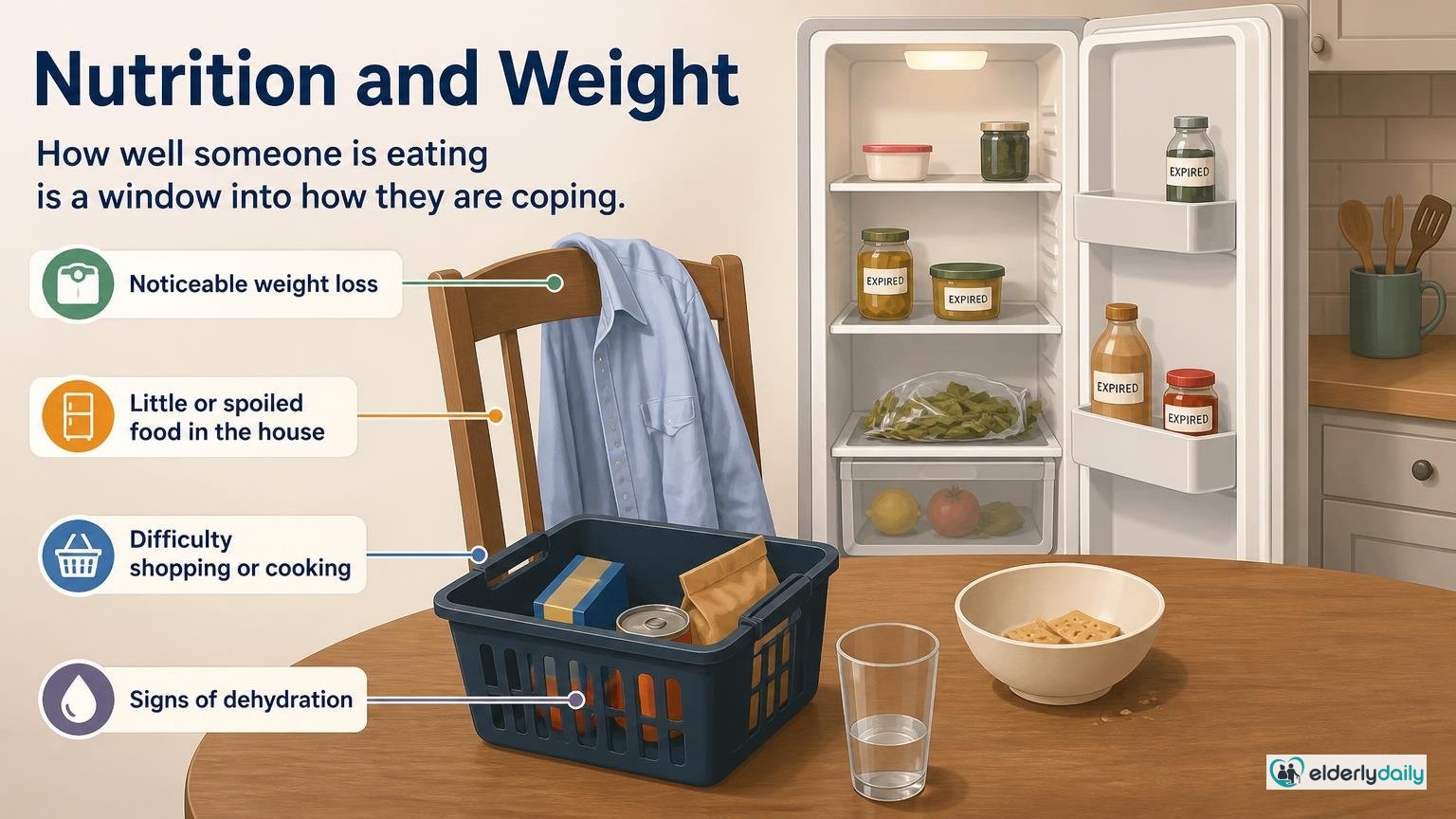
How well someone is eating is a window into how they are coping overall:
- Noticeable weight loss, or clothes becoming loose.
- Little or spoiled food in the house, or a fridge of expired items.
- Difficulty shopping or cooking, or evidence they are skipping meals or living on snacks.
- Signs of dehydration — weakness, confusion, dizziness.
Meal support (delivery, prepared meals, help shopping) can resolve this for some; ongoing poor nutrition despite support is a concern.
Hygiene and home upkeep
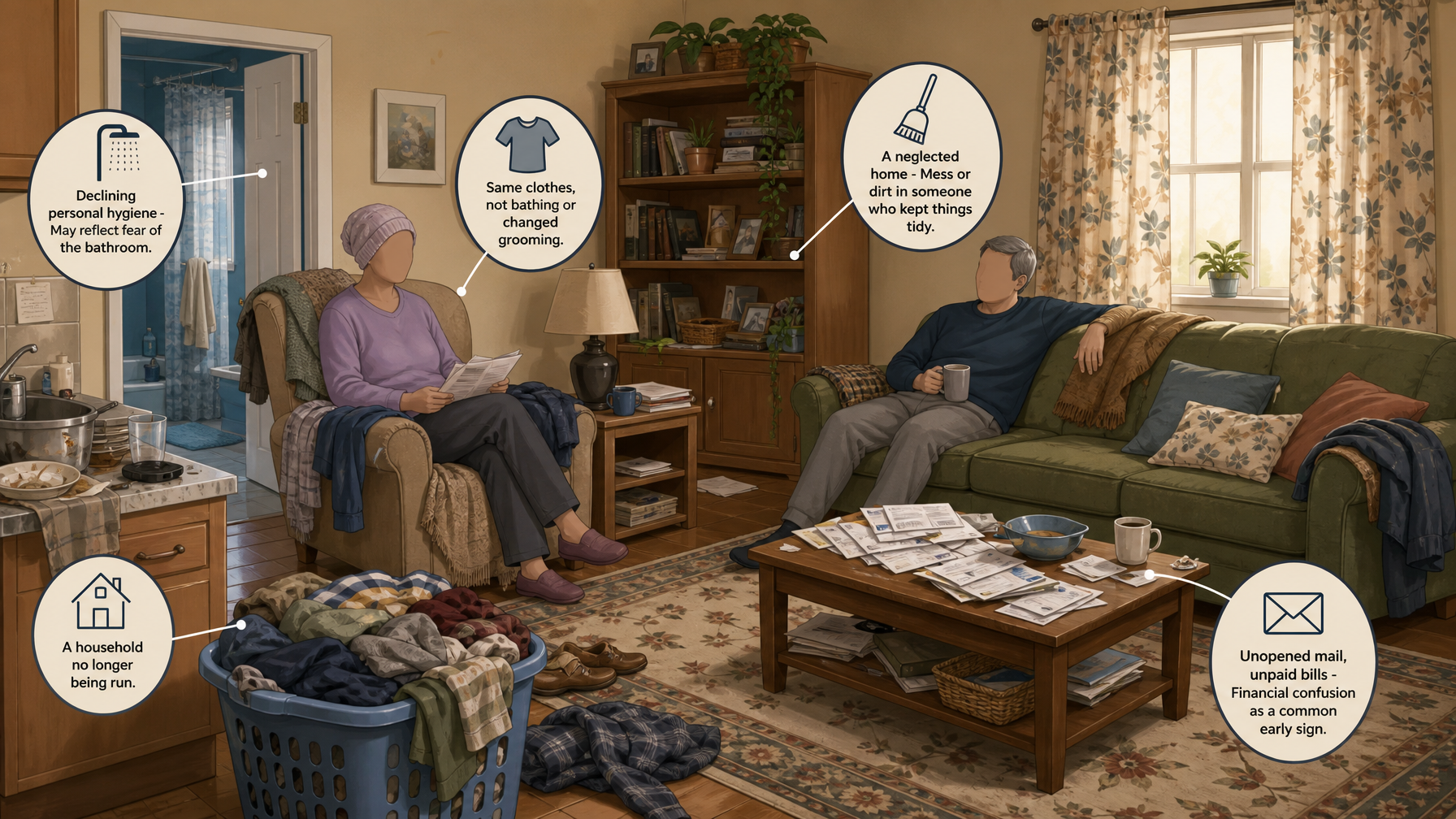
A decline in personal care and in the state of the home often signals that daily life has become too much to manage alone:
- Declining personal hygiene — wearing the same clothes, not bathing, or a change in grooming, which can also reflect difficulty or fear around bathing safely.
- A neglected home — unusual mess, clutter, or dirtiness in someone who used to keep things tidy.
- Unopened mail, unpaid bills, or financial confusion — a common and important early sign.
- Spoiling food, unwashed dishes, or a generally unmanaged household.
Memory, judgment, and safety
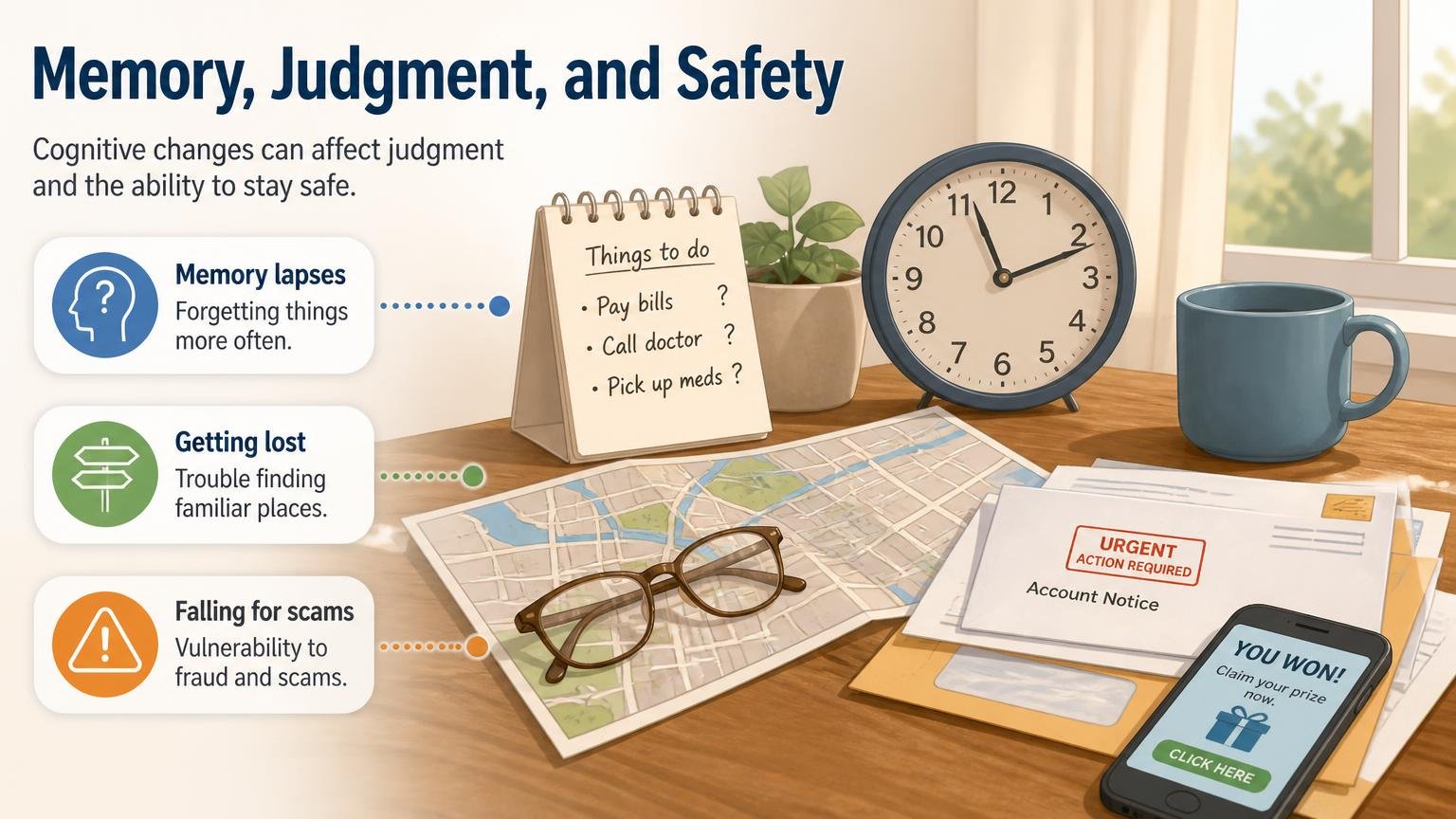
Cognitive changes are among the most serious signs, because they affect the judgment that safety depends on:
- Getting lost, even in familiar places, or confusion about time and place.
- Forgetting to turn off the stove or appliances, leaving doors unlocked, or other unsafe lapses.
- Falling for scams or making uncharacteristic financial mistakes.
- Repeating questions, missing appointments, or notable memory decline — see signs dementia is getting worse and why mom is confused at night.
- Wandering or leaving home and being unable to find the way back — a serious safety issue; see dementia wandering behavior.
Watch out
Safety lapses like leaving the stove on, wandering and getting lost, or an inability to call for help after a fall are urgent red flags. These often mean the person needs more supervision than living alone can provide — act promptly rather than waiting.
What to do when you notice the signs
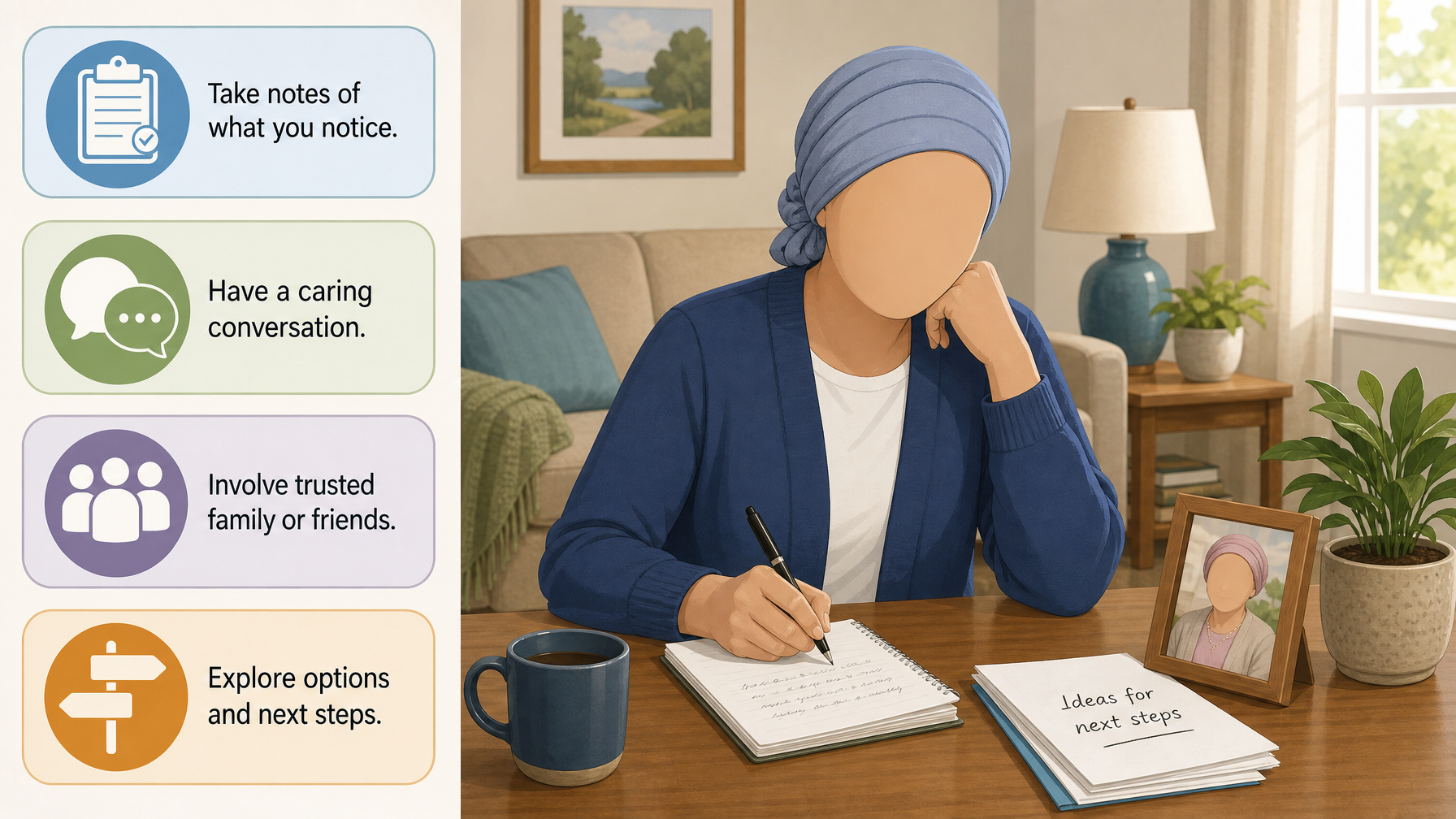
Seeing warning signs is the beginning of a process, not an instant verdict:
- 1
Document what you observe
Keep a factual record of specific incidents and changes over time. This clarifies whether it is a pattern and is invaluable for doctors and family discussions.
- 2
Rule out treatable causes
Some declines are reversible — a UTI, medication effects, depression, or sensory loss can mimic "not coping." A medical review should come first.
- 3
Try increasing support
Often the right next step is more help at home, safety technology, and the measures in living alone more safely — not immediately a move.
- 4
Get a professional assessment
A doctor or geriatric care assessment brings objectivity. Our how to tell if a parent needs assisted living guide covers evaluating care needs and options.
- 5
Involve your parent and approach it with care
Include them in the conversation and respect their autonomy — resistance is common; see when an elderly parent refuses help.
Frequently asked questions
What are the signs an elderly parent can no longer live alone?
Watch for a pattern across areas: repeated falls and unsteadiness, missed or muddled medications, weight loss or little food in the house, declining hygiene and a neglected home (unopened mail, clutter), and memory or judgment problems like getting lost or leaving the stove on. Several signs together, or a clear change from before, are the real signal.
Does one fall mean my parent should not live alone?
Not necessarily. A single fall is not a verdict — what matters is a pattern of falls or unsteadiness, especially alongside other warning signs, or an inability to get up and call for help. First rule out treatable causes and try added support like home safety changes and a medical alert device; recurring falls despite these are a stronger sign to reassess.
What are urgent signs that a parent is unsafe alone?
Urgent red flags include leaving the stove or appliances on, wandering and getting lost, a serious fall or an inability to call for help after one, falling for scams, and significant confusion affecting safety. These suggest the person needs more supervision than living alone provides and warrant prompt action rather than waiting.
Could my parent’s decline be reversible?
Sometimes, yes. Problems that look like "not coping" can stem from treatable causes — a urinary tract infection, medication side effects, depression, dehydration, or hearing and vision loss. A medical review should come before major decisions, since addressing a reversible cause may restore the person’s ability to manage.
Does noticing these signs mean my parent must move?
Not automatically. Often the right response is more support at home — help with medications and meals, safety technology, and the measures in our living-alone-safely guide. A move is considered when signs persist or safety cannot be maintained despite added support. A professional assessment helps weigh the options objectively.
How do I bring up my concerns with my parent?
Document specific observations, rule out treatable causes first, and approach the conversation with respect for their autonomy — focus on their safety and wishes rather than taking over. Resistance is very common; our guide on when an elderly parent refuses help offers approaches that keep the relationship and the person’s dignity intact.
Sources
- MedlinePlus (U.S. National Library of Medicine). Delirium
- Clinical Infectious Diseases (Norman, 2000). Fever in the Elderly
- CDC. Facts About Falls — Older Adult Fall Prevention
- National Institute on Aging (NIH). Taking Medicines Safely as You Age
- Alzheimer's Association. Wandering (prevention and safety)
