
When an Elderly Parent Refuses Help: What Actually Works

Practical, compassionate guidance for families; not medical advice. Where a parent has capacity, they have the right to make their own choices — even ones you disagree with.
Few things are more frustrating — or more common — than a parent who clearly needs help and refuses it. Understanding what is really behind the refusal is the key to approaches that actually move things forward.
Key takeaways
- Refusal is almost always about fear of losing independence and control, not stubbornness — meeting that fear is the key.
- Listen first and truly understand their perspective before problem-solving; feeling heard lowers resistance.
- Offer choices and start small — a sense of control and a low-stakes first step open the door.
- Respect autonomy: a parent with decision-making capacity has the right to make choices you disagree with, and pushing hard often backfires.
- Safety can override autonomy only when capacity is genuinely lost or there is serious, imminent risk — a different situation needing professional input.
Quick answer
What do I do when my elderly parent refuses help?
Start by understanding why — refusal usually comes from fear of losing independence, control, or dignity, not stubbornness. Listen and make them feel heard, then offer choices and start with a small, low-stakes step rather than a sweeping change. Frame help around their goals (staying home, staying independent), involve trusted others, and be patient across multiple conversations. Respect their right to choose if they have capacity — but where capacity is lost or risk is serious and imminent, safety may need to override, with professional help.
Understand why they are refusing
The instinct is to see refusal as stubbornness or denial, but that framing makes it harder to solve. Underneath almost every refusal is something understandable — usually fear. Accepting help can feel like the first step toward losing everything a person values: their independence, their home, their role, their dignity, their very identity as the capable one who used to care for *you*.
Common drivers include fear of losing independence and control, denial that help is needed (sometimes protective, sometimes from cognitive decline), pride and not wanting to be a burden, grief over lost abilities, distrust of outsiders in the home, and worry about cost. When you can identify which fears are at play, you can address *those* — which is far more effective than arguing about the help itself.
Listen before you problem-solve
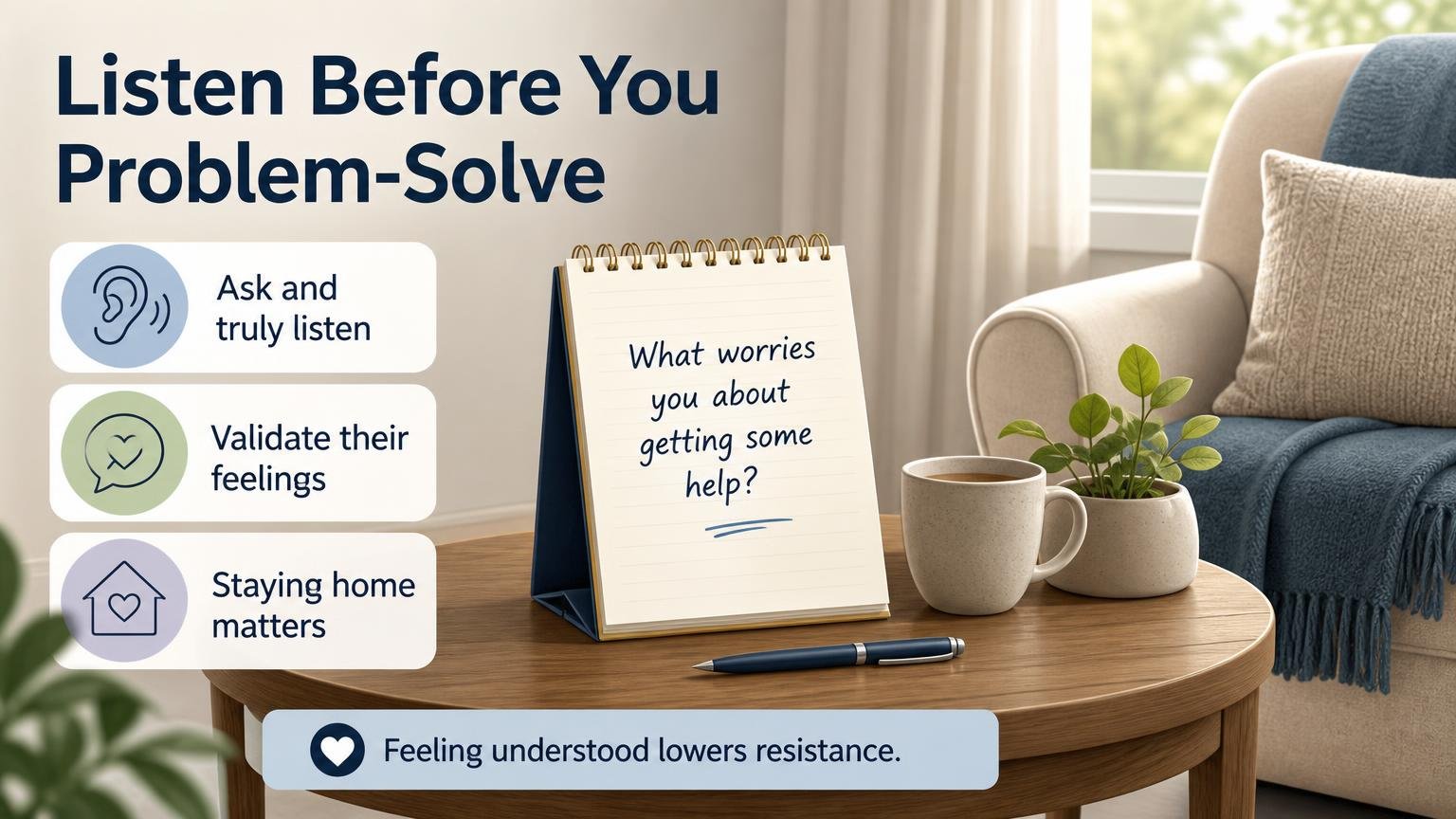
The most common mistake is jumping straight to solutions — booking the carer, buying the device — before the parent feels heard. That reliably increases resistance, because it confirms their fear of being managed and overridden. Reverse the order:
- Ask and truly listen — "What worries you about getting some help?" — and let them answer fully without rushing to counter.
- Validate their feelings — "It makes sense that you want to stay in your own home; that matters to me too." Feeling understood lowers defenses.
- Acknowledge what they are afraid of losing, explicitly, rather than brushing past it.
- Avoid lecturing or a list of everything going wrong, which triggers defensiveness and shame.
A parent who feels genuinely heard is far more open to what comes next. This same listening-first approach helps across hard topics — from hearing aids to assisted living.
Good to know
Resist the urge to "win" the conversation with facts about the risks. Being right rarely changes a frightened person’s mind — feeling heard and in control does.
Approaches that actually work
Once your parent feels heard, these strategies tend to move things forward far better than pressure:
- 1
Offer choices, not ultimatums
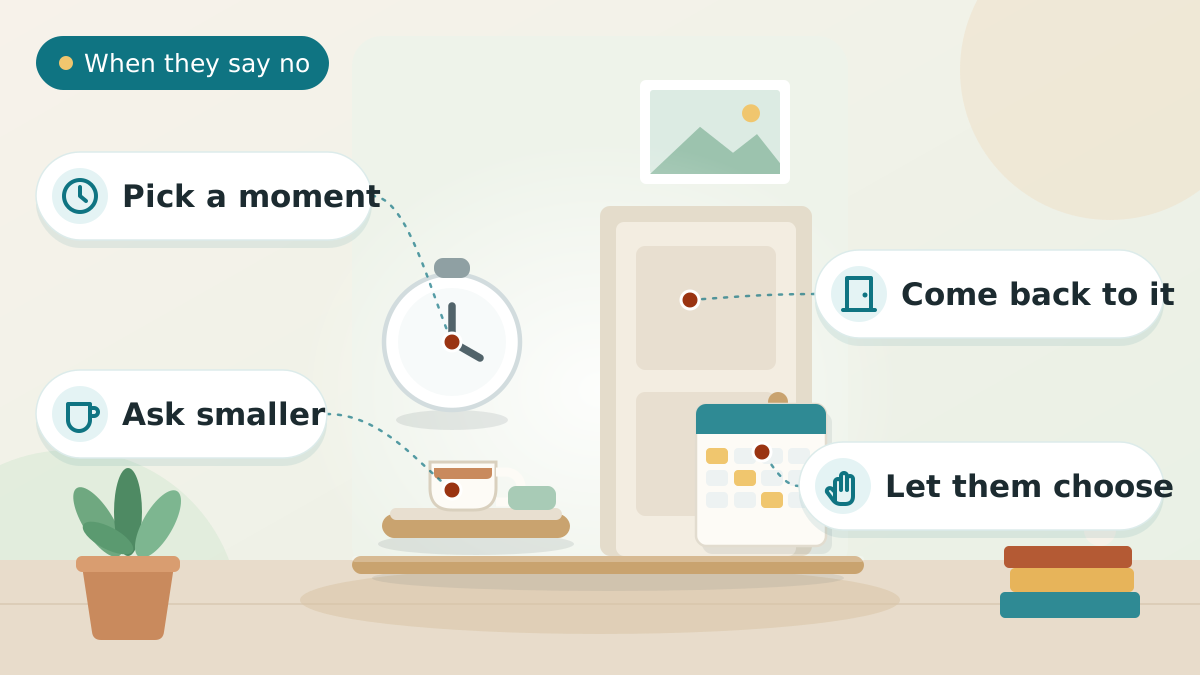
Preserve their control by offering options — "Would you prefer help on Tuesday or Thursday?" or "the delivery meals or a bit of shopping help?" — rather than a single take-it-or-leave-it plan.
- 2
Start small
Propose one low-stakes, easy-to-accept step (a cleaner once a week, a medical alert button, a grab bar) rather than a sweeping change. Small successes build trust and open the door to more.
- 3
Frame help around their goals
Connect the help to what they want — "This medical alert means you can stay in your own home more safely." Help becomes a tool for their independence, not a threat to it.
- 4
Let it be someone else’s idea
People often accept from a doctor, a respected friend, or another relative what they resist from a son or daughter. Enlist trusted voices — "the doctor recommended it" carries weight.
- 5
Frame it around helping YOU
Some parents accept help more readily if it eases your worry — "It would give me real peace of mind" — because caring for you is a role they still value.
- 6
Be patient and revisit
Except in emergencies, treat it as a series of conversations over time, not a single decision. Plant seeds and come back to them; minds change gradually.
Respecting their right to choose
This is the hard truth at the center of it: an adult with the mental capacity to make decisions has the right to make their own choices — including ones you believe are unwise or risky. It is painful to accept, but a parent may choose to keep living with more risk than you are comfortable with, and that can be their right.
- Distinguish a capable choice you disagree with from a decision the person can no longer safely make — the difference is decision-making capacity, not whether you like the choice.
- Pushing harder against a capable parent usually backfires, damaging trust and the relationship and making them less likely to accept help later.
- Aim to reduce risk within their choices — if they insist on staying home, focus on making living alone safer rather than winning the argument to leave.
- Keep the relationship intact. Preserving trust means they are more likely to turn to you when they *are* ready — and you stay in a position to help.
When safety must override
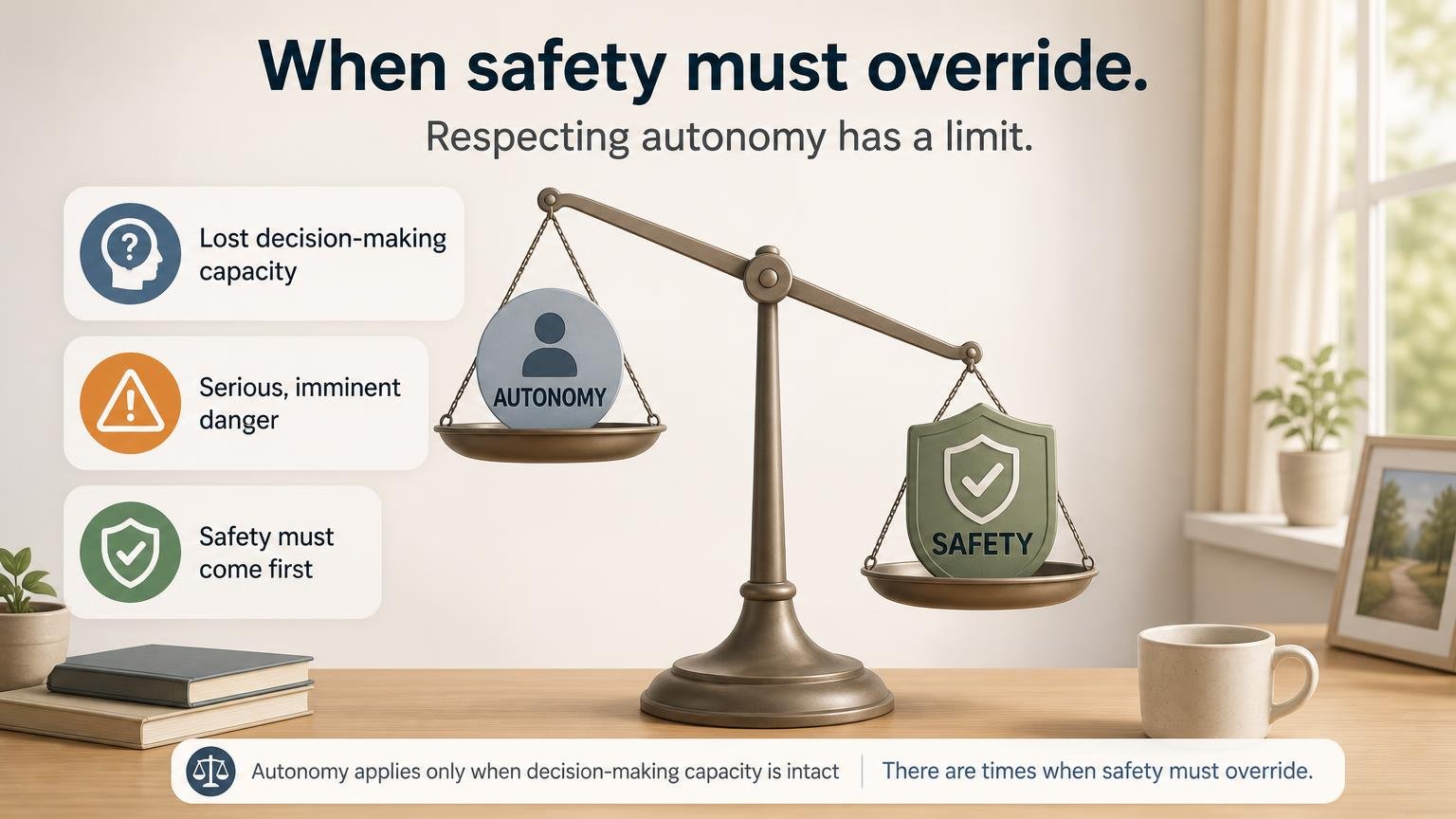
Respecting autonomy has a limit: it applies to a person who has the capacity to understand and make the decision. That changes in two situations:
- Lost decision-making capacity — when dementia or another condition means the person can no longer understand the risks or make a safe decision, others may need to step in for their protection, ideally through the proper legal channels (such as power of attorney).
- Serious, imminent danger — a genuine emergency where someone is at immediate risk of serious harm may require acting quickly, even against their wishes.
These are difficult, high-stakes situations that call for professional input — a doctor to assess capacity, and social services or legal advice on the right steps. Our guides on signs a parent should not live alone and assisted living help you judge when this line is approaching.
Safety first
If a parent lacks capacity or is in immediate serious danger, do not navigate it alone — involve their doctor, social services, or legal advice. Assessing capacity and acting on someone’s behalf are decisions that need professional and, often, legal guidance.
Look after yourself through it
Repeated refusals are emotionally exhausting, layering worry, frustration, guilt, and helplessness. Protect your own wellbeing:
- Accept what you cannot control — you can offer, support, and reduce risk, but you cannot force a capable adult, and their choices are not your failure.
- Set boundaries on what you can sustainably provide.
- Seek support — other caregivers, support groups, or a counselor understand this specific strain.
- Guard against burnout, which this situation feeds directly — see preventing caregiver burnout.
Frequently asked questions
Why does my elderly parent refuse help?
Refusal is usually driven by fear, not stubbornness — fear of losing independence, control, dignity, and identity. Other common reasons include denial that help is needed (sometimes from cognitive decline), pride and not wanting to be a burden, grief over lost abilities, distrust of outsiders, and worry about cost. Identifying the specific fears lets you address those directly.
How do I get my parent to accept help?
Listen first and make them feel heard before proposing solutions, then offer choices rather than ultimatums, start with a small easy-to-accept step, and frame help around their goals like staying home and independent. Enlisting a doctor or trusted friend, and framing it as easing your worry, often works. Be patient and treat it as several conversations over time.
Can I force my elderly parent to accept care?
Generally no. An adult with the mental capacity to make decisions has the right to make their own choices, even risky ones, and forcing a capable parent usually backfires and damages trust. The exceptions are when the person has lost decision-making capacity or is in serious, imminent danger — situations that require professional and often legal guidance.
What do I do if my parent has dementia and refuses help?
Dementia can impair the insight needed to recognize the need for help, so refusals may reflect the condition rather than a fully capable choice. Use gentle, validating communication, avoid arguing, and involve their doctor to assess capacity. Where capacity is genuinely lost and safety is at risk, family may need to step in through proper legal channels — with professional input.
Should I respect my parent’s choice even if it seems unsafe?
If they have decision-making capacity, yes — they have the right to make choices you disagree with, and pushing hard tends to backfire. The constructive path is to reduce risk within their choices (for example, making living alone safer) and keep the relationship strong so they turn to you when ready. Capacity loss or imminent danger is a different situation needing professional help.
How do I cope with the stress of a parent who refuses help?
Accept what you cannot control — you can offer and support but not force a capable adult, and their choices are not your failure. Set sustainable boundaries, seek support from other caregivers, groups, or a counselor, and actively guard against burnout, which this situation feeds. Protecting your own wellbeing keeps you able to help.
