
A Daily Exercise and Movement Routine for Seniors

Educational guidance, not medical advice. Check with a doctor before starting a new exercise routine, especially with health conditions, and stop for pain, dizziness, or chest symptoms.
Daily movement is one of the most powerful things a senior can do for health and independence. It doesn’t need a gym — small, consistent activity woven through the day keeps the body strong and steady.
Key takeaways
- Daily movement helps preserve strength, balance, and independence, and can help lower the risk of falls.
- It doesn’t need a gym: little and often, woven through the day, beats occasional big efforts.
- Aim across strength, balance, and flexibility, plus gentle movement — each matters for healthy aging.
- Start gently, build gradually, and stay safe — support nearby, good footwear, and stopping for any warning signs.
- Check with a doctor first if there are health conditions or a long period of inactivity.
Quick answer
What daily exercise should seniors do?
Aim for a mix across strength (e.g. sit-to-stands), balance (e.g. standing with support), flexibility (gentle stretches), and gentle cardio (walking) — done as little and often through the day rather than one big session. Start gently and build gradually, keep it safe (sturdy support nearby, good footwear, and stop for pain, dizziness, or chest symptoms), and check with a doctor first if there are health conditions or a long period of inactivity. Consistency matters far more than intensity.
Why daily movement matters

Few things do more for an older adult’s health and independence than regular movement. It helps maintain the muscle strength and balance that lower the risk of falls, supports mobility and daily tasks, can help with many chronic conditions, and may lift mood, sleep, and mental sharpness. The reverse is also true: inactivity leads to weakness and stiffness that steadily erode independence.
The good news is that it doesn’t require a gym or intense workouts. Small amounts of movement woven consistently through the day are what deliver the benefits. This guide covers simple daily movement as part of a healthy routine; for the caregiver’s role in supporting safe exercise, see how caregivers can help seniors exercise safely.

Large-print edition included
An ElderlyDaily original
Want every movement drawn out, a full page each?
Chair Tai Chi — Illustrated Edition
- All eight movements, a full page each, drawn frame by frame
- A three-minute warm-up, plus five common mistakes and how to fix them
- A four-week plan with a practice tracker
One-off purchase. Instant download.
PDF · 24 pages · US Letter + A4
Core movement principles for seniors
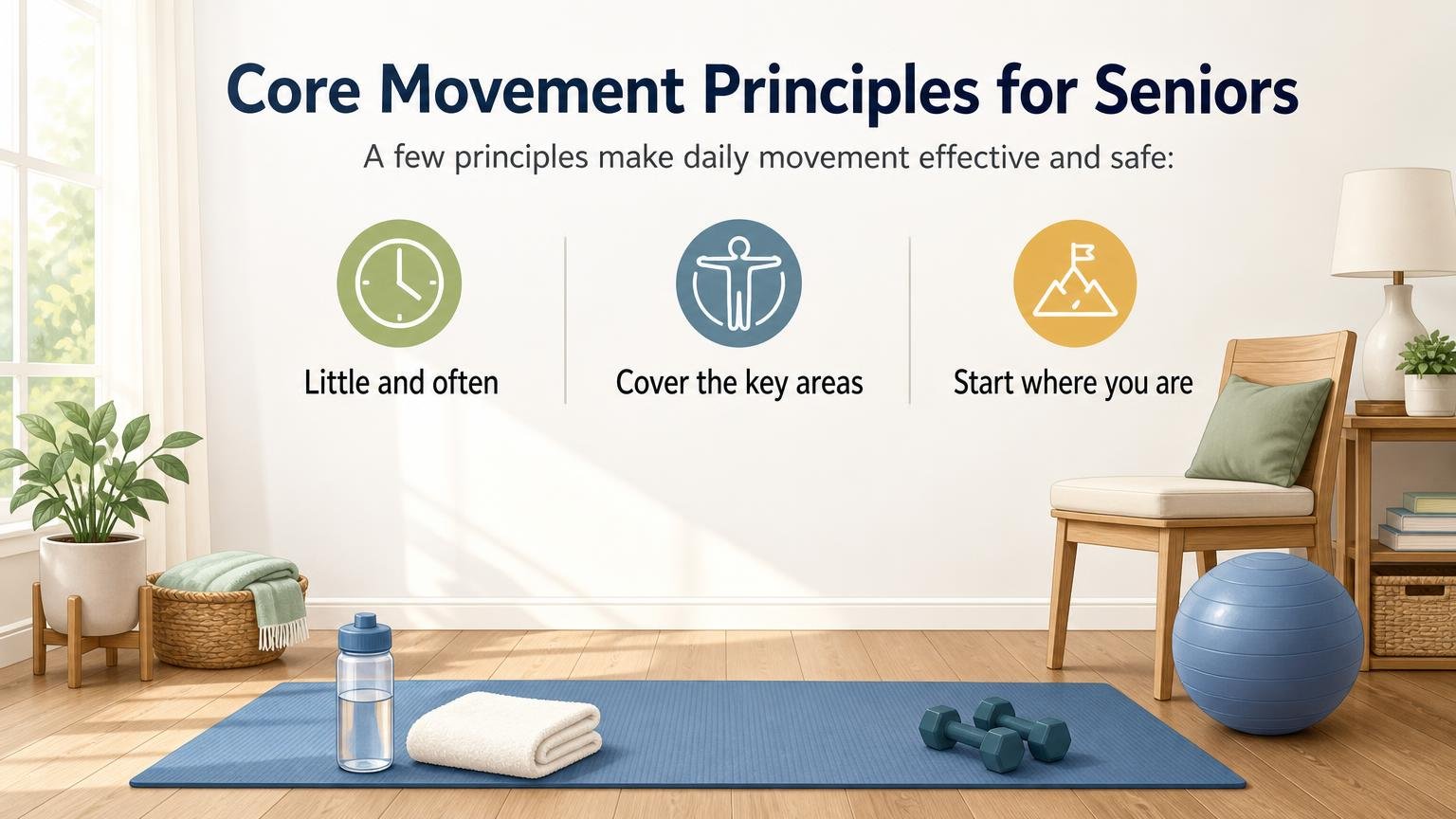
A few principles make daily movement effective and safe:
- Little and often — short bursts of movement through the day are easier and just as valuable as one long session.
- Cover the key areas — aim to include strength, balance, and flexibility work, plus some gentle walking, across the week.
- Start where you are — begin gently at the person’s current level and build up gradually; overdoing it causes injury and discouragement.
- Consistency over intensity — regular gentle movement beats occasional hard effort every time.
- Safety first — support nearby, good footwear, and stopping for any warning signs (see below).
Watch out
Check with a doctor before starting a new exercise routine, especially with heart or lung conditions, recent surgery, or a long period of inactivity. And always stop and seek help for chest pain, severe breathlessness, or dizziness — "no pain, no gain" does not apply to senior exercise.
Simple daily movement ideas
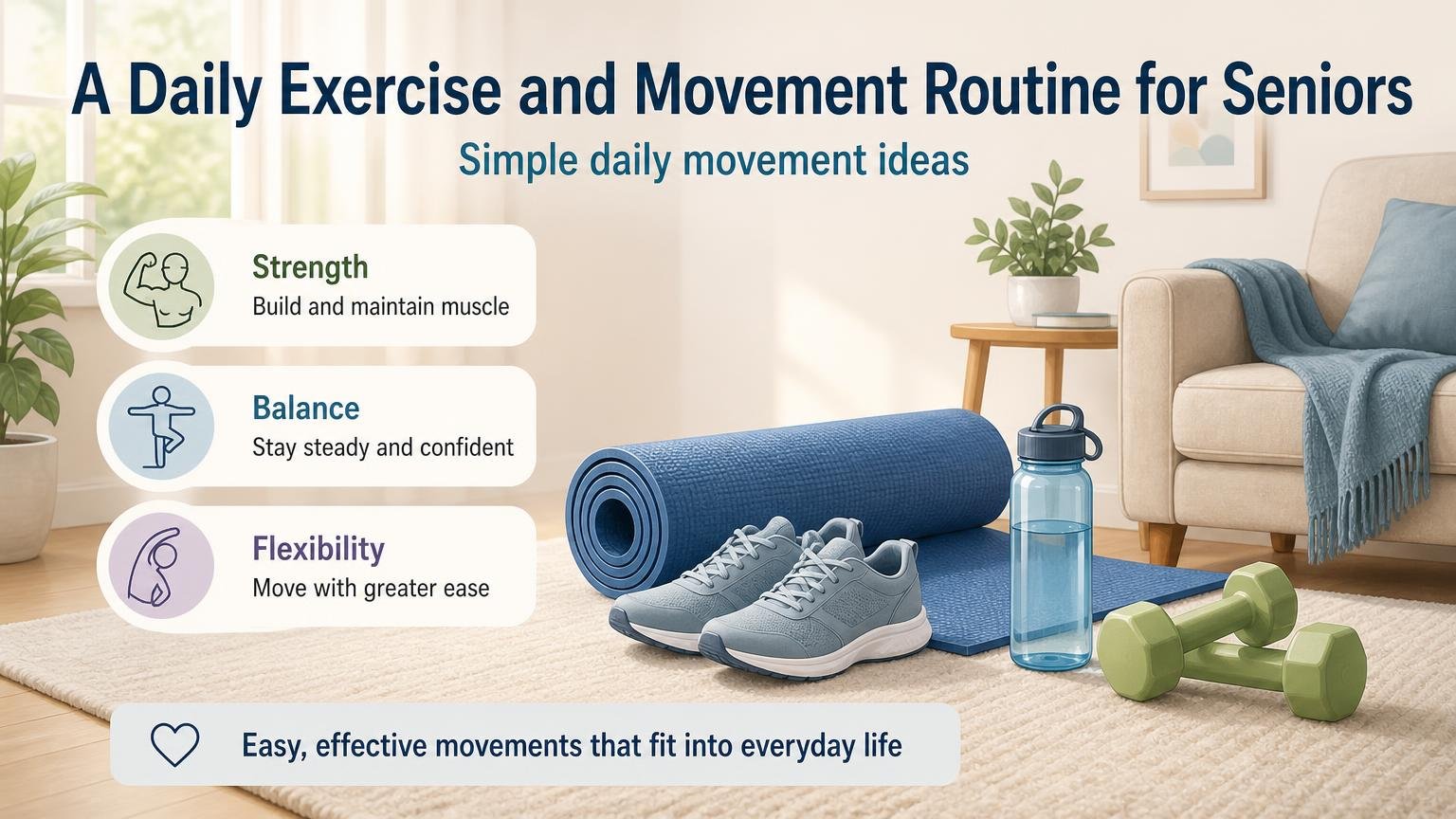
Easy, effective movements that fit into everyday life:
- Strength — sit-to-stands from a sturdy chair, wall push-ups, and gentle resistance work build the muscle that keeps a person mobile; especially valuable for rebuilding strength after illness.
- Balance — standing on one foot or heel-to-toe walking, always with a sturdy support nearby, can help lower fall risk (see balance exercises ).
- Flexibility — gentle stretches and seated stretches ease stiffness and maintain range of motion.
- Gentle cardio — walking (indoors or out), a stationary bike or portable pedal exerciser, or chair-based movement supports heart and overall health.
- Everyday movement — standing up regularly, walking to do tasks, and moving during TV adverts all add up.
A sample daily movement flow
A flexible way to spread movement through the day — adapt to energy and ability:
- 1
Morning loosen-up
A few gentle stretches and a short walk after breakfast to loosen stiff joints and energize for the day.
- 2
Midday strength & balance
A few sit-to-stands, wall push-ups, and a balance exercise or two (holding a sturdy support), building up over time.
- 3
Afternoon walk or cardio
A walk, some time on a stationary bike or pedal exerciser, or a chair-yoga session — whatever suits the day.
- 4
Evening gentle stretch
Light stretching or gentle movement in the evening to release tension, kept calming rather than energizing close to bed.
- 5
Movement snacks all day
Stand up regularly, walk to do small tasks, and avoid long unbroken sitting — little bursts add up to a lot.
Adapting movement by ability
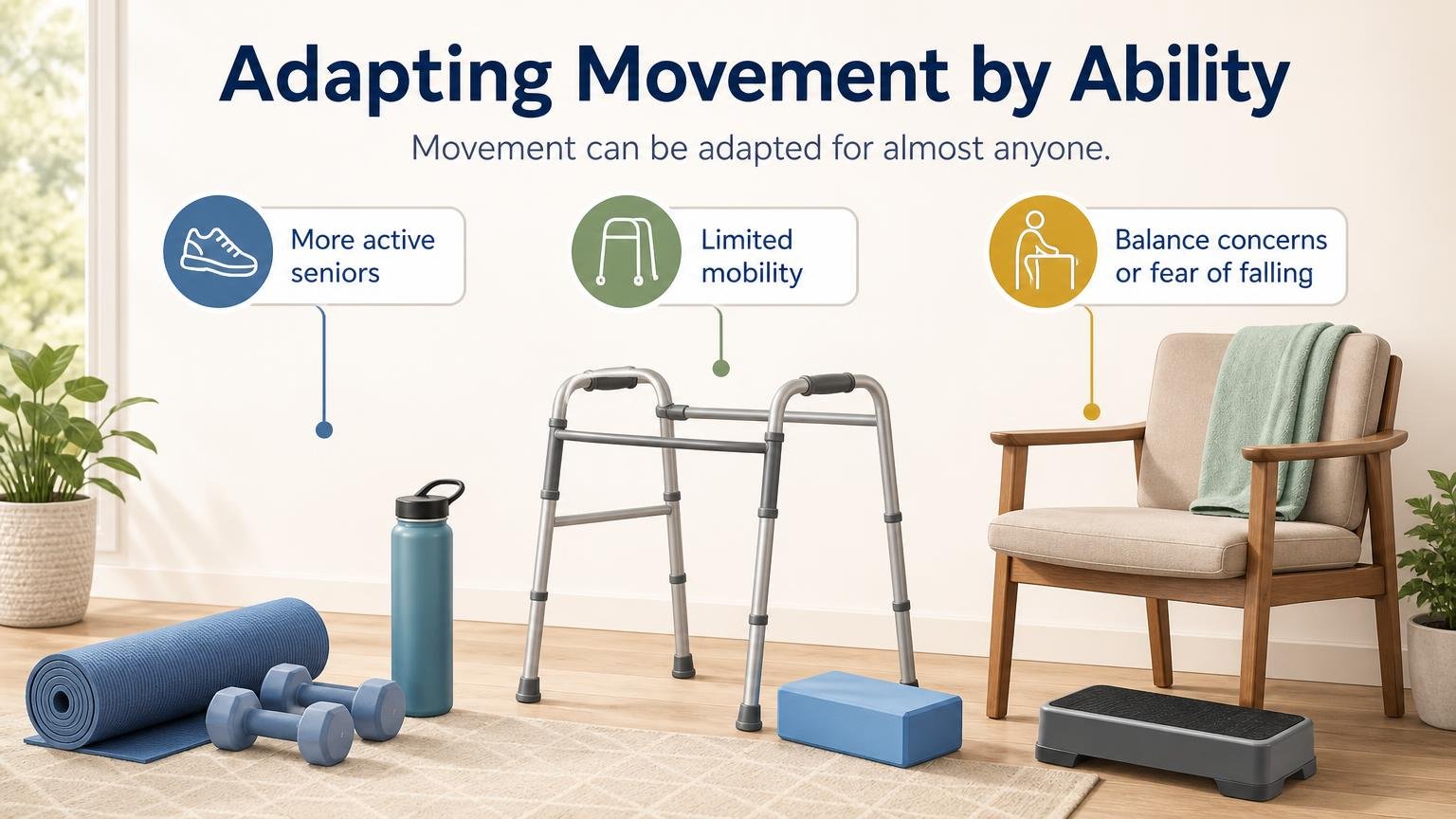
Movement can be adapted for almost anyone:
- More active seniors — can do longer walks, more strength work, and activities they enjoy, keeping challenge appropriate and safe.
- Limited mobility — seated exercises and chair yoga allow strength, flexibility, and gentle cardio work without standing.
- Balance concerns or fear of falling — exercise with sturdy support and, ideally, guidance; rebuilding strength and confidence eases fear of falling.
- Recovering after illness or surgery — follow any medical or physiotherapy guidance, and rebuild gradually.
- Frailty — even very gentle movement helps; a physical therapist can design a safe program.
Encouraging movement, and mistakes to avoid
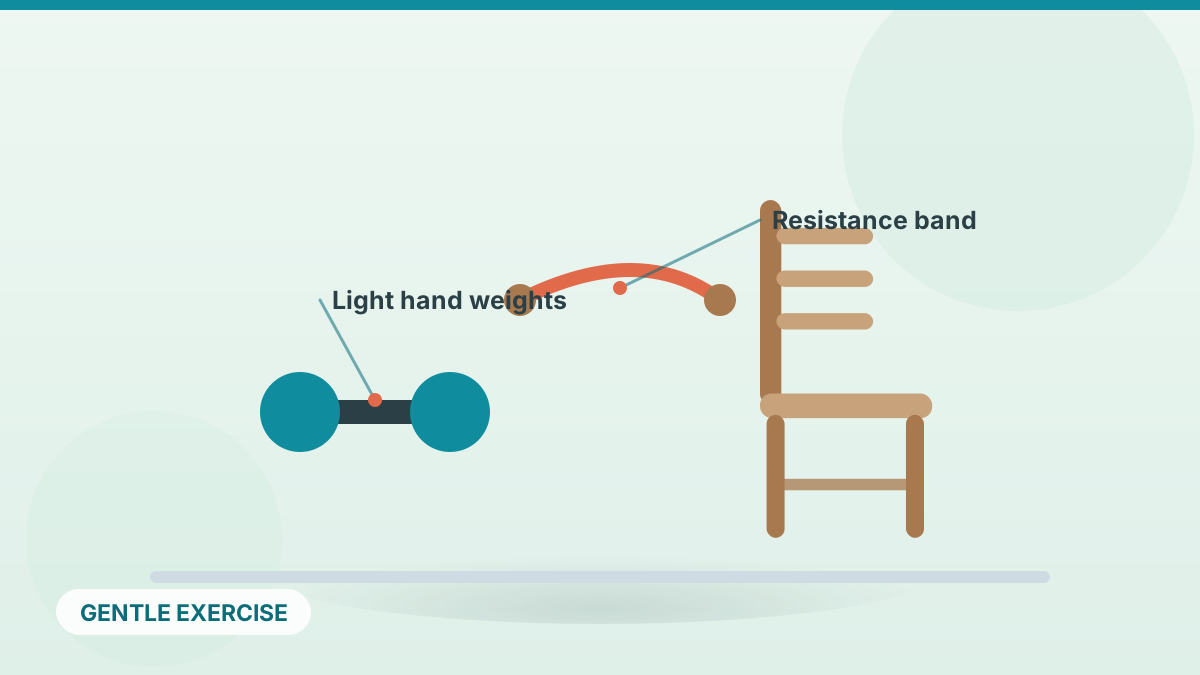
Caregivers can make daily movement happen — while avoiding common pitfalls:
- Make it enjoyable and social — activities the person likes, music, or moving together builds motivation and consistency.
- Set small, achievable goals and celebrate progress — powerful against fear of falling and low motivation.
- Don’t overdo it — building up too fast causes injury and puts people off; gradual is better.
- Don’t let fear lead to inactivity — moving less to "stay safe" actually raises fall risk over time; safe, supported activity is protective.
- Keep it safe — good footwear, a clear space, support nearby, and a medical alert device for reassurance; join in for supervision and company.
Frequently asked questions
What daily exercise should seniors do?
Aim for a mix across strength (like sit-to-stands), balance (like standing with support), flexibility (gentle stretches), and gentle cardio (walking), done little and often through the day rather than in one big session. Start gently and build gradually, keep it safe with support nearby and good footwear, and check with a doctor first if there are health conditions or a long period of inactivity.
How much should elderly people exercise each day?
The best approach is little and often — short bursts of movement spread through the day are easier and just as beneficial as one long session, and consistency matters far more than intensity. Aim to include strength, balance, and flexibility work plus some gentle walking across the week, starting at the person’s current level and building up gradually.
What exercises are safe for seniors with limited mobility?
Seated exercises and chair yoga allow strength, flexibility, and gentle cardio work without standing, and are ideal for limited mobility. Bed-to-chair exercises, seated stretches, and gentle resistance work all help. The key is starting gently at the right level, keeping support nearby, following any medical guidance, and building up gradually. A physical therapist can tailor a safe program.
Do seniors need a doctor’s approval before exercising?
It is strongly recommended to check with a doctor before starting a new exercise routine, especially with heart, lung, joint, or bone conditions, recent surgery, or a long period of inactivity. The doctor can advise on safe activities and limits and may refer to a physical therapist. Always stop and seek help for chest pain, severe breathlessness, or dizziness.
What are the best simple exercises for seniors?
Effective, easy options include sit-to-stands from a sturdy chair and wall push-ups (strength), standing on one foot or heel-to-toe walking with support (balance), gentle and seated stretches (flexibility), and walking, a stationary bike, or chair yoga (gentle cardio). Everyday movement — standing up often and walking to do tasks — adds up too.
Is it safe for a fearful or frail senior to exercise?
Yes, with the right approach — and it is important, because moving less to "stay safe" actually increases fall risk over time by causing weakness. Exercise with sturdy support and, ideally, guidance, start very gently, and rebuild strength and confidence gradually. Even very gentle movement helps the frail, and a physical therapist can design a safe program.
Sources
- National Institute on Aging (NIH). Four Types of Exercise Can Improve Your Health and Physical Ability
- Cochrane. Exercise for preventing falls in older people living in the community (2019)
- CDC. Facts About Falls — Older Adult Fall Prevention
