
An Evening Routine for Seniors: Winding Down for Better Sleep

Practical guidance for seniors and caregivers; not medical advice. Persistent sleep problems should be discussed with a doctor.
A gentle evening wind-down is the bridge to a good night’s sleep. The right habits in the hours before bed help a senior sleep more deeply — and move through the night more safely.
Key takeaways
- A calming evening wind-down signals the body to prepare for sleep — the foundation of better rest.
- Consistency is key — a similar sequence and bedtime each night strengthens the body clock.
- Create a sleep-friendly bedroom — cool, dark, quiet, comfortable, and set up for safe night trips.
- Favor calming activities and dim light in the evening; limit heavy meals, caffeine, and bright screens close to bed.
- Prepare for safe nights — a clear lit path, night lights, and a way to call for help.
Quick answer
What is a good evening routine for seniors?
A calming, consistent wind-down: dim the lights and switch to relaxing activities an hour or two before bed, have a light dinner (not heavy or late), limit caffeine and screens, and follow a familiar pre-bed sequence at a consistent bedtime. Set up a sleep-friendly bedroom — cool, dark, quiet, comfortable — and make night trips safe with a clear lit path, night lights, and a way to call for help. Persistent sleep problems are worth raising with a doctor.
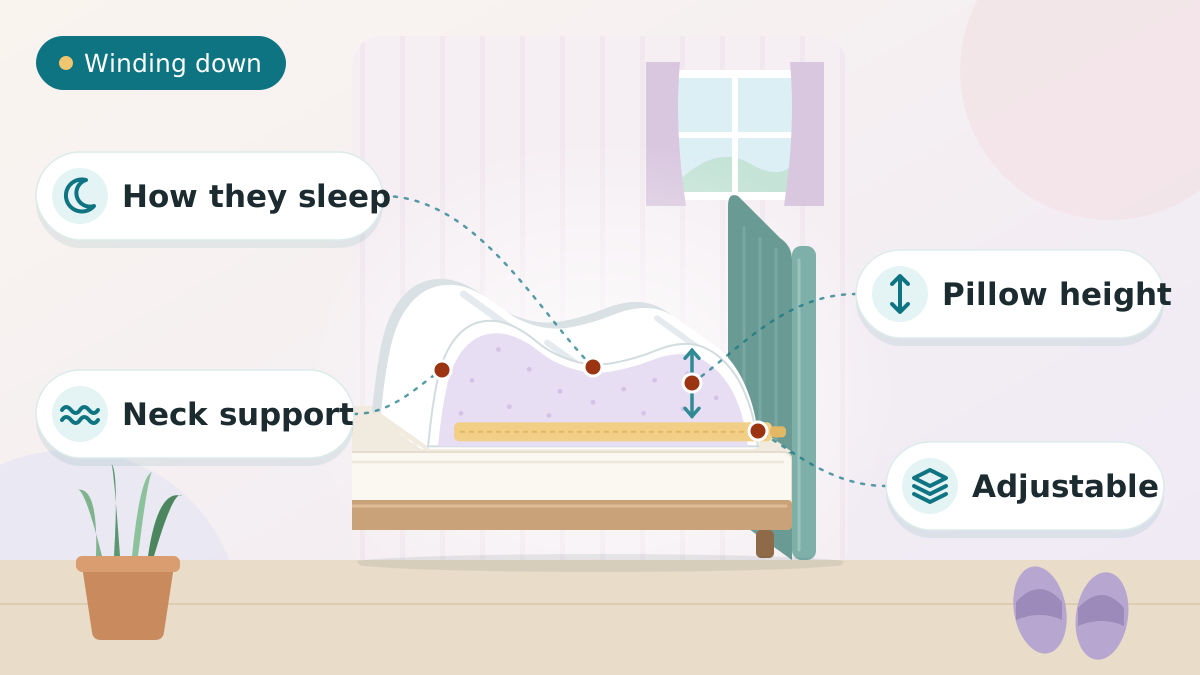
Why the evening routine matters
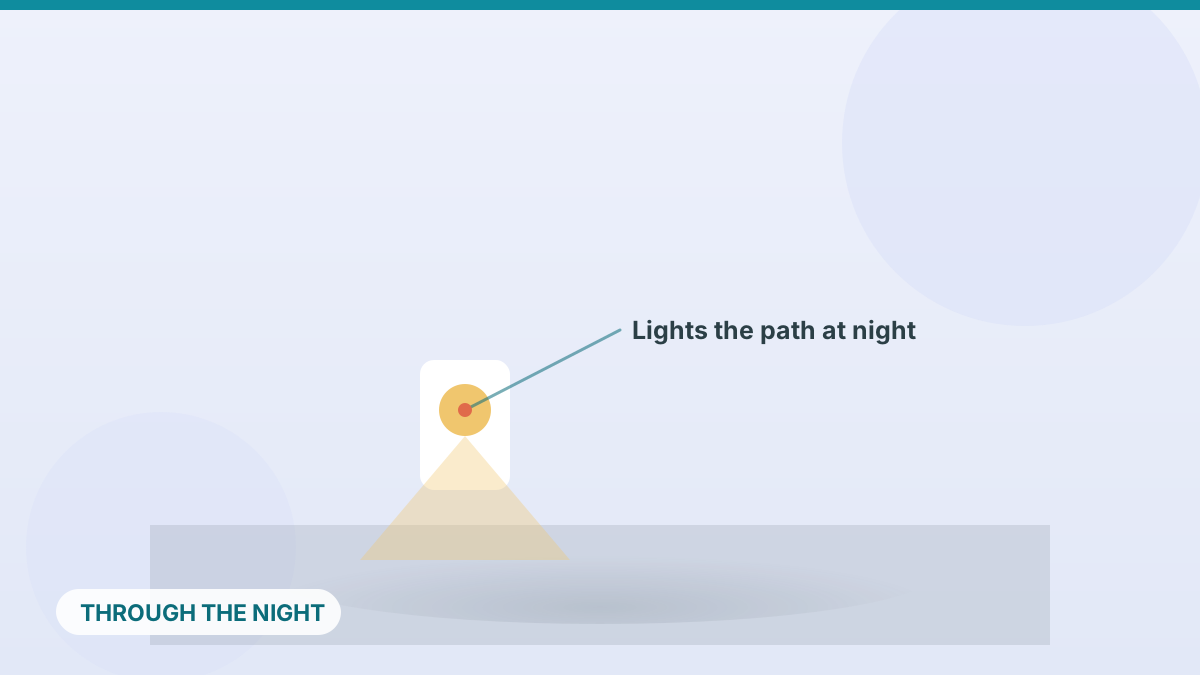
Sleep often becomes lighter and more broken with age, which makes the hours before bed genuinely important. A calming evening routine is how you signal to the body that the day is ending — easing it out of activity and into rest. Done consistently, it helps a senior fall asleep more easily, sleep more deeply, and wake less during the night.
The evening is also when you prepare for a safe night, since night-time is a common moment for falls. This guide covers both the wind-down and the sleep environment, completing the daily routine alongside afternoon rest.

Bonus: Follow-Along Player
An ElderlyDaily original
Ready for a plan you can follow every day?
Chair Yoga for Seniors — The Complete 4-Week System
- 40 illustrated poses, each with an easier and a stronger option
- A day-by-day 4-week plan that starts at about 10 minutes a day
- 7 mini-routines for stiff knees, balance, mornings and more
One-off purchase. Instant download.
Fillable PDF · 48 pages · US Letter + A4

Sponsored Pick
Elviros Cervical Memory Foam Pillow
A contoured pillow for side sleepers who want shoulder and neck support.
Check PriceCore elements of a healthy evening

A good evening routine gently shifts the body toward sleep:
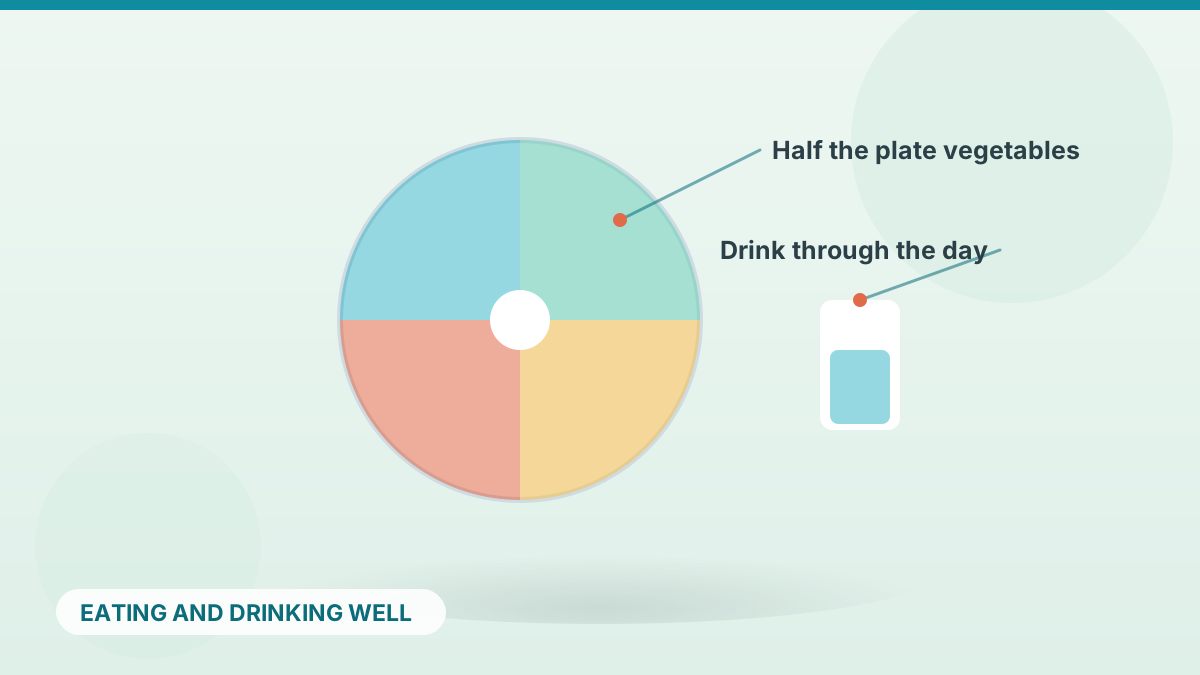
- A light, earlier dinner — heavy or late meals disrupt sleep; aim to eat a few hours before bed, and see nutrition.
- Limit stimulants and screens — reduce caffeine from the afternoon on, and dim bright screens and lights in the last hour or two.
- Calming activities — reading, gentle music, light stretching, or quiet hobbies rather than stimulating or stressful ones.
- A consistent wind-down sequence — the same soothing steps each night (a warm drink, washing, changing) that cue sleep.
- A consistent bedtime — going to bed at a similar time strengthens the body clock.
- Prepare for morning — laying out clothes and medications eases the next day.
A sample evening routine
A flexible wind-down over the last hour or two before bed:
- 1
Light dinner, earlier
Have a lighter evening meal a few hours before bed, so digestion does not disrupt sleep.
- 2
Dim the lights, slow the pace
Lower the lighting and switch off stimulating screens an hour or two before bed to let the body produce sleep hormones.
- 3
A calming activity
Read, listen to gentle music, do light stretching, or enjoy a quiet hobby — something relaxing and enjoyable.
- 4
A warm, non-caffeinated drink
A warm milky or herbal drink can be soothing (avoid caffeine and limit large amounts of fluid right before bed).
- 5
Wash, change, and prepare
Follow the familiar pre-bed steps — washing, changing into nightwear, brushing teeth — and lay out tomorrow’s clothes and medications.
- 6
To bed at a consistent time
Go to bed at a similar time each night in a cool, dark, quiet room, with the path to the bathroom clear and lit.
Creating a sleep-friendly bedroom
The bedroom environment strongly affects sleep quality and night-time safety:
- Cool, dark, and quiet — a comfortable temperature, blackout where helpful, and minimal noise support deeper sleep.
- A comfortable, supportive bed — a mattress and pillows that suit the person; a wedge pillow can ease reflux or breathing for some.
- Safe for night trips — a clear, lit path to the bathroom with night lights, since night bathroom trips are a common fall scenario; see safe bedroom setup.
- Essentials within reach — a lamp, water, glasses, and a phone or medical alert device by the bed.
- A bedside commode if the bathroom is far or the person is very unsteady at night.
Safety first
Night bathroom trips in the dark are a common fall scenario. Motion-activated night lights along that path, a clear route, and a reachable lamp are among the highest-value evening safety steps you can put in place.
Calming evening activities
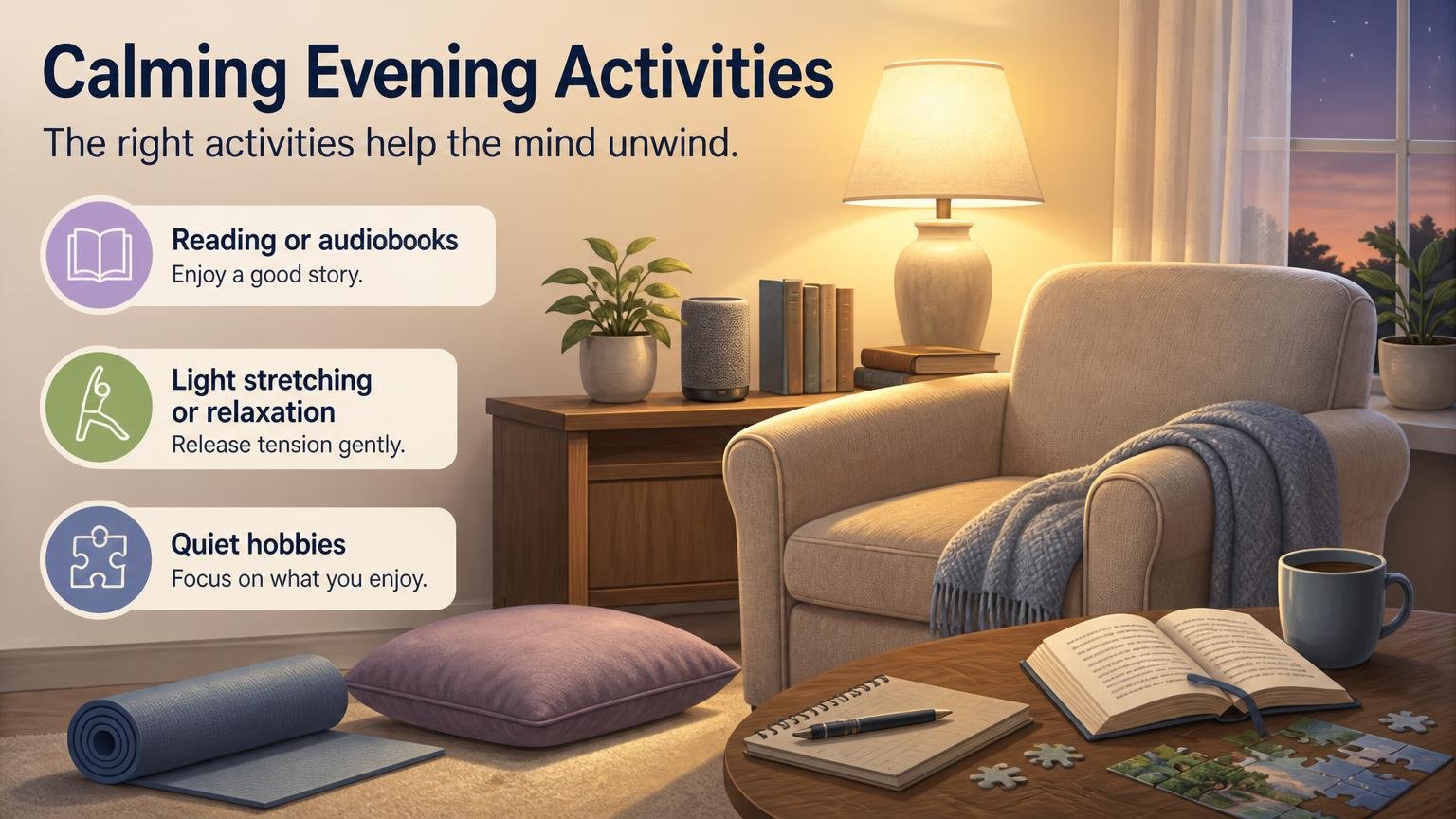
The right activities help the mind unwind:
- Reading or audiobooks, gentle music, or a favorite calm TV program (kept off close to sleep).
- Light stretching or relaxation — gentle movement or breathing exercises to release the day’s tension.
- Quiet hobbies — puzzles, knitting, journaling, or gentle mental activities.
- Gentle connection — a relaxed chat or call with family, part of healthy social contact.
- Avoid stimulating or stressful activities — intense TV, difficult conversations, or anything that raises stress close to bed.
Adapting the evening, and mistakes to avoid
Tailor the routine and sidestep common sleep-disruptors:
- Adapt by ability — for those with limited mobility, keep the wind-down seated and accessible; for cognitive decline, a simple consistent routine helps with evening restlessness and sundowning.
- Avoid long or late naps — too much afternoon sleep can undermine night sleep.
- Avoid heavy meals, caffeine, and alcohol late in the day.
- Avoid bright screens and lights right before bed.
- Caregiver support — help with the wind-down and safety checks, and see caregiver daily routine support.
- Persistent problems — ongoing insomnia, or new sleep changes, deserve a doctor’s review rather than reaching for sleep aids, which carry fall risks.
Frequently asked questions
What is a good evening routine for seniors?
A calming, consistent wind-down: a light earlier dinner, dimming lights and switching off stimulating screens an hour or two before bed, a calming activity (reading, gentle music, light stretching), a familiar pre-bed sequence, and a consistent bedtime in a cool, dark, quiet room. Make night trips safe with a clear lit path, night lights, and a way to call for help.
How can seniors sleep better at night?
Keep a consistent bedtime and wake time, follow a calming wind-down routine, create a cool, dark, quiet, comfortable bedroom, limit caffeine, heavy meals, alcohol, and bright screens in the evening, avoid long late naps, and stay active during the day. Make night trips safe with lighting and a clear path. Persistent sleep problems should be discussed with a doctor rather than self-treated.
How do I make a bedroom safe for night-time?
Keep a clear, lit path from the bed to the bathroom with motion-activated night lights (night bathroom trips are a common fall scenario), place a lamp, water, glasses, and a phone or medical alert device within reach, ensure a comfortable supportive bed, and consider a bedside commode if the bathroom is far or the person is very unsteady. Our safe bedroom setup guide covers this fully.
Why do elderly people have trouble sleeping?
Sleep naturally becomes lighter and more broken with age, and it can be further disrupted by evening habits (caffeine, heavy or late meals, bright screens, long naps), an uncomfortable or unsafe bedroom, medications, pain, or medical conditions. A consistent calming evening routine and a sleep-friendly bedroom help a great deal; persistent problems warrant a medical review.
What activities help seniors wind down before bed?
Calming, enjoyable activities work best: reading or audiobooks, gentle music, light stretching or relaxation and breathing exercises, quiet hobbies like puzzles or knitting, and gentle connection with family. Keep the last hour low-stimulation and dimly lit, and avoid intense TV, stressful conversations, or bright screens that make it harder to fall asleep.
Should seniors take sleeping pills for insomnia?
Sleep aids should not be a first resort — many carry real risks for older adults, including grogginess and dizziness that raise fall risk, and dependence. It is far better to address sleep through a consistent routine, a sleep-friendly environment, and daytime activity, and to discuss persistent insomnia with a doctor, who can look for treatable causes and advise on the safest approach.
Sources
- National Institute on Aging (NIH). Sleep and Older Adults
- CDC. Facts About Falls — Older Adult Fall Prevention
- National Institute on Aging (NIH). Taking Medicines Safely as You Age
