
Tracki Mini GPS Tracker Review
 By Kutubuddin, Founder & Senior Care Researcher Updated October 16, 2026
In this guide
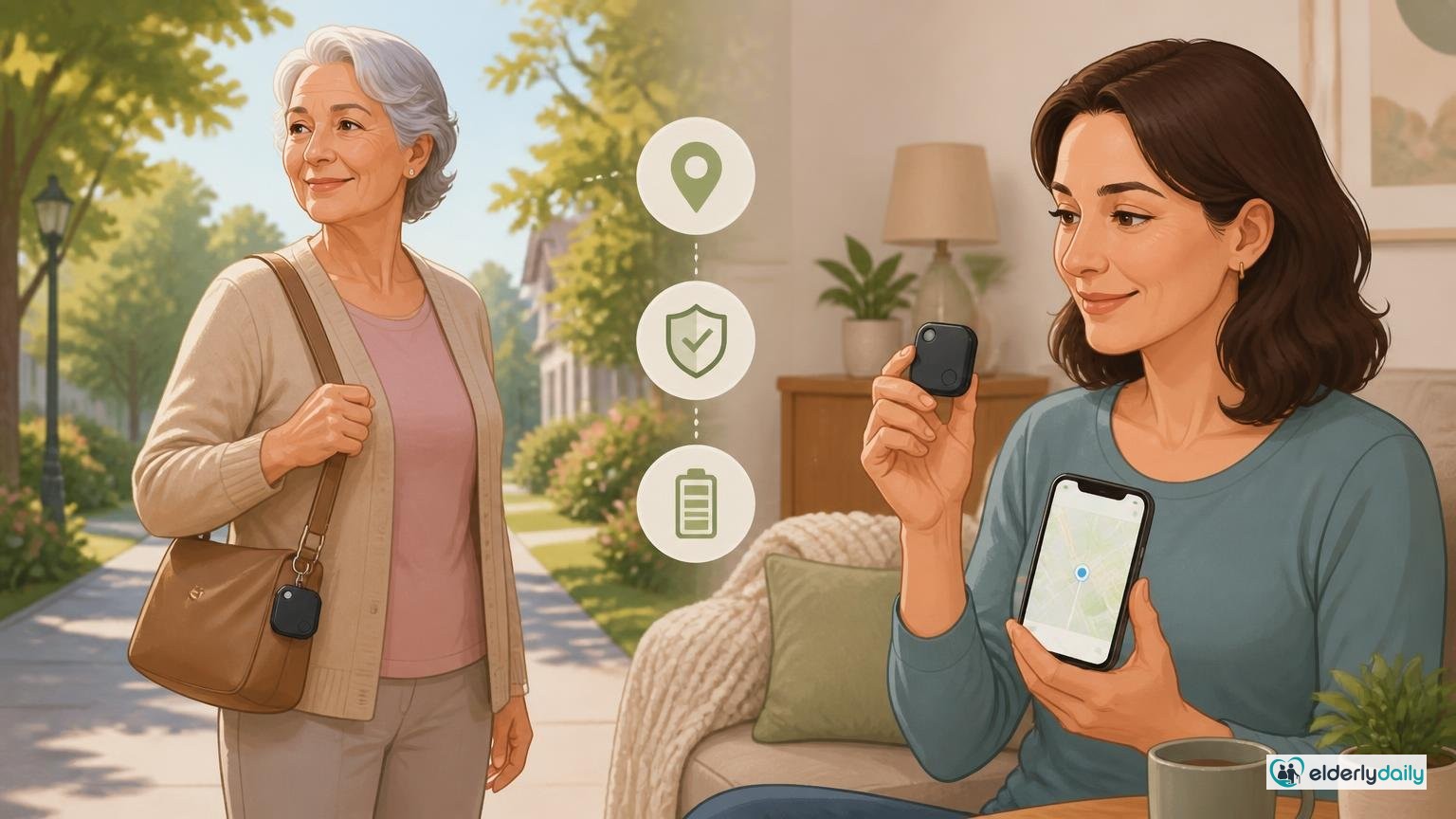
The Tracki Mini is a compact 4G LTE locator that combines GPS, Wi-Fi and Bluetooth positioning. It is cheap to buy and cheap to run — but the battery figure on the box is not the battery figure you will get.
The Tracki Mini is the most affordable way to put real-time cellular tracking on a person who wanders, and for early-to-mid stage dementia that matters more than the feature list. It's small enough to sit in a coat pocket unnoticed, uses four positioning technologies so it usually holds a fix indoors, and geofence alerts arrive quickly.
Two things need saying plainly. First, the headline month-long battery figure is battery-save mode, reporting only a few times a day — that's an asset-tracking mode, not a wandering safeguard. Set to update every one to five minutes, which is what you actually need when someone has walked out, expect roughly five days between charges. Second, this is a locator, not an alert device: there is no two-way voice, and it is not a satellite emergency beacon. Buy it to find someone quickly. Do not buy it as a way for them to call for help.
We may earn a commission when you buy through links on this page, at no extra cost to you. Read our affiliate disclosure.

Tracki Mini GPS Tracker (4G LTE, Subscription Required)
A caregiver of someone in the early-to-mid stages of dementia who needs a low-cost, pocketable locator and can commit to charging it every few days
- One of the cheapest ways to get genuine real-time cellular tracking rather than Bluetooth proximity
- Small and light enough to sit in a coat pocket or clip to a belt without drawing attention
- Four positioning technologies — GPS, Wi-Fi, Bluetooth and cellular — so it usually keeps a fix indoors
- Geofence alerts arrive quickly, which is the feature that actually matters for wandering
- Replaceable battery, so the device does not become disposable when the cell degrades
- Subscription can be cancelled at any time, unlike medical alert contracts
Type
4G LTE cellular GPS locator
Model
Sold under rolling model-year names — one Amazon listing, current revision
Positioning
GPS, Wi-Fi, Bluetooth and cellular
Size
Compact puck, roughly 2 oz
Battery
~5 days at real-time updates; 30–45 days in battery-save
Battery type
Replaceable 600 mAh cell
Wear
Pocket, belt clip or magnetic mount
Running cost
Subscription required; cancellable at any time
Not
Not an emergency beacon — **no SOS call, no two-way voice**
What we like
- One of the cheapest ways to get genuine real-time cellular tracking rather than Bluetooth proximity
- Small and light enough to sit in a coat pocket or clip to a belt without drawing attention
- Four positioning technologies — GPS, Wi-Fi, Bluetooth and cellular — so it usually keeps a fix indoors
- Geofence alerts arrive quickly, which is the feature that actually matters for wandering
- Replaceable battery, so the device does not become disposable when the cell degrades
- Subscription can be cancelled at any time, unlike medical alert contracts
Worth noting
- The advertised month-plus battery life is battery-save mode, reporting a few times a day — useless for locating someone who has just left
- At the real-time update rate you actually need, expect around five days between charges
- A locator only — no SOS button, no two-way voice, and Tracki states it is not an emergency beacon
- Nothing stops it being taken out of a pocket or unclipped; there is no tamper resistance
- The Amazon listing is written around vehicle and asset tracking, so the setup guidance is not caregiver-focused
- Requires a subscription for the device to do anything at all
Buy it if…
- You need real-time location and cannot justify the cost of a dedicated dementia tracker
- The person will carry something in a pocket but refuses to wear a visible device
- You want geofence alerts that tell you the moment someone leaves a safe area
- You can build charging into a routine every few days, the way you would a phone
- You want a second, cheap layer alongside a primary device rather than a sole safeguard
Look elsewhere if…
- You need the person to be able to call for help — look at a medical alert with an SOS button instead
- The person removes or discards anything they find in their pockets — a hidden insole tracker is much harder to find and remove.
- You need a device that cannot be removed at all — consider a tamper-resistant wearable
- Nobody in the household can reliably charge a device every few days
- You want two-way conversation with the person once you have located them
What the Tracki Mini actually is
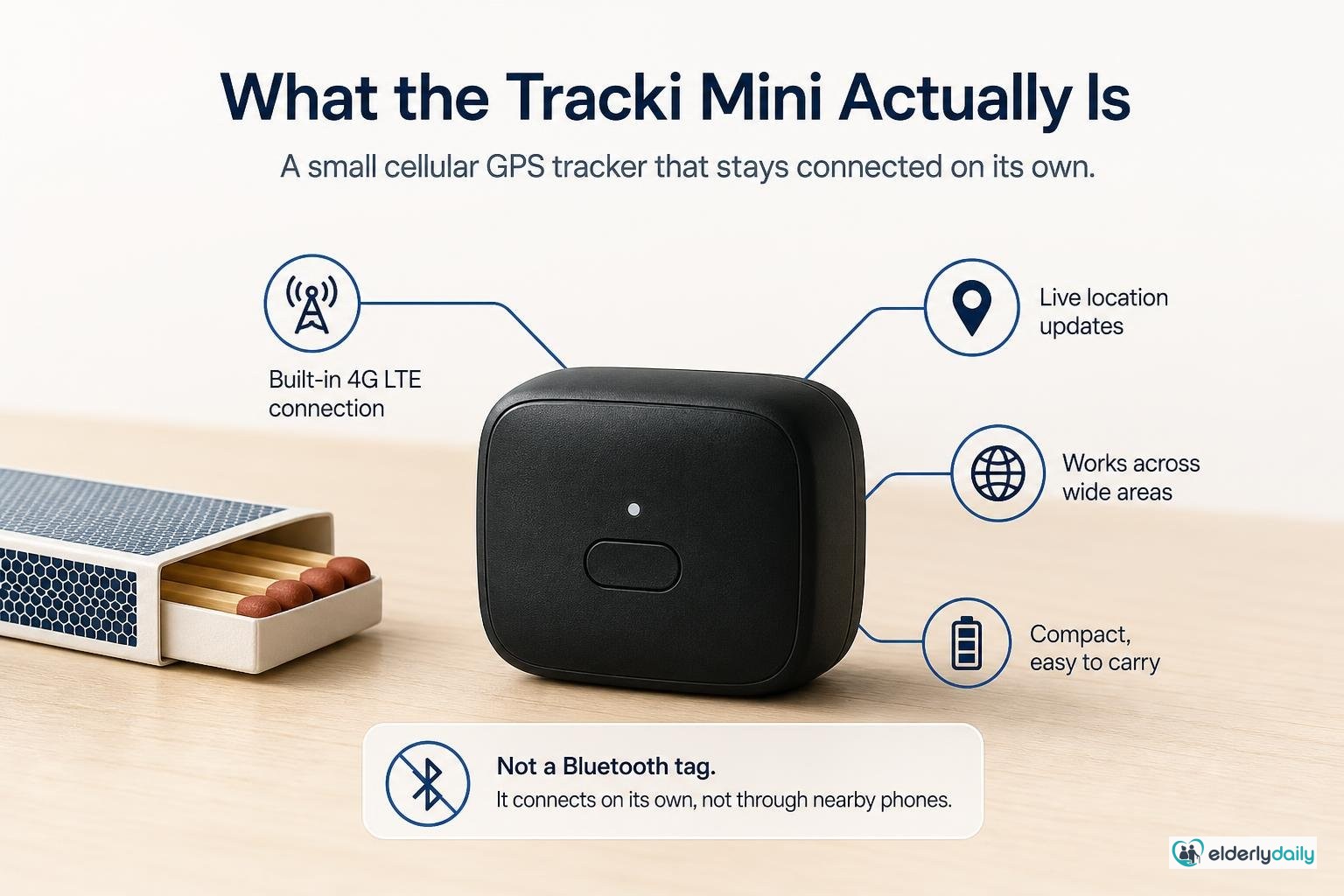
The Tracki Mini is a small cellular GPS tracker — a puck roughly the size of a matchbox that carries its own 4G LTE connection. That last part is the whole point, and it is what separates it from the Bluetooth tags families often reach for first.
A Bluetooth tag has no independent connection. It reports its position only when someone else’s phone passes close enough to notice it, which in practice means a last-seen ping rather than a live location. For a lost wallet that is fine. For a person with dementia who has walked out of the house, it is the difference between knowing where they are and knowing where they were.
The Tracki has its own SIM, so it reports its own position wherever there is cellular coverage. It combines that with GPS satellites for outdoor accuracy, Wi-Fi positioning to help hold a fix indoors, and Bluetooth for close-range location once you are nearby. That hybrid approach is the reason it works reasonably well inside buildings, where GPS alone struggles.
Which model am I buying? Tracki markets the Mini under rolling model-year names — you will see 2020, 2021, 2024 and 2025 versions referred to across the brand’s own site and in search results. On Amazon it is a single listing that has carried the product through those revisions rather than a separate listing per year, so ordering it gets you the current version rather than old stock. The model-year pages on Tracki’s own site are the ones worth checking carefully, since some describe earlier generations. This review covers the 4G LTE Mini as sold in July 2026.
One thing to be aware of when you open the box: the listing and much of the setup material is written around vehicles and assets. There are magnetic mounts, hardwire kits and OBD cables in the accessory range. None of that is wrong, but it does mean the documentation will not walk you through caregiver-specific setup. You will be adapting a general-purpose tracker.
The battery claim, and what you will actually get
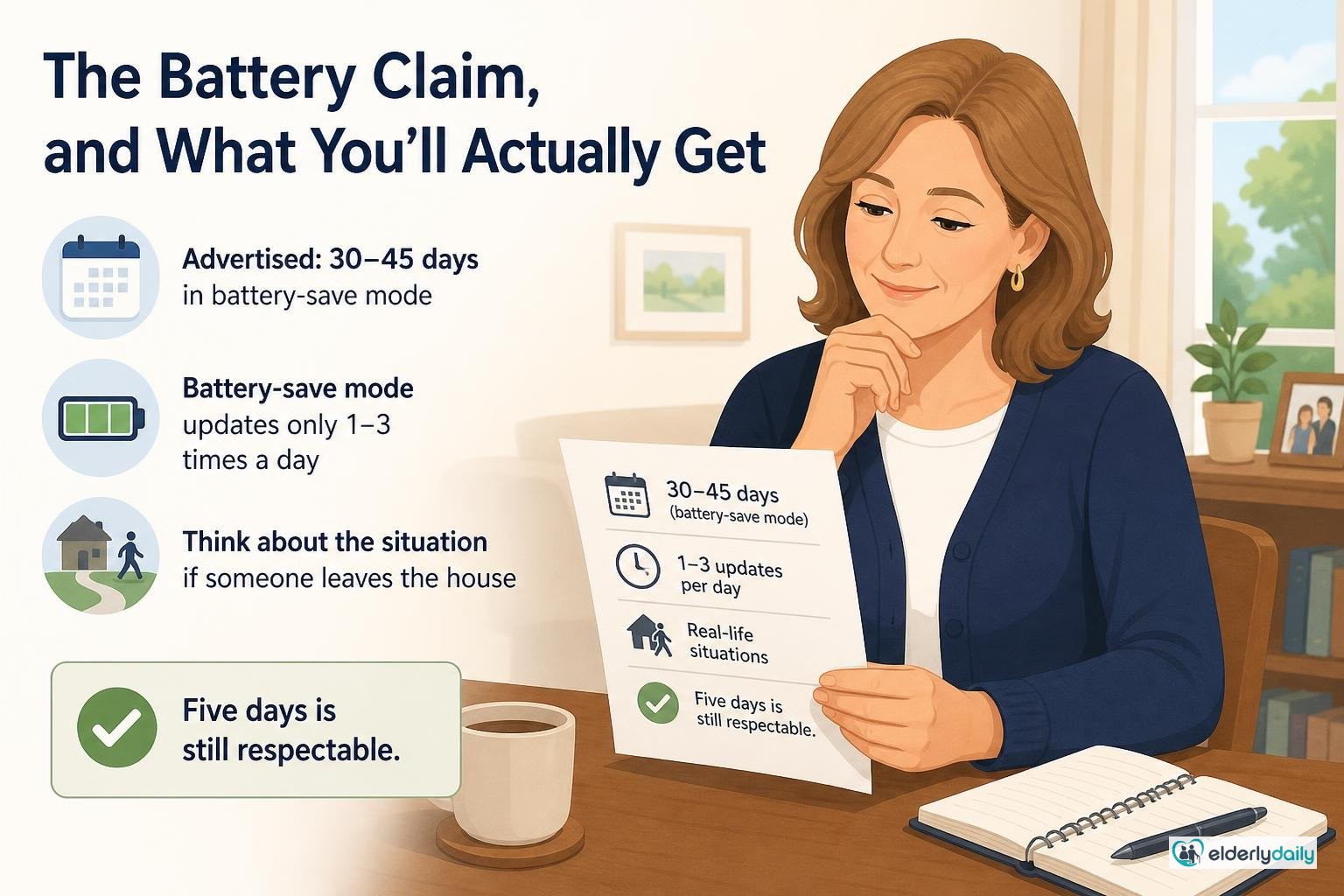
This is the part of the Tracki that is most often misunderstood, and it is the reason to read a review rather than the box.
Tracki advertises battery life measured in weeks — figures in the region of 30 to 45 days appear routinely, and longer with the extended-battery accessory. Those numbers are real, but they describe battery-save mode, in which the device wakes and reports only one to three times a day.
Think about what that means in the situation you bought it for. Someone leaves the house at two in the afternoon. If the tracker’s next scheduled report is that evening, you have no live position during the window that matters most. Battery-save is an asset-tracking mode: useful for knowing roughly where a suitcase is, useless for finding a person who is walking.
Set the device to update every one to five minutes — the setting that makes it a wandering safeguard rather than a locator of last resort — and the manufacturer’s own figure is around five days on the 600 mAh cell.
Five days is still respectable, and some wrist-worn trackers need charging daily. But plan around five days, not thirty. Build charging into a fixed routine, and consider buying a second battery so one is always charged and the device is never off the person while the other refills.
Getting someone to carry it
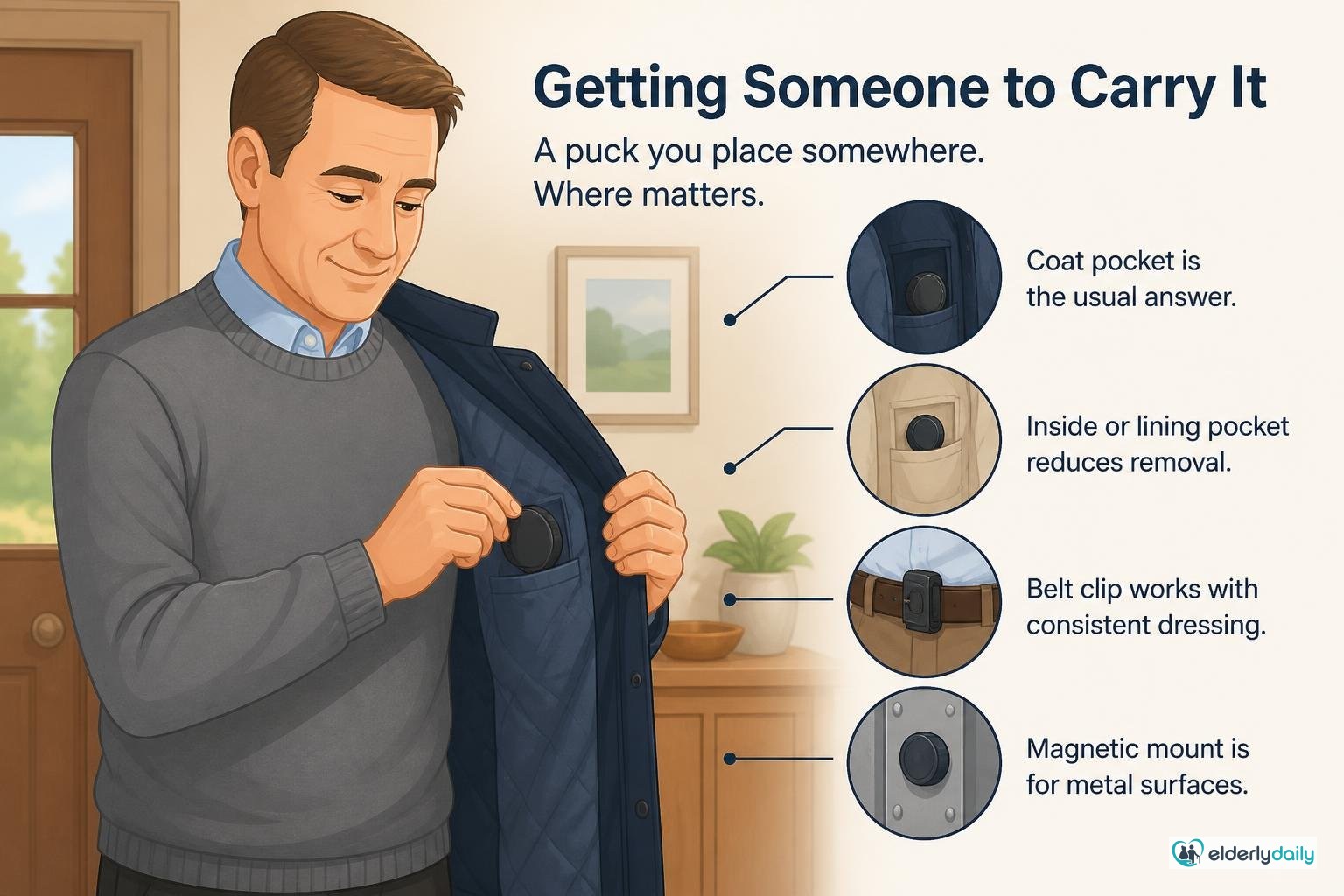
The Tracki has no strap, clip-lock or tamper resistance. It is a puck you place somewhere, and the whole question is where.
A coat pocket is the usual answer, and for many families the most reliable one — particularly if the coat is the one always worn to go out. An inside pocket, or a lining pocket that is not used for anything else, reduces the chance of it being taken out and put down.
A belt clip works if the person dresses consistently. The magnetic mount is designed for metal surfaces and is more useful for a walker frame, a wheelchair, or a bag than for clothing.
What it cannot do is stay attached against intent. If someone reaches into a pocket, finds an unfamiliar object and puts it on the kitchen table, the tracker is now tracking the kitchen table. This is the central limitation of every pocket-carried device, and it is the reason the more advanced stages of dementia usually call for something that cannot be removed — a tamper-resistant clip that needs a tool, or a tracker hidden inside a shoe.
If you are already seeing devices removed, buy for that behaviour rather than hoping it does not happen.
What it will not do
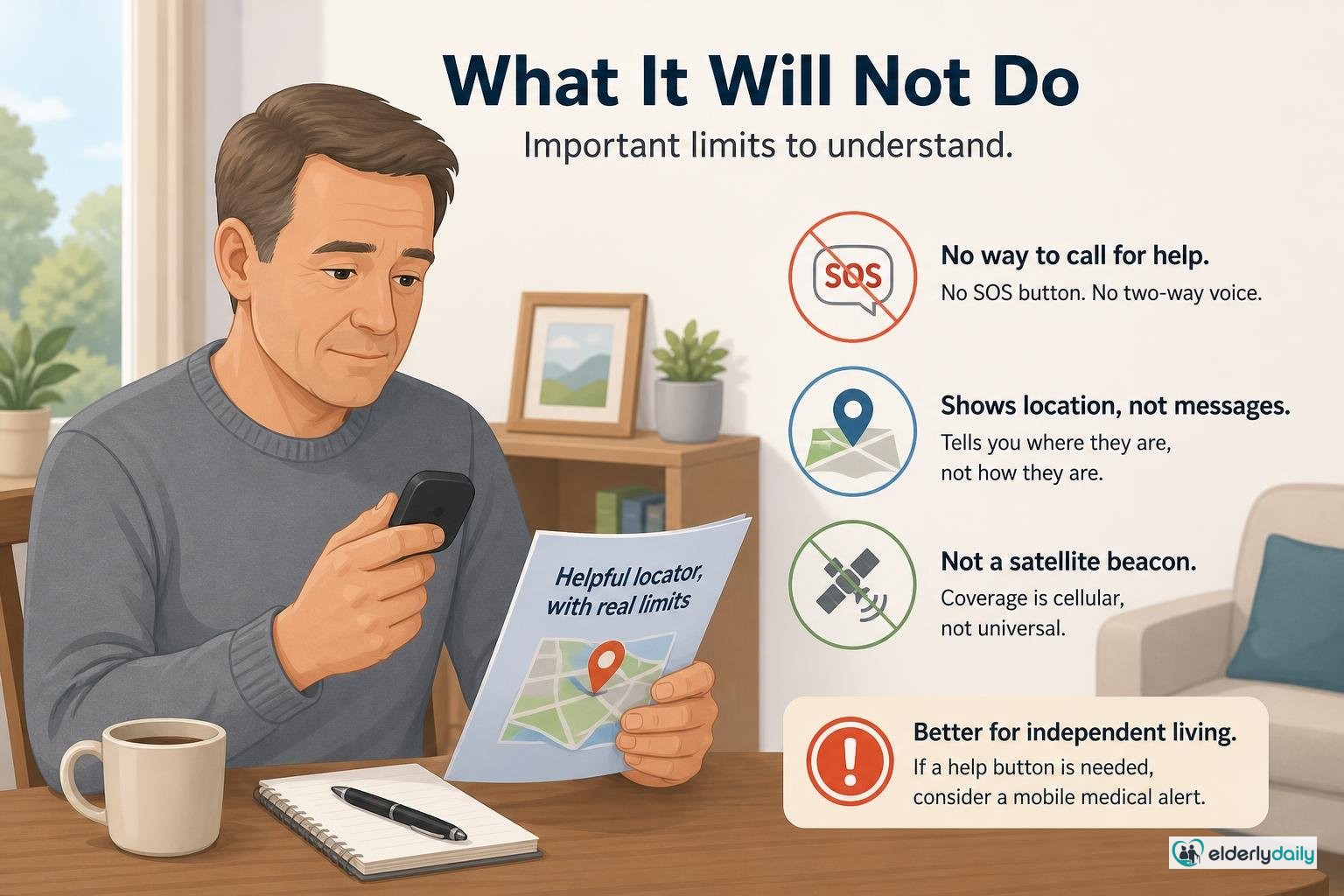
Two limits deserve stating clearly, because neither is obvious from the product page.
There is no way for the person to call for help. No SOS button that reaches a monitoring centre, no two-way voice. If someone falls or becomes distressed, the Tracki will tell you where they are, but they cannot tell you anything. Tracki’s own listing states the device is not a satellite emergency beacon. For a senior who lives fairly independently and would benefit from a help button, a mobile medical alert is a different and better category of product.
Coverage is cellular, not universal. The device works where there is a mobile signal. Rural areas, basements, large concrete buildings and lifts will all degrade or interrupt reporting. This is true of every cellular tracker, but it is worth testing in the places the person actually goes before you rely on it.
Neither of these makes the Tracki a bad product. They make it a locator, which is a genuinely useful thing to own. The mistake is buying it as a safety system.
Setup and running cost
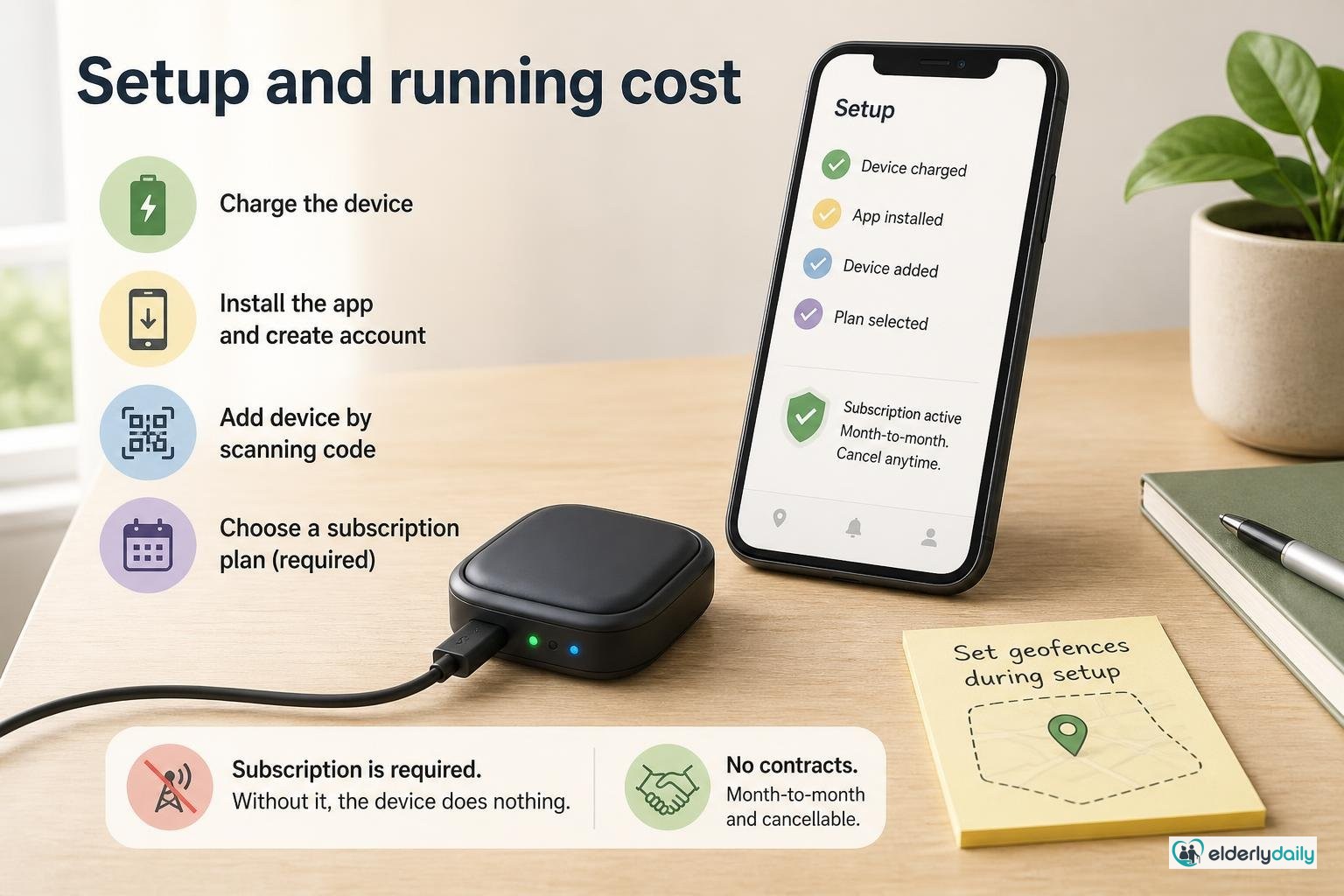
Setup is app-based: charge the device, install the Tracki app, create an account, add the device by scanning the code on the back, and choose a subscription plan.
The subscription is not optional. A cellular tracker needs a data plan to report anything, and without one the device does nothing. Plans are month-to-month and cancellable at any time, which compares favourably with medical alert services that often run on contracts.
Set your geofences during setup rather than later. A boundary around the home is the obvious one; boundaries around a day centre, a relative’s house or a familiar shop are worth adding, because knowing someone has arrived somewhere expected is as useful as knowing they have left.
Test it before you rely on it. Walk the routes the person actually takes, indoors and out, and confirm the app reports where you are. The one thing worse than no tracker is a tracker you trust that has a coverage hole on the route to the shops.
What Tracki says
The following are Tracki’s own marketing claims from the product listing, not our independent findings. Details can change over time — check the current Tracki website for the latest.
- Tracki positions the Mini as a universal compact 4G LTE tracker for vehicles, assets, kids, seniors and pets, with worldwide coverage where cellular service is available.
- The brand advertises battery life of roughly 30 to 45 days, and longer with an extended battery — figures that describe battery-save mode rather than real-time tracking.
- Tracki states the device works where cellular service is available and that it is not a satellite emergency beacon, noting that performance varies with signal, placement, movement and settings.
- The company markets a hybrid positioning approach using GPS, cellular, Wi-Fi and Bluetooth together for better accuracy indoors and in weak-signal areas.
How it compares to other dementia trackers
The Tracki is the budget entry point to real-time tracking, and for early-to-mid stage dementia that is often the right place to start. Two situations call for something else: when the person removes whatever you give them, and when you need them to be able to call for help.
- AngelSense GPS Tracker (our independent #1) — the same real-time tracking with a magnetic lock that needs a key tool to remove, plus two-way voice and far richer alerting — the pick when the device keeps coming off.
- GPS SmartSole — a tracker sealed inside a shoe insole — out of sight and difficult for the wearer to find or remove, though it only works while those shoes are worn. The answer for someone who refuses every visible device.
- Medical Guardian Mini Guardian — a mobile medical alert with a help button to a 24/7 monitoring centre — the better category when the priority is the person calling for help rather than you finding them.
Frequently asked questions
For early-to-mid stage dementia, yes — with two conditions. The person has to be willing to carry something in a pocket, and someone has to charge it every few days. Within those limits it does the important job well: real-time position and fast geofence alerts at a fraction of the cost of a dedicated dementia tracker. It is not suitable once someone routinely removes or discards what they find in their pockets, and it is not a substitute for a device with an SOS button.
Around five days at real-time update rates of one to five minutes, on the standard 600 mAh cell. The 30 to 45 day figures you see advertised are battery-save mode, in which the device reports only one to three times a day. That mode is fine for tracking an asset but not for locating a person who has just wandered, because the next report may be hours away. Plan around five days and treat charging like charging a phone.
Yes. It carries its own 4G LTE connection, and that needs a data plan to report anything. Without a subscription the device does nothing at all. Plans are month-to-month and can be cancelled at any time, which is more flexible than most medical alert services.
For a person who wanders, yes, and the difference is fundamental rather than a matter of degree. AirTags and Tiles are Bluetooth tags with no connection of their own. They report a position only when somebody else’s phone passes close enough to notice them, which gives you a last-seen ping rather than a live location. The Tracki has its own cellular connection and reports its own position. Bluetooth tags are a reasonable cheap backup layer in a wallet or coat; they should never be the primary safeguard for someone at risk of getting lost.
No. There is no SOS button connected to a monitoring centre and no two-way voice, and Tracki’s own listing states the device is not an emergency beacon. It tells you where someone is; it gives them no way to tell you anything. If the priority is the person being able to summon help — after a fall, for instance — a mobile medical alert pendant is the right category of product.
Tracki sells the Mini under rolling model-year labels — 2020, 2021, 2024 and 2025 versions all appear across the brand’s site and in search results — which makes it easy to worry you are buying something superseded. On Amazon it is one continuous listing that has carried the product through those revisions, so ordering it gets you the current version rather than leftover stock. The distinction matters more on Tracki’s own site, where some model-year product pages describe earlier generations. The important specifications have been stable across recent versions: 4G LTE, hybrid GPS/Wi-Fi/Bluetooth positioning, a replaceable 600 mAh cell, and a required subscription. If a specific generation matters to you, check the listing title and the technical details on the product page before ordering. This review covers the 4G LTE Mini as sold in July 2026.
An inside or lining pocket of the coat they always wear to go out is usually the most reliable place, because it is out of sight and out of reach of idle hands. A belt clip works if the person dresses consistently. The magnetic mount is better suited to a walker frame, wheelchair or bag than to clothing. Whatever you choose, remember the device has no tamper resistance — if it is found and set down, it tracks wherever it was set down.
Tracki Mini GPS Tracker (4G LTE, Subscription Required)
Best for: A caregiver of someone in the early-to-mid stages of dementia who needs a low-cost, pocketable locator and can commit to charging it every few days
