
RunStar Scale Review: Smart vs Simple, and What Seniors Actually Need
 By Kutubuddin, Founder & Senior Care Researcher Updated October 20, 2026
In this guide
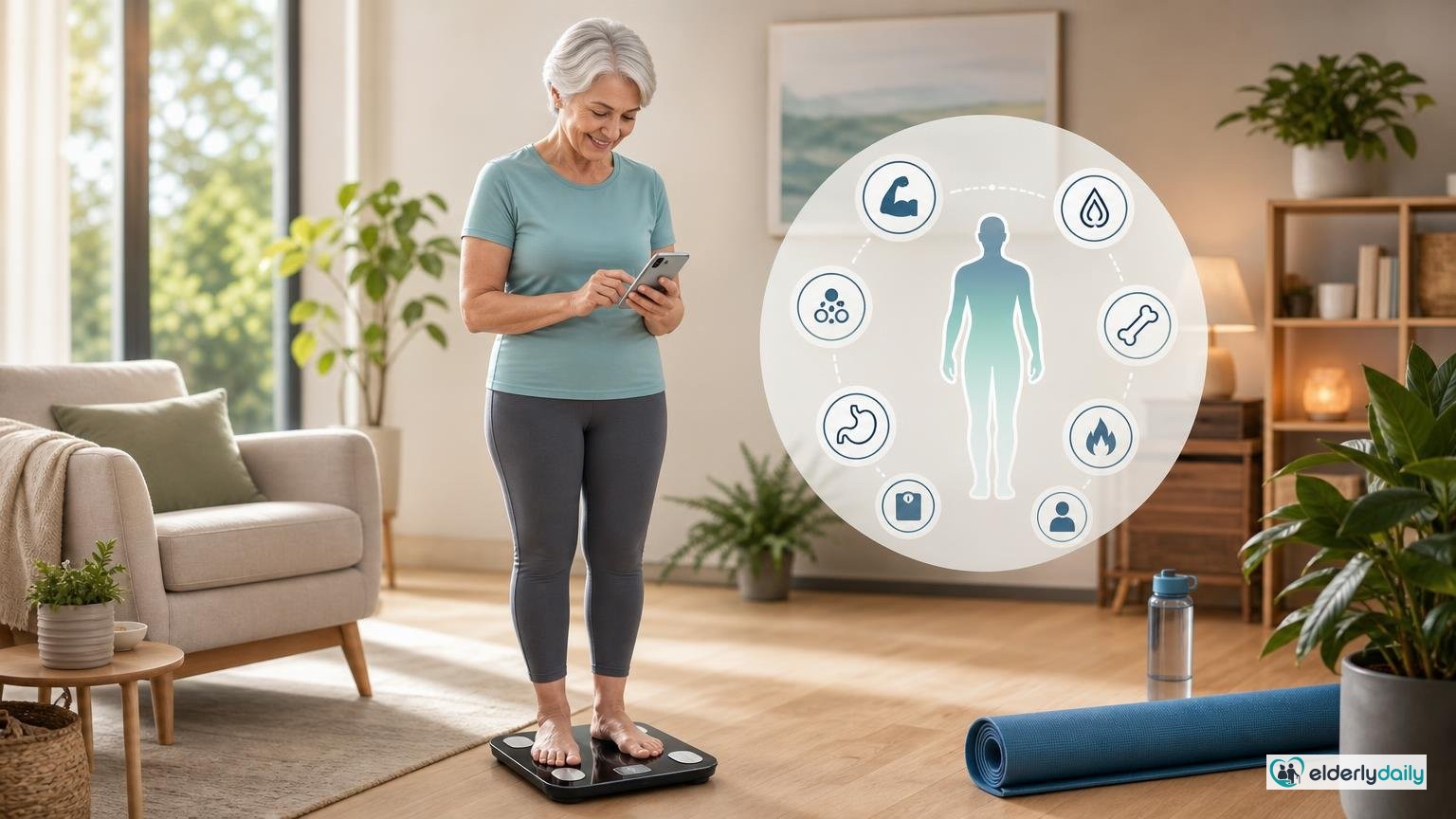
The 8-electrode RunStar smart scale reads body composition through both hands and feet, and shows seven metrics on a colour handle display. Whether an older adult should buy one is a different question — and often the answer is no.
This is a capable body-composition scale. Eight electrodes read the arms and torso as well as the legs, the handle display shows seven metrics the moment you step off, and the Starfit app keeps a history you can look back through.
For an older adult, though, there is a problem ahead of every feature. RunStar's own guidance says anyone with a pacemaker, artificial joints, a portable ECG, other metal implants, or osteoporosis should use this scale for weighing only. Read that against a typical readership over seventy — pacemakers, hip and knee replacements and osteoporosis are all common — and for a large share of people the body-composition features, the entire reason this costs what it does, are off the table.
Even when available, the readings are estimates from a small electrical current, shifting with hydration, meals and time of day — useful for a direction over months, not a decision. What actually matters in later life is the weight itself: a steady unintended loss, or a sudden gain that can mean fluid building up. For that, the simpler RunStar 14-inch does the job in 0.1 lb steps for a fraction of the price. Unless you specifically want body composition and none of the conditions above apply, that is the one to buy.
We may earn a commission when you buy through links on this page, at no extra cost to you. Read our affiliate disclosure.

RunStar Smart Scale (8-Electrode Body Composition)
Someone who genuinely wants body-composition tracking and has no pacemaker, metal implant or bone condition ruling it out
- Eight electrodes read the arms and torso as well as the legs — better than cheap foot-only scales
- Seven metrics show on the handle display straight after weighing, with the change since last time
- Starfit app keeps the history and syncs to Apple Health, Fitbit and Health Connect
- Large 300 x 300 mm platform with extended pads, so foot placement is forgiving
- Up to 24 profiles on one account — practical in a household
- FSA / HSA eligible, which can make it cheaper than the sticker price suggests
Type
8-electrode body composition scale
Measures
28 body-composition metrics via dual-frequency BIA
Display
Full-colour TFT on a retractable handle, 7 metrics shown
Platform
300 x 300 mm (13 x 13 in), extended electrode pads
App
Starfit; syncs to Apple Health, Fitbit, Health Connect
Users
Up to 24 profiles on one account
Eligibility
FSA / HSA eligible
Not for
**Pacemakers, metal implants, osteoporosis — weighing only**
What we like
- Eight electrodes read the arms and torso as well as the legs — better than cheap foot-only scales
- Seven metrics show on the handle display straight after weighing, with the change since last time
- Starfit app keeps the history and syncs to Apple Health, Fitbit and Health Connect
- Large 300 x 300 mm platform with extended pads, so foot placement is forgiving
- Up to 24 profiles on one account — practical in a household
- FSA / HSA eligible, which can make it cheaper than the sticker price suggests
Worth noting
- Ruled out for anyone with a pacemaker, artificial joints, a portable ECG or other metal implants, and for osteoporosis — RunStar says weighing only
- Body-composition figures are estimates from a small electrical current, not measurements — they move with hydration, meals and time of day
- Requires Bluetooth pairing and the Starfit app before it will show anything beyond weight
- You must grip the handle barefoot, standing still — awkward if balance is poor
- Costs several times a simple scale that does the one job most older adults actually need
- Only one account can be connected to the scale at a time
Buy it if…
- You want body-composition tracking and have no pacemaker, metal implant or bone condition ruling it out
- You are comfortable pairing a device to a phone app and will actually use it
- You can stand still barefoot gripping a handle for a few seconds without difficulty
- You are tracking a fitness or body-recomposition goal where the trend over months is the point
- Several people in the household want their own profiles
Look elsewhere if…
- Anyone with a pacemaker, artificial joints, a portable ECG or other metal implants, or osteoporosis — the manufacturer says use it for weighing only, which removes the reason to buy it
- You mainly need to watch weight for a health reason — the simpler RunStar 14-inch reads in 0.1 lb steps on a lit display for a fraction of the price
- Nobody will set up or open the app — without it you have an expensive ordinary scale
- Balance is poor — gripping a handle while standing still on glass is not the right ask
- You want readings sent to a doctor automatically — look at a Wi-Fi smart scale instead
RunStar makes two very different things
Searching "RunStar smart scale" turns up two product families that have almost nothing in common beyond the brand, and it is worth knowing which one you are looking at before you spend anything.
The smart scales, including the one reviewed here, are the 8-electrode models. You stand barefoot on a 300 by 300 mm platform and pull up a retractable handle carrying a full-colour TFT screen. The scale then passes a low, dual-frequency electrical current through both hands and both feet, measuring the upper limbs, lower limbs and torso separately, and estimates twenty-eight figures — body fat, muscle mass, body water, visceral fat, BMI and the rest. Seven of them appear on the handle immediately, each with the change since your last reading; the full set lives in RunStar’s Starfit app, which syncs to Apple Health, Fitbit and Health Connect and holds up to 24 profiles. It is FSA and HSA eligible.
The simple scales are ordinary digital bathroom scales. Large platform, large display, high capacity, no app, no electrodes, no body composition. They tell you what you weigh and nothing else.
Most reviews of the smart models are written for people tracking a fitness goal. That is a reasonable audience for them. It is not the audience reading this, and the difference changes the answer completely.
The warning that decides this for many older adults
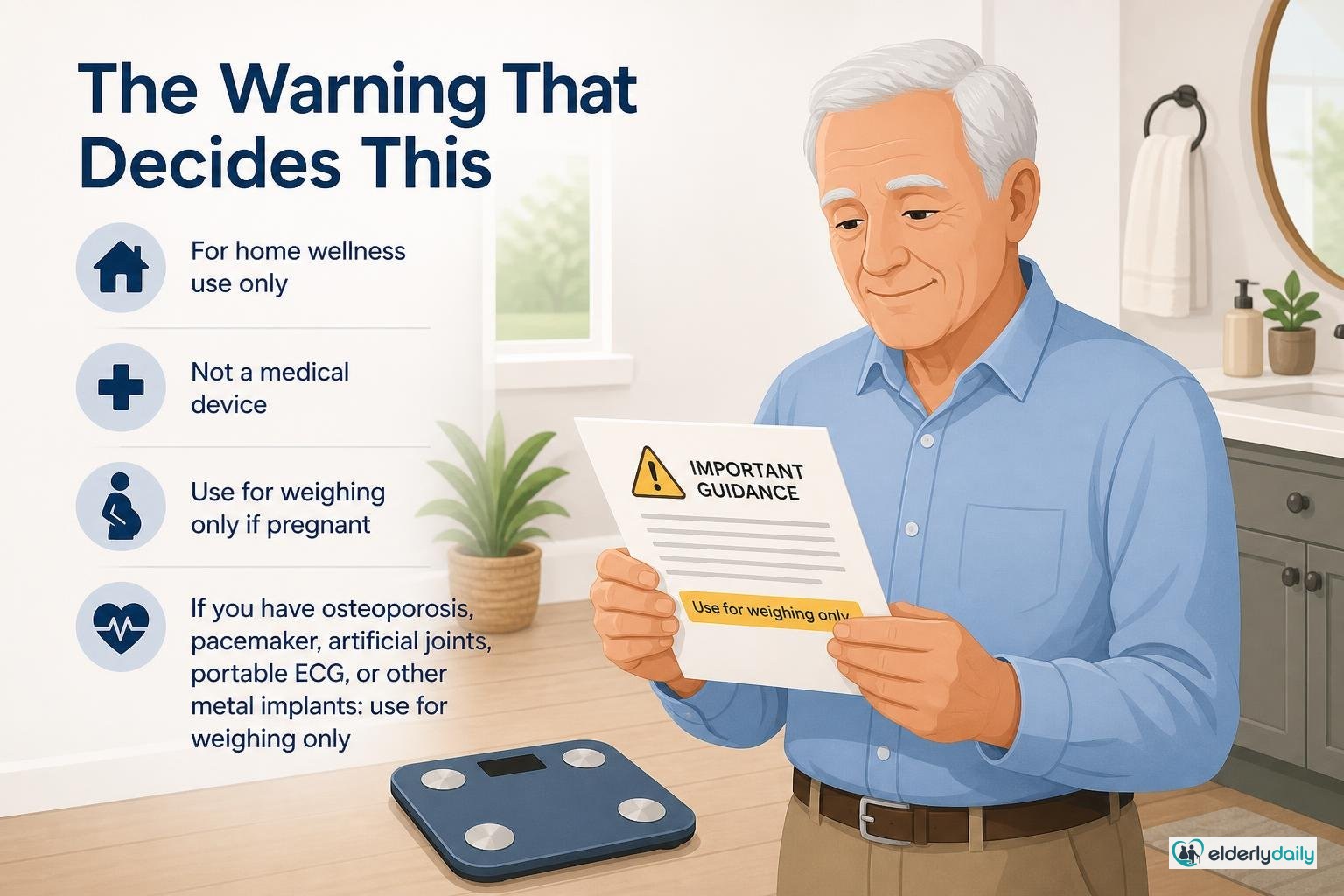
This is the part that does not appear in most reviews, and it comes from RunStar’s own product guidance rather than from us.
RunStar states that its smart scales are intended for home wellness use only, should not be considered medical devices, and that people who are pregnant, or who have osteoporosis, a pacemaker, artificial joints, a portable ECG, or other metal implants should use the scale for weighing only.
Read that against a typical readership over seventy. Pacemakers are common. Hip and knee replacements are common. Osteoporosis is very common, particularly in women after menopause. Any one of those means the body-composition features — the entire reason the smart model costs what it does — are off the table, and you are left with an expensive scale being used as a plain one.
The caution is not specific to RunStar. Every scale that works by bioelectrical impedance passes a small current through the body, and every manufacturer carries a similar warning about implanted electronic devices. It is a standard precaution rather than evidence of harm — but it is the manufacturer’s own instruction, and it is not one to work around.
If any of those apply, buy a scale that only weighs. You will get a better display and a steadier platform for less money, and you will not be paying for a function you have been told not to use.
Is the RunStar smart scale accurate?
This is the most-asked question about these scales, and it needs splitting in two, because the answer is different for each half.
Weight: yes, reasonably. A decent modern bathroom scale, RunStar included, will give you a consistent weight. Consistency matters more than absolute precision here — what you are watching is the direction of travel, and for that a scale that reads the same way every time is what you need.
Body composition: treat it as a rough guide, not a measurement. RunStar markets its 8-electrode models as offering DEXA-like accuracy, and the 8-electrode design does read the upper body as well as the legs, which is genuinely better than the cheap 4-electrode kind. But the underlying method is still bioelectrical impedance: a small current, a measure of resistance, and an algorithm estimating what the body is made of. Hydration, when you last ate, when you last exercised and the time of day all shift the result. RunStar itself describes these readings as estimates for tracking change over time, not medical diagnoses.
That is the right way to use them, if you use them at all. The number on any given day means little; the direction over two months means something.
For an older adult there is a further problem. The body-composition figures most worth having in later life — muscle loss, or sarcopenia — are exactly the ones a home scale estimates least reliably, and a real assessment involves a clinician, not a bathroom scale. So the feature that sounds most relevant to ageing is the one least likely to give you something you can act on.
What a scale is actually for, at this age
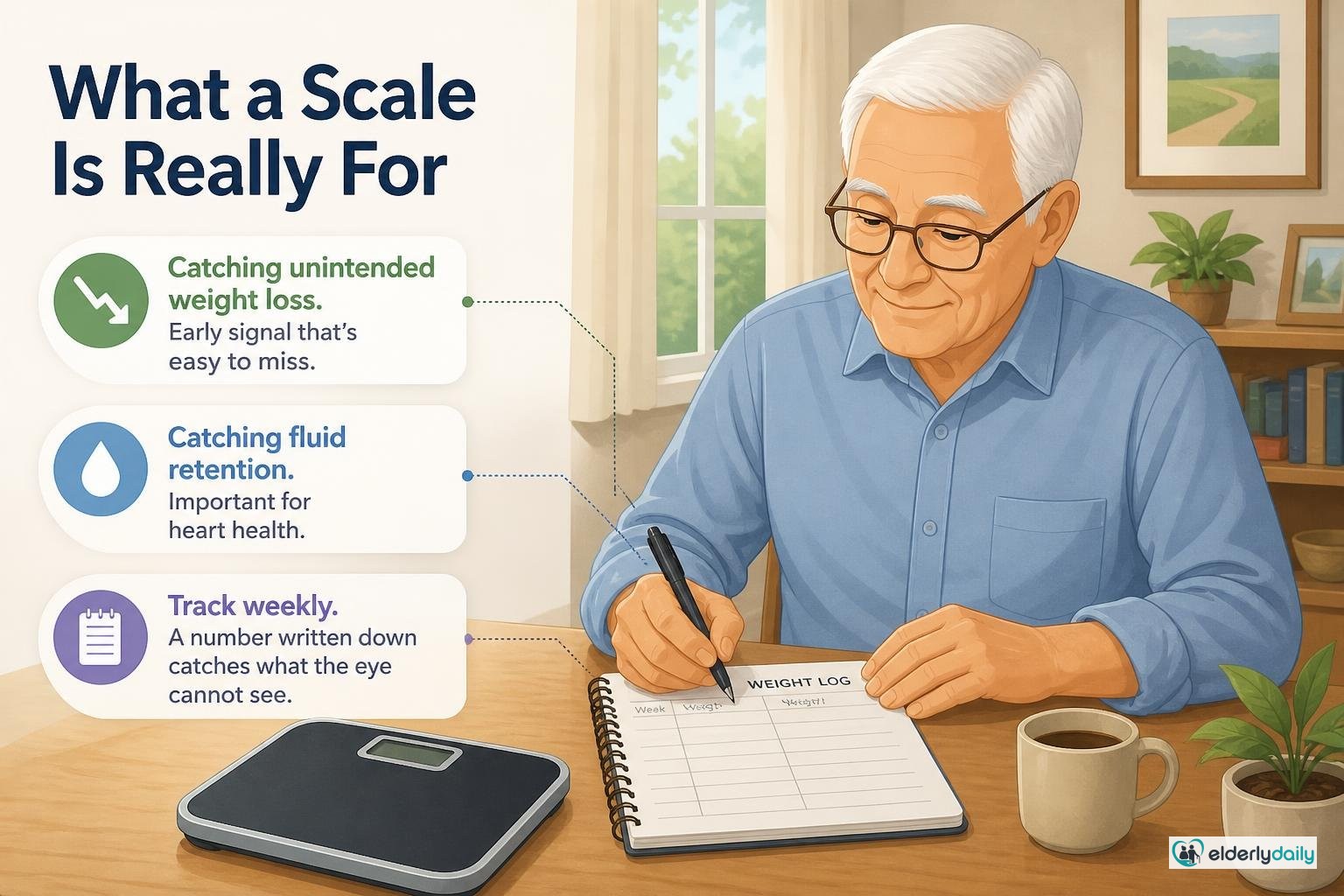
For most people reading this, weighing is not about a fitness goal. It is a monitoring task, and usually one of two:
Catching unintended weight loss. Losing weight without trying is one of the more useful early signals in older adults, and it is easy to miss day to day because clothes hide it and appetite changes are gradual. A number written down weekly catches what the eye does not.
Catching fluid retention. In heart failure, a quick gain in weight over a few days can mean fluid building up before any swelling or breathlessness appears, so follow the threshold in your own care plan. Many heart-failure plans ask for a daily weight for exactly this reason, and the instruction usually comes with a threshold and a phone number.
Both of those are about the weight itself, measured the same way each time. Neither is improved by knowing your visceral fat index.
This is why the simple scale is the better tool here, and why the precision of the display matters more than the feature list. If your heart-failure plan says to call about a two-pound rise, a scale that reads in whole pounds is a blunt instrument. One that reads in tenths is not.
Weigh at the same time of day — first thing in the morning, after using the bathroom and before breakfast is the usual advice — on the same hard floor, wearing about the same amount. Write it down. The pattern is the information.
Which of the two simple RunStar models
RunStar sells two large-platform, high-capacity scales that suit an older adult. They look similar and are rated for the same weight, but there are two real differences.
The 14-inch model reads in 0.1 lb steps. The older 550 lb model reads in 1 lb steps. For general weighing that is irrelevant. For anyone following a heart-failure weight plan it is the difference between seeing a change and not seeing it, and it is the main reason we point most people at the newer one.
The 14-inch has a lit LED display; the older model has an LCD. An LCD shows dark figures on a grey background and depends entirely on the light in the room. An LED display generates its own light. In a dim bathroom, at the start of the day, with older eyes, that is a bigger difference than the size of the numbers.
The older 550 lb model is still a sound scale — a wide platform, tempered glass, a large display and the same capacity — and if you find it at a better price it will do the monitoring job perfectly well at whole-pound resolution. It is the high-capacity pick in our large-display scales roundup, where you can see it alongside the alternatives.
Standing on it safely
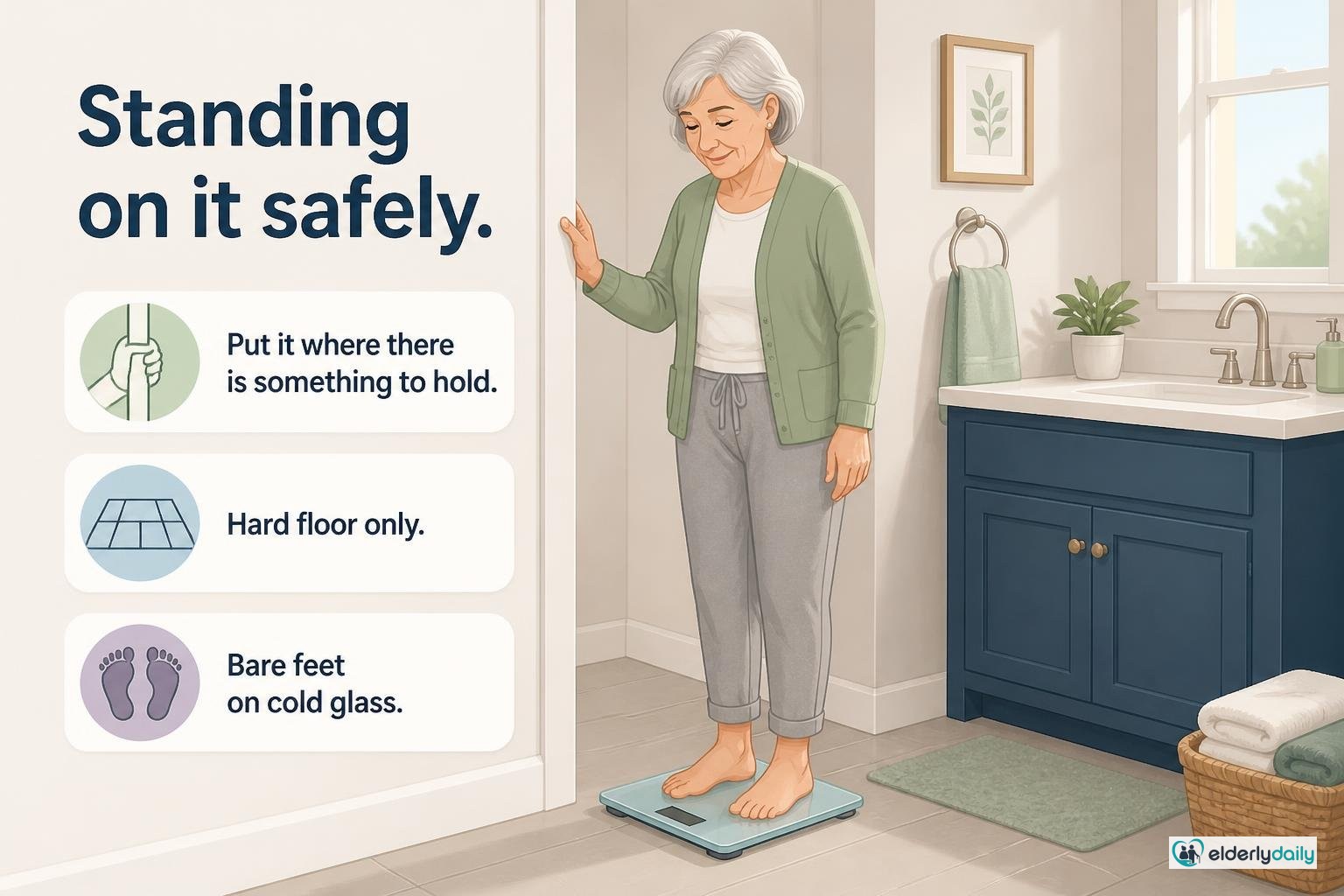
A bathroom scale asks an older person to stand still on a small, hard, sometimes slippery surface, often first thing in the morning when balance is at its worst. That is worth a moment of thought, whichever scale you buy.
Put it where there is something to hold. Next to a wall, a doorframe, a vanity or a grab rail — not in the middle of the floor. Steady yourself, then let go to take the reading; the number settles in a second or two.
Hard floor only. Carpet lets the scale flex and gives inconsistent readings. If the bathroom is carpeted, keep it on a hard floor elsewhere and weigh there every time.
Bare feet on cold glass is unpleasant in winter and can be genuinely startling for someone with neuropathy. Letting it sit in a warm room, or weighing later in the morning, helps.
If standing unaided is not safe, do not solve it with a better scale. Weighing can happen at the doctor's office, and home health nurses and many clinics have chair scales. A weight you cannot obtain safely is not worth a fall.
What RunStar says
The following are RunStar’s own marketing claims from the product listing, not our independent findings. Details can change over time — check the current Amazon listing for the latest.
- RunStar states that its 14-inch scale is rated to 550 lb (250 kg), reads in 0.1 lb increments, and uses a 13.78-inch platform with 8 mm tempered glass that it describes as 30% thicker than ordinary scales, on a fully enclosed non-slip base.
- The company advertises a 4 x 2 inch LED display, three unit options (kg / lb / st:lb), a baby and pet mode that works by weighing yourself and then again holding the child or animal, and battery life of up to 148 days per change.
- RunStar cites 30 years of engineering and more than 100,000 validation tests per model, and states that its finely tuned sensors deliver consistent results.
- For its 8-electrode smart scales, RunStar markets dual-frequency bioelectrical impedance analysis with what it calls DEXA-like accuracy across 28 body-composition metrics, while also stating that these readings are estimates for tracking change over time rather than medical diagnoses.
- RunStar states that its smart scales are for home wellness use only, are not medical devices, and that people who are pregnant or who have osteoporosis, a pacemaker, artificial joints, a portable ECG or other metal implants should use the scale for weighing only.
How it compares
The choice here is less about brands than about what you are trying to find out. If the answer is "is the weight going up or down, and by how much", a simple scale with a good display wins. If you want the readings logged and shared with a doctor without anyone writing them down, that is a different product.
- RunStar 14-inch and 550 lb simple scales — no electrodes, no app, no contraindication — they weigh, on a wide platform with a large display, for a fraction of the price. For most older adults this is the right RunStar to buy, and both appear in our roundup.
- Withings Body Smart — logs every weigh-in automatically and charts the trend for a doctor, which no RunStar model does. Costs several times as much, and its body-composition figures carry the same caveats.
- A talking scale — announces the weight aloud — the right answer when no display, however large or bright, is readable.
Frequently asked questions
For weight, yes — it gives consistent readings, which is what matters when you are watching a trend. For body composition, treat the figures as rough estimates rather than measurements. The 8-electrode models read the upper body as well as the legs, which is better than cheap four-electrode scales, but the method is still bioelectrical impedance: a small current, a resistance reading, and an algorithm inferring the rest. Hydration, meals, exercise and time of day all move the numbers. RunStar itself describes them as estimates for tracking change over time, not diagnoses.
RunStar’s own guidance says people with a pacemaker, artificial joints, a portable ECG or other metal implants should use the scale for weighing only — meaning the body-composition features should not be used. The same caution appears with every bioelectrical impedance scale, because they all pass a small current through the body. It is a standard precaution rather than proof of harm, but it is the manufacturer’s instruction and not one to work around. If this applies, a scale that only weighs is both cheaper and more useful. Anyone unsure should ask the clinic that manages the device.
RunStar lists osteoporosis alongside pacemakers and implants as a reason to use the scale for weighing only. Bone-mass estimates from a bathroom scale are inferred rather than measured, and they are not a substitute for the DEXA scan used to diagnose and monitor osteoporosis. If bone health is the concern, the answer is a conversation with the doctor, not a scale.
The 8-electrode smart models pair over Bluetooth with RunStar’s Starfit app, and the full set of body-composition metrics lives there, though some models show several readings on the scale itself. The simple models reviewed here need no app at all — no pairing, no account, no phone. For many older adults that is a feature rather than a limitation: the number appears, and nothing else is required.
They compete in the same space and both make 8-electrode body-composition scales at similar prices, and both are reasonable within the limits of the technology. For an older adult, though, the brand question is usually the wrong one — the meaningful decision is whether you need body composition at all, and for most people over seventy the answer is no, because the readings are estimates and often ruled out by an implant or bone condition anyway. Choose on display readability, platform size and weight capacity instead, and either brand’s simple models will serve better than either brand’s smart ones.
It depends why. If a doctor has asked for daily weights — common with heart failure — do it daily, at the same time, and follow whatever threshold you were given for calling. If it is general monitoring for unintended weight loss, once a week is plenty and avoids reading meaning into normal day-to-day fluctuation. Either way, weigh first thing in the morning, after the bathroom and before breakfast, on the same hard floor, and write it down. The pattern is what carries the information.
For general monitoring that is fine, and a clinic scale is usually more accurate. The reason for having one at home is frequency: a gain that means fluid retention shows up over days, not over the months between appointments. If standing unaided is not safe, though, home weighing is the wrong solution — clinics and district nursing teams have chair scales, and a weight is never worth a fall.
RunStar Smart Scale (8-Electrode Body Composition)
Best for: Someone who genuinely wants body-composition tracking and has no pacemaker, metal implant or bone condition ruling it out
More reviews
