
Safe Bedroom Setup for Seniors

Practical guidance for families; not medical advice. Adapt to the individual’s needs and any specific precautions from their care team.
The bedroom is where many falls begin — getting in and out of bed, or heading to the bathroom in the dark. A few thoughtful changes can make it a much safer room.
Key takeaways
- Many falls happen getting in and out of bed or on night trips to the bathroom — the bedroom is a key place to make safe.
- Get the bed height right — high enough to sit and rise from easily, with feet flat on the floor.
- Keep a clear, well-lit path from bed to door and bathroom, with night lights.
- Put essentials within reach of the bed — phone, water, light, glasses, and a way to call for help.
- Provide support for getting up — a bed assist handle or, where safe, a bed rail.
Quick answer
How do I set up a safe bedroom for an elderly person?
Focus on the two riskiest moments: getting in/out of bed and night trips. Set the bed at the right height (able to sit with feet flat and rise easily), keep a clear, well-lit path to the door and bathroom with night lights, place essentials within reach (phone, water, light, glasses, call button), and add support for getting up — a bed assist handle or, where appropriate and safe, a bed rail. Remove trip hazards and ensure non-slip footwear is by the bed.
Why the bedroom deserves attention
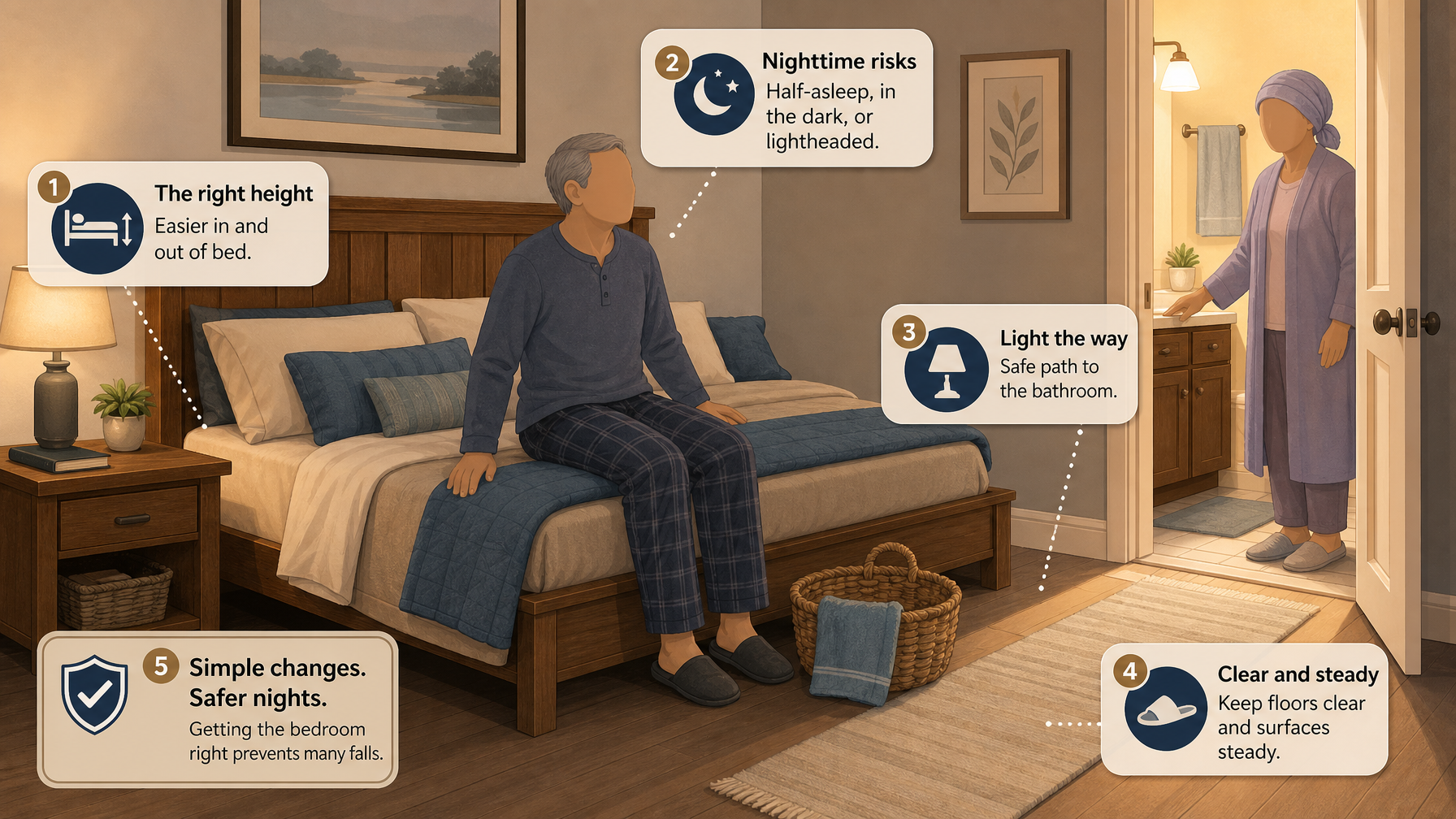
The bedroom is the setting for two of the most common fall scenarios in older adults: the transfer in and out of bed, and the trip to the bathroom at night — often half-asleep, in the dark, and sometimes lightheaded from standing up quickly. Getting the bedroom right can therefore help reduce fall risk, and it is one of the simplest rooms to make safer.
This guide covers the bedroom specifically; it pairs closely with nighttime falls in seniors and sits within the broader senior home safety approach.

Sponsored Pick
Stander Wonder Pole Plus with Rotating Double Grab Bar
Renters, anyone who cannot drill, or spots with no convenient wall
Check PriceGet the bed right
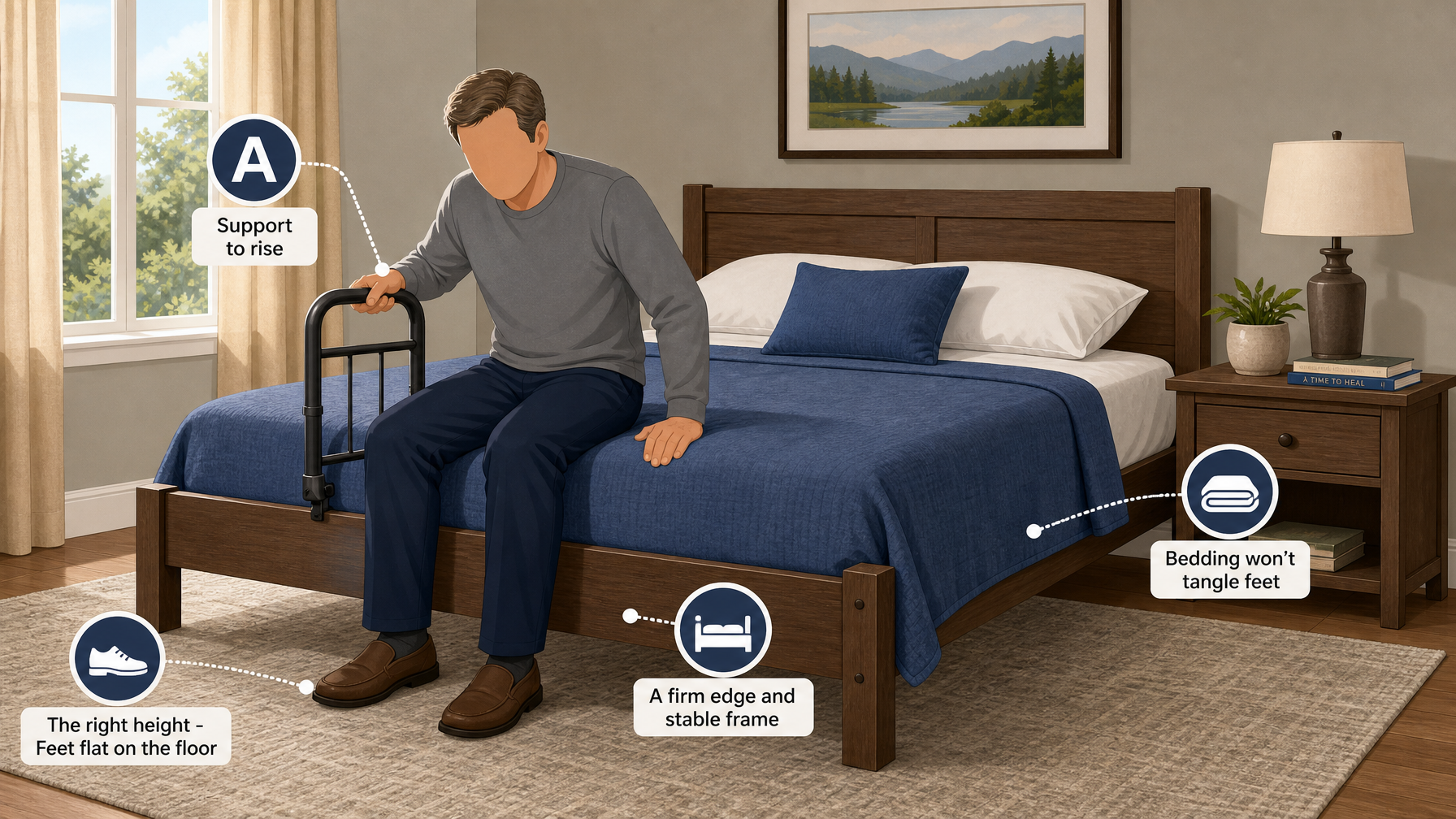
The bed itself is the starting point, because getting in and out is a prime fall moment:
- The right height — the person should be able to sit on the edge with their feet flat on the floor and their knees roughly level with or slightly below their hips, so they can rise easily. Too low is hard to get up from; too high is hard to sit onto safely. Bed risers or a different mattress can adjust it.
- A firm edge and stable frame so the bed does not shift or sag when they push up.
- Support to rise — a bed assist handle gives something sturdy to pull up on; a bed rail can help where appropriate, but only where safe (rails carry entrapment risks and are not right for everyone — see bed rail safety).
- Easy-to-manage bedding that will not tangle the feet.
Good to know
Test the bed height with the person seated on the edge: feet flat, knees about level with hips, and able to stand without a struggle. That "sit-to-stand-friendly" height is the target.
A clear, well-lit path
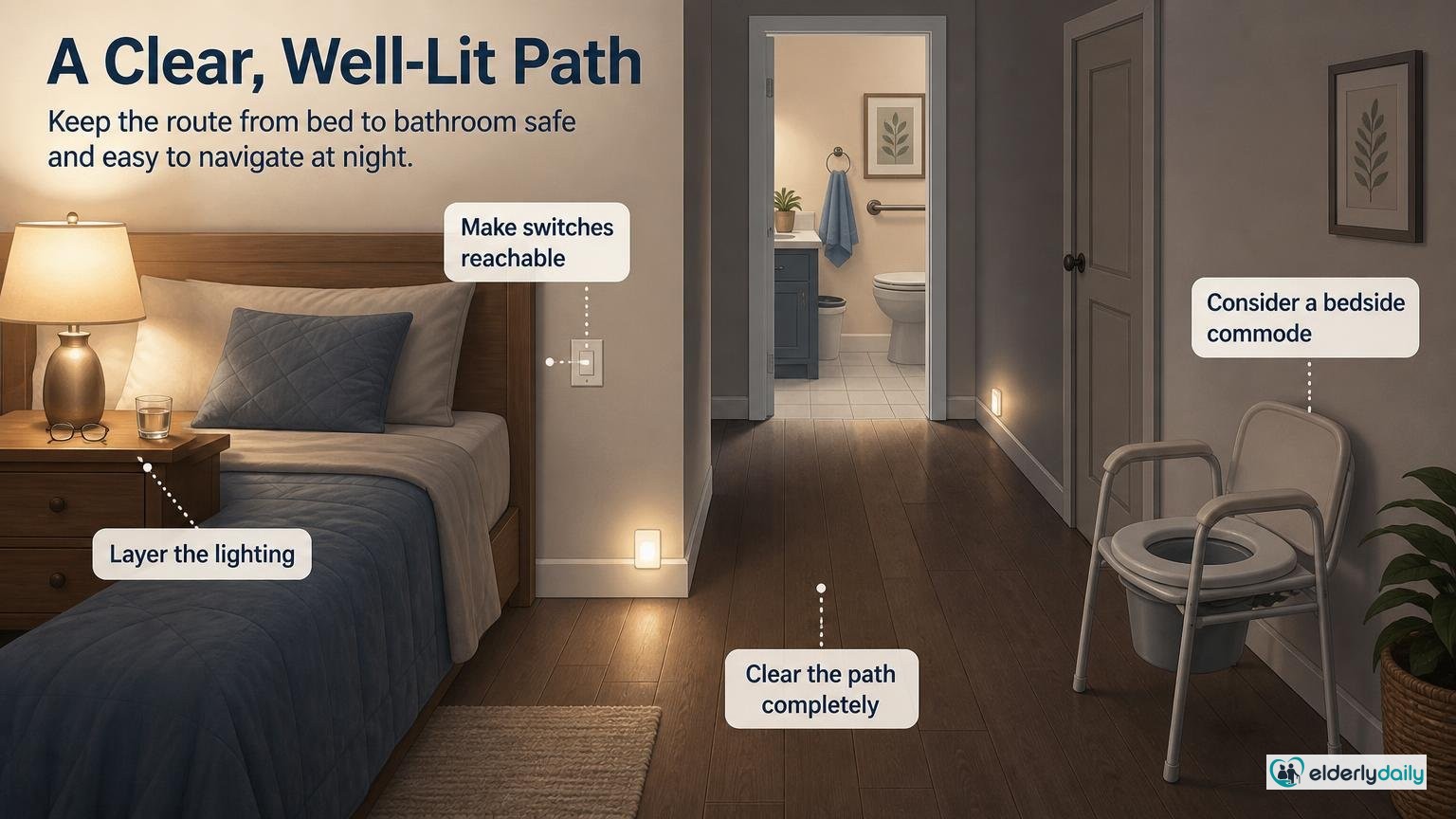
The route from the bed to the door and bathroom is where night falls happen, so make it obvious and obstacle-free:
- Clear the path completely — no clutter, cords, low furniture, or loose rugs between the bed and the door/bathroom.
- Layer the lighting — a bedside lamp within easy reach to turn on before getting up, and night lights (ideally motion-activated) marking the route to the bathroom so it is never navigated in the dark.
- Make switches reachable — a lamp or switch the person can operate from the bed, so they never cross a dark room to reach light.
- Consider the bathroom distance — if it is far or down stairs, a bedside commode can remove a risky night-time journey entirely.
See nighttime falls in seniors for the full night-safety picture, including medication timing and orthostatic hypotension.
Keep essentials within reach
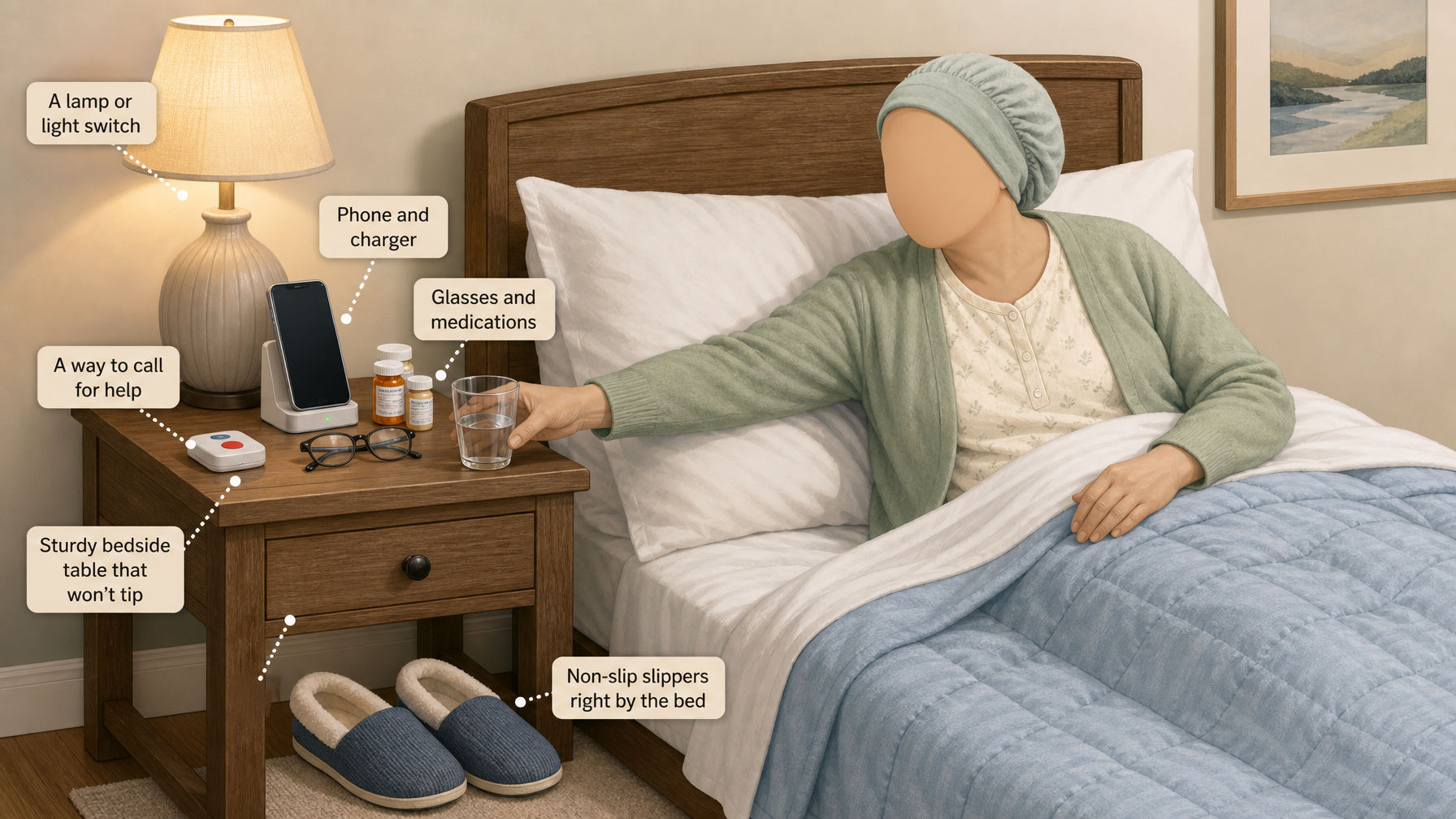
Everything the person might need at night should be reachable from the bed, so they are never tempted into a risky reach or trip:
- A lamp or light switch, phone and charger, and a glass of water.
- Glasses, medications (if any are needed overnight), and tissues.
- A way to call for help — a phone with key numbers, or a medical alert device within reach, especially for someone living alone.
- Non-slip footwear or slippers positioned right by the bed, so they are worn rather than walking in socks.
- A sturdy bedside table at the right height that will not tip if leaned on.
Reduce fall risk in the rest of the room
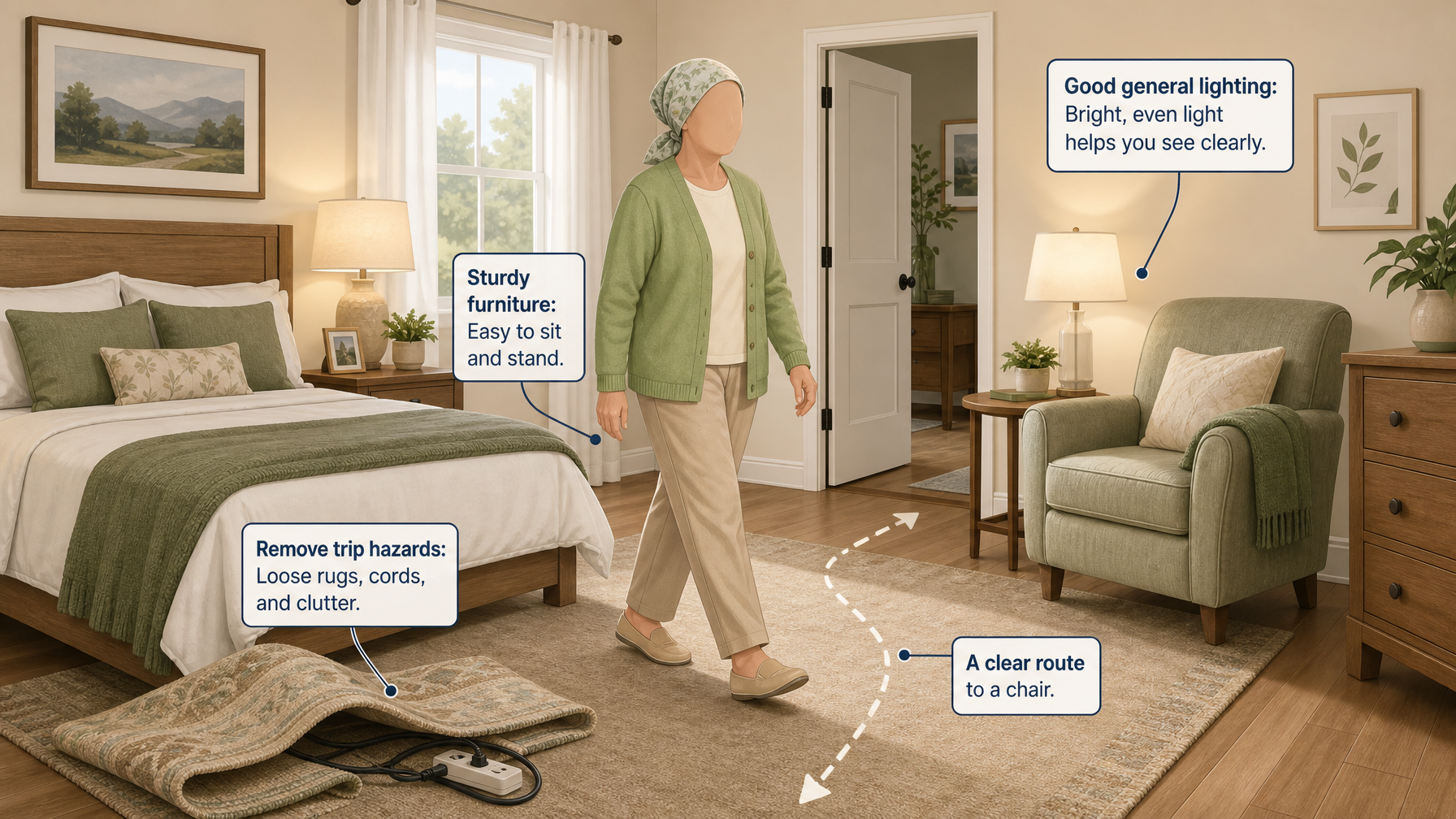
Round out the room’s safety:
- Remove trip hazards — loose rugs, cords, and clutter throughout.
- Sturdy furniture — if the person tends to steady themselves on furniture, make sure what they lean on is stable and will not topple.
- A clear route to a chair for dressing, ideally a firm chair with armrests rather than perching on the bed edge.
- Good general lighting with reachable switches, and a torch/flashlight within reach as backup.
- Temperature and comfort — a comfortable room supports good sleep, which may help reduce night-time confusion and falls.
For someone with dementia, add the considerations in dementia home safety, including night-time wandering precautions.
Frequently asked questions
How do I set up a safe bedroom for an elderly person?
Set the bed at a height that lets them sit with feet flat and rise easily, keep a clear well-lit path from the bed to the door and bathroom with night lights, place essentials within reach (lamp, phone, water, glasses, call button, non-slip footwear), add support for getting up such as a bed assist handle, and remove trip hazards like loose rugs and cords throughout the room.
What is the right bed height for a senior?
The bed should be high enough that the person can sit on the edge with their feet flat on the floor and knees roughly level with or slightly below their hips, allowing them to stand up without a struggle. Too low makes rising hard; too high makes sitting down unsafe. Bed risers or a different mattress can adjust the height to this "sit-to-stand-friendly" level.
How do I prevent falls getting out of bed at night?
Keep a bedside lamp or switch reachable from the bed so light comes on before standing, use motion-activated night lights along the route to the bathroom, keep that path completely clear, provide a bed assist handle for support when rising, place non-slip footwear right by the bed, and consider a bedside commode if the bathroom is far or downstairs.
Are bed rails safe for elderly people?
Bed rails can help some people get in and out of bed or feel more secure, but they carry entrapment and other risks and are not appropriate for everyone — particularly some people with dementia or restlessness. They should be chosen carefully and used only where genuinely safe and suitable; a bed assist handle is often a safer alternative. See our bed rail safety guide.
What should be on a senior’s bedside table?
Keep within easy reach a lamp or light switch, a phone and charger, a glass of water, glasses, any overnight medications, tissues, and a way to call for help such as a medical alert device. Use a sturdy table at the right height that will not tip if leaned on, so nothing tempts the person into a risky reach or trip.
Should I get a bedside commode for night-time?
If the bathroom is far from the bedroom or down stairs, a bedside commode can remove a risky night-time journey entirely, which is especially valuable for someone weak, unsteady, or prone to night falls. It can help reduce the common night trip to the bathroom.
