
Printable Chair Exercises for Seniors (Free PDF with Pictures)

Educational only, not medical advice. Exercises, steps and repetitions follow the NHS and Harvard Health. Check with your doctor before starting a new exercise routine.
In this guide
- Download the free chair exercises PDF
- What is inside the booklet
- Before you start
- The 9 chair exercises, with pictures
- 1. Seated March
- 2. Ankle Stretch
- 3. Chest Stretch
- 4. Upper-Body Twist
- 5. Shoulder Stretch
- 6. Biceps Curl
- 7. Chair Stand
- 8. Hamstring Stretch
- 9. Neck Rotation
- Chair exercises, chair yoga or chair tai chi?
- More free printables
- FAQs
Nine gentle exercises you can do sitting in a sturdy chair, each with a clear picture, three short steps and exactly how many to do. Print the whole large print booklet, or just the one-page chart to keep by your chair.
Key takeaways
- Free printable chair exercises for seniors with a picture for every exercise, 13 large print pages, no sign-up.
- 9 seated exercises: a warm-up, six stretches and two strength moves, from the NHS and Harvard Health.
- A one-page routine chart (page 3) with all nine pictures, to keep by your chair. The whole routine takes about 15 to 20 minutes.
- A weekly tick chart you can print or fill in on screen. The NHS suggests at least two sessions a week.
- A black-and-white edition is there too, to save colored ink.
Quick answer
Where can I get free printable chair exercises for seniors with pictures?
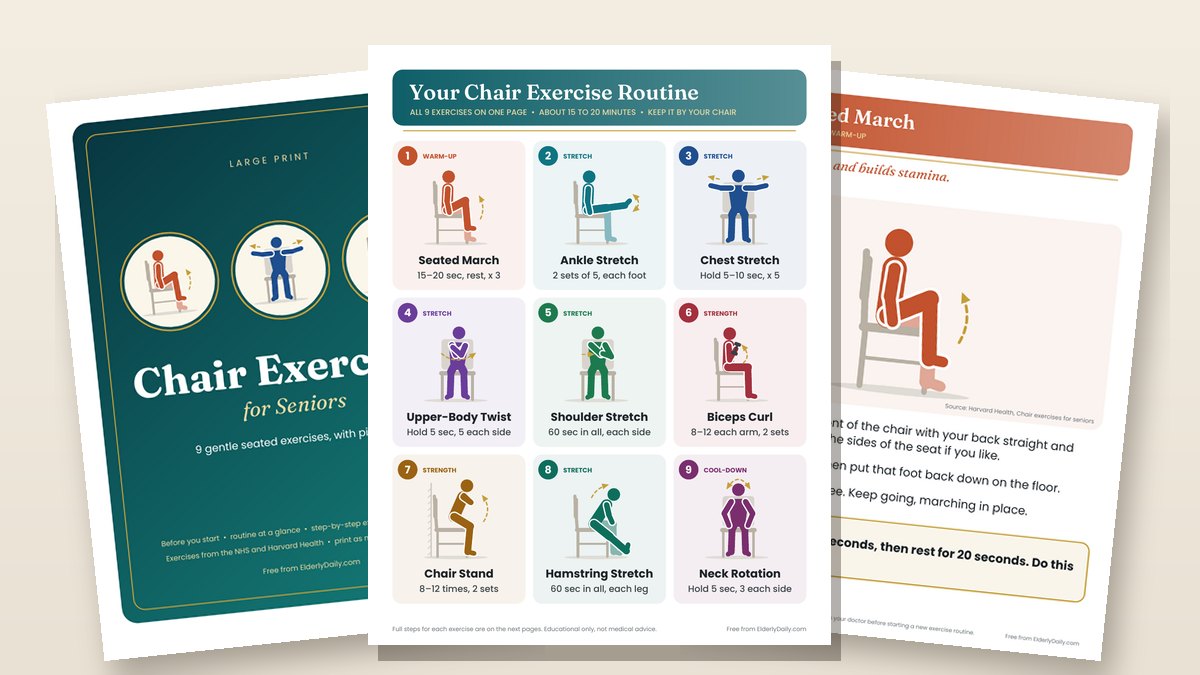
Download them free here: the printable chair exercises PDF has nine seated exercises with a picture, three simple steps and the number of repeats for each, plus a one-page routine chart and a weekly tick chart, all in large print. There is also a black-and-white edition. No email or sign-up is needed. The same exercises, with pictures, are on this page below.
Download the free chair exercises PDF
Both files have the same 13 pages. Open either one in your browser or a PDF reader and print.
- Printable Chair Exercises for Seniors, color edition (PDF, 13 pages)
- Printable Chair Exercises for Seniors, black and white (PDF, 13 pages)
Short on paper? Print page 3 on its own: all nine exercises with pictures and repeats on a single sheet.
Ticking the chart on screen
The weekly chart on the last page is fillable. Open the PDF in Chrome, Edge or Adobe Acrobat Reader, click a box to tick it, then save the file. Or print it and use a pen.
From ElderlyDaily
Want a plan that turns these poses into a daily habit?
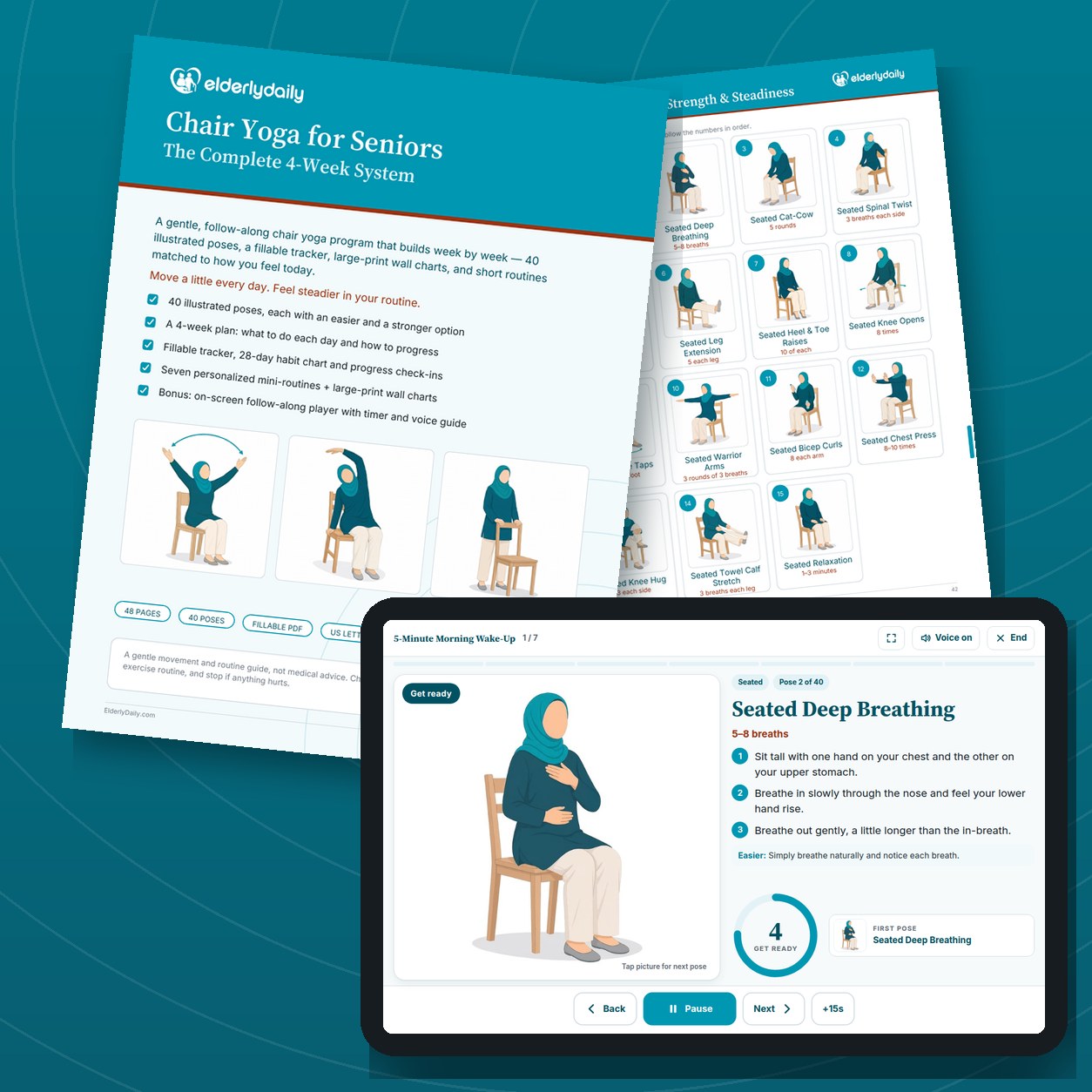
40 illustrated poses, each with an easier and a stronger option, a 4-week day-by-day program, 7 mini-routines, trackers and wall charts — plus the Follow-Along Player for a laptop, tablet or TV.
Fillable PDF · 48 pages · US Letter + A4 · see price on Gumroad
What is inside the booklet
- Page 1 — Cover.
- Page 2 — Before you start: how to sit in the chair, with a labeled picture, and five safety steps.
- Page 3 — Your routine at a glance: all nine exercises on one page.
- Pages 4 to 12 — One exercise per page: a large picture, three steps in big type, and how many to do.
- Page 13 — My weekly exercise chart: a box for each exercise and each day, and space to note how you felt.
Before you start
These are gentle exercises, but they are still exercise. The NHS and Harvard Health give the same basic advice:
- Use a sturdy, stable chair without wheels, ideally one without arms, so you can sit with your feet flat on the floor and your knees bent at right angles.
- Wear loose, comfortable clothes and keep a glass of water nearby.
- Move gently, only as far as is comfortable. Stop if an exercise hurts.
- Start slowly and build up the number of repeats over the weeks.
- Aim for at least two sessions a week.
If you are choosing a chair for this, our guide to the best chairs for chair yoga covers sturdy, armless options that work just as well for these exercises.
Check with your doctor first
Talk to your doctor before you begin if you are not sure these exercises suit you, if you have a health condition, or if you have been told to limit your activity.
The 9 chair exercises, with pictures
Do them in this order: a warm-up, the stretches and strength moves, and a gentle cool-down for the neck. All nine take about 15 to 20 minutes. Each one says where it comes from.
1. Seated March
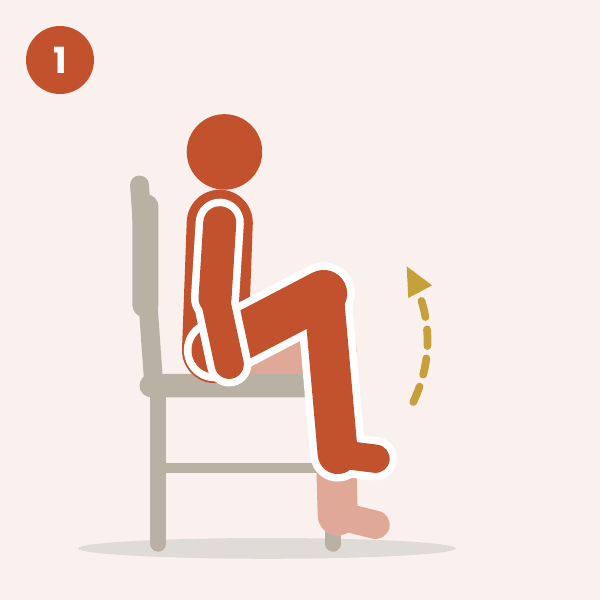
Warms you up and builds stamina.
1. Sit near the front of the chair with your back straight and feet flat. Hold the sides of the seat if you like.
2. Lift one knee, then put that foot back down on the floor.
3. Lift the other knee. Keep going, marching in place.
How many: March for 15 to 20 seconds, then rest for 20 seconds. Do this 3 times.
Source: Harvard Health
2. Ankle Stretch
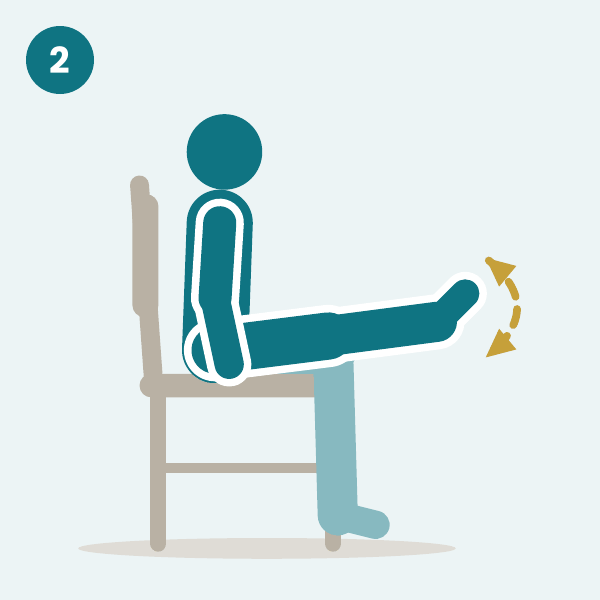
Keeps ankles flexible and helps lower the risk of blood clots.
1. Sit upright and hold the sides of the chair.
2. Straighten your left leg and lift it off the floor.
3. Point your toes away from you, then pull them back toward you.
How many: 2 sets of 5 with each foot.
Source: NHS sitting exercises
3. Chest Stretch
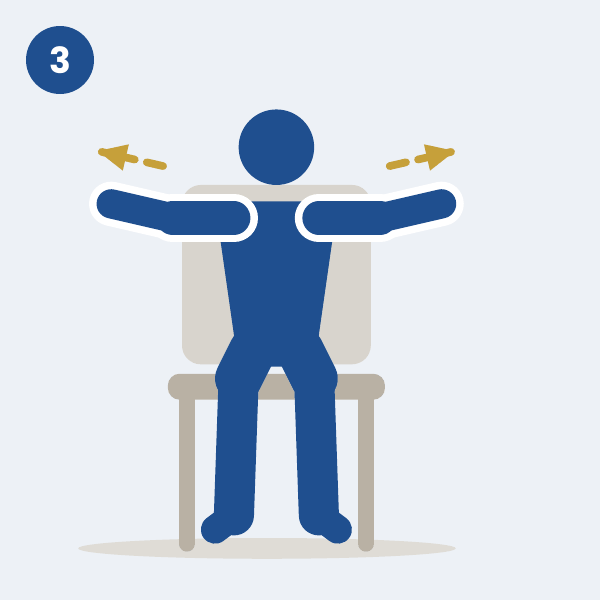
Good for your posture.
1. Sit upright, away from the back of the chair.
2. Pull your shoulders back and down, and stretch your arms out to the sides.
3. Gently push your chest forward and up until you feel a stretch across your chest.
How many: Hold for 5 to 10 seconds. Repeat 5 times.
Source: NHS sitting exercises
4. Upper-Body Twist
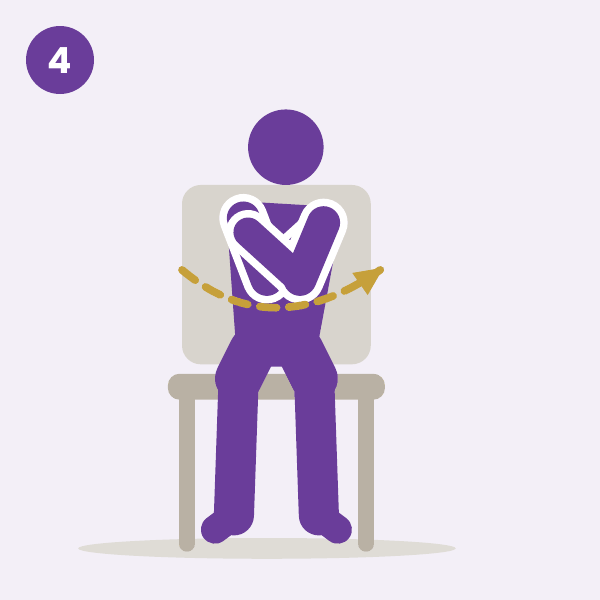
Keeps your upper back flexible.
1. Sit upright with your feet flat. Cross your arms and reach for your shoulders.
2. Keep your hips still and turn your upper body to the left, as far as is comfortable. Hold for 5 seconds.
3. Come back to the middle, then turn to the right.
How many: 5 twists to each side.
Source: NHS sitting exercises
5. Shoulder Stretch
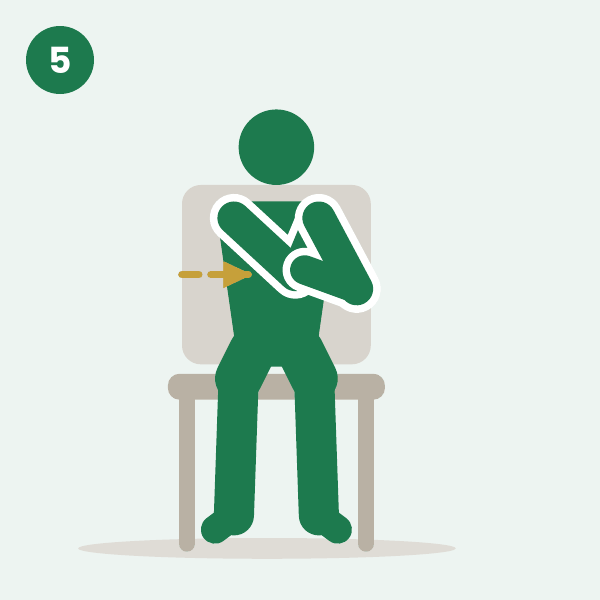
Loosens tight shoulders.
1. Sit up straight. Put your left hand on your right shoulder.
2. Cup your left elbow with your right hand. Roll your shoulders down and back.
3. Gently pull your left elbow across your chest and hold for a few seconds.
How many: Hold, relax and repeat until you have held it for 60 seconds in all. Then switch sides.
Source: Harvard Health
6. Biceps Curl
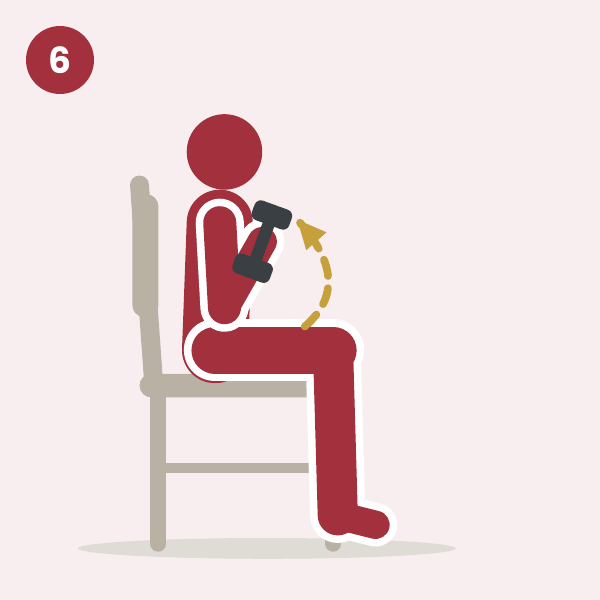
Strengthens your arms for lifting and carrying.
1. Sit holding a light weight in each hand, arms at your sides, palms facing in.
2. Keep your elbow close to your side and curl one weight up toward your chest, turning your palm toward your shoulder.
3. Pause, then lower it slowly.
How many: 8 to 12 times, then switch arms. Rest, then do one more set. Pick a weight you can lift 8 times. When 12 feels easy, go a little heavier.
Source: Harvard Health
7. Chair Stand
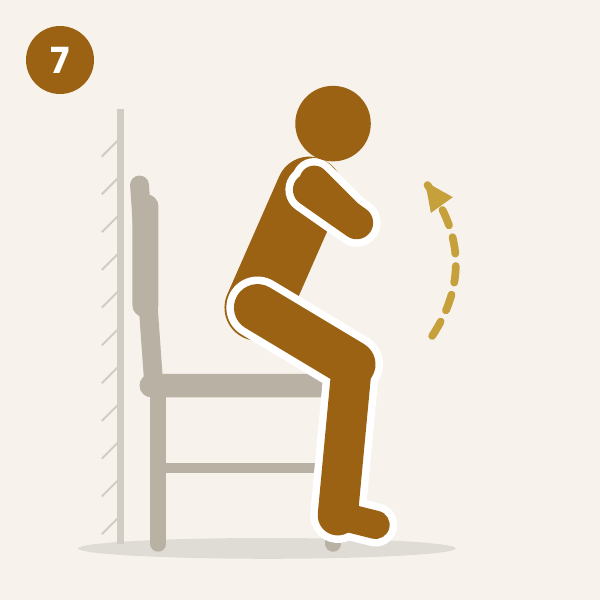
Strengthens your legs for getting up from a chair.
1. Put the chair with its back against a wall. Sit near the front, knees bent, feet flat. Cross your arms over your shoulders.
2. Lean forward a little and slowly stand up, using your hands as little as possible.
3. Slowly lower yourself back down to sitting.
How many: 8 to 12 times. Rest, then do one more set. Skip this one if you cannot stand up safely on your own.
Source: Harvard Health
Only if you can stand safely
Skip the chair stand if you cannot get up from a chair safely on your own. Keep the chair back against a wall so it cannot slide.
8. Hamstring Stretch
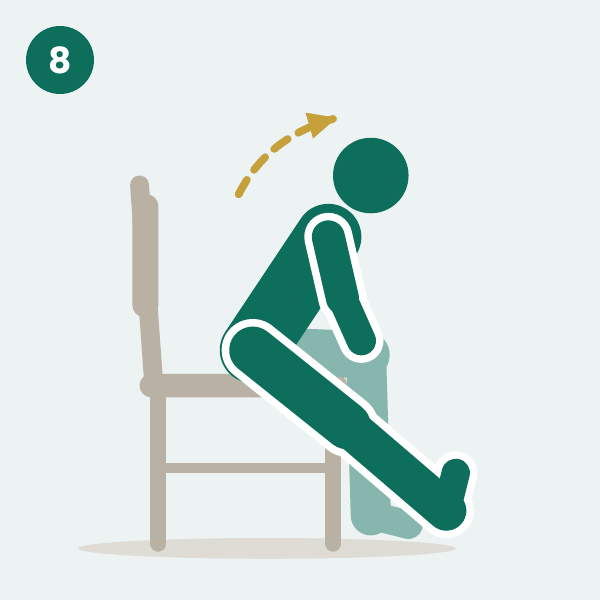
Stretches the back of your thigh.
1. Sit near the front of the chair with your feet flat.
2. Stretch your right leg out in front, heel on the floor and toes pointing up.
3. Keep your back straight and lean forward from the hips, hands resting on your left thigh. Hold a few seconds.
How many: Hold, relax and repeat until you have held it for 60 seconds in all. Then switch legs.
Source: Harvard Health
9. Neck Rotation
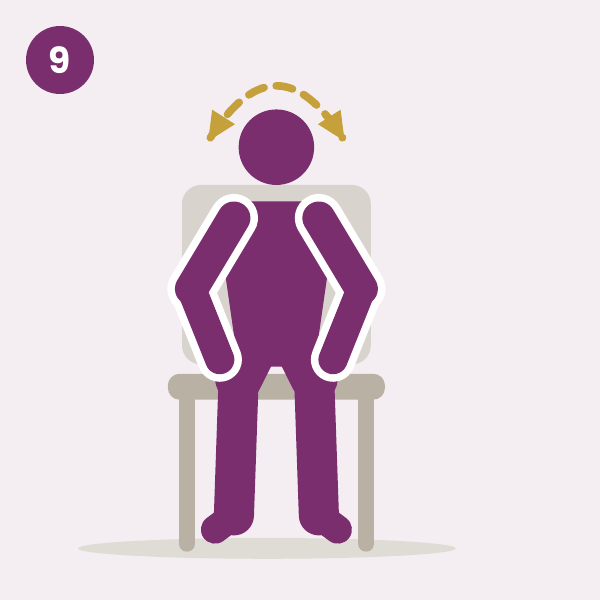
Keeps your neck moving freely.
1. Sit upright with your shoulders relaxed and down, looking straight ahead.
2. Slowly turn your head toward your left shoulder, as far as is comfortable. Hold for 5 seconds.
3. Come back to the middle, then turn to the right.
How many: 3 turns to each side.
Source: NHS sitting exercises
Chair exercises, chair yoga or chair tai chi?
All three are done sitting down and suit people who find standing exercise hard. The difference is mostly in style:
- Chair exercises (this page) are simple stretches and strength moves with a set number of repeats.
- Chair yoga links gentle poses with slow breathing. See our printable chair yoga for seniors.
- Chair tai chi uses slow, flowing arm movements. See our printable chair tai chi for seniors.
Many people mix them through the week. What matters most is doing something you enjoy, regularly.
More free printables
- Printable blood pressure log — morning and evening readings in large print.
- Large print calendar 2027 — one month per page, with room to write.
- Large print word search — 12 free puzzles to print or play online.
Frequently asked questions
Are these printable chair exercises really free?
Yes. Both PDFs download directly, with no email address, sign-up or payment. Print as many copies as you like for personal use.
What are the best chair exercises for seniors?
A good routine mixes a warm-up, stretches and some strength work. This one has nine: the seated march, ankle stretch, chest stretch, upper-body twist, shoulder stretch, biceps curl, chair stand, hamstring stretch and neck rotation, taken from the NHS and Harvard Health.
How often should seniors do chair exercises?
The NHS suggests at least two sessions a week, starting slowly and adding repeats over time. Ask your doctor what suits you if you have a health condition.
What kind of chair should I use?
A sturdy, stable chair without wheels, ideally without arms, where you can sit with your feet flat on the floor and your knees bent at right angles. Never use a desk chair on wheels.
Do I need weights for the biceps curl?
Harvard Health suggests light hand weights you can lift 8 to 12 times, with the last one or two feeling hard. When 12 becomes easy, move up a little. All the other exercises need no equipment.
