
5 Best Tub Transfer Benches
 By SK Kutubuddin, Founder & Senior Care Researcher Updated October 2026
In this guide
 Best OverallMedline Transfer Bench with Reversible Backrest
 Widest SeatMoen Home Care Transfer Bench (DN7105)
 Best Sliding SeatEagle Health Sliding Transfer Bench (77211)
 Best for Weak Upper BodyPlatinum Health Carousel Sliding Swivel Bench
 Best Basic BenchDrive Medical Tub Transfer Bench (12011KD-1)
- What to look for
- Frequently asked questions
Stepping over the wall of a bath is one of the most dangerous movements an older adult makes at home — standing on one leg, on a wet floor, with nothing solid to hold.
We may earn a commission when you buy through links on this page. Read our affiliate disclosure.
Top 5 Picks — Find Your Situation
#1 · Best Overall
Medline Transfer Bench with Reversible BackrestBest for: Most households — someone who can shift themselves across a seat and needs the stepping-over movement removed
#2 · Widest Seat
Moen Home Care Transfer Bench (DN7105)Best for: Anyone who finds narrower bench seats hard to sit down onto accurately, or who wants armrests on both sides
#3 · Best Sliding Seat
Eagle Health Sliding Transfer Bench (77211)Best for: Weak arms, a painful hip, or recovery from hip or knee surgery — anyone for whom shuffling across is the hard part
#4 · Best for Weak Upper Body
Platinum Health Carousel Sliding Swivel BenchBest for: Someone who cannot reliably lift a leg over the bath wall, or who needs a caregiver to control the transfer in stages
#5 · Best Basic Bench
Drive Medical Tub Transfer Bench (12011KD-1)Best for: A first bench, a second bathroom, or a short recovery where the equipment will not be needed permanently
A tub transfer bench removes that movement: two legs stand outside the bath, two inside, so the person sits on the outside end and slides across while still seated. The step over the rim never happens. What decides whether one works for you is not the brand — it's whether it fits, and most disappointment comes down to three measurements taken after the box arrives instead of before. Get those right and this is one of the highest-value pieces of equipment in the house.
A closer look at our top pick: the Medline bench
Medline Transfer Bench with Reversible Backrest
Best for: Most households — someone who can shift themselves across a seat and needs the stepping-over movement removed
- Seat type
- Fixed
- Capacity
- 400 lb
- Frame
- Aluminium, rust-resistant
- Seat height
- 17.6–21.9 in, push-button
Independently researched · Updated October 2026
The Medline takes the top spot by doing the essential job properly and nothing more. A rust-resistant aluminium frame, push-button legs so the seat can be set to the bath rim, and a backrest — which matters for anyone with poor trunk control who would otherwise sit unsupported on a wet seat. The backrest also reverses, which matters more than it sounds: a fixed backrest commits you to one bath orientation on the day the box arrives.
It is also the bench most people should consider first. The sliding and swivelling benches solve real problems, but they solve problems not everyone has, and they add moving parts. If the person can shuffle across a seat under their own steam, this does everything they need.
What we love
- Does the essential job without mechanisms you may not use
- Aluminium frame suits a wet bathroom
- Tool-free, push-button height adjustment
- The backrest reverses, so one bench fits either bath orientation
- 11 lb, so it lifts out for cleaning without help
Things to consider
- Fixed seat means shuffling across — harder with weak arms or a painful hip
- Armrest on one side only — the Moen and the Platinum Health have armrests on both sides
- No safety belt listed; the Eagle Health is the one that includes one
Right for you if
- ✓The person can shift themselves along a seat using their arms and hips
- ✓You want an aluminium frame for a wet bathroom
- ✓Your bath rim sits between about 17.6 and 21.9 inches from the floor
- ✓You would rather start simple and reassess if needs change
Maybe skip it if
- !Shuffling across is the hard part — the Eagle Health sliding seat is the answer
- !Lifting a leg over the rim is the hard part — the Platinum Health swivel is the answer
- !The person is near or above 400 lb — look at bariatric benches instead.
- !You want a safety belt — the Eagle Health is the one that lists one
What owners consistently report
Common praise
- +Removes the step over the bath wall, which is the whole reason for buying it
- +Aluminium frame suits a steamy bathroom
- +Straightforward to assemble and to adjust to the right height
Common gripes
- –Some water escapes onto the floor on every transfer — keep a towel down
- –Check each push-button leg is fully locked before every use
- –The fixed seat asks for arm strength that not every user has
Getting started
- →Set the leg heights so the seat sits level across the rim, not sloping into the bath
- →Position it so the outside legs are on solid floor, clear of the door swing and any bath mat edge
- →Sit on it once, fully clothed and with the bath dry, before it is used for a real bath
How it compares
The Moen DN7105 is the better choice if seat size or armrests matter most. Both are rated to 400 lb, but the Moen’s seat is about 29¼ inches wide against the Medline’s 26½, it has armrests rather than a single side arm, and it carries a limited lifetime warranty. It is also bigger overall, so it needs more floor. Choose the Medline for the essential job, and for the reversible backrest if your bath orientation is awkward; choose the Moen if the person struggles to judge where the seat is when sitting down.
How we picked
We compared benches on the things that decide whether one is usable day to day: stated weight capacity and how the frame is built, the seat height range against typical bath heights, the depth needed outside the bath, whether the seat is fixed, sliding or swivelling, and how the feet grip — suction cups behave very differently on a textured non-slip bath from a smooth one. We prioritised benches with a genuine backrest and armrest, since a bench without either asks a lot of someone with poor trunk control, and we excluded stools and plain shower chairs, which do not solve the stepping-over problem at all.
Reviewed by SK Kutubuddin — who has spent 3+ years researching senior safety equipment and reviewing bathroom fall-prevention products for family caregivers.
Other picks, reviewed
Moen Home Care Transfer Bench (DN7105)
The bench with the biggest seat here. Moen gives the seating area as about 29¼ inches wide by 18⅛ inches deep — and the width matters, because it gives the person more room to land when they sit down rather than aiming for a narrow target. It has a backrest and armrests, a high-density polyethylene seat on aluminium legs, thermoplastic rubber feet, a 400 lb rating, and a limited lifetime warranty. The seat height adjusts from about 16½ to 21 inches, which covers most standard baths.
What we like
- Rated to 400 lb, the same as the top pick
- The wide seat is a real usability gain, not a spec-sheet number
- Armrests rather than a single side arm
- Height range of about 16½–21 in suits most standard baths
Keep in mind
- Fixed seat — no sliding or swivelling help
- Overall it is about 32¾ in wide and 21⅞ in deep, so it needs more clear floor outside the bath; measure first
- The listing does not mention suction feet for inside the bath
Key features
- Seating area about 29¼ × 18⅛ in — the largest on this page
- Backrest and armrests for support during the transfer
- HDPE seat and back on aluminium legs, rated to 400 lb
- Thermoplastic rubber feet
- Limited lifetime warranty
- Seat type
- Fixed
- Capacity
- 400 lb
- Seat size
- About 29¼ in wide × 18⅛ in deep
- Seat height
- About 16½–21 in
- Warranty
- Limited lifetime
Eagle Health Sliding Transfer Bench (77211)
This is the one that changes what the person has to do. On a fixed bench they shuffle across using their arms and hips; here the seat itself slides 15 inches along the frame and **auto-locks at each end**, so they are carried across rather than moving themselves. For anyone with weak arms, a painful hip, or a recent joint replacement, that can be the difference between managing alone and needing someone there. A safety belt is included, and the published dimensions are unusually complete: seat 17.75 by 14.75 inches, seat height 18.25 to 22.25, base length 39 to 40 inches, and a maximum tub clearance of 18.5 inches.
What we like
- The sliding seat removes the shuffle, which is the hard part for many users
- Auto-locks at each end so the seat cannot drift mid-transfer
- Safety belt makes it viable for someone who lists or tips
- Full published dimensions, including maximum tub clearance — rare and genuinely useful
Keep in mind
- Base length of 39–40 inches needs real clear floor outside the bath
- More moving parts than a fixed bench, so more to keep clean and check
- Seat is 17.75 in wide, much narrower than the Moen
Key features
- Seat slides 15 inches and auto-locks at each end
- Safety belt included — the only bench here that lists one
- Heavy-duty aluminium frame rated to 400 lb
- Anti-slip textured seat and rubber tips; tool-free assembly
- Seat type
- Sliding, 15 in travel
- Capacity
- 400 lb
- Seat height
- 18.25–22.25 in
- Max tub clearance
- 18.5 in
- Safety belt
- Included
Platinum Health Carousel Sliding Swivel Bench
The Carousel both slides and pivots. Instead of lifting each leg over the bath wall while facing forward, the person sits down and the seat turns, so the legs come over as part of the movement. For someone who struggles to lift a leg independently — after a stroke, with advanced Parkinson’s, or with a hip that will not flex — that can make the transfer easier to manage. It is also the padded option here: seat, reclining back and pivoting armrests are covered in closed-cell polyurethane that does not absorb water. Platinum Health also says the swivel design sticks out into the room less than a traditional transfer bench.
What we like
- The swivel reduces leg-lifting, which no other bench here does
- Padded surfaces are more comfortable for a full shower, not just a transfer
- Armrests give something to push up from at the end
- Sticks out into the room less than a traditional bench, per the maker
Keep in mind
- The listing gives no weight capacity figure — confirm it with the seller before ordering
- More moving parts than a fixed bench
- Platinum Health asks buyers to check the dimension images on the listing; it is not a one-size-fits-all bench
Key features
- Seat slides and pivots, so the legs come over as part of the turn
- Closed-cell padding on the seat, back and armrests that does not absorb water
- Weight-bearing armrests to push up from
- Reversible for left- or right-side entry
- Optional leg extension kit for baths with a high ledge
- Seat type
- Sliding and swivelling
- Padding
- Padded seat, back and armrests
- Armrests
- Padded, pivoting
- Backrest
- Reclining
- Capacity
- Listed as “high capacity” with no figure — check before ordering
Drive Medical Tub Transfer Bench (12011KD-1)
A plain, no-mechanism bench that does the one thing that matters — removes the step over the bath wall. It has an aluminium frame rated to 350 lb, a backrest, drainage openings, and suction cup feet. The legs adjust in half-inch steps on dual-column extensions, so the seat can be set closer to the exact height of the bath rim than benches with one-inch steps. Drive covers it with a limited lifetime warranty.
What we like
- Removes the step over the bath wall with nothing extra to go wrong
- Half-inch height steps for a precise fit against the rim
- Aluminium frame suits a wet bathroom
- Limited lifetime warranty
Keep in mind
- Lowest rating here at 350 lb
- No padding and no armrest listed
- The listing does not publish the seat-height range — measure the bath rim and check the product images before ordering
Key features
- 350 lb stated capacity
- Backrest for support while seated
- Height-adjustable legs in 0.5-inch increments
- Drainage openings and suction cup feet
- Limited lifetime warranty
- Seat type
- Fixed
- Capacity
- 350 lb
- Height steps
- 0.5 in
- Frame
- Aluminium
- Warranty
- Limited lifetime
What to look for
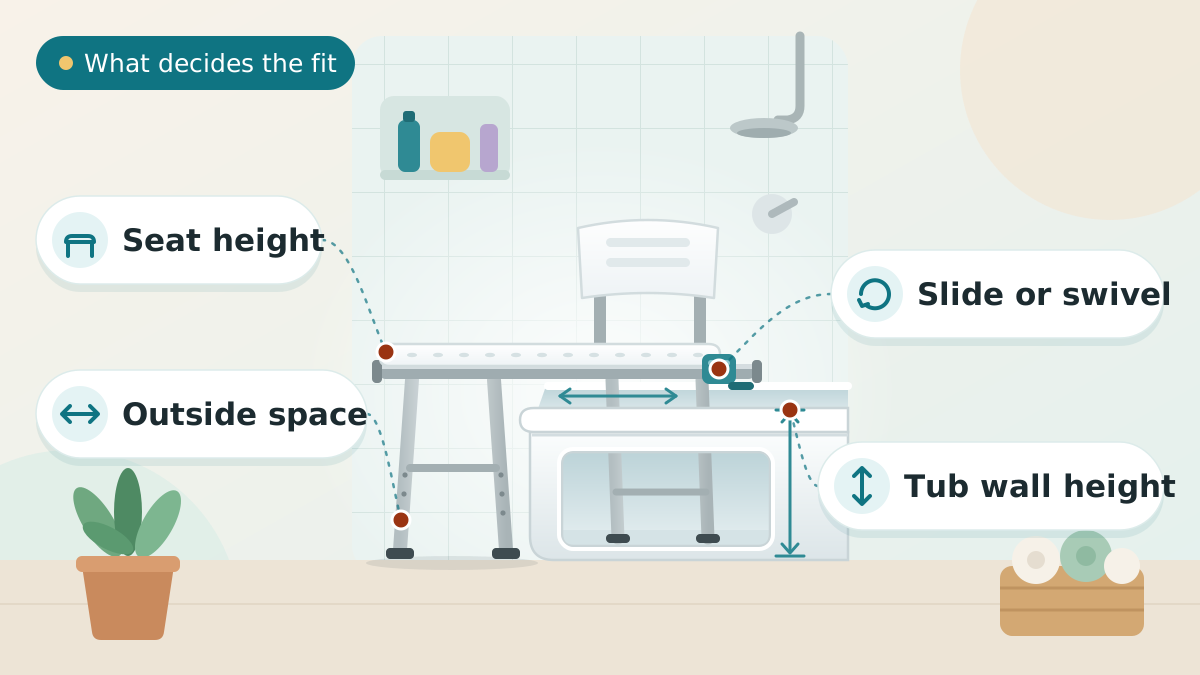
Measure three things before you order
Almost every bad review of a transfer bench is a fitting problem rather than a product problem. Three measurements decide it, and all three take a tape measure and five minutes.
- Clear floor outside the bath. Two of the four legs stand on the bathroom floor, and the bench needs roughly 18–20 inches of clear depth for them plus room for the person to sit down. A base length of 39–40 inches, as on the Eagle Health, is the overall footprint — measure from the bath wall outwards, and check nothing (a toilet, a radiator, a door swing) is in that space.
- Bath wall height, outside floor to rim. This has to sit inside the bench’s seat-height range. Most benches adjust somewhere between about 16 and 22 inches. Measure to the top of the rim, not to the inside of the bath.
- Inside depth, bath floor to rim. The two inside legs stand on the bath floor, so this has to be within the bench’s maximum tub clearance — 18.5 inches on the Eagle Health, for instance. A deep soaking bath can exceed it.
Write all three down before you shop, then check them against the listing’s technical details rather than the marketing copy. If a listing does not publish its dimensions, that is a reason to choose a different bench.
Fixed, sliding or swivelling — which mechanism
This is the decision that changes the price, and the right answer depends entirely on what the person struggles with.
- Fixed seat — they sit down and shuffle across using arms and hips. Fine for someone with reasonable arm strength and a hip that moves. Cheapest, fewest parts, nothing to fail.
- Sliding seat — the seat itself travels along the frame and locks at each end. Choose this when the shuffle is the hard part: weak arms, a painful hip, or recovery from a joint replacement.
- Swivel seat — the seat rotates so the legs come over the rim as part of the turn. Choose this when lifting a leg over is the hard part, which is common after a stroke or with advanced Parkinson’s.
Watch the person attempt a transfer once, on a chair if you have to, and see where it actually goes wrong. That answers this question better than any spec sheet.
Feet, capacity and the things that go wrong later
Check what the feet grip. Suction cups hold well on a smooth acrylic or enamel bath and poorly on a textured non-slip base — which is exactly what a fall-conscious household is likely to already have. Rubber tips grip both adequately. If the bath has a moulded non-slip floor, favour rubber.
Take capacity from the technical details, not the headline. These range from about 300 lb to over 500 lb, and several models are sold in standard and bariatric versions under near-identical names. A bench is something a person puts their whole weight through suddenly, so treat the number as a limit rather than a guideline.
Expect some water on the floor. With two legs outside the bath, a shower curtain cannot fully seal, and every transfer bench lets some water escape. A folded towel on the floor outside handles it. Anyone selling you a bench that does not do this is overselling.
Check the frame every few months. Adjustable legs are held by pins or push-buttons and they can work loose with use and steam. It takes thirty seconds.
Read more:Bathroom Safety for SeniorsPost-Surgery Home Setup GuideGrab Bar Placement Guide 2025
What a tub transfer bench actually does
A transfer bench looks like a shower chair that has outgrown the bath, and the shape is the whole point. It has four legs: two stand on the bathroom floor outside the bath, and two stand inside on the bath floor. The seat spans the wall.
That lets the transfer happen in a completely different way. Instead of standing on one leg, lifting the other over a wet rim, and hoping the standing leg holds — which is the movement that causes bathroom falls — the person sits down on the outside end while still on solid ground, lifts one leg over at a time with their weight supported, then moves across the seat until they are sitting inside the bath.
At no point do they stand on one leg over a wet surface. That single change is what the equipment is for.
It is not the same as a shower chair, which sits entirely inside the bath and helps someone stay seated once they are already in. A shower chair does nothing about the getting-in problem. If stepping over the wall is what worries you, a shower chair is the wrong purchase.
Will it fit in my tub?
This is the most-asked question about transfer benches, and the honest answer is: usually, but not always, and you can know before you order.
The two inside legs stand on the bath floor, which means the depth of your bath — from its inside floor up to the rim — has to be within the bench’s maximum tub clearance. A standard bath is comfortably inside that range on most benches. A deep soaking bath often is not. The Eagle Health publishes 18.5 inches as its maximum; not every maker states the figure, which is itself worth knowing when choosing.
The second constraint is the seat height range, which has to cover the height of the bath rim from the outside floor. Too low and the seat tilts into the bath; too high and the person is stepping up to sit down, which reintroduces the problem you bought the bench to solve.
The third is floor space outside. Two legs plus room to sit means roughly 18–20 inches of clear depth, and a total footprint approaching 40 inches on the larger benches. In a small bathroom, the position of the toilet or the door swing is the real constraint, not the bath.
If the bath is a corner unit, has sloped or rolled edges, or is a walk-in with a door, a transfer bench is usually the wrong solution and an occupational therapist is the right next call.
Transfer bench, shower chair, or transfer board?
Three pieces of equipment with similar names that solve genuinely different problems. Choosing the wrong one is common and expensive.
- Transfer bench — straddles the bath wall. Solves *getting in and out of the bath*. This page.
- Shower chair — sits entirely inside the bath or shower. Solves *staying seated safely while washing*. It does not help anyone get in. Many households need both.
- Transfer board — a flat board that bridges two seats. Solves *moving between a bed and a wheelchair, or a wheelchair and a car*. Nothing to do with baths — see our transfer boards roundup.
If the transfer you need help with is bed-to-wheelchair rather than in and out of the bath, you want a transfer board, not a bench. If the person can get into the bath but is unsteady once inside, a shower chair or bath seat is the right purchase. And if the bath itself has become the problem rather than the getting-in, converting to a walk-in shower is worth pricing before spending on equipment that only partly solves it.
Using one safely, day to day
Getting the bench right is most of the job. A few habits cover the rest:
- Sit down fully before attempting to lift either leg over. The most common mistake is starting the leg lift while still half-standing.
- Lift one leg over at a time. Two at once needs core strength most people buying a bench do not have.
- Use a handheld shower head rather than a fixed one. A fixed head aims at where someone stands, not where they sit, and reaching for it undoes the stability the bench provides.
- Keep a folded towel on the floor outside for the water that escapes, and a non-slip bath mat inside for the feet that end up on the bath floor.
- Check the leg pins and the seat lock every couple of months — adjustable legs work loose with use and steam.
- If the person needs a hand at any point in the transfer, that is worth an occupational therapy assessment rather than a bigger bench. A grab bar positioned for the sitting-down movement often solves it.
Frequently asked questions
It is a bench with four legs that straddles the wall of a bath — two legs stand on the bathroom floor outside, two stand on the bath floor inside, and the seat spans the rim. The person sits down on the outside end while still on solid ground, lifts one leg over the wall at a time with their weight fully supported, then moves across the seat until they are sitting inside the bath. The point is that they never stand on one leg over a wet surface, a movement that is a common cause of bathroom falls.
Usually, and you can check before ordering. Three measurements decide it: the clear floor depth outside the bath (roughly 18–20 inches for the outside legs, with a total footprint approaching 40 inches on larger models), the height of the bath rim from the outside floor (which must fall inside the bench’s seat-height range, typically about 16–22 inches), and the inside depth from bath floor to rim (which must be within the bench’s maximum tub clearance — 18.5 inches on the Eagle Health, for example). Deep soaking baths frequently exceed the third. Corner baths, rolled edges and walk-in baths with doors usually rule a bench out altogether.
A shower chair sits entirely inside the bath or shower and helps someone stay seated safely while washing. It does nothing about getting in. A transfer bench straddles the bath wall and exists specifically to remove the step over the rim. If the worry is falling while stepping in, a shower chair will not help. Plenty of households end up with both — the bench for getting in and out, a chair for a walk-in shower elsewhere.
No, and confusing the two is common. A transfer board is a flat plank that bridges the gap between two seats — a bed and a wheelchair, or a wheelchair and a car seat — so a person can slide across without standing. It has no legs and nothing to do with baths. A transfer bench is a four-legged seat for getting in and out of a bath. If the transfer you need help with is bed-to-wheelchair, the board is what you want.
Some, always. Because two legs stand outside the bath, a shower curtain cannot seal completely against the frame, so a little water escapes on every use. This is inherent to the design rather than a fault with any particular bench. A folded towel on the floor outside deals with it, and some people run the curtain inside the bench legs and tuck it against the seat, which helps. Any listing implying a bench eliminates this is overstating things.
Watch where the transfer actually goes wrong. If the person can sit down and shuffle across using their arms and hips, a fixed seat is enough and everything else is money spent on mechanisms they will not use. If shuffling across is the struggle — weak arms, a painful hip, a recent joint replacement — a sliding seat carries them instead. If lifting a leg over the rim is the struggle, which is common after a stroke or with advanced Parkinson’s, a swivel seat brings the legs over as part of the turn. The mechanism should match the specific difficulty, not the budget.
On this page, the Medline, Moen and Eagle Health benches are rated 400 lb and the Drive Medical 350 lb; the Platinum Health listing says “high capacity” without giving a figure. The wider market runs from about 300 lb to over 500 lb for bariatric models. Take the figure from the listing’s technical details rather than the marketing copy, and be aware that several manufacturers sell standard and bariatric versions under near-identical names. A bench takes a person’s full weight suddenly, often with a twisting motion, so treat the rating as a hard limit and leave margin.
Generally no. Medicare Part B covers durable medical equipment considered medically necessary and primarily useful in treating illness or injury, and bathroom safety equipment — transfer benches, shower chairs, grab bars — is usually classed as a convenience or comfort item rather than DME. Some Medicare Advantage plans include an over-the-counter or home-safety benefit that does cover them, and Medicaid rules vary by state, so both are worth checking directly. If a bench is being bought after a hospital stay, ask the discharge team — some hospitals and hospices operate equipment loan schemes.
Not usefully, and it is the wrong tool. A transfer bench exists to get someone over a bath wall; a walk-in shower has no wall to cross. What that situation needs is a shower chair or a fold-down wall seat inside the enclosure, plus a grab bar positioned for standing up. The exception is a shower with a raised threshold or a step, where a bench can help — but check the bench’s legs can stand level on both surfaces.
The final verdict
A transfer bench is one of the few pieces of home equipment that removes a dangerous movement outright rather than making it a little safer. For most households the Medline does that without mechanisms they may not need. Choose the Moen if you want the widest seat and armrests on both sides, the Eagle Health if shuffling across is the difficulty, the Platinum Health if lifting a leg over the rim is, and the Drive Medical bench for a plain, basic setup under 350 lb. Whichever you pick, measure the three dimensions first — clear floor outside, rim height from the outside floor, and bath depth inside. That, far more than the brand, decides whether it works.
Our overall winner is the Medline Transfer Bench with Reversible Backrest. You can check the current price on Amazon.
Our Top 5 Picks at a Glance
Ready to choose? Here are the top 5 again.
Best Overall
Medline Transfer Bench with Reversible Backrest
Widest Seat
Moen Home Care Transfer Bench (DN7105)
Best Sliding Seat
Eagle Health Sliding Transfer Bench (77211)
Best for Weak Upper Body
Platinum Health Carousel Sliding Swivel Bench
Best Basic Bench
Drive Medical Tub Transfer Bench (12011KD-1)
Affiliate links — we may earn a commission.
