
Senior Home Safety: A Complete Caregiver Guide

Practical guidance for families; not medical advice. Adapt to the individual’s needs, and involve an occupational therapist for a tailored home assessment where possible.
Many of the accidents that send older adults to hospital happen at home — and many are preventable. This room-by-room guide turns an ordinary house into a safe one, focused on the biggest risk of all: falls.
Key takeaways
- Most senior accidents happen at home and most are preventable — a proactive safety pass is one of the highest-value things a caregiver can do.
- Falls are the number-one risk — lighting, clear paths, removing rugs, and support rails matter most.
- The bathroom and stairs are the highest-risk areas — prioritize grab bars, non-slip surfaces, and secure handrails.
- Address lighting everywhere, especially night-time routes, and secure kitchen, medication, and fire hazards.
- Prepare for emergencies — a way to call for help (medical alert) and working smoke/CO alarms.
Quick answer
How do I make a home safe for an elderly person?
Work through the home room by room with falls as the top priority: improve lighting everywhere, clear paths of clutter and cords, and remove or fix loose rugs. Prioritize the bathroom (grab bars, non-slip mats, shower chair, raised toilet) and stairs (secure handrails both sides, marked edges). Secure kitchen, medication, and fire hazards, and prepare for emergencies with a medical alert device and working smoke/CO alarms.
Why home safety matters so much
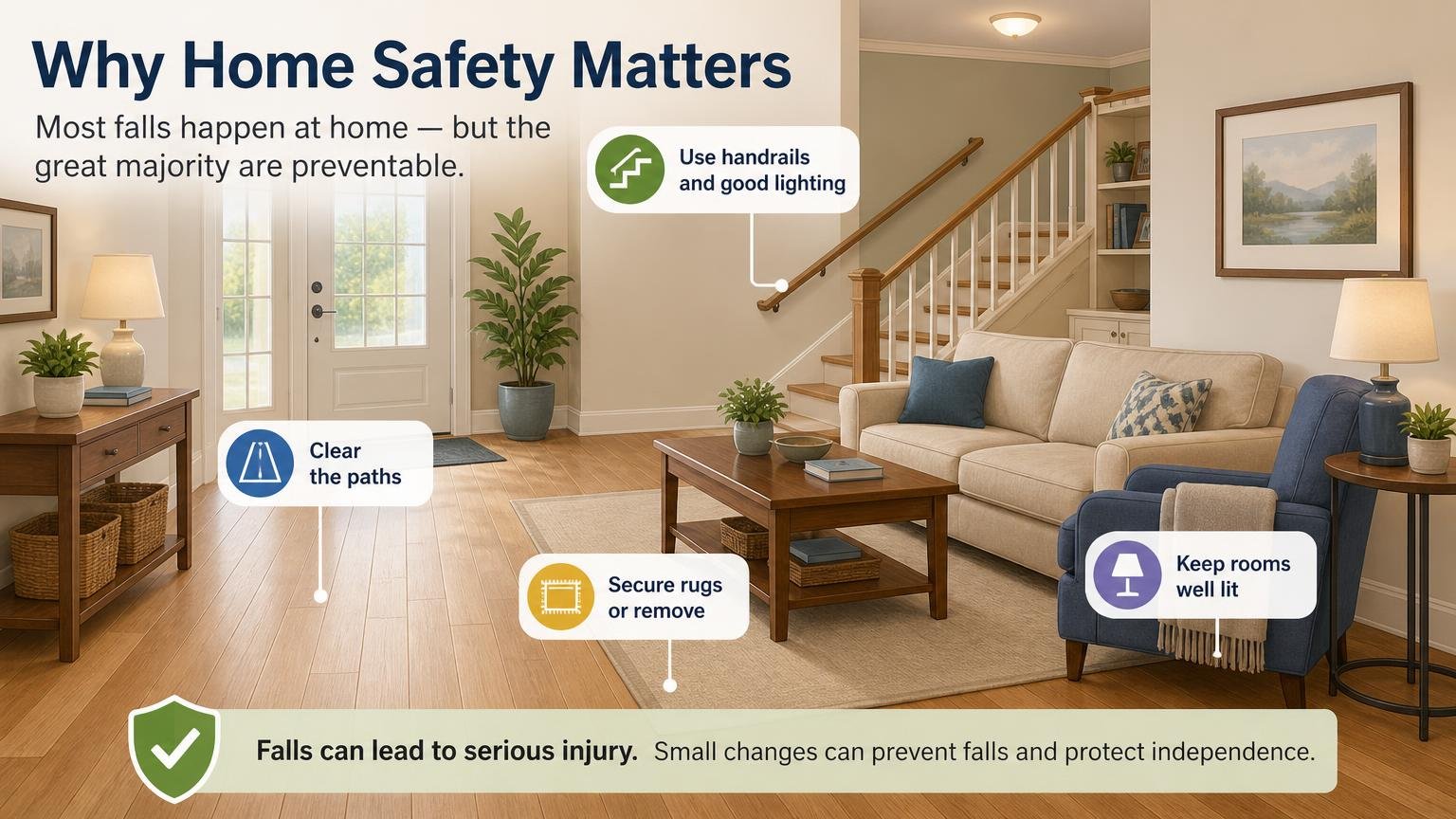
The home feels like the safe place, but for older adults it is where many accidents — especially falls — happen. A fall at home can fracture a hip, trigger a hospital stay, and start a decline that is hard to reverse. The powerful truth behind all of this is that many of these accidents are preventable with straightforward changes.
This guide is a room-by-room walkthrough to make a home safe, with falls as the central focus because they are the biggest risk. It underpins many of our other guides — from fall prevention to dementia home safety and post-hospital setup. Where possible, an occupational therapist can provide a tailored home assessment, but the measures here address the essentials.

Sponsored Pick
HOMLAND T8 Foldable
Tight bathrooms, travel, or anyone who wants to fold the rail out of the way
Check PriceGet the free Home Safety Checklist
A room-by-room printable to walk the home and fix the risks behind most falls. Enter your email and we will send you the PDF.
The fundamentals: falls and lighting
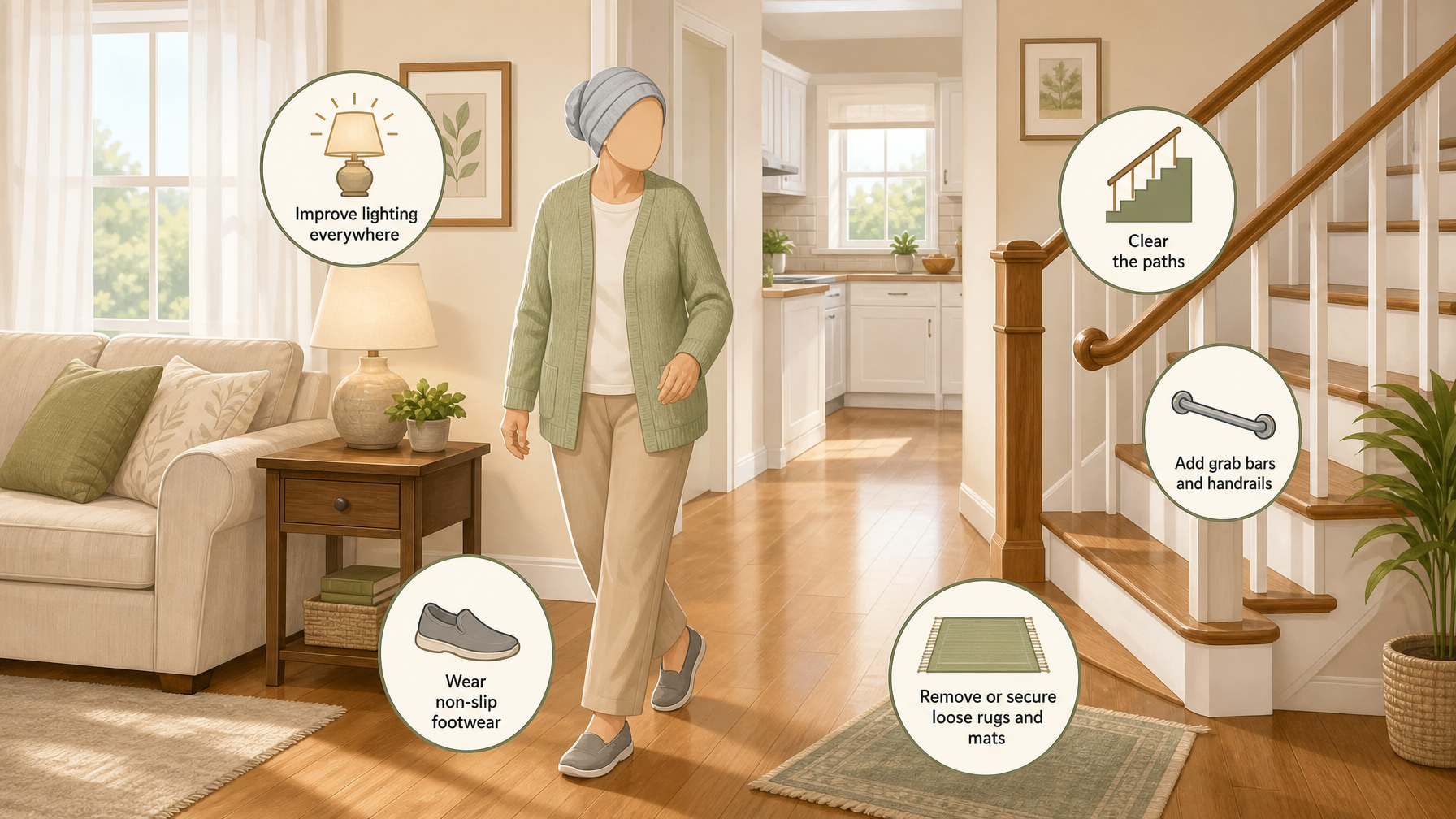
A handful of changes address the biggest share of risk and apply throughout the home:
- Clear the paths — keep walkways free of clutter, cords, and low furniture, with wide routes for a walker or cane.
- Remove or secure loose rugs and mats — a common trip hazard; use non-slip backing or remove them.
- Improve lighting everywhere — bright, even, glare-free light, easy-to-reach switches, and night lights on routes used at night. Poor lighting is a leading contributor to falls.
- Add support — grab bars and handrails where the person needs steadying, especially bathroom and stairs. Not sure who to call or how to pay? See who installs grab bars and how to get installation free or low-cost.
- Non-slip footwear — supportive, non-slip shoes or slippers indoors, not socks or loose slippers.
For the full fall-prevention approach — including strength, balance, and medical factors — see why an elderly parent keeps falling.
Good to know
If you do only three things, do these: fix the lighting, remove the loose rugs, and add grab bars in the bathroom. They address the biggest, most common fall risks for the least effort.
The bathroom (highest risk)
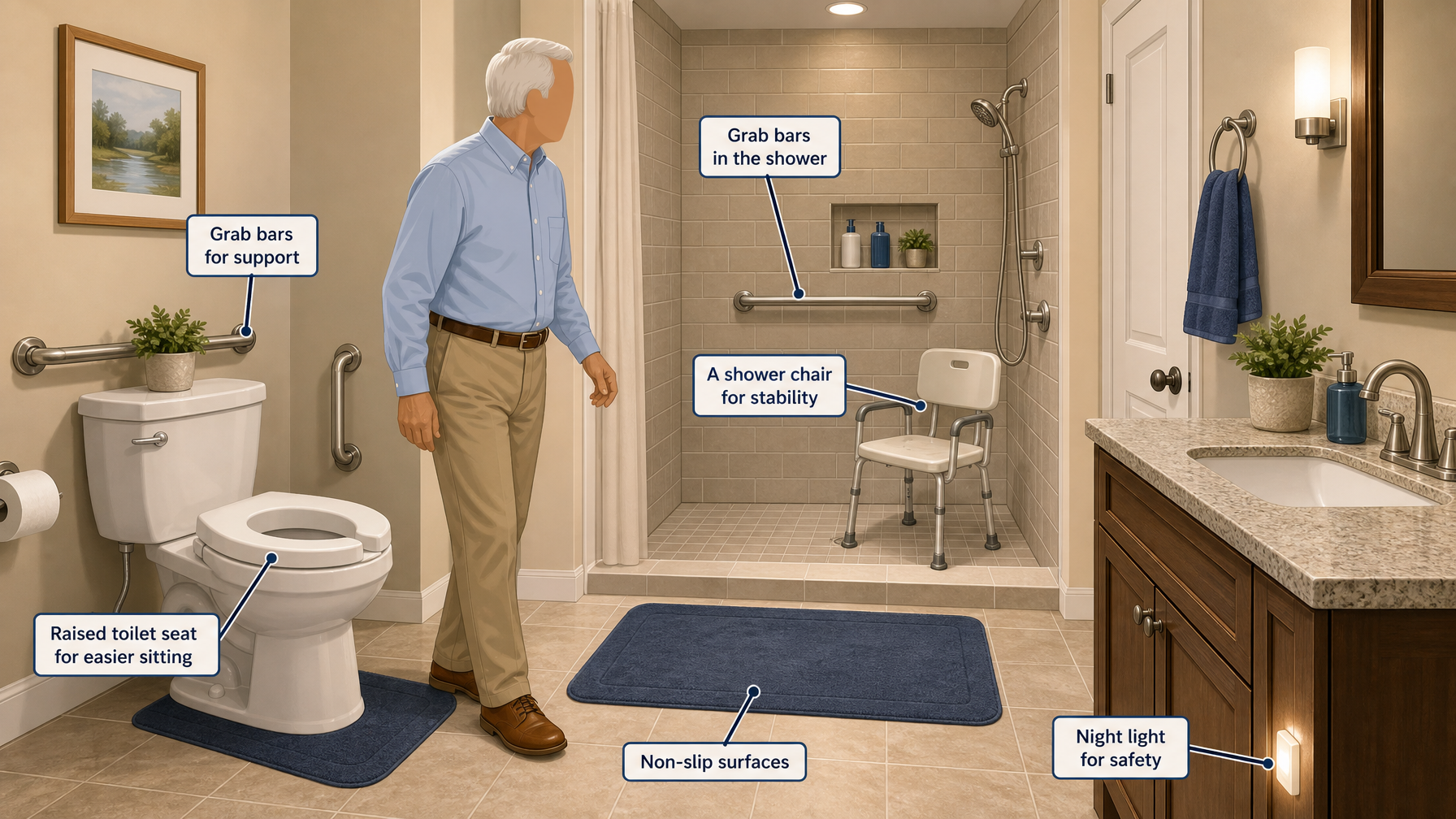
Wet, hard, and cramped, the bathroom is the most dangerous room and deserves priority — much of this is covered in bathroom fall prevention:
- Grab bars by the toilet and in the shower/bath, properly mounted — see the grab bar placement guide and best grab bars.
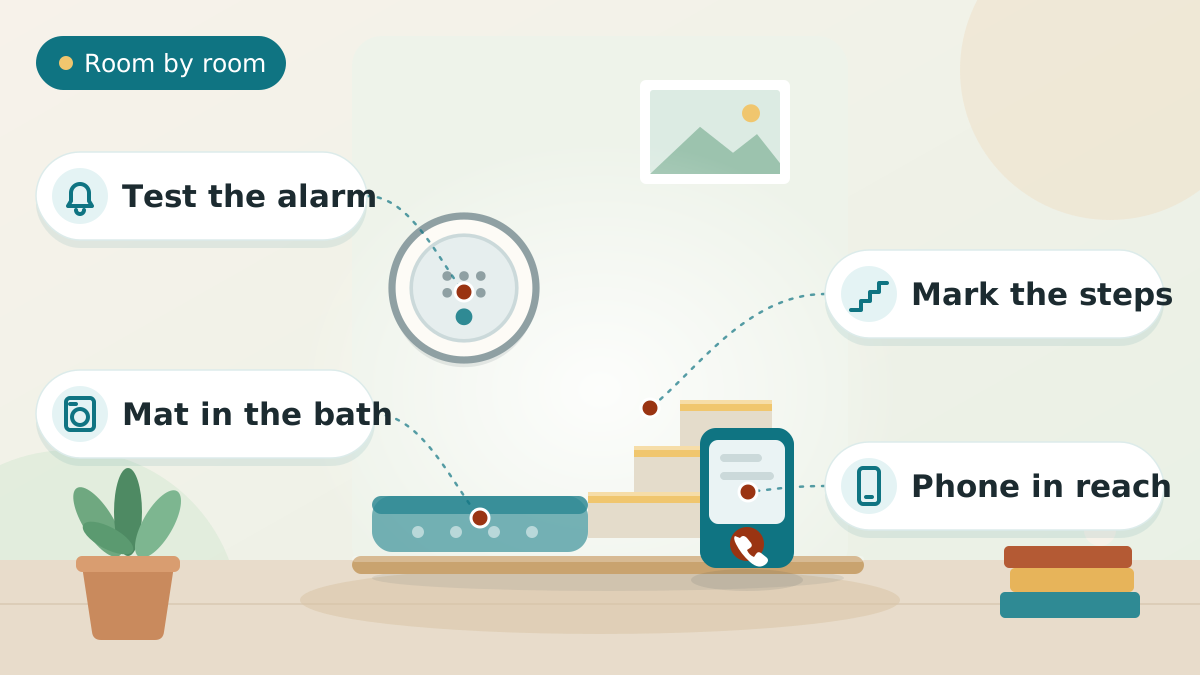
- Non-slip surfaces — mats inside and outside the tub/shower.
- A shower chair and handheld shower head for safe seated washing.
- A raised toilet seat or commode to make sitting and standing safer.
- Scald prevention — set the water heater to a safe temperature.
- Good lighting and a night light, and ideally remove any door lock so the person cannot get locked in.
Stairs, hallways, and the kitchen
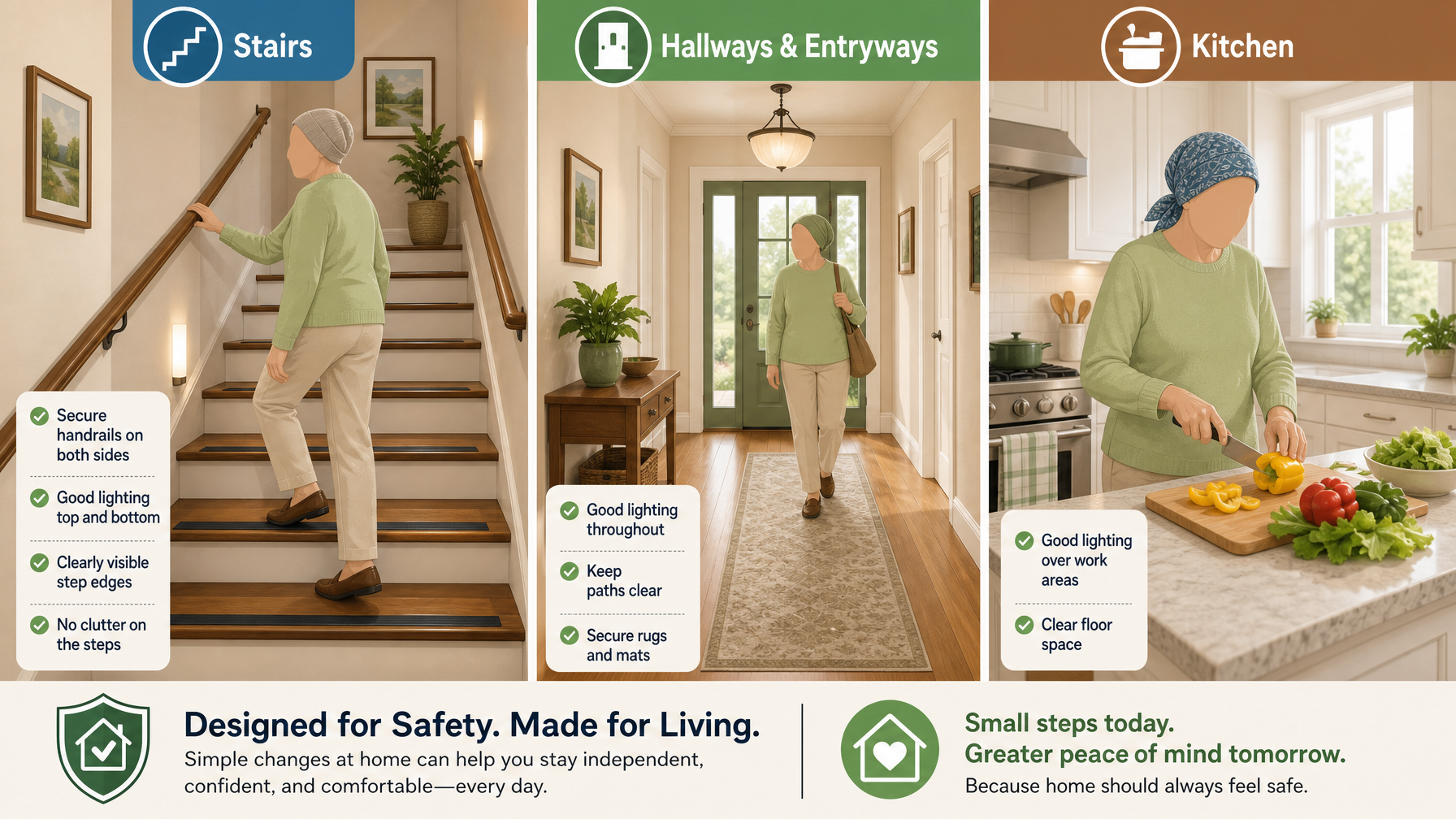
Two more high-risk zones:
- Stairs — secure handrails on both sides, good lighting top and bottom with two-way switches, clearly visible step edges (contrast strips help), and no clutter on the steps. If stairs are a serious problem, consider relocating essential activities to one floor.
- Hallways and entryways — well lit, clutter-free, with a sturdy surface to hold near the door and a safe way to manage any thresholds or steps.
- Kitchen — keep frequently used items within easy reach to avoid reaching or step-stools, wipe spills immediately, use a reacher/grabber rather than climbing, ensure good task lighting, and practice safe cooking (not leaving the stove unattended). For those with cognitive decline, see dementia home safety.
Bedroom and living areas
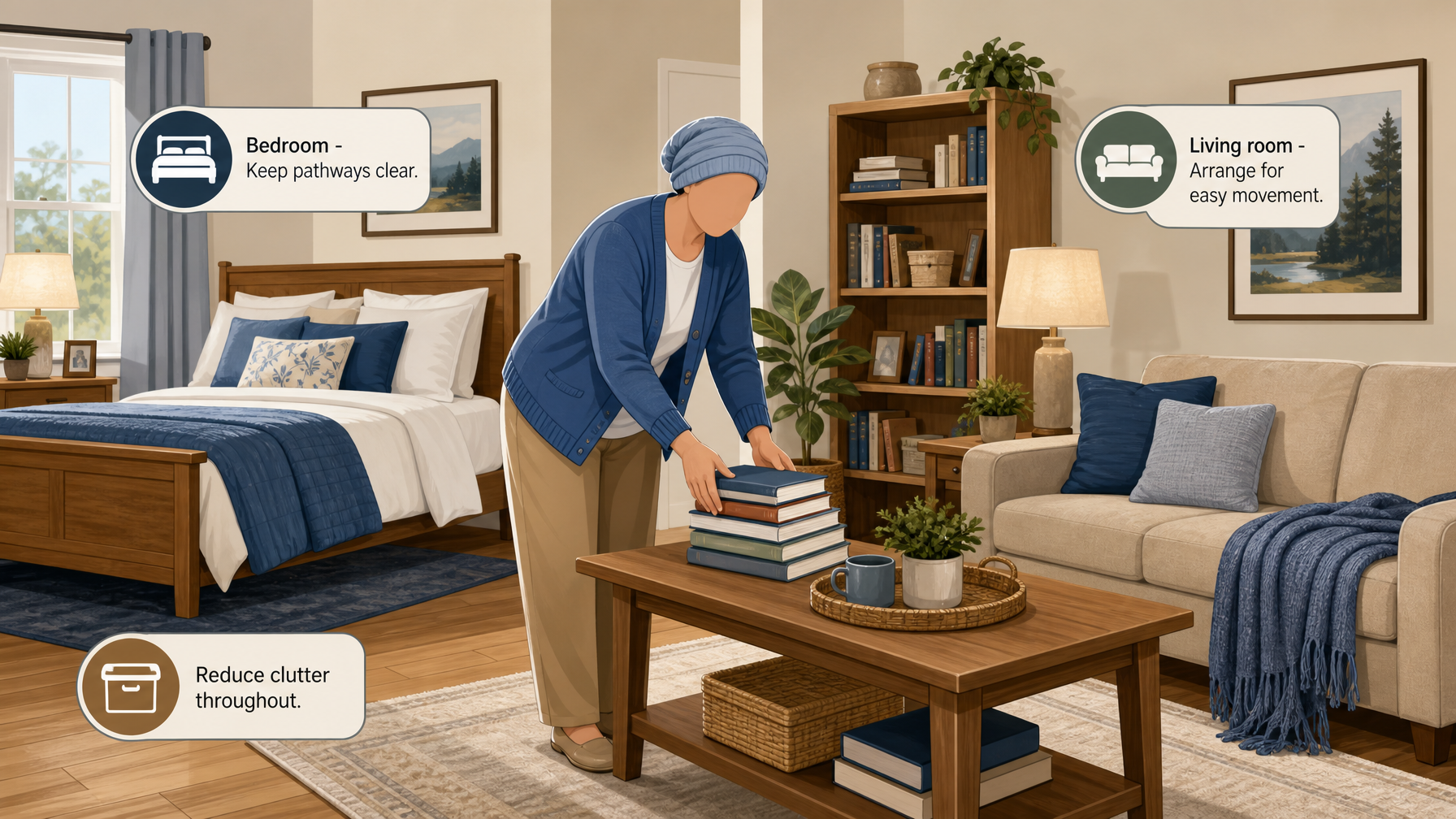
The rooms where people spend the most time need attention too:
- Bedroom — a bed at the right height to rise from easily, a clear well-lit path to the door and bathroom, essentials within reach, and support for getting up (bed assist handle or, where safe, a bed rail). See the full safe bedroom setup and nighttime falls guides.
- Living room — supportive, firm chairs with armrests at a height that is easy to rise from, clear paths between furniture, no low trip hazards (footstools, cords), and good lighting.
- Reduce clutter throughout and keep things in consistent, reachable places.
Hazards, fire safety, and emergencies
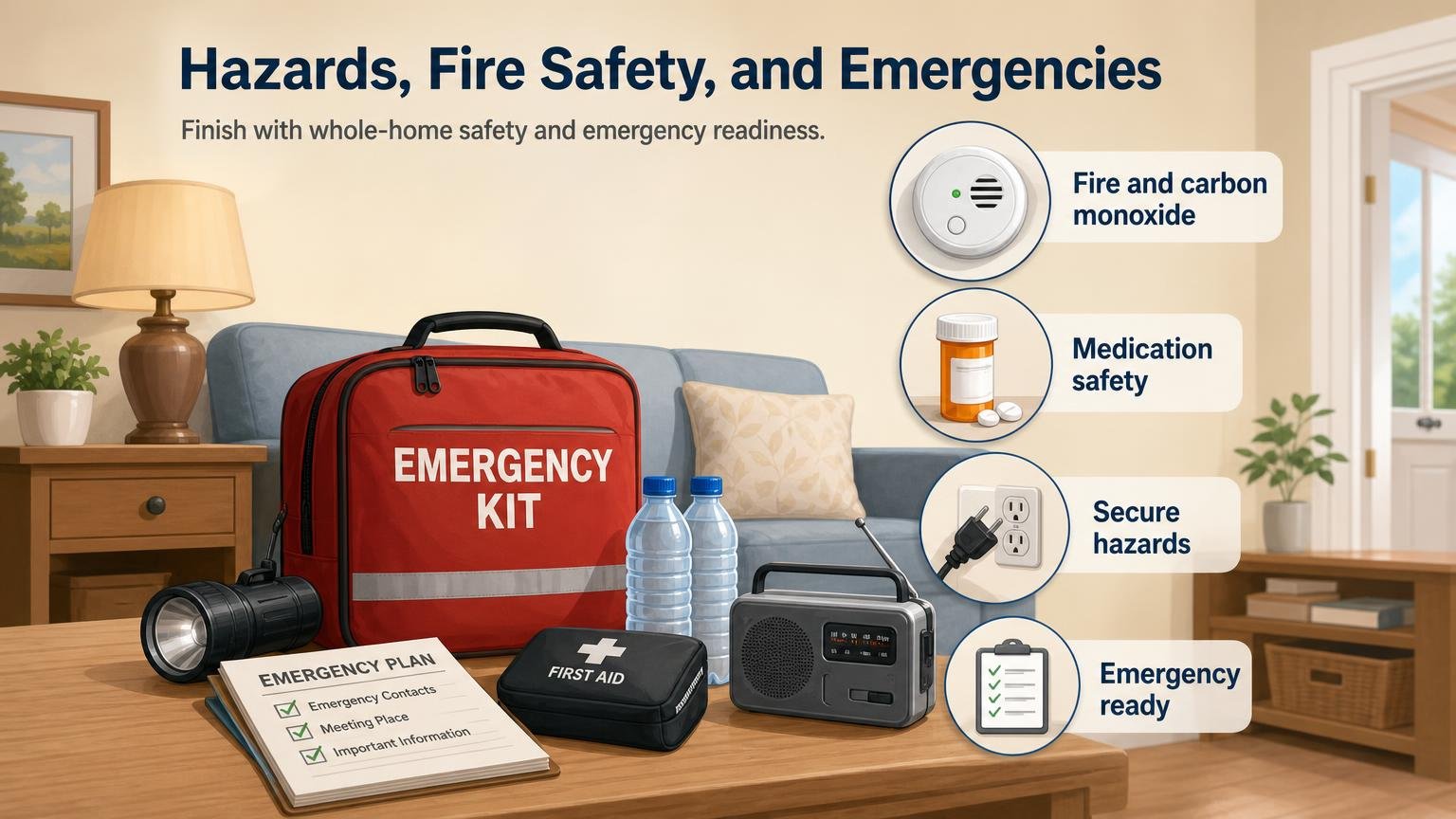
Finish with whole-home safety and emergency readiness:
- Fire and carbon monoxide — working smoke and CO alarms (with flashing/vibrating alerts if hearing is impaired), tested regularly, and safe management of heating, cooking, and any smoking.
- Medication safety — organized, and managed for the person if they can no longer do so safely; see medication management.
- Secure hazards — cleaning chemicals, tools, and anything dangerous, especially with cognitive decline.
- A way to call for help — a medical alert device, especially for someone living alone, plus an accessible phone with key numbers.
- An emergency plan — a list of contacts and medications handy, a key-safe or trusted key holder for responders, and a clear plan for who to call.
Safety first
For someone who spends any time alone, a reliable way to summon help after a fall is essential — a medical alert device (ideally with fall detection) can be the difference between a quick recovery and hours on the floor.
Frequently asked questions
How do I make a home safe for an elderly person?
Work room by room with falls as the priority: improve lighting everywhere, clear paths of clutter and cords, and remove or secure loose rugs. Prioritize the bathroom (grab bars, non-slip mats, shower chair, raised toilet) and stairs (handrails both sides, marked edges), secure kitchen, medication, and fire hazards, and prepare for emergencies with a medical alert device and working smoke and CO alarms.
What is the most dangerous room for seniors?
The bathroom is generally the highest-risk room — wet, hard, and cramped surfaces make falls likely and injuries serious. It should be a priority: add grab bars by the toilet and in the shower/bath, non-slip mats, a shower chair, a raised toilet seat, and good lighting, and set the water heater to a safe temperature. Stairs are the other major danger zone.
What are the most important home safety changes for seniors?
The highest-value changes address falls: fix the lighting (bright, even, with night lights on night-time routes), remove or secure loose rugs, and add grab bars in the bathroom and handrails on stairs. Clear walking paths, ensure supportive non-slip footwear, secure fire and medication hazards, and provide a way to call for help in an emergency.
How can I prevent falls on the stairs?
Install secure handrails on both sides of the staircase, ensure good lighting at the top and bottom with two-way switches, make step edges clearly visible (contrast strips help), and keep the stairs completely free of clutter. If stairs remain a serious hazard, consider relocating essential daily activities to a single floor.
Should I get a professional home safety assessment?
It can be very valuable — an occupational therapist can assess the home and the individual’s specific needs and recommend tailored changes and equipment. That said, the room-by-room essentials in this guide address the biggest risks, and you can implement many of them yourself while arranging a professional assessment for a more personalized plan.
How do I prepare a senior’s home for emergencies?
Ensure working smoke and carbon-monoxide alarms (with flashing or vibrating alerts if hearing is impaired), provide a way to call for help such as a medical alert device (ideally with fall detection) and an accessible phone with key numbers, keep a list of contacts and medications handy, and set up a key-safe or trusted key holder so responders can get in quickly.
