
Caregiver Support: Planning a Daily Routine Together

Practical guidance for family caregivers; not medical advice. Tailor support to the individual, and involve health professionals for specific care needs.
A caregiver can make a senior’s daily routine calmer, safer, and more nourishing — without taking over. The art is supporting the day while protecting the person’s independence, dignity, and preferences.
Key takeaways
- A caregiver’s role is to support and enable a senior’s routine — not to take it over; protecting independence and dignity is central.
- Plan the routine together, built around the person’s preferences, abilities, and natural rhythm.
- Assess what support is actually needed — help with what’s genuinely hard, and step back where the person can manage.
- Support runs across the whole day — morning, nutrition, movement, mental and social engagement, and evening.
- Look after yourself — sustainable caregiving depends on preventing burnout.
Quick answer
How can caregivers support a senior’s daily routine?
By enabling rather than taking over: plan the routine *with* the person around their preferences and rhythm, assess what support is genuinely needed (helping with what’s hard, stepping back where they can manage), and support each part of the day — mornings, nutrition and hydration, movement, mental and social engagement, and evenings. Communicate respectfully, keep the home safe, adjust the routine as needs change, and protect your own wellbeing to avoid burnout.

Why caregiver support matters — done the right way
A caregiver can transform a senior’s day — making it calmer, safer, better nourished, and more connected. But *how* that support is given matters enormously. The goal is to enable and support the person’s own routine, not to take it over. Support that respects independence and dignity keeps the person engaged, capable, and in charge of their life; support that takes over, however well-meant, can erode confidence and independence.
This guide is about that balance: providing real help where it’s needed while preserving autonomy. It ties together the whole daily routine from a caregiver’s perspective, and complements the practical care in our caregiver guides.

An ElderlyDaily original
Want all of it in one organized binder?
Aging Parent Medical & Emergency Binder
- Medical history, medications and emergency contacts in one place
- Seven sections: emergency, health, medications, care team, appointments, documents and family
- Type into it on screen, or print it and fill it in by hand
One-off purchase. Instant download.
Fillable PDF · US Letter

Sponsored Pick
CallToU Wireless Caregiver Pager (2 Buttons, 2 Receivers, 500+ ft)
Households where the caregiver moves between rooms or floors and wants call buttons in more than one spot
Check PricePlan the routine together
A routine works best when it’s co-created, not imposed:
- Start with the person — their preferences, habits, natural rhythm, and what matters to them shape the routine.
- Involve them in decisions — offering choices and respecting their wishes preserves autonomy and buy-in.
- Build on existing habits — work with the person’s established patterns rather than replacing them.
- Keep it flexible — a supportive rhythm, not a rigid schedule, adaptable to energy and how each day feels.
- Agree the anchors — consistent wake/sleep times, meals, movement, and connection, as in the daily routine guide.
Assess what support is actually needed
Effective support is targeted — helping with what’s genuinely difficult while letting the person do what they can:
- Identify real needs — look honestly at which tasks are hard or unsafe (and why), versus those the person manages fine.
- Match help to need — provide the *least* help that keeps things safe and achievable, preserving independence.
- Use aids before hands-on help — tools like grab bars, a pill organizer, or mobility aids often restore independence better than doing things *for* the person.
- Reassess regularly — needs change over time; revisit what help is required.
- Respect their judgment — a person with capacity has the right to their own choices, even ones you’d make differently.
Good to know
The guiding principle: provide the least help needed to keep things safe and achievable. Doing too much, however kind, can quietly erode the confidence and independence you’re trying to protect. Aids and prompts often beat doing a task for someone.
Supporting each part of the day
Caregiver support runs right across the daily routine:
- Mornings — allow unhurried time, prompt gently, and keep it safe; see the morning routine.
- Nutrition and hydration — encourage regular meals and fluids, make food appealing, and use eating aids where helpful; see daily nutrition.
- Physical activity — encourage and enable safe daily movement and chair yoga, joining in for company.
- Mental and social engagement — facilitate mental activities and social connection, which are vital for wellbeing.
- Afternoon rest — protect a calm afternoon rest and balance it with activity.
- Evening and sleep — support a calming evening routine and safe nights.
Living alone, and communicating well
Two things that shape good support:
- Supporting seniors who live alone — extra attention to safety and check-ins, with a medical alert device or monitoring and a reliable contact routine; see seniors living alone safety.
- Communicate with respect — listen, involve the person, explain rather than direct, and never talk down; how you communicate shapes whether support feels caring or controlling.
- Handle resistance gently — reluctance usually protects dignity; the approaches in when a parent refuses help apply.
- Coordinate care — keep good records and work with health professionals and other family involved.
Adjusting over time, and mistakes to avoid
Support should evolve, and sidestep some common traps:
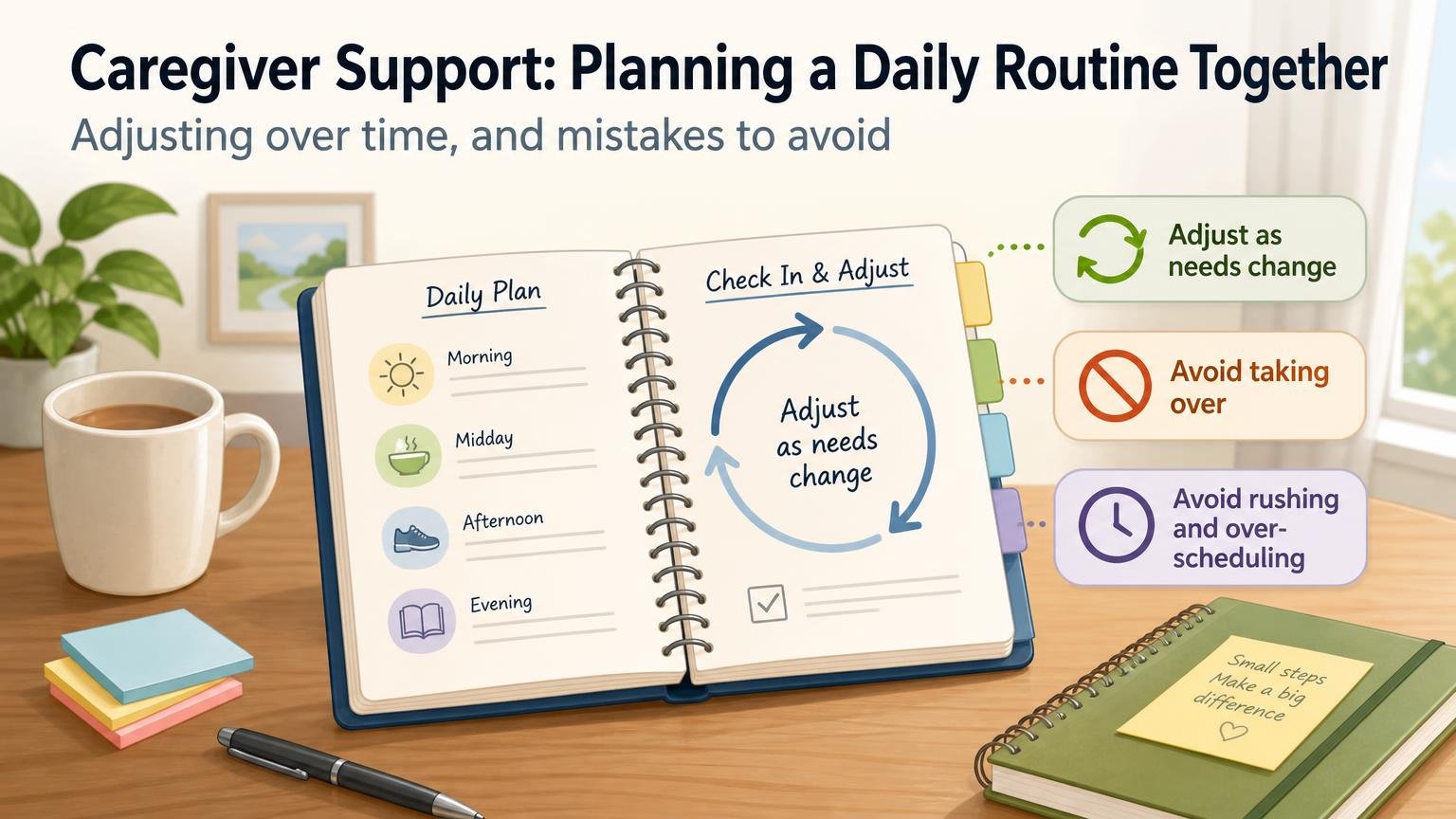
- Adjust as needs change — revisit the routine and level of support as health, seasons, and abilities shift.
- Avoid taking over — the most common mistake; doing too much erodes independence.
- Avoid rushing and over-scheduling — allow time and keep the routine a gentle rhythm, not a packed agenda.
- Don’t neglect the person’s preferences — support their goals and values, not just tasks.
- Don’t ignore mental and social needs — they matter as much as physical care.
Looking after yourself
Sustainable caregiving depends on the caregiver’s own wellbeing:
- Prevent burnout — caregiving is demanding; guard against exhaustion with the strategies in preventing caregiver burnout.
- Accept and ask for help — share the load with family, respite care, and community support.
- Set sustainable boundaries — you can’t pour from an empty cup; protect your own health, rest, and life.
- Seek support — other caregivers and support services understand and can help.
- Remember the goal — a well-supported caregiver provides better, kinder, more sustainable care.
Frequently asked questions
How can caregivers support a senior’s daily routine?
By enabling rather than taking over: plan the routine with the person around their preferences and rhythm, assess what support is genuinely needed (helping with what’s hard, stepping back where they manage), and support each part of the day — mornings, nutrition, movement, mental and social engagement, and evenings. Communicate respectfully, keep the home safe, adjust as needs change, and protect your own wellbeing.
How do I help a senior without taking over their independence?
Provide the least help needed to keep things safe and achievable, letting the person do what they can. Use aids and gentle prompts (like grab bars, a pill organizer, or mobility aids) before doing tasks for them, involve them in decisions, and respect their judgment. Doing too much, however well-meant, can quietly erode the confidence and independence you’re trying to protect.
How do I plan a daily routine with an elderly parent?
Co-create it rather than imposing it: start from their preferences, habits, and natural rhythm, involve them in decisions and offer choices, build on their existing patterns, and keep it a flexible rhythm rather than a rigid schedule. Agree a few anchors — consistent wake and sleep times, meals, movement, and connection — and let the rest of the day flow around them.
How do I assess how much help a senior needs?
Look honestly at which specific tasks are genuinely hard or unsafe, and why, versus those the person manages fine, then match your help precisely to the real needs. Favor aids and prompts that restore independence over hands-on help, reassess regularly as needs change, and respect the person’s own judgment and right to make their own choices where they have capacity.
How do I support a senior who lives alone?
Pay extra attention to safety and regular check-ins: set up a medical alert device or monitoring system, establish a reliable contact routine, ensure a safe home, and support their nutrition, medication, movement, and social connection remotely or through visits. Our guide on seniors living alone safety covers the full approach to balancing independence with safety.
How can caregivers avoid burnout?
Recognize that caregiving is demanding and that your wellbeing is essential to sustainable care: prevent exhaustion by accepting and asking for help, sharing the load with family and respite or community support, setting sustainable boundaries, and protecting your own health, rest, and life. Seeking support from other caregivers and services helps too. A well-supported caregiver provides better, kinder care.
Sources
- National Institute on Aging (NIH). Sleep and Older Adults
- National Institute on Aging (NIH). Four Types of Exercise Can Improve Your Health and Physical Ability
