
Afternoon Rest for Seniors: Balancing Energy Through the Day

Practical guidance for seniors and caregivers; not medical advice. Excessive daytime sleepiness or a sudden change in energy should be discussed with a doctor.
The early-afternoon energy dip is a normal part of the body’s rhythm. Used well, afternoon rest is an intentional reset that carries a senior steadily into the evening — not "giving up" on the day.
Key takeaways
- The early-afternoon energy dip is a normal part of the body’s circadian rhythm, not a sign of poor health.
- Afternoon rest is an intentional reset — used well, it recharges energy for the evening.
- If napping, keep it short and early — a brief nap early in the afternoon avoids grogginess and protects night sleep.
- Rest doesn’t have to mean sleep — quiet activities can restore energy just as well, especially for those who nap poorly.
- Balance rest so it supports, not disrupts, night-time sleep — long or late naps are the main pitfall.
Quick answer
Should seniors nap in the afternoon, and for how long?
A short afternoon rest is healthy and normal — the early-afternoon dip is part of the body’s rhythm. If napping, keep it short and early (a brief nap in the early afternoon) to recharge without grogginess or harming night sleep. Rest doesn’t have to mean sleep — quiet activities like reading or gentle music restore energy too, and suit those who nap poorly. The main pitfall is long or late naps, which disrupt night-time sleep. Persistent excessive daytime sleepiness is worth raising with a doctor.
Why afternoon rest matters
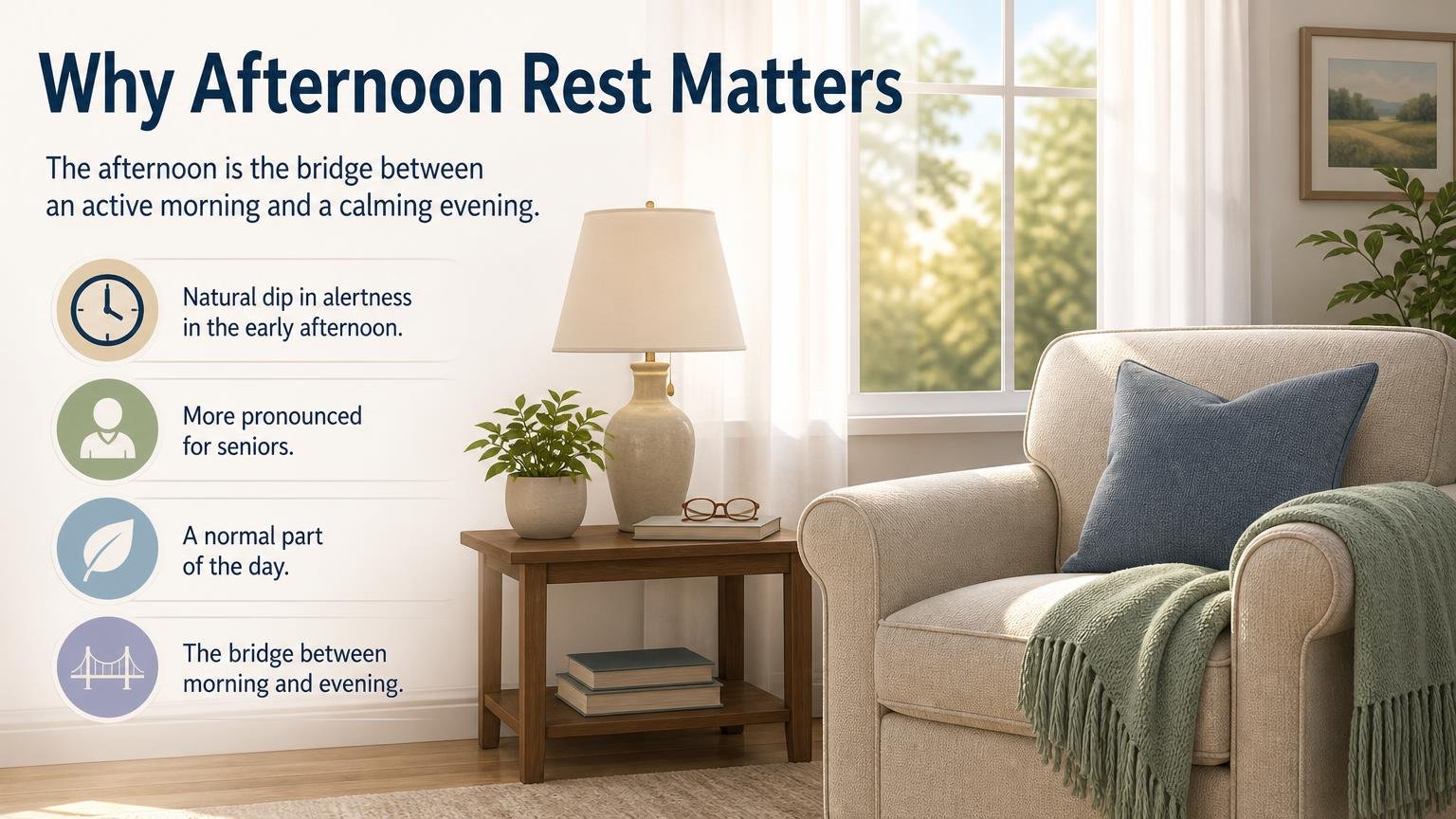
Within a healthy day, the afternoon is the bridge between an active morning and a calming evening. Most people feel a natural dip in alertness in the early afternoon — typically somewhere between about 1 and 3 PM — and for seniors this can feel more pronounced. It is a normal part of the circadian rhythm, not a sign of aging poorly or ill health.
Rather than fighting this dip, a thoughtful daily routine works with it, using afternoon rest as an intentional reset. Handled well, that reset carries the person steadily through to the evening with better mood and energy — the opposite of "doing nothing" or giving up on the day.
Large-print edition included
An ElderlyDaily original
Want every movement drawn out, a full page each?
Chair Tai Chi — Illustrated Edition
- All eight movements, a full page each, drawn frame by frame
- A three-minute warm-up, plus five common mistakes and how to fix them
- A four-week plan with a practice tracker
One-off purchase. Instant download.
PDF · 24 pages · US Letter + A4
Understanding the afternoon energy dip
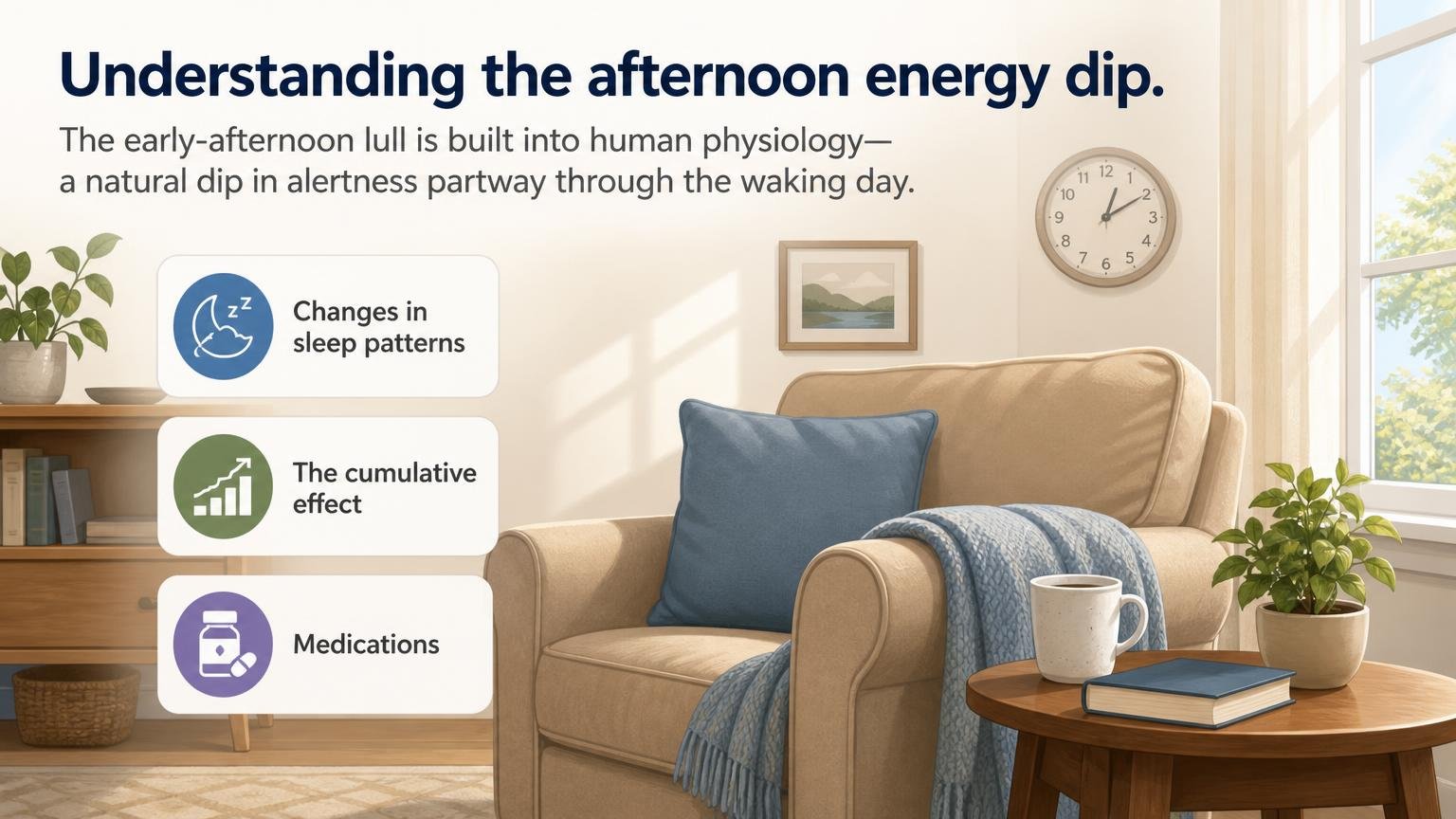
The early-afternoon lull is built into human physiology — a natural dip in alertness partway through the waking day. For older adults it can feel stronger for a few reasons:
- Changes in sleep patterns — lighter, more broken night sleep leaves less reserve for the afternoon.
- The cumulative effect of morning activity and any exertion.
- Medications — some cause drowsiness that deepens the dip.
- After lunch — digestion contributes to the post-meal lull.
Understanding the dip as normal helps a person respond to it kindly — with rest or a change of pace — rather than pushing through or worrying about it.
Healthy ways to rest in the afternoon
Rest can take several forms, and the best one depends on the person:
- A short nap — for those who nap well and wake refreshed (see the timing guidance below).
- Quiet, restful activities — reading, gentle music, or simply sitting comfortably can restore energy without sleep, ideal for those who nap poorly or wake groggy.
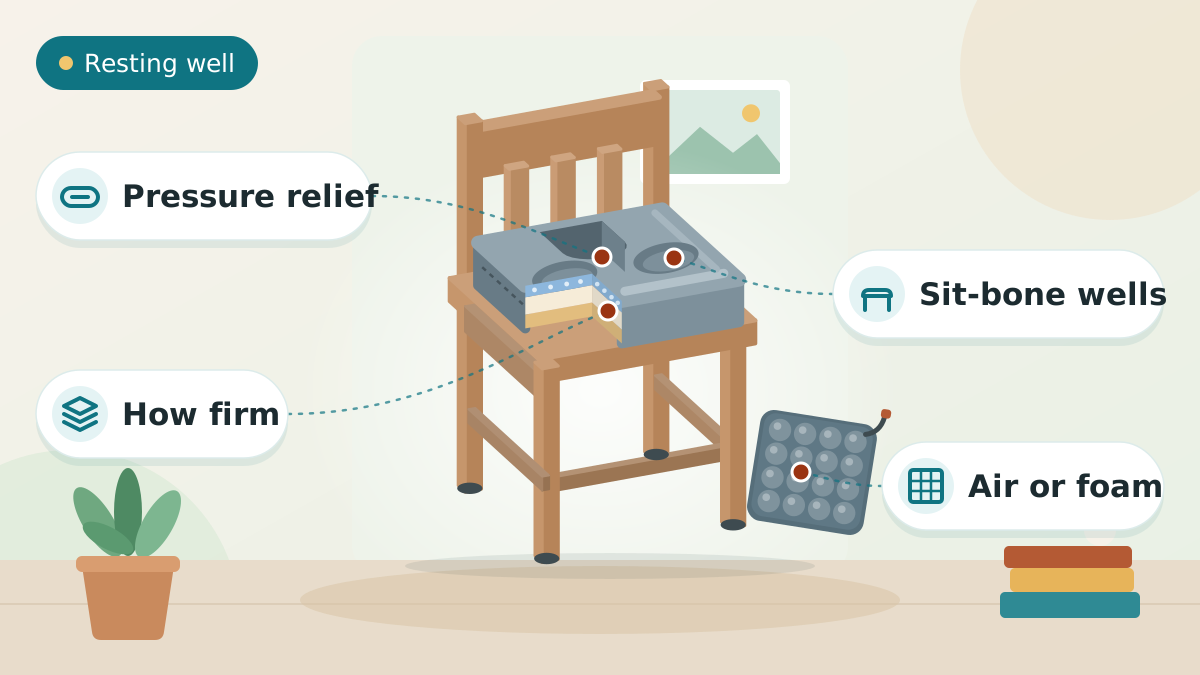
- A comfortable rest spot — a supportive chair with a pressure-relief cushion or a comfortable place to recline, with good support.
- Gentle stretching or breathing — a slow, calming reset that eases stiffness.
- Hydration and a light snack — the afternoon lull can partly be dehydration or hunger; water and a small healthy snack can lift energy.
The nap question: when and how long
Napping is fine and even beneficial for many seniors — the key is doing it in a way that refreshes without stealing from night sleep:
- Keep it short — a brief nap is usually enough to recharge; long naps often cause grogginess and eat into night-time sleep.
- Keep it early — nap in the early afternoon rather than late; a late-afternoon or evening nap is the most likely to disrupt night sleep.
- Rest, don’t force sleep — if sleep doesn’t come, quiet rest still restores; there’s no need to force a nap.
- Notice the effect — if napping is followed by trouble sleeping at night, shorten it, move it earlier, or switch to a non-sleep rest instead.
Good to know
The golden rule of senior napping: short and early. A brief nap in the early afternoon recharges without the grogginess of a long sleep or the night-time disruption of a late one. If a nap leaves the person groggy or wakeful at night, trim it or move it earlier.
Alternatives to napping, and protecting night sleep
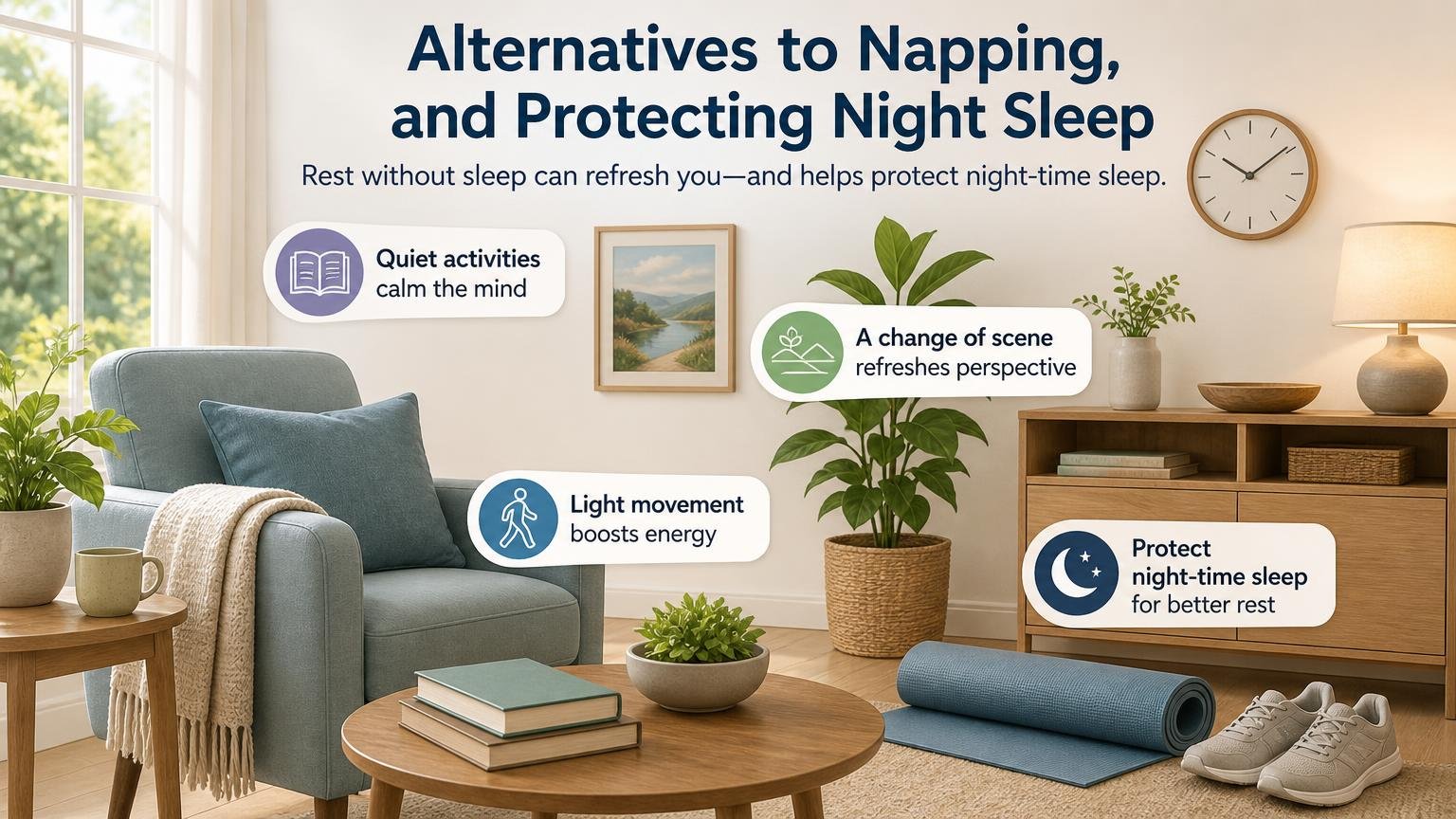
For those who nap poorly or find naps disrupt their nights, rest without sleep works well — and protects night-time sleep:
- Quiet activities — reading, puzzles, gentle hobbies, or listening to music rest the body while keeping the mind lightly engaged.
- A change of scene — sitting outside, by a window, or in a different comfortable spot can refresh without sleep.
- Light movement — a gentle stroll or seated stretches can help lift a mild energy dip without sleep.
- Protect the night — the main risk of afternoon rest is undermining night sleep; keeping naps short and early, and choosing non-sleep rest when needed, keeps the balance right.
Adapting rest, and when to be watchful
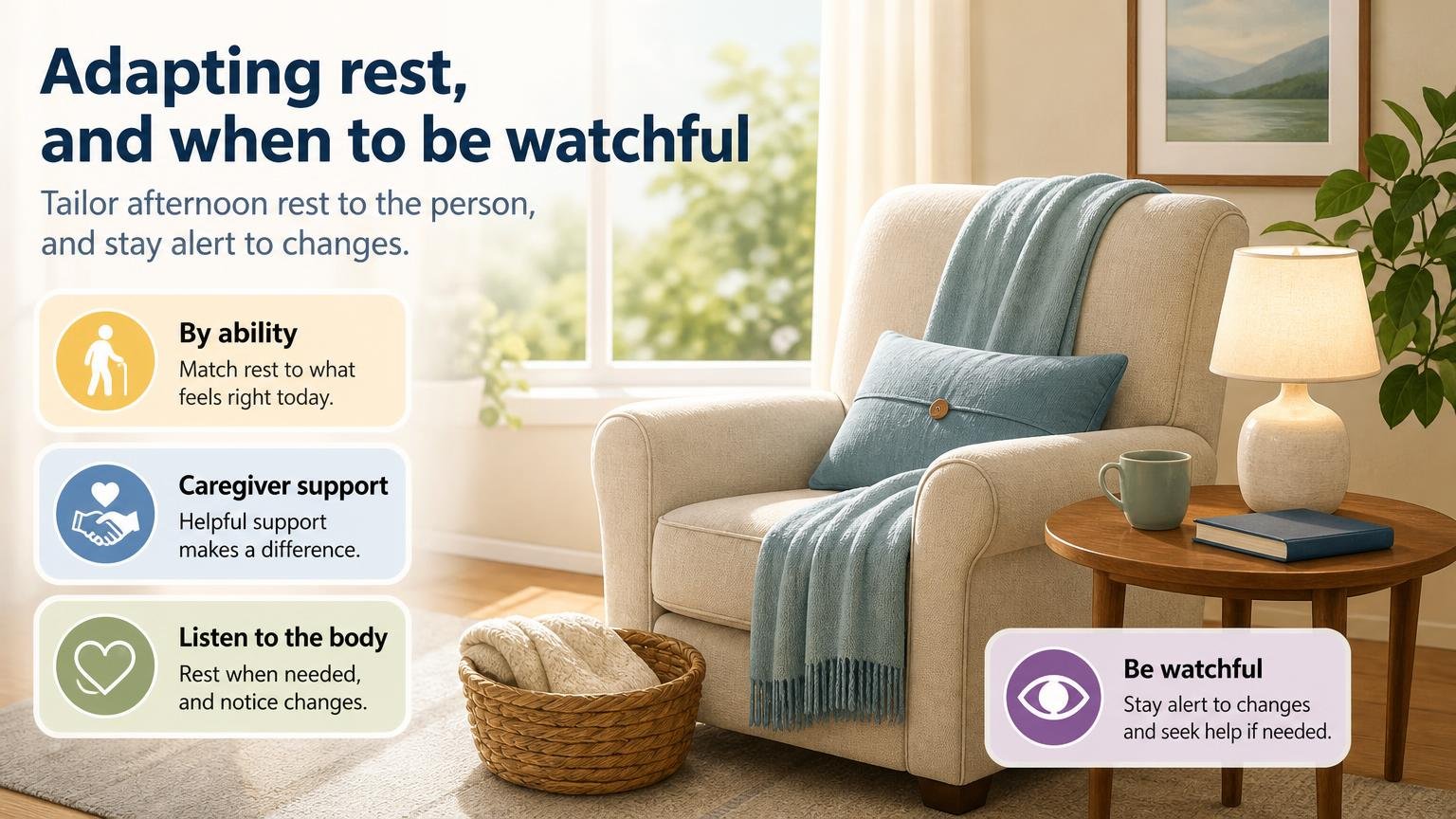
Tailor afternoon rest to the person, and stay alert to changes:
- By ability — those with limited mobility or recovering after a hospital stay may need more rest; balance it with gentle activity to avoid too much sedentary time.
- Caregiver support — help create a calm, comfortable rest, protect it from interruptions, and keep the balance with activity; see caregiver daily routine support.
- Listen to the body — genuine tiredness deserves rest; the aim is responding to real energy needs, not rigid rules.
- Watch for red flags — new, excessive daytime sleepiness, sleeping much more than usual, or a sudden drop in energy can signal a medical issue (from medication effects to infection) and should be discussed with a doctor.
Watch out
A short afternoon rest is healthy, but a marked, new increase in daytime sleeping — or a sudden drop in energy — is different. It can signal a treatable problem such as a medication effect, infection, or another condition, and is worth a prompt medical check. See our guide on why a parent may be sleeping all day.
Frequently asked questions
Should seniors nap in the afternoon?
A short afternoon rest is healthy and normal — the early-afternoon energy dip is part of the body’s natural rhythm. If napping, keep it short and early to recharge without grogginess or harming night sleep. Rest doesn’t have to mean sleep, though; quiet activities restore energy too and suit those who nap poorly. The main thing to avoid is long or late naps that disrupt night-time sleep.
How long should a senior nap for?
Keep naps short — a brief nap is usually enough to recharge, while long naps often cause grogginess and eat into night sleep. Timing matters too: nap in the early afternoon rather than late. If sleep doesn’t come, quiet rest still restores. If a nap leaves the person groggy or unable to sleep at night, shorten it, move it earlier, or switch to a non-sleep rest.
Why do elderly people get tired in the afternoon?
The early-afternoon dip in alertness is a normal part of the circadian rhythm that everyone experiences. For seniors it can feel stronger due to lighter or broken night sleep, the cumulative effect of morning activity, some medications, and the post-lunch lull from digestion. Understanding it as normal helps the person respond with rest or a change of pace rather than worry.
Will an afternoon nap ruin night-time sleep?
Not if it is short and early. Long naps and late-afternoon or evening naps are the ones most likely to disrupt night sleep. A brief nap in the early afternoon usually refreshes without affecting the night. If naps do interfere with sleeping at night, shorten them, move them earlier, or switch to a non-sleep rest such as reading or gentle music.
What can seniors do to rest without napping?
Quiet, restful activities work well and protect night sleep: reading, puzzles, gentle hobbies, or listening to music rest the body while lightly engaging the mind. A change of scene (sitting outside or by a window), light movement like a gentle stroll or seated stretches, and hydration with a light snack can all restore a mild energy dip without sleep.
When is daytime sleepiness in seniors a concern?
While a short afternoon rest is healthy, a marked new increase in daytime sleeping, sleeping much more than usual, or a sudden drop in energy can signal a medical issue — such as a medication effect, infection, or another condition — and should be discussed with a doctor. Sudden excessive sleepiness with confusion or feeling unwell warrants prompt medical attention.
Sources
- National Institute on Aging (NIH). Sleep and Older Adults
- National Institute on Aging (NIH). The Dangers of Polypharmacy and the Case for Deprescribing in Older Adults
