
Chair Yoga for Seniors Over 80: Safe, Gentle Movement

Educational guidance, not medical advice. Prioritize safety, start ultra-gently, and check with a doctor before beginning, especially with health conditions.
Movement matters just as much after 80 — arguably more. Done gently and safely, chair yoga helps the oldest seniors keep the mobility, circulation, and confidence that support independence.
Key takeaways
- Gentle exercise is generally considered beneficial after 80 when done carefully and with a doctor's clearance, and movement can help support mobility, circulation, and independence.
- For the oldest seniors, safety comes first: a very gentle pace, sturdy support, and careful attention to how the body responds.
- An ultra-gentle routine of small, slow movements maintains flexibility and circulation without strain.
- Little and often — brief daily sessions are ideal; there’s no need to do a lot.
- Have support nearby, check with a doctor first, and stop for any pain, dizziness, or distress.
Quick answer
Is chair yoga safe for seniors over 80?
For many seniors over 80, gentle exercise can be safe and valuable with a doctor's clearance, and chair yoga is a lower-risk option because it is seated and low-impact. For the oldest seniors, prioritize safety: a very gentle pace, a sturdy chair, support nearby, and careful attention to how the body responds. An ultra-gentle routine of small, slow movements — breathing, gentle neck and shoulder work, small arm and leg movements, and easy stretches — maintains mobility and circulation without strain. Keep it brief and daily, check with a doctor first, and stop for any pain, dizziness, or distress.
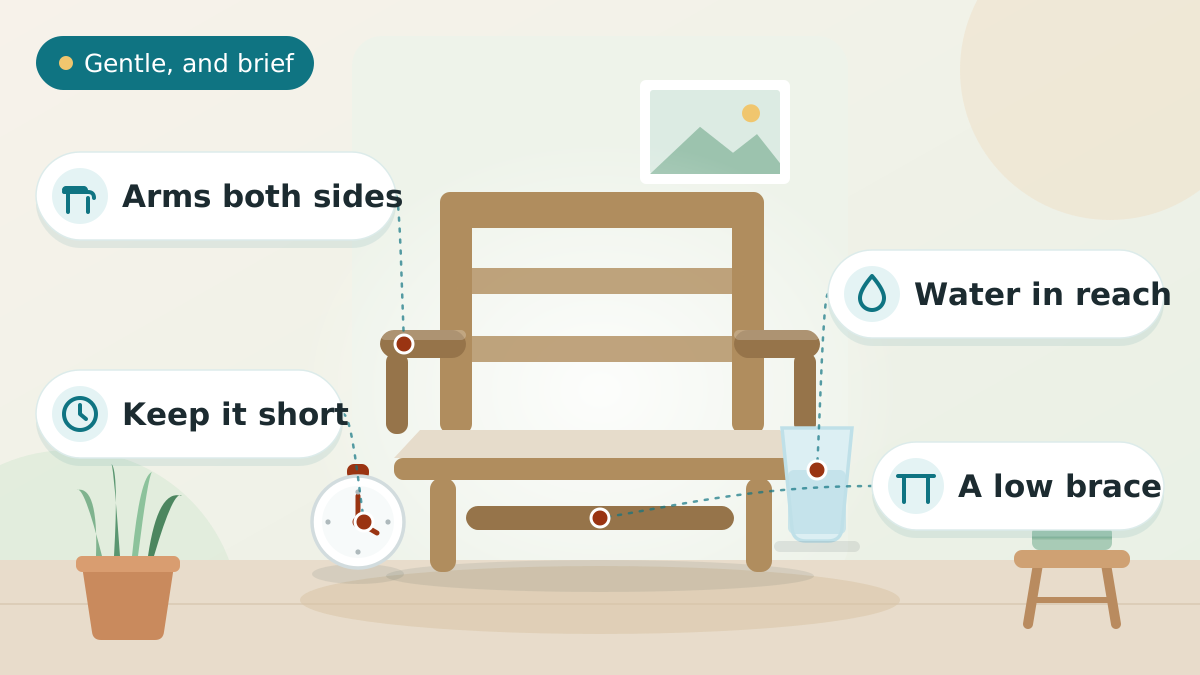
Is exercise safe after 80?
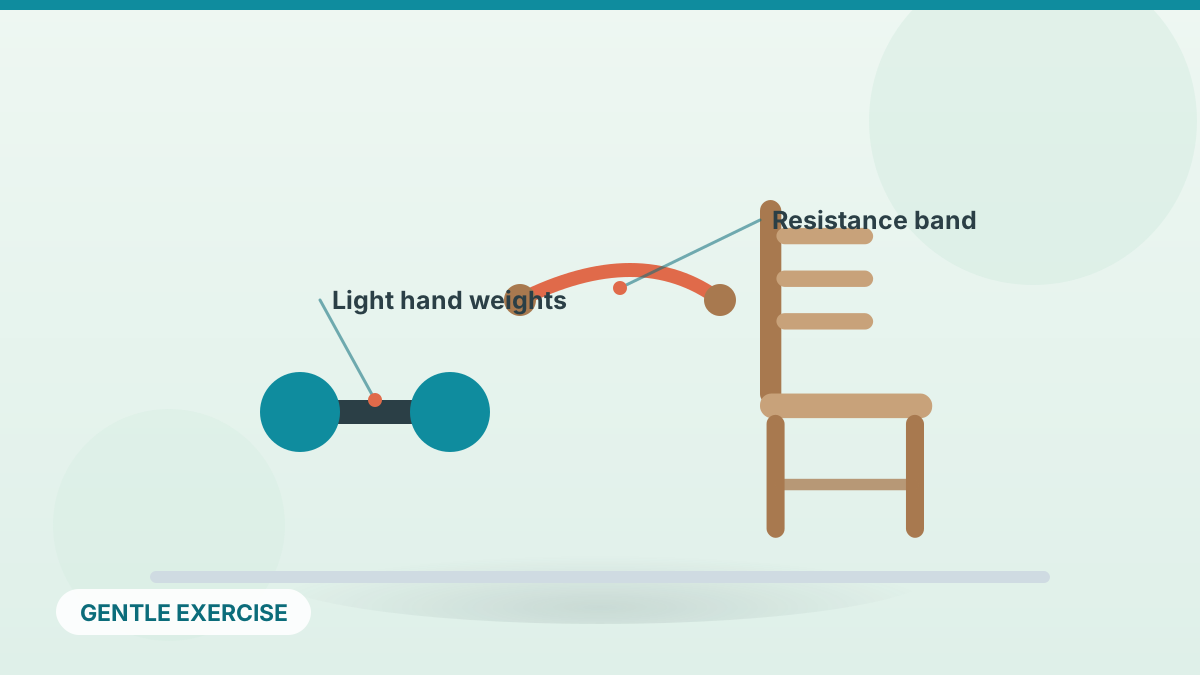
A common worry is that exercise becomes risky or pointless in very old age. In fact, the opposite is true: gentle movement remains safe and genuinely valuable after 80 — arguably more so, because it helps protect the mobility, strength, balance, and circulation that independence depends on, and it lifts mood and wellbeing. Inactivity, not gentle activity, is the greater risk at this age.
The key is *how* it’s done: gently, safely, and within the person’s abilities. Chair yoga fits this perfectly, being seated, low-impact, and easy to scale to a very gentle level. As always for this age group, a doctor’s clearance and a safety-first approach come before starting. This complements our guidance on mobility and fall prevention.
Get the free Chair Yoga Starter
We’ll email you the free Chair Yoga Starter: 12 illustrated seated poses, a one-page wall chart and a 7-day tracker. Plus occasional gentle-movement tips. Unsubscribe anytime.
Bonus: Follow-Along Player
An ElderlyDaily original
Ready for a plan you can follow every day?
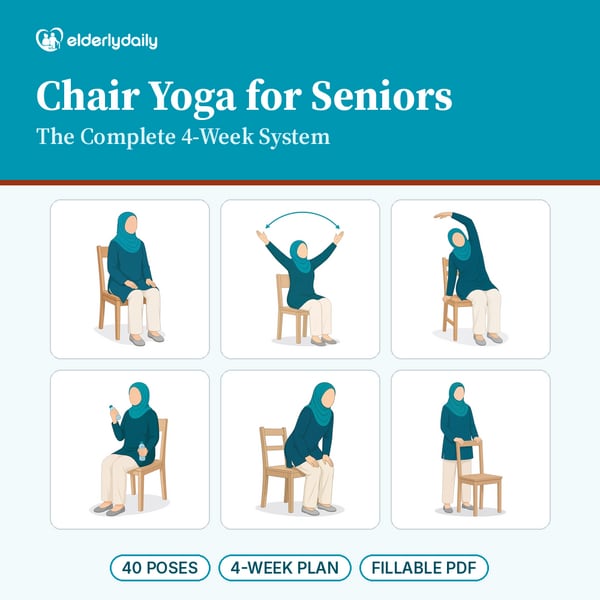
Chair Yoga for Seniors — The Complete 4-Week System
- 40 illustrated poses, each with an easier and a stronger option
- A day-by-day 4-week plan that starts at about 10 minutes a day
- 7 mini-routines for stiff knees, balance, mornings and more
One-off purchase. Instant download.
Fillable PDF · 48 pages · US Letter + A4
Safety first for seniors 80+
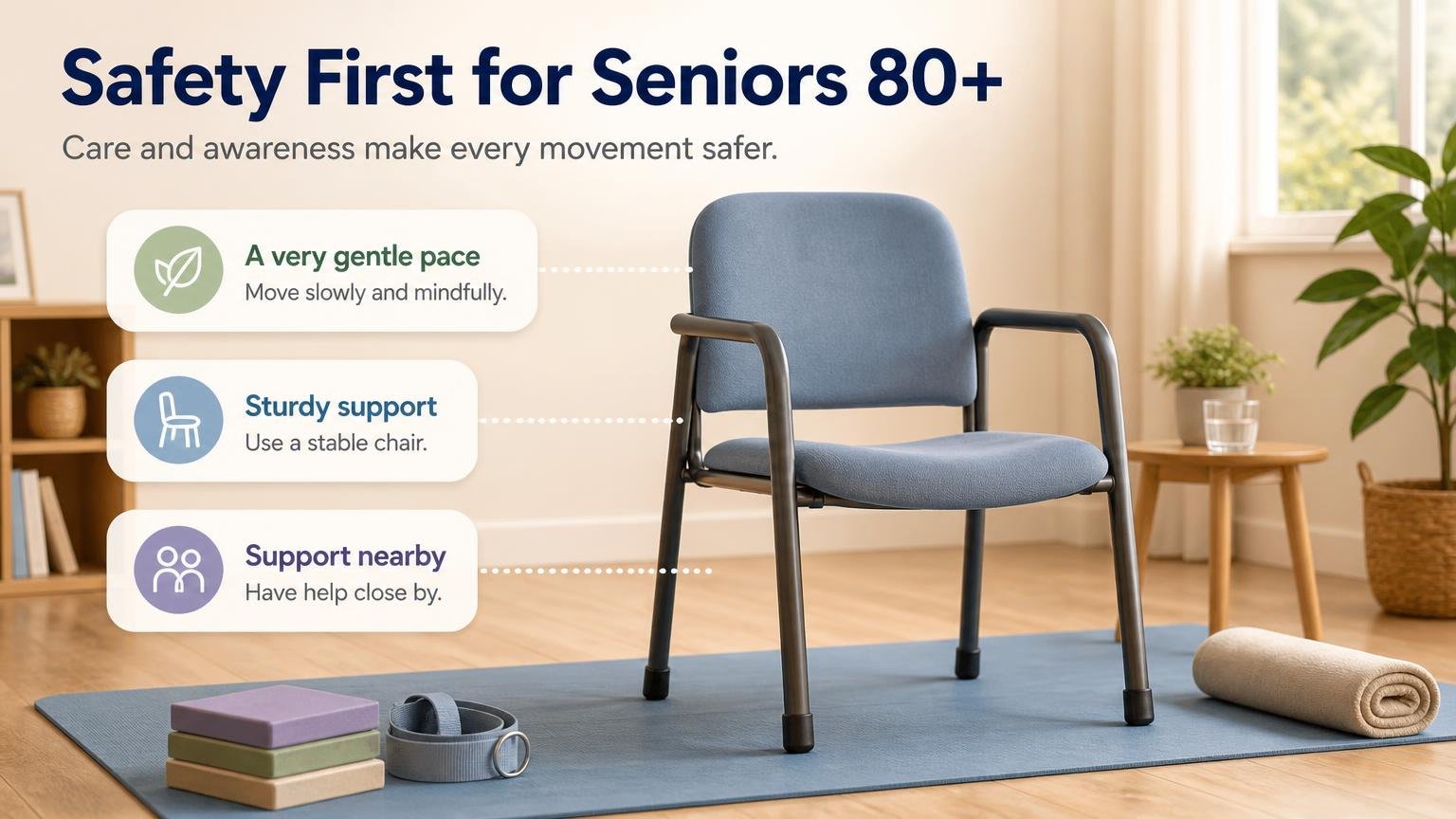
For the oldest seniors, careful safety is the foundation of the whole practice:
- A very gentle pace — small, slow movements with plenty of rest; there’s no rush and no target to hit.
- Sturdy support — a stable chair that won’t tip, good posture, and something to hold if needed.
- Support nearby — a caregiver present, or a medical alert device within reach for those alone.
- Watch the response — stop and rest at the first sign of tiredness, discomfort, or dizziness; ending early is always fine.
- Mind blood pressure and balance — move slowly, avoid sudden position changes, and don’t bend the head far below the heart.
- Doctor’s clearance first — especially important at this age and with any health conditions.
Safety first
For seniors over 80, safety always comes before ambition. A very gentle pace, sturdy support, and someone nearby matter more than how much gets done. Stop and rest at the first sign of tiredness, discomfort, or dizziness — ending a session early is never a problem.
An ultra-gentle chair yoga routine
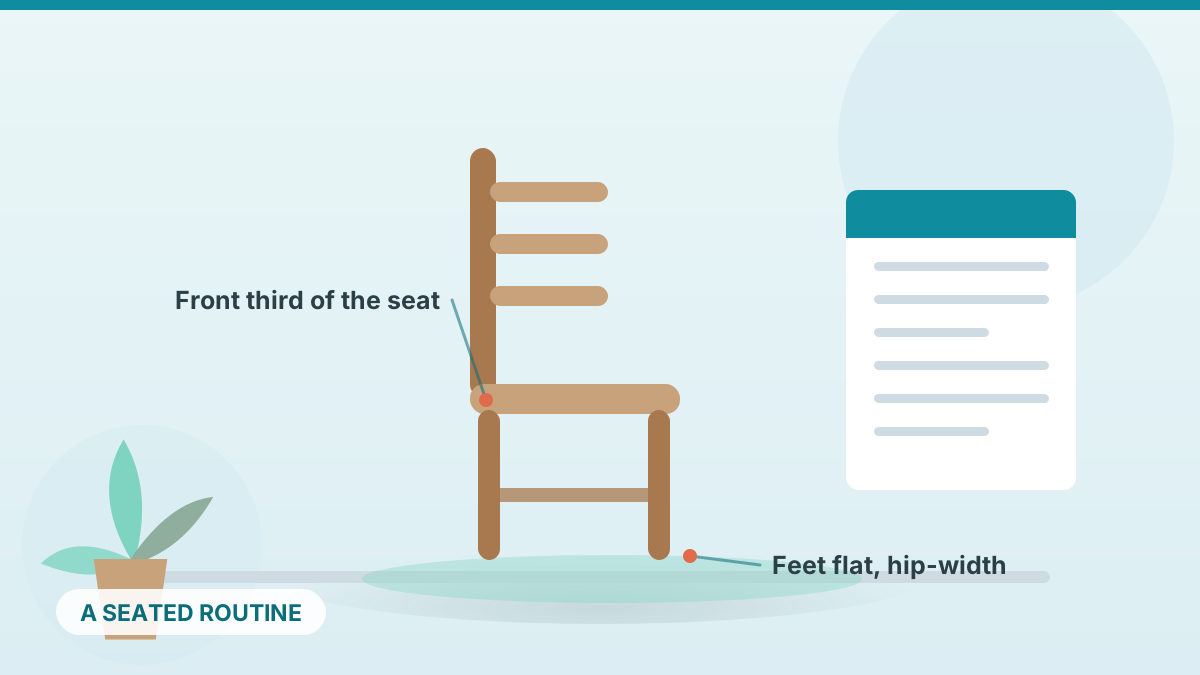
Small, slow movements with rests in between — do only what feels easy and comfortable:
- 1
Settle and breathe
Sit comfortably and supported, feet flat. Take slow, gentle breaths for a minute or two — a calming, valuable start on its own.
- 2
Gentle hands and shoulders
Open and close the hands, circle the wrists softly, then roll the shoulders gently a few times. Rest as needed.
- 3
Easy neck movements
Slowly turn the head to look one way, then the other, and gently lower the chin. Keep movements small and comfortable.
- 4
Small arm raises
Raise the arms only as far as is easy — even a little counts — and lower slowly. Rest between each.
- 5
Gentle leg wake-up
Lift each foot slightly and set it down, alternating, then circle the ankles softly. Small movements to keep the legs and circulation active.
- 6
A soft stretch and rest
Reach the arms up a little for a gentle stretch if comfortable, then rest the hands and finish with a few calming breaths.
How often to practice at 80+
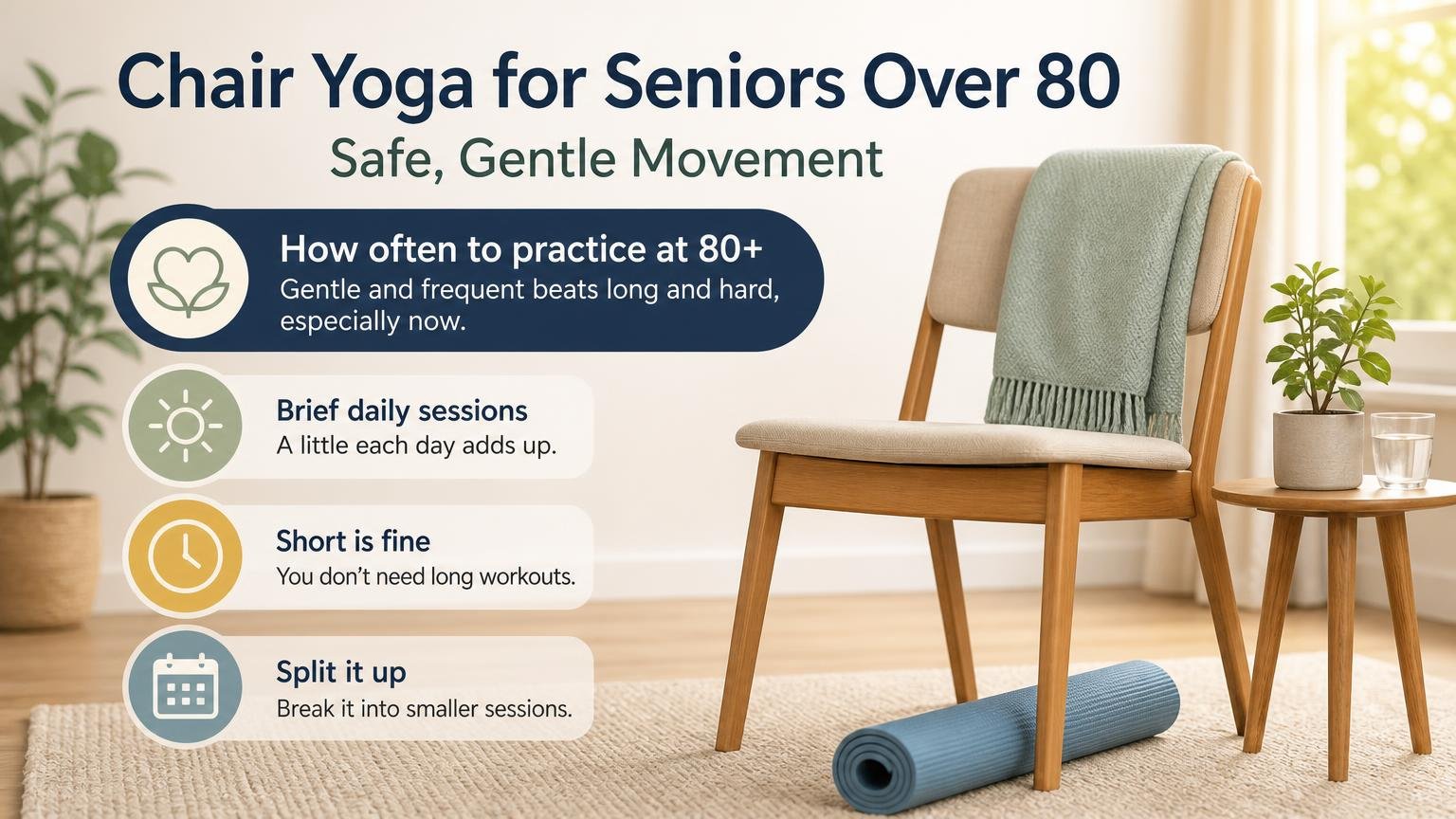
Gentle and frequent beats long and hard, especially now:
- Brief daily sessions — even a few minutes most days is ideal and very achievable.
- Short is fine — there’s no need to do a lot; a little, done gently, maintains mobility and circulation.
- Split it up — a few movements in the morning and a few later is perfectly good.
- Follow energy — do more on good days and less on tired ones, always stopping when the body says so.
Caregiver help and when to stop
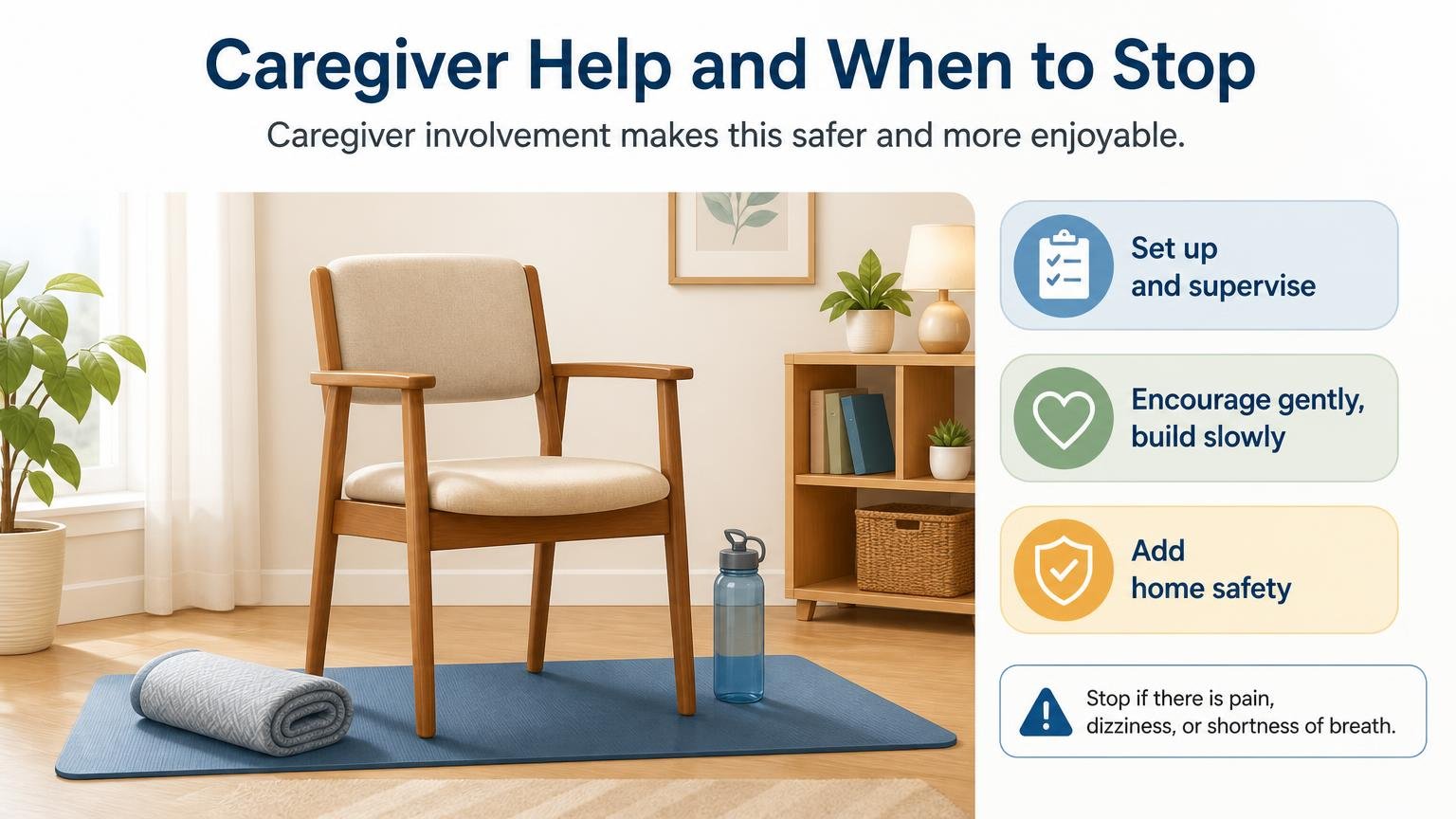
Caregiver involvement makes this safer and more enjoyable:
- Set up and supervise — arrange a safe space and sturdy chair, and stay present for support and reassurance.
- Encourage gently, build slowly — celebrate small efforts, and add movements only as they feel comfortable.
- Add home safety — supportive footwear, grab bars, and a way to call for help support movement and daily life.
- Stop and rest for any pain, dizziness, breathlessness, chest symptoms, or distress.
- Seek advice for new symptoms, a fall, or if unsure whether an activity is suitable — a doctor or physiotherapist can guide a safe program.
For a written version, see the printable chair yoga guide, and for even gentler starts, chair yoga for limited mobility.
Frequently asked questions
Is chair yoga safe for seniors over 80?
Yes — gentle exercise is safe and valuable after 80, and chair yoga is among the safest options because it is seated and low-impact. For the oldest seniors, prioritize safety with a very gentle pace, a sturdy chair, support nearby, and attention to how the body responds. Keep sessions brief and daily, get a doctor’s clearance first, and stop for any pain, dizziness, or distress.
Is it too late to start exercising at 80 or older?
No — it is never too late to benefit from gentle movement. Even starting in very old age helps protect mobility, strength, balance, and circulation, supports independence, and lifts mood. Inactivity is the greater risk. The key is starting gently and safely within your abilities, with a doctor’s clearance, and building up slowly from there.
How much should a senior over 80 exercise?
Little and often is ideal — even a few minutes of gentle movement most days maintains mobility and circulation, and there’s no need to do a lot. You can split it into a few movements in the morning and a few later, and follow your energy, doing more on good days and less on tired ones. Always stop when the body signals it’s time.
What exercises are safe for very elderly seniors?
Ultra-gentle seated movements are safest: slow breathing and good posture, opening and closing the hands, gentle wrist, shoulder, and neck movements, small arm raises, gentle foot lifts and ankle circles, and soft stretches — all with rests between. Move slowly, stay well supported, and do only what feels easy. A physiotherapist can tailor movements to the individual.
What safety precautions matter most for exercising after 80?
A very gentle pace with plenty of rest, a sturdy non-tipping chair and good support, someone nearby (or a medical alert device within reach), and stopping at the first sign of tiredness, discomfort, or dizziness. Move slowly to protect balance and blood pressure, avoid sudden position changes, and get a doctor’s clearance before starting, especially with health conditions.
When should a senior over 80 stop exercising and get help?
Stop and rest for any pain, dizziness, breathlessness, chest symptoms, or distress, and seek help for chest pain or severe symptoms. Seek medical advice for new symptoms, after a fall, or if unsure whether an activity is suitable. At this age, ending a session early is always fine, and safety comes before doing more.
Sources
- National Institute on Aging (NIH). Four Types of Exercise Can Improve Your Health and Physical Ability
- Cochrane. Exercise for preventing falls in older people living in the community (2019)
