
Chair Yoga for Balance and Fall Prevention

Educational guidance, not medical advice. Do standing balance work only with sturdy support and, ideally, supervision; check with a doctor, especially after falls.
Balance can be trained — gently and safely, right from a chair. These seated exercises build the leg strength, core stability, and body awareness that support steadier balance.
Key takeaways
- Balance naturally declines with age, but it can be improved with gentle, regular practice, which can help lower the risk of falls.
- Chair yoga builds the leg strength, core stability, and body awareness that underpin steady balance — safely, from a seated base.
- Start seated and supported; any standing balance work must use a sturdy support and, ideally, supervision.
- Practice little and often — regular short sessions build balance more than occasional long ones.
- Combine with the wider fall-prevention picture — home safety, footwear, vision, and medication review.
Quick answer
Can chair yoga help improve balance and prevent falls?
Balance can be trained at any age, and chair yoga builds the leg strength, core stability, and body awareness that support steadiness, as part of a wider approach to lowering fall risk. Practice seated and supported balance-building exercises (marches, leg lifts, weight shifts, ankle and core work) little and often. Any standing balance work must use a sturdy support and, ideally, supervision. Combine it with the wider fall-prevention approach — home safety, good footwear, and vision and medication review. Check with a doctor, especially after any falls.
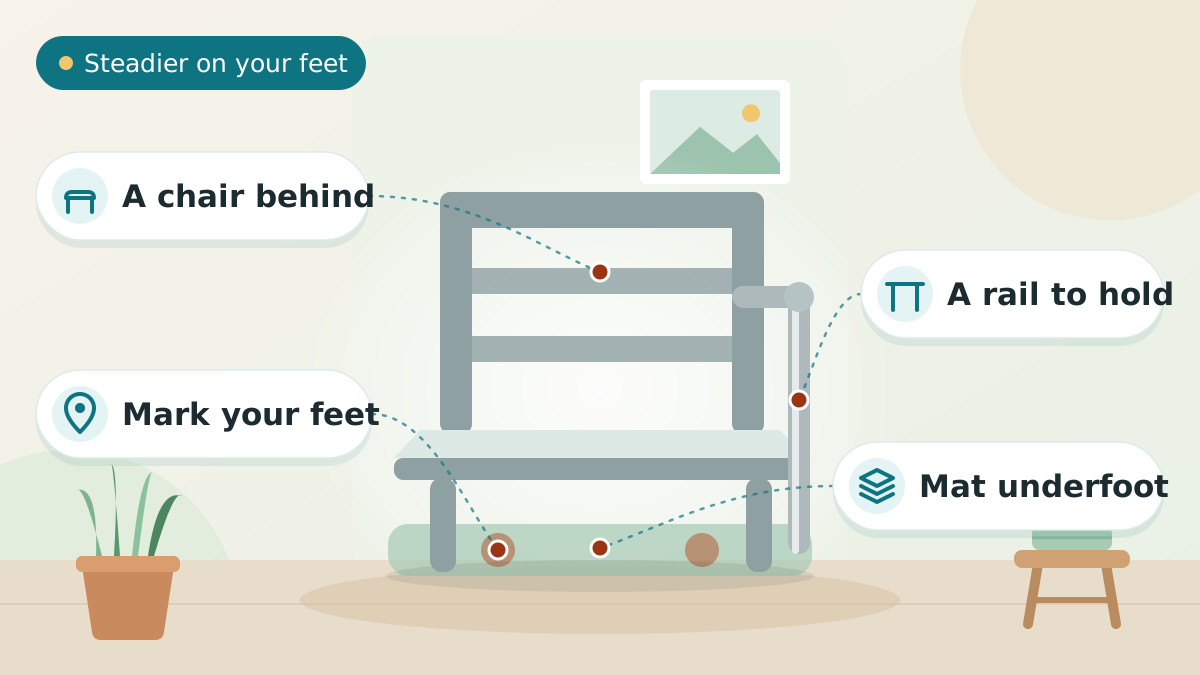
Why balance declines with age
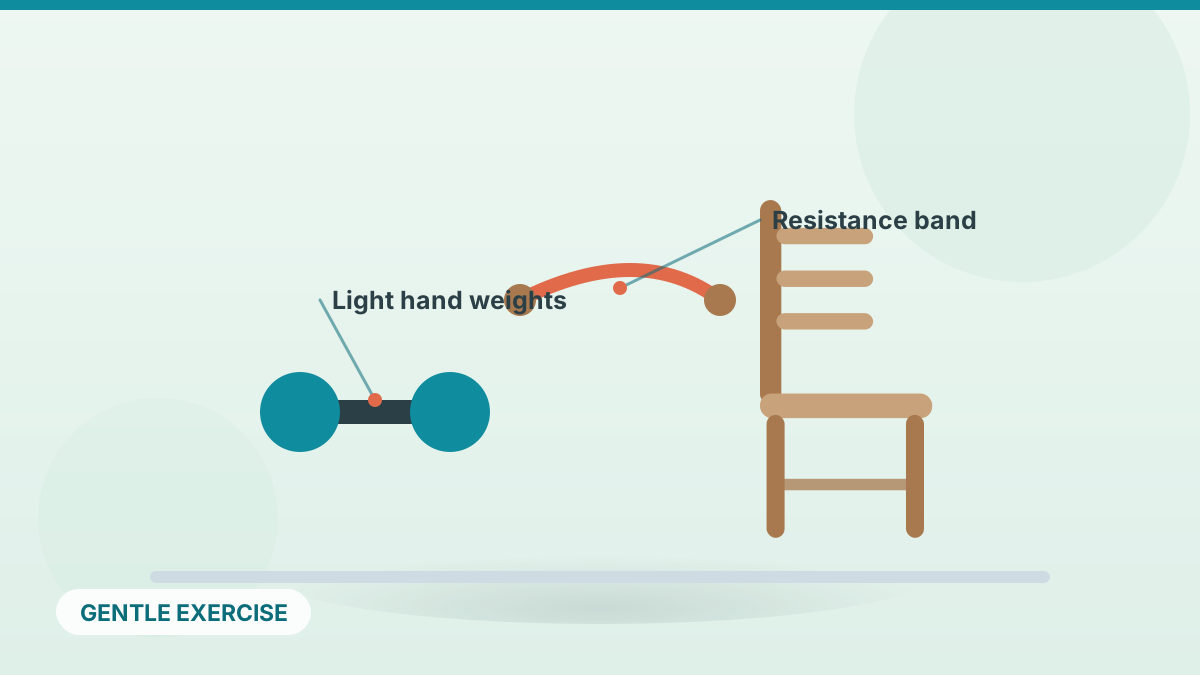
Balance relies on several systems working together — leg and core strength, the inner ear, vision, and the body’s sense of its position (proprioception). With age, each of these can weaken: muscles lose strength, reactions slow, senses dull, and conditions or medications can add to it. The result is reduced steadiness and a higher risk of falls, which are a leading cause of injury in older adults.
The encouraging news is that balance is trainable at any age. Targeted, gentle practice rebuilds the strength, stability, and body awareness that keep a person steady — and chair yoga is a gentler way to start for many people, since it builds these foundations from a supported, seated base.. This sits within the broader mobility and fall prevention approach.

Sponsored Pick
REHAND Ergonomic All-Terrain Folding Cane
Seniors with arthritis or joint pain who want a cushioned, ergonomic grip with all-terrain stability
Check PriceGet the free Chair Yoga Starter
We’ll email you the free Chair Yoga Starter: 12 illustrated seated poses, a one-page wall chart and a 7-day tracker. Plus occasional gentle-movement tips. Unsubscribe anytime.
Bonus: Follow-Along Player
An ElderlyDaily original
Ready for a plan you can follow every day?
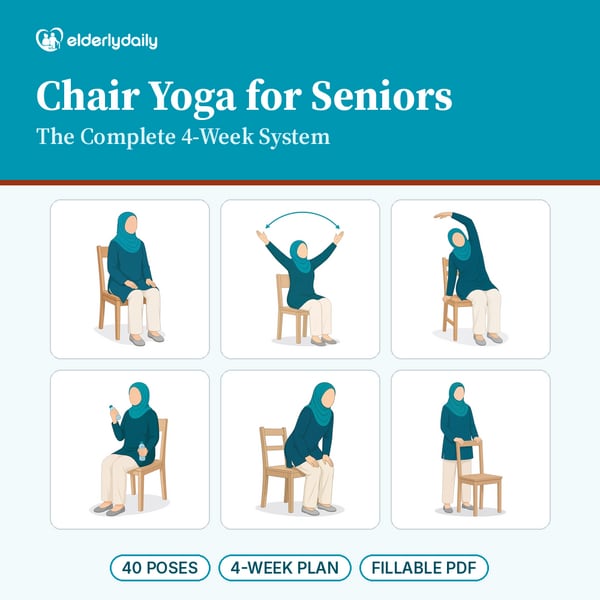
Chair Yoga for Seniors — The Complete 4-Week System
- 40 illustrated poses, each with an easier and a stronger option
- A day-by-day 4-week plan that starts at about 10 minutes a day
- 7 mini-routines for stiff knees, balance, mornings and more
One-off purchase. Instant download.
Fillable PDF · 48 pages · US Letter + A4
How chair yoga improves balance
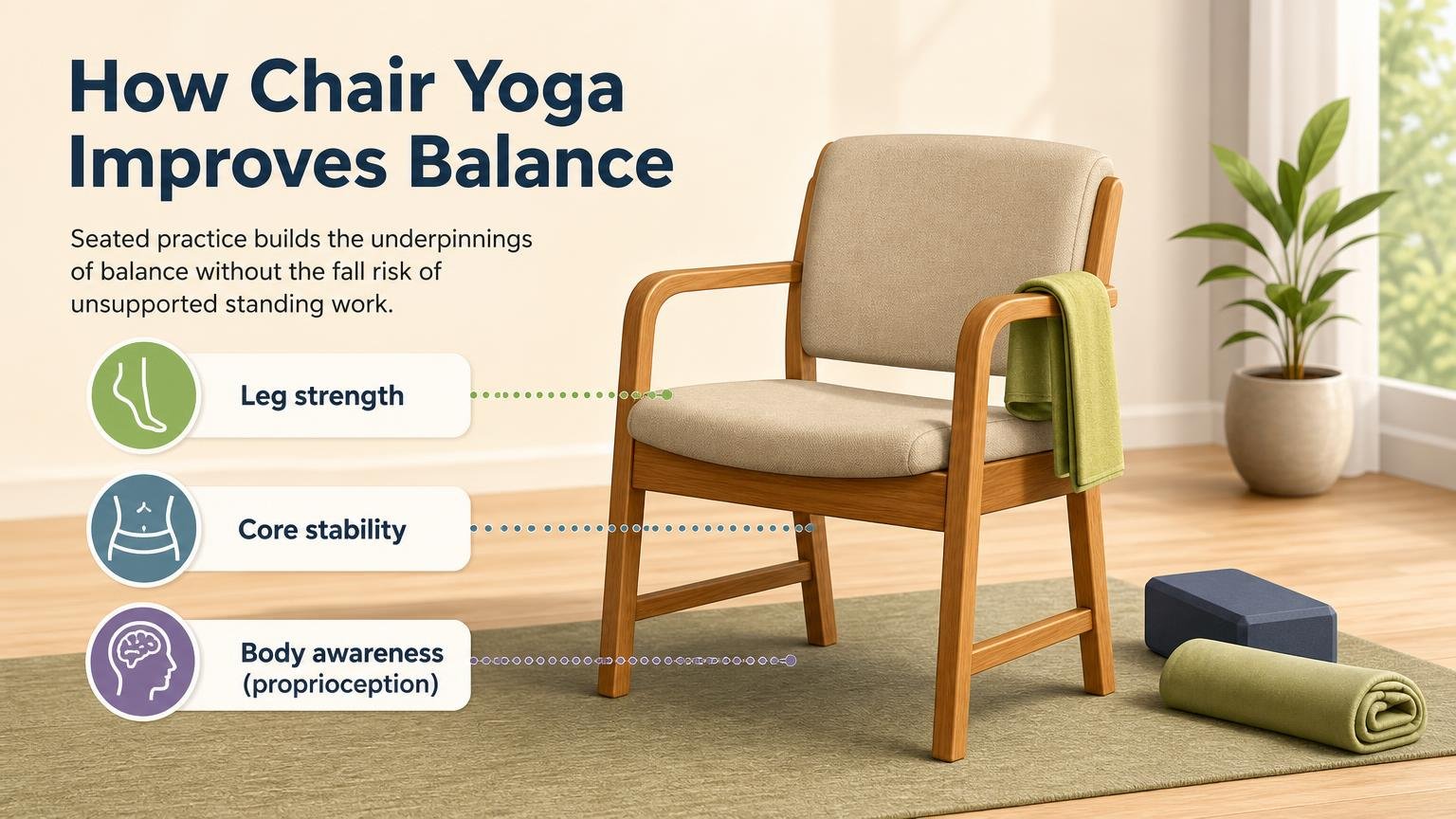
Seated practice builds the underpinnings of balance without the fall risk of unsupported standing work:
- Leg strength — stronger legs are fundamental to standing steady and recovering from a stumble; seated leg work builds this safely.
- Core stability — a stronger core holds the body upright and steady; gentle seated core engagement helps.
- Body awareness (proprioception) — controlled movements and weight shifts sharpen the body’s sense of position.
- Ankle and foot mobility — the ankles make constant small balance adjustments; keeping them mobile and strong helps.
- Confidence — safe, successful movement rebuilds the confidence that fear of falling erodes, which itself improves steadiness.
Seated balance-building exercises
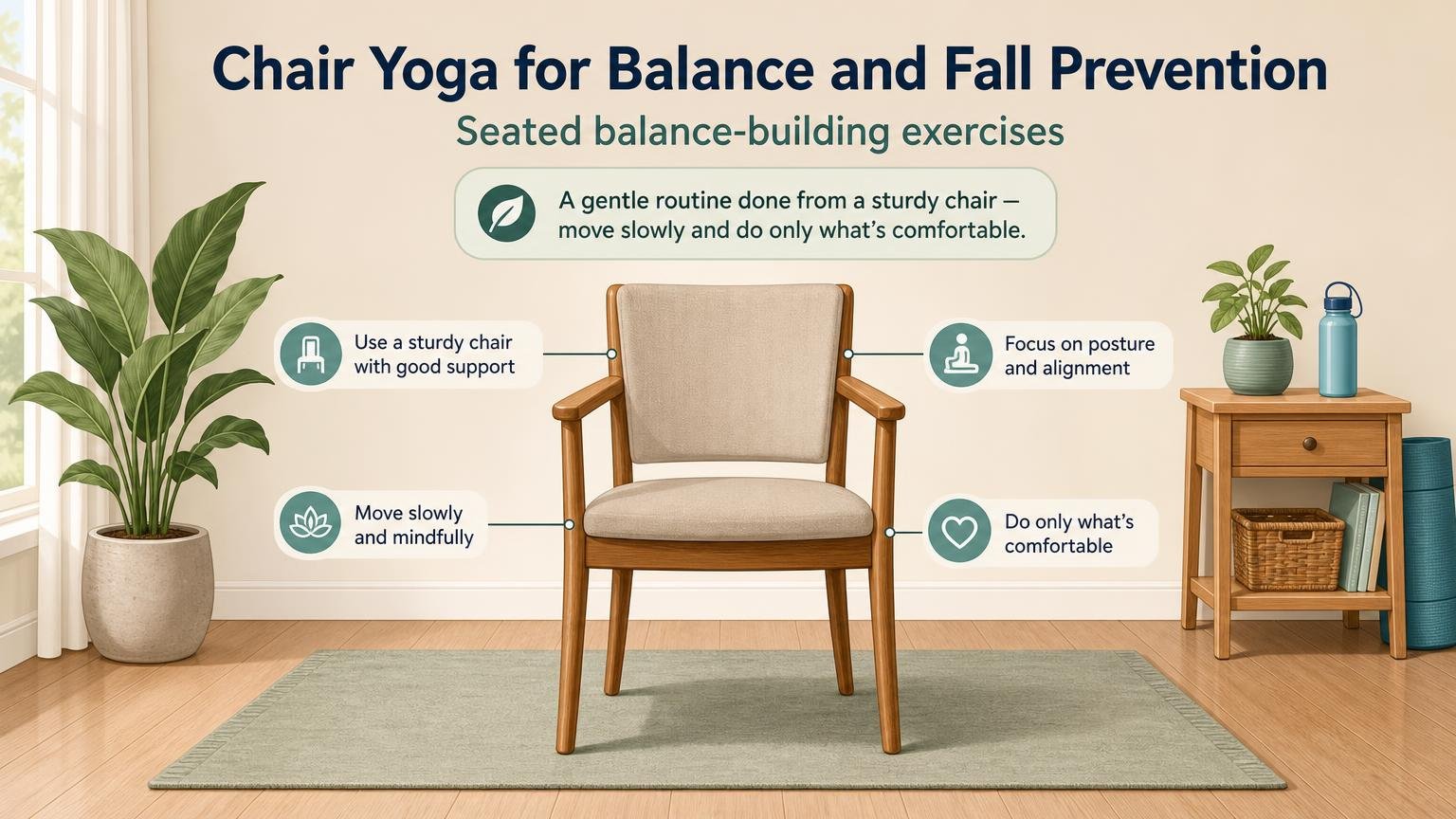
A gentle routine done from a sturdy chair — move slowly and do only what’s comfortable:
- 1
Seated marches
Sitting tall, lift each knee in turn, marching gently in place. Builds hip and leg strength and coordination.
- 2
Seated leg lifts
Straighten one knee to lift the lower leg, hold briefly, and lower. Alternate legs to strengthen the thighs that keep you standing.
- 3
Heel and toe raises
With feet flat, raise the heels, then lower; then raise the toes, and lower. Strengthens the lower legs and ankles used for balance.
- 4
Seated weight shifts
Sitting tall, gently shift your weight from one side to the other, feeling the change through the hips — training the body to control its center of gravity.
- 5
Core engagement
Sit tall and gently draw the belly in, holding for a few breaths, to activate the core that stabilizes the body upright.
- 6
Seated side bends
Reach one arm up and gently over to the side and back, controlled, to build side-body stability. Switch sides.
- 7
Ankle circles
Lift each foot slightly and circle the ankle both ways, keeping the ankles mobile for constant balance adjustments.
- 8
Supported sit-to-stand (if able)
With a sturdy chair and support, slowly stand and sit with control a few times — excellent for the leg strength behind steady standing. Only with support and, if unsteady, supervision.
Safety rules for fall prevention
Because this is about *preventing* falls, safety during practice is paramount:
- Start seated and supported — build strength seated before any standing work.
- Sturdy support for standing — any standing balance exercise must be done holding a stable, fixed support (a sturdy counter or chair), never something that can move.
- Supervision if unsteady — have someone nearby for standing work, especially early on or if there’s a history of falls.
- Move slowly and controlled — no rushing; control is what builds balance safely.
- Good footwear and clear space — supportive, non-slip shoes and a clutter-free area.
- Stop for dizziness, pain, or unsteadiness, and check with a doctor before starting, especially after any falls or with balance conditions.
Safety first
The paradox of balance training is that it can carry fall risk if done unsafely. Build strength seated first, do any standing balance work only with a sturdy fixed support and (if unsteady) someone nearby, and move slowly. After any fall or with a known balance problem, get a doctor or physiotherapist’s guidance first.
A weekly plan, caregiver tips, and mobility support
Make it regular and safe, and know when more support is needed:
- Little and often — short balance sessions most days build steadiness better than occasional long ones; build up gradually.
- Caregiver support — supervise standing work, encourage consistency, keep the space safe, and celebrate progress; see caregiver daily routine support.
- Combine with the full picture — balance work is one part of fall prevention alongside home safety, footwear, vision, and a medication review.
- When to consider mobility support — if unsteadiness persists or falls occur, a cane, walker, or rollator may be needed; a physiotherapist can assess balance and recommend the right support.
- Address night-time risk — many falls happen at night; see nighttime falls in seniors.
Want it written down? See the printable chair yoga routine.
Frequently asked questions
Can chair yoga help improve balance and prevent falls?
Balance can be trained at any age, and chair yoga builds the leg strength, core stability, and body awareness that support steadiness, as part of a wider approach to lowering fall risk. Practice seated, supported balance-building exercises little and often, do any standing balance work only with sturdy support and ideally supervision, and combine it with the wider fall-prevention approach of home safety, footwear, and vision and medication review.
Why does balance get worse with age?
Balance relies on leg and core strength, the inner ear, vision, and the body’s sense of its position, and each of these can weaken with age — muscles lose strength, reactions slow, senses dull, and conditions or medications add to it. The result is reduced steadiness and higher fall risk. Encouragingly, balance is trainable at any age with gentle, regular practice.
What seated exercises improve balance?
Seated marches, leg lifts, heel and toe raises, gentle weight shifts, core engagement, side bends, and ankle circles all build the strength, stability, and body awareness behind good balance. Supported sit-to-stands are especially valuable for the leg strength behind steady standing. These build the foundations of balance safely from a chair before any standing work.
Is balance training safe for seniors who have fallen?
It can be very beneficial, but safety is paramount: build strength seated first, do any standing balance work only with a sturdy fixed support and someone nearby, and move slowly and with control. Anyone with a history of falls or a balance condition should check with a doctor or physiotherapist first, who can assess balance and guide a safe, appropriate program.
How often should seniors do balance exercises?
Little and often is best — short balance sessions most days build steadiness more effectively than occasional long ones, and consistency is what produces lasting improvement. Start gently and build up gradually. Because balance improves with regular practice over weeks, making it a small daily habit, ideally as part of a routine, gives the best results.
When should a senior consider a mobility aid for balance?
If unsteadiness persists despite practice, or if falls occur, a mobility aid such as a cane, walker, or rollator may be needed to move safely. A physiotherapist can assess the person’s balance and recommend and fit the right aid. Balance exercises and a well-chosen mobility aid work together — the exercises build steadiness while the aid provides safe support.
Sources
- Cochrane. Exercise for preventing falls in older people living in the community (2019)
- CDC. Facts About Falls — Older Adult Fall Prevention
- National Institute on Aging (NIH). Four Types of Exercise Can Improve Your Health and Physical Ability
