
Chair Yoga for Seniors With Limited Mobility

Educational guidance, not medical advice. Start very gently within a comfortable range; check with a doctor or physiotherapist, especially after illness or surgery.
When standing and walking are hard, ordinary exercise can feel out of reach. Chair yoga meets a person exactly where they are — gentle, seated movement that rebuilds strength, circulation, and confidence.
Key takeaways
- Chair yoga makes movement possible when standing and walking are difficult — it meets the person where they are.
- Being seated removes the balance and weight-bearing demands that make standard exercise feel impossible.
- Even very gentle seated movement improves circulation, flexibility, strength, and confidence.
- Start tiny and build slowly — small, achievable movements, celebrated, rebuild both ability and confidence.
- Keep it safe and supported, and seek professional advice for a tailored program after illness or surgery.
Quick answer
Can seniors with limited mobility do chair yoga?
Yes — chair yoga is ideal for limited mobility because it is done seated, removing the balance and weight-bearing demands that make standing exercise feel impossible. Even very gentle seated movements — breathing, hand and arm movements, gentle marches, ankle circles, and small stretches — improve circulation, flexibility, strength, and confidence. The key is to start tiny and build slowly, staying within a comfortable range and well supported. Check with a doctor or physiotherapist for a tailored approach, especially after illness or surgery.
Why standard exercise can feel impossible
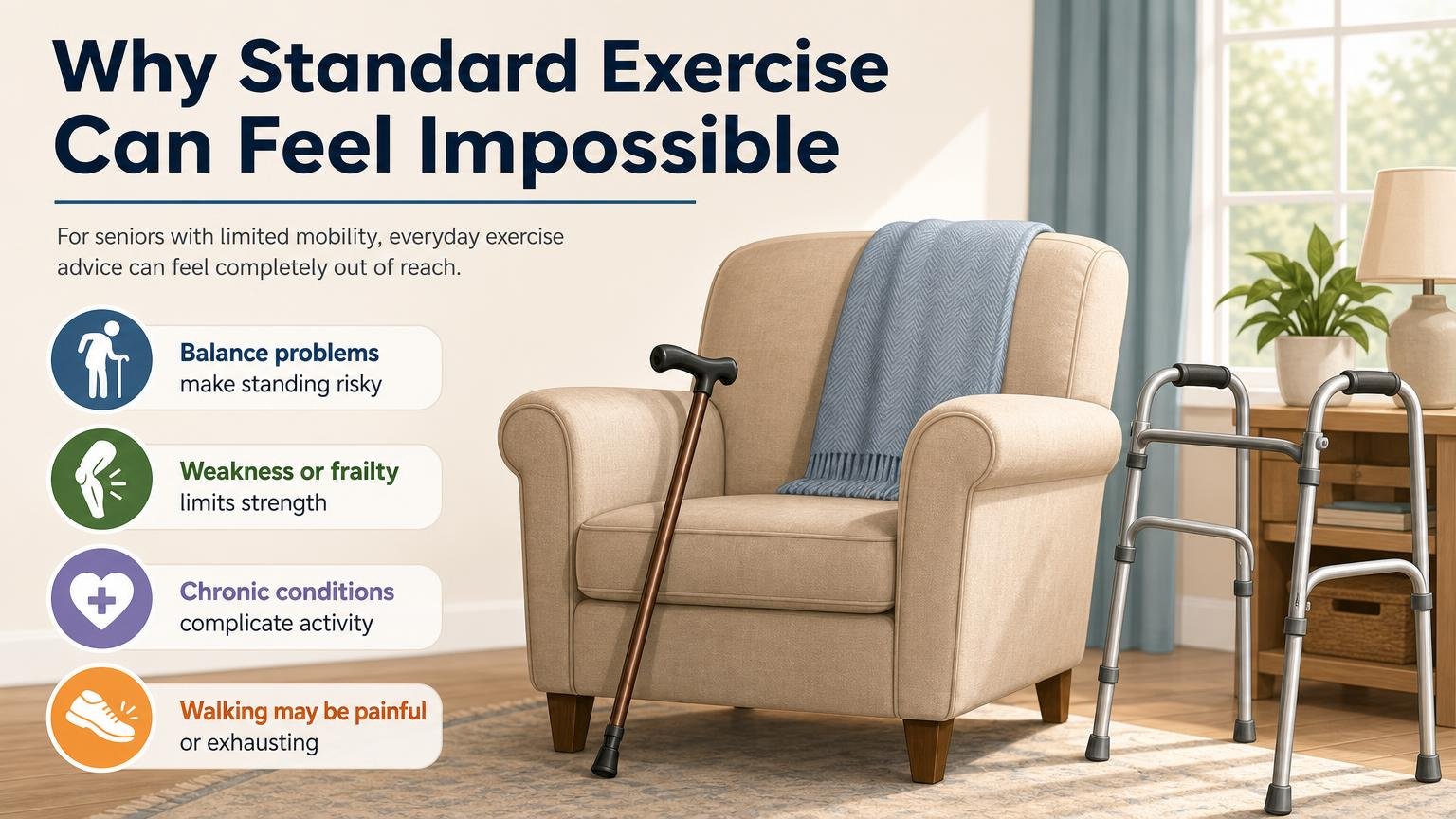
For a senior with limited mobility — from frailty, weakness after a hospital stay, chronic conditions, or balance problems — ordinary exercise advice can feel completely out of reach. Standing exercises demand balance and leg strength that may not be there; walking may be tiring or unsafe; and the fear of falling can make any movement feel risky. It’s easy to conclude that exercise simply isn’t possible.
But movement is still both possible and valuable — it just needs to start from where the person actually is. That’s exactly what chair yoga offers, and this guide shows how to begin gently and build from there. It complements our guides on mobility aids and rebuilding strength.

Get the free Chair Yoga Starter
We’ll email you the free Chair Yoga Starter: 12 illustrated seated poses, a one-page wall chart and a 7-day tracker. Plus occasional gentle-movement tips. Unsubscribe anytime.
Bonus: Follow-Along Player
An ElderlyDaily original
Ready for a plan you can follow every day?
Chair Yoga for Seniors — The Complete 4-Week System
- 40 illustrated poses, each with an easier and a stronger option
- A day-by-day 4-week plan that starts at about 10 minutes a day
- 7 mini-routines for stiff knees, balance, mornings and more
One-off purchase. Instant download.
Fillable PDF · 48 pages · US Letter + A4
What makes chair yoga different
Chair yoga removes the very barriers that make other exercise feel impossible:
- Seated support — the chair takes the balance and weight-bearing demands off the person, which can make movement feel safer and less worrying.
- Start from any level — movements can be as small and gentle as needed, and scaled up over time.
- Every joint, gently — it works the whole body (neck, shoulders, arms, torso, legs, ankles) through comfortable ranges.
- Real benefits — even gentle seated movement improves circulation, eases stiffness, maintains and builds strength, and lifts mood and confidence.
- Accessible and low-risk — no equipment beyond a sturdy chair, and safe for most people with medical clearance.
Gentle starter movements
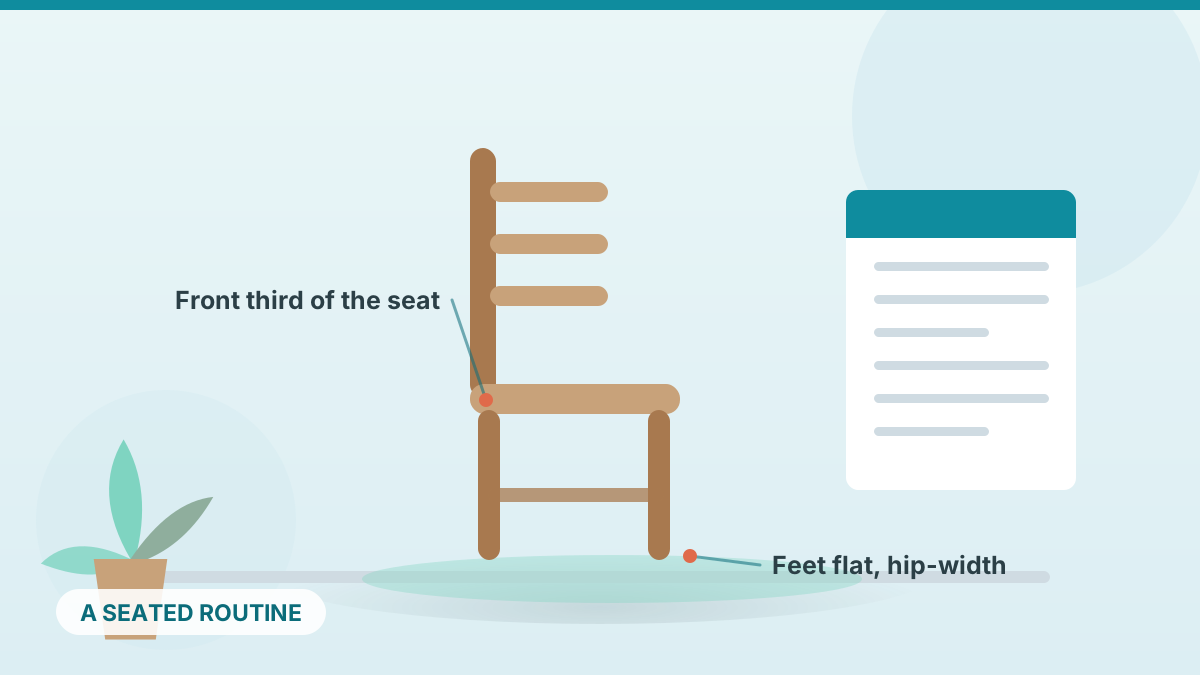
Begin with tiny, achievable movements — do only what’s comfortable, and rest whenever needed:
- 1
Breathing and posture
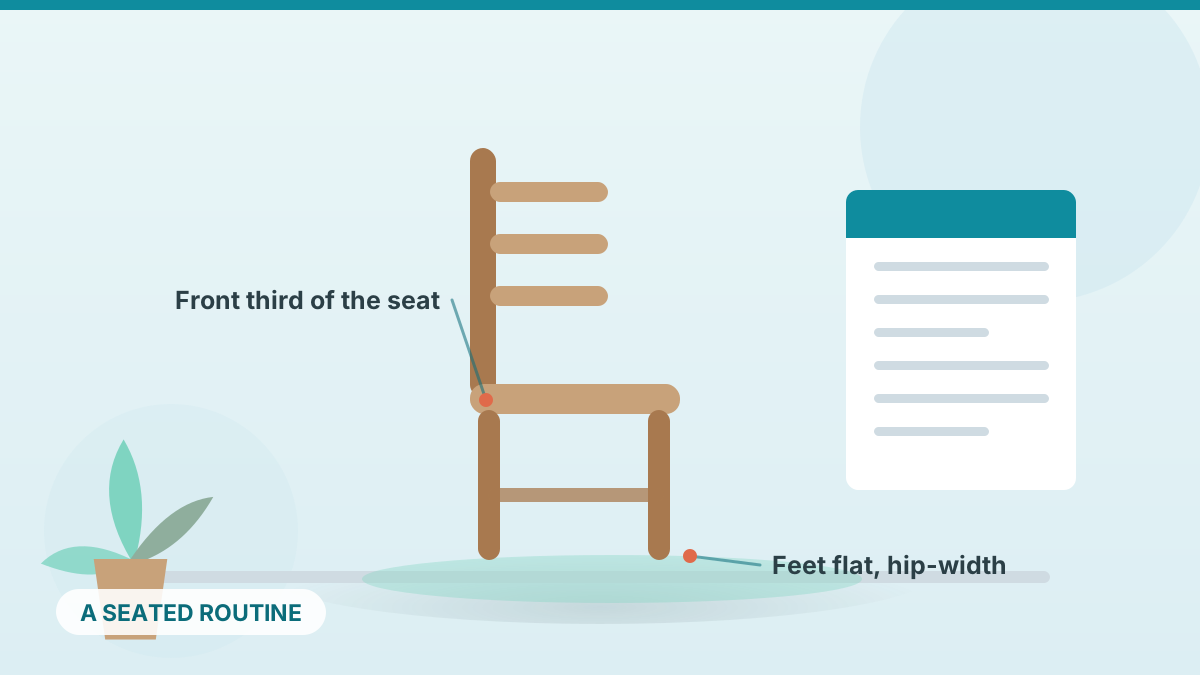
Simply sitting tall with feet flat and taking slow, deep breaths is a valuable start — it improves posture, calms the mind, and prepares the body.
- 2
Hands and wrists
Open and close the hands, then gently circle the wrists both ways. Small movements that improve circulation and dexterity.
- 3
Shoulders and arms
Roll the shoulders gently, then raise the arms as far as is comfortable — even a small lift counts. Rest between repetitions.
- 4
Gentle neck release
Slowly turn the head side to side and lower the chin gently, easing tension without straining.
- 5
Seated marches and ankle circles
Lift each knee a little, even just an inch, alternating gently. Then circle the ankles and point and flex the feet to wake the legs.
- 6
Small seated stretches
Reach one arm up gently, or ease into a soft side stretch, only as far as comfortable. Finish with easy breaths.
Safety rules for limited mobility
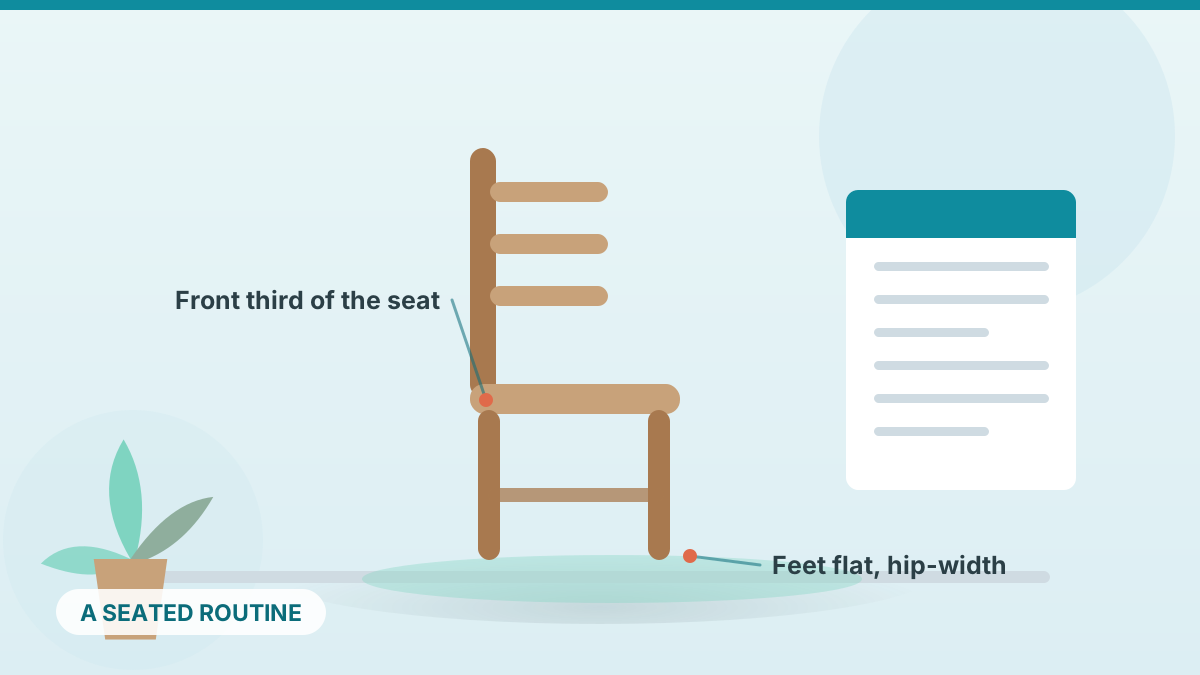
Extra care keeps things safe when mobility and strength are reduced:
- Start very gently — tiny movements are a real and worthwhile start; there’s no minimum to reach.
- Stay well supported — a sturdy chair, good sitting posture, and help nearby if transfers or balance are a concern.
- Move within comfort — never force, and rest as often as needed; stopping to breathe is fine.
- Have help on hand — a caregiver nearby, and a medical alert device for those exercising alone.
- Get medical clearance — especially after illness, surgery, or with significant conditions; a physiotherapist can tailor movements.
- Stop for pain, dizziness, breathlessness, or chest symptoms.
Good to know
There is no movement too small to count. For someone with very limited mobility, sitting tall and breathing, opening and closing the hands, or lifting a knee an inch are genuine, worthwhile exercise — and the foundation everything else builds on. Start there, and celebrate it.
Building confidence slowly
Progress here is as much about confidence as ability:
- Celebrate every effort — showing up and doing a little is a genuine win; positive reinforcement matters enormously.
- Build gradually — add a repetition, a little range, or a new movement only as it feels comfortable.
- Consistency over intensity — a few gentle minutes daily rebuilds both strength and belief over time.
- Ease fear of falling — supported, successful movement is one of the best ways to rebuild the confidence that fear of falling erodes.
- Caregiver role — patient encouragement, help with setup and transfers, and doing it together; see caregiver daily routine support.
For a written routine, see the printable chair yoga guide; for the gentlest progressions, chair yoga for seniors over 80 and bed-to-chair exercises may help.
Frequently asked questions
Can seniors with limited mobility do chair yoga?
Yes — chair yoga is ideal for limited mobility because it is done seated, removing the balance and weight-bearing demands that make standing exercise feel impossible. Even very gentle seated movements improve circulation, flexibility, strength, and confidence. The key is to start tiny and build slowly, staying within a comfortable range and well supported, with medical clearance where appropriate.
What exercise can you do if you can’t stand or walk well?
Seated exercise — like chair yoga and bed-to-chair movements — lets you work the whole body without standing: breathing and posture, hand and arm movements, gentle neck and shoulder work, seated marches, ankle circles, and small stretches. These improve circulation, flexibility, and strength. Start very gently, stay supported, and ideally get a physiotherapist to tailor movements to your ability.
What makes chair yoga suitable for limited mobility?
Being seated removes the balance and weight-bearing demands that make other exercise feel risky or impossible, so there’s no fear of falling during movement. Movements can start as small and gentle as needed and scale up over time, working every joint through a comfortable range. It needs no equipment beyond a sturdy chair and is low-risk for most people with medical clearance.
How do I start exercising with very limited mobility?
Start tiny — sitting tall and breathing, opening and closing the hands, rolling the shoulders, or lifting a knee an inch are all genuine, worthwhile starts, with no minimum to reach. Stay well supported in a sturdy chair with help nearby, move only within comfort, rest as needed, and build up gradually. Get medical clearance, especially after illness or surgery.
Is seated exercise actually beneficial?
Yes — even gentle seated movement delivers real benefits: better circulation, reduced stiffness, maintained and improving flexibility and strength, and a genuine lift in mood and confidence. For someone with limited mobility, seated exercise is often the most practical and sustainable way to stay active, and it can be a stepping stone to more as strength and confidence grow.
How can seniors build confidence to move again?
Supported, successful movement is the key — starting with tiny, achievable movements in a safe seated position lets a person experience success without fear, which gradually rebuilds confidence. Celebrate every effort, build up slowly, stay consistent, and have a caregiver nearby for reassurance. This is one of the best ways to counter the fear of falling that can keep people from moving.
Sources
- National Institute on Aging (NIH). Four Types of Exercise Can Improve Your Health and Physical Ability
- Cochrane. Exercise for preventing falls in older people living in the community (2019)
- JAMA (Kortebein et al., 2007). Effect of 10 Days of Bed Rest on Skeletal Muscle in Healthy Older Adults
