
Printable Morning Chair Yoga for Seniors (PDF Chart)

Educational guidance, not medical advice. Check with a doctor before starting, move within a comfortable range, and stop for pain, dizziness, or chest symptoms.
Bodies are stiffest first thing in the morning. ⬇ Download the free printable morning chair yoga PDF — a few minutes on waking eases that stiffness and sets a steady tone for the day.
Key takeaways
- A free printable PDF chart gives you the full 6-step wake-up sequence to print and follow at home — download it here.
- The body is stiffest in the morning — gentle movement on waking eases stiffness and improves circulation.
- A short wake-up sequence loosens the joints top to bottom and helps you feel steadier for the day.
- Chair yoga is generally gentle and accessible — done seated from a sturdy chair, easy on the joints; check with a doctor first.
- Keep it short and consistent — a few minutes each morning beats an occasional long session.
- Pair morning movement with a safe morning routine and steady footwear for the day.
Quick answer
What is a good morning chair yoga routine for seniors?
A gentle wake-up sequence from a sturdy chair: begin with a minute of easy breathing, then gentle neck and shoulder rolls, arm raises, a soft seated twist and side stretch, and seated marches with ankle circles to wake the legs — finishing with a full-body stretch. Move slowly within a comfortable range, keep feet flat and back supported, and stop for any pain or dizziness. Just a few minutes eases morning stiffness and steadies you for the day. Check with a doctor before starting.
Why morning movement matters
After a night’s rest, the body is naturally stiff — joints are tight, muscles are cold, and balance can feel less sure in those first minutes. Gentle morning movement counters all of this: it eases stiffness, warms up the joints, boosts circulation, and helps a person feel steadier and more confident as they start the day. It also lifts mood and energy, setting a positive tone.
Chair yoga is a gentle way to do this, and seated movement can suit people who feel stiff, though anyone with balance concerns should check with a doctor first. It pairs naturally with a calm morning routine and the broader benefits of daily movement.
Get the free Chair Yoga Starter
We’ll email you the free Chair Yoga Starter: 12 illustrated seated poses, a one-page wall chart and a 7-day tracker. Plus occasional gentle-movement tips. Unsubscribe anytime.

Bonus: Follow-Along Player
An ElderlyDaily original
Ready for a plan you can follow every day?
Chair Yoga for Seniors — The Complete 4-Week System
- 40 illustrated poses, each with an easier and a stronger option
- A day-by-day 4-week plan that starts at about 10 minutes a day
- 7 mini-routines for stiff knees, balance, mornings and more
One-off purchase. Instant download.
Fillable PDF · 48 pages · US Letter + A4
Get the free printable morning chair yoga PDF
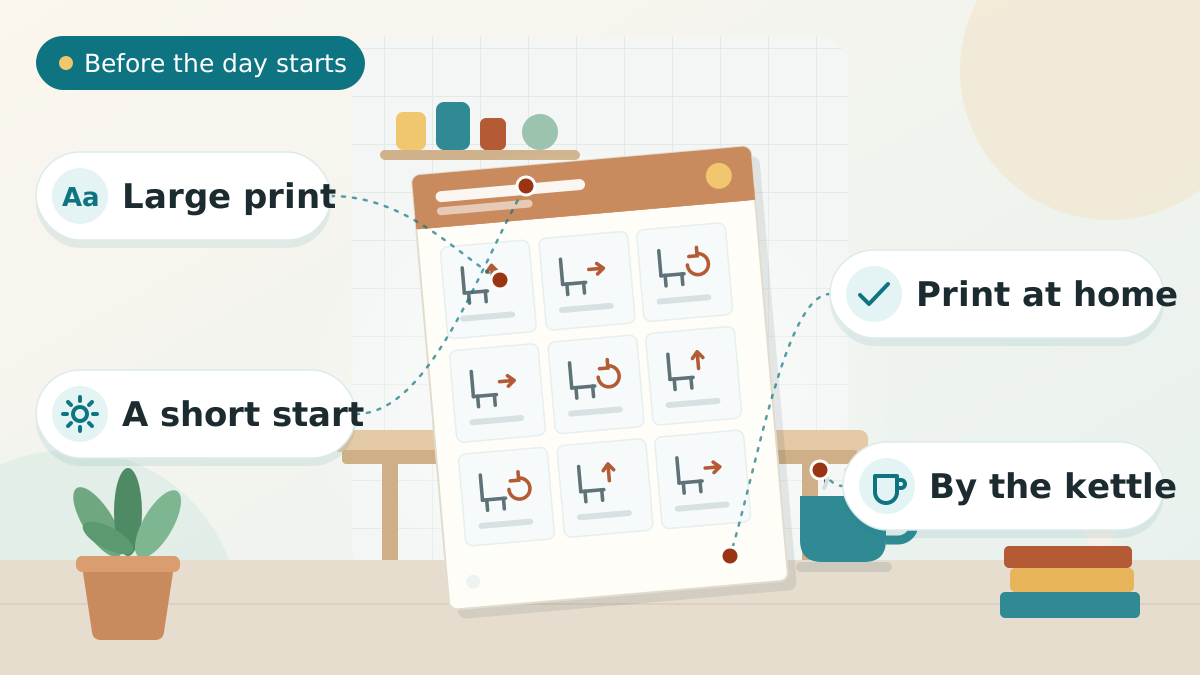
The easiest way to build a morning habit is to have the sequence printed and in front of you. Our free printable morning chair yoga PDF lays out the full 6-step wake-up sequence you can print and follow at home — no screen needed first thing in the morning.
Print it and keep it by the bed or the chair you use each morning. Download the printable PDF here.
Morning safety basics
A gentle start is a safe start, especially first thing:
- Rise fully first — get out of bed carefully (sitting on the edge before standing), and be properly awake before starting.
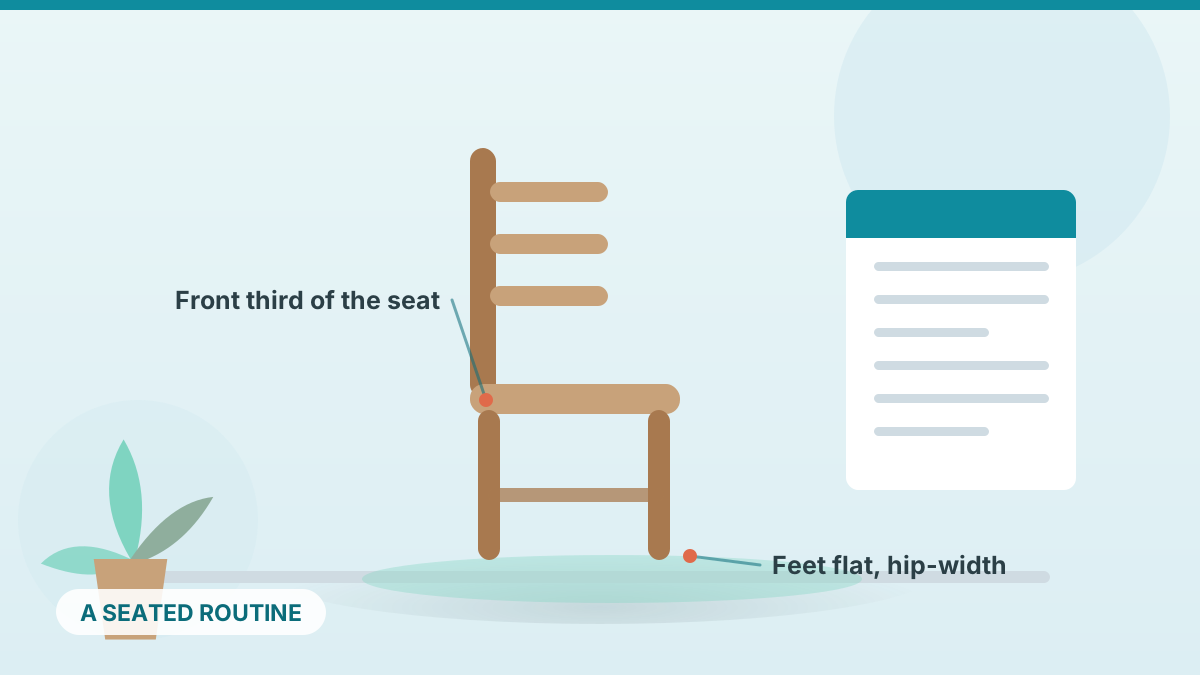
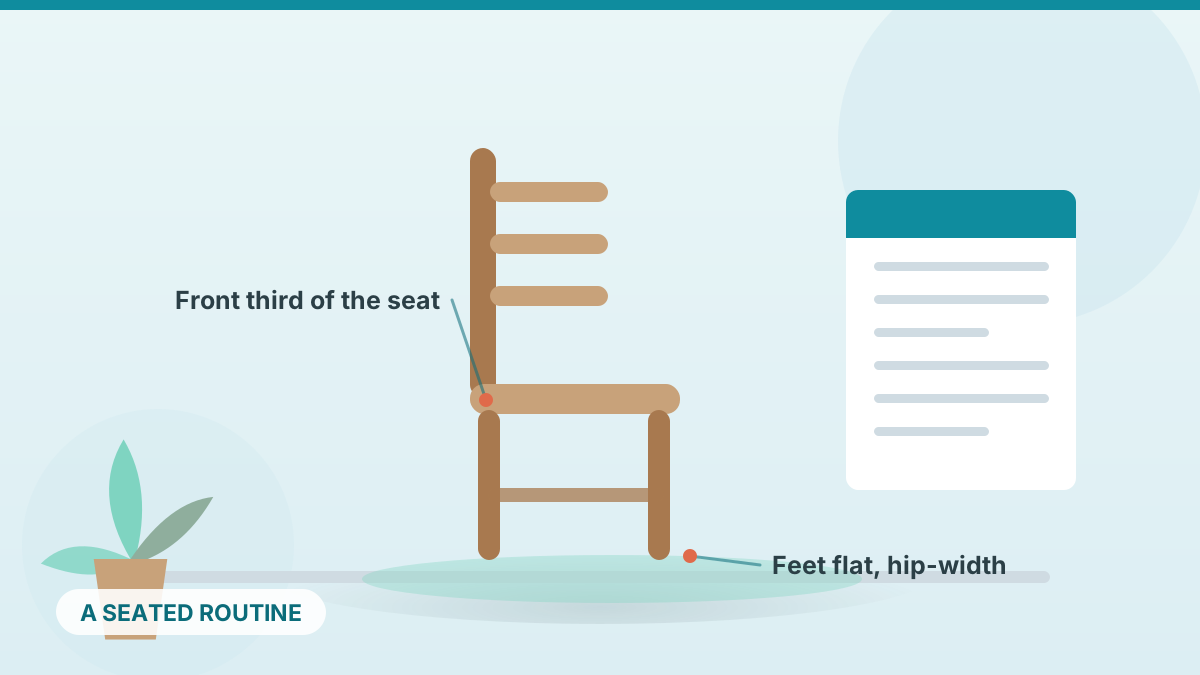
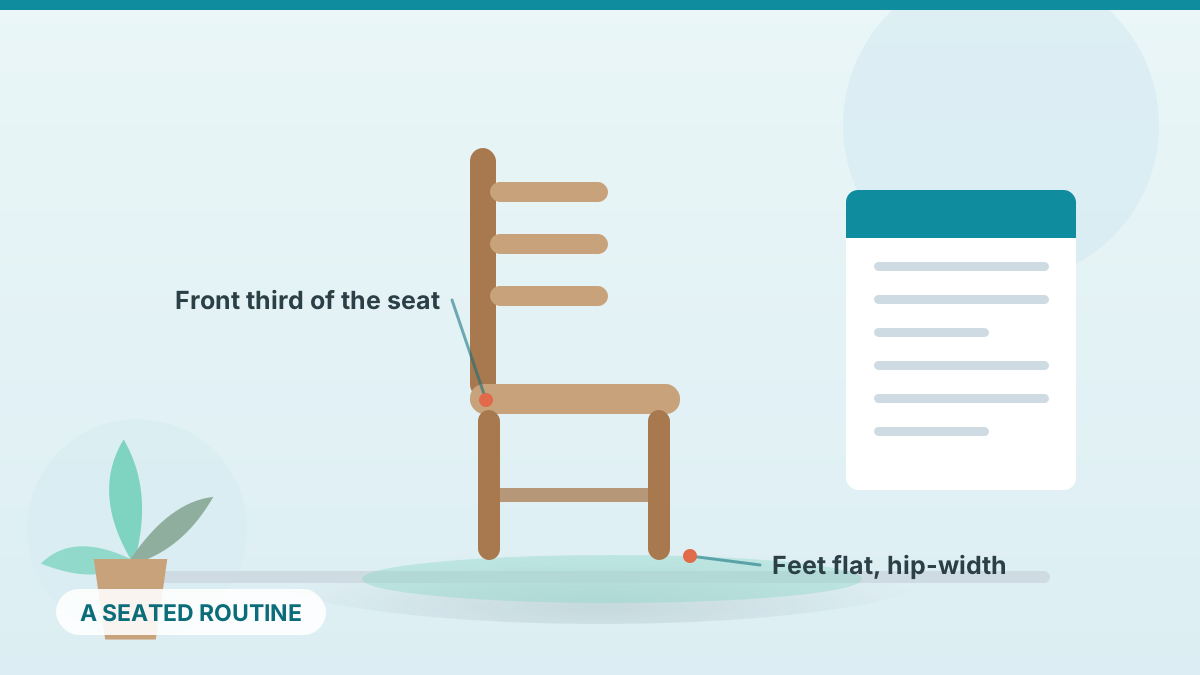
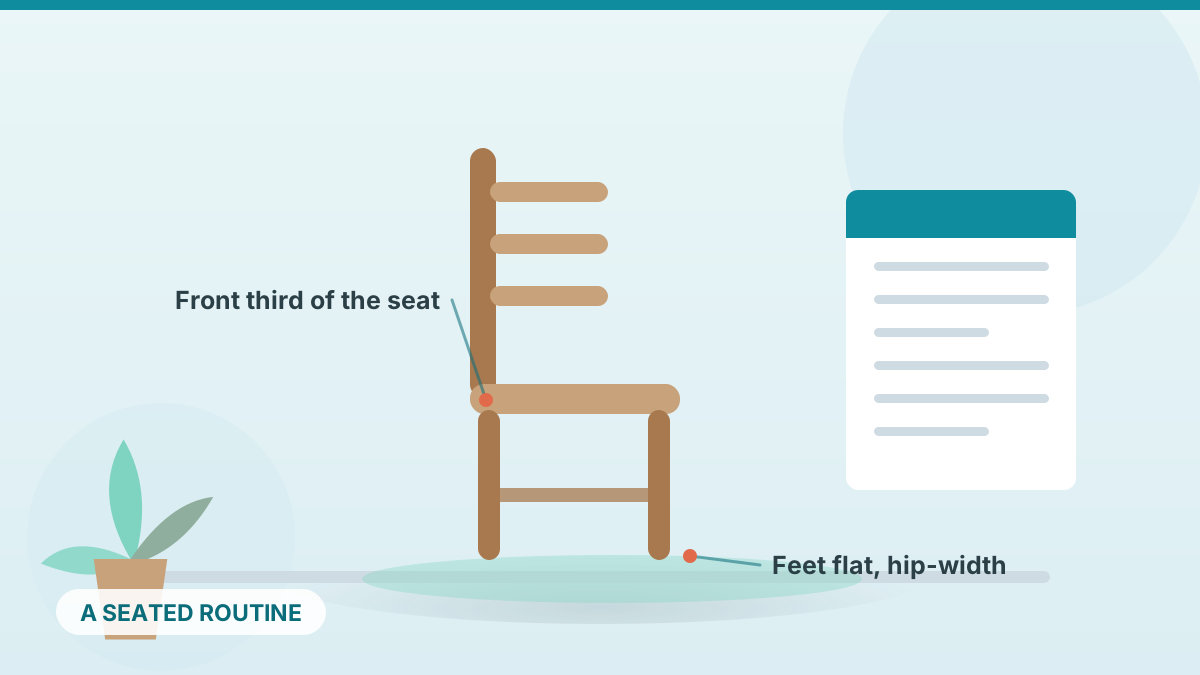
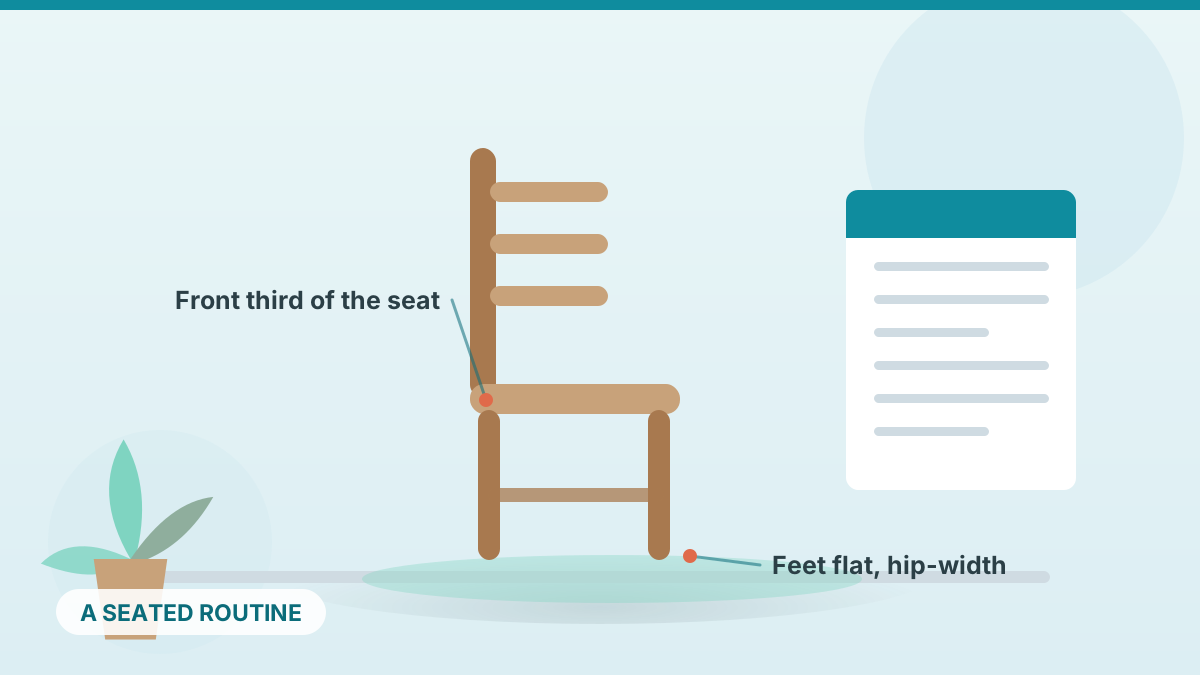
- Use a sturdy chair — a stable, non-rolling chair on a non-slip floor, feet flat, back supported.
- Go extra gently in the morning — the body is stiff, so ease in slowly and never force a stretch.
- Breathe steadily and move within a comfortable range.
- Check with your doctor first if you have health conditions or are new to exercise.
Watch out
Stop and rest if anything hurts, and seek help for chest pain, severe breathlessness, or dizziness. Mornings can bring a dip in blood pressure on rising, so if you feel lightheaded, sit quietly until it passes before continuing.
A gentle morning wake-up sequence
A soft, joint-by-joint sequence to ease into the day — slow and comfortable throughout:
- 1
Wake-up breaths
Sit tall, feet flat, hands on thighs. Take slow, deep breaths for a minute, gently waking the body and calming the mind.
- 2
Neck and shoulders
Lower the chin and turn the head slowly side to side, then roll the shoulders backward a few times to release overnight tension.
- 3
Arm raises
Raise both arms out and up as far as is comfortable, then lower. Repeat a few times to open the chest and shoulders.
- 4
Gentle twist and side stretch
Turn gently through the torso to each side, then reach one arm up and over to stretch each side of the body.
- 5
Wake the legs
March gently in place with alternating knee lifts, then circle each ankle, to get circulation moving in the legs and feet.
- 6
Full-body stretch and finish
Reach both arms up for a gentle stretch, then relax the hands down and take a few final easy breaths, ready for the day.
How long and how often
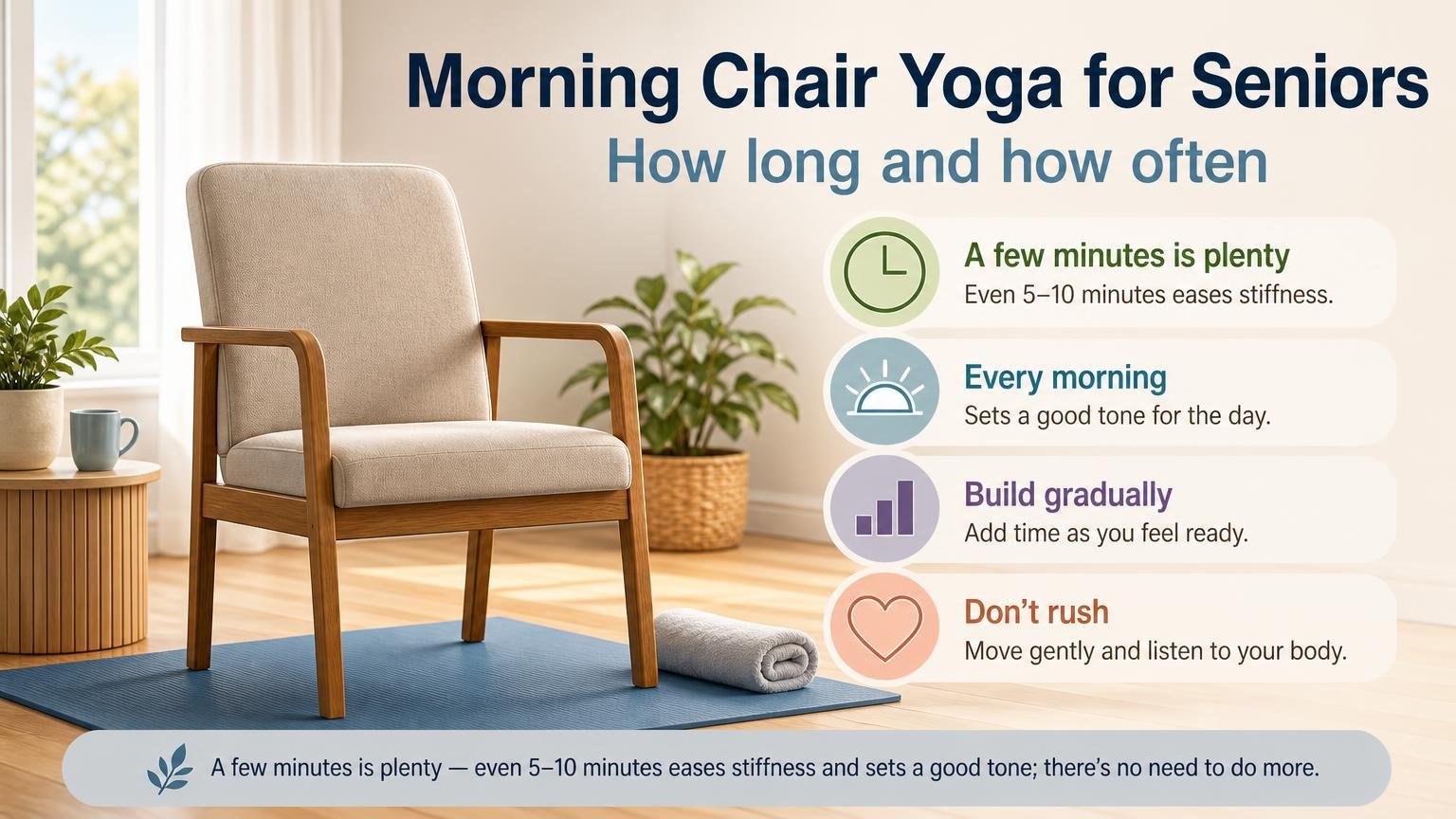
Keep mornings gentle and sustainable:
- A few minutes is plenty — even 5–10 minutes eases stiffness and sets a good tone; there’s no need to do more.
- Every morning — daily consistency is what delivers the benefits and builds the habit.
- Build gradually — as it becomes familiar, you can add a little time or a few more movements if it feels good.
- Don’t rush — a calm, unhurried pace matters more in the morning than getting through every movement; see the morning routine guide.
Caregiver encouragement and building the habit
Support helps a morning practice take root:
- Keep it positive — gentle encouragement, praise for showing up, and a relaxed, enjoyable atmosphere.
- Do it together — company and shared routine build motivation and provide light supervision.
- Be patient with progress — flexibility and confidence grow slowly; celebrate small wins.
- Add stability for the day — supportive shoes and fall-prevention habits carry the morning’s benefits forward, especially after a hospital stay.
- Want it written down? A printable routine makes it easy to follow.
More free printables
See all 24 free printables- Seated Stretches for BeginnersA gentle top-to-bottom stretching routine for flexibility and comfort, with clear safety notes.Free PDF, no sign-up
- Bed-to-Chair ExercisesThree stages, in bed, the transfer and seated, for rebuilding strength after illness or time in bed.Free PDF, no sign-up
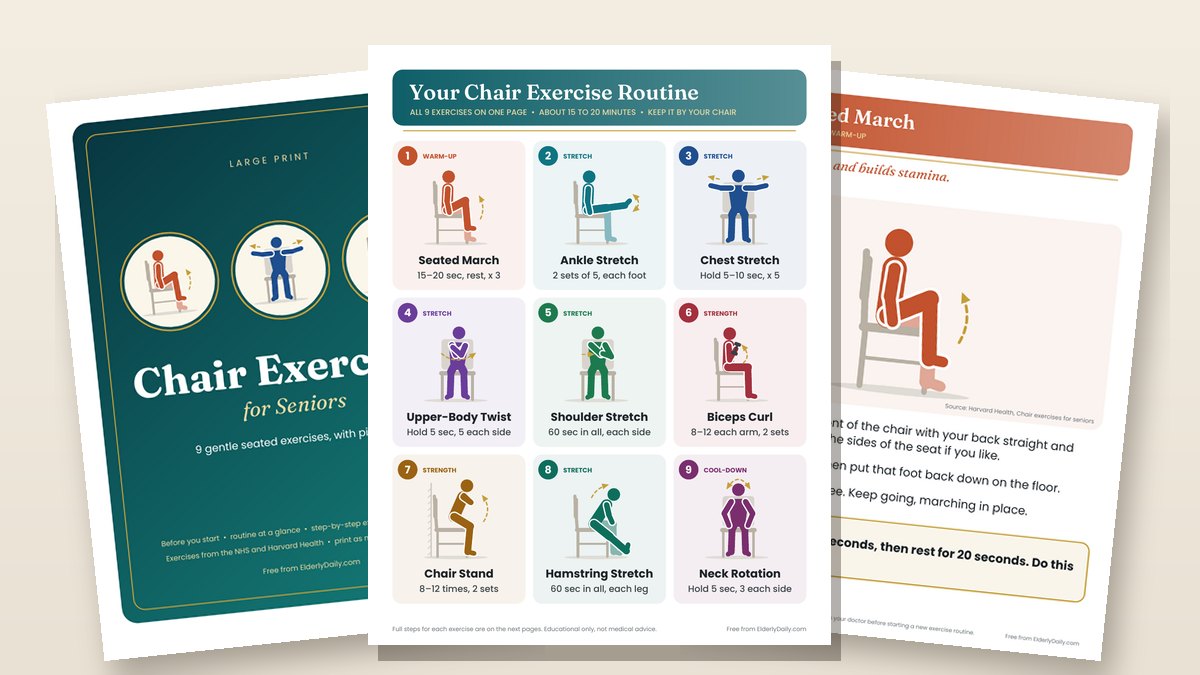 Chair Exercises with Pictures9 gentle seated exercises from NHS and Harvard Health guidance, a one-page routine chart and a weekly tick chart.Free PDF, no sign-up
- Chair Yoga Starter12 illustrated seated poses, a one-page wall chart and a 7-day tracker. Free; we email you the PDF.Free, emailed to you
 Large Print Word Search12 colorful puzzles in large and extra-large print. Words never run backwards, and the answers are included.Free PDF, no sign-up
 Trivia Questions for Seniors100 questions with answers: the 1950s, the 1960s, state capitals, nature, food and more. Print it, or play each round online.Free PDF, no sign-up
Frequently asked questions
Is the printable morning chair yoga PDF free to download?
Yes — the printable morning chair yoga PDF is completely free, with no sign-up needed. It's a full 6-step wake-up sequence you can print at home and keep by the bed or chair, so there's no screen to deal with first thing in the morning.
What is a good morning chair yoga routine for seniors?
A gentle wake-up sequence from a sturdy chair: a minute of easy breathing, then neck and shoulder rolls, arm raises, a soft seated twist and side stretch, and seated marches with ankle circles to wake the legs, finishing with a full-body stretch. Move slowly within a comfortable range, keep feet flat and back supported, and stop for any pain or dizziness. Check with a doctor before starting.
Why is morning movement good for seniors?
After sleep the body is naturally stiff, with tight joints and cold muscles, and balance can feel less sure. Gentle morning movement eases that stiffness, warms up the joints, boosts circulation, and helps a person feel steadier and more confident starting the day. It also lifts mood and energy, setting a positive tone for the hours ahead.
How long should morning chair yoga take?
A few minutes is plenty — even 5 to 10 minutes eases morning stiffness and sets a good tone, so there’s no need to do more. Daily consistency matters far more than length. As it becomes familiar you can gradually add a little time or a few more movements if it feels comfortable. Keep the pace calm and unhurried.
Is it safe to exercise right after waking up?
Gentle chair yoga is generally safe on waking, but ease in carefully: get out of bed slowly (sitting on the edge before standing), be properly awake first, and go extra gently since the body is stiff. Because blood pressure can dip on rising, sit quietly if you feel lightheaded. Use a sturdy chair, move within a comfortable range, and check with a doctor if unsure.
How often should seniors do morning chair yoga?
Every morning is ideal — daily consistency is what delivers the benefits and turns it into a lasting habit. Keep each session short and gentle (5 to 10 minutes), and build up gradually only as it feels comfortable. Doing it at the same time each morning, as part of a routine, helps it stick.
Can morning chair yoga help with stiffness?
Yes — gentle movement may help ease the joint stiffness that’s common first thing in the morning. Moving each joint through a comfortable range warms it up, improves circulation, and reduces that stiff, tight feeling, helping the person move more easily and confidently through the day. Regular daily practice keeps the benefit going.
Sources
- National Institute on Aging (NIH). Four Types of Exercise Can Improve Your Health and Physical Ability
- Cochrane. Exercise for preventing falls in older people living in the community (2019)
