
5 Best Thermometers for Elderly Care
 By Kutubuddin, Founder & Senior Care Researcher Updated October 2026
In this guide
 Best OverallBraun ThermoScan 7+ Connect Ear Thermometer
 Best for DementiaiProven Forehead and Ear Thermometer (Dual-Mode)
 Best No-TouchiHealth No-Touch Forehead Thermometer
 Best BudgetVicks ComfortFlex Digital Thermometer
 Best SmartWithings BeamO 4-in-1 Health Scanner
- What to look for
- Frequently asked questions
A reliable thermometer is a quiet essential in elderly care — but two things matter more than the brand.
We may earn a commission when you buy through links on this page. Read our affiliate disclosure.
Top 5 Picks — Find Your Situation
#1 · Best Overall
Braun ThermoScan 7+ Connect Ear ThermometerBest for: Most seniors who want fast, accurate readings that are easy to take and read
#2 · Best for Dementia
iProven Forehead and Ear Thermometer (Dual-Mode)Best for: Seniors with dementia or anyone who may resist a single measurement method
#3 · Best No-Touch
iHealth No-Touch Forehead ThermometerBest for: Caregivers who need contactless checks, including for sleeping or resistant seniors
#4 · Best Budget
Vicks ComfortFlex Digital ThermometerBest for: Cooperative seniors who want the most accurate home reading at the lowest cost
#5 · Best Smart
Withings BeamO 4-in-1 Health ScannerBest for: Caregivers already tracking a heart or lung condition who want temperature, ECG and oxygen in one device
First, accuracy depends on the method: oral and ear readings are most accurate at home, forehead and no-touch are most comfortable, and armpit is least precise. Second, fever looks different in older adults: many run a lower baseline, so a serious infection can show up as only a slight rise — which is why knowing a person's normal temperature matters. Our overall pick is the Braun ThermoScan 7, a fast, accurate ear thermometer that's easy for seniors. Below, five options for different needs, plus when it's time to call a doctor.
A closer look at our top pick: the Braun ThermoScan 7
Braun ThermoScan 7+ Connect Ear Thermometer
Best for: Most seniors who want fast, accurate readings that are easy to take and read
- Method
- Ear (tympanic)
- Accuracy
- High; ExacTemp positioning guide
- Display
- Backlit, color-coded fever alert
- Age Precision
- Age-adjusted thresholds
Independently researched · Updated October 2026
The ThermoScan 7 hits the sweet spot for elderly care: ear readings are among the most accurate you can take at home, yet they're fast and comfortable, which matters when the person isn't feeling well. Its standout feature is Age Precision — you set the user's age band, and the display color-codes the result against an age-appropriate fever threshold, so you're not mentally adjusting numbers in the moment.
It's also built to be used easily and consistently. A pre-warmed tip avoids the cold-probe error that can skew the first reading, an on-screen guide confirms correct positioning, and the backlit display is legible in a dim bedroom. Add the memory of the last reading, and it's a thermometer a caregiver can trust check after check.
What we love
- Accurate and quick
- Easy-to-read, color-coded display
- Comfortable and non-invasive
- Trusted, widely recommended brand
Things to consider
- Needs disposable probe covers
- Earwax or poor positioning can affect a reading
- Costs more than a basic oral stick
Right for you if
- ✓You want accurate readings that are still quick and comfortable
- ✓You'd benefit from an age-adjusted, color-coded fever alert
- ✓You're checking a senior with mild or no cognitive impairment
- ✓You want a clear, backlit, easy-to-read display
Maybe skip it if
- !The person resists having anything near their ear — try the no-touch iHealth
- !You want both forehead and ear in one device — the iProven dual-mode fits
- !You want the cheapest accurate option — the Vicks oral thermometer costs less
What owners consistently report
Common praise
- +Owners cite accurate, repeatable readings
- +The color-coded, age-adjusted display is praised as reassuring
- +It's described as fast and easy for caregivers
Common gripes
- –It needs disposable probe covers on hand
- –Earwax or poor positioning can throw a reading off
- –It costs more than a simple oral stick
Getting started
- →Set the user's age band so Age Precision flags fevers correctly
- →Use a fresh probe cover and follow the positioning guide each time
- →Let it sit at room temperature before the first reading
How it compares
The iProven dual-mode forehead-and-ear thermometer is the better choice when flexibility matters most — it can do an easy forehead check on a resistant or sleeping senior and an ear reading when you want accuracy. The Braun is more accurate and consistent as a dedicated ear thermometer, which is why it's our overall pick. Choose Braun for everyday accuracy, the iProven when one device needs to do double duty.
How we picked
We compared widely available thermometers on what matters in elderly care: accuracy by measurement method, ease of use for seniors (large backlit display, fast reading, fever alerts), comfort and non-invasiveness, and useful extras like memory and app sharing. Our picks draw on manufacturer specs, Mayo Clinic and expert guidance, and reviews from outlets like CNN Underscored — not hands-on lab testing. Because readings vary by site, the most important habit is using the same method each time and learning the person's baseline.
Reviewed by Kutubuddin — who researches senior-care products and the real-world needs of caregivers and older adults.
Other picks, reviewed
iProven Forehead and Ear Thermometer (Dual-Mode)
The most flexible choice when a senior may not cooperate. It offers both forehead (for a quick, easy check) and ear (for better accuracy) in one device, with big buttons, a backlit screen, and a fever alarm — features designed with seniors in mind. Switch to forehead for a resistant or sleeping person, ear when you want a more precise number.
What we like
- Two methods in one device
- Forehead mode for resistant or sleeping users
- Senior-friendly buttons and display
- Fast readings with a fever alert
Keep in mind
- Forehead mode trades some accuracy for ease
- Two methods can read slightly differently
- Confirm positioning for the ear mode
- Method
- Forehead + ear (dual)
- Design
- Big buttons, backlit screen
- Alert
- Color/fever alarm
- Speed
- 1-2 seconds
- Memory
- Stores past readings
iHealth No-Touch Forehead Thermometer
The most comfortable option for a sleeping or agitated senior, and the most hygienic for shared care. It reads from a short distance with no skin contact, has a large, quiet digital display, and gives a result in about a second — so you can check someone without waking or disturbing them.
What we like
- Completely contactless and hygienic
- Won't disturb a sleeping senior
- Fast, large, easy-to-read display
- Simple one-button operation
Keep in mind
- Less precise than ear or oral readings
- Affected by sweat, drafts, and room temperature
- Hold at the correct distance for accuracy
- Method
- No-touch infrared forehead
- Contact
- None (hygienic)
- Display
- Large, quiet digital
- Speed
- ~1 second
- Best use
- Quick fever screening
Vicks ComfortFlex Digital Thermometer
Proof that the most accurate home method is also the cheapest. A digital oral thermometer gives dependable readings for a cooperative senior, and the ComfortFlex adds a flexible tip for comfort, a fever-coded backlight, and a clear display — all at a budget price.
What we like
- Most accurate home method, lowest price
- Comfortable flexible tip
- Color-coded fever backlight
- Simple and reliable
Keep in mind
- Requires holding it under the tongue (not for dementia)
- Slower than ear or forehead models
- Wait 15 minutes after eating or drinking
- Method
- Oral (also underarm)
- Accuracy
- High for home use
- Tip
- Flexible, comfortable
- Display
- Backlit, fever-coded
- Cost
- Budget
Withings BeamO 4-in-1 Health Scanner
Withings discontinued the Thermo and replaced it with this. BeamO takes a forehead temperature reading with a newer sensor, then adds three more: a 1-lead ECG, a pulse oximeter and a digital stethoscope, all in a handheld the size of a large thermometer. Every reading syncs to the app, so a caregiver can log a trend and share it with a doctor. Be clear what you are buying, though — this costs several times what a good thermometer costs, and temperature is one of four functions. If you only need to check a fever, pick any of the four above. This earns its place when someone is already monitoring a heart or lung condition and a single device replaces three.
What we like
- Temperature, ECG, blood oxygen and heart/lung sounds in one handheld
- FDA-cleared, and every reading logs and graphs automatically
- Contactless forehead reading using a newer sensor than the old Thermo
- One device to hand a doctor a full picture, and it tracks multiple people
Keep in mind
- Several times the price of a good thermometer — overkill if fever is all you are checking
- Needs the app and a smartphone for most of its value
- Forehead readings still trail oral or ear for pure temperature precision
- The ECG flags a possible rhythm problem to take to a doctor — it does not diagnose one
- Method
- Temporal (forehead)
- Sync
- App logging + sharing
- Sensors
- Multi-sensor array
- Contact
- Light temple touch
- Users
- Multiple profiles
What to look for
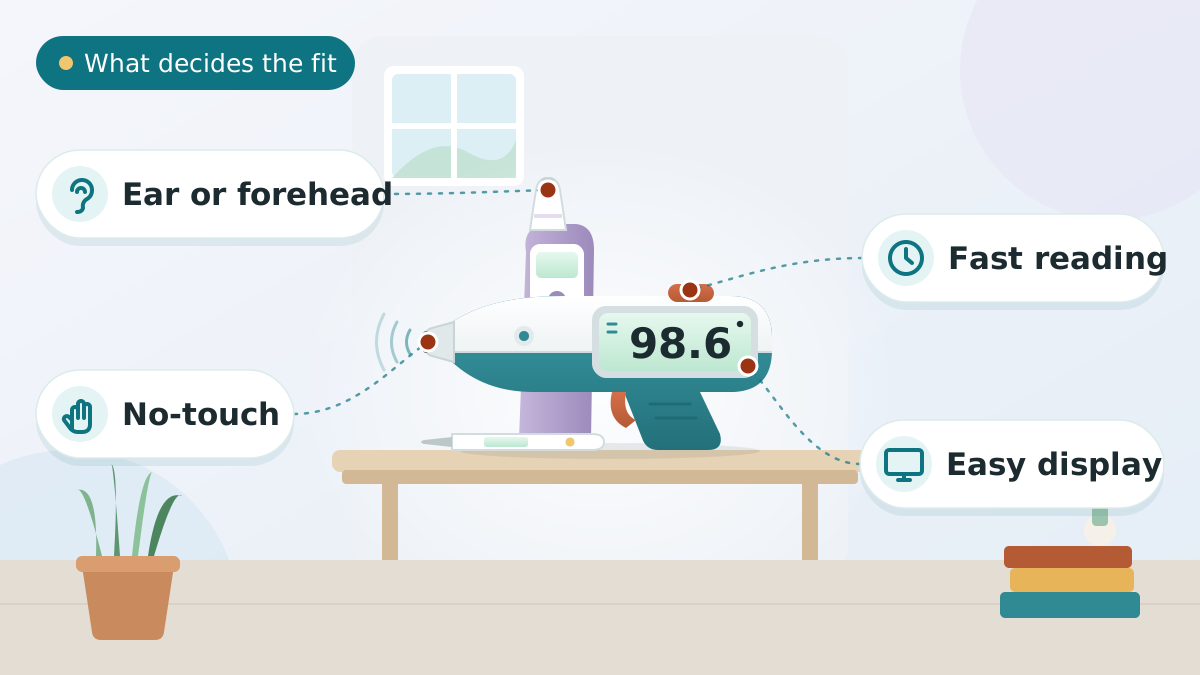
Pick the method by who's using it
The right type depends as much on the person as on precision.
- Oral: most accurate at home, for a cooperative senior who can hold it under the tongue.
- Ear (tympanic): fast and accurate, good for most seniors including mild dementia.
- Forehead / no-touch: easiest and most comfortable, ideal for sleeping, resistant, or dementia care.
- Armpit: least accurate (about a degree low) and best kept as a last resort.
Accuracy vs convenience
Oral and ear readings are the most precise; forehead and no-touch trade a little accuracy for comfort and speed. For simply screening whether a fever is present, any modern method works.
Because readings differ by site, the golden rule is to use the same method every time and compare against a known baseline — a forehead reading and an oral reading from the same person won't match exactly.
Easy to read and use
Small, fiddly thermometers are frustrating in a caregiving moment. Look for a large, backlit display, a fast reading, and a color-coded or audible fever alert.
Big buttons help arthritic hands, and a silent or mute mode lets you check a sleeping senior without a beep waking them.
Fever is different in older adults
This is the most important and most overlooked point. Many older adults have a lower baseline temperature, so a serious infection can show up as only a mild rise — or with no obvious fever at all.
Clinicians often treat a single oral reading of 100°F (37.8°C), repeated readings of 99°F (37.2°C), or a rise of about 2°F over the person's normal as a possible fever in seniors. That's why knowing the baseline matters: a reading that looks 'normal' could still be elevated for them.
Hygiene, memory, and sharing
Clean the thermometer after every use, and use disposable probe covers on ear and oral models to prevent spreading germs between people.
A memory of recent readings helps track a trend, and smart thermometers that log and share data with a doctor are useful when monitoring an ongoing illness.
Read more:When Is Incontinence a Medical Emergency? Warning Signs Caregivers Should Not IgnoreUTI Signs in SeniorsCommon Post-Surgery Complications in Seniors
Tips to Choose Thermometers
Short on time? Here are the key points to weigh before choosing, each covered in detail above:
- Pick the method by who's using it
- Accuracy vs convenience
- Easy to read and use
- Fever is different in older adults
- Hygiene, memory, and sharing
Comparing options? See our guides to Best Blood Pressure Monitors for Seniors, Best Pulse Oximeters for Seniors, and Best Weight Scales with Large Display for Seniors.
How to get an accurate reading
Technique matters as much as the device:
- For oral or ear readings, wait at least 15 minutes after eating, drinking, or coming in from hot or cold air.
- For forehead and no-touch, make sure the forehead is clean, dry, and free of sweat, and hold the device at the distance the maker specifies.
- For ear readings, gently straighten the ear canal and avoid taking a reading in an ear with a lot of wax or an infection.
- Take two readings to confirm, and always record the number along with the method used.
When a temperature means call the doctor
For older adults, don't wait for a dramatic fever. A single oral reading of 100°F (37.8°C), repeated readings around 99°F (37.2°C), or roughly a 2°F rise over the person's baseline is worth a call to a clinician — especially alongside new confusion, unusual lethargy, poor appetite, or a fall, which can be the only signs of an infection like a UTI.
In an older adult a normal temperature does not rule out infection — fever is absent or blunted in many seriously ill seniors, and a low temperature can itself be a warning sign, so judge by the whole person rather than the thermometer. Seek prompt care for a temperature over 100.4°F (38°C), or any fever with trouble breathing, chest pain, a stiff neck, severe confusion, or a rash that doesn't fade. This is general guidance, not a diagnosis — follow the person's doctor and trust your instincts if something seems wrong.
Frequently asked questions
A no-touch forehead or a dual forehead-and-ear thermometer is usually best for dementia care, because it's fast and doesn't require the person to hold anything in their mouth or stay still for long. The iHealth no-touch can check someone without contact (even while sleeping), and the iProven dual-mode lets you do a quick forehead scan and switch to ear for a more accurate reading when needed.
They're accurate enough to screen for whether a fever is present, which is what matters most day to day. They are a bit less precise than ear or oral readings and can be thrown off by sweat, drafts, or room temperature. Hold the device at the distance the maker specifies, keep the forehead clean and dry, and if a reading looks high, confirm it with an ear or oral measurement.
There's no need to check constantly when a senior feels well. Take a temperature if they seem unwell, are recovering from an illness, or show signs of infection such as new confusion, lethargy, or poor appetite. When monitoring an active illness, follow the doctor's advice on frequency, and record each reading with the time and method used.
In an older adult a normal temperature does not rule out infection — fever is absent or blunted in many seriously ill seniors, and a low temperature can itself be a warning sign, so judge by the whole person rather than the thermometer. Seek prompt care for a temperature over 100.4°F (38°C), or any fever accompanied by trouble breathing, chest pain, a stiff neck, severe confusion, or a non-fading rash. Importantly, in older adults even a milder temperature can signal a serious infection, so don't wait for a high number — call a doctor for a persistent low-grade fever, especially with other symptoms.
Clean it after every use. Wipe the probe with an alcohol wipe or soapy water (then dry it) for oral and forehead models, and use disposable probe covers on ear and oral thermometers when more than one person uses the device. Never share an oral thermometer between people without a cover, and don't use the same thermometer orally and rectally.
Ear (tympanic) thermometers are generally more accurate than forehead ones, as long as they're positioned correctly and the ear is free of excess wax. Forehead and no-touch models are more comfortable and convenient, which makes them better for resistant or sleeping seniors, but they trade a little precision. For the most accurate number, ear or oral is the better choice.
Yes — that's one of the biggest advantages of a no-touch forehead thermometer. It reads from a short distance with no contact and gives a result in about a second, so you can check someone without waking them. Just make sure the forehead is uncovered and dry, and that the person hasn't been lying against a warm pillow, which can affect the reading.
A typical adult range is about 97 to 99°F (36.1 to 37.2°C), and the often-cited 98.6°F is just an average — many people, and especially older adults, run a bit lower. Because of that lower baseline, the most useful step is to measure a senior's normal temperature when they're well, so you can recognize when a reading is elevated for them specifically.
It's a good idea. A backup means you're not caught out by a dead battery or a lost device during an illness, and having both an accurate ear or oral model and an easy no-touch model covers different situations. Keep spare batteries and probe covers with them, and check periodically that each device still gives consistent readings.
Generally no. Standard home thermometers are inexpensive personal-care items that traditional Medicare doesn't cover. HSA or FSA funds can usually be used to buy one, and some Medicare Advantage plans include over-the-counter allowances that may apply — check your specific plan.
The final verdict
For most seniors, the Braun ThermoScan 7 is the best all-round thermometer — accurate, fast, and easy to read, with an age-adjusted fever alert. Choose the iProven dual-mode for dementia care or when you want both forehead and ear, the iHealth no-touch for contactless checks on a sleeping senior, the Vicks ComfortFlex for the most accurate budget option with a cooperative senior, or the Withings BeamO if you are already tracking a heart or lung condition and want temperature, ECG and oxygen logged in one place. Whatever you pick, use the same method each time, learn the person's baseline, and remember that in older adults a fever can be subtle — so a small rise still deserves attention.
Our overall winner is the Braun ThermoScan 7+ Connect Ear Thermometer. You can check the current price on Amazon.
Our Top 5 Picks at a Glance
Ready to choose? Here are the top 5 again.
Best Overall
Braun ThermoScan 7+ Connect Ear Thermometer
Best for Dementia
iProven Forehead and Ear Thermometer (Dual-Mode)
Best No-Touch
iHealth No-Touch Forehead Thermometer
Best Budget
Vicks ComfortFlex Digital Thermometer
Best Smart
Withings BeamO 4-in-1 Health Scanner
Affiliate links — we may earn a commission.
More reviews
