
How to Choose a Rollator: A Complete Buying Guide

Based on mobility-equipment and physical-therapy guidance; a therapist can confirm fit and suitability.
A rollator is a big quality-of-life upgrade for the right person — but the wrong size or wheel setup makes it unsafe. This guide walks through every feature that matters, so you buy once and buy right.
Key takeaways
- A rollator suits someone who needs steady support but can control wheels and work hand brakes — it is not for a person who leans their full weight forward.
- Fit is everything: handles should reach the wrist crease standing tall; the seat should let feet rest flat with knees near 90 degrees.
- Bigger wheels (8"+) handle outdoors and thresholds; small wheels are lighter and fine for smooth indoor floors.
- Check the weight capacity against the user’s weight with a margin, and the rollator’s own weight against who has to lift it into a car.
- Decide between a rollator and a standard walker first — our walker vs cane and rollator vs walker guides help.
Quick answer
What should I look for when choosing a rollator?
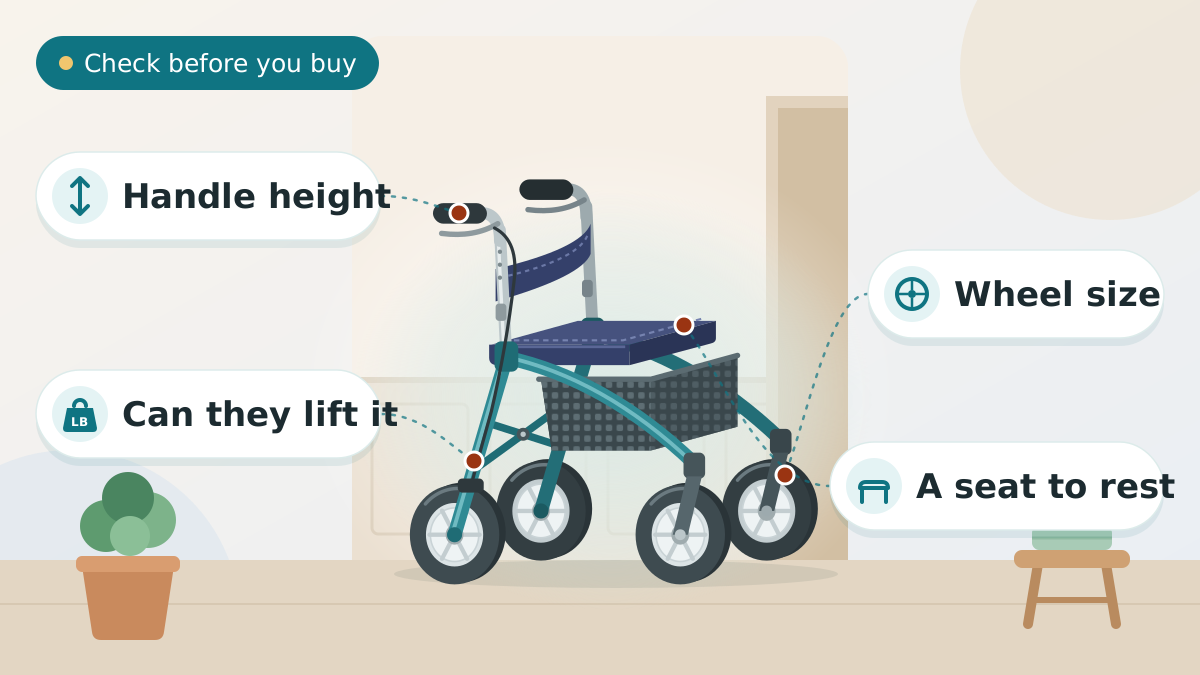
Match five things to the person: handle height (wrist-crease when standing tall), seat height and width (feet flat, comfortable sit), wheel size (big for outdoors, small for indoors), weight capacity (with a margin), and total weight (who lifts it into the car?). Then choose 3-wheel for tight indoor turns or 4-wheel for stability and a seat. Compare models in our best rollators for seniors review.
First, is a rollator the right aid?
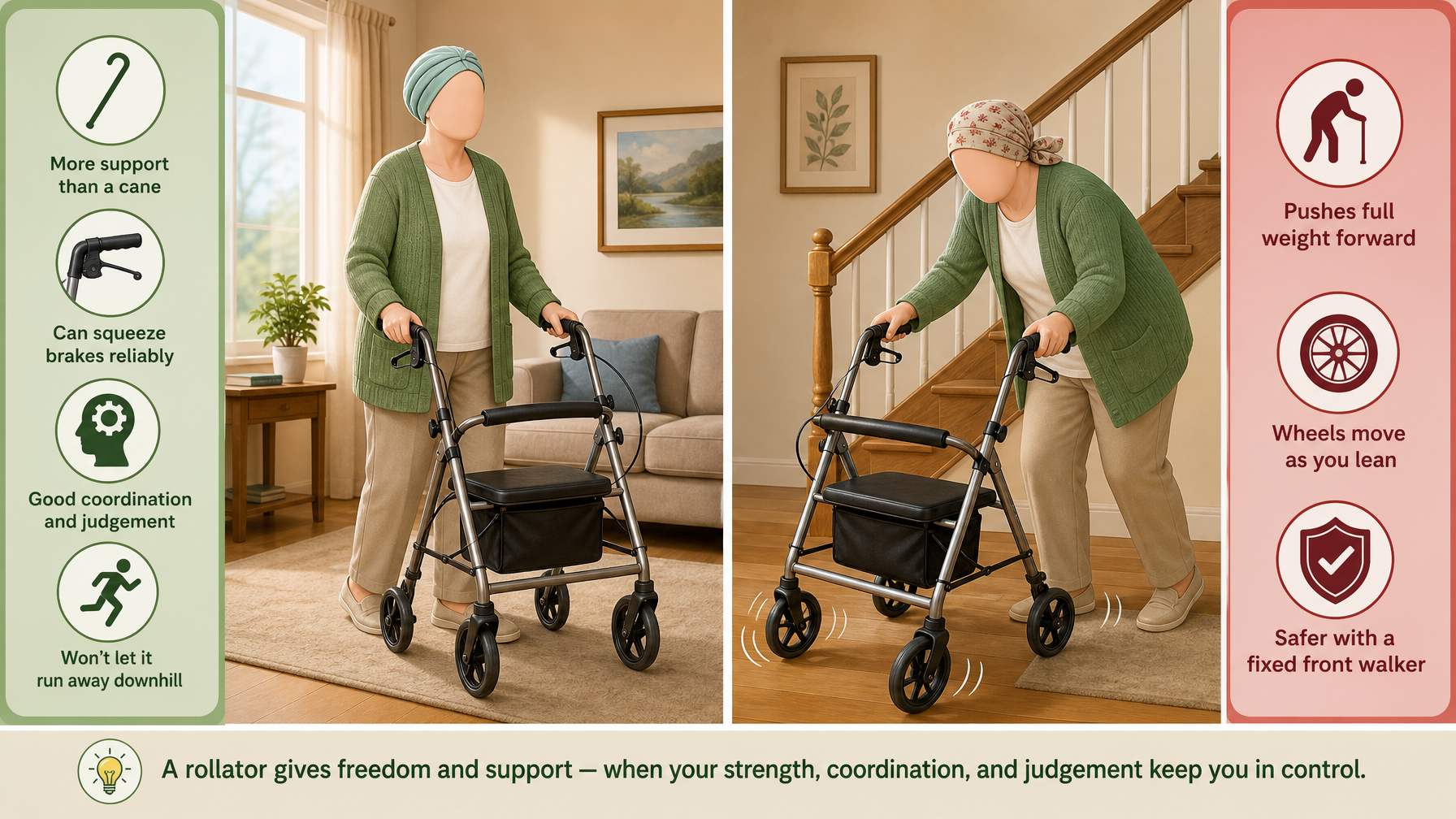
A rollator earns its place for someone who needs more than a cane but does not want the slow, lift-with-every-step motion of a standard walker — and who can safely control wheels. The wheels roll continuously, so the person must have the hand strength and coordination to squeeze the brakes reliably and the judgement not to let it run away downhill.
It is the wrong choice for someone who tends to push their full weight forward onto the frame; wheels move, and that person is safer with the fixed four points of a standard walker. If you have not settled the walker-versus-rollator question yet, start with our rollator vs walker comparison, then come back here to choose the specific rollator.
Safety first
If there is any doubt about braking ability or cognitive judgement (for example with dementia), have a physical therapist assess suitability before buying a wheeled aid.

Sponsored Pick
REHAND Ergonomic All-Terrain Folding Cane
Seniors with arthritis or joint pain who want a cushioned, ergonomic grip with all-terrain stability
Check PriceFit: handle height and seat height
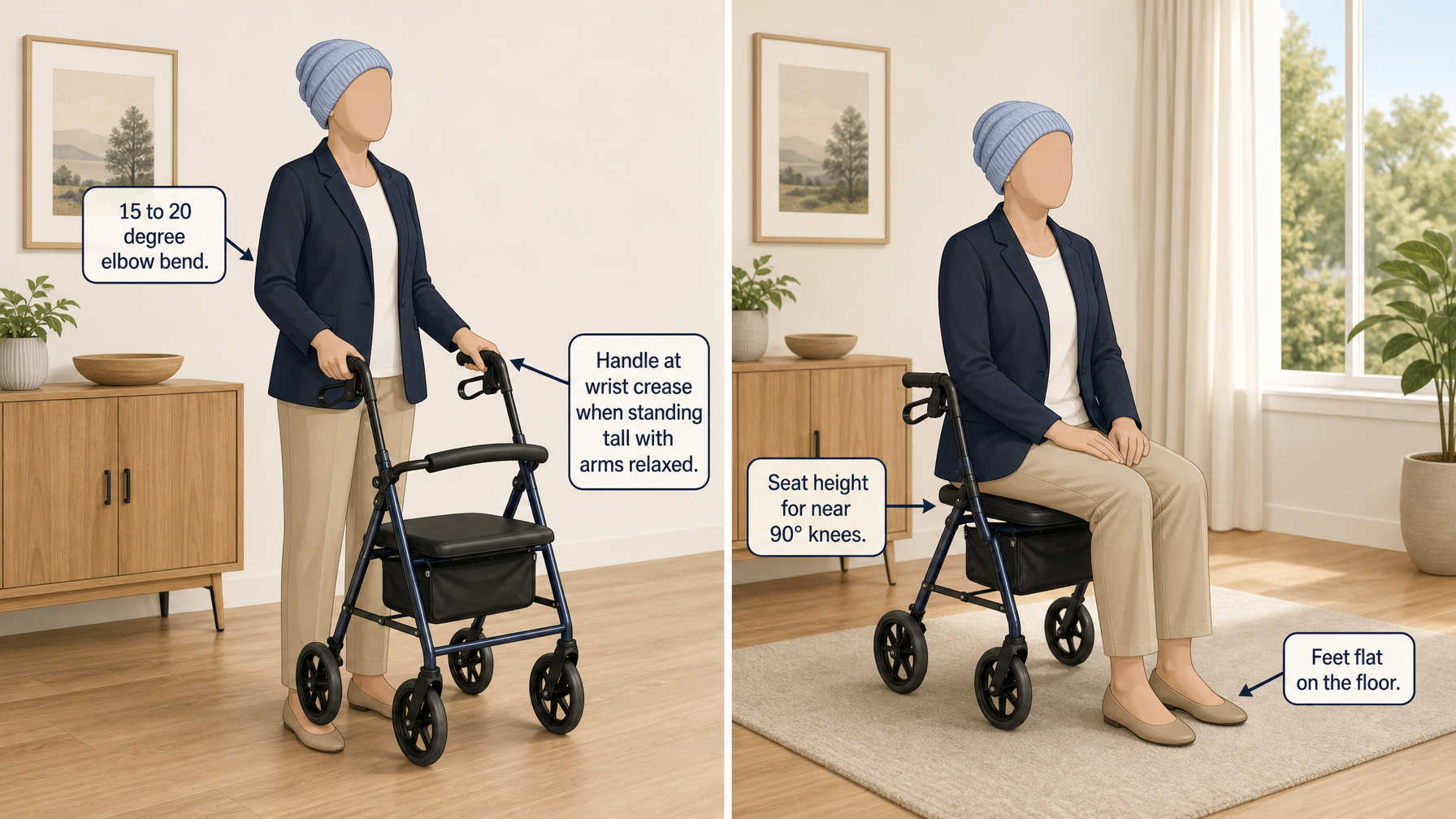
Almost every rollator complaint traces back to poor fit. Two measurements matter most.
- 1
Handle height
Standing tall in normal shoes with arms relaxed, the handle grips should sit at the crease of the wrist. At that height the elbows bend a comfortable 15–20 degrees. Too high forces the shoulders up; too low causes a stoop. Most rollators adjust — confirm the range covers the user’s height.
- 2
Seat height
Sitting on the seat, feet should rest flat on the floor with knees near 90 degrees. A seat that is too high leaves feet dangling; too low makes standing back up hard. Match the seat height to the user’s lower-leg length.
- 3
Seat width and depth
The seat should be wide and deep enough for a genuinely comfortable rest, not a perch. Bariatric users need a wider seat and frame rated for their weight.
Wheel size: indoors vs outdoors
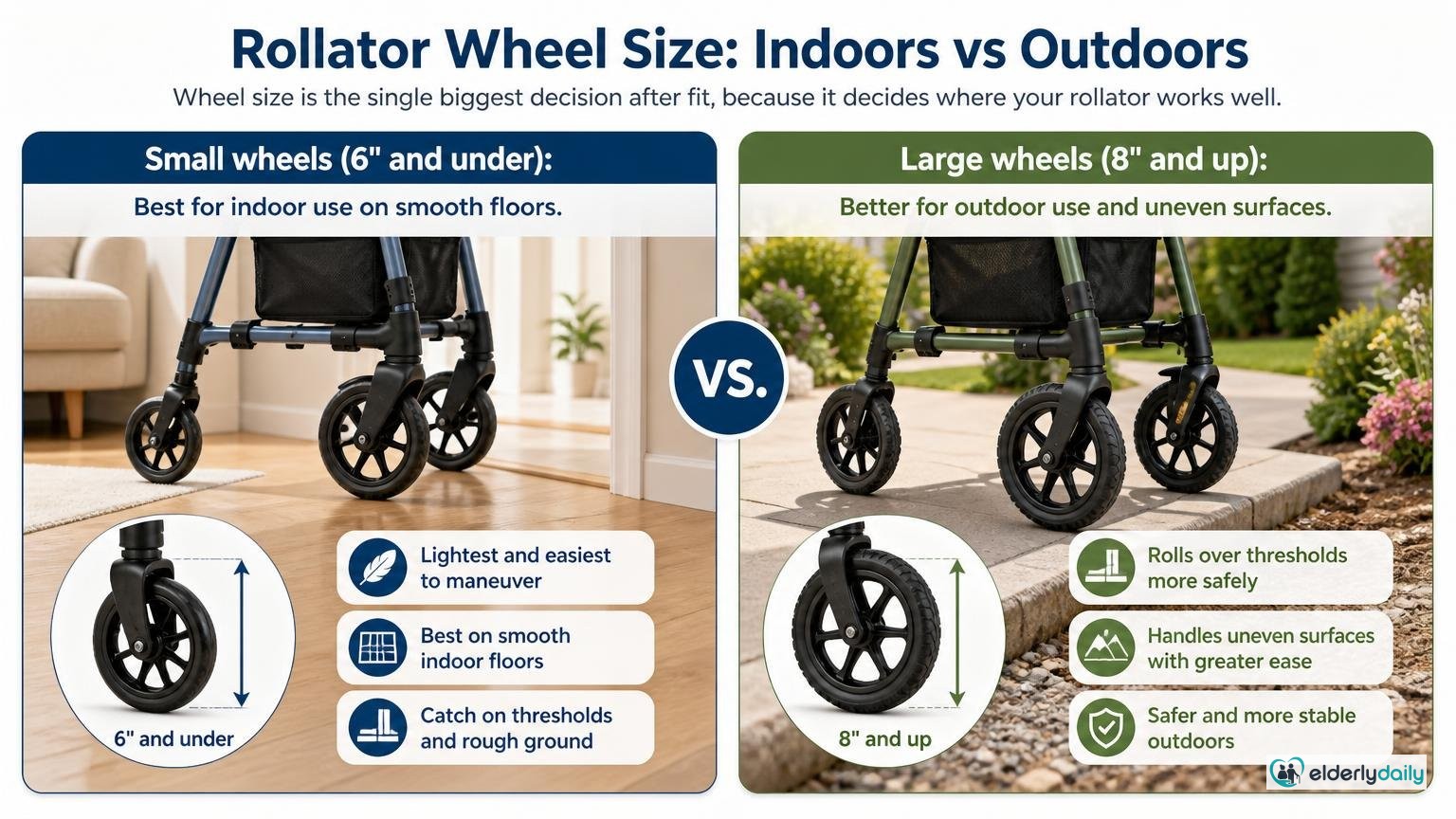
Wheel size is the single biggest decision after fit, because it decides where the rollator works well.
- Small wheels (6" and under): lightest and most maneuverable on smooth indoor floors, but they catch on thresholds, gravel, grass, and cracks. Best for someone who is mostly indoors.
- Large wheels (8" and up): roll over door thresholds, uneven pavements, and outdoor ground with far less effort and less risk of a sudden stop. Best for anyone who goes outside regularly. Slightly heavier.
If the person will use the rollator both at home and out and about, err toward larger wheels — the outdoor safety gain outweighs the small extra weight indoors.
Good to know
A rollator that stops dead on a threshold or crack is a fall risk in itself. If outdoor use is on the cards at all, larger wheels are worth it.
Three wheels or four?
The frame layout is a genuine trade-off, not a matter of "more is better":
| 3-wheel | 4-wheel | |
|---|---|---|
| Stability | Good | Best |
| Seat | Usually none | Yes — a place to rest |
| Maneuverability | Excellent in tight spaces | Needs more turning room |
| Weight | Lighter | Heavier |
| Best for | Small homes, tight corners, indoor use | Stability, outdoor use, resting on the go |
Good to know
Most seniors are best served by a 4-wheel rollator for its stability and seat. Choose a 3-wheel only when navigating a very tight home is the top priority and a seat is not needed.
Brakes, weight capacity, and portability
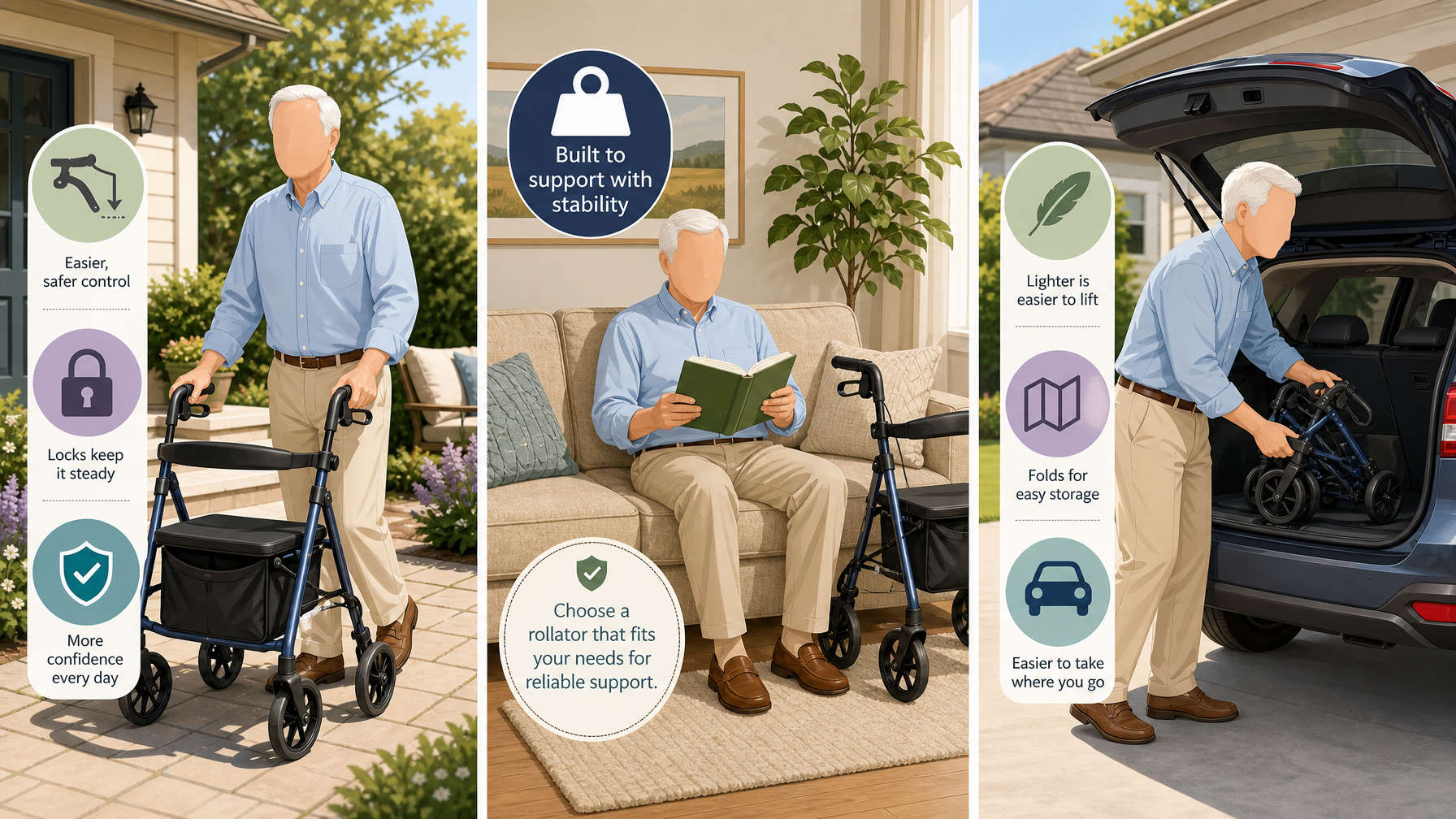
Three practical specs make or break daily use:
- Brakes: look for smooth loop-style hand brakes that lock in place (a "parking brake") so the rollator stays put while sitting down or standing up. Test that the user can squeeze and lock them easily — arthritic hands may struggle with stiff levers. Our grabber and grip guides note the same hand-strength issue.
- Weight capacity: check the rated capacity against the user’s weight with a comfortable margin. Standard rollators typically support around 250–300 lb; bariatric models go higher and use a sturdier frame.
- The rollator’s own weight and fold: if it must go in a car, someone has to lift it. Lighter aluminum frames and a simple one-hand fold matter enormously for an outing. Weigh portability against stability for how it will actually be used.
Useful extras (and what to skip)
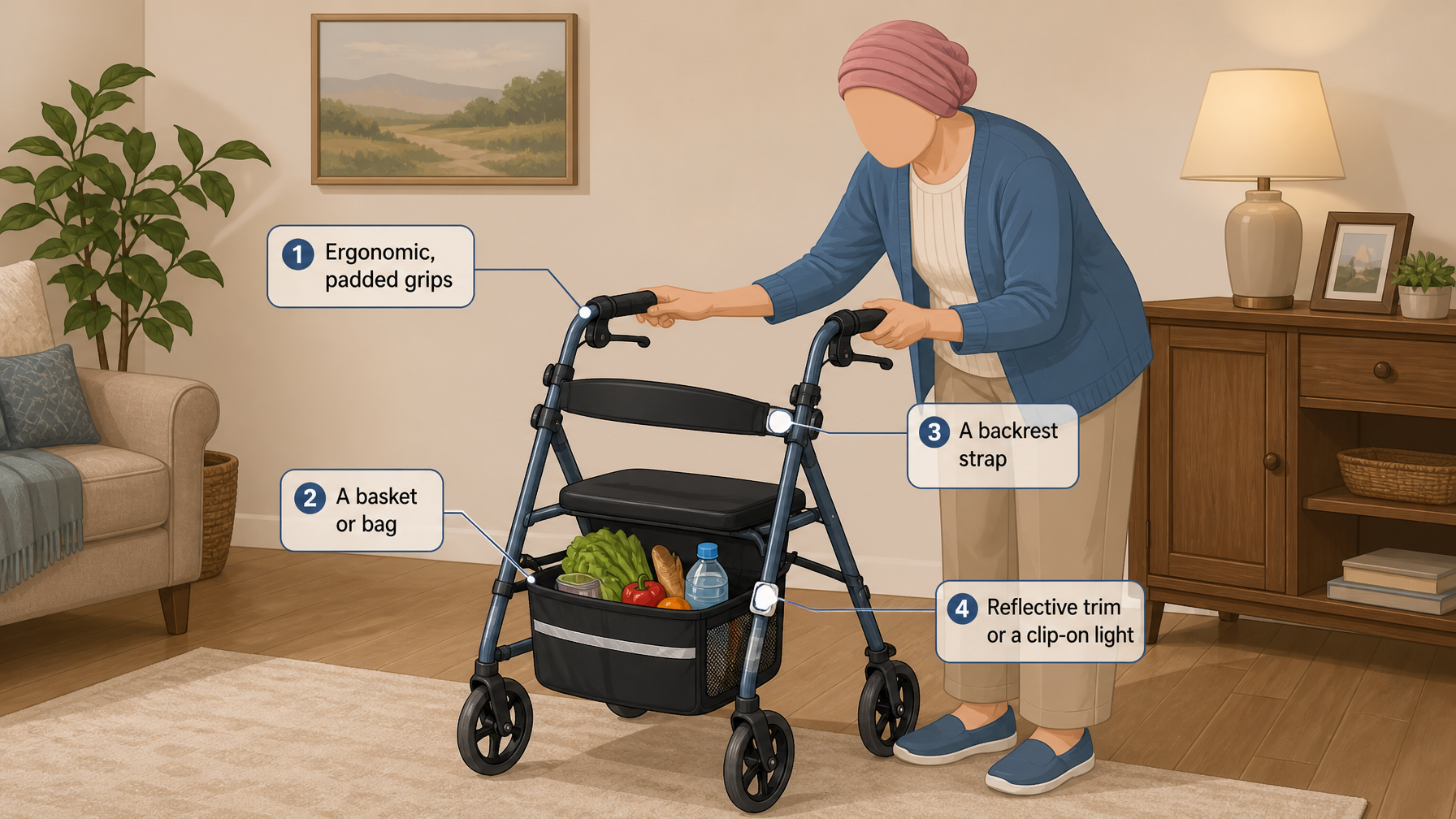
Once fit, wheels, and brakes are right, a few extras genuinely help:
- A basket or bag to carry items frees both hands for the rollator — practically essential.
- Ergonomic, padded grips reduce hand and wrist fatigue over distance and help with arthritis.
- A backrest strap makes the seat far more restful for longer sits.
- Reflective trim or a clip-on light adds safety for anyone out near dusk.
Skip anything that adds weight without daily value. The goal is a rollator the person will actually use — and pairing it with balance exercises keeps them steady on it.
Using a rollator safely
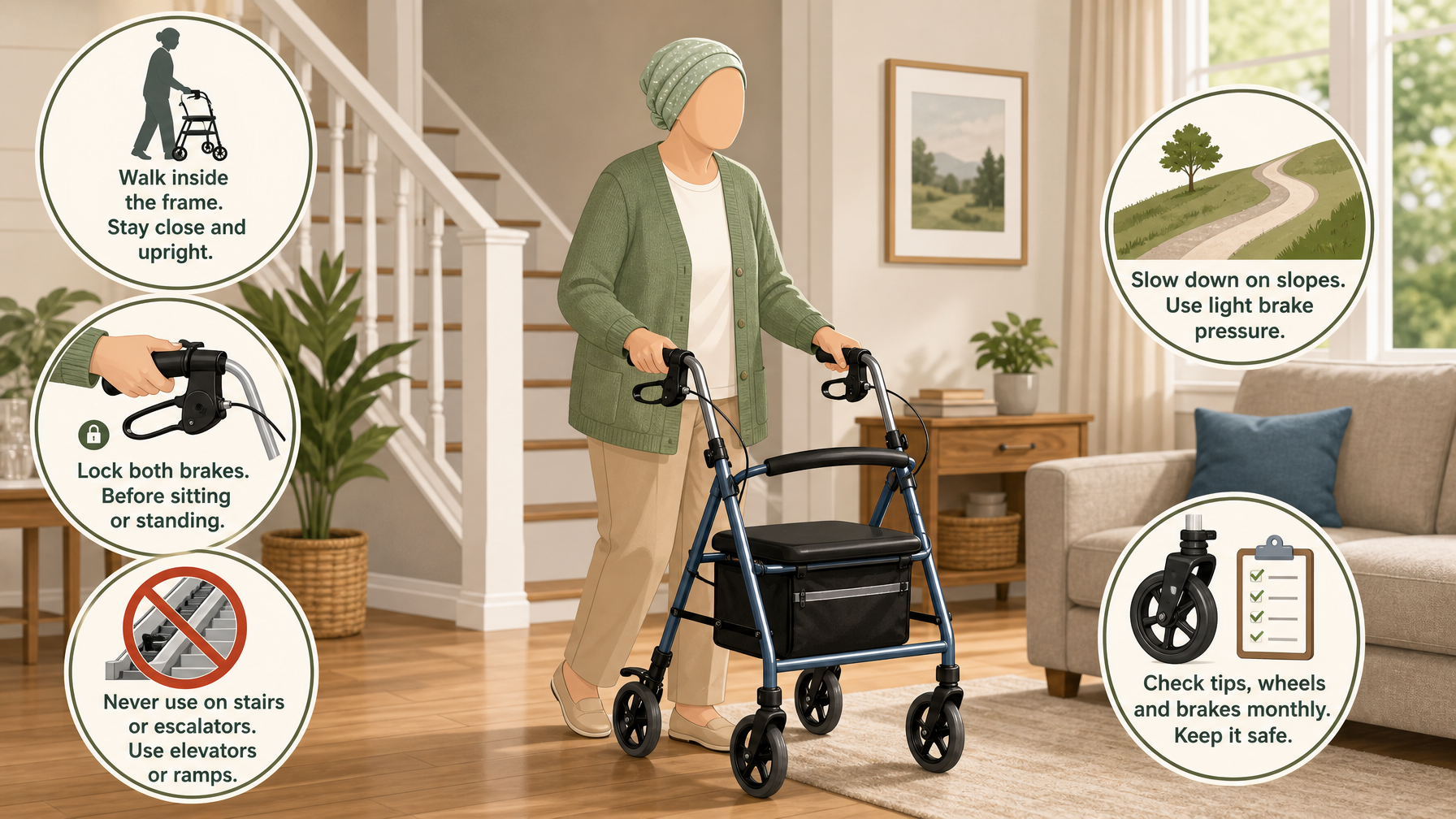
Even the right rollator needs safe habits:
- Walk inside the frame, upright, not hunched over reaching for the handles ahead.
- Lock both brakes before sitting down or standing up — never sit on a rollator that can roll.
- On any slope, slow down and keep light brake pressure; never let it coast downhill.
- Do not use a rollator on stairs or escalators; use a railing and, if needed, a stair-assist approach.
- Keep tips, wheels, and brakes checked monthly — worn brakes are a safety issue, not a cosmetic one.
Frequently asked questions
What is the most important feature when choosing a rollator?
Fit — handle height at the wrist crease and a seat height that lets feet rest flat. A rollator that fits poorly is uncomfortable and unsafe no matter how good its other features are. After fit, wheel size (indoor vs outdoor) matters most.
Are 3-wheel or 4-wheel rollators better?
It depends on need. Four wheels give the most stability and include a seat, which suits most seniors. Three wheels are lighter and turn in tighter spaces, which suits very small homes where a seat is not required. See the comparison table above.
What size rollator wheels do I need?
Small wheels (6" or under) are lightest and best on smooth indoor floors but catch on thresholds and outdoor ground. Large wheels (8"+) roll over uneven surfaces and thresholds far more safely and suit anyone who goes outdoors. If in doubt, choose larger wheels.
How much weight can a rollator hold?
Standard rollators typically support about 250–300 lb; bariatric models support more with a reinforced frame and wider seat. Always check the rated capacity against the user’s weight with a comfortable margin.
Is a rollator better than a walker?
For someone who can control wheels and brakes, a rollator is faster, less tiring, and adds a seat. For someone who leans their full weight forward or has poor coordination, a standard walker is more stable. Our rollator vs walker guide compares them in detail.
Can someone with arthritis use a rollator?
Often yes, but test the brakes — stiff levers are hard for arthritic hands. Look for smooth loop brakes and padded grips. If gripping is a real problem, a physical therapist can recommend adaptations or an alternative aid.
