
How Caregivers Can Help Seniors Exercise Safely

Educational guidance, not medical advice. Check with the person’s doctor before starting a new exercise program, especially with health conditions — see below.
Exercise is one of the most powerful things for a senior’s health, independence, and mood — and a caregiver can make it safe, achievable, and even enjoyable. Here is how to help without overdoing it.
Key takeaways
- Exercise is one of the best things for senior health — it builds strength and balance, can help lower the risk of falls, and lifts mood and independence.
- Aim across four types: strength, balance, flexibility, and gentle cardio — each matters.
- Check with the doctor first before starting, especially with heart, joint, or other conditions.
- Start gently and build gradually, with safety precautions — support nearby, good footwear, hydration, and stopping if anything is wrong.
- A caregiver’s role is to make it safe, achievable, and encouraging — and consistency matters more than intensity.
Quick answer
How can I help a senior exercise safely?
First check with their doctor, especially if they have health conditions. Then support exercise across four types — strength, balance, flexibility, and gentle cardio — starting gently and building gradually. Ensure safety: sturdy support nearby (a chair or counter), supportive footwear, hydration, and stopping immediately if there is pain, dizziness, chest discomfort, or breathlessness. Your role is to make it safe, achievable, and encouraging — consistency matters more than intensity.
Why exercise matters so much for seniors
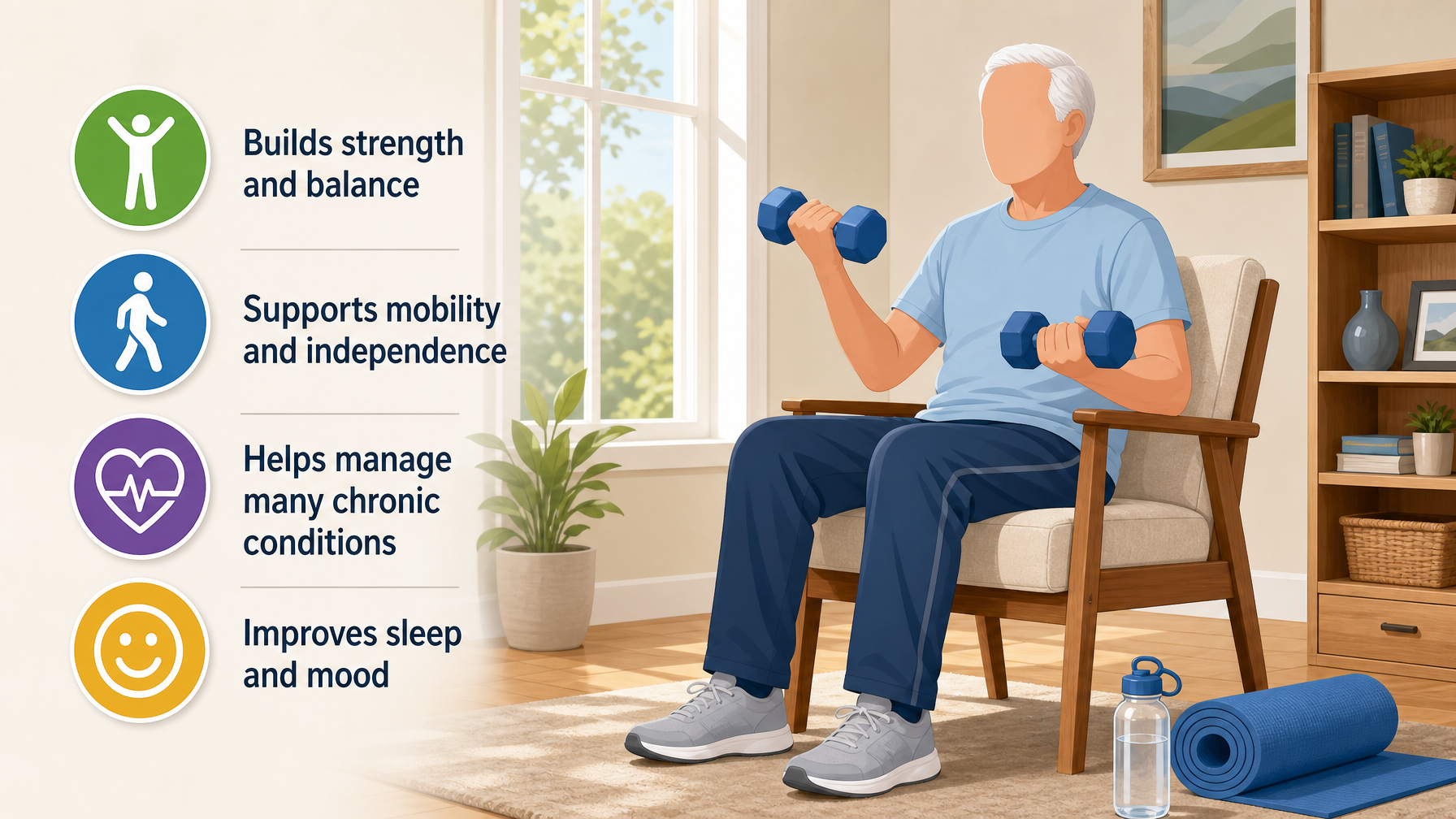
Few things do more for an older adult’s health than regular, appropriate exercise. It builds and maintains the strength and balance that help prevent falls, supports mobility and independence, helps manage many chronic conditions, improves sleep and mood, and keeps the mind sharper. For someone who has become weak — for instance after a hospital stay — it is the route back to strength.
A caregiver can be the key to making exercise happen safely: providing encouragement, ensuring safety, and making it achievable and even enjoyable. This guide covers what kinds of exercise matter, how to keep it safe, and how to help — complementing our balance exercises guide.

Large-print edition included
An ElderlyDaily original
Want every movement drawn out, a full page each?
Chair Tai Chi — Illustrated Edition
- All eight movements, a full page each, drawn frame by frame
- A three-minute warm-up, plus five common mistakes and how to fix them
- A four-week plan with a practice tracker
One-off purchase. Instant download.
PDF · 24 pages · US Letter + A4
Check with the doctor first
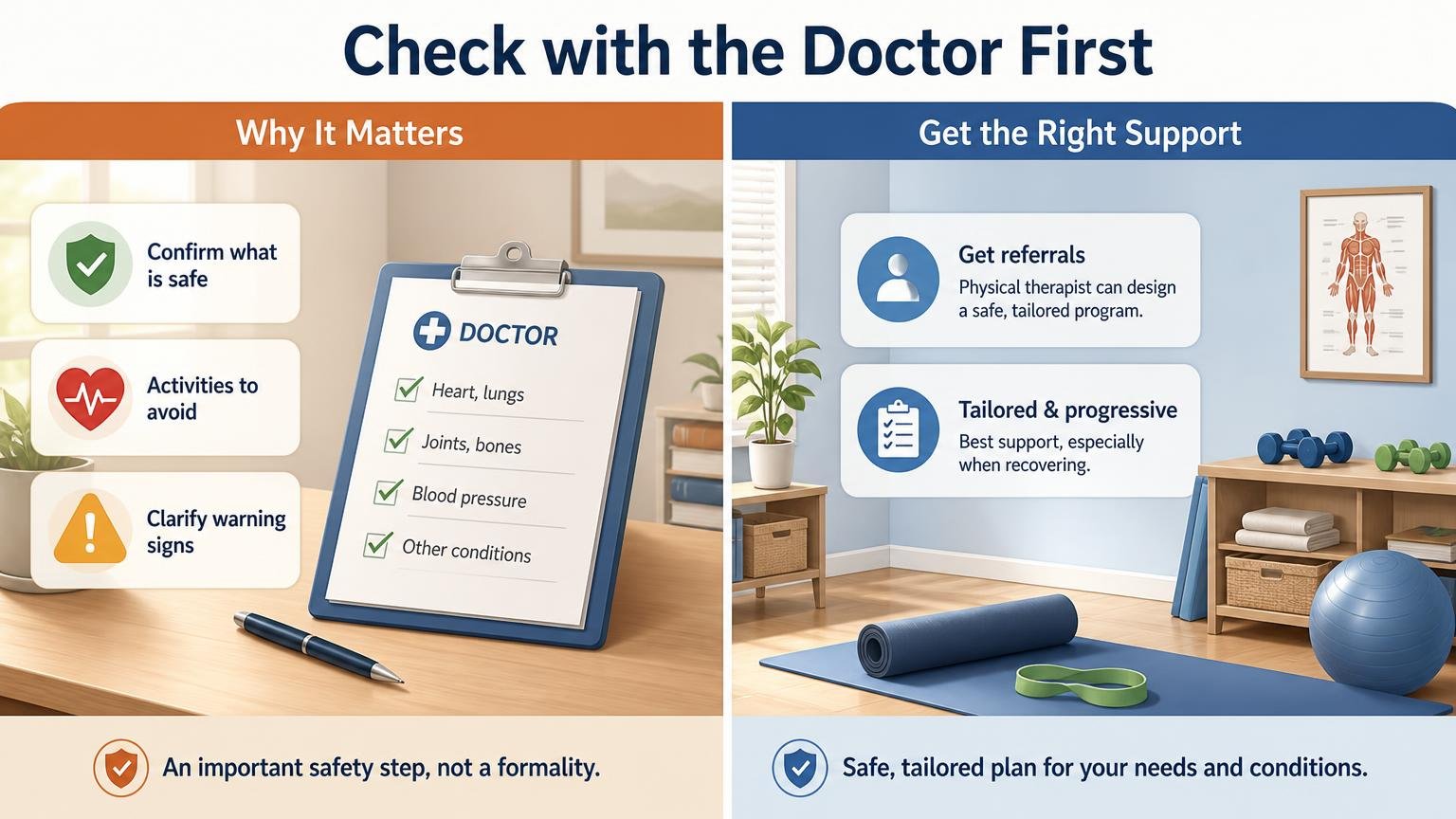
Before starting any new exercise program, especially for someone with health conditions or who has been inactive, check with their doctor. This is an important safety step, not a formality:
- Confirm what is safe — the doctor can advise on suitable activities and any that should be avoided given the person’s heart, lungs, joints, bones, blood pressure, or other conditions.
- Get referrals — a physical therapist can design a safe, tailored, progressive program, which is ideal, especially when recovering from illness, surgery, or a fall.
- Clarify warning signs — understand what symptoms mean stop and seek help for that individual.
With medical guidance in place, you can support exercise confidently and safely.
Watch out
Always get medical clearance before a new exercise program for a senior with heart or lung conditions, uncontrolled blood pressure, recent surgery, osteoporosis, or who is very frail or inactive. The right activities and limits depend on their specific health.
The four types of exercise that matter
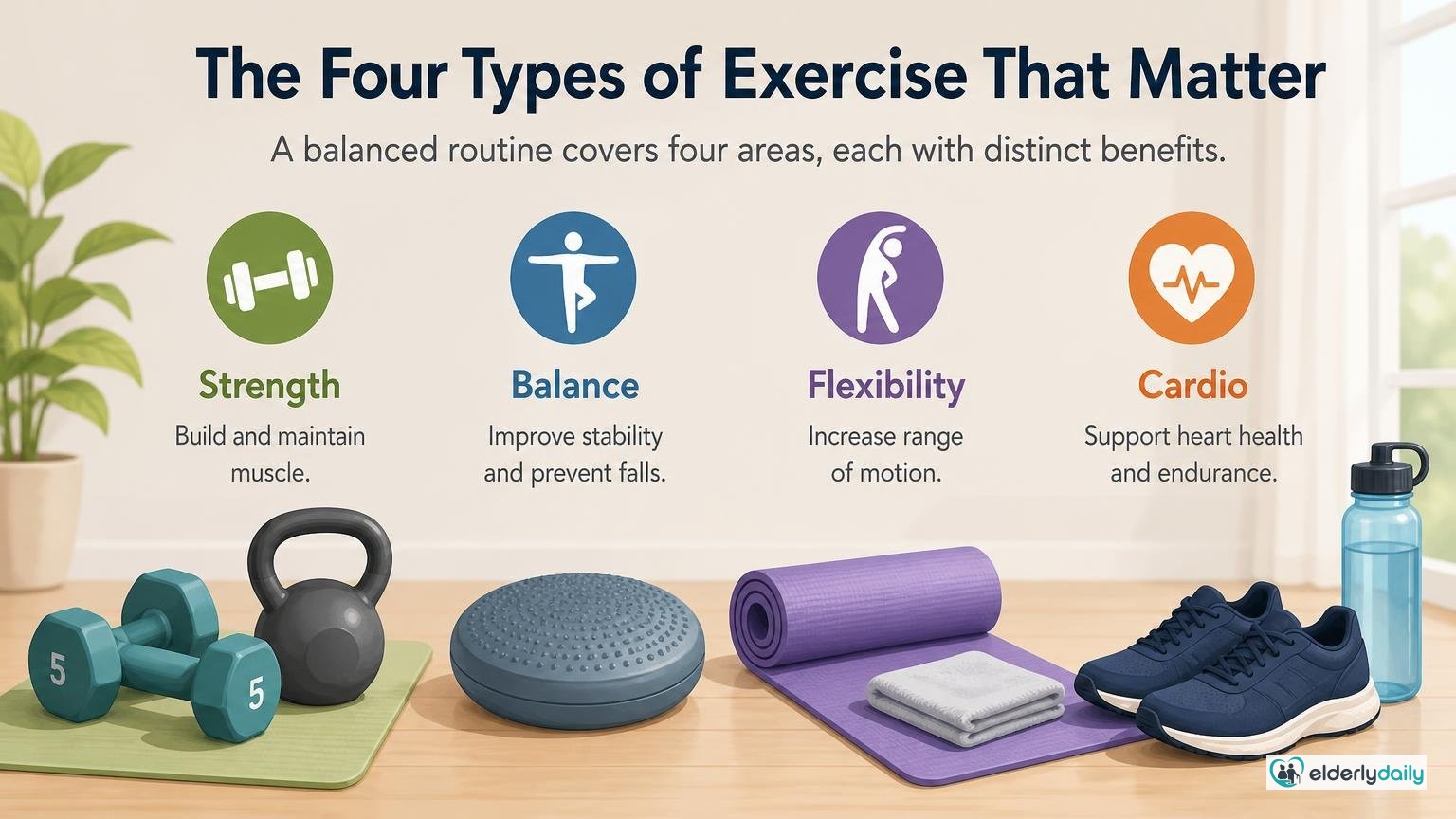
A balanced routine covers four areas, each with distinct benefits:
- Strength — builds and maintains muscle, crucial for mobility, standing, and preventing falls. Gentle resistance work (light weights, resistance bands, bodyweight moves like sit-to-stands) is very effective. Especially important for reversing weakness.
- Balance — directly improves steadiness and reduces falls; see balance exercises for seniors. Simple standing balance work, always with support nearby.
- Flexibility — gentle stretching maintains range of motion, eases stiffness, and supports everyday movements like reaching and dressing.
- Cardio (aerobic) — gentle activity like walking, cycling on a stationary bike, or swimming supports heart, lung, and overall health, and can be done at whatever level suits the person.
Keeping exercise safe
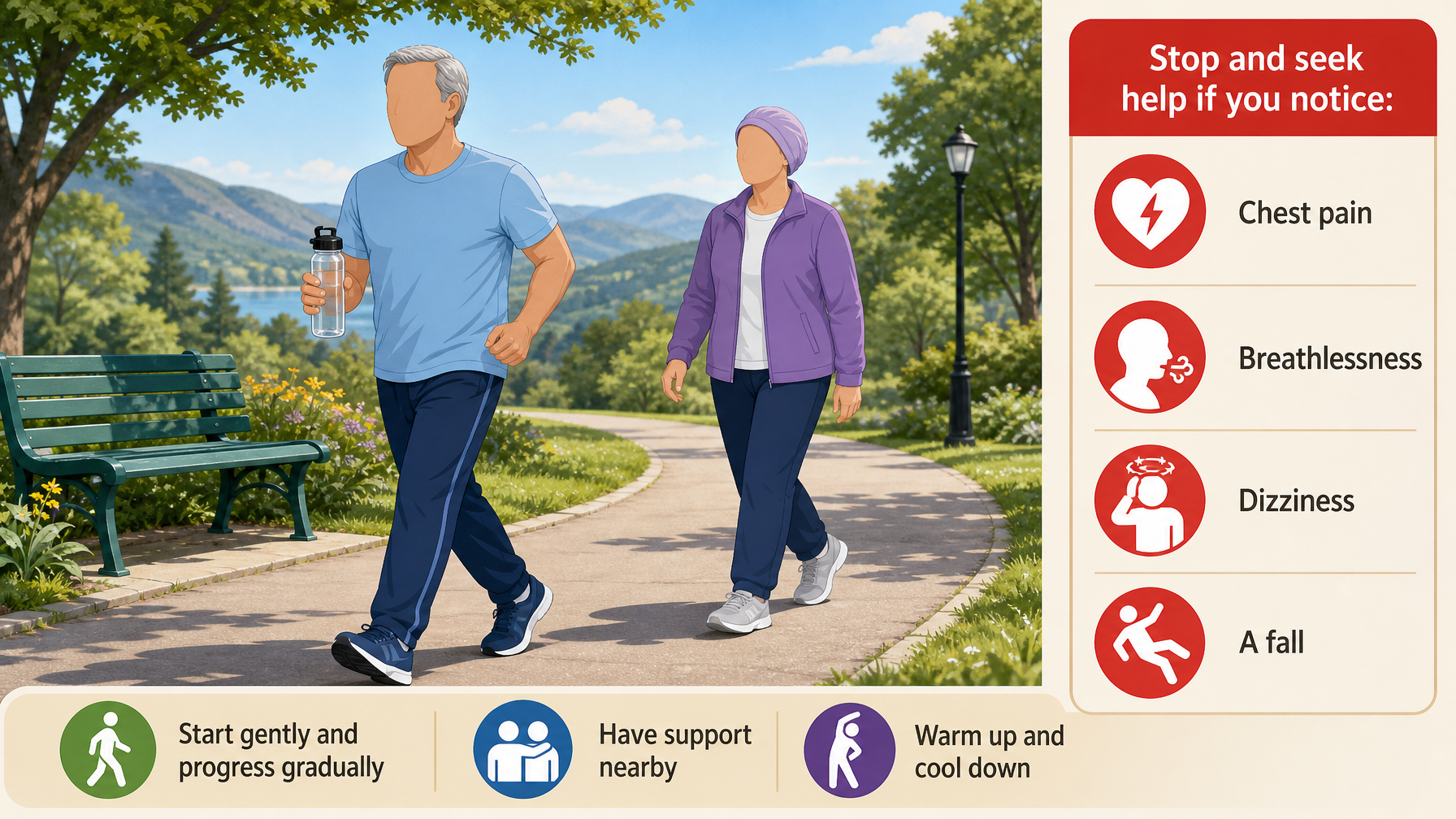
Safety precautions let the person exercise with confidence and avoid injury:
- Start gently and progress gradually — begin with what the person can manage and slowly increase; overdoing it causes injury and discouragement.
- Have support nearby — a sturdy chair, counter, or rail to hold for balance work, and be present to steady them if needed.
- Warm up and cool down — ease into and out of activity to protect muscles and joints.
- Good footwear and clear space — supportive, non-slip shoes and a clutter-free area.
- Stay hydrated and exercise in a comfortable temperature.
- Stop if something is wrong — pain, dizziness, chest discomfort, shortness of breath, or feeling unwell means stop and, for chest pain or severe symptoms, seek urgent help.
- Respect their limits and conditions — work within any medical guidance and the person’s abilities on the day.
Safety first
Stop exercising immediately and seek urgent help for chest pain or pressure, severe breathlessness, dizziness or faintness, or a fall. "No pain, no gain" does not apply — discomfort that is sharp or worrying is a signal to stop, not push through.
Making it achievable and enjoyable
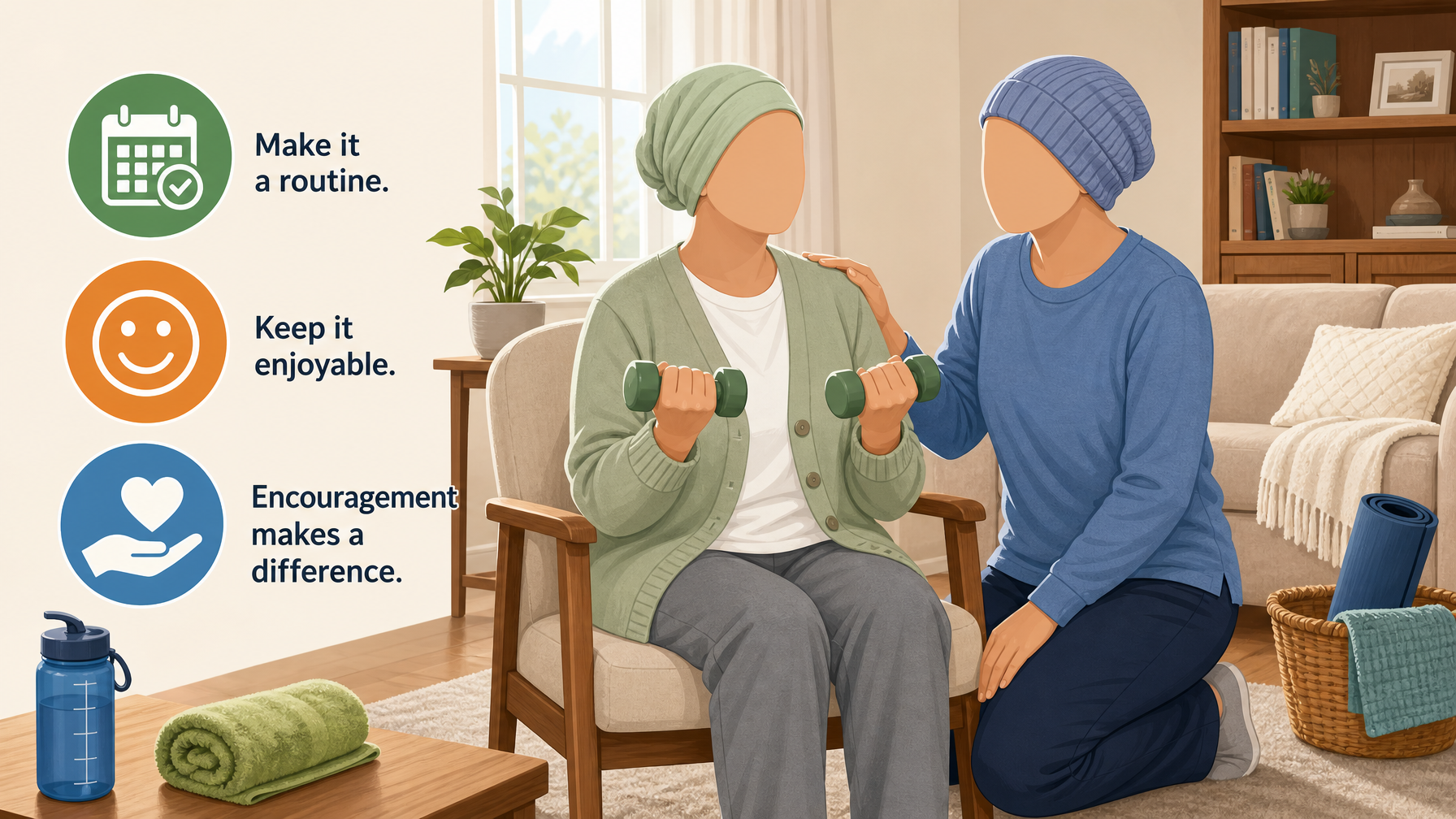
Beyond safety, a caregiver’s encouragement and practical help are what turn good intentions into a lasting habit:
- Make it a routine — a regular, realistic schedule (even short daily sessions) beats occasional big efforts; consistency is what delivers results.
- Keep it enjoyable — activities the person likes, music, exercising together, or a class or group add motivation and social contact.
- Set achievable goals and celebrate progress — small, visible wins build motivation and confidence, which is especially powerful against fear of falling.
- Adapt to the person — seated exercises for those with limited mobility, and adjusting to good and bad days; something is almost always possible.
- Join in — exercising alongside them provides company, encouragement, and gentle supervision, and is good for you too.
- Be patient and encouraging, never pushy — support autonomy and frame it around what they will gain.
Frequently asked questions
How can caregivers help seniors exercise safely?
Check with the doctor first, then support exercise across four types (strength, balance, flexibility, gentle cardio), starting gently and building gradually. Ensure safety with support nearby, good footwear, a clear space, hydration, and stopping for any warning signs. Make it a regular, enjoyable routine, set achievable goals, adapt to the person, and be encouraging — consistency matters more than intensity.
What types of exercise are best for seniors?
A balanced routine covers four areas: strength (resistance or bodyweight work to build muscle and help lower fall risk), balance (to improve steadiness and reduce falls), flexibility (gentle stretching for range of motion), and gentle cardio (walking, stationary cycling, or swimming for heart and overall health). Each has distinct benefits, so aim to include all four at an appropriate level.
Do seniors need a doctor’s approval before exercising?
It is strongly recommended to check with the doctor before starting a new exercise program, especially for someone with health conditions (heart, lung, joint, bone, or blood-pressure issues), who has had recent surgery, or who is very frail or inactive. The doctor can advise on safe activities and limits, and may refer to a physical therapist for a tailored program.
What safety precautions should seniors take when exercising?
Start gently and progress gradually, have sturdy support nearby for balance work, warm up and cool down, wear supportive non-slip footwear in a clutter-free space, stay hydrated, and stop immediately for pain, dizziness, chest discomfort, breathlessness, or feeling unwell (seeking urgent help for chest pain or severe symptoms). Always work within any medical guidance and the person’s abilities.
How do I motivate an elderly person to exercise?
Make it a regular, realistic routine (short daily sessions work well), keep it enjoyable with liked activities, music, or company, set achievable goals and celebrate small wins, adapt to the person’s abilities and good and bad days, and exercise alongside them for encouragement. Be patient and encouraging rather than pushy, and frame it around what they will gain in independence and wellbeing.
Can frail or immobile seniors still exercise?
Yes — exercise can almost always be adapted. Seated exercises allow strength, flexibility, and even gentle cardio work for those with limited mobility, and very gentle movements suit the frail. The key is starting at the right level with medical guidance, progressing gently, and adjusting to the person’s abilities. A physical therapist can design a safe program for even significant frailty.
