
ORKA Talking Clock Review: Best for Voice & Low Vision (2026)
 By Kutubuddin, Founder & Senior Care Researcher Updated October 8, 2026
In this guide
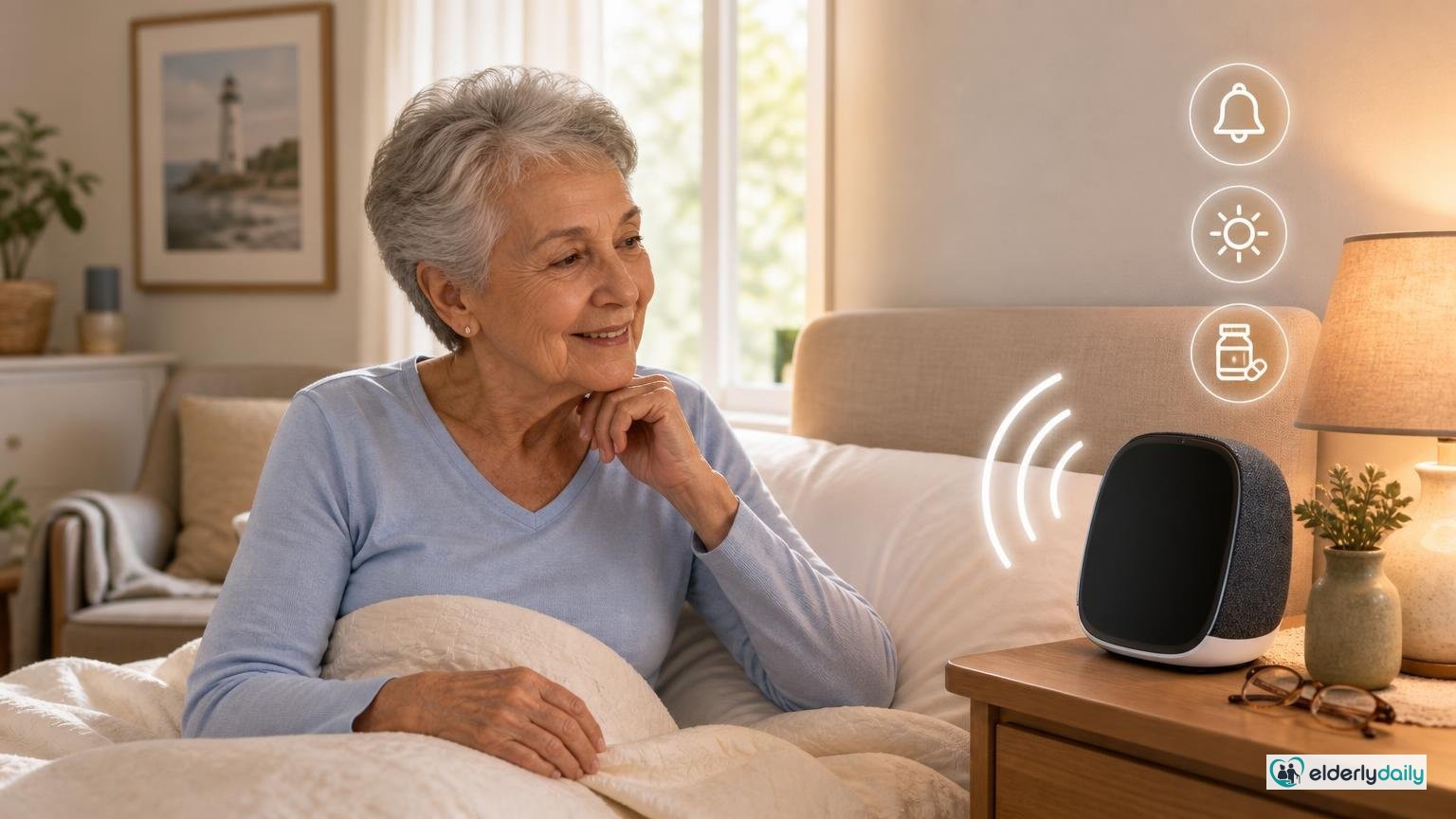
The ORKA announces the day and time aloud, plays up to 8 alarms recorded in your own voice, and pairs extra-large digits with 90 dB volume — built for low vision and hearing loss.
When a screen isn't enough — sight failing, or a spoken prompt simply lands better — the ORKA is our pick, and the only clock here that talks. Press a button and it announces the day, date and time aloud in one of six languages; set a reminder and it plays up to eight alarms recorded in your own voice, so a loved one hears a familiar "time for your morning tablets" rather than a beep.
It's also built for the senses that fade: extra-large 1.93-inch digits and spelled-out words for low vision, and a loud 90-decibel volume for hard-of-hearing users. It costs more and the voice alarms take setup, but for eyes-free, ears-first reminders nothing else in our roundup compares. For plain visual clarity, our best overall pick is simpler and cheaper.
We may earn a commission when you buy through links on this page, at no extra cost to you. Read our affiliate disclosure.

ORKA Talking Alarm Clock
Seniors with low vision, or who respond best to spoken reminders
- Announces the day, date, and time aloud at the press of a button
- Record up to 8 alarms in your own (or a loved one's) voice
- Extra-large 1.93-inch digits and spelled-out day for low vision
- Loud up to 90 dB volume for hard-of-hearing users, with a mute switch
- 30-minute reminder loop so a prompt is not missed
- Discreet — no "dementia" wording on the clock or packaging
Type
Talking day clock (announces aloud)
Display
HD, extra-large 1.93 in digits, spelled-out day
Voice alarms
Up to 8, record your own message
Reminder loop
30 minutes so it is not missed
Volume
Up to 90 dB (loud), with mute
Languages
6 (English US/UK, Spanish, German, French, Italian)
Power
Plug-in AC; battery is outage backup only
What we like
- Announces the day, date, and time aloud at the press of a button
- Record up to 8 alarms in your own (or a loved one's) voice
- Extra-large 1.93-inch digits and spelled-out day for low vision
- Loud up to 90 dB volume for hard-of-hearing users, with a mute switch
- 30-minute reminder loop so a prompt is not missed
- Discreet — no "dementia" wording on the clock or packaging
Worth noting
- Pricier than a display-only clock
- Recording the voice alarms takes some setup — a caregiver may need to help
- Audio prompts still rely on the person being within earshot
- Plug-in only — no cordless battery operation (battery is backup only)
Buy it if…
- The person has low vision and benefits from hearing the time and reminders
- A familiar recorded voice lands better than a beep or an on-screen message
- Hearing loss means a loud, clear prompt matters
- You want spoken medication reminders, not just a silent alarm
Look elsewhere if…
- Plain visual clarity is all you need — the American Lifetime is simpler and cheaper
- The person cannot hear even a loud prompt and reads better — a large-display clock like the JALL fits better
- You need it to run on batteries away from an outlet
The talking feature: it says the time aloud
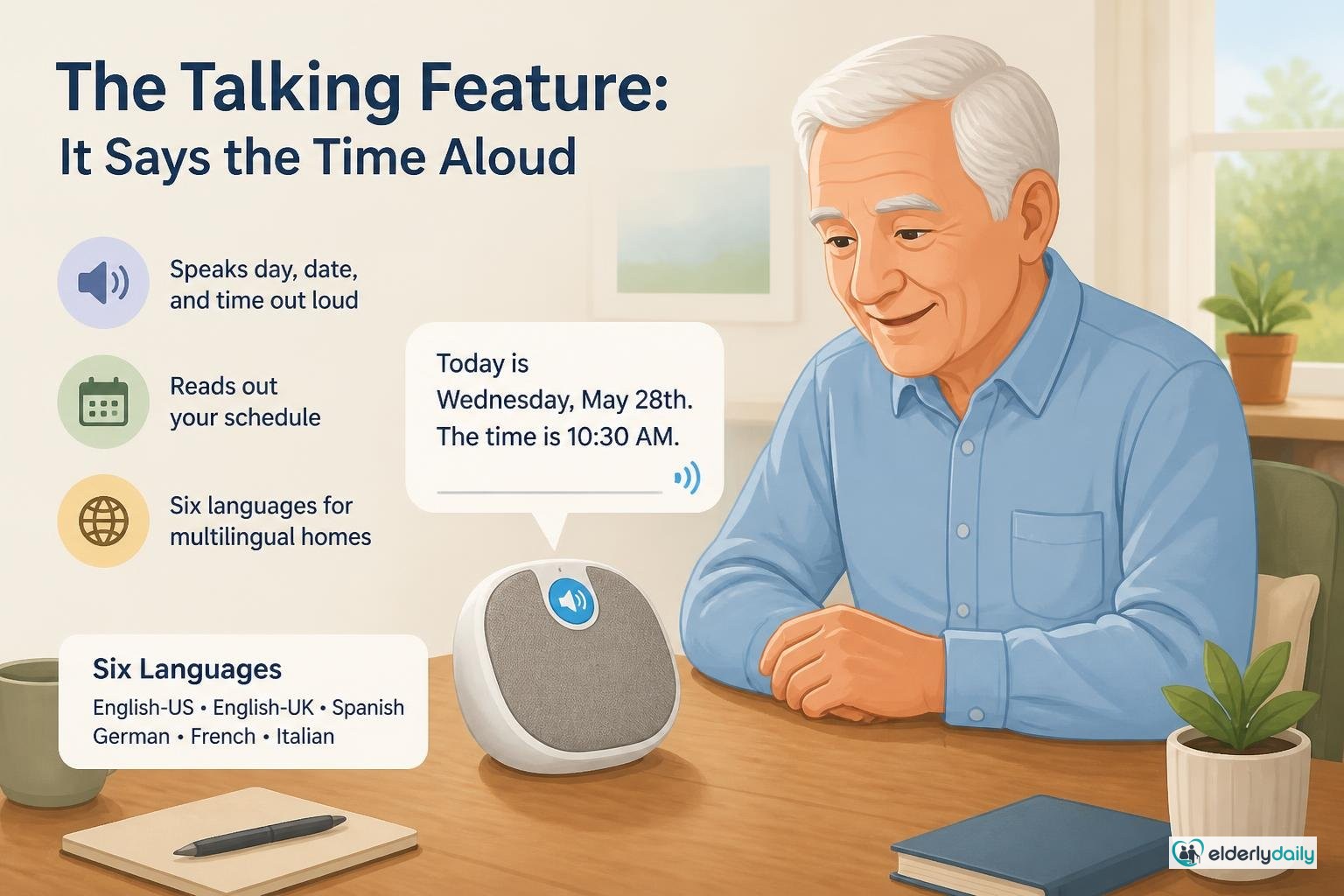
The ORKA's defining feature is that it speaks. At the press of a button it announces the day, date, and time out loud, and it can read out the weekly schedule too — so a person who can no longer read a screen still gets the information clearly. It speaks in six languages (English-US, English-UK, Spanish, German, French, and Italian), which helps in multilingual households.
For someone with significant sight loss, or anyone who simply takes in spoken information better than text, that is the whole point: the clock meets them through hearing rather than vision, which is why it stands apart from every display-only option in the roundup.
Record up to 8 alarms in your own voice
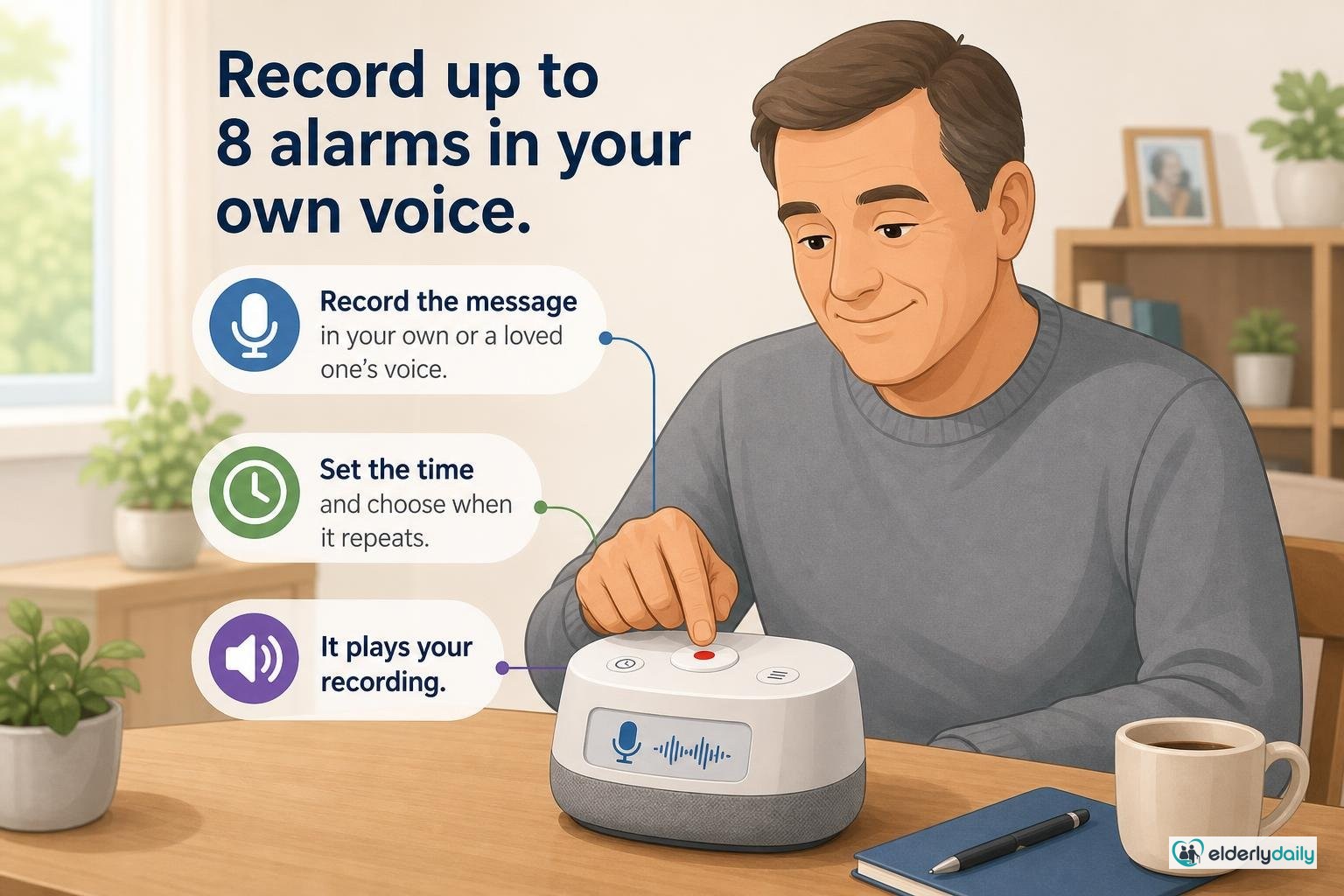
This is the ORKA's second standout: you don't just set an alarm, you record the message it plays. Setting one up works like this:
- Record the message — in your own or a loved one's voice, e.g. "Dad, time for your afternoon tablets."
- Set the time and choose when it repeats.
- It plays your recording aloud at that time — up to 8 separate voice alarms, with a 30-minute loop so a missed prompt repeats.
A familiar voice can reduce the anxiety around missed medication far more than a generic beep, which makes it a genuinely useful tool for medication management. Where the reminder still needs to be paired with the actual dose, an automatic pill dispenser handles the dispensing.
Built for low vision and hearing loss
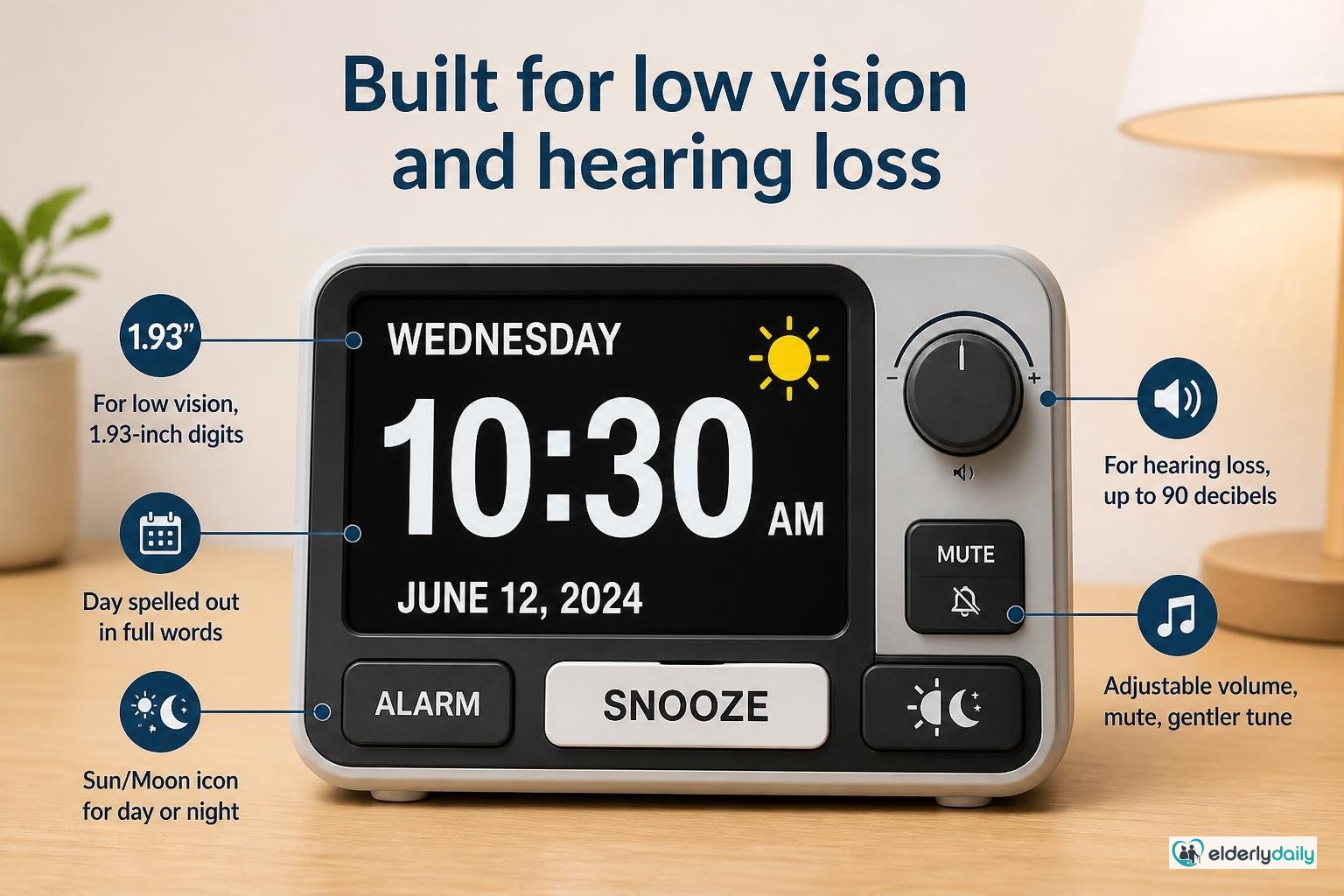
Beyond the voice, the hardware is designed around fading senses:
- For low vision — extra-large 1.93-inch digits, the day spelled out in full words, a Sun/Moon icon for day or night, big buttons, and a display that flashes during an alarm.
- For hearing loss — a loud volume of up to 90 decibels, adjustable, with a mute switch and a gentler tune than the jarring buzz most clocks use.
That combination makes it a rare clock that serves sight and hearing impairment at once — a good fit alongside broader hearing and vision support at home. If hearing is the bigger issue, our hearing aids for seniors review covers that directly.
Everyday use and power
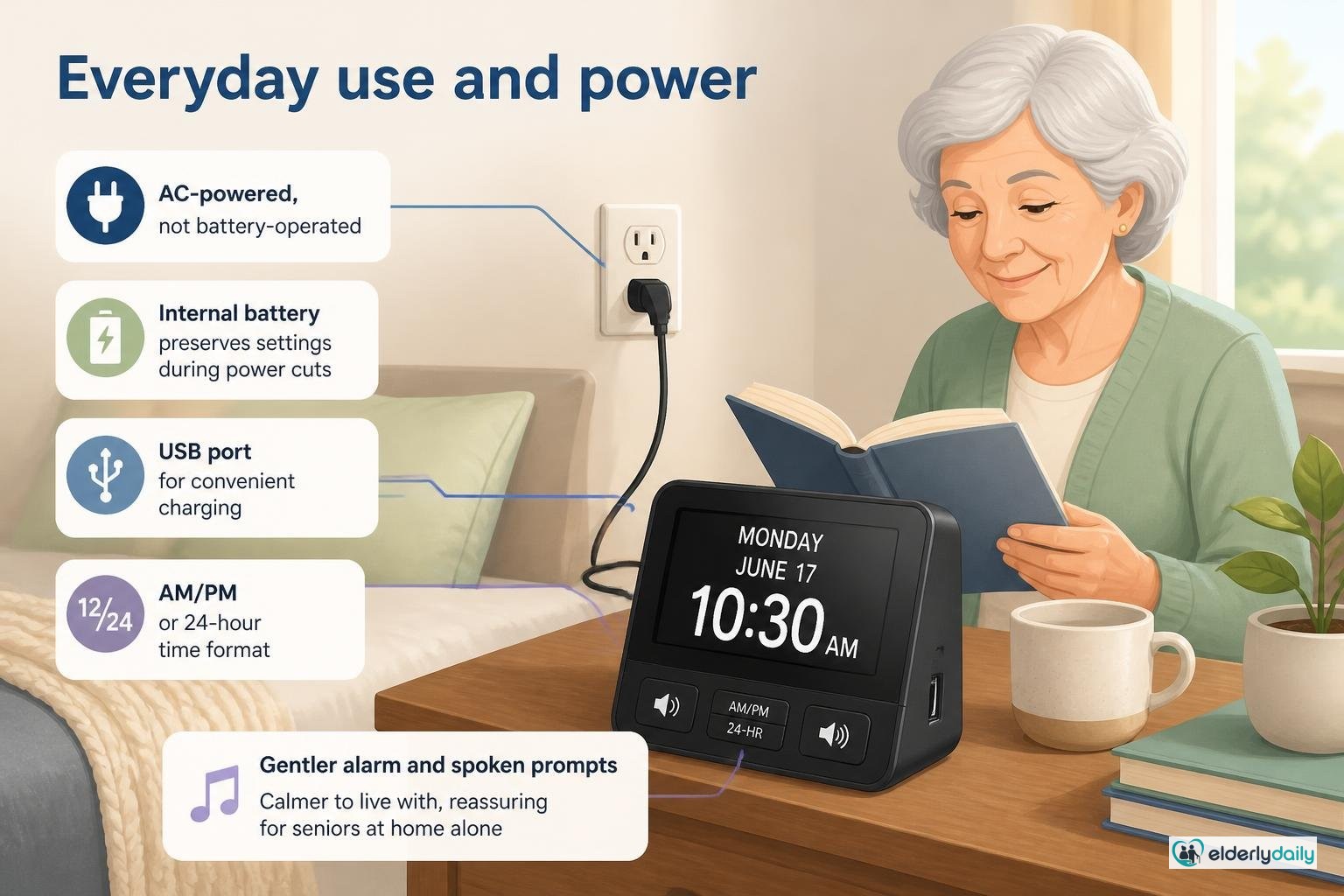
The ORKA is an AC-powered clock — it is not battery-operated, so it needs an outlet; the internal battery only preserves settings during a power cut. It also has a USB port and works in AM/PM or 24-hour format.
Day to day, the gentler alarm tune and spoken prompts make it calmer to live with than a shrill beeper — a small thing that matters for someone who is easily startled, and reassuring for a senior living alone or managing dementia care at home.
Who it's for
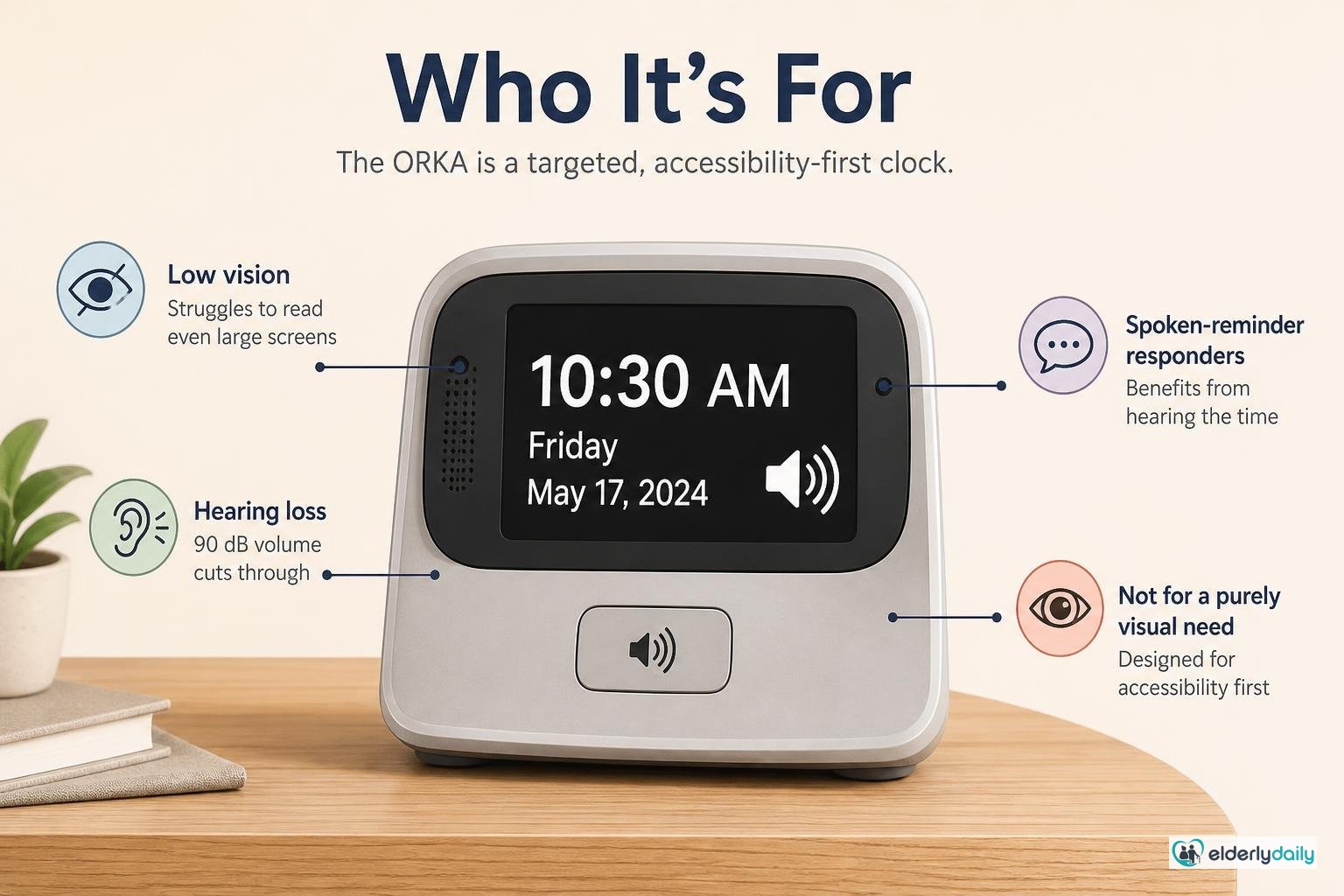
The ORKA is a targeted, accessibility-first clock:
- Low vision — anyone who struggles to read even a large screen and benefits from hearing the time.
- Hearing loss — the 90 dB volume cuts through where a quiet clock would be missed.
- Spoken-reminder responders — people who act on a familiar voice more reliably than a beep or text.
- Not for a purely visual need — if the person reads fine and just wants the day and date, a display-only clock is cheaper and simpler.
Its discreet packaging makes it an easy, dignified gift for a senior.
How it compares to other dementia clocks
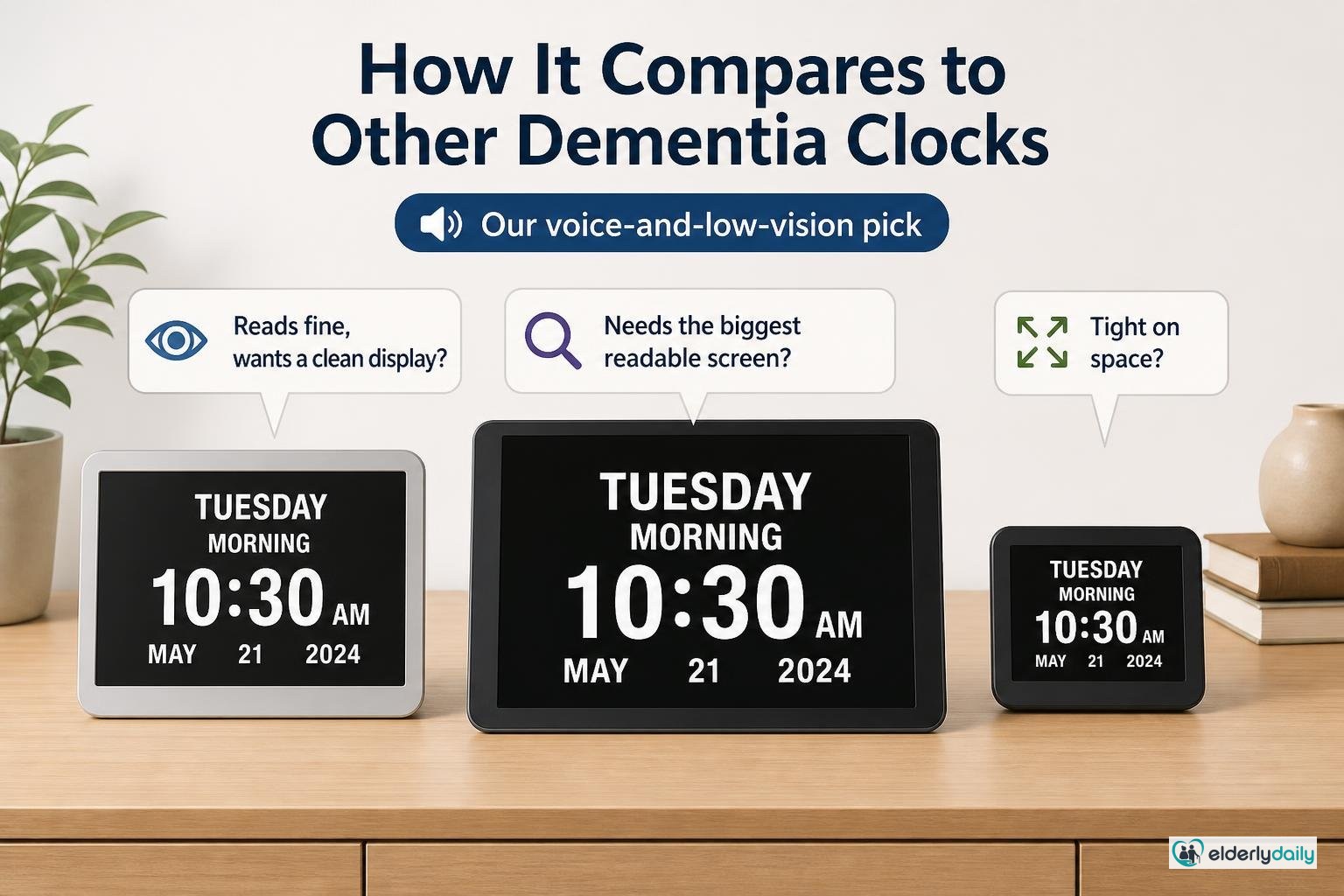
It is our voice-and-low-vision pick, and the choice is really about sight and sound:
- Reads fine, wants a clean display? Our best overall pick is a simpler, cheaper 8-inch clock.
- Needs the biggest readable screen? The JALL 8-inch IPS reads best from across a room.
- Tight on space? The compact SSYA fits a smaller footprint.
All five are compared side by side in our best dementia clocks roundup.
What ORKA says
The following are ORKA’s own marketing claims from the product listing, not our independent findings. Figures such as ratings and review counts change over time — check the current Amazon listing for the latest.
- ORKA states the clock announces the day, date, and time aloud and can read out the weekly schedule, in six languages.
- ORKA describes up to 8 alarms that play messages you record in your own voice, with a 30-minute reminder loop.
- ORKA lists extra-large 1.93-inch digits, a spelled-out day with no abbreviations, big buttons, a Sun/Moon icon, and a flashing display during alarms.
- ORKA states the clock is AC-powered (not battery-operated), reaches up to 90 decibels with a mute switch, and uses the battery only to retain settings during a power outage.
How it compares to other dementia clocks
The ORKA is our pick when hearing matters more than sight — a talking clock with recordable voice reminders and loud, clear audio. For a purely visual need, a display-only clock is simpler and cheaper. All are covered in our roundup.
- American Lifetime Day Clock — our best overall pick — a clean 8-inch visual display, simpler and cheaper if voice is not needed.
- JALL 8" Day Clock — the largest, most readable 8-inch IPS screen, with 12 alarms — best when the need is visual.
- Hearing aids for seniors — if hearing loss is the core issue, addressing it directly may matter more than a louder clock.
Frequently asked questions
Yes — press a button and it announces the day, date, and time aloud, in one of six languages, and it can read out the weekly schedule too. It is the only talking clock in our dementia-clock roundup.
Yes. You can record up to 8 alarms in your own or a loved one's voice, so the reminder plays as a familiar message rather than a beep, with a 30-minute loop so a missed prompt repeats.
It reaches up to 90 decibels, which is loud, and the volume is adjustable with a mute switch. That makes it a strong choice where a quiet clock would be missed.
No — it is AC-powered and needs an outlet. The internal battery only preserves the settings during a power outage; it does not run the clock on its own.
The others are visual, display-only clocks. The ORKA adds spoken announcements and recordable voice reminders plus loud 90 dB audio, so it suits low vision and hearing loss. If the need is purely visual, a display-only clock is simpler and cheaper.
ORKA Talking Alarm Clock
Best for: Seniors with low vision, or who respond best to spoken reminders
