
Hearing and Vision Support at Home for Seniors

Practical guidance for supporting sensory loss at home; not medical advice. Regular hearing and eye checks with professionals remain essential.
Sensory loss is isolating, but a thoughtful home and a few communication habits make a world of difference. This guide brings together the practical ways to support hearing and vision — and connection — at home.
Key takeaways
- Sensory loss is isolating and raises safety risk — but home setup and communication habits can restore much independence and connection.
- For hearing: reduce background noise, face the person and speak clearly (don’t shout), and use visual/vibrating alerts for alarms and the doorbell.
- For vision: maximize glare-free lighting, boost contrast, reduce clutter, and keep things consistent and clearly marked.
- Devices help — hearing aids, low-vision aids, big-button phones, and accessible tablets.
- Sensory loss increases fall risk — combine support with home safety, and keep regular professional checks.
Quick answer
How can I support a senior with hearing or vision loss at home?
Adapt the home and how you communicate. For hearing, cut background noise, face the person and speak clearly (never shout), and add visual or vibrating alerts for alarms and the doorbell. For vision, maximize bright glare-free lighting, boost contrast, reduce clutter, and mark hazards. Support both with the right devices (hearing aids, low-vision aids, big-button and accessible tech), keep up professional checks, and address the raised fall risk with home safety.
Why supporting the senses matters
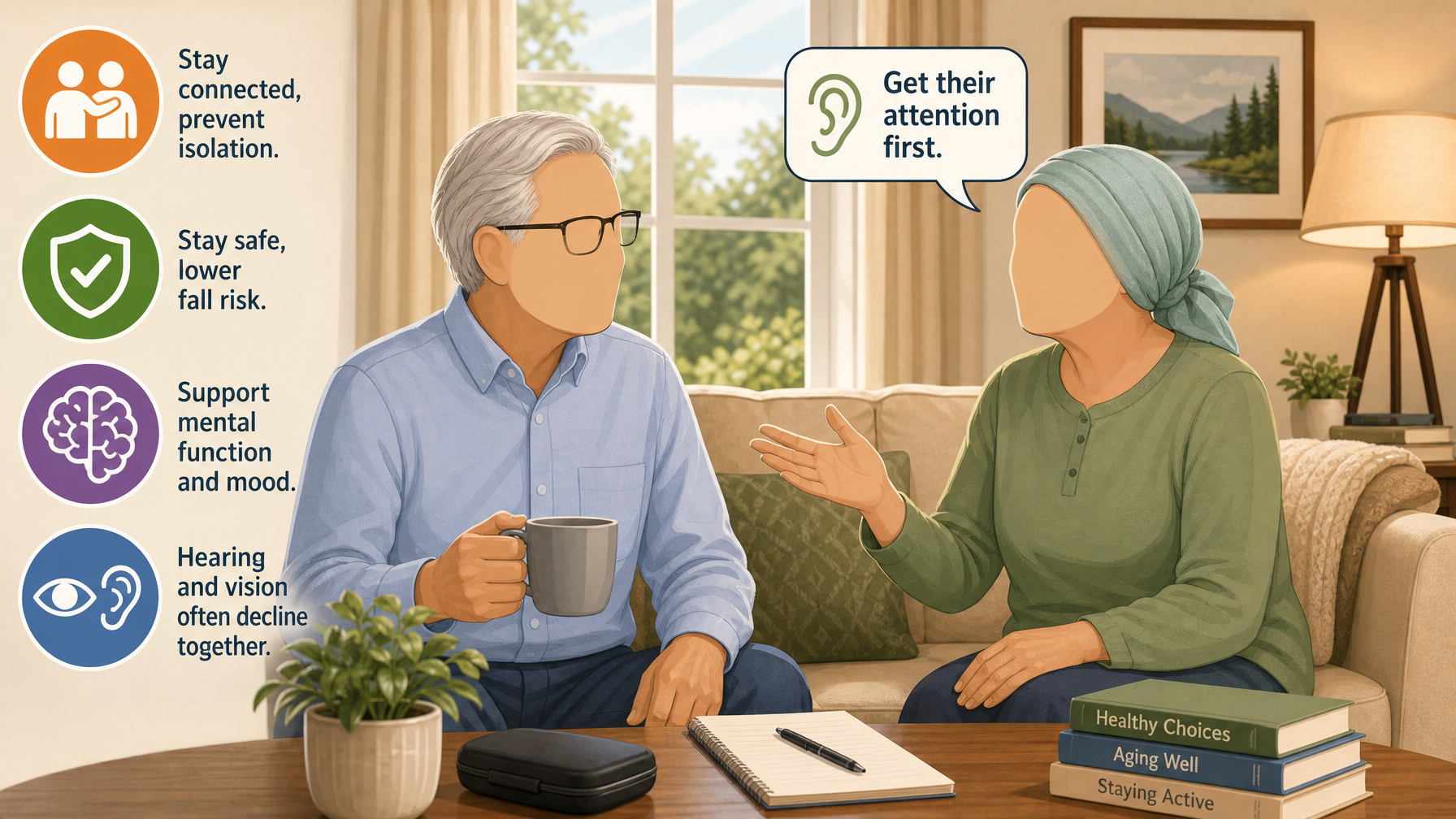
Hearing and vision are how we stay connected to people and safe in our surroundings, so losing them takes a toll well beyond the obvious. Sensory loss is strongly linked to social isolation and low mood, to greater fall risk, and to added strain on the mind — and the two senses often decline together in older age, compounding the effect.
The encouraging reality is how much a supportive home and a few learned habits can help. Alongside professional care and devices, the everyday environment and the way we communicate make an enormous difference to a person’s independence, safety, and sense of connection. This guide gathers those practical steps.

Sponsored Pick
MagniPros Hands-Free Gooseneck Magnifier
Tremor, arthritis, or anyone who finds holding a magnifier steady for more than a minute tiring.
Check PriceCommunicating with hearing loss
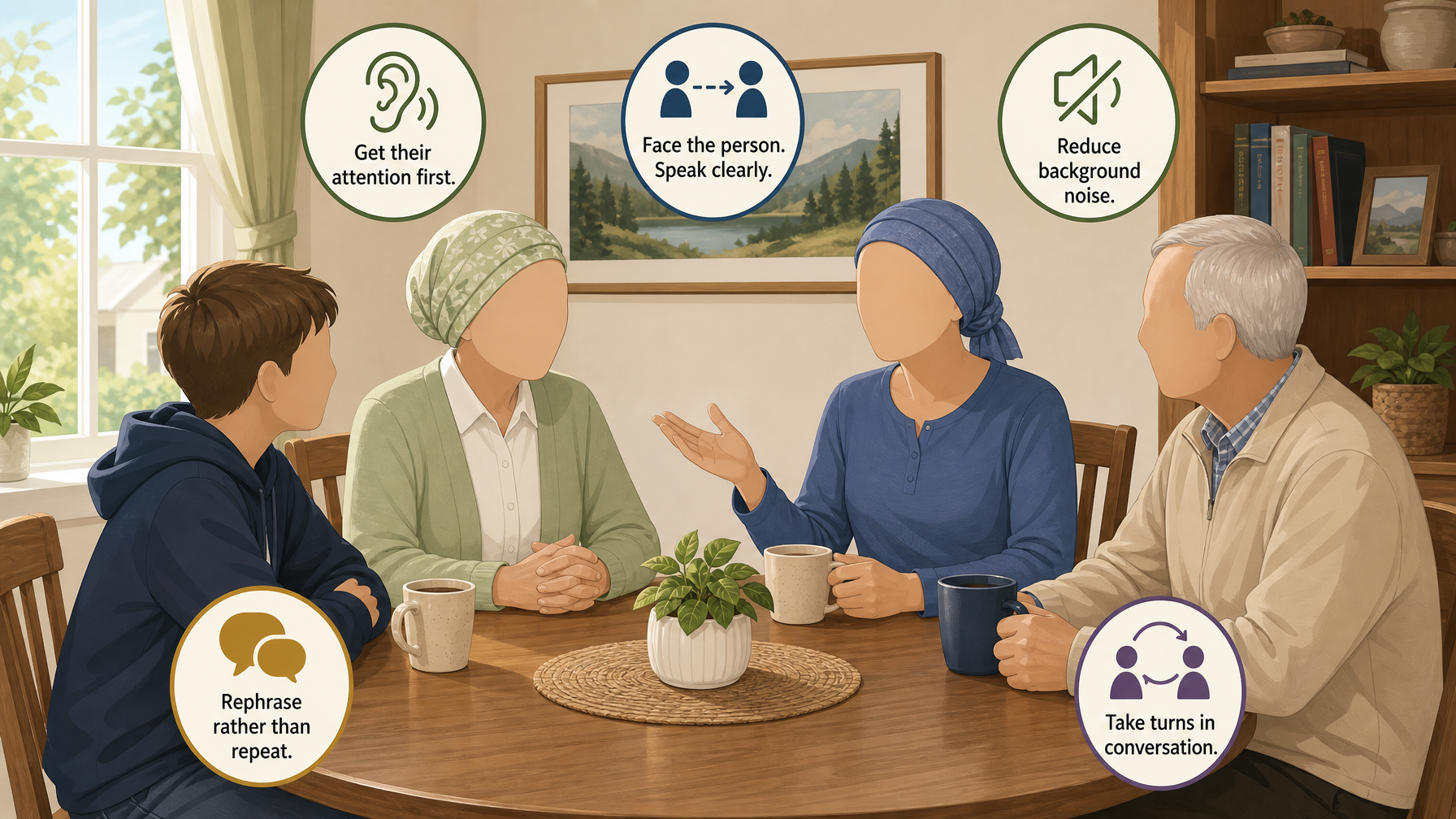
How family communicates matters as much as any device. Simple habits transform daily interaction for someone with hearing loss:
- Get their attention first, then face them directly in good light so they can see your lips and expression.
- Speak clearly at a natural pace — do not shout. Shouting distorts speech and can seem aggressive; clarity beats volume.
- Reduce background noise — turn off the TV or tap before talking; competing sound is the enemy of understanding.
- Rephrase rather than just repeat if not understood — different words may be clearer than the same ones louder.
- One person at a time in groups, and give the gist of group conversation so they are not left out.
- Be patient and supportive — frustration on either side makes it harder. Support consistent hearing-aid use too.
Good to know
The instinct to shout actually makes speech harder to understand. Face the person, speak clearly at a normal volume, cut the background noise, and rephrase if needed — that combination works far better.
Setting up the home for hearing
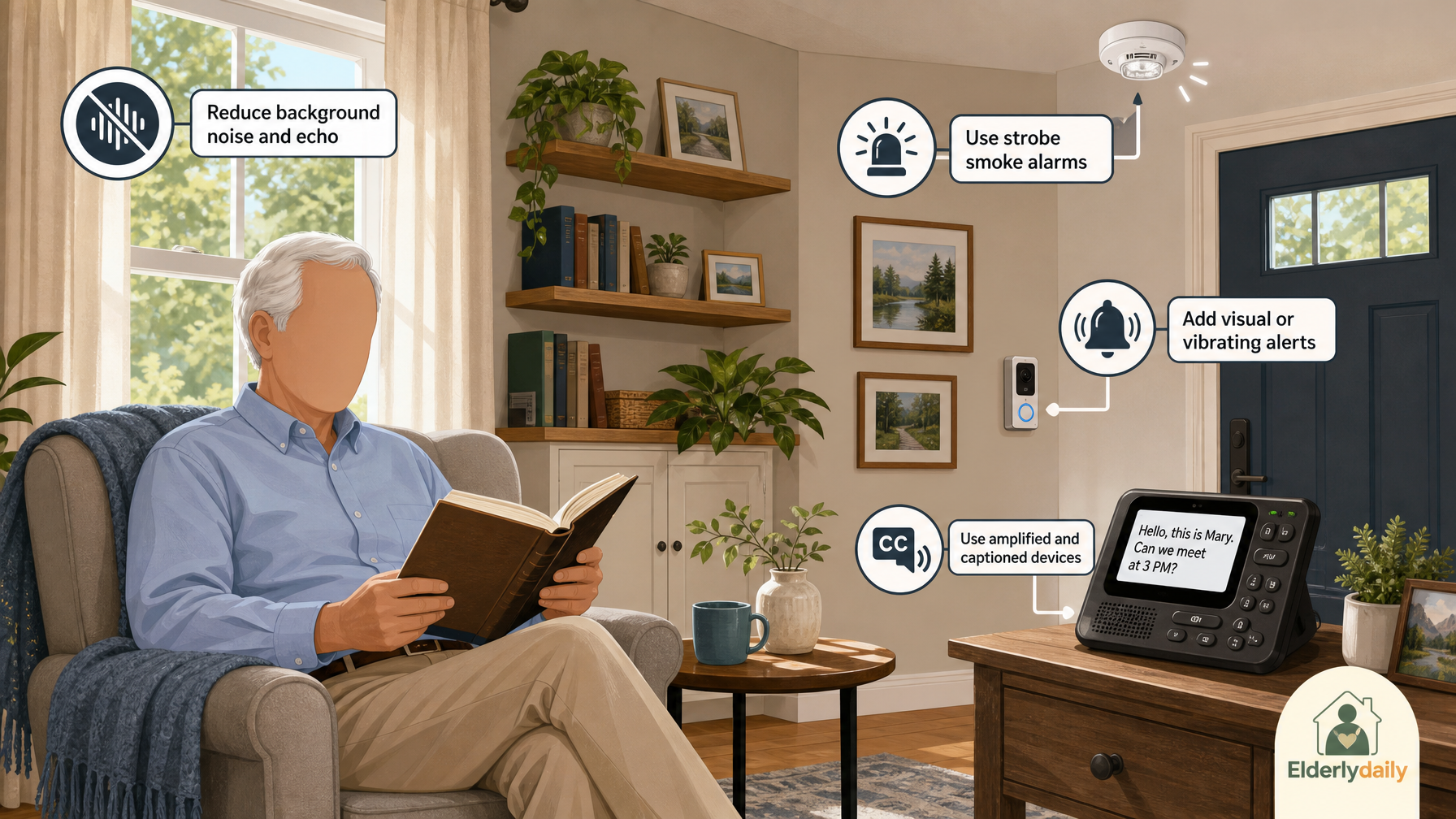
A few environmental changes make a home easier and safer to hear in:
- Reduce background noise and echo — soft furnishings (rugs, curtains, cushions) absorb sound and make speech clearer.
- Add visual or vibrating alerts for essentials — a doorbell that flashes a light, and crucially smoke and carbon-monoxide alarms with strobe or bed-shaker options so safety alerts are easier to notice.
- Use amplified and captioned devices — large-button amplified phones, captioned phones, and TV listening aids or captions.
- Create good listening spots — a quiet, well-lit place for conversation, away from noisy appliances.
- Do not confuse a sound amplifier with a hearing aid — they sit side by side online and look identical, but an amplifier is not a medical device and was never intended for hearing loss. See hearing aid vs amplifier.
Setting up the home for vision
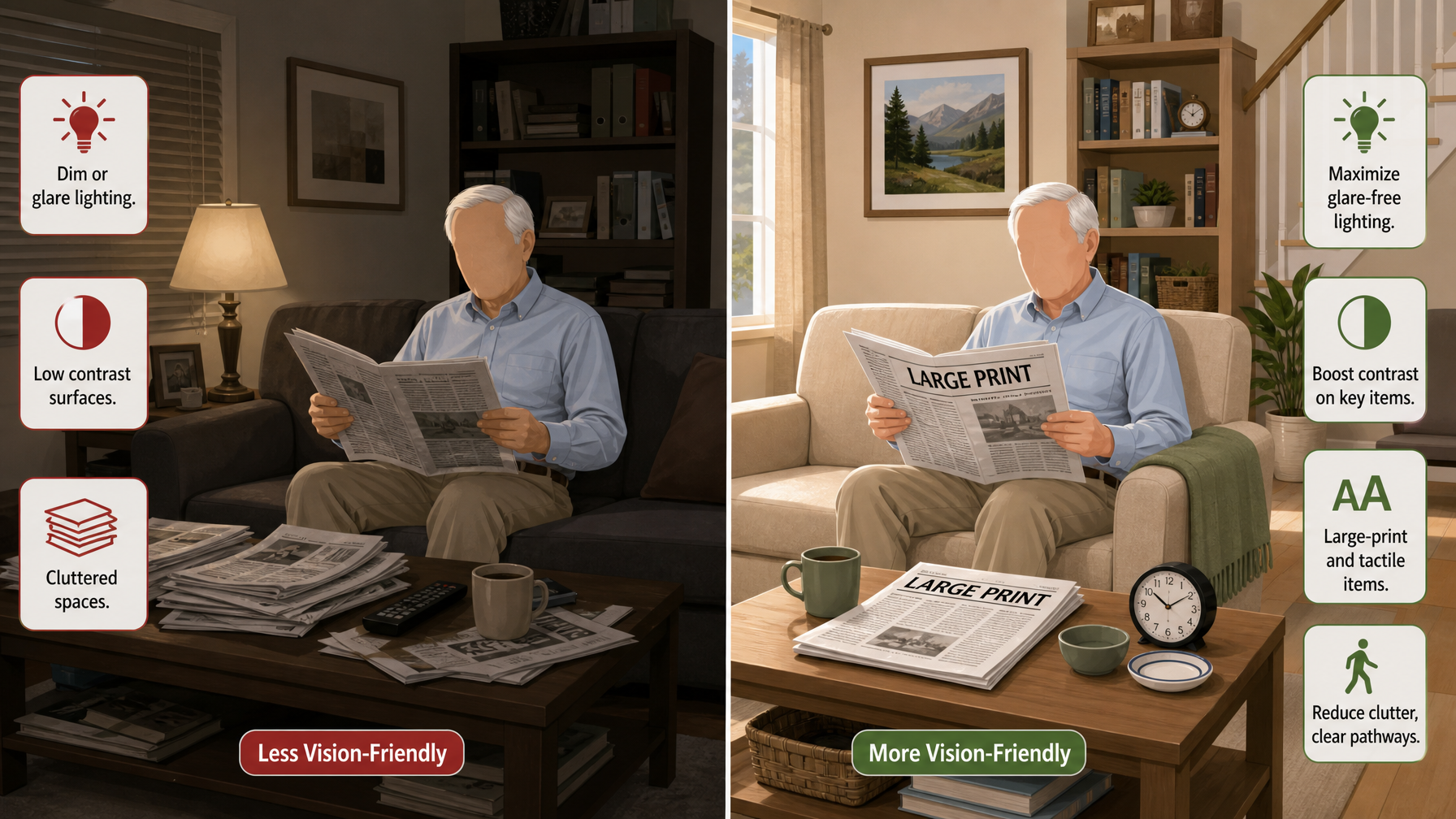
For low vision, the home environment is one of the most powerful tools — much of it covered in depth in our low vision aids guide, with the essentials here:
- Maximize glare-free lighting, especially task light for reading, cooking, and hobbies, and even lighting on stairs and in hallways. Older eyes need much more light.
- Boost contrast — dark-on-light or light-on-dark for surfaces, dishes, switches, and step edges, and coloured tape to mark hazards and controls.
- Reduce clutter and keep things consistent — items in predictable places are far easier to find and safer to move around.
- Use large-print, tactile, and talking items — labels, clocks, and appliance markings.
- Add accessible technology — an accessible tablet, and see setting up a phone for low vision.
Safety with sensory loss
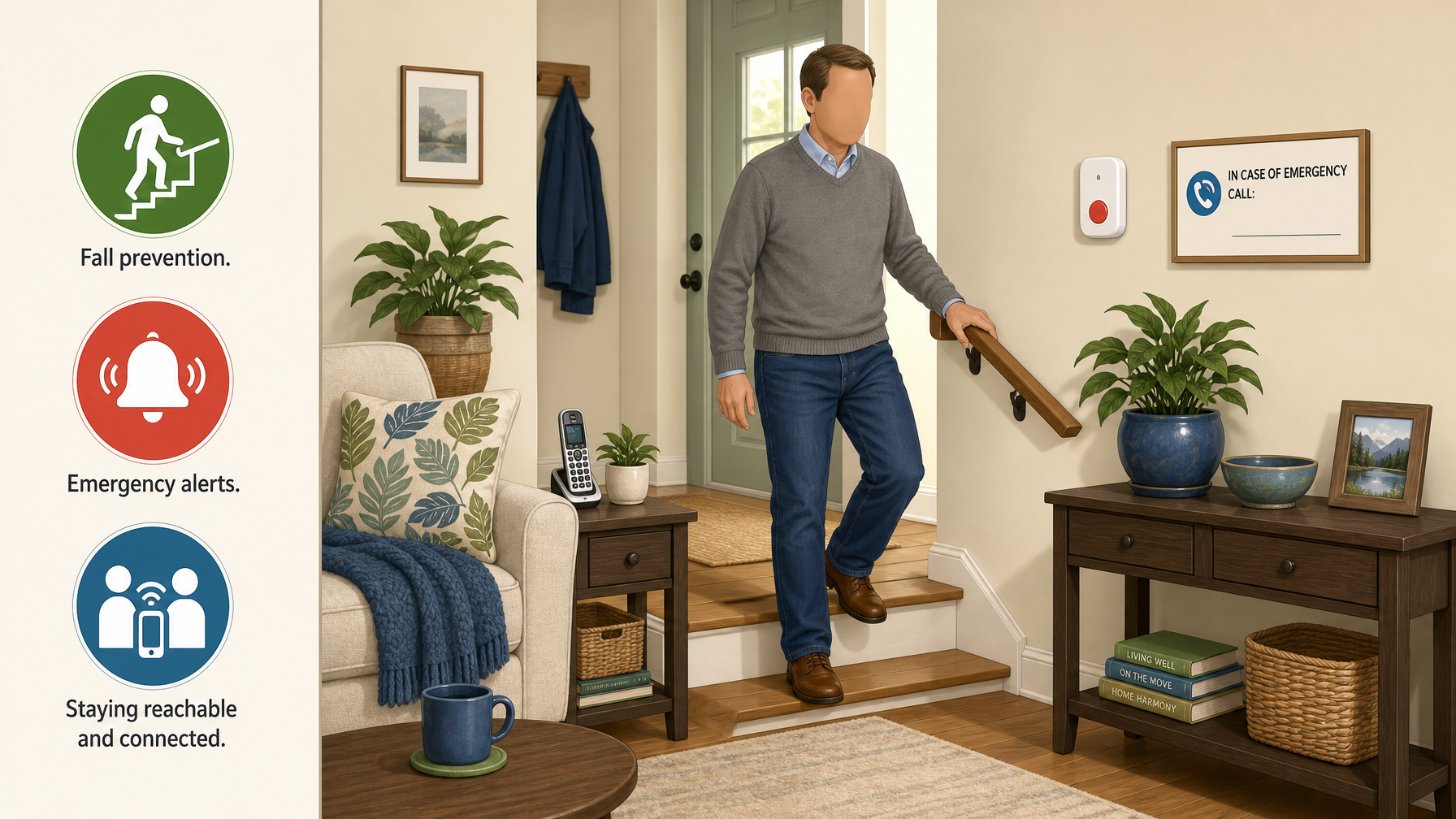
Both hearing and vision loss reduce awareness of the environment and raise the risk of accidents, so safety deserves specific attention:
- Fall prevention — both senses affect balance and hazard awareness; combine sensory support with home safety, bathroom safety, and the fuller fall-prevention approach. Vision loss especially calls for bright, even lighting and clearly marked steps.
- Emergency alerts — ensure the person can perceive and respond to alarms, and consider a medical alert device suited to their needs.
- Staying reachable and connected — video calling devices and simple communication tech reduce isolation and keep help a call away.
Protecting connection and getting checks

Finally, the human side. Sensory loss can quietly push people into isolation as conversation and activities become harder, so actively protecting connection is part of the support:
- Keep the person included — adapt activities and gatherings so they can take part, and use the communication habits above.
- Maintain enjoyable activities in accessible forms — audiobooks, large-print or talking games, music, and video calls with family.
- Watch for withdrawal and low mood, which often accompany sensory loss, and address the sensory cause as well as the emotional one.
- Keep up regular professional checks — hearing tests and eye exams catch changes early and keep aids and prescriptions current. And remember that a sudden change in hearing or vision is a medical emergency — see sudden hearing loss and seek urgent eye care for sudden vision changes.
Safety first
Regular checks are not optional maintenance — they catch treatable changes and keep aids effective. And any sudden loss of hearing or vision is an emergency: seek urgent care rather than waiting.
Frequently asked questions
How do I talk to someone with hearing loss?
Get their attention first, then face them directly in good light so they can see your lips and expression. Speak clearly at a natural pace without shouting (which distorts speech), reduce background noise, and rephrase rather than just repeat if not understood. In groups, have one person speak at a time and share the gist so they are included.
How should I set up a home for someone with low vision?
Maximize bright, glare-free lighting (especially task light and even lighting on stairs), boost contrast on surfaces, dishes, switches, and step edges, reduce clutter, keep items in consistent places, and use large-print, tactile, and talking items. Accessible technology like a tablet with large text and screen reading adds further independence.
What devices help seniors with hearing and vision loss?
For hearing: hearing aids, amplified and captioned phones, TV listening aids, and flashing or vibrating alerts for the doorbell and alarms. For vision: magnifiers, better lighting, large-button and talking devices, accessible tablets, and AI smart glasses. Video calling devices help both by adding visual cues and maintaining connection.
Why is background noise a problem for hearing loss?
Competing background sound makes it much harder for someone with hearing loss to pick out speech, because the brain cannot separate the voice from the noise as easily. Turning off the TV or a running tap before talking, and using soft furnishings to reduce echo, makes speech clearer — often more effective than simply speaking louder.
Does sensory loss increase safety risks at home?
Yes. Both hearing and vision loss reduce awareness of the environment and raise the risk of falls and accidents, and can mean missing safety alerts. Combine sensory support with fall prevention and home safety, ensure alarms are perceivable (flashing or vibrating), consider a medical alert device, and keep the person reachable and connected.
How can I stop a parent with sensory loss becoming isolated?
Actively include them by adapting conversations and activities, using clear communication habits, and offering enjoyable activities in accessible forms (audiobooks, large-print or talking games, music, video calls). Watch for withdrawal and low mood, address the sensory cause with aids and checks, and keep connection a priority alongside the practical support.
