
7 Best Sock Aids for Seniors
 By Kutubuddin, Founder & Senior Care Researcher Updated October 2026
In this guide
 Best overallVive Sock Aid
 Best for hip replacementRMS 4-Piece Hip Kit
 Best for arthritisSammons Preston Sock Aid
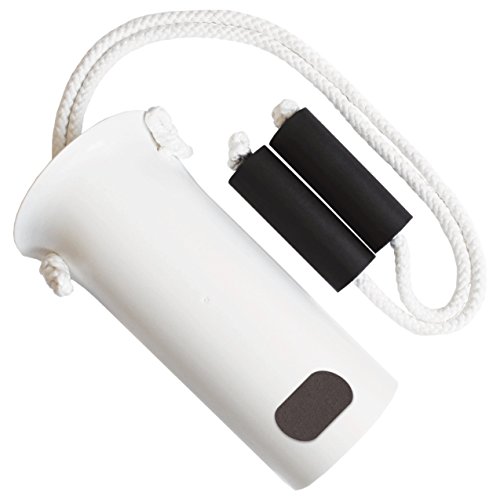 Best for wider feetRehabilitation Advantage Sock Aid
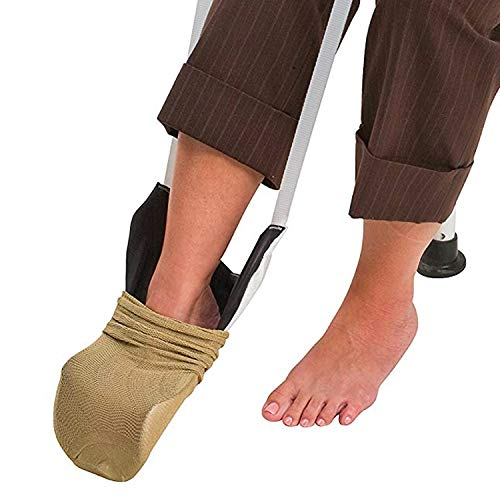 Best budgetDMI Deluxe Sock Aid
 Best for one-handed useKinsman Enterprises Sock Aid
 Best semi-rigid shellRMS Deluxe Sock Aid
- What to look for
- Frequently asked questions
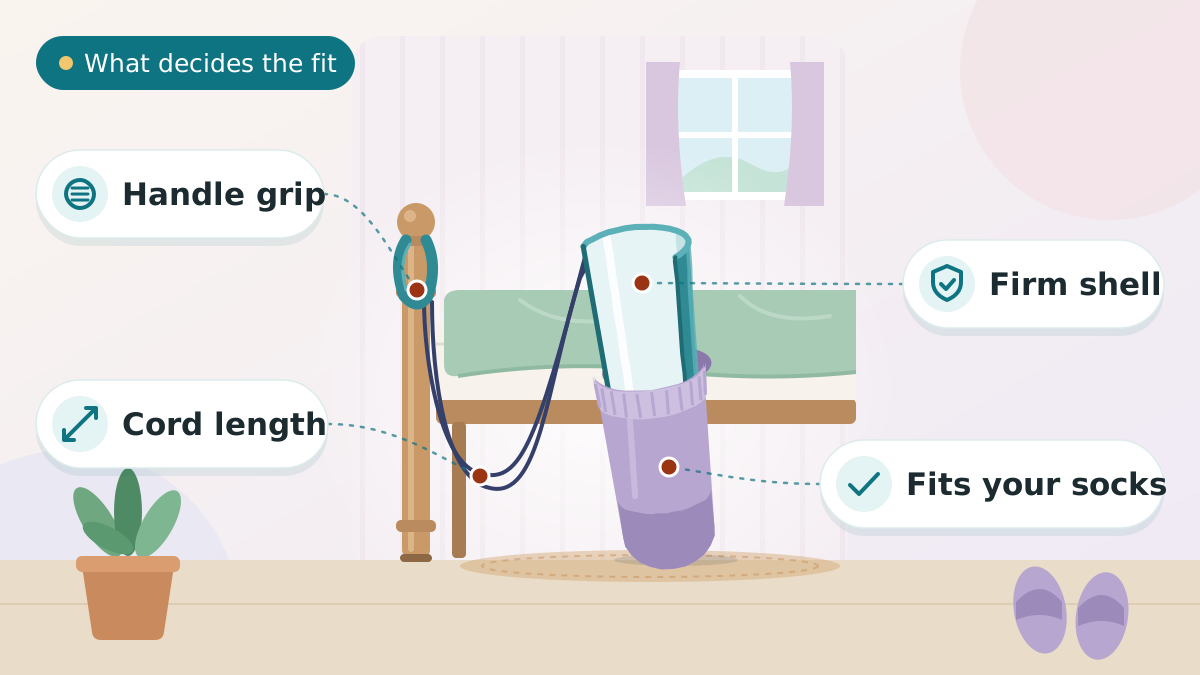
For most seniors who struggle to reach their feet, the Vive Sock Aid is the best all-around pick: its extra-long handles eliminate the bending, its foam grips are kind to stiff hands, and it is easy to learn. The right choice changes with the situation, though. After a hip or knee replacement, the semi-rigid RMS Deluxe is the physical-therapy standard because it keeps you inside your bending precautions. Arthritic hands do better with the thick foam handles of the Sammons Preston. A stroke survivor or anyone with one-sided weakness needs the weighted, single-handle Kinsman design. And if the goal is donning compression stockings rather than regular socks, a flexible sock aid is the wrong tool — use a rigid compression donner instead, which we compare separately in our compression sock aid guide. Sock aids pair naturally with a reacher grabber and other dressing aids for a complete no-bend morning routine. Further down, step-by-step sections cover specific situations: arthritis, back pain, limited mobility, and one-handed dressing after a stroke. If reaching and gripping is making dressing hard generally, the other garment worth changing is the bra — our front closure bras guide covers the closures that work with stiff hands.
We may earn a commission when you buy through links on this page. Read our affiliate disclosure.
Our Top Pick
Vive Sock Aid
The Vive Sock Aid combines excellent value with reliable performance, making it the top choice for most elderly users.
- Very affordable price point
- Easy to learn and use
- Lightweight and portable
- Works with most sock types, including diabetic socks
Type
Flexible shell sock aid
Handles
33-inch ropes, foam grips
Weight
About 4 oz
Top 7 Picks — Find Your Situation
- Vive Sock AidBest overall
Best forMost elderly adults with limited flexibility, back pain, or general difficulty reaching their feet
- Very affordable price point
- Easy to learn and use
- Lightweight and portable
Watch out: Not suitable for compression stockings
- RMS 4-Piece Hip KitBest for hip replacement
Best forSeniors recovering from hip or knee replacement surgery who must avoid bending past 90 degrees
- Complete no-bend dressing and bathing set
- The tools therapists recommend after hip or knee surgery
- Cheaper bought together than piece by piece
Watch out: More than you need if you only want a sock aid
- Sammons Preston Sock AidBest for arthritis
Best forElderly users with arthritis, weak grip strength, or chronic hand pain
- Exceptional comfort for arthritic hands
- Wide opening accommodates swelling
- Medical-grade, rehabilitation-facility quality
Watch out: Higher price than basic models
- Rehabilitation Advantage Sock AidBest for wider feet
Best forSeniors with wider or larger feet, or who wear thicker or larger socks
- Wider 5-inch shell fits larger feet and thicker socks
- Soft foam handles with comfortable grip and leverage
- Non-slip foam pad holds the sock while you load it
Watch out: Not a true one-handed aid — two handles, no weighted base
- DMI Deluxe Sock AidBest budget
Best forBudget-conscious seniors with mild flexibility issues, or anyone trying a sock aid for the first time
- Inexpensive way to try a sock aid
- Terry-cloth cover keeps the sock from slipping
- Loop-handle straps are easy to grasp
Watch out: Loop handles are not padded — harder on arthritic hands than foam grips
- Kinsman Enterprises Sock AidBest for one-handed use
Best forStroke survivors, hemiplegia, or anyone dressing with one working hand
- Purpose-built for one-handed use
- Weighted base stays planted — no second hand to steady it
- Occupational-therapist designed
Watch out: Heavier than standard sock aids
- RMS Deluxe Sock AidBest semi-rigid shell
Best forPost-surgery bending precautions, limited range or stamina, or anyone who keeps missing with a flexible shell
- Semi-rigid shell keeps the motion controlled
- Terry lining grips the sock — fewer re-loads
- Built-in notches hold the sock in position
Watch out: Slightly heavier than flexible models
Vive Sock Aid
Most elderly adults with limited flexibility, back pain, or general difficulty reaching their feet
The Vive is the sock aid most people should try first because it solves the ordinary version of the problem rather than a specialised one. The flexible latex-free shell holds a sock open and then bends with the foot as it goes on, which is what stops the sock bunching at the heel — the failure that makes people give up on these tools.
The cord handles run 33 inches and adjust with button sliders, so you can set the pull length to your own reach rather than accepting a fixed cord. The padded foam grips matter more than they sound: without them the cords cut into the fingers exactly when you are pulling hardest.
It handles regular, diabetic, dress socks and hosiery, which covers most of what a senior wardrobe actually contains, and it is backed by a 60-day Vive guarantee.
What we love
- Very affordable price point
- Easy to learn and use
- Lightweight and portable
- Works with most sock types, including diabetic socks
Things to consider
- Not suitable for compression stockings
- Rope handles may fray over time
Right for you if
- ✓Reaching your feet is difficult because of back pain, limited flexibility, arthritis or general stiffness.
- ✓You want one tool that works across ordinary socks, diabetic socks and thinner hosiery.
- ✓You can use both hands — one to steady, one to pull.
Maybe skip it if
- !You are pulling on tight compression stockings. A flexible shell gives where a semi-rigid compression-specific aid holds its shape, and compression garments are exactly where that difference shows.
- !You can only use one hand. This is a two-handed tool — one steadies the aid while the other pulls the cords — so a one-handed user needs a different design.
- !You are recovering from hip or knee replacement and must not bend past 90 degrees. The RMS hip kit below bundles the reacher, dressing stick and long shoe horn you will also need, rather than the sock aid alone.
- !You want something you can put through the wash. It is wipe-clean only.
Getting started
- →Expect a few practice attempts before the technique clicks — almost nobody gets it first try, and giving up on attempt two is the most common reason these end up in a drawer.
- →Set the cord length to your seated reach before the first attempt rather than fighting a cord that is too long or too short.
How it compares to our runner-up
The RMS 4-Piece Hip Kit is the better buy if the sock is only part of the problem — after a hip or knee replacement you also need to reach the floor and manage shoes without bending, and the kit covers all of it. If reaching your feet is the whole issue, the Vive on its own is the simpler answer.
How we picked
We compared 7 options. Our picks are based on manufacturer specifications, occupational-therapy dressing guidance, and verified owner reviews — not independent lab testing. Sock aids are simple tools, so the decisions that matter are practical ones: handle length (whether it truly eliminates bending), grip comfort for arthritic hands, frame rigidity (flexible for everyday socks, semi-rigid for post-surgery precautions), sock compatibility, and how quickly an older adult can actually learn the technique. For anyone recovering from hip or knee surgery, follow the specific dressing precautions from your surgical team or physical therapist.
Reviewed by Kutubuddin — who researches senior-care products and the real-world needs of caregivers and older adults.
Our picks, reviewed
Vive Sock Aid
Read our full Vive Sock Aid reviewThe Vive Sock Aid combines excellent value with reliable performance, making it the top choice for most elderly users. The extra-long 33-inch rope handles eliminate excessive bending, while foam grips reduce hand strain during use. The flexible plastic shell conforms to most sock sizes, works with regular and diabetic socks, and weighs only about 4 ounces — light enough to keep by the bed or pack for travel. Most seniors learn it within a few days of practice.
What we like
- Very affordable price point
- Easy to learn and use
- Lightweight and portable
- Works with most sock types, including diabetic socks
Keep in mind
- Not suitable for compression stockings
- Rope handles may fray over time
- Type
- Flexible shell sock aid
- Handles
- 33-inch ropes, foam grips
- Weight
- About 4 oz
RMS 4-Piece Hip Kit
Read our full RMS 4-Piece Hip Kit reviewFor hip or knee replacement recovery, the RMS 4-Piece Hip Kit covers more than socks: it bundles a 26-inch reacher, a molded sock aid with 38-inch foam handles, a 22-inch long-handle bath sponge, and a long shoe horn — the no-bend dressing-and-bathing set therapists most often send home. Buying the four together costs far less than one at a time, and the reacher stays useful long after recovery.
What we like
- Complete no-bend dressing and bathing set
- The tools therapists recommend after hip or knee surgery
- Cheaper bought together than piece by piece
- Reacher stays useful well beyond recovery
Keep in mind
- More than you need if you only want a sock aid
- Reacher handles light-to-medium items, not heavy objects
- Kit
- 4 pieces: reacher, sock aid, sponge, shoe horn
- Sock aid
- 38-inch foam handles
- Reacher
- 26-inch, magnetic tip
Sammons Preston Sock Aid
Read our full Sammons Preston Sock Aid reviewDesigned for seniors with arthritis or hand pain, this medical-grade sock aid uses extra-thick foam handles that distribute pulling pressure across the whole hand instead of concentrating it in the fingers. The wide opening accommodates the swollen feet that often come with arthritis, and the smooth interior protects delicate skin. It is the same rehabilitation-grade equipment used in therapy facilities, built to hold up to daily use.
What we like
- Exceptional comfort for arthritic hands
- Wide opening accommodates swelling
- Medical-grade, rehabilitation-facility quality
- Very durable construction
Keep in mind
- Higher price than basic models
- Bulkier design than entry-level aids
- Type
- Flexible shell sock aid
- Handles
- Extra-thick foam
- Opening
- Wide, for swollen feet
Rehabilitation Advantage Sock Aid
Read our full Rehabilitation Advantage Sock Aid reviewMost sock aids use a shell around 4 inches wide; the Rehabilitation Advantage Deluxe runs a generous 5 inches, giving larger feet, swollen ankles, or thick socks noticeably more room to load. It keeps the basics right — soft foam handles, a non-slip foam pad that holds the sock, and 33-inch adjustable cords — in a light, latex-free ABS build from an ISO-9001 maker. For average-width feet a standard aid is fine, but for wider feet the extra room is the difference.
What we like
- Wider 5-inch shell fits larger feet and thicker socks
- Soft foam handles with comfortable grip and leverage
- Non-slip foam pad holds the sock while you load it
- Lightweight, latex-free, ISO-9001 made
Keep in mind
- Not a true one-handed aid — two handles, no weighted base
- Like most flexible shells, not for the tightest compression stockings
- Type
- Flexible latex-free ABS shell
- Shell
- 5-inch wide (9.5 x 5 x 3 in)
- Cords
- 33-inch, soft foam handles
DMI Deluxe Sock Aid
Read our full DMI Deluxe Sock Aid reviewA simple, no-frills option for trying a sock aid without spending much. The DMI Deluxe — the long-running Duro-Med design under its current brand — uses a terry-cloth cover that grips the sock so it does not slip, a nylon lining to reduce friction, and 29-inch straps with easy-to-grasp loop handles. It does the core job of getting a sock on without bending; the loop handles are not padded, so for arthritic hands a foam-handle model is gentler.
What we like
- Inexpensive way to try a sock aid
- Terry-cloth cover keeps the sock from slipping
- Loop-handle straps are easy to grasp
- Compact and simple to use
Keep in mind
- Loop handles are not padded — harder on arthritic hands than foam grips
- Terry cover needs hand-washing, not a quick wipe
- Type
- Terry-cloth-covered sock aid
- Straps
- 29-inch, loop handles
- Care
- Hand wash (terry cloth)
Kinsman Enterprises Sock Aid
Dressing with one working hand is the problem no two-handle aid solves, and the Kinsman is built for it: a weighted, non-slip base plants itself on the floor so nothing needs steadying while your working hand pulls the single handle. Occupational-therapist designed and a fixture of stroke rehabilitation, it restores sock dressing for anyone with one-sided weakness, hemiplegia, or an arm injury.
What we like
- Purpose-built for one-handed use
- Weighted base stays planted — no second hand to steady it
- Occupational-therapist designed
- Common in stroke rehabilitation programs
Keep in mind
- Heavier than standard sock aids
- Higher learning curve at first
- Type
- One-handed, weighted base
- Handle
- Single-handle pull
- Base
- Weighted, non-slip
RMS Deluxe Sock Aid
When a floppy shell keeps collapsing — or bending precautions after surgery mean every attempt has to count — the semi-rigid RMS earns its place: the shell holds its shape so the sock loads once and stays put, the terry lining grips the sock to stop mid-pull slips, and one controlled, upright pull finishes the job. It is the style physical therapists reach for when range, stamina, or bending limits are the constraint.
What we like
- Semi-rigid shell keeps the motion controlled
- Terry lining grips the sock — fewer re-loads
- Built-in notches hold the sock in position
- The style physical therapists commonly recommend
Keep in mind
- Slightly heavier than flexible models
- Small learning curve at first
- Type
- Semi-rigid shell sock aid
- Lining
- Terry cloth sock grip
- Handles
- 32-inch length
What to look for
How to choose a sock aid for an elderly adult
Sock aids look alike at a glance, but the details decide whether one gets used every morning or ends up in a drawer. Six factors matter most:
- Handle design and grip comfort: arthritic or weak hands need foam or padded handles that spread the pulling force across the palm. Thin cords concentrate pressure into the fingers — fine for strong hands, painful for stiff ones.
- Handle length: longer handles (around 32 to 33 inches) mean less bending. If the whole point is avoiding a bend — back pain, hip precautions, poor balance when leaning — do not compromise on length.
- Frame rigidity: flexible shells conform to the foot and are easiest to learn for everyday socks. Semi-rigid frames hold their shape and keep you inside post-surgery bending precautions. Rigid molded frames exist for compression stockings — a different tool for a different job.
- Sock compatibility: most flexible aids handle regular, cotton, and diabetic socks well. None of them handle 20–30 mmHg compression stockings — for those, use a purpose-built compression donner instead.
- Ease of learning: flexible aids are generally the quickest to learn. Weighted one-handed designs take more practice but solve a problem no two-handle aid can. Expect a few days of daily practice either way, starting with loose cotton socks.
- Durability and maintenance: check cords monthly for fraying and the shell edges for cracks. A wiped-down, air-dried sock aid typically lasts years of daily use.
How to use a sock aid, step by step
Every sock aid on this list works the same basic way. With a little practice, the whole routine takes under a minute:
- Load the sock: slide it onto the shell with the heel facing down, stretching the opening wide over the end.
- Position on the floor: keep hold of the handles and lower the loaded aid to the floor in front of your chair.
- Insert your foot: slide your toes into the sock opening and push forward until your foot is inside the shell.
- Pull up: draw the handles up and toward you — the shell slips out as the sock slides onto your foot.
Practice with loose cotton socks first, seated in a sturdy chair with armrests. Once the motion is familiar, move on to your everyday socks.
Safety tips for daily use
- Always sit in a sturdy chair with armrests — never balance on the edge of the bed while learning.
- Keep the handles taut through the pull so the shell releases smoothly instead of snapping free.
- Position the heel correctly when loading; a twisted sock means starting over.
- Inspect the aid regularly: frayed cords and cracked shell edges are the two common failure points.
- Store it in the same place you dress, so it becomes part of the routine rather than an extra step.
If a sock aid still proves too difficult after a week of practice, alternatives exist: sock sliders use a different mechanism some users find easier (see our sock aid vs. sock slider comparison), and for some seniors, slip-on shoes with no-show liners sidestep the problem entirely — our slip-on shoes guide covers those.
Sock aids for arthritis: protecting painful hands
When arthritis is the obstacle, handle design matters more than anything: choose foam or loop handles that spread the pull across the palm, not thin cords that bite into the finger joints. The Sammons Preston above and the foam-gripped Vive both suit painful grips, while a loop-handle aid you can pull with an open hand suits hands that cannot squeeze at all. Then protect the joints with the habits occupational therapists teach:
- Pull with big joints, not small ones: drape loop handles over the palms or forearms and lean back slightly, letting arms and shoulders do the work instead of the fingers.
- Dress after warmth, not before: hands are most cooperative after a warm shower or a few minutes of gentle finger stretches.
- Load the sock during low-pain hours, even the night before — morning stiffness is the worst window for fine motor work.
- Alternate hands day to day if one side flares, and stop before pain rather than pushing through it.
If even loop handles are too much during a bad flare, a caregiver can load the aid while the senior does only the foot-and-pull step — shared independence beats abandoned independence.
Sock aids for back pain: the seated no-bend technique
When a painful back is the reason socks are hard, handle length is everything — every inch of handle is an inch you do not bend. The long-handled Vive lets most people dress fully upright, and after back surgery or with flexion precautions the semi-rigid RMS keeps the whole motion controlled. Then remove the rest of the strain with position:
- Sit tall in a firm chair with armrests, feet flat, hips slightly higher than the knees (add a folded towel if the seat is low).
- Load the sock at waist height on your lap, never down by your feet.
- Lower the aid on its handles, guide your toes in, and pull upward and back toward your hip, keeping your chest tall.
- Exhale through the pull and let the handles do the reaching — if your chest drops toward your knees, the handles are too short or the chair too low.
Sock aids for limited mobility: seated and wheelchair setup
With limited range or strength, the winning aid finishes the job in one controlled motion from a seated position — a shell that stays loaded, like the semi-rigid RMS, beats chasing a collapsed shell around the floor. Set up seated dressing the way therapists do:
- Lock the wheelchair or choose a firm chair with armrests; remove or swing away the footrests so the feet reach the floor.
- Keep the aid and the day’s socks in a bedside caddy at lap height — retrieving equipment should never be the hardest step.
- Load the sock on your lap, lower the aid on its handles alongside the footrest line, and pull up and back toward the hip.
- Dress the weaker or stiffer side first, while energy is highest.
If stamina is the limit, split the task — a caregiver loads the sock and the senior does the foot-and-pull step.
Sock aids for one hand: dressing after a stroke
Dressing with one working hand needs a different tool: the weighted, single-handle Kinsman aid plants itself on the floor so nothing needs steadying while you pull — the design used in stroke rehabilitation. A two-handle aid can work one-handed too, by gathering both handles into the working hand. The stroke-rehab sequence:
- Sit supported with the working side toward a table or armrest; place the aid on the floor slightly toward the working side.
- Load the sock on your lap: anchor the shell against your thigh or between your knees, then work the sock over it with the working hand.
- Lower the aid on its handles (or position the weighted base) and guide the foot in, dressing the affected leg first while energy is highest.
- Pull upward toward the hip in one motion, keeping the trunk tall — let the base or shell do the bracing, not your teeth or your affected arm.
Expect a week or two of daily practice after a stroke; an occupational therapist can shortcut it and confirm the technique fits your recovery stage.
Frequently asked questions
Four steps: slide the sock onto the shell with the heel facing down and the opening stretched wide; lower the aid to the floor while holding the handles; slide the foot into the sock opening; then pull the handles up to draw the sock on as the shell slips free. Most seniors are comfortable with the motion after a few days of practice with loose cotton socks.
Generally no. Original Medicare treats dressing aids like sock helpers as convenience or self-help items rather than durable medical equipment, so they are typically not covered. A narrow exception exists for donning aids deemed medically necessary alongside covered lymphedema compression garments. Some Medicare Advantage plans include an over-the-counter allowance that can be used for items like sock aids — check your specific plan. Fortunately, most sock aids are inexpensive enough to buy out of pocket.
The Sammons Preston Sock Aid is our arthritis pick: its extra-thick foam handles reduce hand strain, and the wide opening accommodates the foot swelling that often comes with arthritis. On a tighter budget, the Vive Sock Aid also has foam grips at a lower price. Avoid thin-cord handles if grip pain is the main problem.
Not the flexible kind. Compression hosiery is too thick and too tight for a standard flexible sock aid — you need a rigid donner that holds the stocking open and withstands the pulling force. We compare those separately in our best compression sock aids guide, linked below.
Most elderly users are comfortable within 3 to 7 days of daily practice. Flexible aids are generally the quickest to learn; weighted one-handed designs take a little longer. Start with loose cotton socks, then progress to everyday socks once the motion feels natural.
There are alternatives. Sock sliders use a different mechanism that some users find easier — see our sock aid vs. sock slider comparison. Slip-on shoes can eliminate the sock struggle for some routines, and for compression hosiery there are dedicated donning devices. If dressing overall is the challenge, an occupational therapist can assess which combination of dressing aids fits your parent’s abilities.
Wipe the shell weekly with a damp cloth and mild soap, and let it air-dry fully before use. Check rope or cord handles monthly for fraying, and inspect the shell edges for cracks where socks stretch over them. With that basic care, most sock aids last years of daily use.
Yes. One-handed sock aids like the Kinsman Enterprises design pair a single pull handle with a weighted, non-slip base that stays planted on the floor while you pull. They are commonly used in stroke rehabilitation and restore dressing independence for anyone with one-sided weakness.
Yes — it is one of the most common wheelchair dressing tools. Lock the brakes, clear or swing away the footrests, load the sock at lap height, and pull up toward the hip. Long-handle models (around 32 inches and up) suit chair-height dressing best.
The affected or weaker leg first, while strength and patience are highest, then the stronger leg. The same order applies to trousers and shoes in most stroke-rehab dressing programs.
Used with joint-protection technique, the opposite is true: a sock aid removes the sustained pinch-and-tug that sock dressing forces on the finger joints. Choose foam or loop handles, pull with the palms and arms rather than the fingers, and stop before pain rather than after.
The final verdict
Our overall winner is the Vive Sock Aid — our best overall for most seniors. You can check the current price on Amazon to see today’s deal.
