
How to Choose a Sock Aid for Seniors: Buying Guide

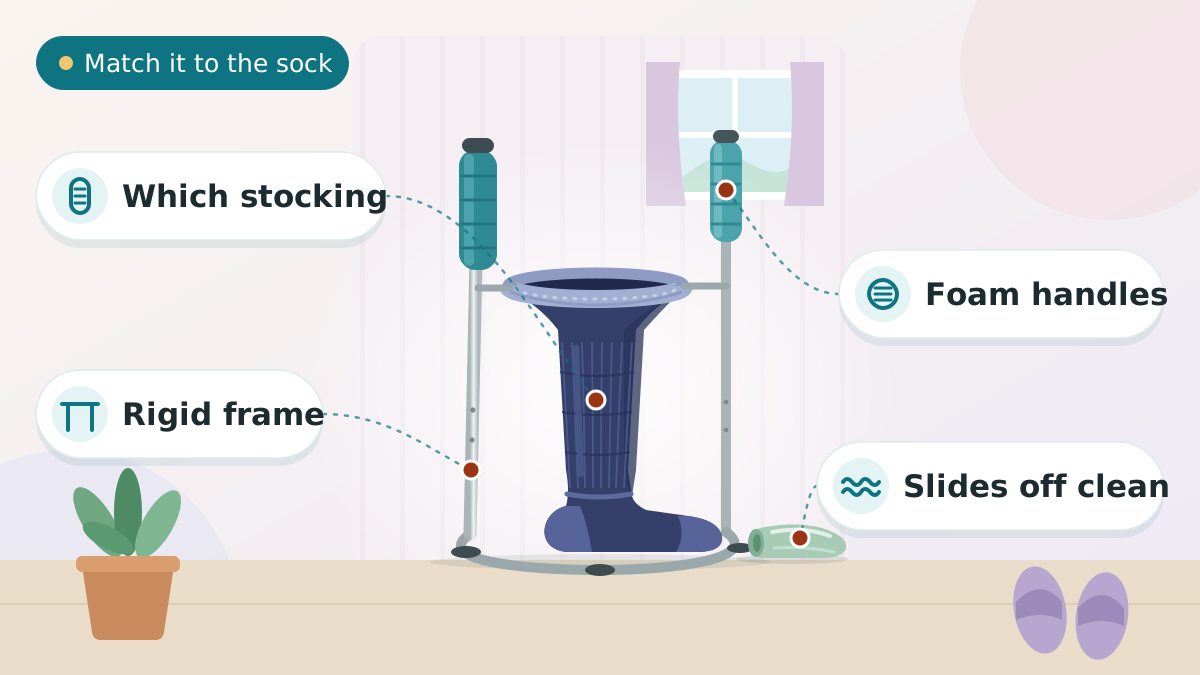
Answer three questions — what limits them, what socks they wear, and where they will dress — and the right sock aid picks itself.
Key takeaways
- Match the shell to the limitation: flexible for everyday ease, semi-rigid for precautions, weighted for one hand
- Handle style matters as much as length: foam for sore grips, loops for weak ones, 32–33 inches to avoid bending
- Compression stockings need a rigid donner — a different tool, not a stronger sock aid
- Entry models prove the concept; padded and semi-rigid models earn their price in daily comfort
- Fit the chair and routine, not just the product — setup is half the purchase
Quick answer
Which sock aid should I buy first?
Start from the limitation: sore hands want thick foam or loop handles; bending restrictions want 32-inch-plus handles and a semi-rigid shell; one working hand wants a weighted base. If none of those apply, a basic flexible shell is the right, inexpensive first buy.
Three questions that decide it
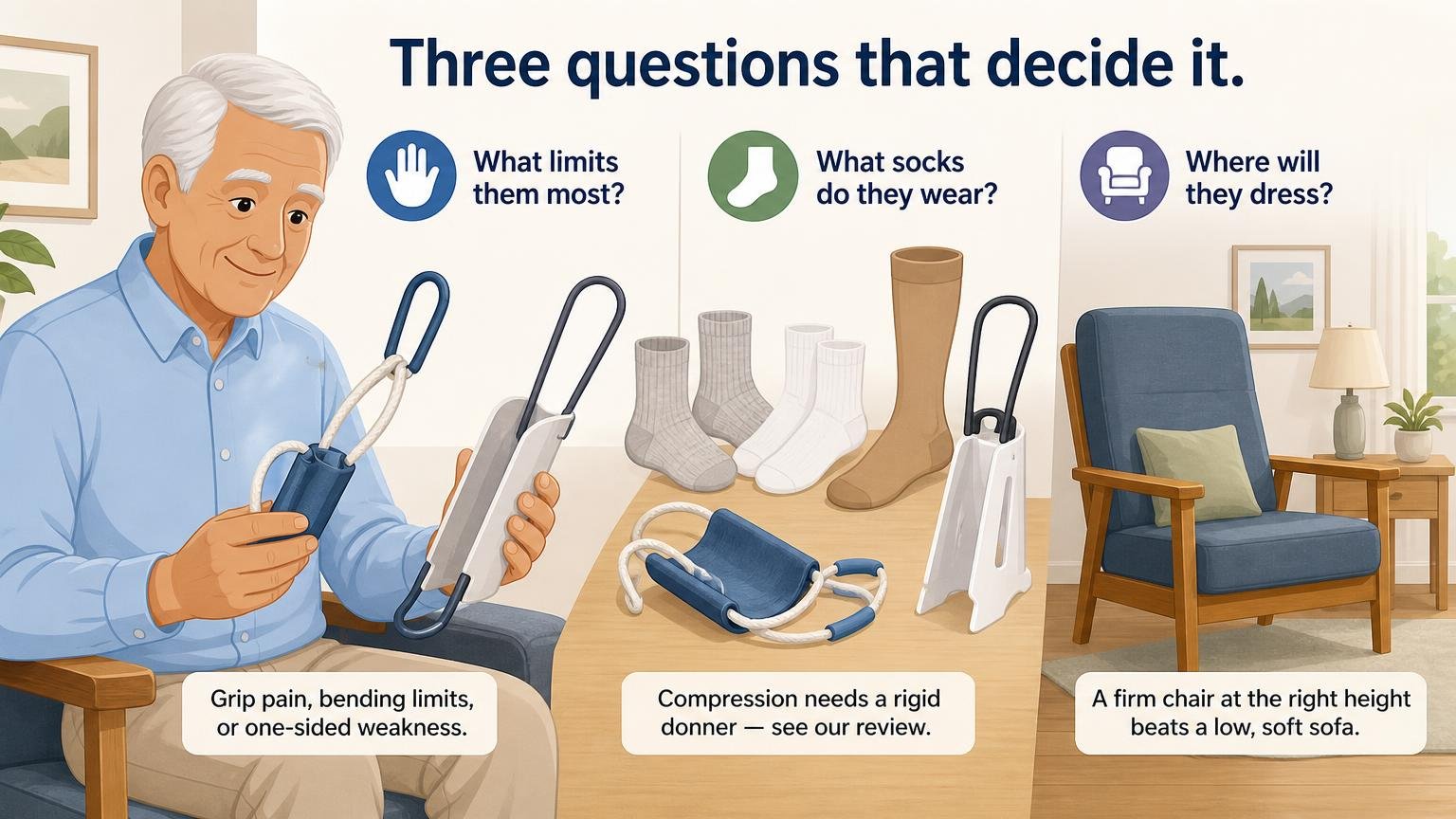
- What limits them most? Grip pain points to foam or loop handles; bending limits point to long handles and semi-rigid shells; one-sided weakness points to a weighted base.
- What socks do they wear? Everyday and diabetic socks suit any flexible aid; compression stockings need a rigid donner instead — see our compression sock aid review.
- Where will they dress? A firm chair with armrests at a workable height is part of the purchase — the longest handles cannot rescue a low, soft sofa.
Sock aid types at a glance
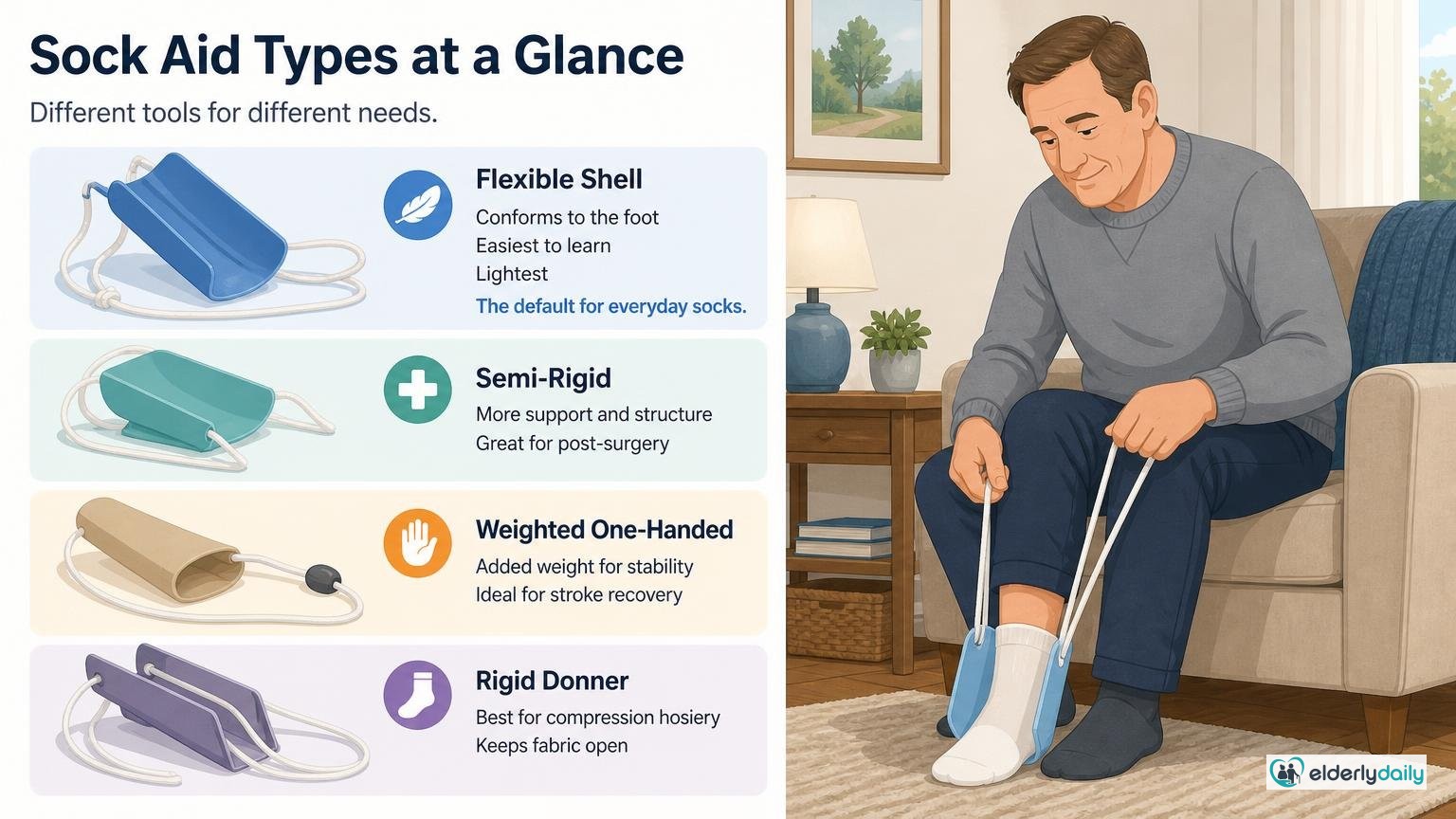
- Flexible shell: conforms to the foot, easiest to learn, lightest — the default for everyday socks.
- Semi-rigid shell: holds its shape and the loaded sock, one-motion dressing — the post-surgery and small-range choice.
- Weighted one-handed: a base that braces itself so a single hand only pulls — the stroke and hemiplegia choice.
- Rigid compression donner: holds heavy hosiery open against real pulling force — a separate category for compression wearers.
Handles: the half people get wrong
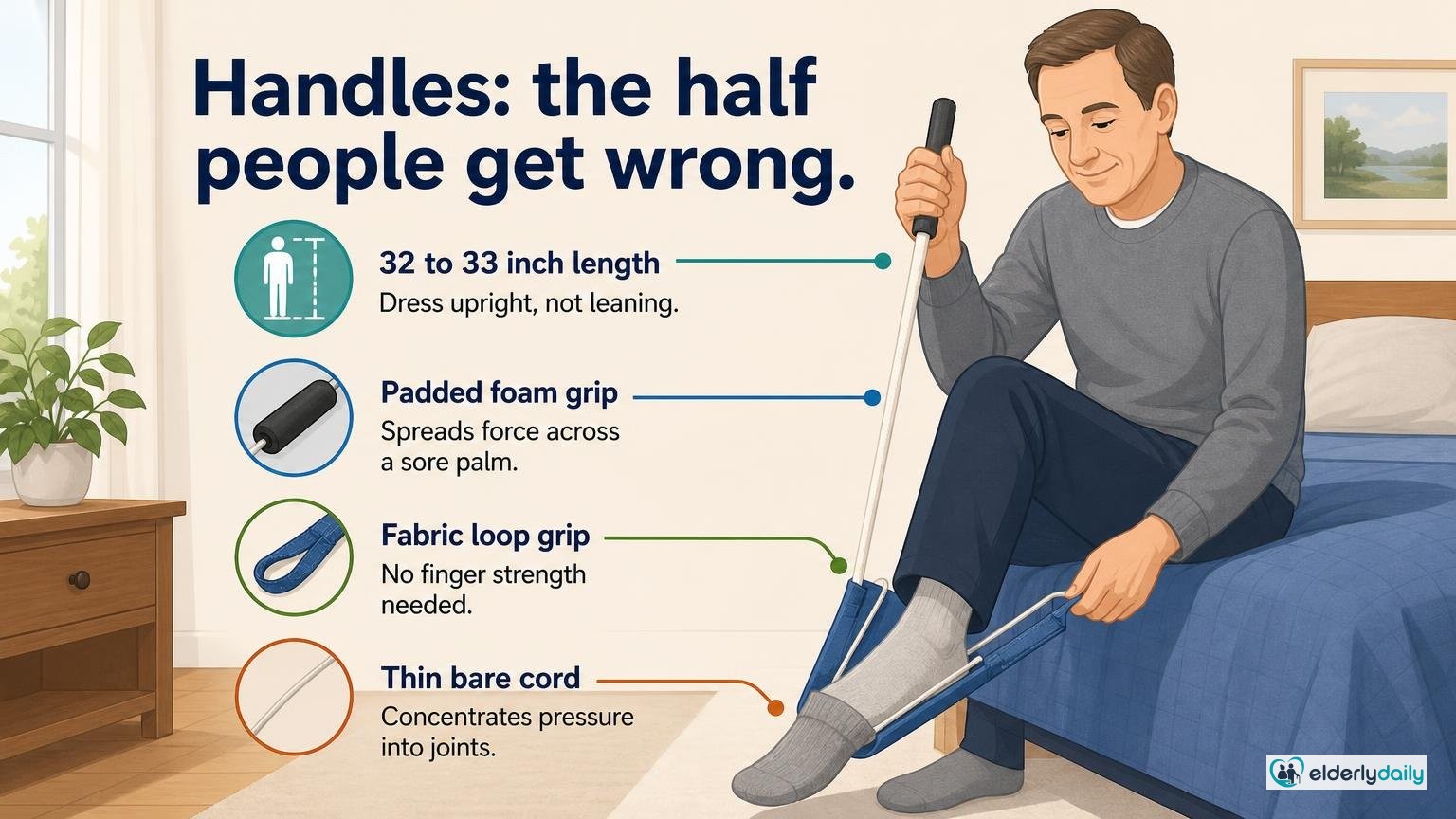
Length first: 32 to 33 inches lets most adults dress fully upright; short cords guarantee a lean. Then material: thick foam spreads force across a sore palm, fabric loops need no finger strength at all, and thin bare cords — the cheapest option — concentrate pressure into exactly the joints that hurt.
Sizing and fit
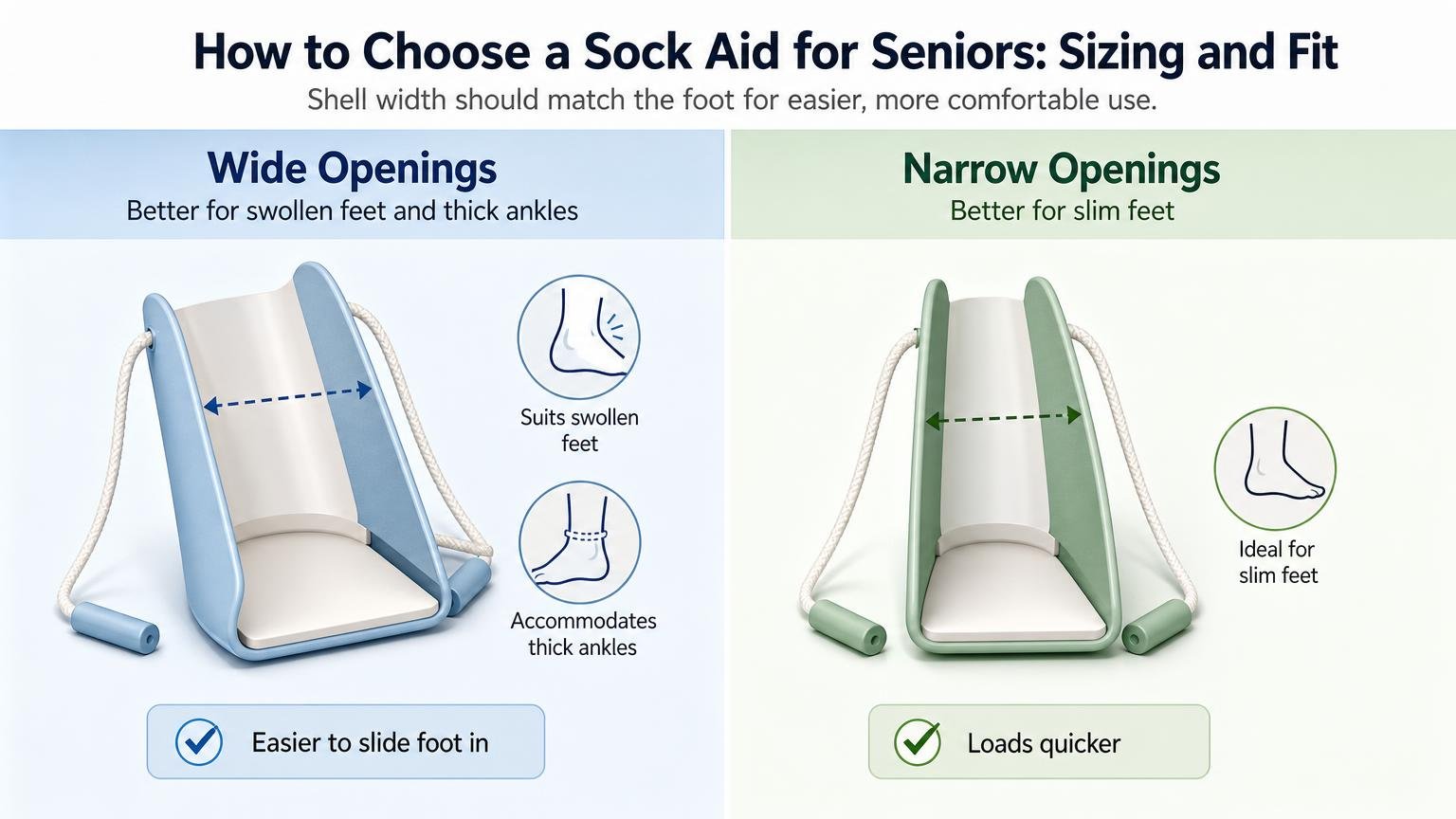
- Shell width should match the foot: wide openings suit swollen feet and thick ankles; narrow shells load quicker for slim feet.
- Check the sock aid against the sock drawer: bulky winter socks want a wider, stiffer shell than thin dress socks.
- Weight matters at the margins: a 4-ounce shell suits a weak arm; a weighted base suits an unsteady one.
Budget tiers, honestly
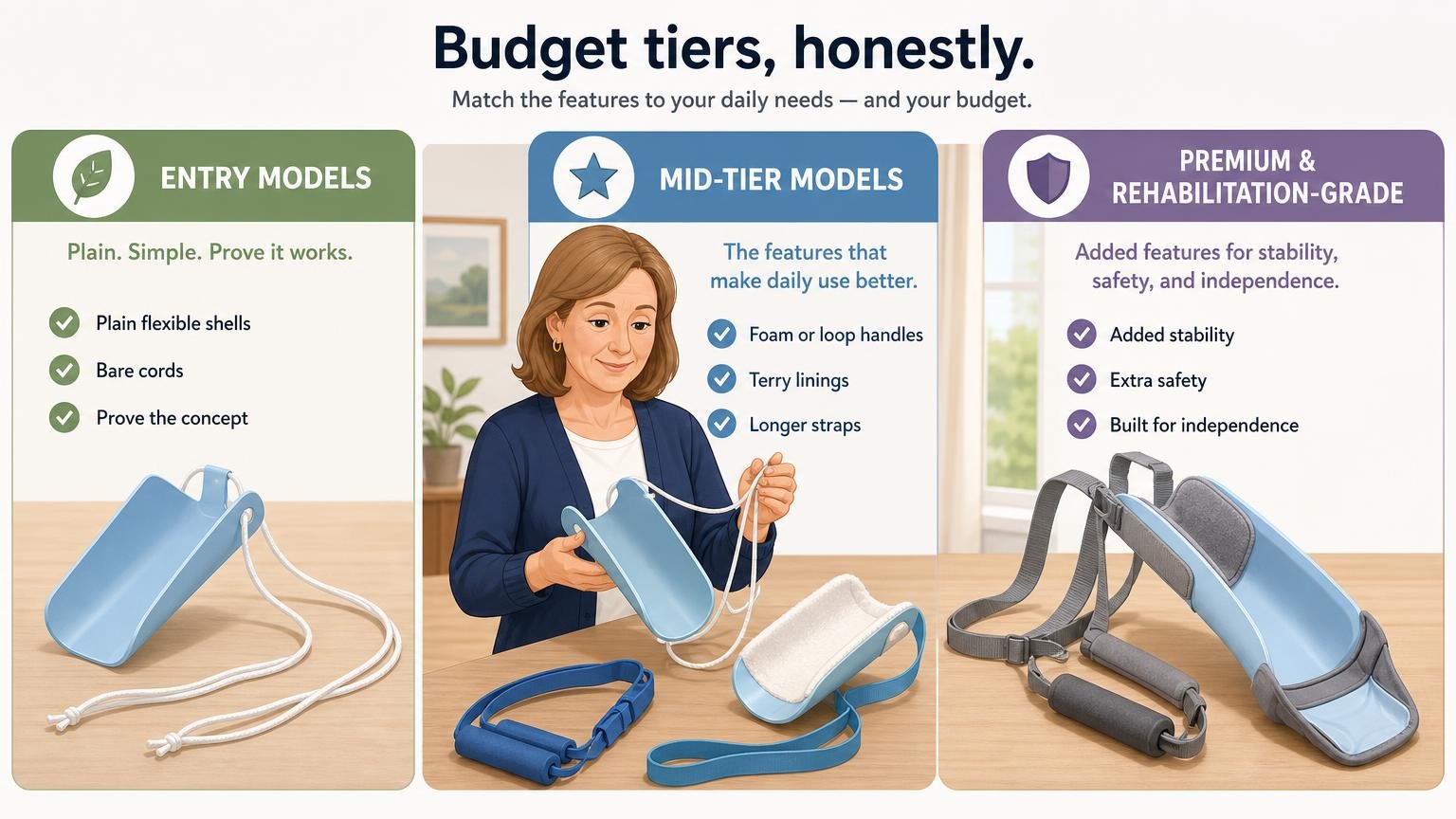
Entry models — plain flexible shells with bare cords — prove whether the concept works for a few dollars, and that is their whole job. Mid-tier models add the features that decide daily comfort: foam or loop handles, terry linings, longer straps. Premium and rehabilitation-grade models add semi-rigid frames, weighted bases, and durability for years of daily use. Buy entry to test, mid or premium to live with — our best sock aids for elderly review ranks the field by situation.
Dignity is a feature
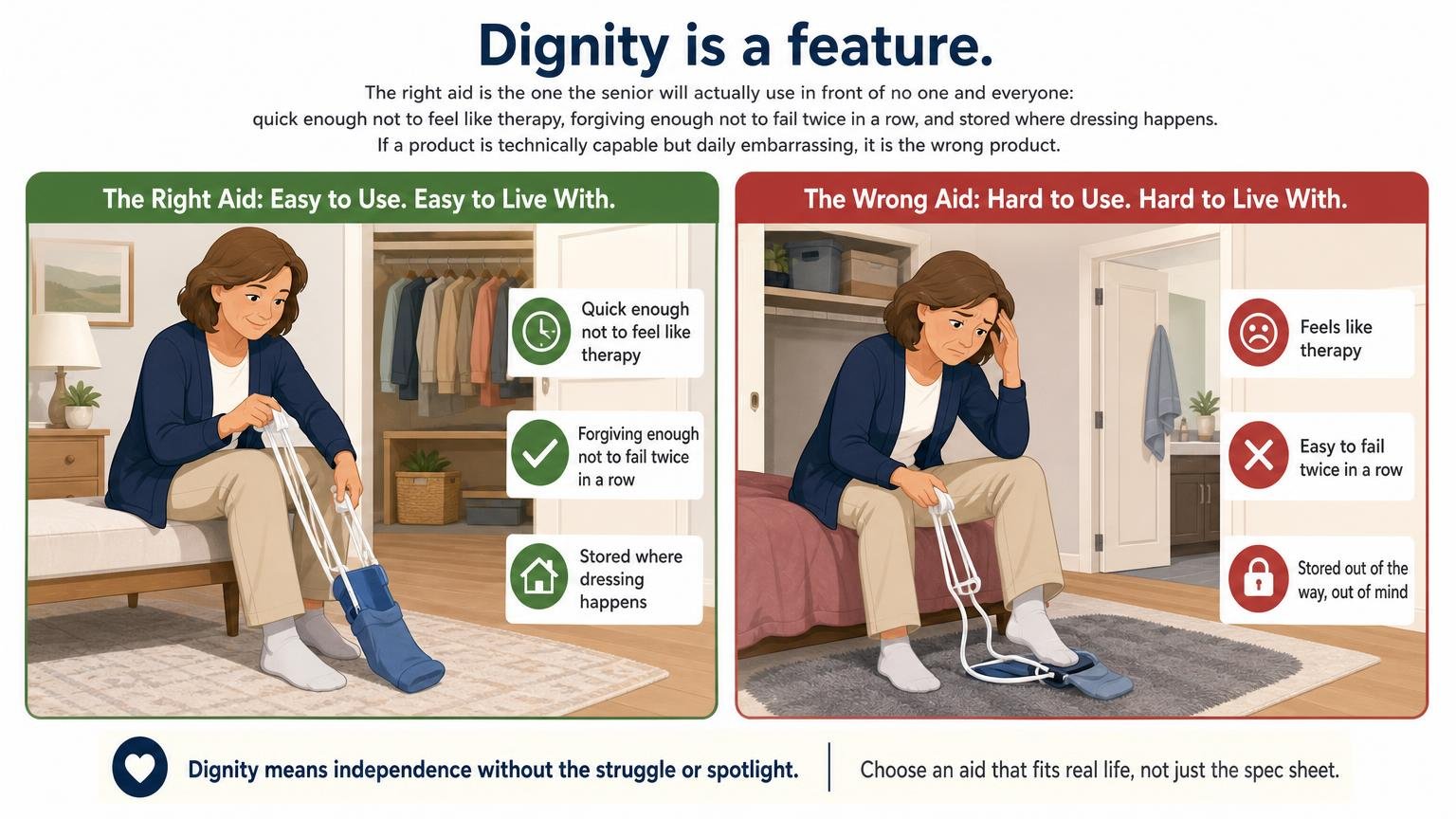
The right aid is the one the senior will actually use in front of no one and everyone: quick enough not to feel like therapy, forgiving enough not to fail twice in a row, and stored where dressing happens. If a product is technically capable but daily embarrassing, it is the wrong product.
Frequently asked questions
What is the best sock aid type for most seniors?
A flexible shell with foam-grip handles around 33 inches — easy to learn, gentle on hands, and long enough to remove the bend. Situational needs (surgery precautions, one hand, compression socks) change the answer.
Are expensive sock aids worth it?
When the upgrade buys a needed feature — foam or loop handles for sore grips, a semi-rigid shell for one-motion dressing, a weighted base for one hand — yes. Paying more for the same bare-cord flexible shell is not.
Can one sock aid handle compression stockings and regular socks?
Not well. Flexible aids cannot hold compression hosiery open; rigid donners are clumsy for thin everyday socks. Compression wearers usually end up with one of each.
What should caregivers check before buying for a parent?
Grip strength, bending restrictions, the sock drawer, and the dressing chair. Ten minutes of watching the current morning routine answers all four.
