
Roho Mosaic Seat Cushion Review: Best for Pressure-Sore Risk (2026)
 By Kutubuddin, Founder & Senior Care Researcher Updated October 8, 2026
In this guide
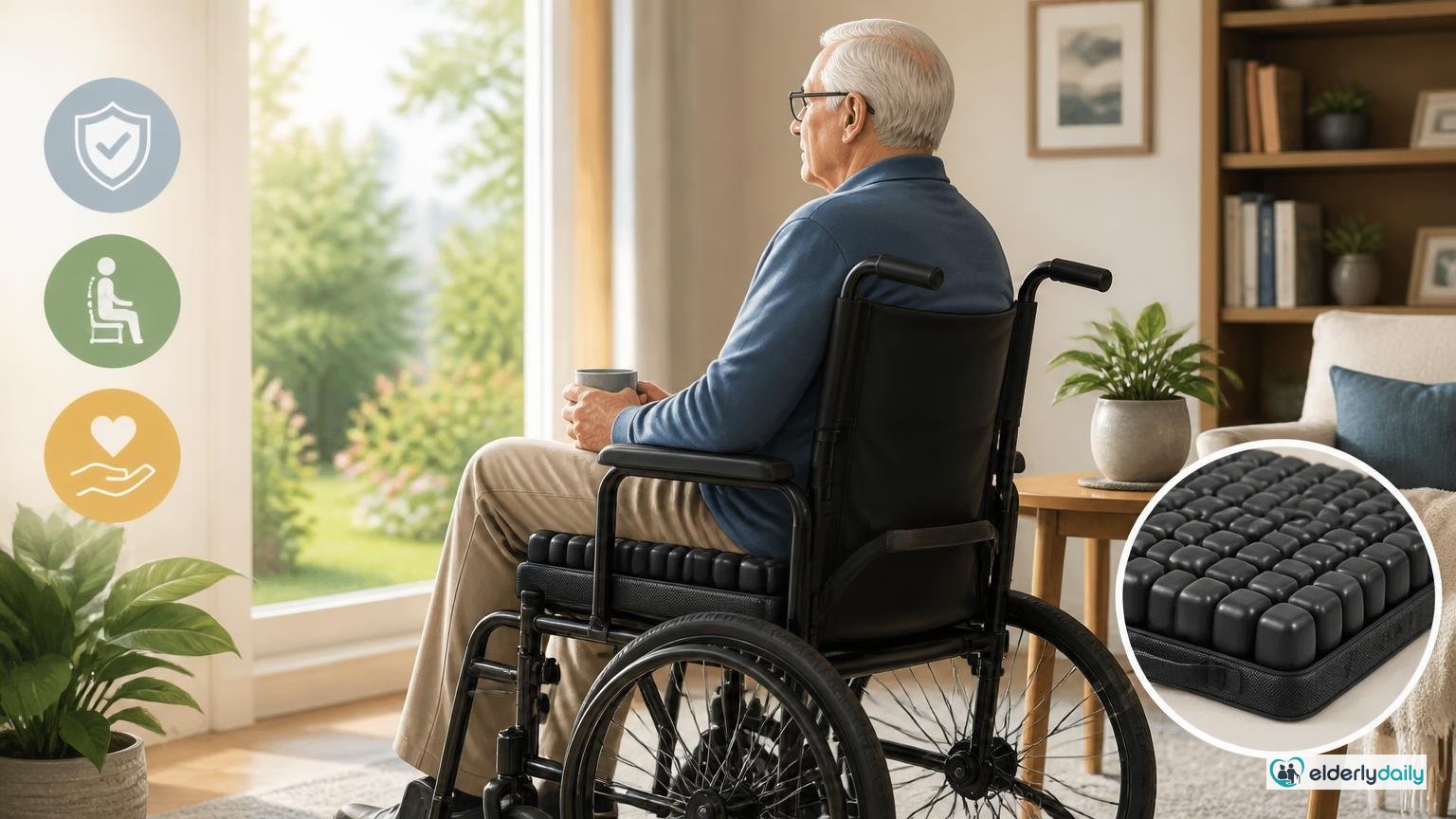
The Roho Mosaic uses interconnected air cells that let the skin float and redistribute weight, with pump-adjustable firmness — the medical-grade pick for pressure-sore prevention.
This is the one cushion in our roundup for a different, more serious need: a senior who sits most of the day and is at real risk of skin breakdown — a situation foam and gel cushions can't safely cover. The Roho Mosaic is an air-cell cushion, not foam: interconnected 3-inch air cells let the skin "float" and redistribute weight, and you inflate or deflate it with the included pump to tune the firmness.
It is a medical-grade prevention tool, not a plush comfort cushion, and should be chosen with a clinician's input for genuine pressure-ulcer risk. If you simply want everyday comfort, our best-value pick is far simpler and cheaper. But for someone truly at risk, the air-cell approach does something padding cannot. See the full comparison.
We may earn a commission when you buy through links on this page, at no extra cost to you. Read our affiliate disclosure.

Roho Mosaic Seat Cushion
A senior at genuine risk of pressure sores who sits for most of the day
- Air-cell immersion redistributes weight to ease pressure at bony points
- Adjustable firmness — inflate or deflate to suit the person
- A medical-grade approach to pressure-sore (pressure-ulcer) prevention
- Non-slip, removable, machine-washable cover
- Lightweight and portable; fits most wheelchairs
- Complete kit with hand pump, cover, and patch kit
Design
Interconnected 3-in air cells (float support)
Firmness
Adjustable via included hand pump
Capacity
Up to 315 lb
Size
18 x 16 in (fits most wheelchairs)
Cover
Non-slip, removable, machine-washable
Kit
Cushion, pump, cover, patch kit
Weight
Lightweight and portable
What we like
- Air-cell immersion redistributes weight to ease pressure at bony points
- Adjustable firmness — inflate or deflate to suit the person
- A medical-grade approach to pressure-sore (pressure-ulcer) prevention
- Non-slip, removable, machine-washable cover
- Lightweight and portable; fits most wheelchairs
- Complete kit with hand pump, cover, and patch kit
Worth noting
- A prevention tool, not a plush comfort cushion
- Best chosen with a clinician's input for genuine risk
- Inflation needs checking periodically to stay effective
- Pricier than a foam cushion
Buy it if…
- The person sits for most of the day and is at real risk of skin breakdown
- A wheelchair user who needs pressure-sore prevention
- Someone with reduced sensation or mobility who can't reposition often
- You want adjustable, medical-grade pressure redistribution
Look elsewhere if…
- You just want everyday comfort — a foam cushion like the Everlasting Comfort is simpler and cheaper
- You want a firm, set-and-forget cushion — this needs periodic inflation checks
- The concern is posture or sciatica, not skin breakdown — the Cushion Lab suits that
Air cells, not foam
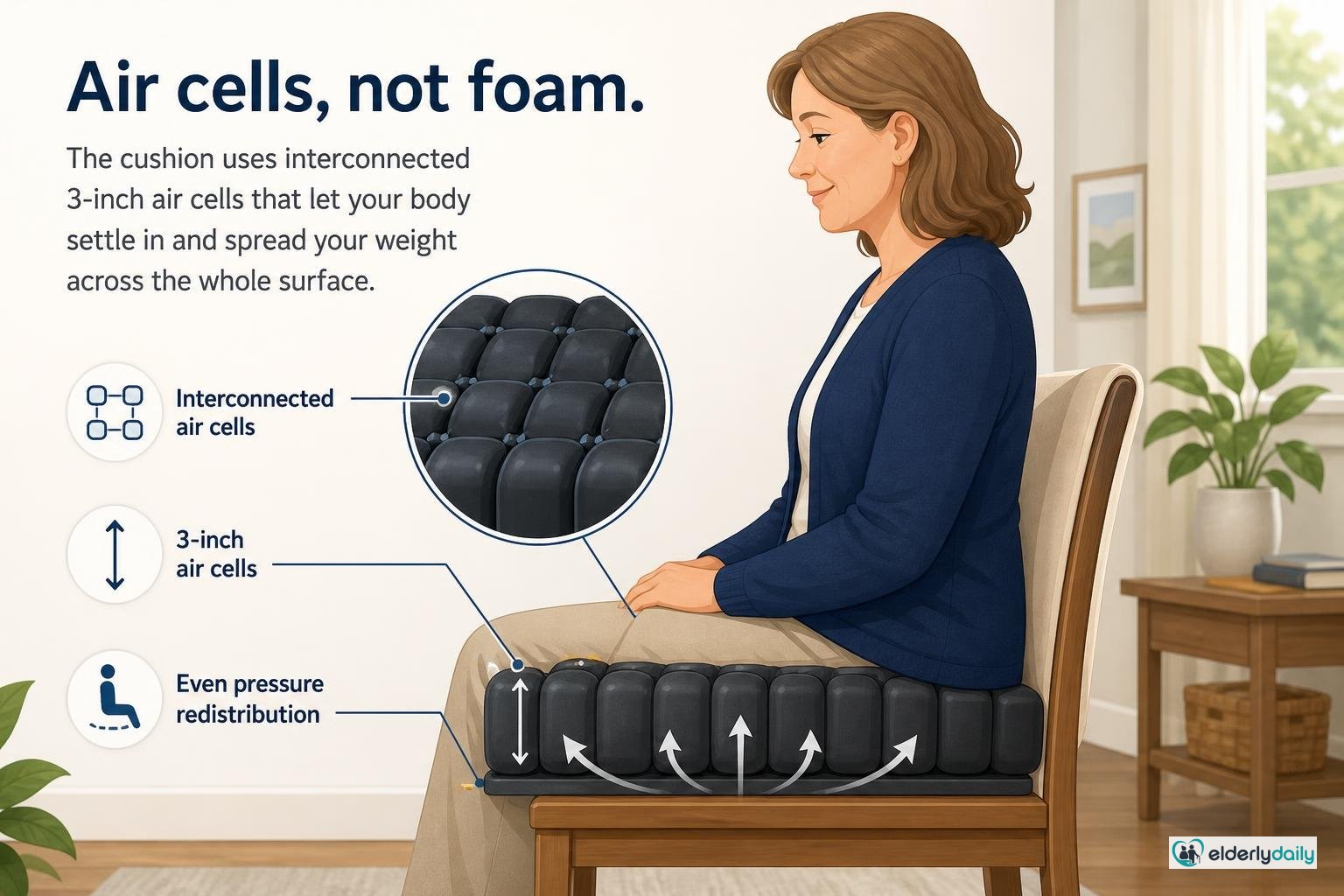
The Roho works on a fundamentally different principle from every other cushion here. Instead of a foam surface, it is a grid of interconnected, 3-inch air cells. When you sit, the cells gently give and connect, letting your body settle into the cushion so the skin "floats" and your weight spreads across the whole surface rather than concentrating on the bony points that are most at risk of breaking down.
That even redistribution of pressure is exactly what a person at risk of skin breakdown needs, and it is why the Roho is the pressure-sore pick in our seat cushions roundup — it targets a genuine medical need rather than everyday comfort.
Adjustable firmness with the pump
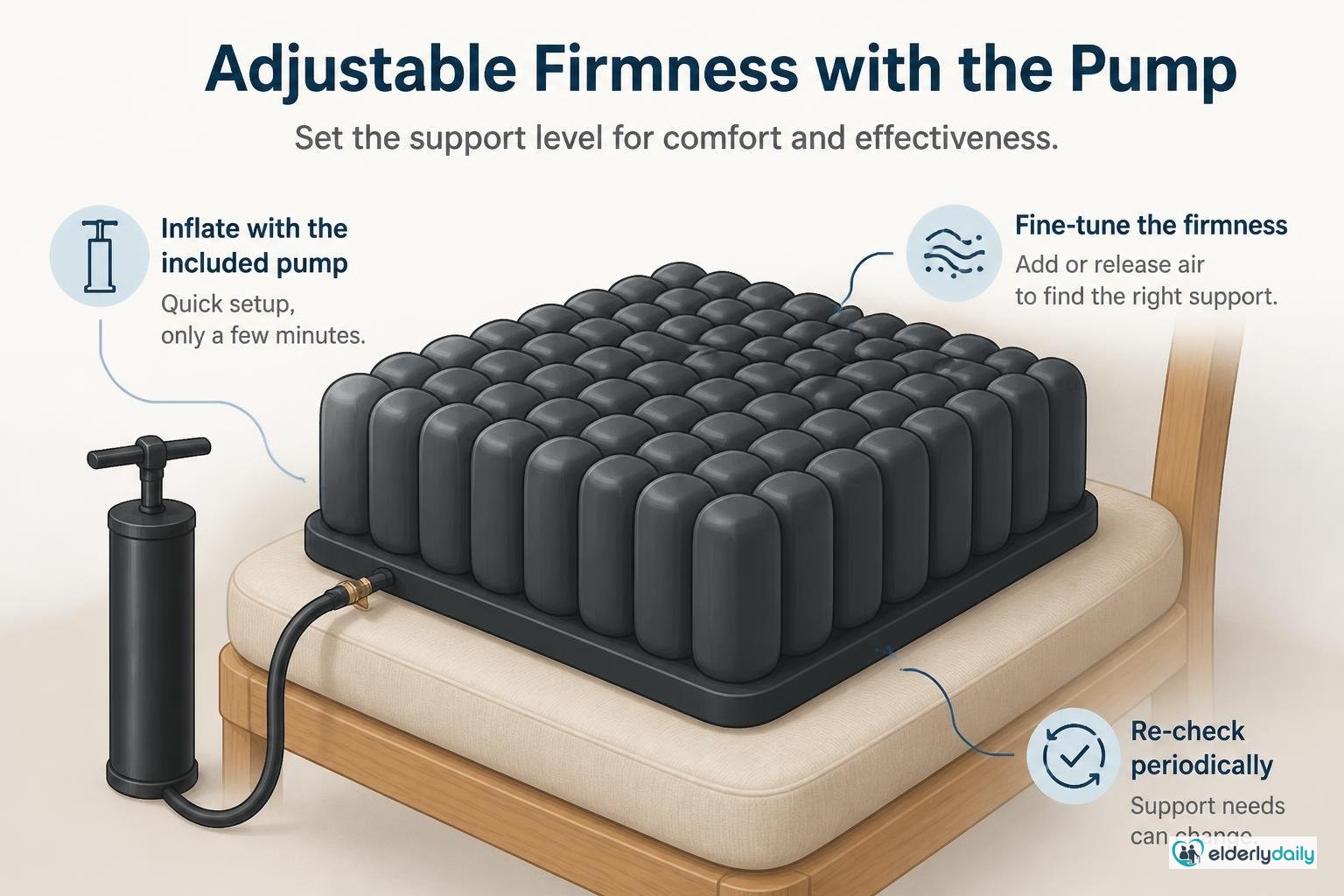
Unlike a fixed foam cushion, the Roho lets you set the support level, and getting it right is what makes it effective:
- Inflate with the included pump — a quick setup that takes only a few minutes.
- Fine-tune the firmness — add or release air so the person settles into the cells without bottoming out on the base.
- Re-check periodically — air pressure changes over time, so the inflation should be checked and adjusted so the float support keeps working.
A clinician or therapist can advise on the right inflation for the individual, which is part of why the Roho is best set up with professional guidance rather than guessed at.
Who it's for — and a word of care

The Roho is a targeted, medical-grade tool, and it suits a specific and serious situation:
- Genuine pressure-sore risk — a senior who sits most of the day and is prone to skin breakdown.
- Wheelchair users — a common setting for pressure-ulcer prevention; our wheelchairs review covers the chairs themselves.
- Reduced sensation or mobility — people who cannot shift their weight or reposition often on their own.
One honest, important note: a cushion is only one part of preventing pressure sores, alongside regular repositioning, skin checks, and good skin care. For anyone at genuine risk, the Roho — and the overall plan — is best chosen and monitored with a doctor, nurse, or occupational therapist rather than tackled alone.
Cover and cleaning
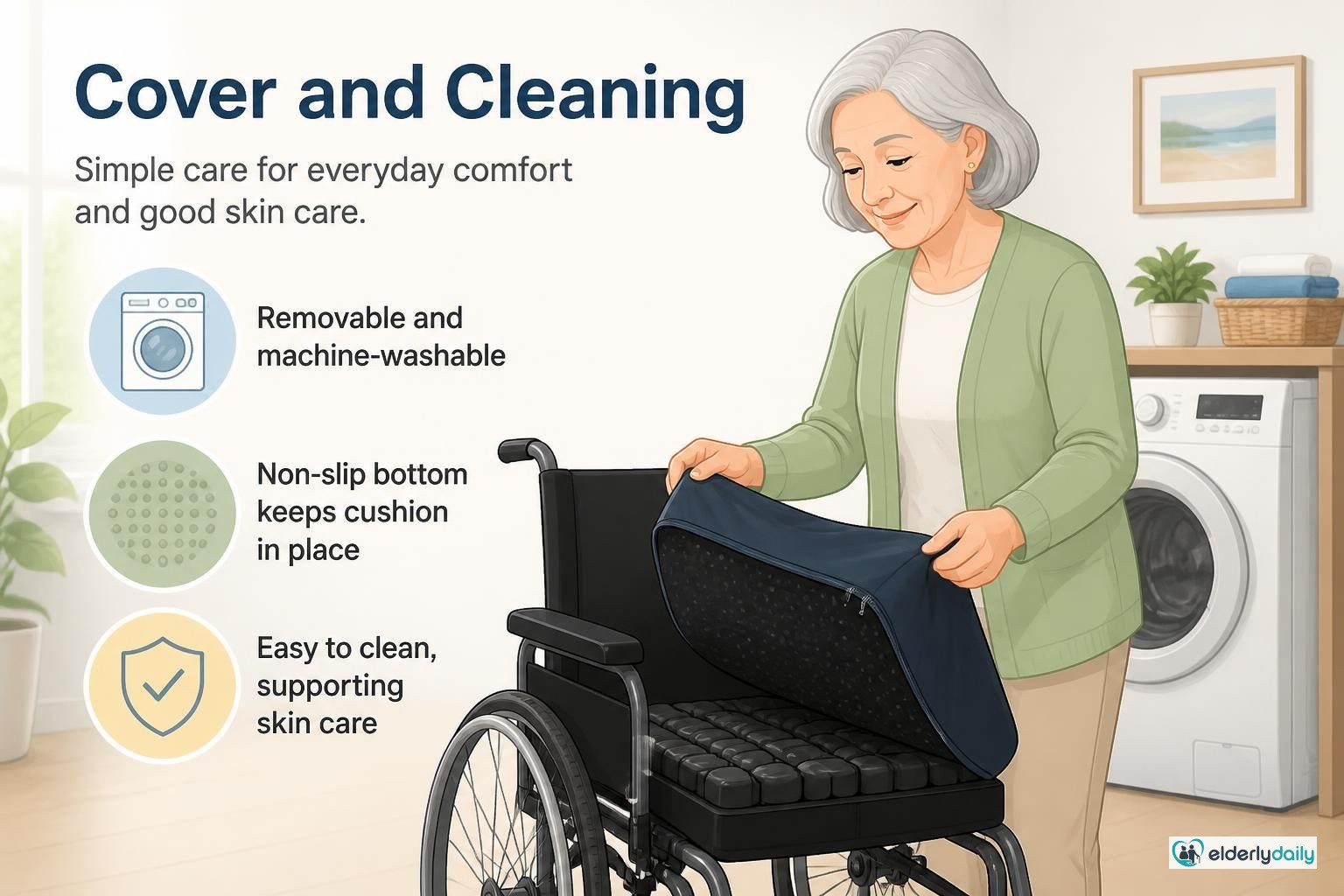
For a cushion in daily, close-contact use, hygiene matters, and the Roho keeps it simple: the cover is removable and machine-washable, and it has a non-slip bottom so the cushion stays put on a wheelchair or chair rather than shifting under the person.
Keeping the cover clean is part of good skin care for someone sitting on it for hours, so an easy-wash cover is a genuine practical benefit here rather than a nice-to-have.
Where it fits
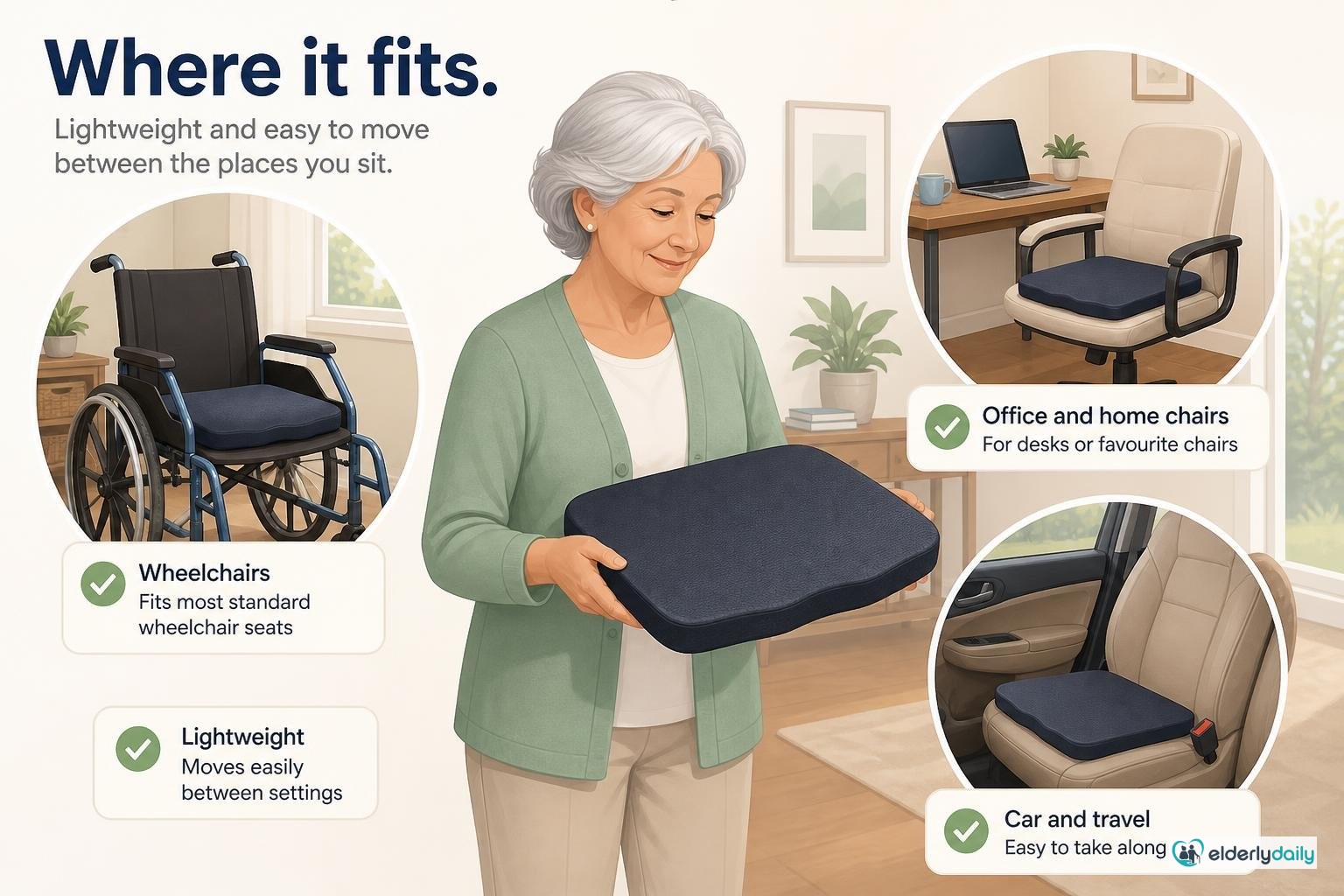
At a standard 18 x 16 inches and a light weight, it moves easily between settings:
- Wheelchairs — its primary role, fitting most standard wheelchair seats.
- Office and home chairs — for anyone at risk who spends the day seated at a desk or in a favourite chair.
- Car and travel — light and portable enough to take along without adding bulk.
It supports users up to 315 pounds, which covers most seating situations.
The kit and keeping it working
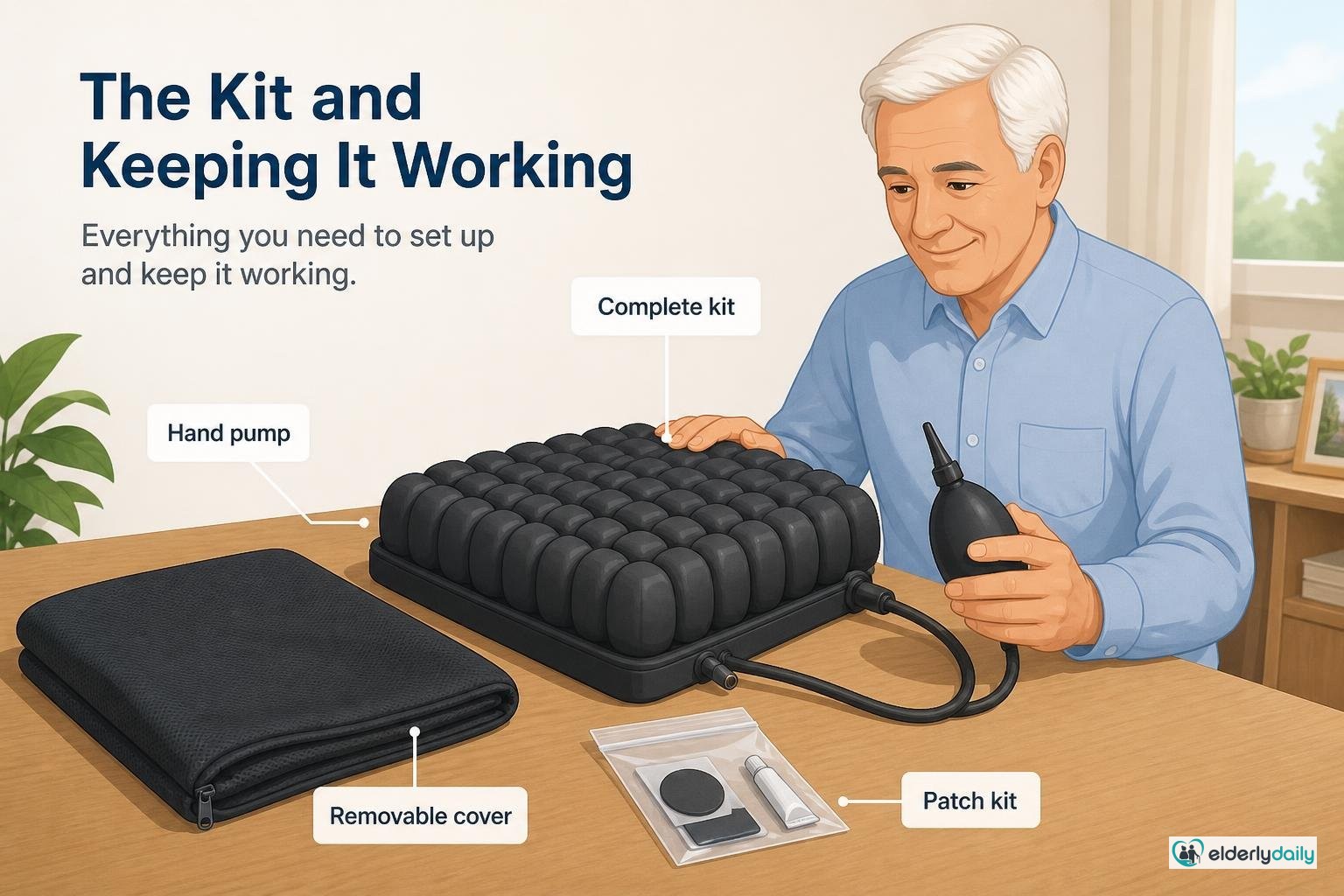
The Roho comes as a complete kit — the cushion, a hand pump, a removable cover, and a patch kit — so you can set it up and maintain it without buying extras.
The trade-off compared with a foam cushion is that it is not entirely maintenance-free: the inflation needs the occasional check, and the patch kit is there because an air cushion can, rarely, be punctured. For the population it is built for, that small amount of upkeep is a fair price for pressure relief foam can't match — and a lumbar cushion from our orthopedic pillows review can add back support on top.
What Roho says
The following are Roho’s own marketing claims from the product listing, not our independent findings. Figures such as ratings and review counts change over time — check the current Amazon listing for the latest.
- Roho describes interconnected 3-inch air cells that gently adapt to the body, with firmness customizable using the included pump for a more balanced, supportive sit.
- Roho states the standard 18 x 16 inch size fits most wheelchairs and chairs and supports up to 315 pounds, in a lightweight, portable build.
- Roho notes the cushion comes as a complete kit with a hand pump, removable cover, and patch kit, and is easy to inflate and fine-tune in minutes.
- Roho describes a non-slip bottom that helps keep the cushion in place and a removable, machine-washable cover.
How it compares
This is our pressure-sore-risk pick in the best pressure-relief seat cushions roundup — a medical-grade prevention tool. For everyday comfort or posture support, a foam cushion is the better everyday choice.
- Everlasting Comfort Seat Cushion — the simple, affordable foam choice if comfort — not skin-breakdown risk — is the need.
- ComfiLife Gel Seat Cushion — our best overall pick — a cooling-gel foam cushion for general comfort.
- Wheelchairs for seniors — since pressure-sore prevention often centers on wheelchair seating, the chair matters too.
Frequently asked questions
It is an air-cell cushion, not foam. Interconnected air cells let the body settle in so the skin "floats" and weight spreads across the whole surface, which redistributes pressure away from bony points more effectively than foam or gel for someone at risk of skin breakdown.
Yes — it comes with a hand pump. You inflate it and fine-tune the firmness so the person settles into the cells without bottoming out, a setup that takes a few minutes. The inflation should be re-checked periodically, and a clinician can advise on the right level.
It is a medical-grade pressure-redistribution cushion used for pressure-ulcer prevention. It is one part of prevention, alongside repositioning, skin checks, and skin care. For genuine risk, choose and monitor it with a doctor, nurse, or occupational therapist rather than relying on it alone.
It is a standard 18 x 16 inches, fits most wheelchairs and chairs, and supports users up to 315 pounds. It is lightweight and portable.
It is a prevention tool rather than a plush comfort cushion, and it needs occasional inflation checks. If you simply want everyday comfort, a foam cushion like the Everlasting Comfort is simpler, cheaper, and lower-maintenance.
Roho Mosaic Seat Cushion
Best for: A senior at genuine risk of pressure sores who sits for most of the day
Keep comparing
