
How to Use a Sock Aid: Step-by-Step Guide for Seniors

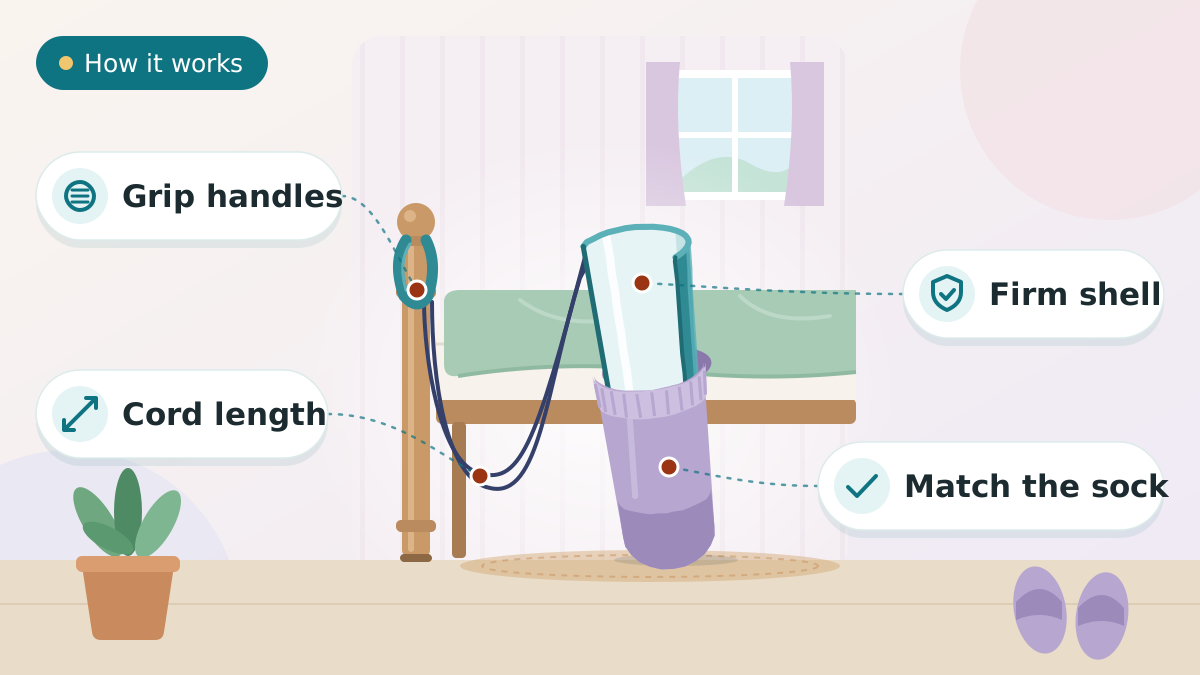
Four steps, a sturdy chair, and a few days of practice: the complete technique, the mistakes to avoid, and how to troubleshoot when the sock will not cooperate.
Key takeaways
- The whole routine is four steps: load the sock, lower the aid, insert the foot, pull up
- Learn seated in a sturdy chair with armrests, starting with loose cotton socks
- Most seniors are comfortable within 3 to 7 days of short daily practice
- The two common failure points are a twisted sock at loading and slack handles mid-pull — both fixable
- If a week of practice fails, a different aid style or an occupational therapist visit is the next step
Quick answer
What is the fastest way to learn a sock aid?
Practice the four-step sequence once a day with a loose cotton sock, seated in a firm chair with armrests: load the sock heel-down on the shell, lower the aid by its handles, slide your foot in, and pull up toward your hip. Most seniors are fluent within a week.
The four-step technique
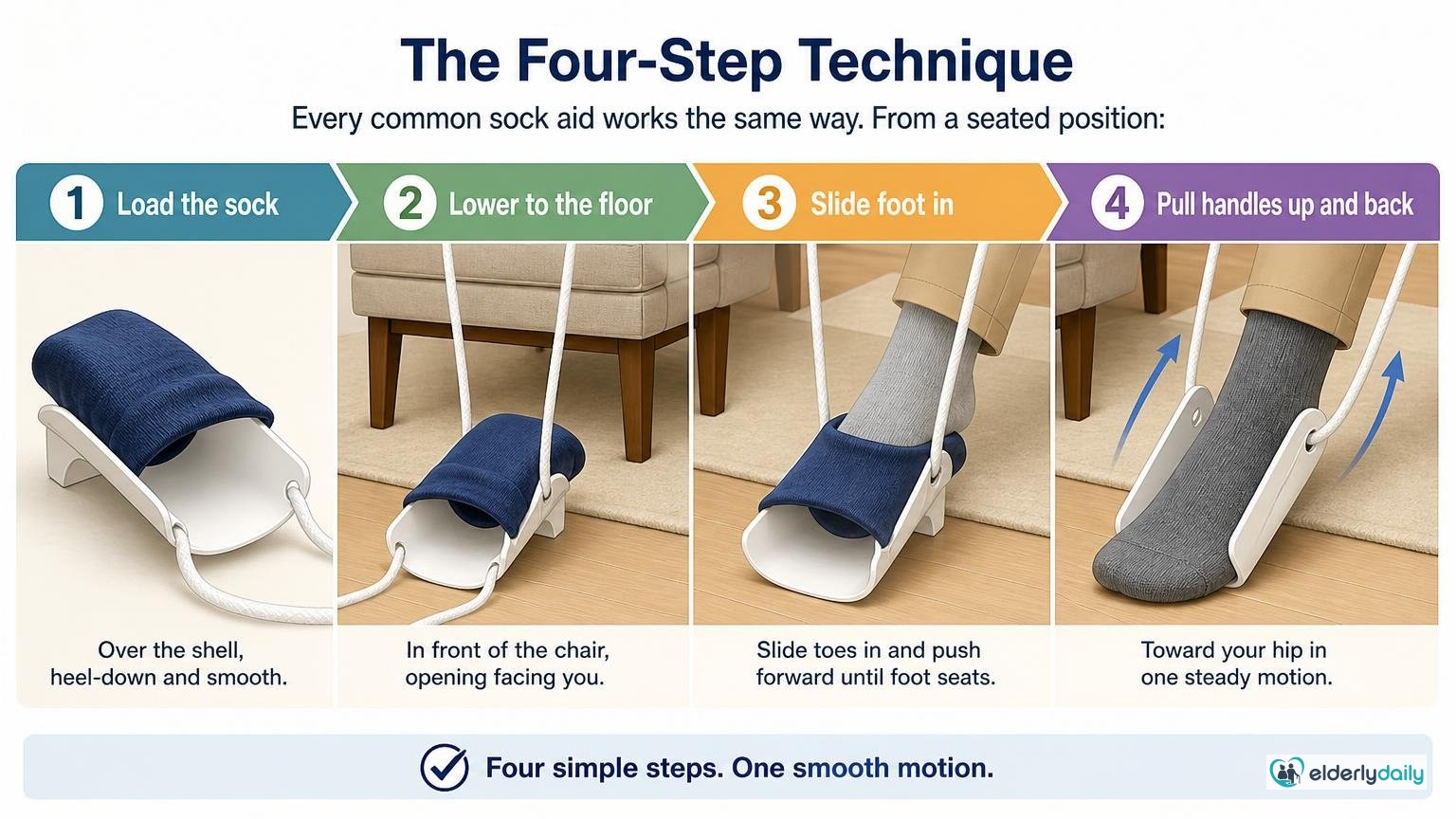
Every common sock aid works the same way. From a seated position:
- Load the sock: slide it over the shell heel-down, stretching the opening wide across the end — smooth, not twisted.
- Position on the floor: keep hold of the handles and lower the loaded aid in front of your chair, shell opening facing you.
- Insert your foot: slide toes into the opening and push forward until the foot seats inside the shell.
- Pull up: draw the handles upward and back toward your hip in one steady motion — the shell slips free as the sock comes on.
Keep light tension on the handles the whole way; slack is what lets the shell tip and the sock slide off.
Safety and dignity habits
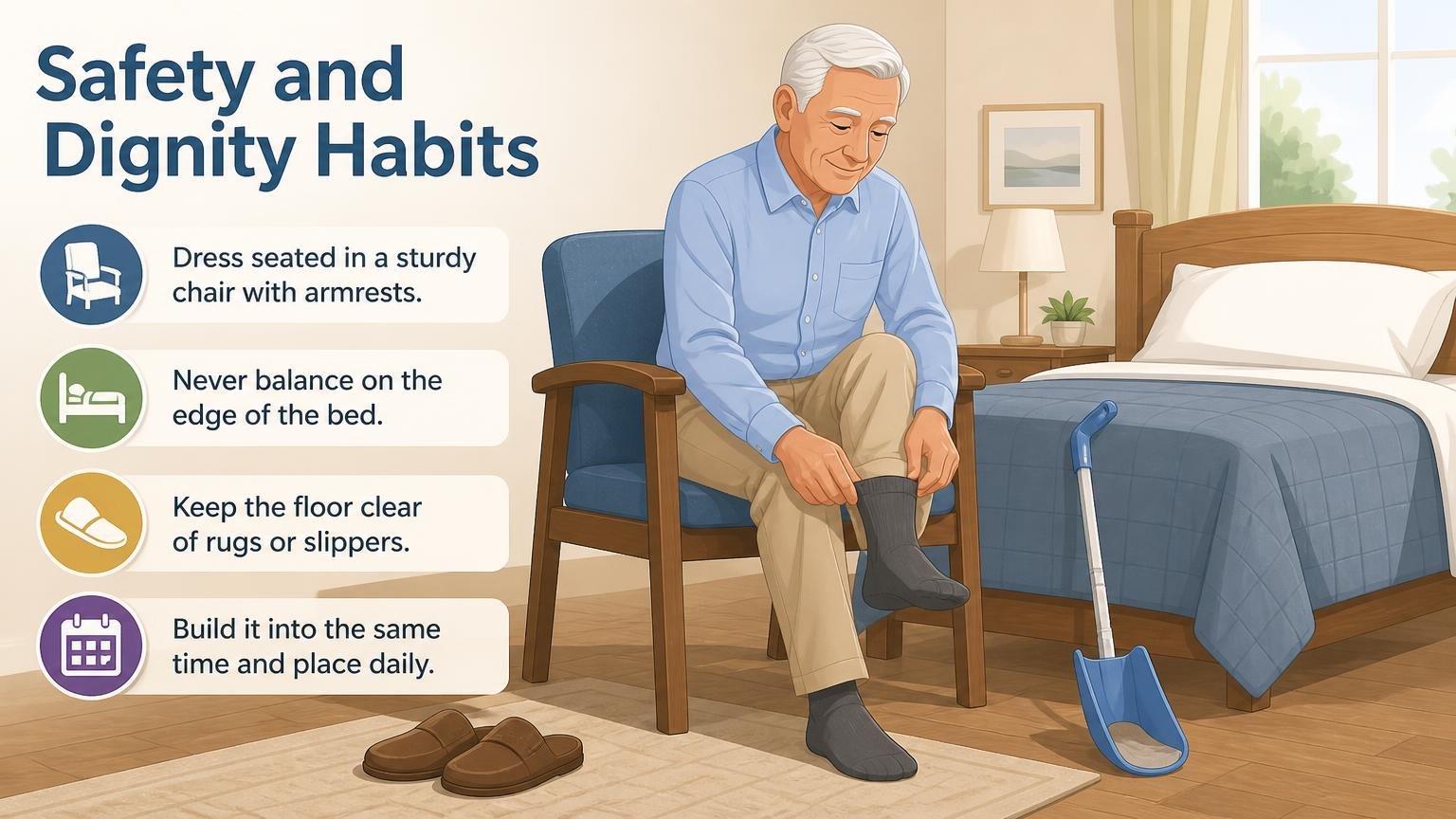
- Always dress seated in a sturdy chair with armrests — never balancing on the edge of the bed while learning.
- Keep the floor area clear so the lowered aid cannot snag a rug or slipper.
- Build it into the same time and place daily; a routine protects both safety and dignity far better than improvising.
- Caregivers: resist taking over at the first fumble — load the sock if needed, and let the senior own the foot-and-pull step.
Common mistakes to avoid
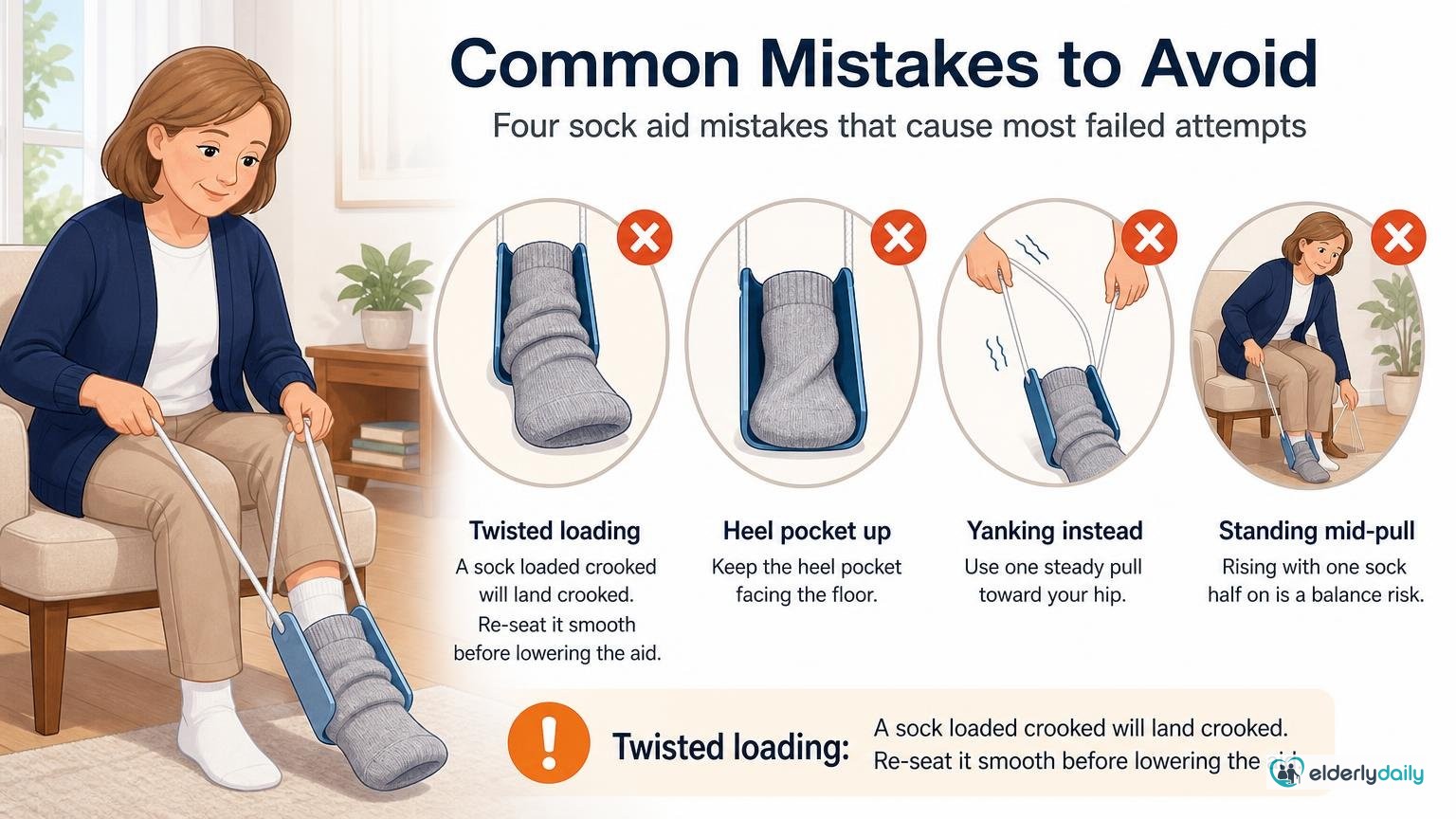
- Twisted loading: a sock loaded crooked will land crooked. Re-seat it smooth before lowering the aid.
- Heel up instead of down: the heel pocket must face the floor, or the sock finishes rotated.
- Yanking instead of pulling: one steady draw toward the hip beats three jerks — jerking pops the sock off the shell.
- Standing mid-pull: finish seated; rising with one sock half-on is a balance risk.
Troubleshooting
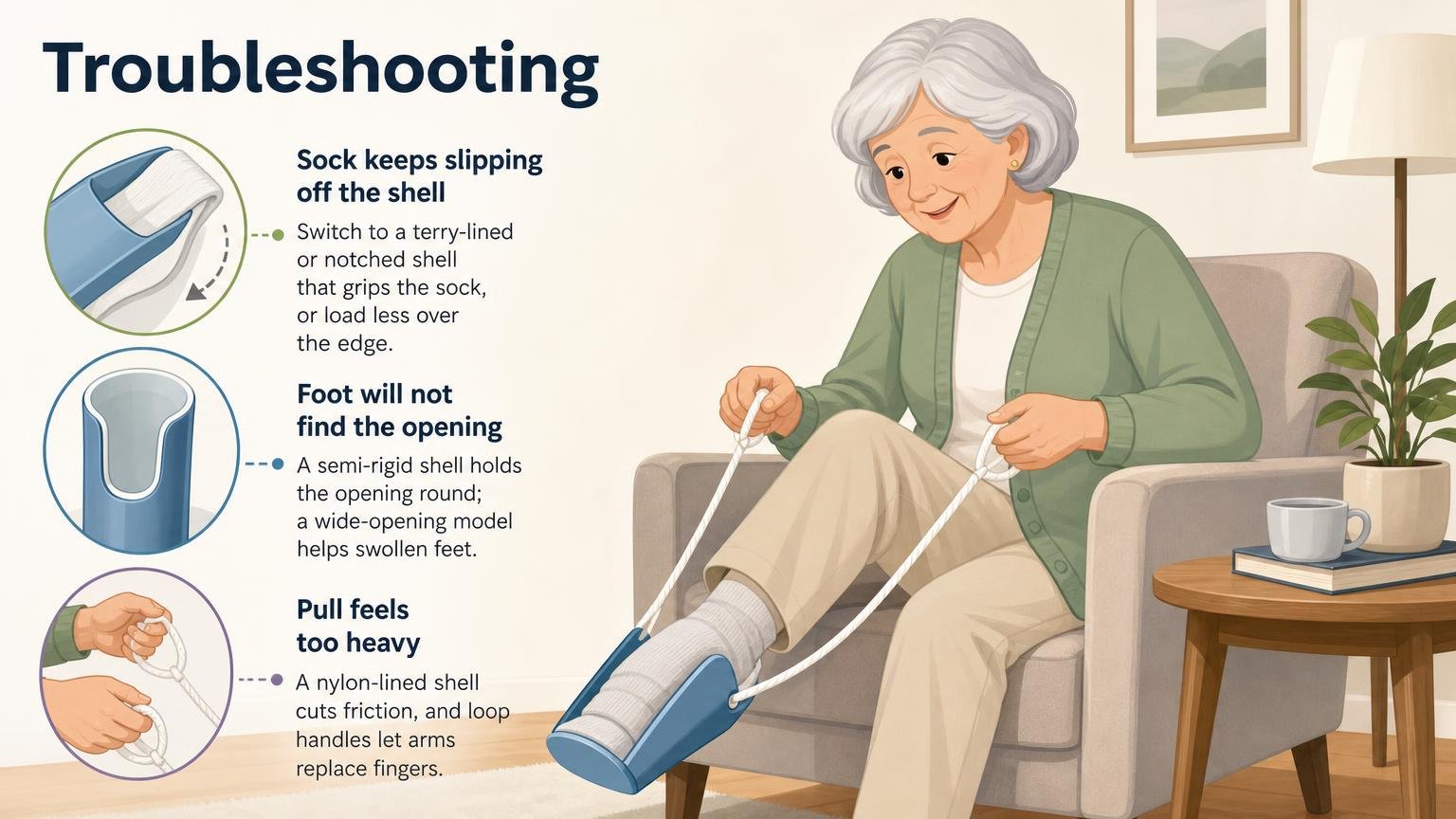
- Sock keeps slipping off the shell: switch to a terry-lined or notched shell that grips the sock, or load less of the sock over the edge.
- Foot will not find the opening: a semi-rigid shell holds the opening round; a wide-opening model helps swollen feet.
- Pull feels too heavy: a nylon-lined shell cuts friction, and loop handles let arms replace fingers.
- Everything works but only sometimes: shorten sessions and practice at your best hour — fatigue, not technique, is often the variable.
A realistic practice schedule
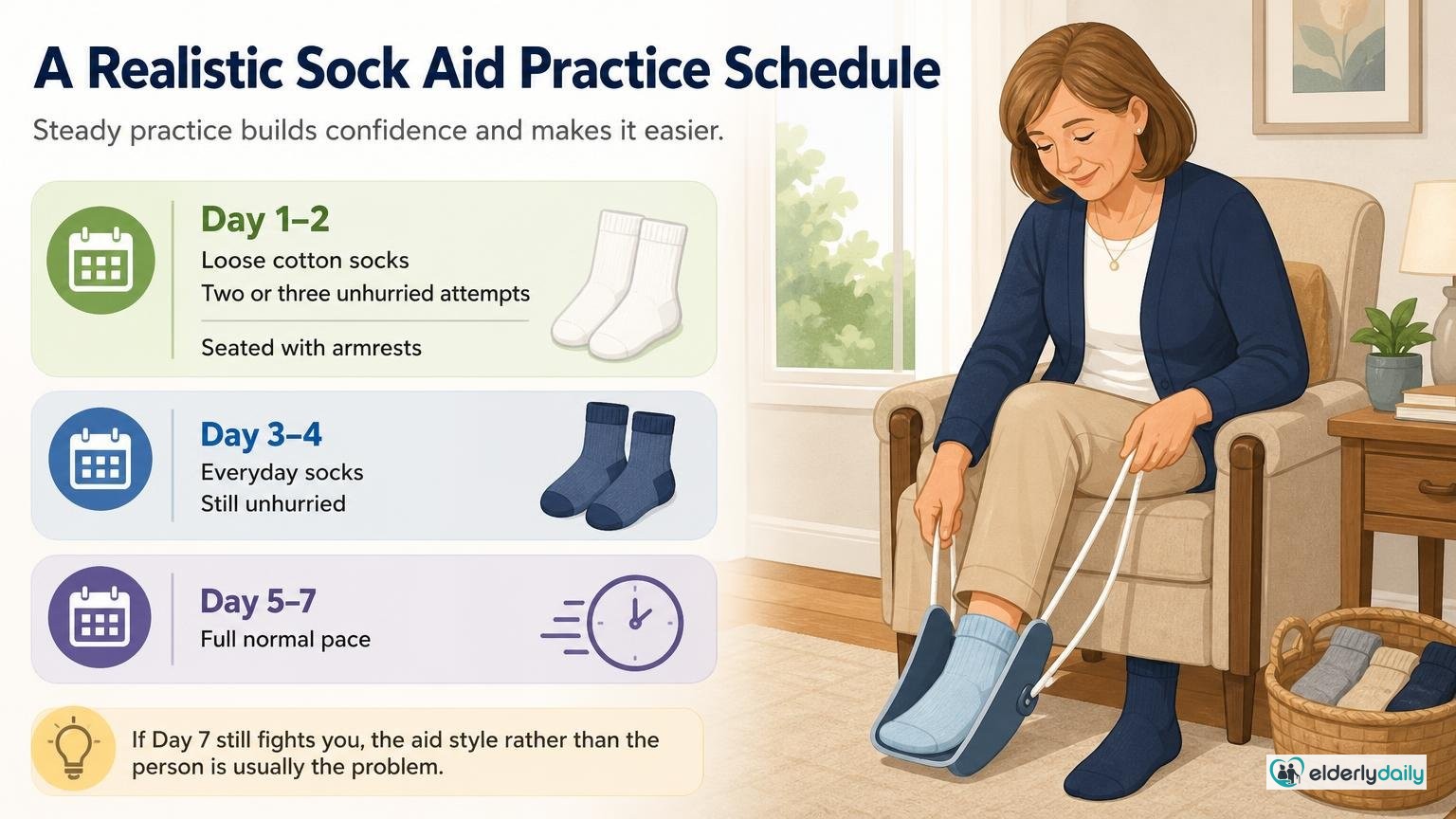
Day 1–2: loose cotton socks, two or three unhurried attempts, seated with armrests. Day 3–4: everyday socks, still unhurried. Day 5–7: full morning routine at normal pace. If day 7 still fights you, the aid style — not you — is usually the problem: see our picks by situation in the best sock aids for elderly review, or ask an occupational therapist to watch one attempt.
Frequently asked questions
How long does it take to learn a sock aid?
Most seniors are comfortable within 3 to 7 days of short daily practice. Flexible shells are quickest; weighted one-handed designs take a little longer.
Why does the sock keep coming off the shell?
Either the load was shallow or the pull was jerky. Load more of the sock over the edge, keep steady tension, and if it persists, move to a terry-lined shell that grips the sock.
Can someone with dementia learn to use a sock aid?
Sometimes, with a consistent routine, the same chair, and hand-over-hand practice — but success varies with stage. An occupational therapist can judge whether it reduces or adds frustration.
Should the sock aid be used standing?
No. The technique is seated start to finish; standing with a sock half-on is a needless balance risk.
