
Safe Transfer Techniques After Hospitalization

General guidance, not a substitute for hands-on training. Ask a physical or occupational therapist to teach transfers for your specific situation — technique taught in person is safest.
Moving a weak loved one between bed, chair, and toilet is one of the most common — and most injury-prone — tasks in home care. Good technique protects both their safety and your back.
Key takeaways
- Transfers (bed↔chair↔toilet) are a common injury point — for the senior (falls) and the caregiver (back injury).
- Let them do as much as they safely can — assist, don’t lift; a transfer is a guided movement, not you carrying them.
- Protect your back — feet apart, bend the knees not the back, keep the person close, and never twist while supporting weight.
- Use equipment — a transfer board, transfer pole, or a gait belt make transfers far safer.
- Know your limits — if the person cannot bear weight or is too heavy to assist safely, get help or equipment. Never risk a fall for both of you.
Quick answer
How do I safely transfer a weak elderly person after hospital?
Let them do as much as they safely can — you assist, you do not lift. Prepare the space, get them to the edge of the seat, feet flat, and rock forward to stand using their legs and any grab bar or pole. Protect your back: stand close with feet apart, bend your knees not your back, and never twist while bearing weight. Use a transfer board or gait belt where helpful, and get help or equipment if they cannot bear weight — never lift dead weight.
Why transfers deserve real care
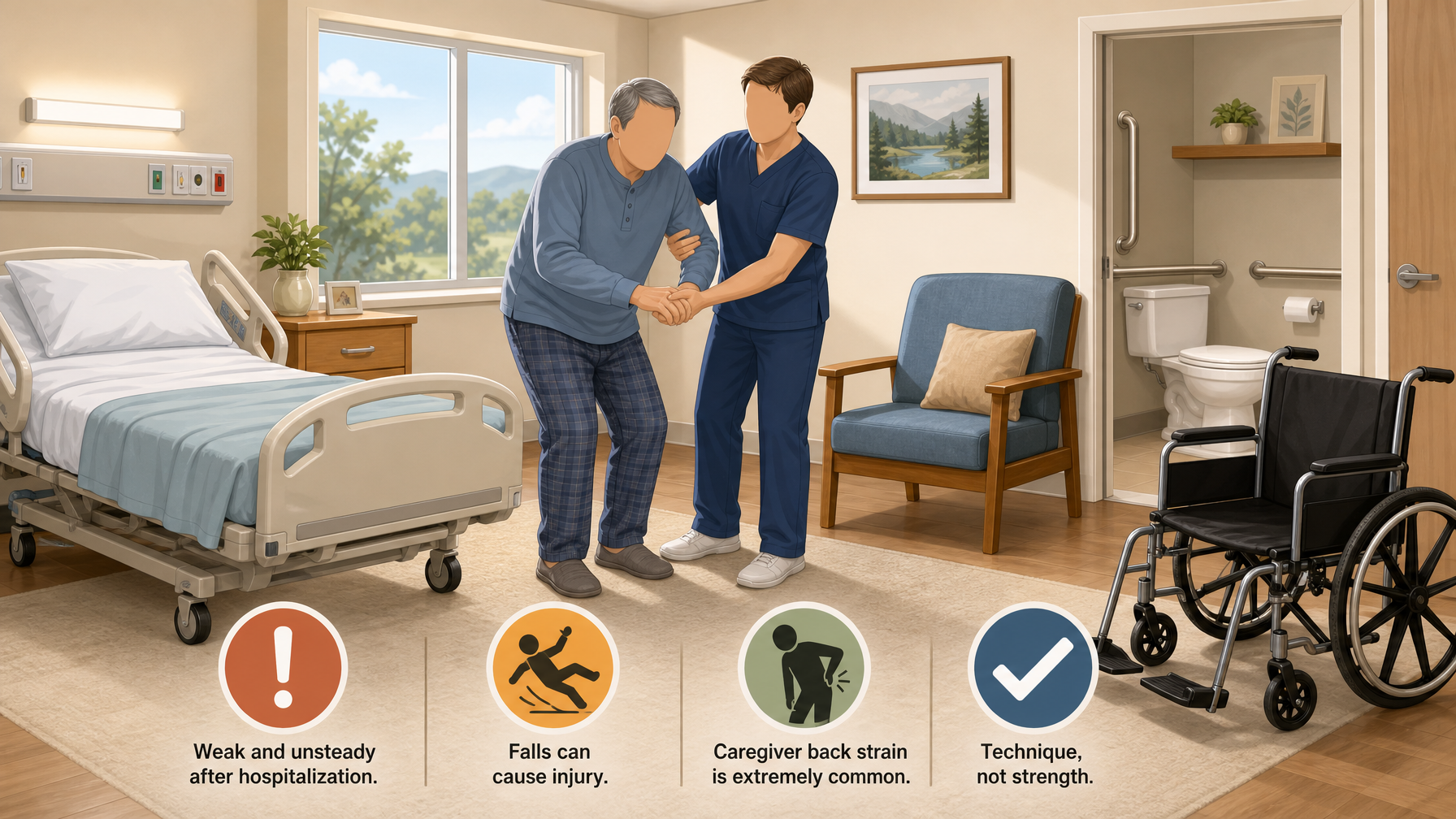
After a hospital stay, a person is often weak and unsteady (see weakness after hospitalization), and the moments of moving between bed, chair, wheelchair, and toilet become some of the riskiest of the day. A poorly done transfer can cause a fall and injury for the person — and a strained or injured back for the caregiver, which is extremely common and can end your ability to care at all.
The good news is that safe transfers are mostly about technique, not strength — working *with* the person’s own ability and your body mechanics rather than muscling them around. This guide covers the principles; wherever possible, ask a physical or occupational therapist to demonstrate for your specific situation, because a few minutes of hands-on teaching is worth more than any written guide.
Good to know
Ask for a therapist to teach transfers before discharge or at a home visit. Transfer technique is much easier to learn by being shown once than from any description — and getting it right protects you both.

Bonus: Health Tracker Pack
An ElderlyDaily original
Bringing someone home from the hospital?
Post-Hospital Recovery Planner
- Discharge snapshot: care team, who to call and when, insurance and documents
- Medication reconciliation, a master list, a daily record and refills
- Daily recovery log, vitals log, and a symptom and pain log
One-off purchase. Instant download.
Fillable PDF · 38 pages · US Letter + A4

Sponsored Pick
Stander Wonder Pole Plus with Rotating Double Grab Bar
Renters, anyone who cannot drill, or spots with no convenient wall
Check PriceThe core principles
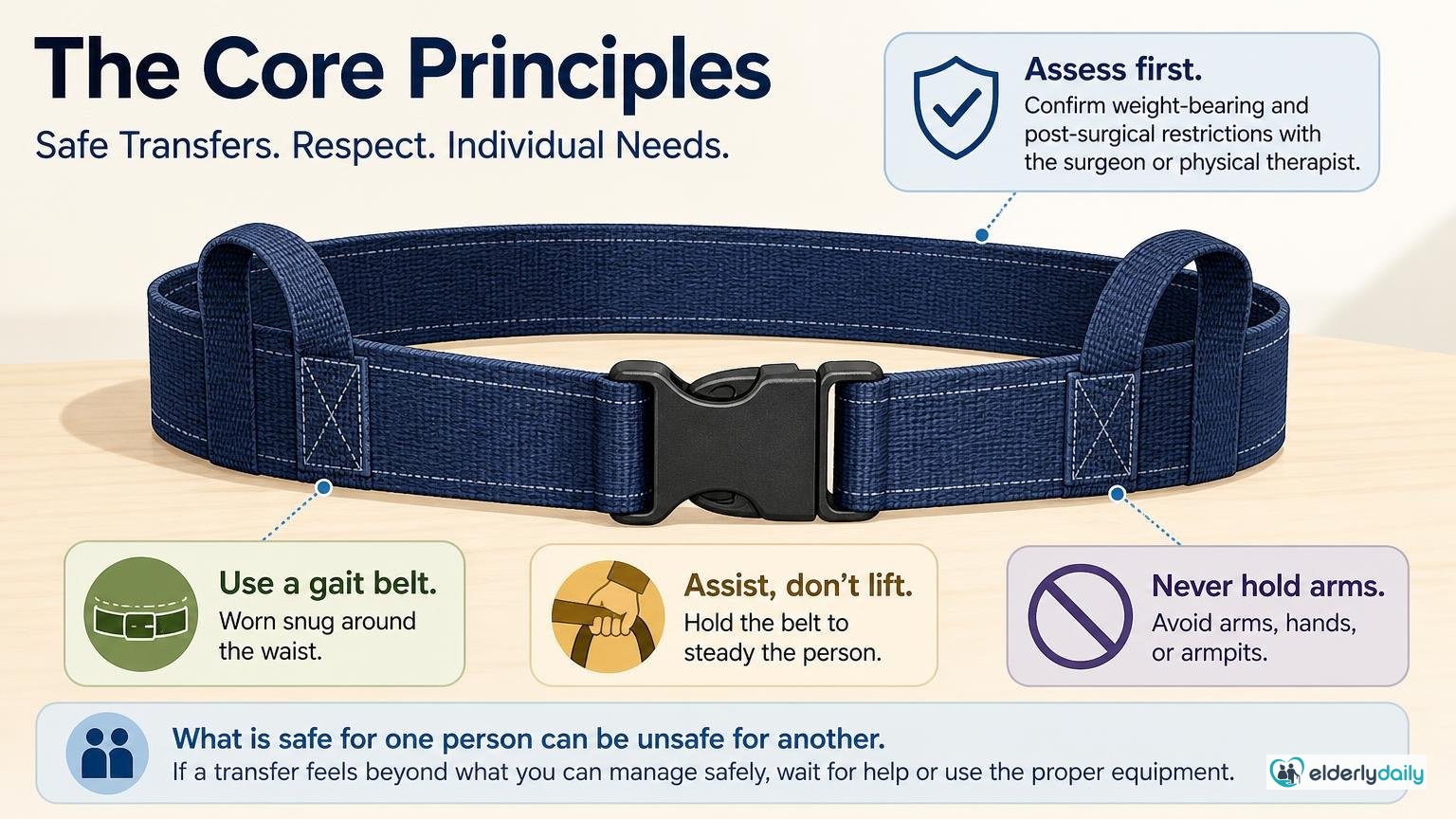
A handful of rules underlie every safe transfer:
- Assess first. Can the person bear weight on their legs? How much can they do themselves? Are there precautions (a new hip, a weak side)? Plan the transfer to their ability, and toward their stronger side where relevant.
- Assist, don’t lift. Let them do as much as they safely can; your job is to guide and steady, not carry. If they cannot help at all, you likely need equipment or a second person.
- Protect your back — the golden rule for you: stand close, feet shoulder-width apart for a stable base, bend your knees and hips (not your back), keep your back straight, hold the person close to you, and never twist while supporting weight — turn with your feet instead.
- Communicate and count. Explain the move, agree a signal ("ready, steady, stand"), and move together so you are coordinated.
- Prepare the space — remove obstacles, lock any wheels (wheelchair, bed, commode), position surfaces close together, and have the person in non-slip footwear.
Confirm what they can safely bear
Before you move anyone, make sure you know their specific weight-bearing and post-surgical restrictions — confirm them with the surgeon or physical therapist. What is safe for one person can be unsafe for another. If a transfer feels beyond what you can manage safely, wait for help or use the proper equipment rather than risk a fall or injury to either of you.
The sit-to-stand (the foundation)
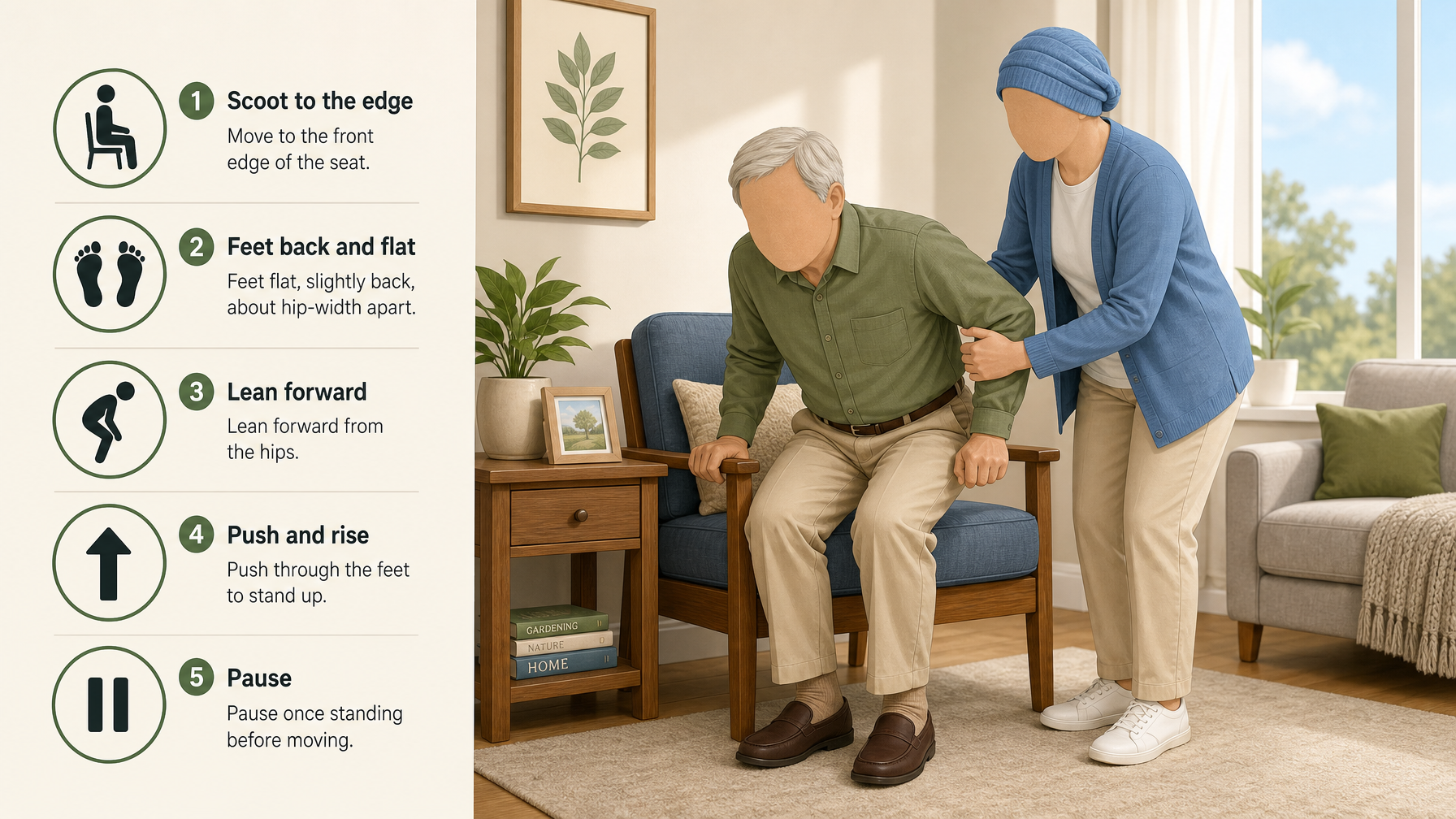
Most transfers begin with helping the person stand, so getting this right is key. To help someone from sitting to standing:
- Scoot to the edge — help them move to the front edge of the seat.
- Feet back and flat — position their feet flat on the floor, slightly back under them, about hip-width apart, so they can push up.
- Lean forward — "nose over toes"; they lean their upper body forward over their feet, which brings the weight over the legs.
- Push and rise — they push up through their legs using the armrests or a grab bar/transfer pole, while you steady them (a gait belt around their waist gives you a secure hold — never pull on their arms or under the shoulders).
- Pause — let them steady themselves fully once up, checking for dizziness, before moving.
See how to help an elderly person stand up for a fuller treatment, including standing after a fall.
Watch out
Never pull a person up by their arms, hands, or under their armpits — it can injure their shoulders and throws you both off balance. Support at the waist (ideally with a gait belt) and let their legs do the work.
Bed, chair, and toilet transfers
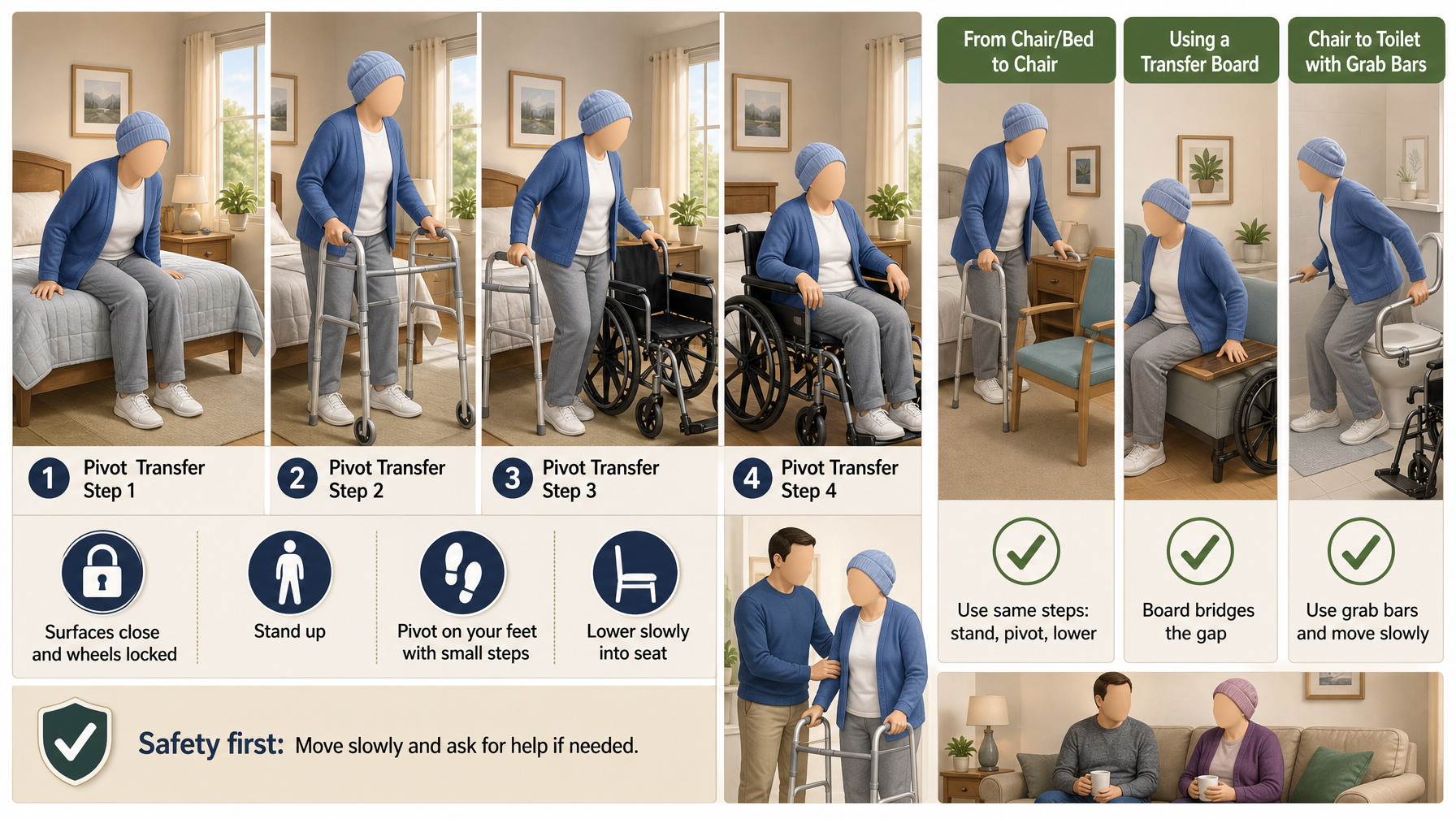
Once standing (or using a board), the common transfers follow the same logic:
- Chair/bed to chair — with surfaces close and at similar heights, help them stand, take small steps or pivot toward the new seat (turning with your feet, not twisting), then lower slowly and controlled by bending your knees as they reach back for the seat.
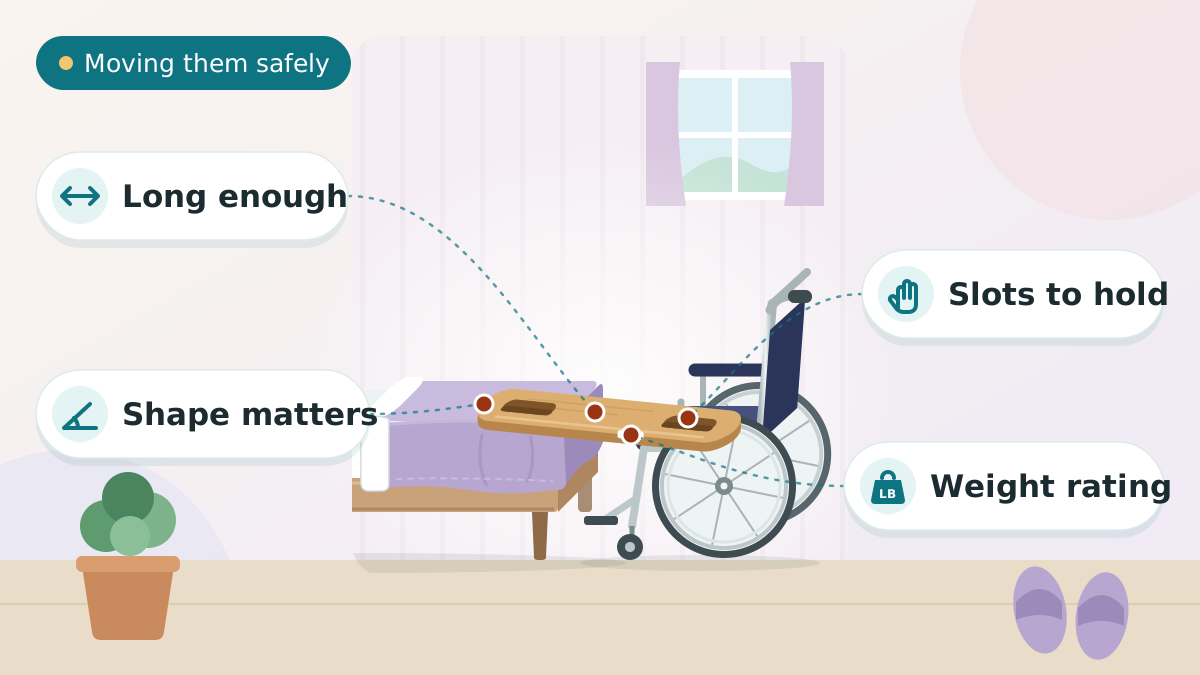
- Using a transfer board — for someone who cannot stand but can bear some weight, a transfer board bridges two surfaces of similar height so the person slides across in stages, which can reduce the effort and risk. A therapist can show the technique.
- Toilet transfers — a raised toilet seat and grab bars make these safer; approach and technique are the same sit-to-stand principles.
- Bed mobility — help them roll and rise in stages (roll to the side, drop legs off the bed, push up sideways to sitting) rather than sitting straight up; a bed rail or assist handle gives them something to pull toward.
Equipment that makes transfers safer
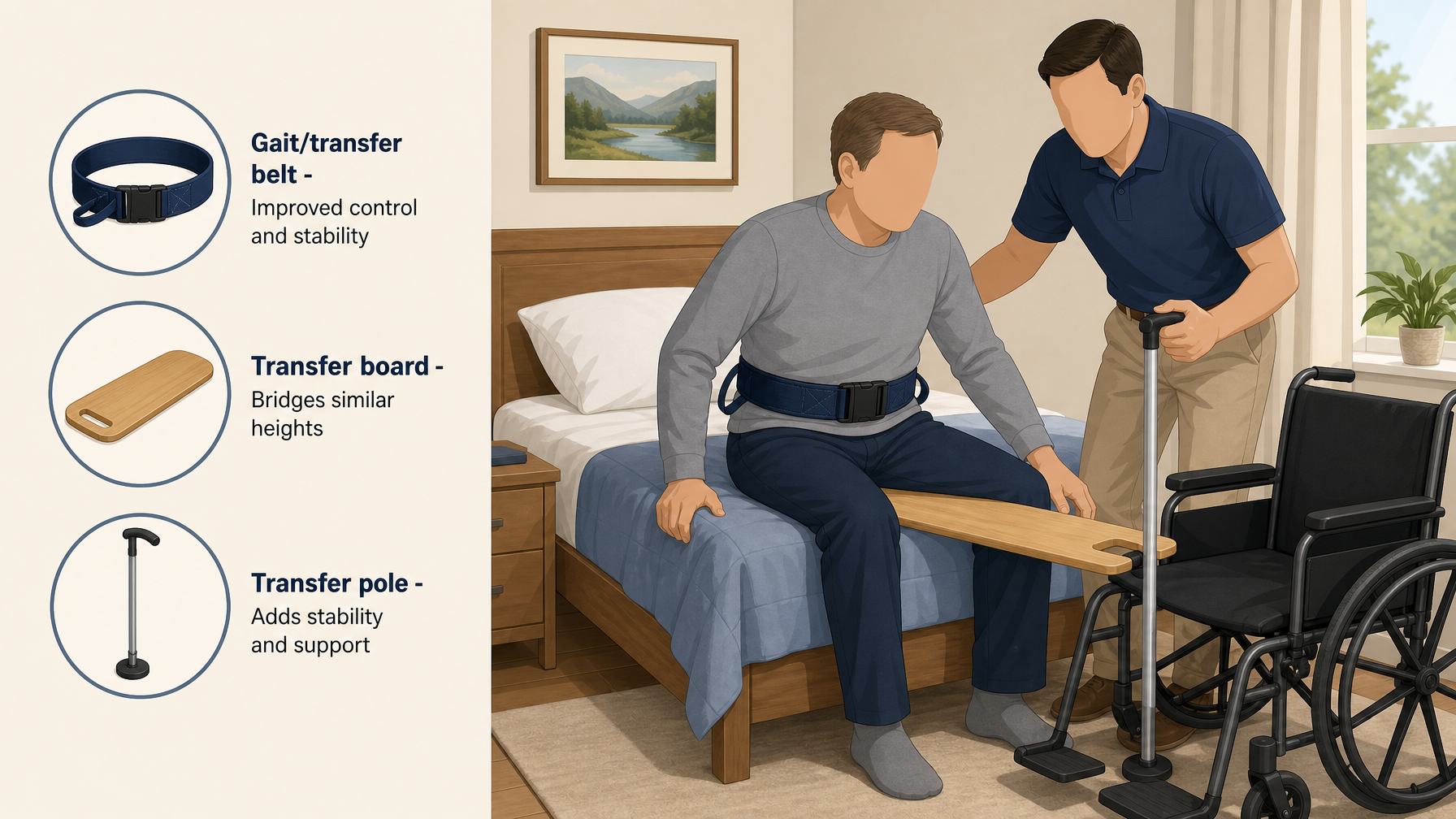
The right aids can help reduce risk and strain:
- Gait/transfer belt — worn around the person’s waist, it gives you a secure, safe place to hold and steady them (far better than grabbing limbs).
- Transfer board — bridges surfaces for those who cannot stand.
- Transfer pole — a floor-to-ceiling pole gives the person a sturdy handhold to pull up on and steady themselves.
- Grab bars and bed assist handles at key points.
- A raised, firm chair and bed at the right height make every transfer easier — see post-surgery home setup.
Know your limits — and when to get help
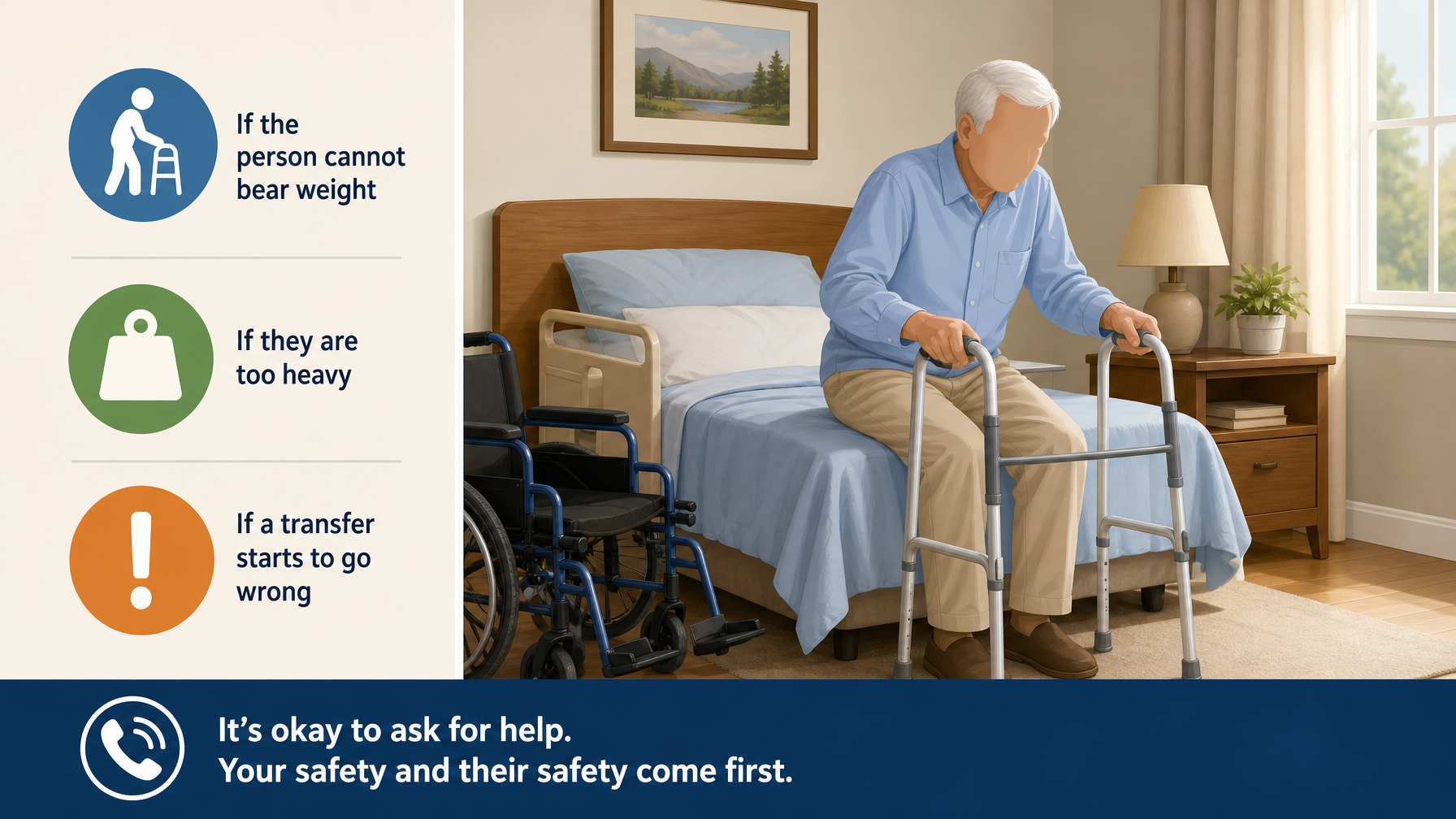
The most important safety rule is knowing when *not* to attempt a transfer alone. Pushing past your limits risks a fall for the person and injury for you:
- If the person cannot bear weight on their legs, do not try to lift or transfer them by yourself — you need equipment (like a hoist) or trained help.
- If they are too heavy for you to assist safely, get a second person or equipment.
- If a transfer starts to go wrong — do not fight to hold them up. Guide them gently toward a controlled lowering to the nearest safe surface or the floor; trying to stop a fall by force injures caregivers.
- Get proper training and equipment — ask about physical/occupational therapy, home-care support, and equipment provision. This is not a task to improvise with a frail person.
- After any fall, see how to help an elderly person stand up — assess for injury before attempting to move them, and have a medical alert device available.
Safety first
If a person begins to fall during a transfer, do not try to hold them up — that is how caregivers get seriously injured. Protect their head, guide them to a controlled slide down to the floor or a seat, then assess. Both of you staying uninjured matters most.
Frequently asked questions
How do I safely move a weak elderly person from bed to chair?
Prepare the space (surfaces close, wheels locked, non-slip footwear), then help them to the edge of the bed and into sitting, do a sit-to-stand (feet back and flat, lean nose-over-toes, push up through the legs while you steady them at the waist), then pivot toward the chair by turning with your feet — never twisting — and lower them slowly by bending your knees. Use a gait belt and let them do as much as they safely can.
How do I protect my back when transferring someone?
Stand close with feet shoulder-width apart for a stable base, bend your knees and hips rather than your back, keep your back straight and the person close to your body, and never twist while supporting weight — turn with your feet instead. Let the person’s legs do the work, use a gait belt to hold at the waist, and use equipment. Never lift dead weight alone.
Why should I not pull an elderly person up by their arms?
Pulling on the arms, hands, or under the armpits can injure their shoulders (which are vulnerable in older adults) and throws both of you off balance, risking a fall. Instead, support at the waist — ideally with a gait belt — and let them push up through their legs using armrests, a grab bar, or a transfer pole.
What equipment helps with safe transfers at home?
A gait or transfer belt (a secure place to hold the person), a transfer board (bridges surfaces for those who cannot stand), a floor-to-ceiling transfer pole (a sturdy handhold), grab bars and bed assist handles at key points, and a raised, firm chair and bed at the right height. For someone who cannot bear weight at all, a hoist and trained help may be needed.
When should I not try to transfer someone by myself?
Do not attempt a solo transfer if the person cannot bear weight on their legs, if they are too heavy for you to assist safely, or if you have not been shown safe technique. In these cases you need equipment (such as a hoist) or a second, trained person. Improvising with a frail person risks a fall for them and a serious back injury for you.
What do I do if someone starts to fall during a transfer?
Do not try to hold them up by force — that can lead to serious caregiver injury. Instead, protect their head and guide them into a controlled lowering to the floor or nearest safe surface, keeping your own back protected. Once they are down safely, assess for injury before attempting to move them, and get help if needed.
