How Long Does Weakness Last After Hospitalization in Seniors?
Last Updated: February 2026
Post-hospital weakness is common in older adults. It often feels scary. But in most cases, it is temporary and improves with time and gentle activity.
Recovery timelines vary. Some seniors regain strength in days. Others need weeks or months. The key is knowing what to expect and when to worry.
This guide explains why weakness happens, how long it typically lasts, and safe ways to rebuild strength at home.

Recovery takes time, but strength returns
Caregiver-Reviewed Recovery Guidance
This guide is written for family caregivers helping seniors recover at home after hospitalization. It provides educational information about typical recovery timelines and safe strengthening strategies.
Important: This is educational only. Not a substitute for medical advice. Always follow your doctor's specific recovery instructions and call if you have concerns about your loved one's progress.
Key Points to Remember
Weakness is normal: Most seniors feel weak after a hospital stay. It does not mean something is wrong.
Recovery varies: Some regain strength in days. Others need weeks or months.
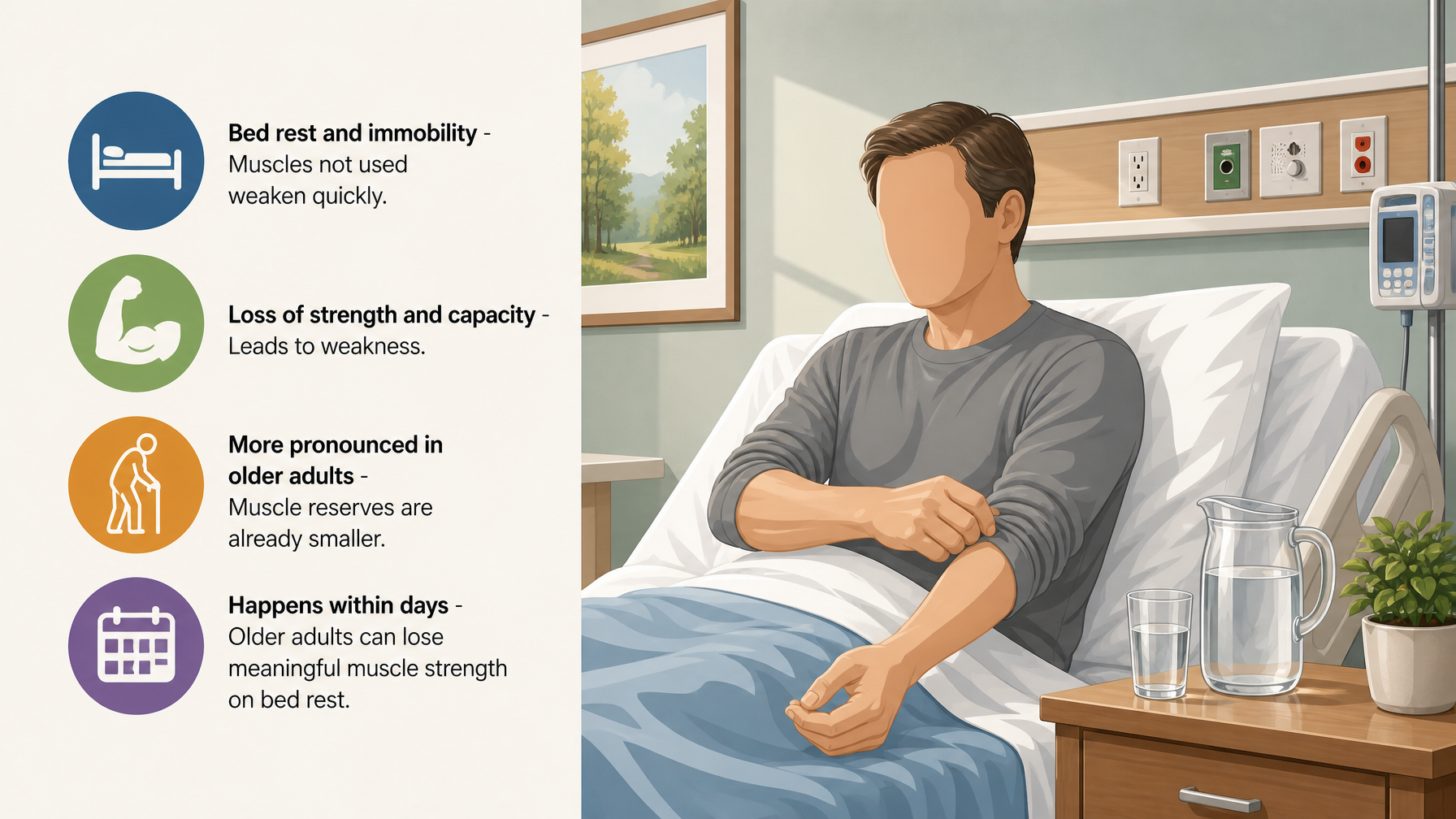
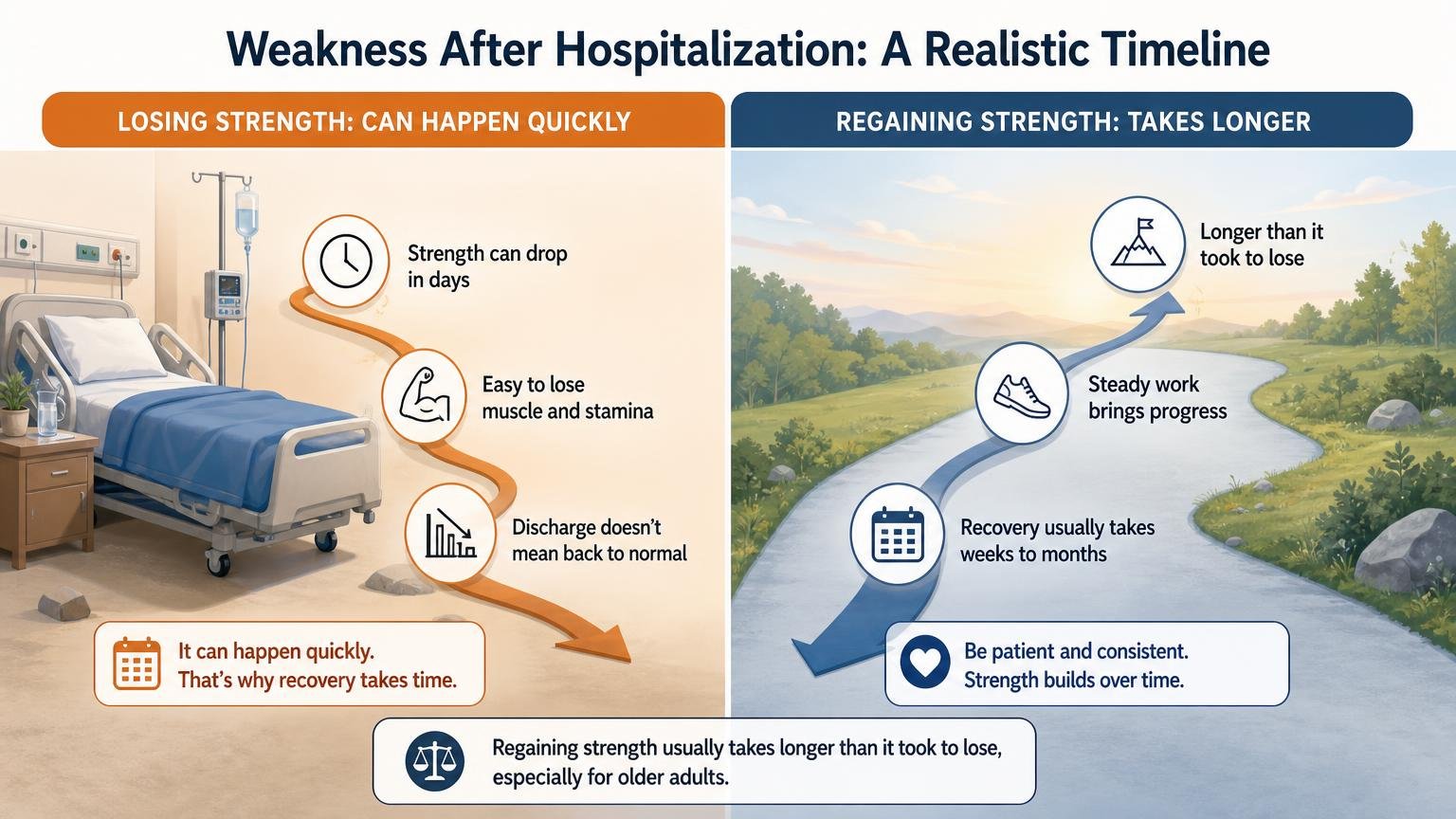
Muscle loss is fast: Seniors can lose 1-5% of muscle per day in bed.
Gentle activity helps: Safe movement speeds recovery. Rest alone does not rebuild strength.
Watch for red flags: Worsening weakness or new symptoms need medical attention.
You are not alone: Physical therapy and home health can help.
Why Seniors Become Weak After a Hospital Stay
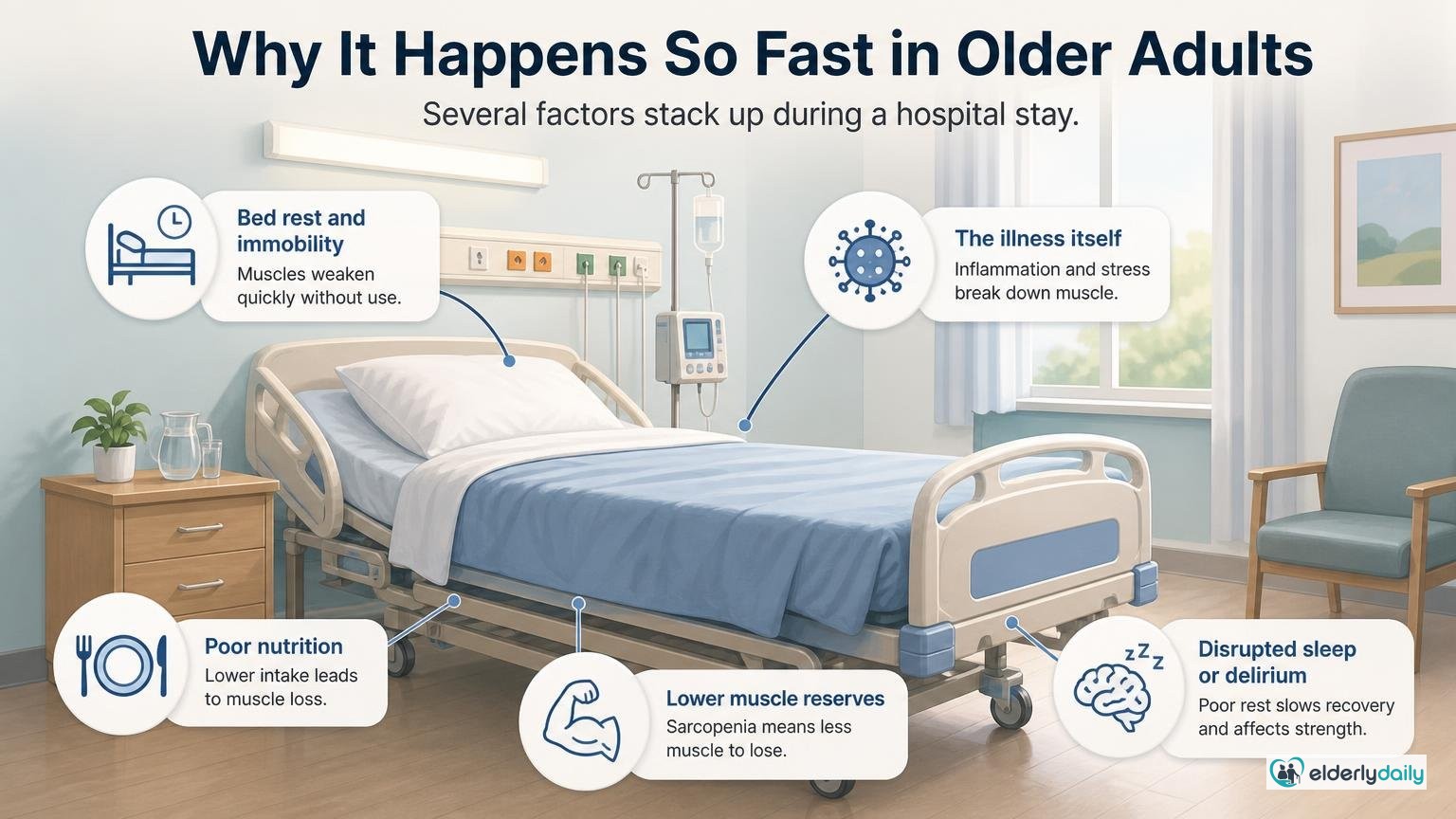
Post-hospital weakness has multiple causes. Understanding why it happens helps you know what to expect:
Bed Rest Muscle Loss
Seniors lose muscle fast when lying in bed. Studies show older adults can lose 1-5% of muscle mass per day during bed rest. A 5-day hospital stay can mean 5-25% muscle loss.
This is called hospital-acquired deconditioning. It is the most common cause of post-hospital weakness.
Reduced Appetite and Nutrition
Hospital food is often unappealing. Illness reduces appetite. Pain medications cause nausea. Poor nutrition during hospitalization means the body lacks protein and calories needed to maintain muscle.
Seniors need 25-30 grams of protein per meal to prevent muscle loss. Most hospital meals provide less.
Infection Recovery
Fighting infection takes enormous energy. The immune system uses calories and protein to heal. Pneumonia, UTIs, sepsis, and surgical infections all cause profound fatigue and weakness.
Infection recovery can take 2-6 weeks even after the infection clears.
Medication Side Effects
Pain medications, sedatives, blood pressure drugs, and antibiotics can all cause fatigue and weakness. New medications started in the hospital may take time to adjust to.
Always review the medication list with your doctor at the first follow-up appointment.
Delirium or Confusion
Hospital delirium affects 30-50% of seniors. Confusion, disrupted sleep, and disorientation drain energy. Even after delirium clears, fatigue and weakness can linger for weeks.
Delirium-related weakness usually improves within 2-4 weeks at home.
Anesthesia and Surgery
Anesthesia affects the body for days or weeks. Surgery causes inflammation and tissue damage that requires energy to heal. Older adults metabolize anesthesia more slowly than younger people.
Anesthesia-related fatigue typically resolves within 1-2 weeks.
For a detailed explanation of the science behind post-hospital weakness, read our guide: Why Seniors Become Weak After Hospital Stay
Bed rest causes rapid muscle loss in older adults
How Long Does Weakness Typically Last?
Recovery timelines vary based on the reason for hospitalization and baseline health. Here are general expectations:
Mild Illness (Pneumonia, UTI, Dehydration)
Hospital stay: 3-5 days
Expected recovery: 1-3 weeks
Most seniors regain baseline strength within 2-3 weeks with gentle activity. Week 1 is the hardest. By week 2, appetite and energy improve. By week 3, most feel close to normal.
Surgery (Hip, Knee, Abdominal)
Hospital stay: 3-7 days
Expected recovery: 6-12 weeks
Surgical recovery takes longer. The body needs time to heal incisions and repair tissue. Physical therapy is usually needed. Strength returns gradually. Most seniors see significant improvement by 8-10 weeks.
ICU Stay (Sepsis, Heart Attack, Stroke)
Hospital stay: 7-14+ days
Expected recovery: 3-6 months or longer
ICU stays cause severe deconditioning. Seniors may need weeks to regain basic mobility. Full recovery can take 6 months or more. Some never return to pre-hospital strength levels. Physical therapy and home health are critical.
Importance of Baseline Health
Seniors who were active and strong before hospitalization recover faster. Those with multiple chronic conditions, frailty, or dementia need longer recovery periods.
Example: A 70-year-old who walked daily before pneumonia may recover in 2 weeks. An 85-year-old with heart failure and diabetes may need 2-3 months for the same illness.
Caregiver Tip
Ask the hospital discharge team for a realistic recovery timeline. They know your loved one's specific situation and can give you a better estimate than general guidelines.
For more details on the causes of post-hospital weakness, read: Why Seniors Become Weak After Hospital Stay
What Affects Recovery Speed?
Several factors determine how quickly strength returns:
Health Before Hospital
Seniors who were active and strong before hospitalization recover faster. Those with chronic conditions or frailty need more time.
Baseline fitness is the biggest predictor of recovery speed.
Length of Hospital Stay
The longer someone stays in bed, the more muscle they lose. A 3-day stay causes less weakness than a 2-week ICU stay.
Each day in bed can mean 3-5 days of recovery time.
Nutrition Status
Poor appetite during and after hospitalization slows muscle recovery. Protein intake is especially important for rebuilding strength.
Seniors need 25-30g protein per meal during recovery.
Age and Frailty
Seniors over 80 or those with multiple chronic conditions typically need longer recovery periods. Frailty before hospitalization extends recovery time.
Age alone does not determine recovery, but it is a factor.
Signs Recovery Is Progressing Normally
These signs show your loved one is on the right track:
Gradual Strength Return
Each week, your loved one can do a little more. Walking distance increases. Transfers become easier. They need less help with daily tasks.
Improved Appetite
Appetite returns within the first week or two. They start eating full meals again. Interest in favorite foods comes back.
Increased Walking Distance
Week 1: Walks to bathroom only. Week 2: Walks around the house. Week 3: Walks to mailbox or around block. Progress is steady.
Better Balance
Steadiness improves. They feel more confident walking. Fewer near-falls. Can turn without wobbling.
Improved Mood and Energy
They smile more. Show interest in activities. Sleep better at night. Feel less exhausted during the day.
No New Symptoms
No fever, chest pain, shortness of breath, or confusion. Vital signs remain stable. No signs of infection or complications.
For a complete overview of what to expect during recovery, read: Post-Hospital Recovery at Home
Physical therapy helps rebuild strength safely
Signs Weakness May Be Concerning
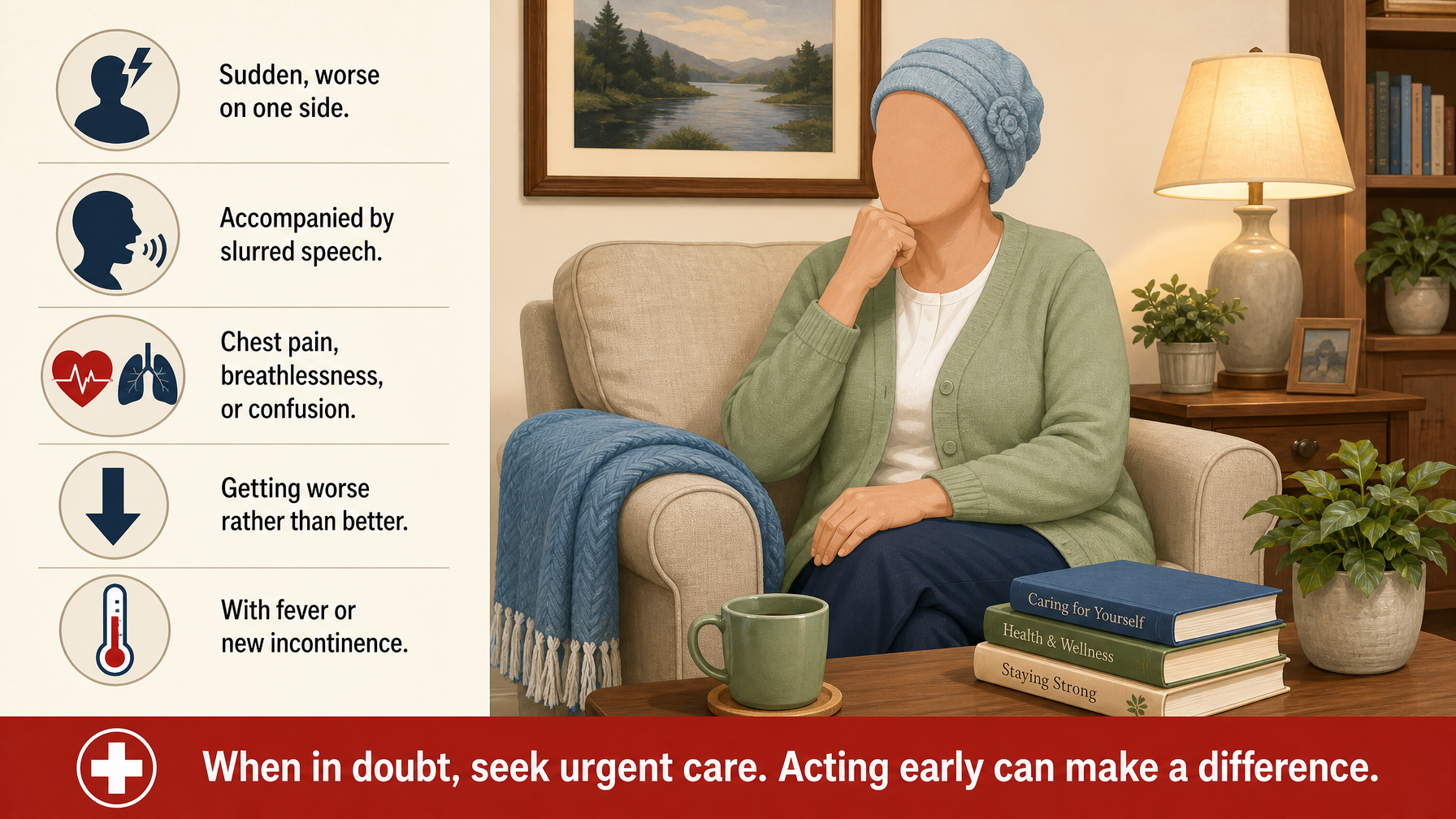
Call your doctor if you notice any of these warning signs:
No Improvement After 2-3 Weeks
Your loved one is not getting stronger. They cannot do more than they could at discharge. Weakness stays the same or gets worse.
This may signal an underlying problem like infection, medication side effects, or inadequate nutrition.
Frequent Falls or Near-Falls
They fall or almost fall multiple times per week. Balance is not improving. Legs give out unexpectedly.
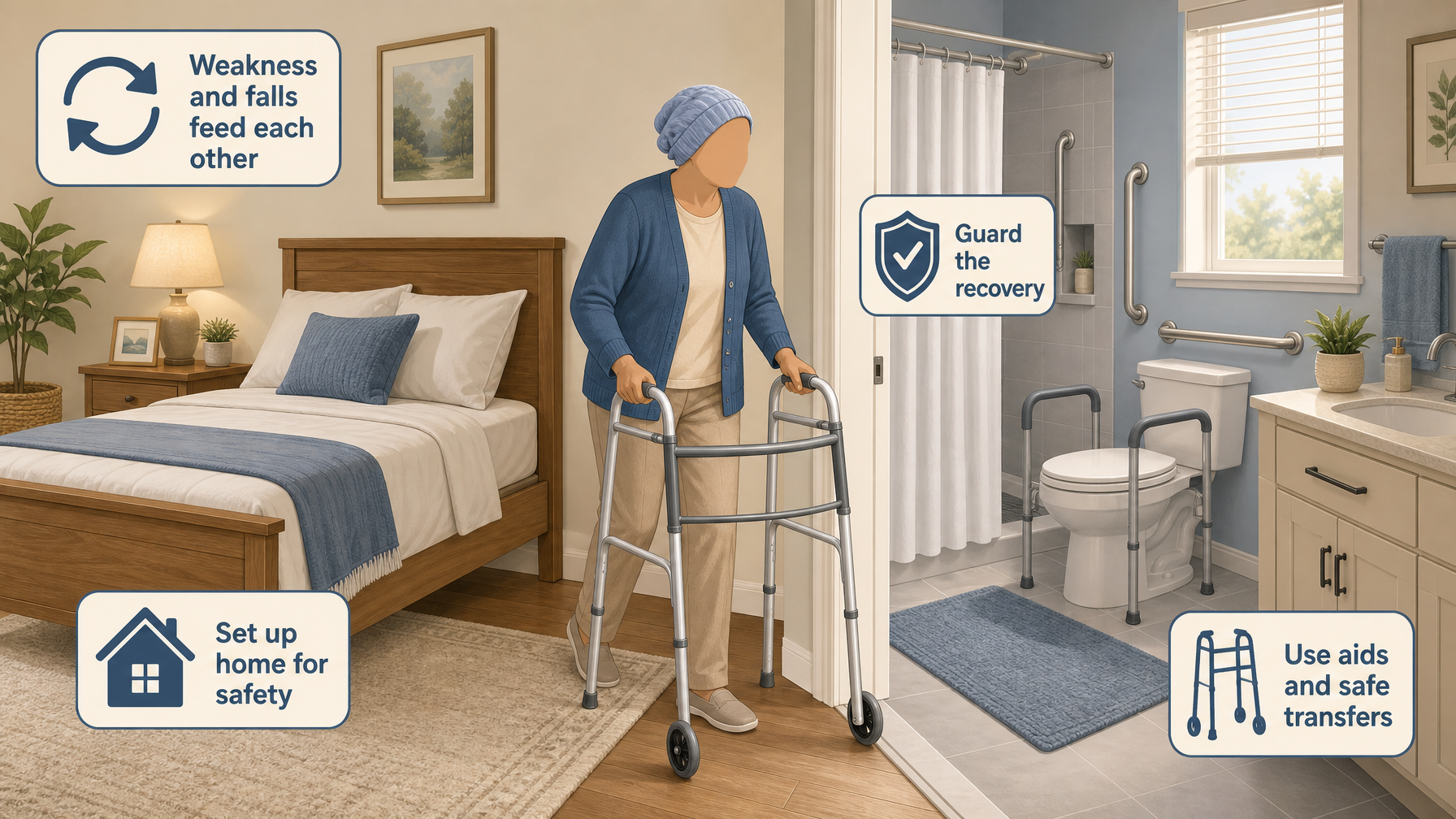
Falls during recovery can cause serious injury. This needs immediate medical evaluation.
Sudden Confusion or Delirium
New confusion that was not present at discharge. Disorientation. Hallucinations. Agitation. Cannot recognize family members.
Sudden confusion in seniors often signals infection, medication reaction, or stroke. Call the doctor immediately.
Severe Fatigue
Cannot stay awake during the day. Sleeps 16+ hours. Too tired to eat or walk to the bathroom. Extreme exhaustion that does not improve with rest.
Severe fatigue may indicate anemia, thyroid problems, heart failure, or medication side effects.
New Incontinence
Bladder or bowel accidents that were not happening before hospitalization. Cannot make it to the bathroom in time. Leaking urine or stool.
New incontinence may be temporary weakness or a sign of UTI, nerve damage, or medication side effects.
Shortness of Breath
Breathing is hard even at rest. Cannot walk 10 feet without gasping. Lips or fingernails look blue. Chest feels tight.
Shortness of breath may signal heart failure, pneumonia, blood clots, or fluid buildup. This is urgent.
For a complete list of red flags during recovery, read: Signs Elderly Parent Not Recovering Properly
If new incontinence develops, read: Temporary Incontinence After Hospitalization
What Might Be Causing This Symptom?
Free ToolSelect a symptom — confusion, falls, weakness, incontinence, or more — and answer a few quick questions to explore possible causes, urgency level, and recommended next steps.
Real Caregiver Stories
These real experiences show different recovery paths:
Carol, 74 - Pneumonia Recovery
"My mom was in the hospital for 5 days with pneumonia. When she came home, she could barely walk to the bathroom. I was terrified. But her doctor said this was normal. We did short walks three times a day. By week 3, she was back to her normal self. The key was not pushing too hard too fast."
Recovery time: 3 weeks to baseline strength
David, 82 - Hip Surgery
"After hip replacement, Dad was so weak he needed help with everything. Physical therapy came to the house twice a week. It took 8 weeks before he could walk with just a cane. At 12 weeks, he was driving again. Surgery recovery takes longer, but he got there."
Recovery time: 8-12 weeks with physical therapy
Patricia, 78 - ICU Stay
"My mother spent 10 days in ICU with sepsis. When she came home, she could not stand alone. We got a walker, shower chair, and bedside commode. It took 4 months before she felt like herself. ICU stays are hard on the body. But with patience and help, she recovered."
Recovery time: 4 months with home modifications and support
How to Safely Rebuild Strength at Home
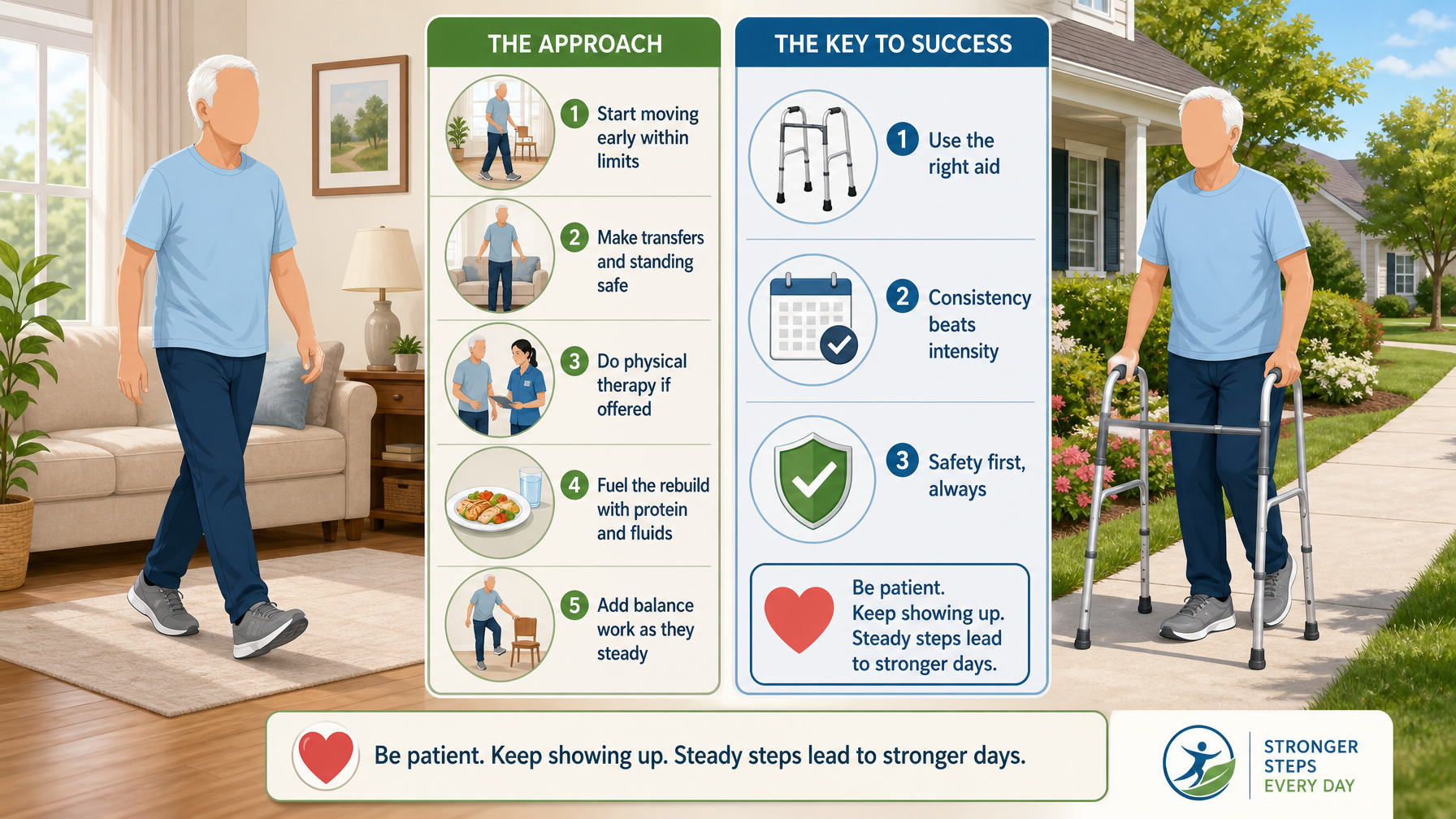
Gentle, consistent activity is the key to recovery. Here is how to help your loved one regain strength safely:
Short, Supervised Walks
Start with 5-minute walks, 3 times daily. Walk in the house or hallway. Stay close enough to provide support.
Walking Progression:
Week 1: 5 minutes, 3x daily (bathroom, kitchen, bedroom)
Week 2: 7-10 minutes, 3x daily (add hallway or around house)
Week 3: 10-15 minutes, 2-3x daily (add outdoor walks if safe)
Week 4+: 15-20 minutes, 2x daily (gradually increase distance)
Seated Leg Exercises
Sitting exercises rebuild leg strength without fall risk. Do these 2-3 times daily.
Simple Seated Exercises:
Leg lifts: Sit in chair. Straighten one leg. Hold 5 seconds. Lower. Repeat 10 times each leg.
Ankle pumps: Point toes up, then down. Repeat 20 times. Improves circulation and leg strength.
Seated marching: Lift knees up and down like marching. Do 20 steps. Builds hip and thigh muscles.
Sit-to-stand: Stand up from chair without using hands (if safe). Sit back down. Repeat 5-10 times.
Gradual Increase in Activity
Add 10-20% more activity each week. If your loved one tolerates 5-minute walks, try 6-7 minutes the next week.
Signs You Can Increase Activity:
Completes current walks without excessive fatigue
Recovers energy within 30 minutes of activity
No pain, dizziness, or shortness of breath
Asks to do more or walk farther
Avoid Overexertion
Pushing too hard causes setbacks. Watch for signs your loved one is doing too much.
Stop Activity If You See:
Breathing very hard or gasping for air
Face turns pale or flushed
Dizziness or lightheadedness
Chest pain or pressure
Extreme fatigue that lasts hours after activity
Caregiver Tip
Recovery is not linear. Some days are better than others. If your loved one has a bad day, scale back activity. Resume the next day. Do not give up.
For detailed exercise guidance, read: How Caregivers Can Help Seniors Exercise Safely and Mobility & Fall Prevention Guide
Gentle seated exercises help rebuild strength safely
Sample Daily Recovery Schedule
A structured routine helps rebuild strength without overexertion:
Morning (8-10 AM)
- Sit up in bed for 5 minutes before standing
- Walk to bathroom with walker or cane
- Eat protein-rich breakfast
- Short 5-minute walk in hallway or around room
Midday (12-2 PM)
- Sit in chair for lunch (not in bed)
- Do 5-10 seated leg lifts
- Walk to mailbox or around house
- Rest in chair (not bed) for 30-60 minutes
Afternoon (3-5 PM)
- Another short walk (5-10 minutes)
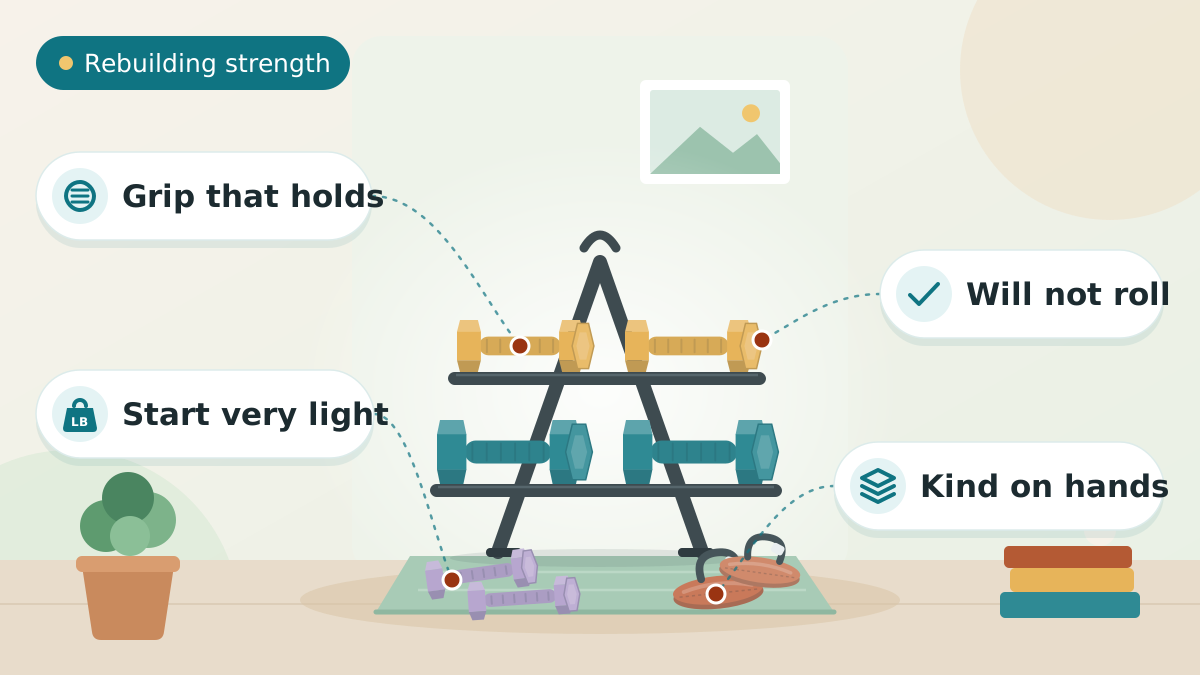
- Seated arm exercises with light weights or cans
- Sit outside if weather permits
- Protein-rich snack
Evening (6-8 PM)
- Sit at table for dinner
- Gentle stretches in chair
- Final bathroom walk before bed
- Early bedtime to support healing
Caregiver Tip
Increase activity by 10-20% each week. If your loved one feels more tired or weak, scale back. Recovery is not linear. Some days are better than others.
Nutrition for Muscle Recovery
Proper nutrition is as important as exercise for rebuilding strength:
Protein Priority
Seniors need 25-30 grams of protein per meal during recovery. Protein rebuilds muscle tissue lost during bed rest.
Good Protein Sources:
- • Eggs (2 eggs = 12g protein)
- • Greek yogurt (1 cup = 20g)
- • Chicken breast (3 oz = 26g)
- • Cottage cheese (1/2 cup = 14g)
- • Protein shakes (varies by brand)
Hydration Matters
Dehydration makes weakness worse. Seniors need 6-8 cups of fluid daily unless a doctor says otherwise.
Hydration Tips:
- • Offer water every 2 hours
- • Keep water within reach
- • Try broth, juice, or herbal tea
- • Watch for dark urine (sign of dehydration)
- • Avoid excessive caffeine
Poor Appetite Warning
If your loved one refuses food for more than 2 days or loses weight rapidly, call the doctor. Poor nutrition prevents muscle recovery.
Equipment That Helps During Recovery
The right tools make recovery safer and easier:
Walker or Rollator
Provides maximum support during early recovery. Rollators with seats allow rest breaks.
Best WalkersShower Chair
Prevents falls during bathing when standing is difficult. Essential for safe hygiene during recovery.
Best Shower ChairsBed Assist Handle
Helps with getting in and out of bed safely. Reduces fall risk during nighttime bathroom trips.
Best Bed HandlesWhen to Call the Doctor
Some symptoms require immediate medical attention. Do not wait:
Call Doctor Immediately If:
- Worsening weakness: Getting weaker instead of stronger
- Shortness of breath: Hard to breathe even at rest
- Chest pain: Any chest discomfort or pressure
- Fever: Temperature over 100.4°F
- Sudden confusion: New disorientation or delirium
- Cannot urinate: No urine output for 8+ hours
Schedule Appointment If:
- No improvement: Weakness unchanged after 2-3 weeks
- Frequent falls: Multiple falls or near-falls per week
- Poor appetite: Not eating for 2+ days
- Medication concerns: Side effects or questions about drugs
- Severe fatigue: Sleeping 16+ hours daily
- New incontinence: Bladder or bowel accidents
Questions to Ask Your Doctor
About Recovery Timeline:
- • How long should weakness last?
- • What is realistic for my loved one?
- • When should I expect improvement?
- • What if strength does not return?
About Treatment:
- • Do we qualify for home physical therapy?
- • Are medications causing weakness?
- • Should we adjust activity level?
- • What warning signs should I watch for?
For guidance on medication-related weakness, read: Medication Management Guide
When Physical Therapy Helps
Home health physical therapy can speed recovery and prevent falls:
Who Qualifies for Home PT
- Homebound status: Cannot leave home without major effort
- Recent hospitalization: Discharged within past 2 weeks
- Doctor order: Physician prescribes home health PT
- Medicare coverage: Most seniors qualify under Medicare Part A or B
What PT Does
- Strength assessment: Tests current muscle strength and balance
- Custom exercises: Creates safe exercise plan for your loved one
- Fall prevention: Teaches safe transfers and walking techniques
- Equipment recommendations: Suggests walkers, canes, or other aids
How to Request Home Physical Therapy
Call Your Doctor
Ask for a home health physical therapy order. Explain your loved one cannot safely leave home.
Doctor Sends Order
The doctor faxes or sends the order to a home health agency.
Agency Calls You
The home health agency schedules the first visit, usually within 2-3 days.
PT Visits Begin
Therapist comes 2-3 times per week for 4-8 weeks, depending on progress.
Common Mistakes That Slow Recovery
Avoid these mistakes that can delay strength return:
Staying in Bed All Day
Do this instead: Get up and sit in a chair for meals. Walk short distances several times daily. Bed rest makes weakness worse.
Doing Too Much Too Soon
Do this instead: Start with 5-minute walks. Add 1-2 minutes each day. Pushing too hard causes setbacks and falls.
Skipping Follow-Up Appointments
Do this instead: Keep all doctor appointments. They check for complications and adjust recovery plans.
Not Eating Enough Protein
Do this instead: Include protein at every meal. Muscles cannot rebuild without adequate protein intake.
Ignoring Pain or Dizziness
Do this instead: Stop activity if pain or dizziness occurs. Call the doctor. These symptoms may signal complications.
Supervised walking helps rebuild confidence and strength
Weakness vs. Deconditioning: What's the Difference?
Understanding the difference helps set realistic expectations:
Deconditioning
Muscle loss from bed rest and inactivity. This is reversible with exercise and time.
Signs of Deconditioning:
- • Gradual improvement each week
- • Fatigue improves with rest
- • Can do more each day
- • Appetite improving?
- • No new symptoms
Medical Complication
Weakness from infection, medication, or underlying illness. This needs medical evaluation.
Signs of Complication:
- • Weakness getting worse, not better
- • Fever or infection signs
- • Sudden confusion
- • Shortness of breath
- • Chest pain or dizziness
When in Doubt, Call the Doctor
If you cannot tell whether weakness is normal recovery or a complication, call your doctor. It is always better to check.
Tracking Recovery Progress
Keep a simple log to monitor improvement and spot problems early:
Daily Recovery Checklist
Mobility
- • How far walked today?
- • Used walker, cane, or no aid?
- • Any falls or near-falls?
- • Balance better or worse?
Nutrition
- • Ate 3 meals today?
- • Protein at each meal?
- • Drank 6-8 cups fluid?
- • Appetite improving?
Energy Level
- • Rate fatigue 1-10
- • Needed naps today?
- • Felt stronger than yesterday?
- • Mood improving?
Warning Signs
- • Any new pain?
- • Fever or chills?
- • Increased confusion?
- • Shortness of breath?
When Weakness May Be Permanent
In some cases, full strength may not return. This is important to understand:
Stroke or Neurological Damage
Nerve damage from stroke, spinal injury, or severe illness may cause lasting weakness. Physical therapy can improve function, but full recovery may not be possible.
Advanced Heart or Lung Disease
Severe heart failure or COPD limits how much activity the body can tolerate. Strength may plateau at a lower level than before.
Severe Frailty
Seniors who were very frail before hospitalization may not return to previous strength levels. Focus shifts to maintaining current function.
Quality of Life Still Matters
Even when full strength does not return, the right equipment and home setup can maintain independence and quality of life. Walkers, grab bars, and shower chairs help seniors stay safe and active.
More Helpful Guides
Learn more about post-hospital recovery and safety:
Frequently Asked Questions
Medical Disclaimer
This guide provides educational information only. It is not medical advice and does not replace professional medical care.
Always follow your doctor's specific recovery instructions. Every senior's situation is different. Recovery timelines, exercise recommendations, and warning signs vary based on individual health conditions.
Call your doctor immediately if: Weakness worsens, new symptoms develop, or you have concerns about recovery progress.
Before starting any exercise program: Consult with your loved one's physician or physical therapist. Some exercises may not be safe depending on surgical restrictions, heart conditions, or other medical factors.
Need a Complete Recovery Plan?
Get step-by-step guidance for safe at-home recovery