
Managing Incontinence at Home: A Practical Caregiver Guide

Practical caregiving guidance, not medical advice. New or worsening incontinence should always be evaluated by a doctor first — it often has a treatable cause.
Incontinence is one of the most common — and most stressful — parts of caregiving. With the right products, a skin-protection routine, and a calm approach, it becomes manageable, and dignity stays intact.
Key takeaways
- See a doctor first: new incontinence is a symptom, not a diagnosis, and is often treatable — never assume it is just aging. See why an elderly parent is suddenly incontinent.
- Management stands on three pillars: the right absorbent products, a skin-protection routine, and odor and laundry control.
- Protecting the skin is the highest-stakes daily task — cleanse gently and apply a barrier cream at every change to help protect against painful breakdown.
- A timed-toileting routine (regular bathroom visits) can help reduce accidents alongside the right products.
- Preserve dignity: use matter-of-fact language, offer choices, and protect the relationship — the emotional side matters as much as the practical.
Quick answer
How do I manage incontinence at home for an elderly parent?
Start with a doctor’s visit to find and treat the cause. Then build a routine around three things: absorbent products matched to the level of leakage (diapers, pads, bed protection); a skin-care routine of gentle cleansing plus a barrier cream at every change to prevent breakdown; and odor and laundry control. Add a timed-toileting schedule, and handle it all calmly to protect dignity.
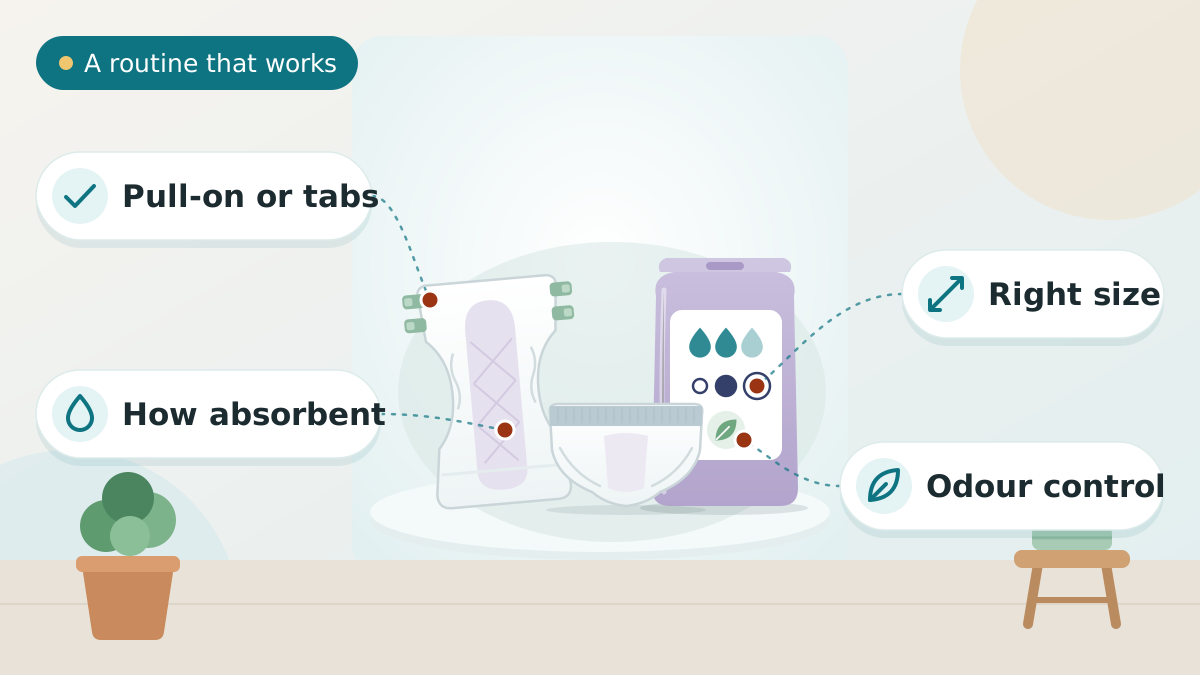
Start with the doctor, not the drugstore
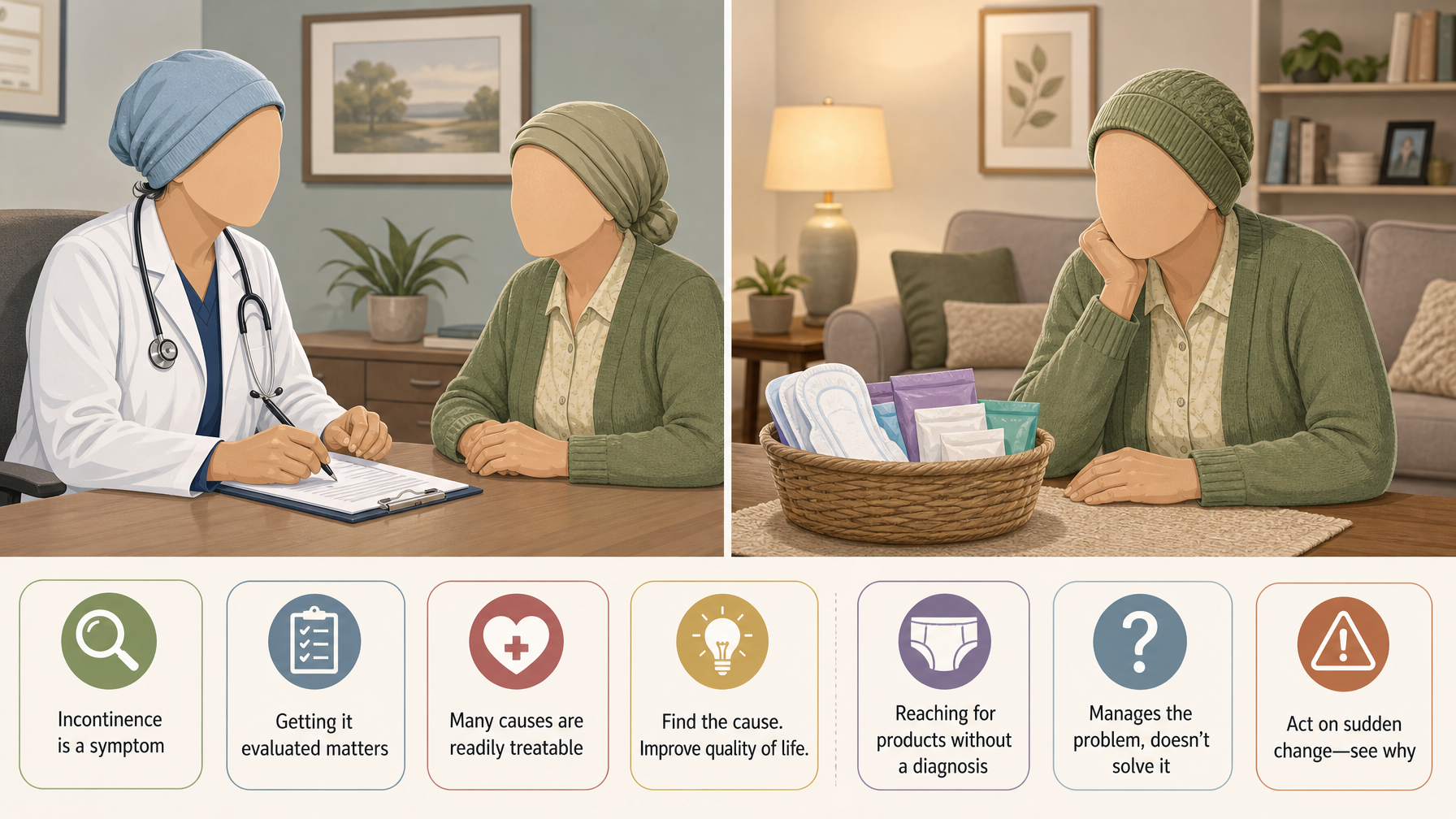
The most important step in managing incontinence is often skipped: getting it evaluated. Incontinence is a symptom with many possible causes — some of them, like a urinary tract infection, medication effects, constipation, or prostate issues, are readily treatable. Reaching straight for absorbent products without a diagnosis can mean managing a problem that could have been reduced or resolved.
A sudden change is especially important to act on — see why an elderly parent is suddenly incontinent. Bringing it up with a doctor can feel awkward; our how to talk to a doctor about incontinence guide makes that conversation easier and more productive.
Watch out
If the person suddenly cannot urinate, has only frequent small dribbles with a full, uncomfortable bladder, or has fever with back or side pain, seek urgent care — these can signal urinary retention or infection. See incontinence warning signs.
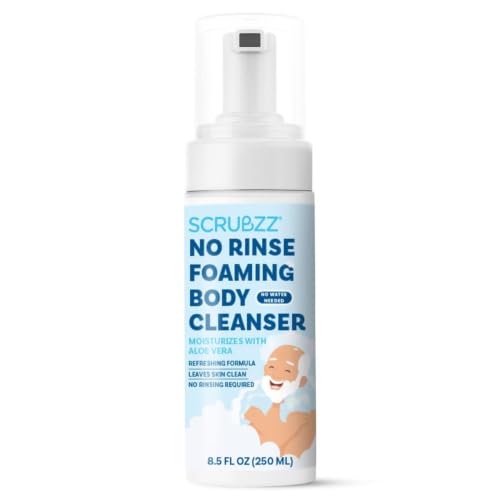
Sponsored Pick
Scrubzz No-Rinse Foam Cleanser (3-Pack)
Ongoing elder care or hospital stays where you want a hydrating no-rinse foam in a multi-pack
Check PriceChoosing the right absorbent products
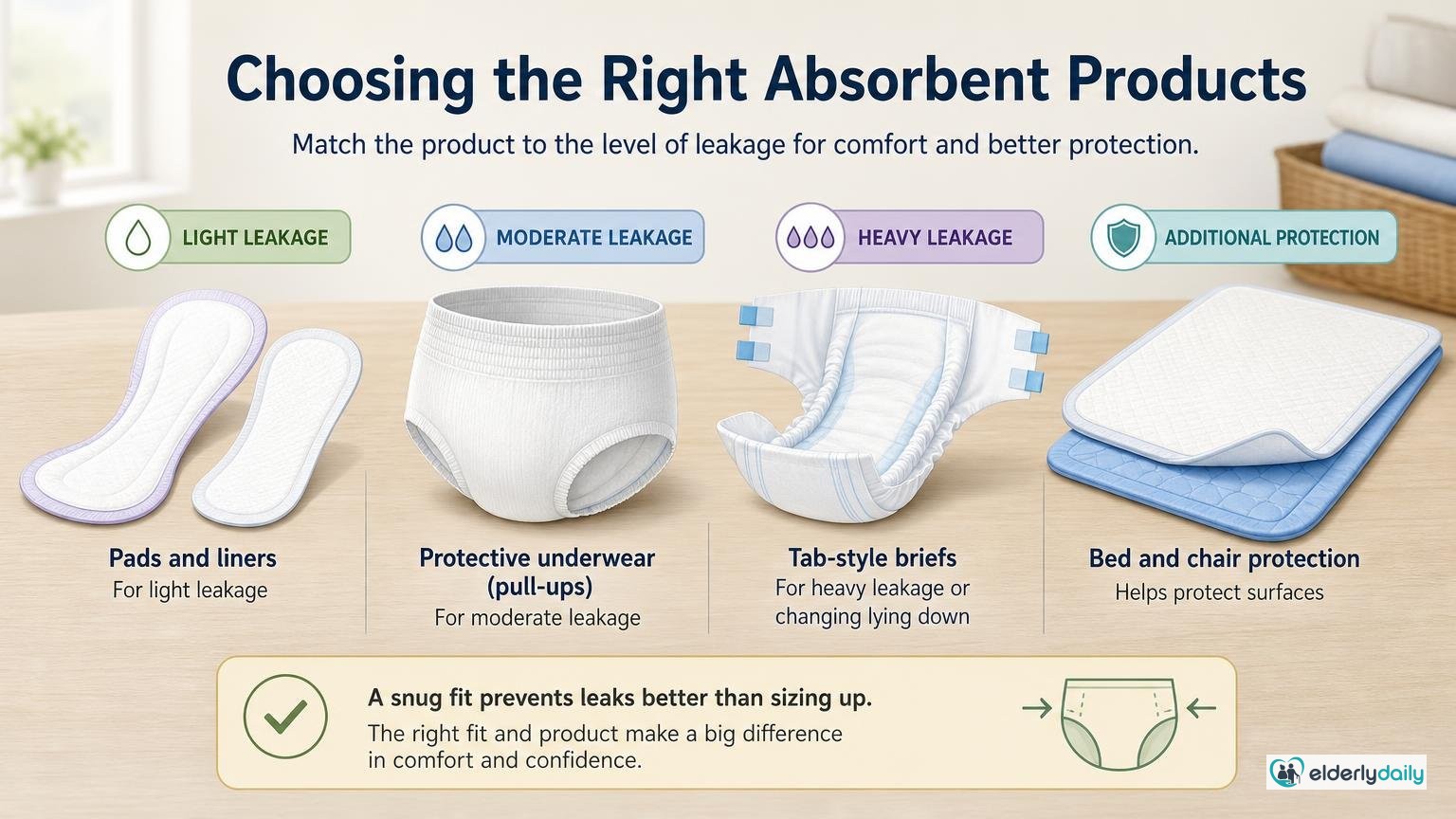
The market is overwhelming, but products fall into a few clear categories. Match the product to the level of leakage rather than defaulting to the most absorbent option, which can be bulky and undignified when it is not needed.
- Pads and liners for light leakage — discreet, worn inside regular underwear.
- Protective underwear (pull-ups) for moderate leakage — they look and go on like normal underwear, which many people accept far more readily than "diapers." See adult diapers for active seniors.
- Tab-style briefs for heavy leakage or for someone who needs a caregiver to change them lying down.
- Bed and chair protection — reusable or disposable bed pads and under pads, plus a waterproof mattress protector as a last line of defense for the mattress.
Fit matters as much as absorbency: a snug (not tight) fit around the legs and waist prevents leaks far better than sizing up.
Good to know
Terminology shapes acceptance. Many people resist "diapers" but accept "protective underwear" or simply "pull-ups." For a parent who refuses products entirely, see when an elderly parent refuses adult diapers.
Protecting the skin (the most important daily task)
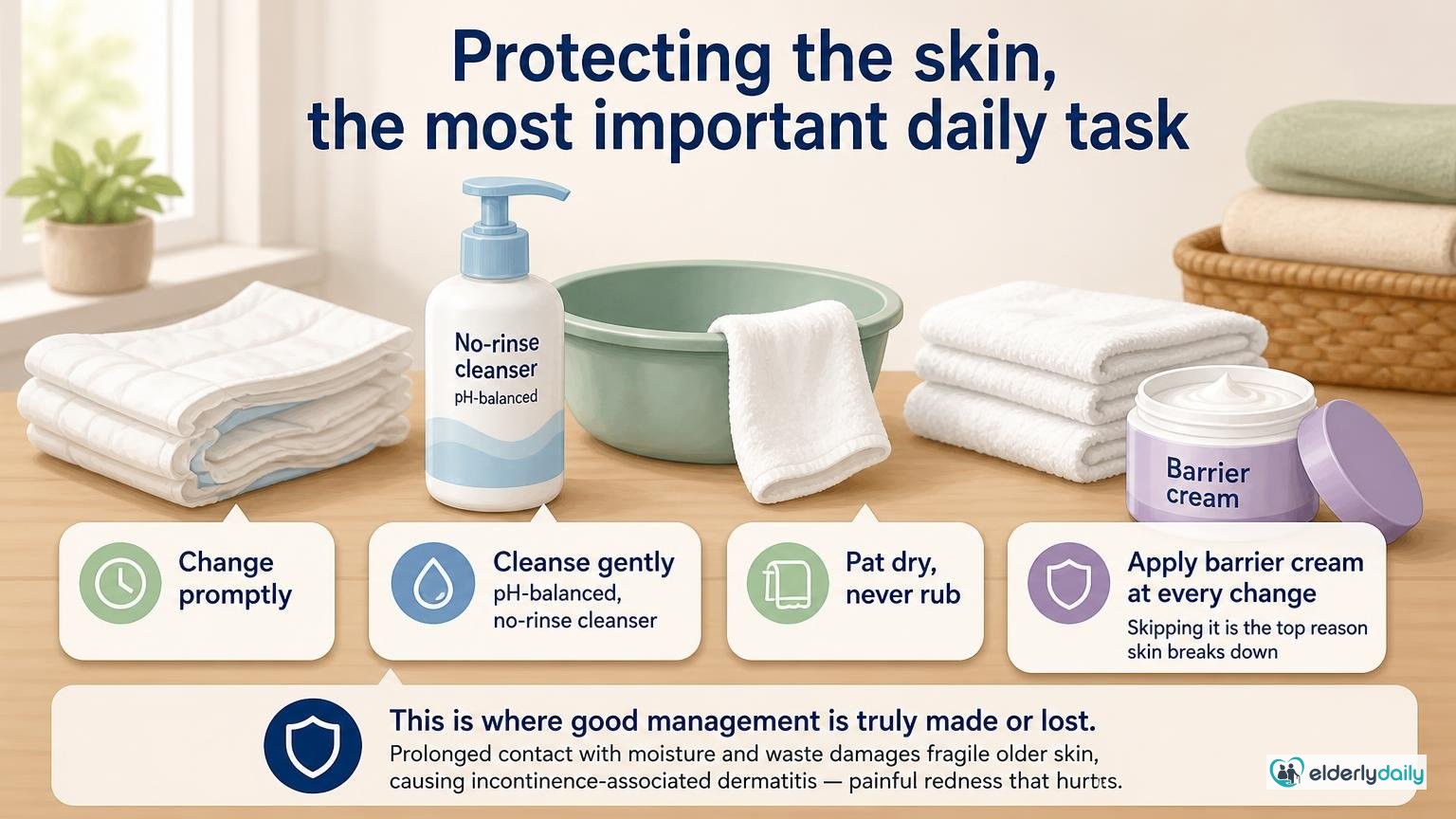
This is where good management is truly made or lost. Prolonged contact with moisture and waste damages fragile older skin, causing incontinence-associated dermatitis — painful redness that can progress to open, slow-healing skin. Preventing it is a routine, not a one-off:
- 1
Change promptly
Change soon after an episode rather than on a fixed clock — the longer skin sits against moisture, the more damage occurs.
- 2
Cleanse gently
Use a pH-balanced, no-rinse cleanser or gentle cleansing wipes rather than soap and a washcloth, which strip and abrade fragile skin. See our skin protectant cleansers review.
- 3
Pat dry, never rub
Blot the skin dry; rubbing damages the surface. Let skin folds air a moment before covering.
- 4
Apply a barrier cream every change
A silicone or dimethicone barrier cream shields the skin from the next episode. Skipping this step leaves skin exposed to the next episode — make it automatic at every change.
Safety first
If you see redness that does not fade, open skin, or a rash spreading despite good care, have a nurse or doctor assess it — early skin breakdown is much easier to treat than an established pressure or moisture wound.
Timed toileting: routine beats reaction
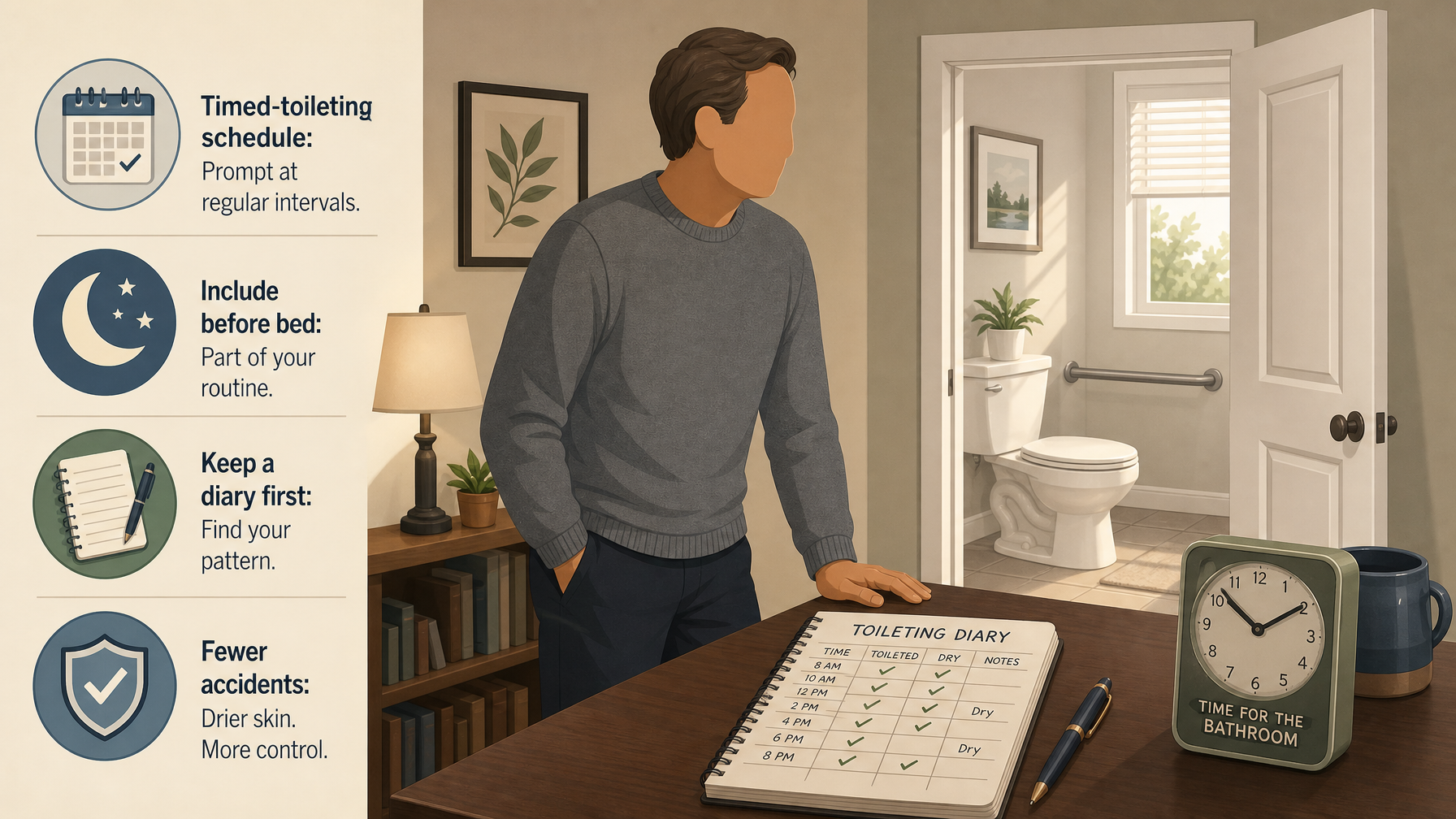
One of the most effective interventions costs nothing: a timed-toileting schedule. Rather than waiting for the urge (which may not arrive in time) or for an accident, offer or prompt a bathroom trip at regular intervals — commonly every two to three hours during the day, and before bed.
Over time this reduces accidents, keeps skin drier, and preserves the person’s sense of control. Keep a brief diary for a week first — noting times of accidents — to find the natural pattern and set the schedule around it. Making the bathroom easy to reach and use supports this; see bathroom fall prevention and, for chair or bedside needs, raised commode chairs.
Odor and laundry control
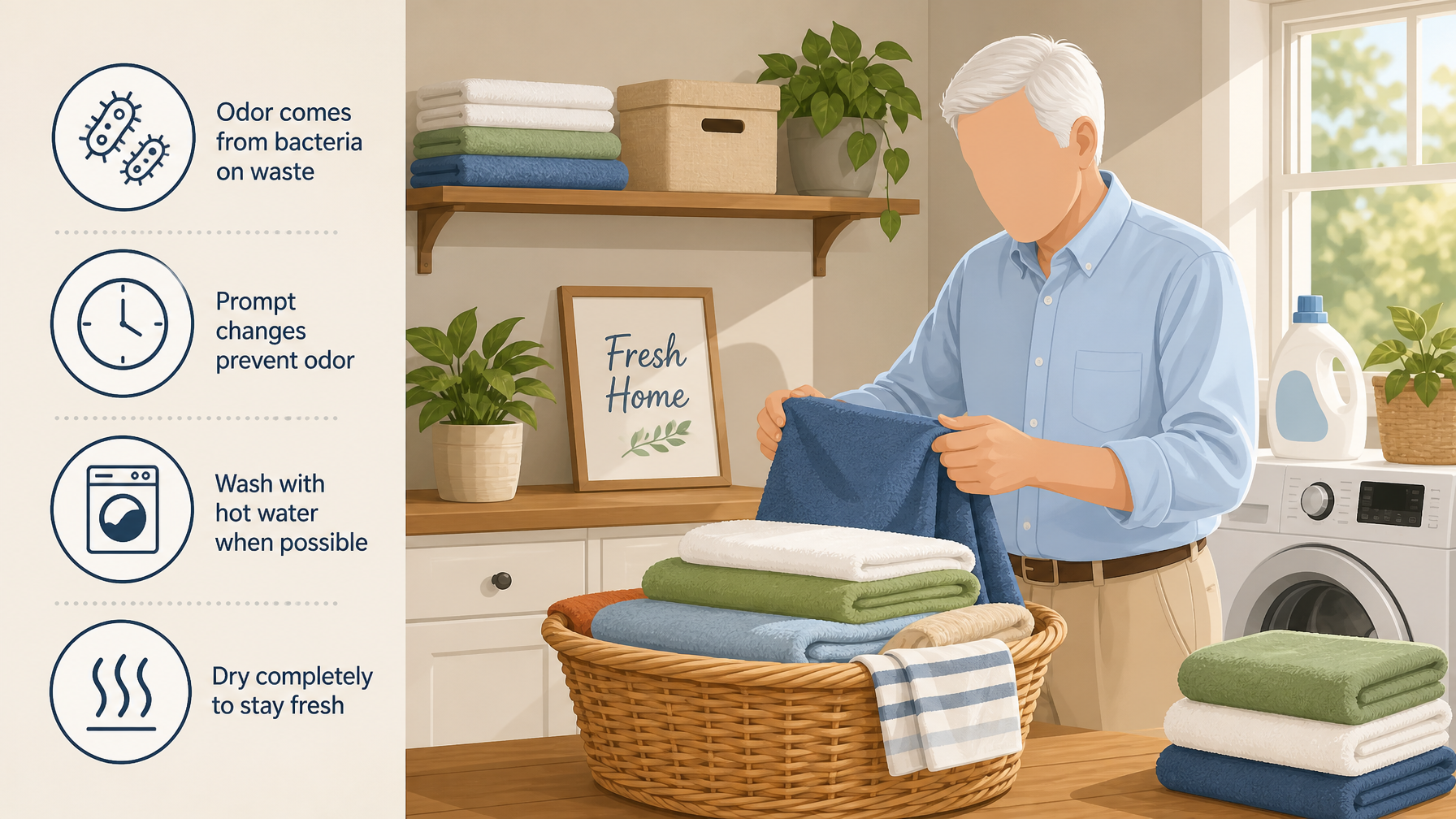
Managed well, incontinence does not have to mean a home that smells of it. The key is that odor comes from bacteria acting on waste over time, so prompt changes and cleaning solve most of it.
- Change and dispose promptly, sealing used products in a lidded, lined bin — see odor control products for caregivers.
- For laundry, rinse soiled items in cold water first (hot sets stains and odor), then wash with detergent plus a cup of white vinegar or an enzyme-based additive.
- Protect furniture and the bed with washable pads so cleanup is a laundry load, not a crisis.
- Air the room and clean surfaces regularly; persistent odor despite prompt changes can itself be a sign of infection worth mentioning to the doctor.
Protecting dignity and the relationship

The hardest part of incontinence care is rarely the laundry — it is the shame, and the strain it puts on the relationship. How you handle it shapes how the person feels about themselves and about accepting help.
- Use calm, matter-of-fact language, and treat changes as routine, not as a burden or an embarrassment.
- Offer choices wherever possible — which products, doing what they can themselves — to preserve autonomy and control.
- Protect privacy during changes as you would want for yourself.
- Acknowledge that this is hard for them, not only for you; a little empathy defuses a lot of resistance. Our guide on an elderly parent who refuses help has approaches that carry over.
And protect yourself: incontinence care is one of the most burnout-prone parts of caregiving. Share the load and use respite where you can — see preventing caregiver burnout.
Reducing incontinence, not just managing it
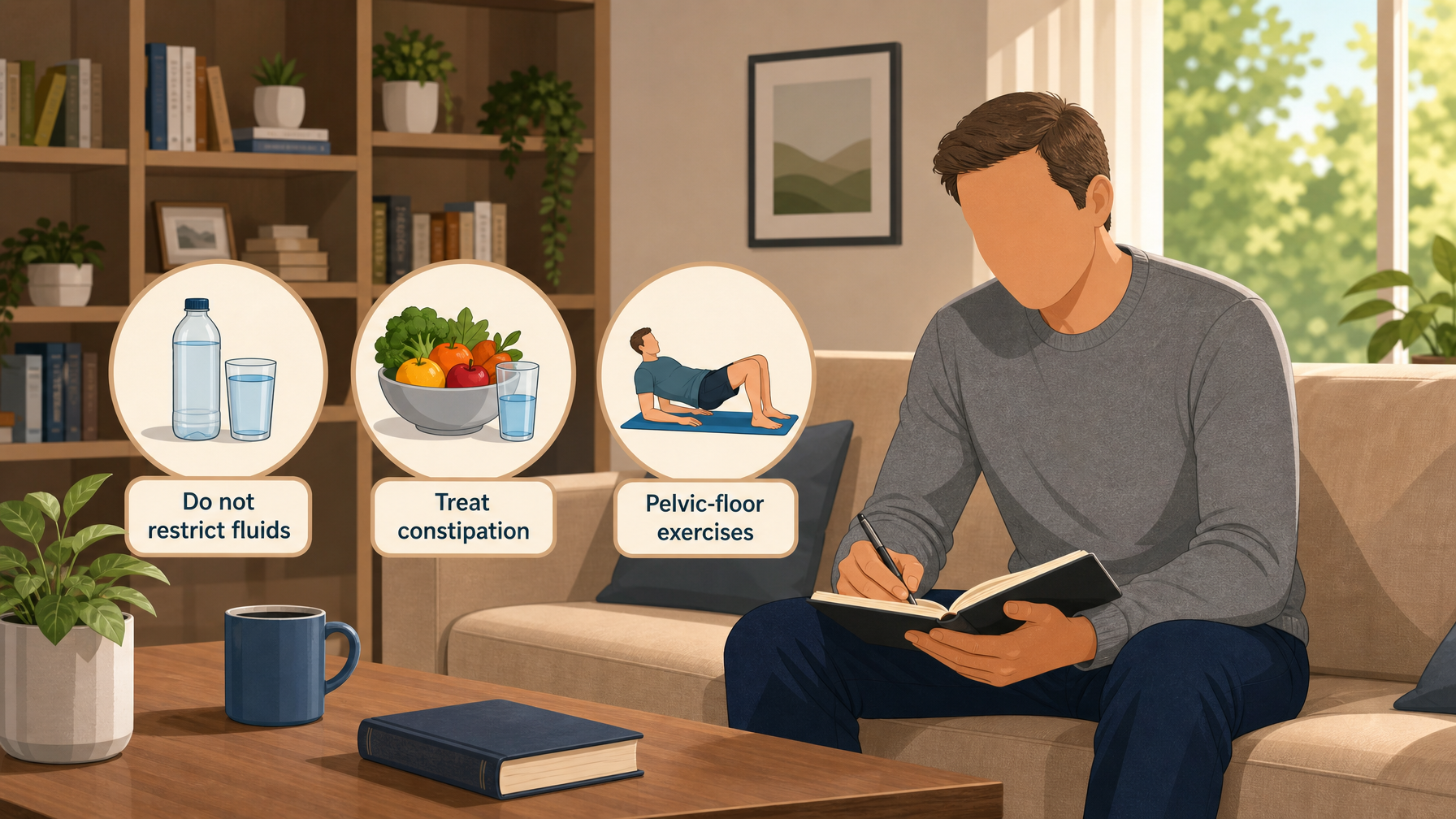
Beyond management, several things can genuinely reduce episodes — worth pursuing alongside the doctor:
- Do not restrict fluids to cut accidents; it backfires, concentrating urine (which irritates the bladder) and risking dehydration. Instead, time fluids sensibly and taper in the couple of hours before bed.
- Treat constipation, which crowds and irritates the bladder and worsens both urinary and bowel control — see bowel incontinence in elderly.
- Pelvic-floor exercises can improve control for some types of incontinence — see pelvic floor exercises for seniors.
- Review medications with the doctor; some (like diuretics) drive urgency and can sometimes be timed differently.
If incontinence is clearly worsening despite good management, revisit the doctor — see signs incontinence is getting worse.
Frequently asked questions
Is incontinence a normal part of aging?
No. Incontinence becomes more common with age, but it is a medical symptom with identifiable, often treatable causes — not an inevitable part of getting older. New or worsening incontinence should always be evaluated by a doctor, because addressing the cause can reduce or resolve it.
What is the best product for elderly incontinence?
There is no single best product — match it to the level of leakage. Pads or liners for light leakage, protective underwear (pull-ups) for moderate, and tab-style briefs for heavy leakage or caregiver-assisted changes, plus bed and chair protection. A snug, correct fit prevents leaks better than simply choosing the most absorbent option.
How do I prevent skin breakdown from incontinence?
Change promptly, cleanse with a gentle pH-balanced no-rinse cleanser (not soap and a washcloth), pat dry without rubbing, and apply a barrier cream at every change. The barrier step is important and easy to skip — it shields fragile skin from the next episode.
Should I limit fluids to reduce accidents?
No — restricting fluids backfires. It concentrates the urine, which irritates the bladder and can worsen urgency, and it risks dehydration. Instead, keep fluids steady through the day and taper them in the last couple of hours before bed.
How do I keep the house from smelling?
Odor comes from waste sitting over time, so prompt changes and disposal in a lidded, lined bin solve most of it. Rinse soiled laundry in cold water before washing (hot sets odor), add white vinegar or an enzyme additive, and protect furniture with washable pads. Persistent odor despite prompt care can hint at an infection worth mentioning to the doctor.
How can I help my parent accept incontinence products?
Use dignified language ("protective underwear" rather than "diapers"), offer choices, protect privacy, and keep the tone matter-of-fact. Involving them in the decision preserves control. If they refuse entirely, our guide on when a parent refuses adult diapers offers specific approaches.
Sources
- National Institute on Aging (NIH). Urinary Incontinence in Older Adults
- Clinical Infectious Diseases (Norman, 2000). Fever in the Elderly
- National Institute on Aging (NIH). The Dangers of Polypharmacy and the Case for Deprescribing in Older Adults
