
Why Is My Elderly Parent Suddenly So Weak?


Medically reviewed by Dr. Shifin Shad PN, MBBS, BCCPM · Reviewed 20 July 2026
Educational guidance, not medical advice. Sudden weakness — especially one-sided — can be a stroke or other emergency; seek urgent care.
Sudden weakness in an older parent should never be brushed off. Some causes are simple and treatable — but a few are emergencies, and knowing the difference can be life-saving.
Key takeaways
- Sudden weakness is a symptom that needs prompt attention — not a normal part of aging to wait out.
- One-sided weakness, or weakness with facial droop or slurred speech, is a stroke until proven otherwise — call emergency services immediately.
- Common other causes of weakness include infection, dehydration, medication effects, low blood sugar, anemia, and heart problems — many treatable, but some can themselves be emergencies.
- Weakness that develops over days after illness or a hospital stay is often deconditioning — different from truly sudden weakness.
- For any sudden, unexplained weakness, seek medical care promptly to find the cause.
Quick answer
Why is my elderly parent suddenly so weak?
Sudden weakness needs prompt attention. The most urgent cause is stroke — weakness on one side of the body, facial droop, or slurred speech means call emergency services now. Other causes, many treatable, include infection (a UTI often causes sudden weakness and confusion), dehydration, medication effects, low blood sugar, anemia, and heart problems. Weakness building over days after illness is often deconditioning. For any sudden, unexplained weakness, seek medical care promptly.
Sudden weakness is a signal to act
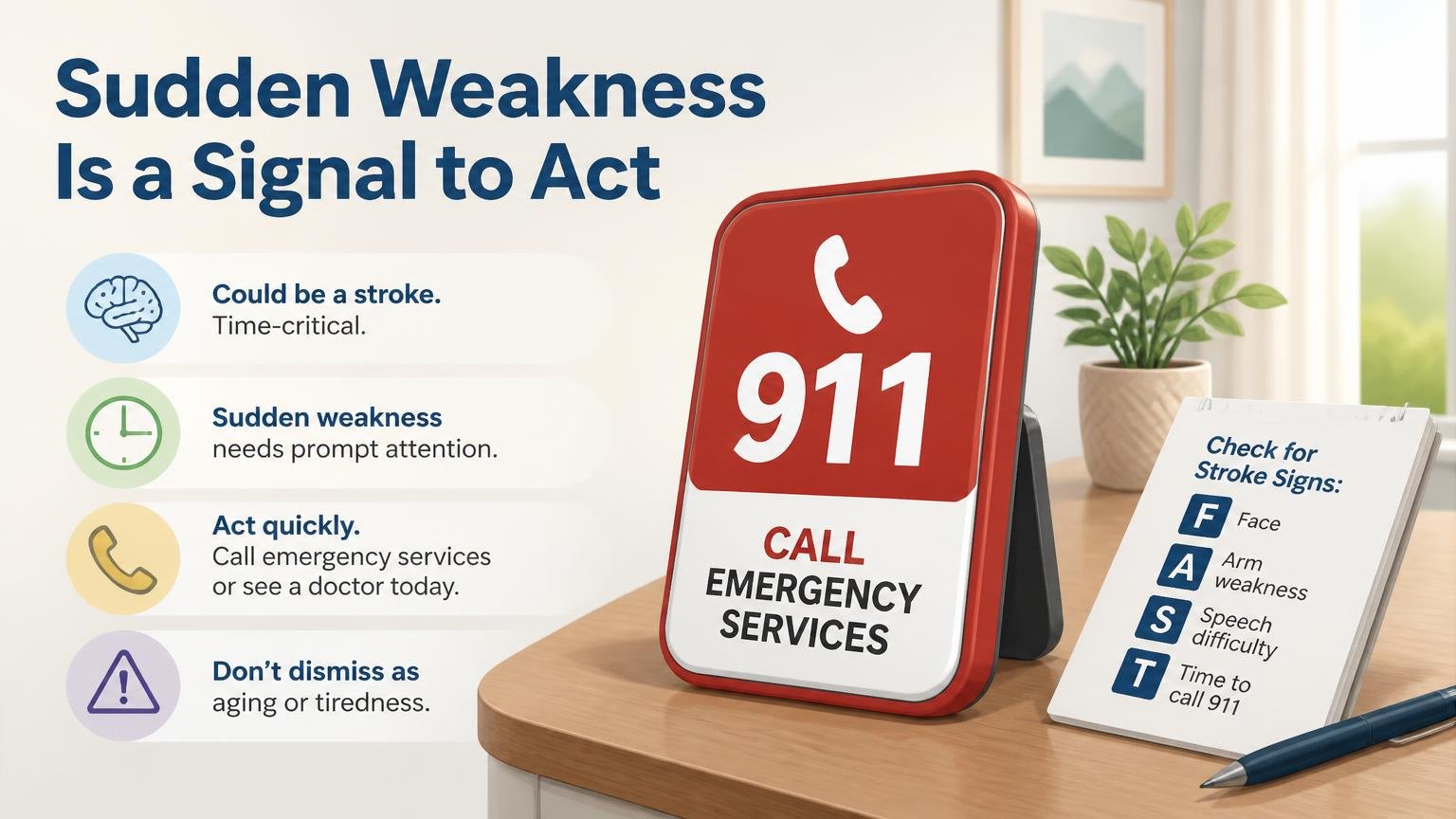
Weakness that comes on suddenly, or over a short time, in an older person is a symptom that warrants prompt attention — it is not something to dismiss as simply aging or tiredness. Depending on the cause, the right response ranges from calling emergency services immediately to arranging a same-day doctor visit, so the first task is to judge how urgent it is.
The most important question is whether this could be a stroke, because stroke is common, causes sudden weakness, and is a time-critical emergency where fast treatment dramatically affects the outcome. We start there.
First, rule out stroke
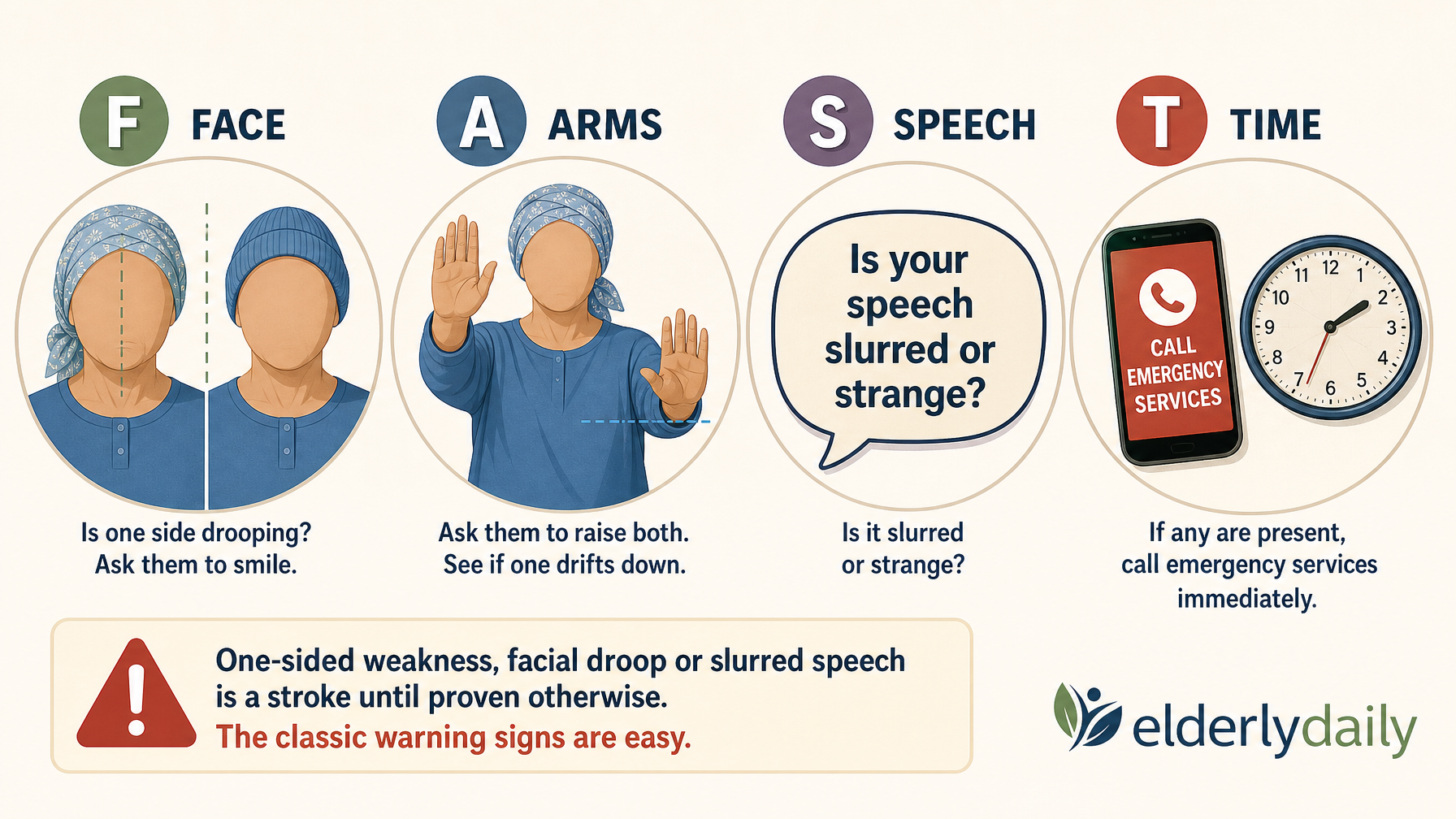
Any sudden weakness should immediately raise the question of stroke. The classic warning signs are easy to remember and check:
- Face — is one side of the face drooping? Ask them to smile.
- Arms — is one arm weak or numb? Ask them to raise both arms; does one drift down?
- Speech — is speech slurred or strange? Ask them to repeat a simple sentence.
- Balance — sudden loss of balance or coordination.
- Eyes — sudden loss of vision, or double vision.
- Time — if any of these are present, it is time to call emergency services immediately.
Other stroke signs include sudden numbness (especially one-sided), sudden confusion, trouble seeing, severe headache, or sudden trouble walking. Stroke treatment is highly time-sensitive, so acting fast is critical — never "wait and see" with these signs.
Safety first
Sudden weakness on ONE side of the body, facial droop, or slurred speech = call emergency services immediately. This is a stroke until proven otherwise, and every minute matters for treatment.
Infection and other acute illness
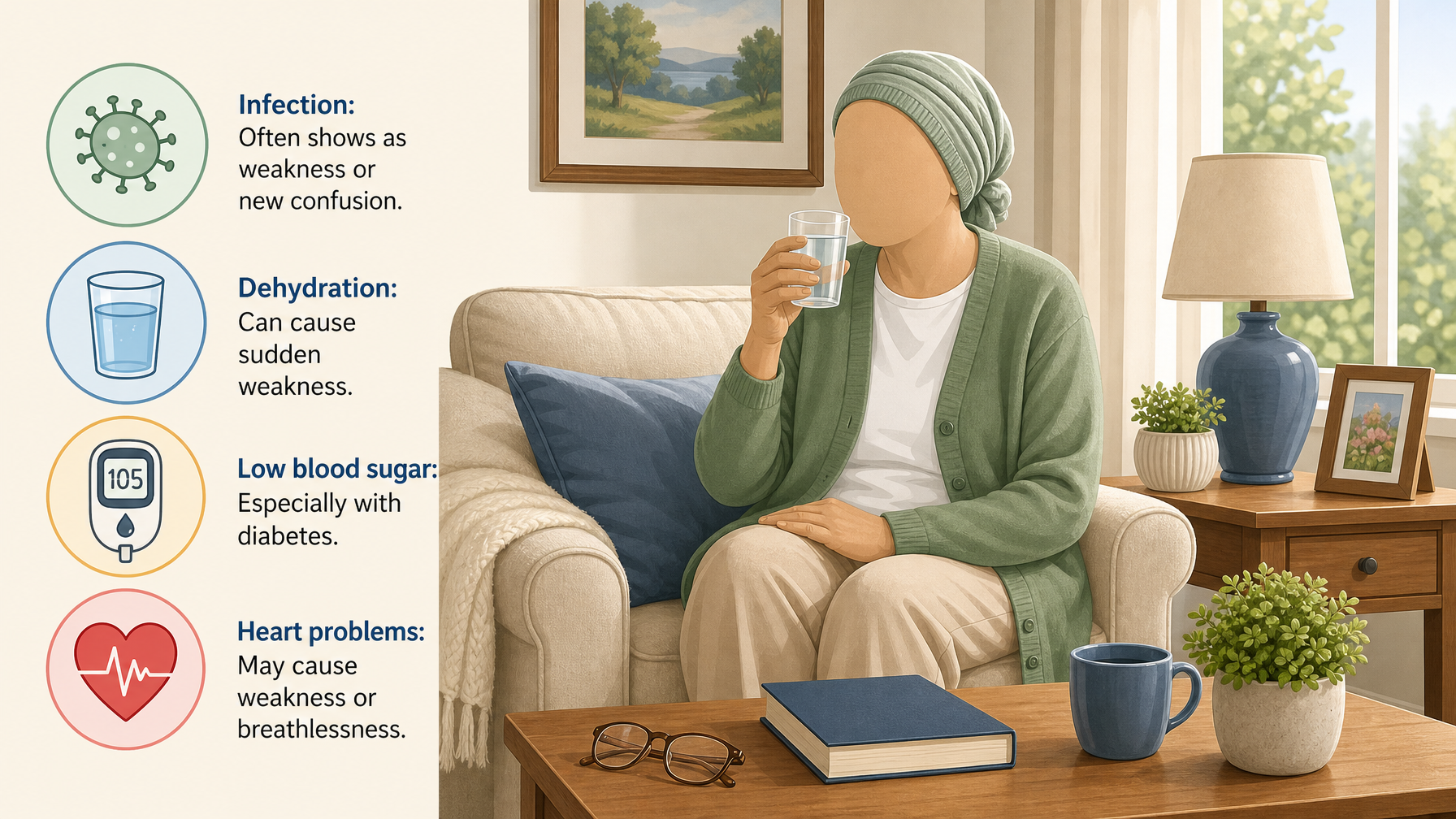
If stroke signs are absent, infection is one of the most common causes of sudden generalized weakness in older adults — and it often shows up as weakness, drowsiness, or confusion rather than obvious symptoms:
- Infection — a UTI, chest infection, or other infection can cause sudden weakness and a general decline, often with new confusion. This is a leading, treatable cause.
- Dehydration — common in seniors and a frequent cause of weakness, dizziness, and confusion; easily missed and easily corrected.
- Low blood sugar — especially in those with diabetes, can cause sudden weakness, sweating, and confusion, and needs prompt treatment.
- Heart problems — a heart-rhythm disturbance, or less typical signs of a heart attack in older adults (weakness and breathlessness rather than chest pain), can present as sudden weakness.
Watch out
Sudden weakness with fever, confusion, breathlessness, chest discomfort, or feeling generally very unwell needs urgent, same-day medical assessment — these can indicate serious infection or a cardiac cause.
Other causes to investigate
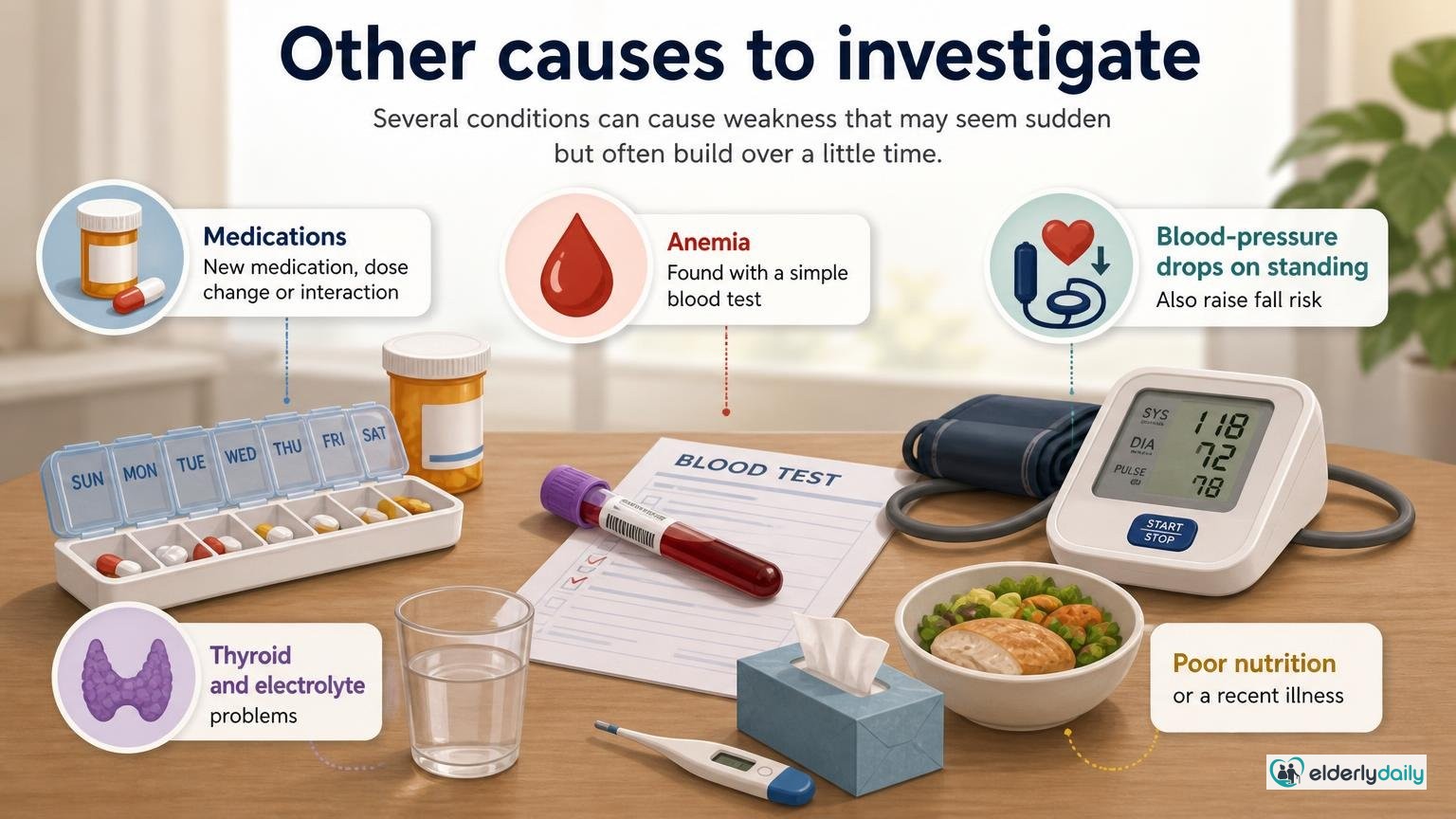
Several other conditions cause weakness that may seem to appear suddenly but often build over a little time:
- Medications — a new drug, a dose change, or an interaction can cause weakness, dizziness, or drowsiness; ask about a medication review.
- Anemia — a low blood count causes fatigue and weakness and is found with a simple blood test.
- Blood-pressure drops on standing, causing weakness and lightheadedness when getting up — which also raises fall risk.
- Thyroid problems, electrolyte imbalances, and other medical conditions, all testable.
- Poor nutrition or a recent illness sapping reserves.
Weakness over days: deconditioning
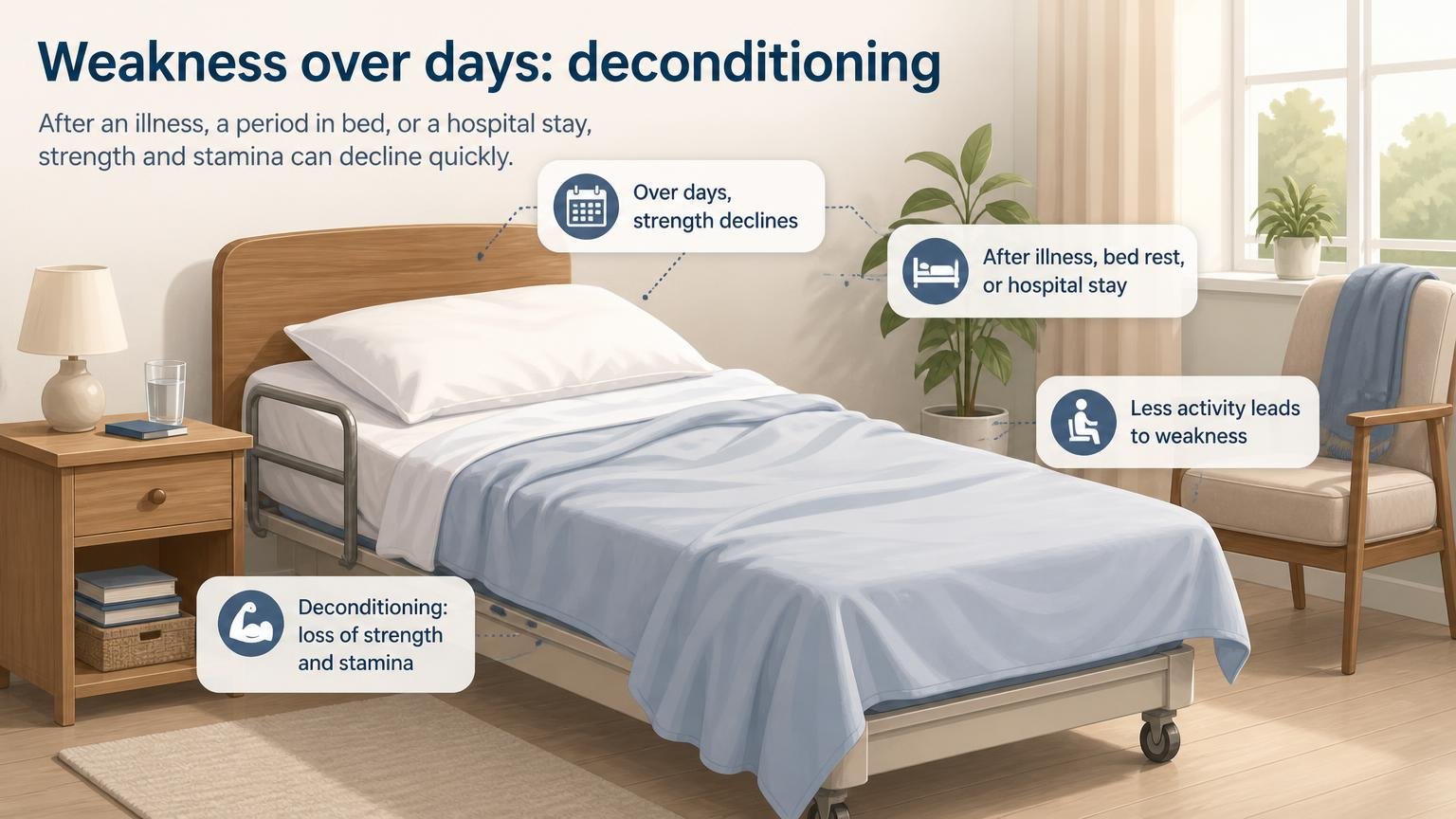
It is worth distinguishing truly *sudden* weakness (minutes to hours — think stroke, low blood sugar, cardiac) from weakness that develops over days, often after an illness, a period in bed, or a hospital stay. The latter is frequently deconditioning — rapid loss of muscle strength from inactivity and illness — which is common in older adults and largely reversible.
If the weakness followed a hospital stay or a bout of illness and built up over days rather than striking suddenly, our dedicated guide on weakness after hospitalization covers why it happens and how to rebuild strength safely. Even so, if you are unsure, or the weakness is worsening, a medical check is wise.
What to do
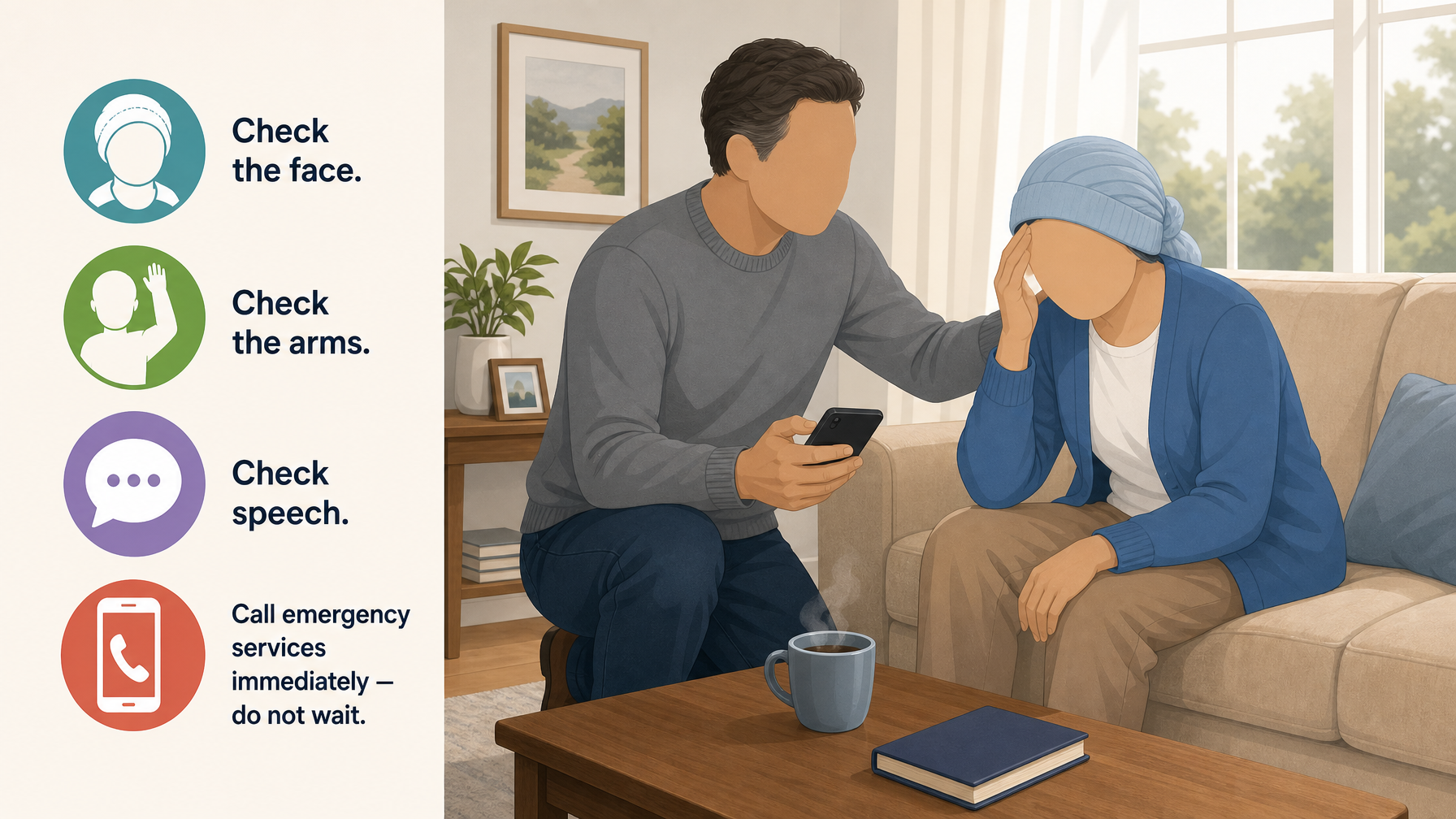
Match your response to the picture:
- 1
Check for stroke signs first
Face, arms, speech. If any are present, call emergency services immediately — do not wait.
- 2
Assess urgency of other signs
Sudden weakness with fever, confusion, chest discomfort, breathlessness, or severe illness needs urgent same-day care. For someone with diabetes, check blood sugar if you can.
- 3
Note the details
When it started, how fast, one-sided or general, and any other symptoms — vital information for whoever assesses them.
- 4
Arrange prompt evaluation for unexplained weakness
For sudden weakness without emergency features, a same-day or urgent doctor visit can check for infection, dehydration, anemia, medication effects, and other causes with simple tests.
- 5
Keep them safe meanwhile
Weakness raises fall risk sharply — help with transfers, keep them seated safely, and see how to help an elderly person stand up and fall prevention.
Frequently asked questions
Why is my elderly parent suddenly so weak?
Sudden weakness needs prompt attention. The most urgent cause is stroke — weakness on one side, facial droop, or slurred speech means call emergency services immediately. Other causes, many treatable, include infection (a UTI often causes sudden weakness and confusion), dehydration, low blood sugar, medication effects, anemia, and heart problems. Any sudden, unexplained weakness warrants prompt medical care.
Is sudden weakness a sign of a stroke?
It can be. Sudden weakness, especially on one side of the body, along with facial droop or slurred speech, is a classic stroke sign and a time-critical emergency. Use the FAST check — Face drooping, Arm weakness, Speech difficulty, Time to call emergency services. Never wait and see with these signs, as fast treatment dramatically affects the outcome.
Can a UTI cause sudden weakness in the elderly?
Yes. In older adults, a urinary tract infection or other infection often causes sudden weakness, drowsiness, or confusion rather than classic symptoms. Infection is a leading and treatable cause of sudden generalized weakness, so it should be checked for — treating it often restores strength.
When is sudden weakness an emergency?
Immediately for one-sided weakness, facial droop, or slurred speech (stroke), or weakness with chest discomfort, severe breathlessness, or collapse. Urgent same-day care is needed for sudden weakness with fever, confusion, or feeling very unwell, or for low blood sugar in someone with diabetes. For unexplained sudden weakness without these, seek prompt evaluation.
What is the difference between sudden weakness and deconditioning?
Truly sudden weakness (over minutes to hours) suggests causes like stroke, low blood sugar, or a cardiac problem and can be an emergency. Weakness that builds over days, often after illness or a hospital stay, is frequently deconditioning — muscle loss from inactivity — which is common and largely reversible with safe rebuilding. If unsure or worsening, get it checked.
What should I do if my parent suddenly becomes weak?
Check for stroke signs first (face, arms, speech) and call emergency services if present. Assess other urgent signs (fever, confusion, chest discomfort, breathlessness) needing same-day care, note when and how it started and whether it is one-sided, arrange prompt evaluation for unexplained weakness, and keep them safe from falls in the meantime by helping with transfers and seating.
Sources
- CDC. Signs and Symptoms of Stroke
- Clinical Infectious Diseases (Norman, 2000). Fever in the Elderly
- U.S. Pharmacist. Sarcopenia: Loss of Muscle Mass in Older Adults
