
Why Seniors Become Weak After a Hospital Stay

Educational guidance, not medical advice. Sudden or one-sided weakness is different from deconditioning and needs urgent evaluation — see below.
Families are often shocked at how weak a parent is after even a short hospital stay. There is a clear explanation — and, reassuringly, a path back to strength.
Key takeaways
- Post-hospital weakness is usually deconditioning — the rapid loss of muscle strength from bed rest and illness during the stay.
- Older adults lose muscle remarkably fast during bed rest, so even a short stay leaves them notably weaker.
- Several factors stack up: bed rest, the illness itself, poor appetite and nutrition, disrupted sleep, and lower muscle reserves.
- It is usually not permanent — strength returns with safe, gradual movement, good nutrition, and often physical therapy.
- Sudden or one-sided weakness is different — treat it as a possible emergency, not deconditioning.
Quick answer
Why do seniors become so weak after a hospital stay?
Almost always it is deconditioning — the rapid loss of muscle strength that comes from bed rest and illness during a hospital stay. Older adults lose muscle quickly when immobile, and factors like the illness itself, poor appetite, disrupted sleep, and already-lower muscle reserves all add to it, so even a short stay leaves them notably weaker. It is usually not permanent — strength returns with safe, gradual rebuilding. But sudden or one-sided weakness is a different, urgent problem.
The main reason: deconditioning
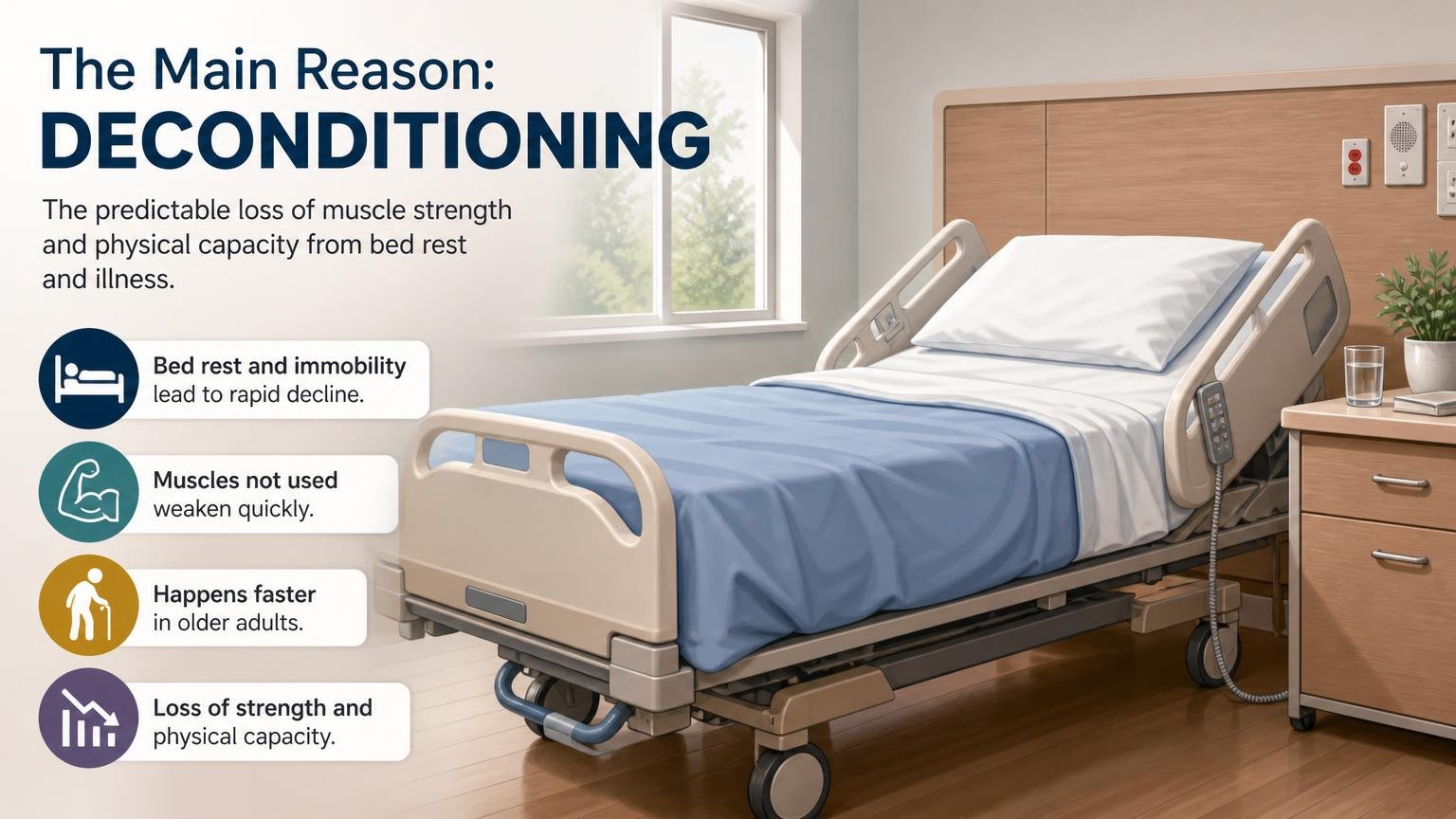
It shocks many families: a parent who walked into hospital needs help to stand when they come home, even after a short stay. The main explanation is deconditioning — the predictable, rapid loss of muscle strength and physical capacity that comes from being immobile and unwell.
Muscles that are not used weaken quickly, and this happens much faster in older adults, whose muscle reserves are already smaller. An older person on bed rest can lose a meaningful amount of muscle strength within days, not weeks. Understanding this reframes the weakness: it is common, it has a clear cause, and it is largely reversible. This guide explains the "why"; for the full "how to rebuild," see weakness after hospitalization.

Sponsored Pick
Kate Farms High Protein Nutrition Shake
Seniors who are dairy-free, vegan, or want an organic, plant-based option
Check PriceThe factors that stack up
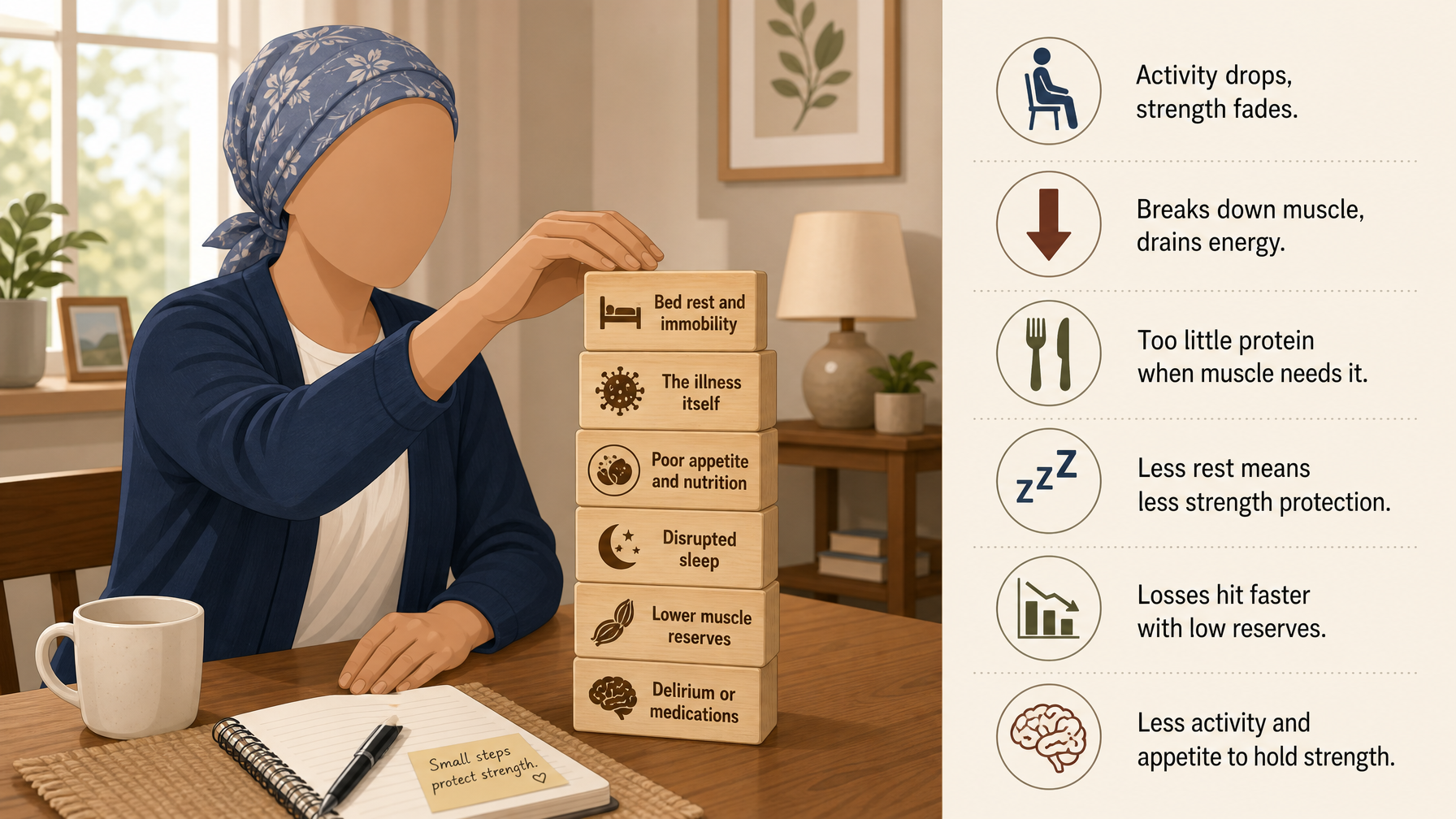
It is rarely one thing — several stay-related factors combine to sap strength:
- Bed rest and immobility — the core driver; hospitals often involve a lot of lying down, and unused muscle weakens rapidly.
- The illness itself — infection and acute illness break down muscle and drain energy, on top of the immobility.
- Poor appetite and nutrition — eating little during the stay means too little protein exactly when the body needs it to maintain muscle.
- Disrupted sleep — hospitals are hard places to sleep, and poor rest reduces the energy and recovery that protect strength.
- Lower reserves (sarcopenia) — older adults start with less muscle, so losses bite faster and matter more.
- Sometimes delirium or medications — reducing the activity and appetite that would otherwise preserve strength.
Together, these explain why the weakness is often greater than the original illness alone would suggest.
The good news: it is usually reversible
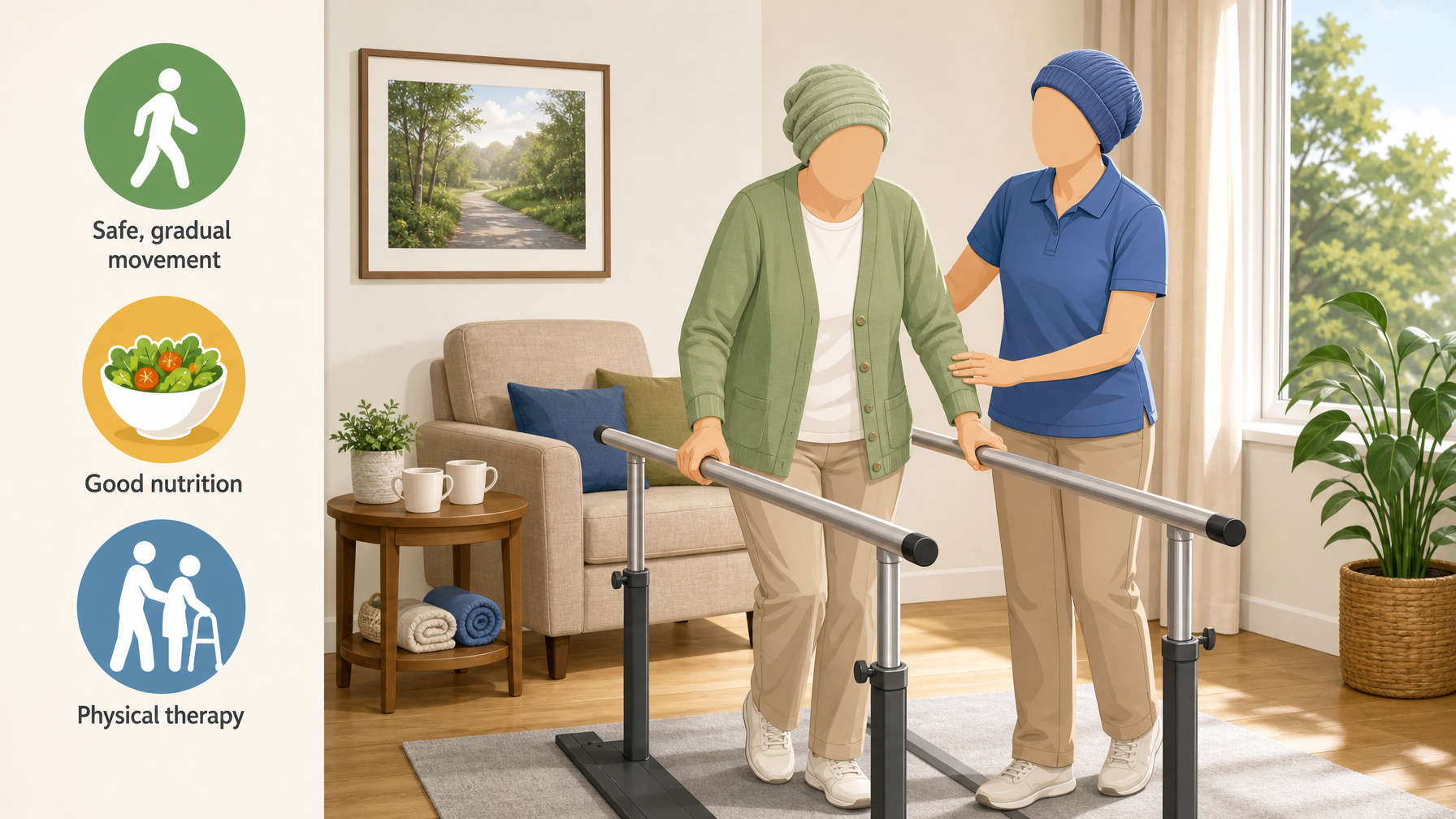
The most important thing to know is that deconditioning is largely reversible — strength comes back with deliberate, safe effort:
- Safe, gradual movement — starting early and building up (within any activity limits) counters further loss and rebuilds strength; even small daily activity helps.
- Good nutrition — protein and fluids to rebuild muscle, addressing the poor intake of the stay.
- Physical therapy — often a key part of rebuilding strength after hospitalization, if available.
- Patience — regaining strength usually takes longer than it took to lose, often weeks to months, but steady improvement is the goal.
- Fall precautions meanwhile — a weak person is a fall risk, so support and safety matter while strength returns.
The full, practical rebuild plan — with a realistic timeline and safe technique — is in weakness after hospitalization, and safe support is in safe transfer techniques and how to help an elderly person stand up.
Good to know
The antidote to deconditioning is the opposite of what feels natural: not more rest, but safe, gradual movement. Little and often — started early — rebuilds strength far better than waiting to "feel stronger" first.
When weakness is NOT deconditioning
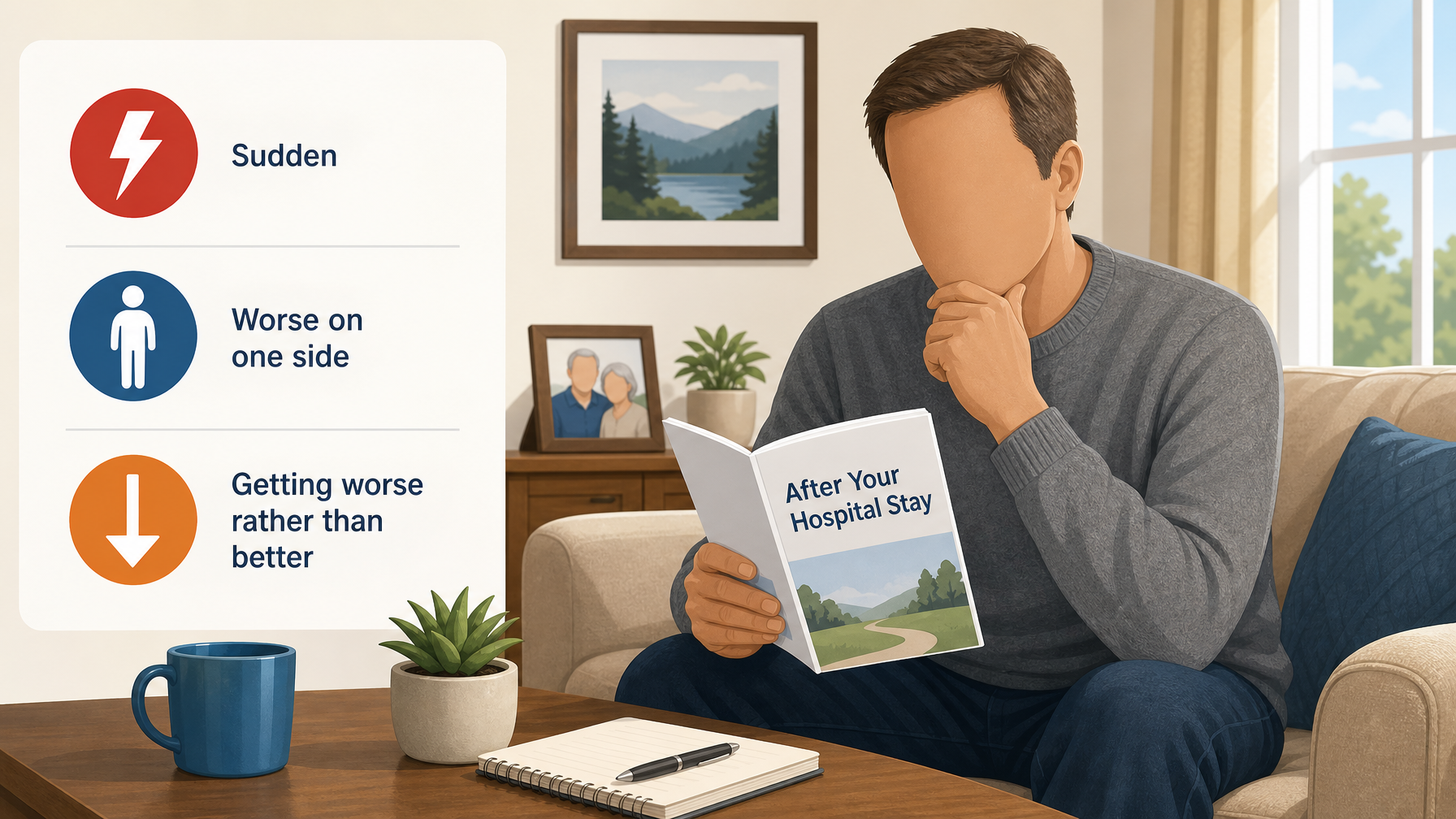
Most post-hospital weakness is deconditioning — general, both-sided, and slowly improving. Some weakness is not, and needs urgent evaluation. Seek prompt or emergency care if weakness is:
- Sudden, or clearly worse on one side of the body (face, arm, or leg) — a possible stroke; call emergency services.
- With slurred speech, facial droop, severe headache, chest pain, or breathlessness.
- Getting worse rather than better over days despite rest and movement.
- With fever or new confusion/incontinence — a possible infection.
When weakness is worsening or comes with new symptoms, treat it as a possible sign that recovery is off-track rather than assuming deconditioning. See also why an elderly parent is suddenly so weak.
Safety first
Sudden weakness on one side of the body, facial droop, or slurred speech = call emergency services immediately. These are stroke signs, entirely different from the general weakness of deconditioning, and fast treatment matters enormously.
Frequently asked questions
Why do seniors become weak after a hospital stay?
The main cause is deconditioning — the rapid loss of muscle strength from bed rest and illness during the stay. Older adults lose muscle quickly when immobile, and factors like the illness itself, poor appetite and nutrition, disrupted sleep, and already-lower muscle reserves all add to it. So even a short stay can leave them notably weaker. It is common and usually reversible.
How fast do older adults lose muscle in hospital?
Remarkably fast — an older person on bed rest can lose a meaningful amount of muscle strength within days, not weeks, because unused muscle weakens quickly and older adults start with smaller reserves. This is why even a short hospital stay can leave a senior markedly weaker, and why getting safely moving as early as possible matters so much.
Is weakness after a hospital stay permanent?
Usually not — deconditioning is largely reversible with consistent, safe effort: gradual movement started early, good nutrition (especially protein), and often physical therapy. Full recovery can take weeks to months, and in some frail individuals strength may not fully return to baseline, but the key is that it generally improves. Sudden or one-sided weakness, though, is a different, urgent problem.
How do I help a senior rebuild strength after hospital?
Support safe, gradual movement started early (within any activity limits), good nutrition with enough protein and fluids, and physical therapy if available, while taking fall precautions since a weak person is at risk. Keep sessions short and frequent rather than exhausting, and be patient — regaining strength takes longer than losing it. Our weakness after hospitalization guide gives the full rebuild plan.
When is weakness after hospital an emergency?
When it is sudden or clearly worse on one side of the body, or comes with slurred speech, facial droop, severe headache, chest pain, or breathlessness — these can be stroke or other emergencies; call emergency services. Weakness that worsens over days, or comes with fever or new confusion, also needs prompt medical attention rather than being assumed to be deconditioning.
Should a weak senior rest until they feel stronger?
No — resting completely worsens deconditioning, because unused muscle keeps weakening. The antidote is safe, gradual movement within any activity limits, started early, which is what actually rebuilds strength, alongside adequate rest, good nutrition, and fall precautions. Waiting to "feel stronger" before moving usually prolongs the weakness.
Sources
- JAMA (Kortebein et al., 2007). Effect of 10 Days of Bed Rest on Skeletal Muscle in Healthy Older Adults
- U.S. Pharmacist. Sarcopenia: Loss of Muscle Mass in Older Adults
- CDC. Signs and Symptoms of Stroke
- Clinical Infectious Diseases (Norman, 2000). Fever in the Elderly
