When Is Incontinence a Medical Emergency? Warning Signs Caregivers Should Not Ignore

Last Updated: February 2026

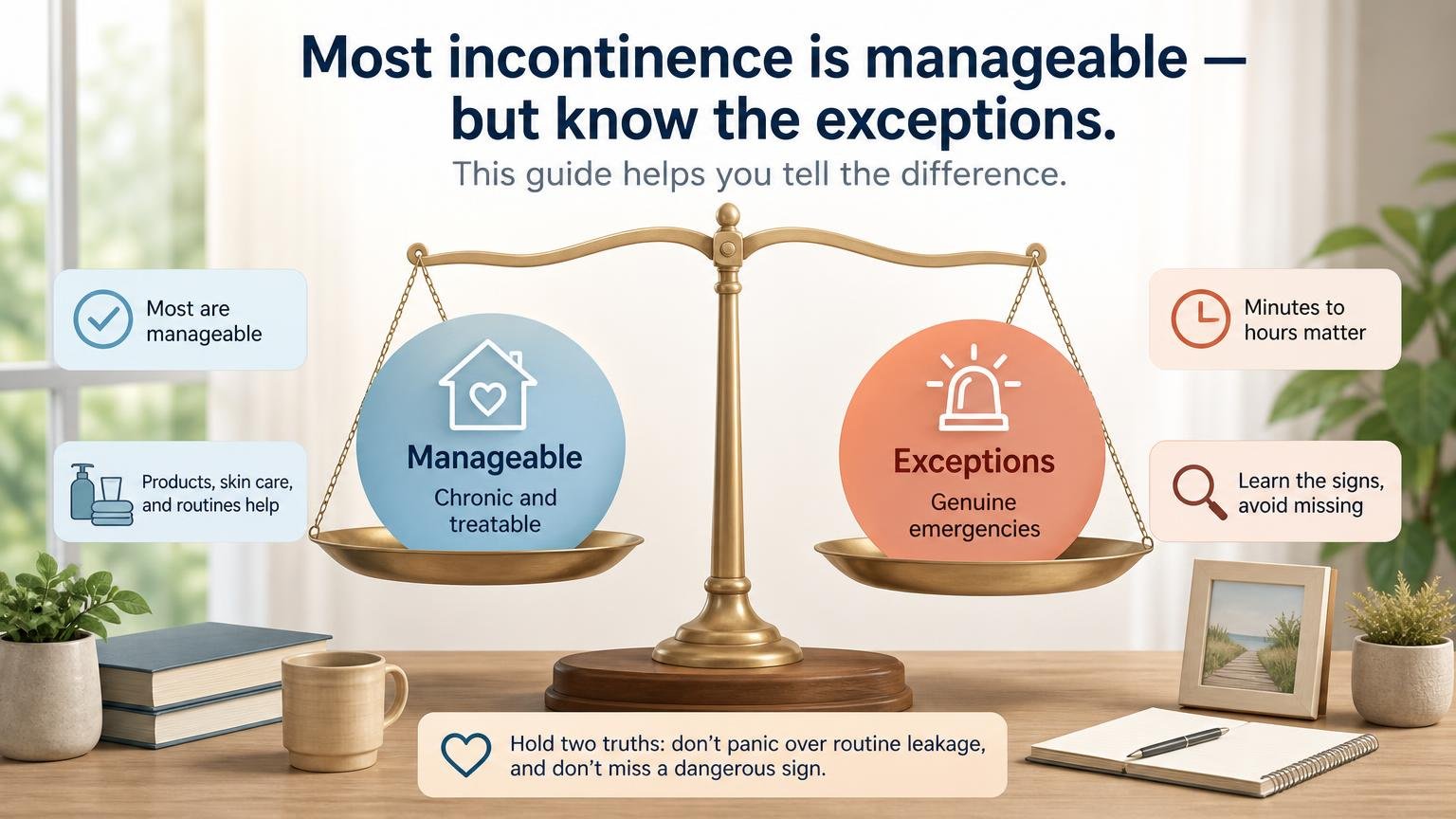
Most incontinence is manageable at home. It develops slowly. You learn routines. You find products that work.

But certain symptoms mean something more serious is happening. They need medical attention right away.

This guide helps you tell the difference. You will learn which signs are urgent. When to call the doctor. When to go to the emergency room.

Knowing these warning signs can prevent serious complications. It can save your loved one from sepsis, kidney damage, or dangerous falls.

Caregiver checking on elderly parent with care and concern

Trust your instincts when something feels wrong

Caregiver-Reviewed Safety Guidance

This guide is for educational purposes only. It is not a substitute for urgent medical care. If you believe your loved one is experiencing a medical emergency, call 911 or go to the nearest emergency room immediately.

Always trust your instincts. If something feels seriously wrong, seek medical help right away.

Key Points to Remember

Most incontinence is not urgent: Gradual changes can be managed at home with doctor guidance.

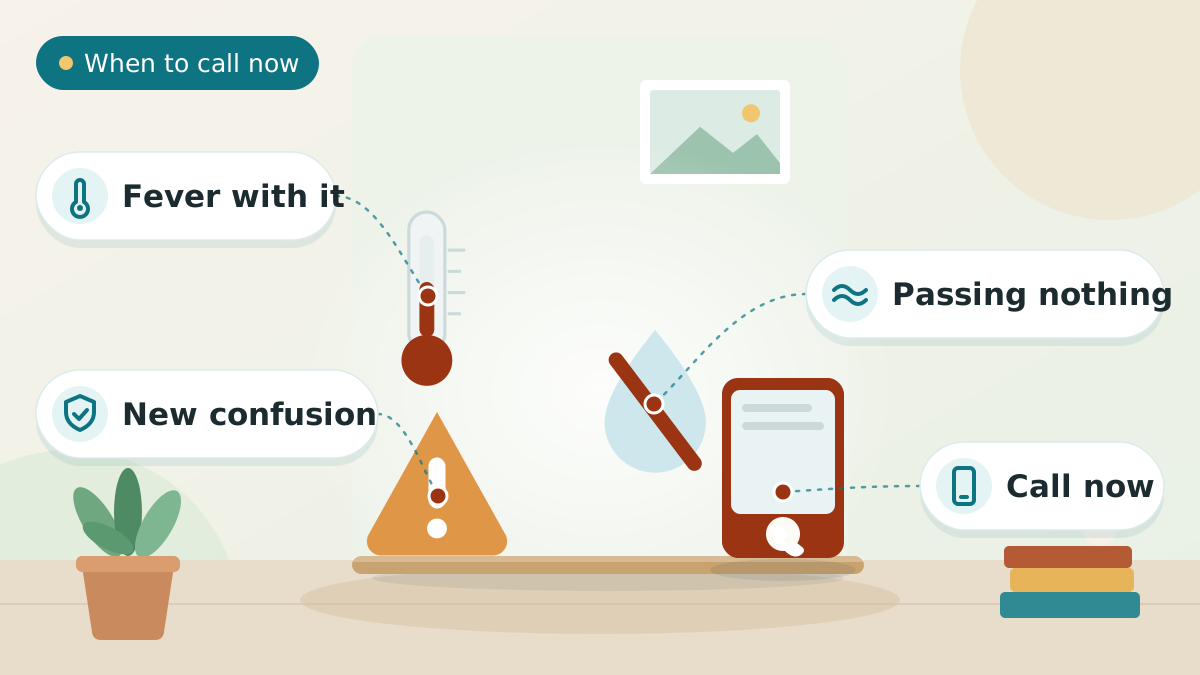
Fever with urinary symptoms: This combination suggests infection that needs immediate treatment.

Sudden confusion is a red flag: Especially in seniors with dementia, this often means UTI or sepsis.

Blood in urine needs evaluation: Always call the doctor the same day you notice it.

Cannot urinate is urgent: Inability to pass urine for 8+ hours requires immediate care.

Trust your instincts: If something feels seriously wrong, seek medical help.

Most Incontinence Is Not an Emergency

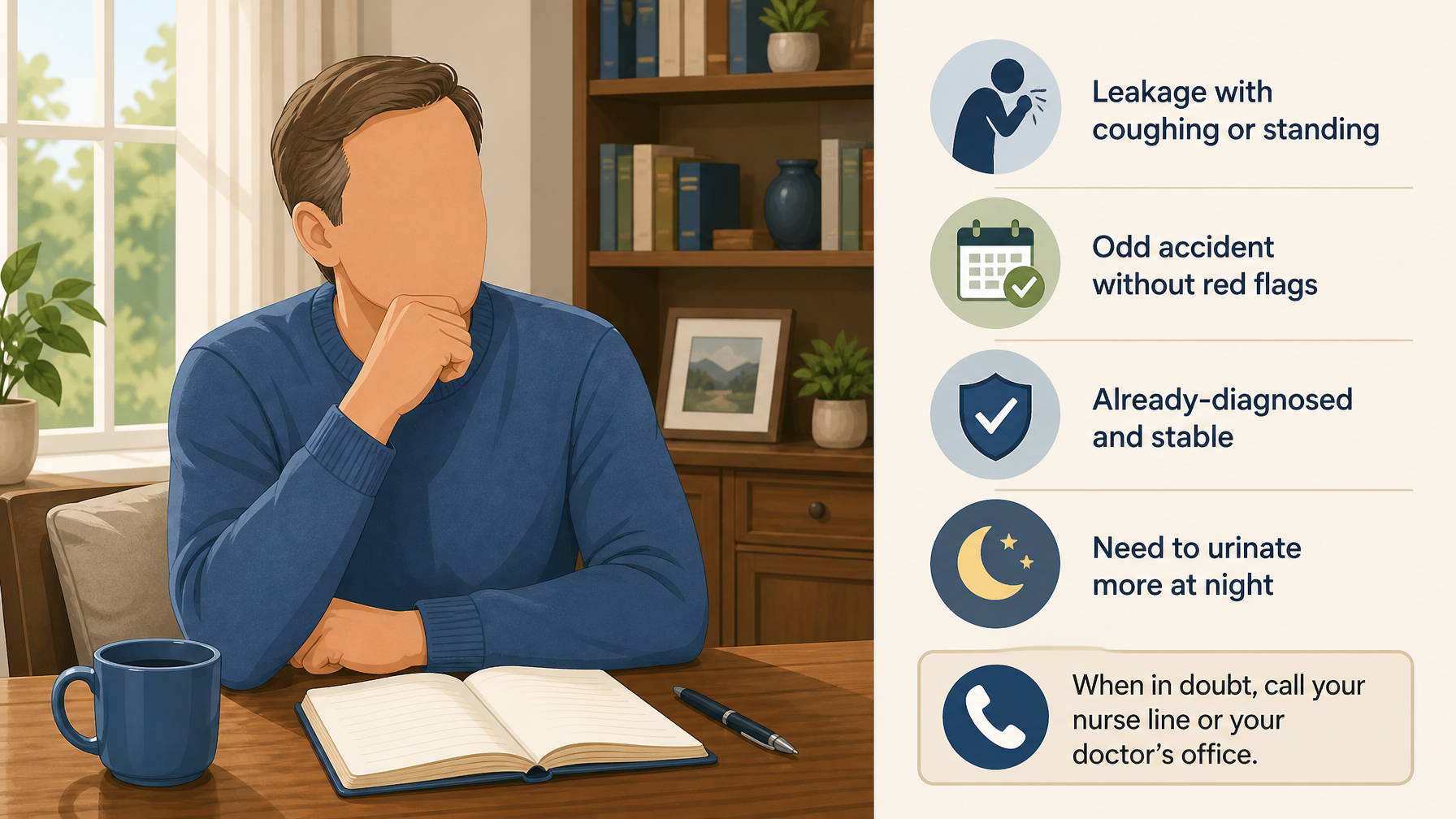
Before we talk about warning signs, let us be clear: most incontinence does not require urgent care. These situations can be managed at home with doctor guidance:

Gradual Onset

Leakage that develops slowly over weeks or months. You have time to schedule a regular doctor appointment.

Mild Leakage

Small amounts of urine with coughing, sneezing, or laughing. Common stress incontinence.

Long-Standing Issues

Bladder weakness that has been present for months or years without sudden changes.

For everyday incontinence management strategies, read our complete guide: Managing Incontinence at Home

Senior woman comfortable at home showing normal daily routine

Most incontinence can be managed safely at home

Emergency Warning Signs

These symptoms require immediate medical attention. Do not wait. Call your doctor, go to urgent care, or call 911:

Fever With Urinary Symptoms

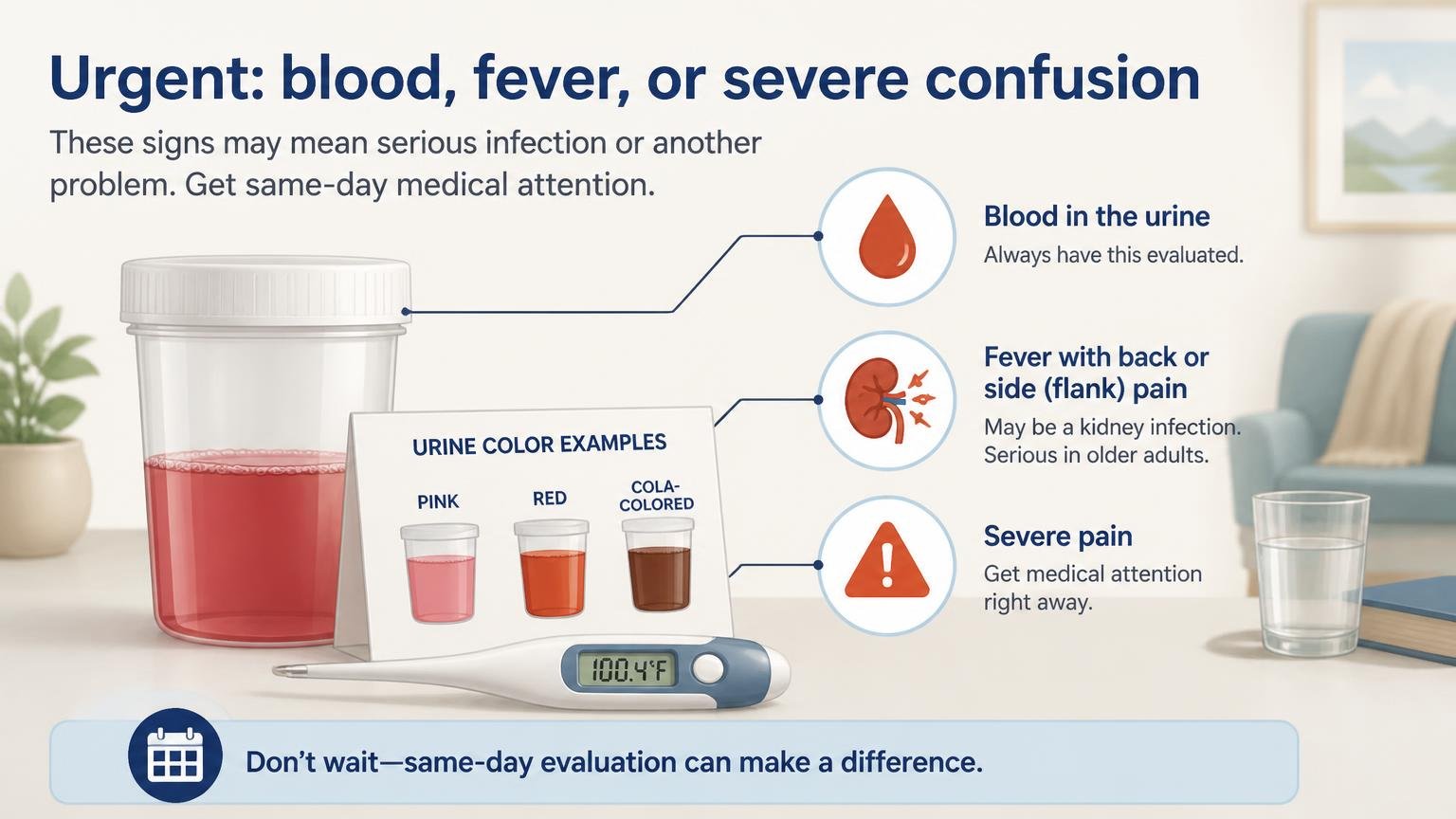
Temperature over 100.4°F combined with burning, urgency, or strong-smelling urine.

Why it matters: Suggests kidney infection or sepsis. Can become life-threatening within hours.

Severe Lower Back or Flank Pain

Sharp pain in the lower back or sides, especially with fever or nausea.

Why it matters: May indicate kidney infection. Kidneys can be damaged quickly without treatment.

Blood in Urine

Visible blood in urine or on briefs. Urine may look pink, red, or brown.

Why it matters: Can signal infection, kidney stones, bladder problems, or other serious conditions.

Vomiting With Weakness

Repeated vomiting combined with extreme fatigue, confusion, or inability to keep fluids down.

Why it matters: Severe dehydration or systemic infection. Can lead to kidney failure or septic shock.

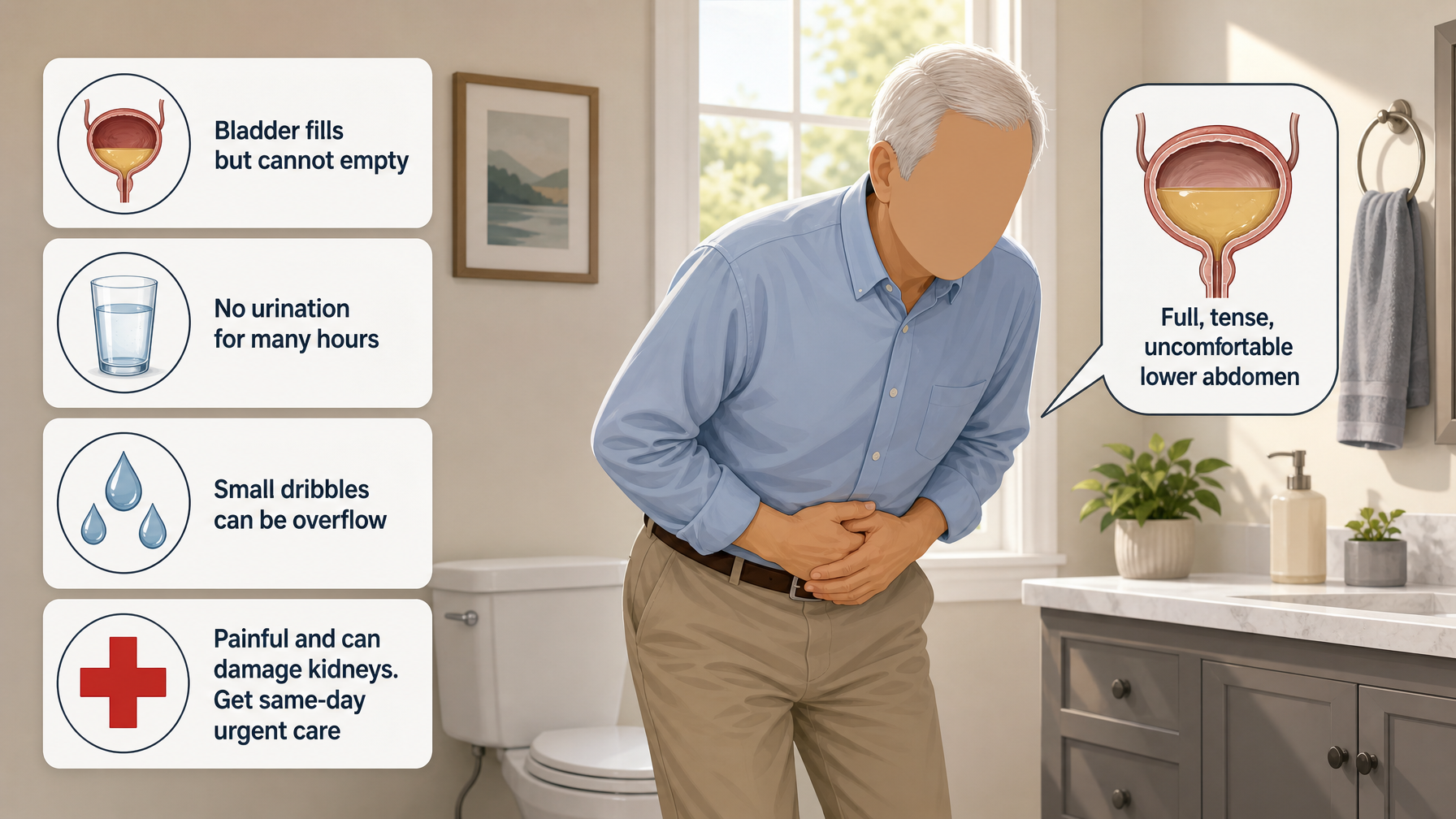
Sudden Inability to Urinate

Cannot pass urine for 8+ hours despite feeling the urge. Abdomen may feel swollen or painful.

Why it matters: Urinary retention can damage the bladder and kidneys. Needs catheter placement.

Rapid Confusion or Delirium

Sudden mental changes, especially in seniors with dementia. Not recognizing family. Hallucinations.

Why it matters: Often the only sign of serious UTI or sepsis in elderly patients.

When to Call 911

Call emergency services immediately if your loved one has:

  • Difficulty breathing or chest pain
  • Loss of consciousness or extreme lethargy
  • Rapid heart rate with cold, clammy skin
  • Severe abdominal pain with rigid abdomen

What Might Be Causing This Symptom?

Free Tool

Select a symptom — confusion, falls, weakness, incontinence, or more — and answer a few quick questions to explore possible causes, urgency level, and recommended next steps.

Monitor
Call Doctor
Seek Urgent Care
Try the Free Symptom Pathway Tool
Caregiver calling doctor during medical emergency

Know when to call for immediate medical help

Sudden Incontinence After Hospitalization

New incontinence that starts during or right after a hospital stay needs close monitoring. While some temporary leakage is normal during recovery, certain signs indicate complications:

Schedule Doctor Visit If:

  • Medication reactions: New incontinence started after new prescription
  • Not improving: Leakage same or worse after 2-3 weeks home
  • Catheter was used: Had catheter in hospital, now having control issues
  • Pelvic surgery: Had surgery near bladder or reproductive organs

Call Doctor Immediately If:

  • Surgical site leaking: Fluid leaking from incision area
  • Fever develops: Temperature over 100.4°F with new incontinence
  • Severe pain: Intense abdominal or pelvic pain
  • Blood in urine: Any visible blood after surgery

Learn what to expect during recovery: Temporary Incontinence After Hospitalization

Understanding UTI Complications in Seniors

Urinary tract infections are the most common cause of emergency incontinence symptoms in older adults. Here is why they are so dangerous:

Rapid Progression

UTIs can turn into kidney infections or sepsis within 24-48 hours in frail seniors.

Atypical Symptoms

Seniors often show confusion or falls instead of burning or fever.

Weakened Immune Response

Aging immune systems cannot fight infections as effectively as younger bodies.

For detailed UTI symptom information, read our complete guide: UTI Signs in Seniors

Signs of Severe Dehydration or Infection

Seniors with incontinence are at higher risk for dehydration. Some limit fluids to reduce accidents. Others lose too much fluid through leakage. Watch for these serious signs:

Severe Dehydration Signs

Very Dark Urine

Urine looks like apple juice or darker. Strong ammonia smell.

Dry Mouth and Lips

Mouth feels sticky. Lips are cracked. Tongue looks dry.

Extreme Fatigue

Too weak to stand. Sleeping most of the day.

Dizziness When Standing

Blood pressure drops. Risk of fainting or falling.

Reduced Urine Output

Urinating less than 3-4 times per day. Very small amounts.

Systemic Infection Signs

Fever Over 101°F

High fever suggests infection has spread beyond bladder.

Shaking Chills

Uncontrollable shivering. Body trying to fight severe infection.

Rapid Heart Rate

Heart racing even at rest. Over 100 beats per minute.

Rapid Breathing

Breathing fast and shallow. Over 20 breaths per minute.

Cold, Clammy Skin

Skin feels cold and sweaty. Sign of shock.

Sepsis Warning

Sepsis is a life-threatening response to infection. It can develop from untreated UTIs in seniors. The combination of fever, confusion, rapid heart rate, and rapid breathing requires immediate emergency care. Do not wait.

Real Caregiver Stories: When They Called for Help

These caregivers share the warning signs that made them seek immediate medical care:

Carol, 68 - Mother with Dementia

"My mom has had incontinence for two years. We manage it fine. But one morning she was completely confused. She did not know where she was. Her urine smelled terrible. I called her doctor right away. They said come to urgent care immediately. It was a severe UTI. They started antibiotics and IV fluids. The doctor said waiting even one more day could have been dangerous."

Warning sign: Sudden confusion with strong urine odor

David, 72 - Father Post-Stroke

"Dad had a stroke six months ago. He has some bladder leakage but it is stable. Then one night he could not urinate at all. He was in pain. His abdomen was swollen. We went to the ER. They put in a catheter and found his prostate was blocking everything. They kept him overnight. The urologist said we caught it just in time."

Warning sign: Complete inability to urinate with abdominal pain

Patricia, 65 - Mother with Diabetes

"Mom has diabetes and wears protection for leakage. One morning I found blood in her brief. Not a little. A lot. She also had back pain. I called 911. At the hospital they found a kidney infection. She needed IV antibiotics for three days. The doctor said blood in urine always needs same-day evaluation."

Warning sign: Visible blood in urine with back pain

What To Do If You Suspect an Emergency

Quick action can prevent serious complications. Follow these steps:

1

Call the Doctor Immediately

Call your loved one's primary care doctor first. Explain the symptoms clearly. Ask if you should come to the office, go to urgent care, or call 911.

What to say: "My mother has incontinence. Today she has [symptom]. She also has [other symptoms]. Should I bring her in right away?"

2

Go to Urgent Care or ER If Severe

If symptoms are severe or the doctor cannot see you quickly, go to urgent care or the emergency room. Do not wait until tomorrow.

Severe means: High fever, severe pain, blood in urine, cannot urinate, extreme confusion, or vomiting

3

Bring Complete Medication List

Bring all medications in their bottles. Or bring a written list with names, doses, and how often taken. Include vitamins and supplements.

Why it matters: Doctors need to check for drug interactions and medication side effects

4

Do Not Delay Due to Embarrassment

Incontinence is a medical condition. Doctors and nurses see it every day. Your loved one's health and safety are more important than embarrassment.

Remember: Medical professionals are trained to handle these situations with dignity and respect

For guidance on talking to doctors about incontinence: How to Talk to Your Doctor About Incontinence

Medication-Related Emergencies

Some medications can cause sudden urinary retention or dangerous side effects:

High-Risk Medications

  • Anticholinergics

    Allergy meds, sleep aids, some antidepressants

  • Decongestants

    Cold medicines with pseudoephedrine

  • Opioid Pain Relievers

    Can cause urinary retention

  • Muscle Relaxants

    May affect bladder control

Call Doctor If New Medication Causes:

  • Sudden inability to urinate within hours of taking new medication
  • Severe abdominal pain with bladder fullness
  • Extreme confusion after starting new prescription
  • Dizziness or fainting with new incontinence medication

Learn more about medication safety: Medication Management for Caregivers

Signs of Severe Dehydration or Infection

Seniors with incontinence are at higher risk for dehydration. Some limit fluids to reduce accidents. Others lose too much fluid through leakage. Watch for these serious signs:

Severe Dehydration Signs

Very Dark Urine

Urine looks like apple juice or darker. Strong ammonia smell.

Dry Mouth and Lips

Mouth feels sticky. Lips are cracked. Tongue looks dry.

Extreme Fatigue

Too weak to stand. Sleeping most of the day.

Dizziness When Standing

Blood pressure drops. Risk of fainting or falling.

Reduced Urine Output

Urinating less than 3-4 times per day. Very small amounts.

Systemic Infection Signs

Fever Over 101°F

High fever suggests infection has spread beyond bladder.

Shaking Chills

Uncontrollable shivering. Body trying to fight severe infection.

Rapid Heart Rate

Heart racing even at rest. Over 100 beats per minute.

Rapid Breathing

Breathing fast and shallow. Over 20 breaths per minute.

Cold, Clammy Skin

Skin feels cold and sweaty. Sign of shock.

Sepsis Warning

Sepsis is a life-threatening response to infection. It can develop from untreated UTIs in seniors. The combination of fever, confusion, rapid heart rate, and rapid breathing requires immediate emergency care. Do not wait.

Emergency room entrance at modern hospital

Do not hesitate to seek emergency care when needed

What To Do If You Suspect an Emergency

Quick action can prevent serious complications. Follow these steps:

1

Call the Doctor Immediately

Call your loved one's primary care doctor first. Explain the symptoms clearly. Ask if you should come to the office, go to urgent care, or call 911.

What to say: "My mother has incontinence. Today she has [symptom]. She also has [other symptoms]. Should I bring her in right away?"

2

Go to Urgent Care or ER If Severe

If symptoms are severe or the doctor cannot see you quickly, go to urgent care or the emergency room. Do not wait until tomorrow.

Severe means: High fever, severe pain, blood in urine, cannot urinate, extreme confusion, or vomiting

3

Bring Complete Medication List

Bring all medications in their bottles. Or bring a written list with names, doses, and how often taken. Include vitamins and supplements.

Why it matters: Doctors need to check for drug interactions and medication side effects

4

Do Not Delay Due to Embarrassment

Incontinence is a medical condition. Doctors and nurses see it every day. Your loved one's health and safety are more important than embarrassment.

Remember: Medical professionals are trained to handle these situations with dignity and respect

For guidance on talking to doctors about incontinence: How to Talk to Your Doctor About Incontinence

What to Bring to the Emergency Room

Being prepared helps doctors treat your loved one faster:

Medical Information

  • Complete list of all medications and doses
  • List of medical conditions and diagnoses
  • Recent hospital discharge papers if applicable
  • Insurance cards and photo ID
  • Primary doctor contact information

Symptom Timeline

  • When symptoms started
  • How symptoms have changed
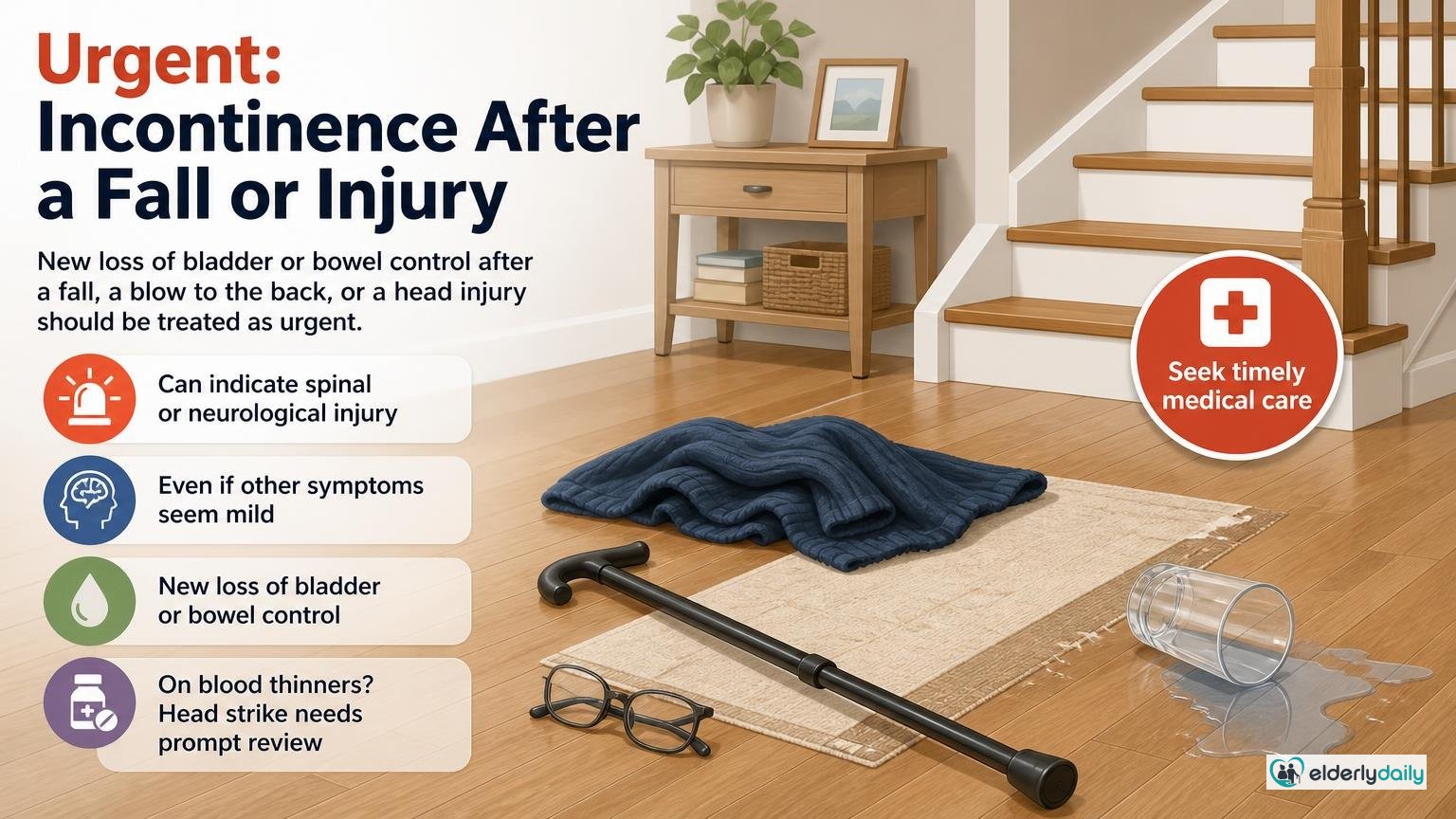
  • Any recent falls or injuries
  • Changes in eating or drinking
  • Any new medications or supplements

Caregiver Tip: Keep a medical information binder ready. Update it monthly. Store it where you can grab it quickly. Download our free template: Emergency Binder Template

After the Emergency: Ongoing Care Planning

Once the immediate crisis is resolved, work with your medical team to prevent future emergencies:

Schedule Follow-Up Appointments

See the doctor within 1-2 weeks after emergency treatment. Make sure the infection is gone. Discuss prevention strategies.

  • • Urine culture to confirm infection cleared
  • • Review medication changes
  • • Discuss long-term management plan

Monitor Symptoms Closely

Keep a daily log for 2-4 weeks. Track urine color, odor, frequency, and any pain or confusion.

  • • Note any recurring patterns
  • • Watch for early warning signs
  • • Report changes to doctor promptly

Adjust Home Setup

Make changes to prevent future emergencies. Improve bathroom access. Add safety equipment.

  • • Add bedside commode for nighttime
  • • Install motion-activated lights
  • • Keep path to bathroom clear

Questions to Ask Your Doctor

At your follow-up appointment, ask these important questions:

  • What caused this emergency?
  • How can we prevent it from happening again?
  • Should we change any medications?
  • Do we need to see a specialist?
  • What warning signs should we watch for?
  • How often should we check in with you?
  • Are there tests we should do regularly?
  • When should we call you versus go to ER?

For complete post-hospital recovery guidance: Post-Hospital Recovery at Home

Post-Hospital Incontinence Complications

Seniors who develop incontinence after hospitalization need close monitoring. Watch for these complications:

Call Doctor Immediately If:

  • Catheter complications: Pain, bleeding, or catheter falls out
  • Surgical site issues: Leaking from incision area
  • Worsening instead of improving: More leakage after 1-2 weeks home
  • Signs of infection: Fever, chills, or foul-smelling urine

Normal Post-Hospital Changes:

  • Temporary leakage: Common for 2-6 weeks after surgery
  • Increased frequency: Bladder retraining takes time
  • Mild urgency: Should gradually improve week by week
  • Nighttime accidents: Common during recovery period

For complete post-hospital guidance, read: Temporary Incontinence After Hospitalization

When Confusion Signals a Medical Emergency

Sudden mental changes in seniors with incontinence often indicate serious infection:

Confusion That Needs Immediate Medical Attention

Sudden Onset (Hours to Days)

  • • Does not recognize family members
  • • Cannot remember where they are
  • • Seeing or hearing things that are not there
  • • Extreme agitation or combativeness
  • • Slurred speech or difficulty speaking

Physical Signs With Confusion

  • • Fever over 100.4°F
  • • Very dark or bloody urine
  • • Strong foul odor from urine
  • • Rapid breathing or heart rate
  • • Extreme weakness or lethargy

Important for Dementia Caregivers

If your loved one has dementia and suddenly becomes MORE confused than usual, always suspect a UTI first. This is one of the most common causes of sudden decline in dementia patients. Call the doctor the same day.

Learn more about dementia-related changes: Signs Dementia Is Getting Worse

After the Emergency: Ongoing Care Planning

Once the immediate crisis is resolved, work with your medical team to prevent future emergencies:

Schedule Follow-Up Appointments

See the doctor within 1-2 weeks after emergency treatment. Make sure the infection is gone. Discuss prevention strategies.

  • • Urine culture to confirm infection cleared
  • • Review medication changes
  • • Discuss long-term management plan

Monitor Symptoms Closely

Keep a daily log for 2-4 weeks. Track urine color, odor, frequency, and any pain or confusion.

  • • Note any recurring patterns
  • • Watch for early warning signs
  • • Report changes to doctor promptly

Adjust Home Setup

Make changes to prevent future emergencies. Improve bathroom access. Add safety equipment.

  • • Add bedside commode for nighttime
  • • Install motion-activated lights
  • • Keep path to bathroom clear

Questions to Ask Your Doctor

At your follow-up appointment, ask these important questions:

  • What caused this emergency?
  • How can we prevent it from happening again?
  • Should we change any medications?
  • Do we need to see a specialist?
  • What warning signs should we watch for?
  • How often should we check in with you?
  • Are there tests we should do regularly?
  • When should we call you versus go to ER?

For complete post-hospital recovery guidance: Post-Hospital Recovery at Home

More Helpful Guides

Learn more about incontinence management and senior safety:

Frequently Asked Questions

Medical Disclaimer

This guide is for educational purposes only. It is not medical advice, diagnosis, or treatment. It should not replace professional medical care or emergency services.

Always consult qualified healthcare professionals for:

  • Medical emergencies or urgent symptoms
  • Diagnosis of incontinence causes
  • Treatment recommendations
  • Medication changes or adjustments
  • Decisions about emergency care

If you believe your loved one is experiencing a medical emergency, call 911 or go to the nearest emergency room immediately. Do not delay seeking emergency care based on information in this guide.

Every person's medical situation is unique. What is appropriate for one individual may not be appropriate for another. Always follow the specific guidance of your loved one's healthcare providers.

Need Everyday Incontinence Management Help?

Learn practical strategies for daily care and prevention