Nighttime Incontinence Solutions for Seniors (Caregiver Guide)

Last Updated: February 2026

If you're waking up multiple times a night to change sheets, you're not alone. Nighttime incontinence is one of the most exhausting parts of caregiving—but with the right strategies, you can reduce accidents, protect their skin, and help everyone sleep better.

Nighttime accidents affect over 50% of seniors over 65. The combination of reduced bladder control, mobility limitations, and medication effects makes nights especially challenging for both caregivers and their loved ones.

This guide covers practical evening routines, bed protection strategies, fall prevention during nighttime trips, and skin care—everything you need to manage nights with confidence and compassion.

nighttime incontinence elderly caregiver bedside assistance

Caregiver-informed • Focused on sleep & skin protection

Medical Disclaimer

Always consult your parent's doctor about sudden changes in nighttime incontinence, as it may signal urinary tract infections, medication issues, or other medical conditions requiring treatment.

If you're navigating multiple bladder care challenges, our complete incontinence care guide brings everything together in one place—from daily management to skin protection and communication strategies.

Why Nighttime Incontinence Happens in Seniors

Nighttime bladder control is more difficult than daytime for several reasons. Understanding why helps you create better prevention strategies.

For a complete overview of incontinence management strategies, home safety modifications, and skin protection protocols, explore our Managing Incontinence in Elderly Parents guide.

Reduced Nighttime Bladder Control

  • Bladder capacity decreases with age (holds less urine)
  • Kidneys produce more urine at night (nocturia)
  • Reduced awareness of bladder fullness during sleep
  • Weakened pelvic floor muscles cannot hold as long
  • Enlarged prostate in men blocks complete emptying

Mobility Limitations at Night

  • Cannot reach bathroom quickly enough
  • Post-hospitalization weakness makes transfers difficult
  • Arthritis pain worse at night, slows movement
  • Fear of falling in dark prevents getting up
  • Disorientation upon waking makes navigation harder

Medication Effects

  • Diuretics (water pills) increase nighttime urination
  • Blood pressure medications affect bladder control
  • Sedatives and sleep aids reduce bladder awareness
  • Pain medications cause drowsiness and confusion
  • Multiple medications compound effects

Cognitive & Confusion Issues

  • Dementia reduces awareness of bladder signals
  • Sundowning increases confusion at night
  • Cannot find bathroom in dark or unfamiliar setting
  • Forgets toileting routine or appropriate behavior
  • Post-anesthesia confusion after hospitalization

Critical Statistic

70% of seniors with nighttime incontinence experience at least one fall during nighttime bathroom trips. Proper lighting, bedside solutions, and supervision dramatically reduce this risk.

Evening Routine Adjustments That Reduce Nighttime Accidents

Small changes to your evening routine can significantly reduce nighttime incontinence. These strategies work together to minimize accidents while maintaining dignity and safety.

Most Important Rule

Prevention is easier than cleanup. A consistent evening routine takes 15-20 minutes but can prevent hours of nighttime disruption, skin damage, and fall risk.

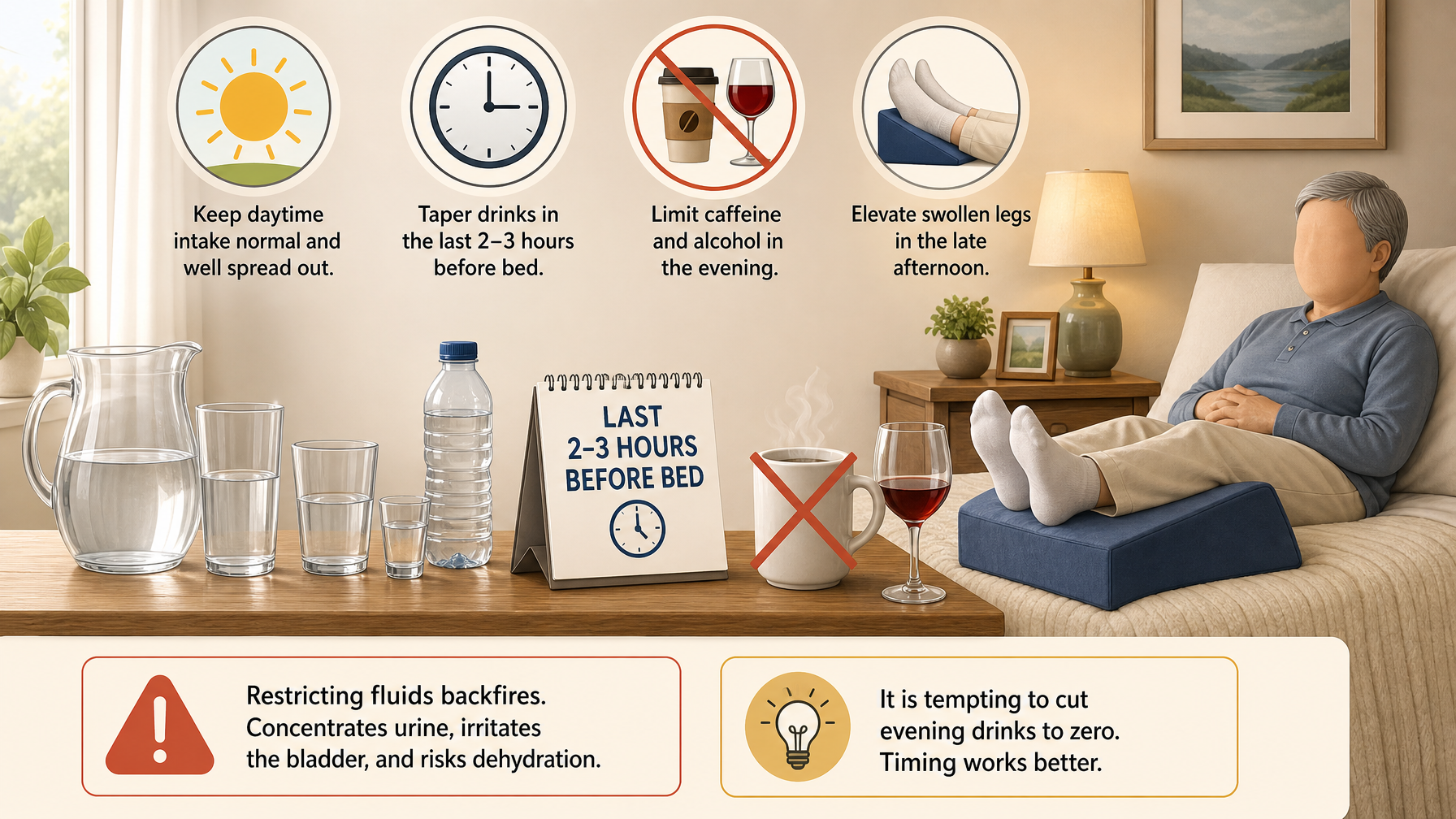
Fluid Timing Strategy

  • Encourage fluids before 5 PM (6-8 glasses during day)
  • Limit liquids 2-3 hours before bed (small sips only)
  • Avoid caffeine after noon (coffee, tea, soda)
  • Skip alcohol in evening (increases urine production)
  • Avoid watery foods late (soup, watermelon, ice cream)

Scheduled Bathroom Trips

  • Before bed routine: Empty bladder completely (double void)
  • Set alarm for 2-3 AM to wake and assist
  • Gentle wake-up (avoid startling)
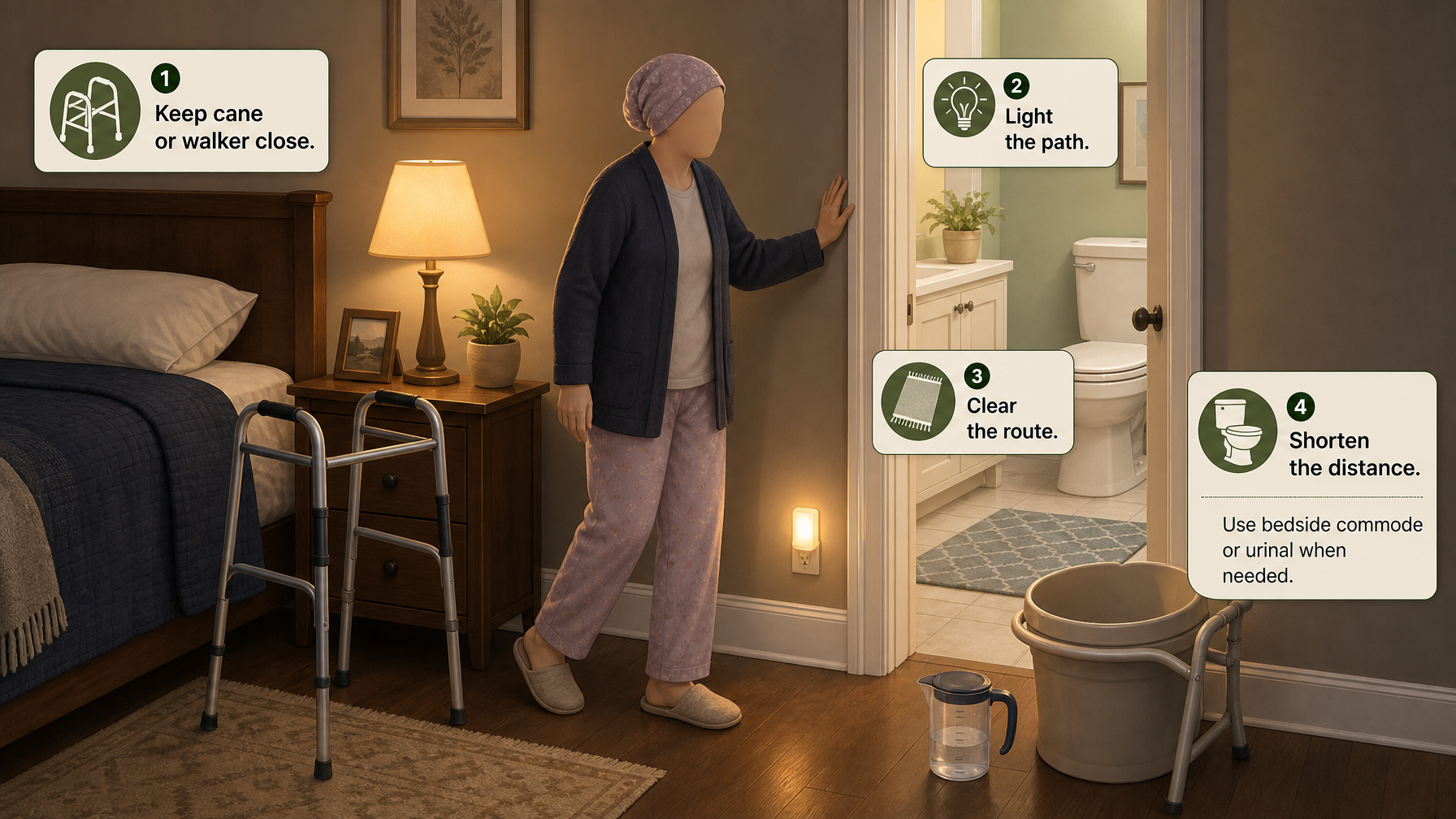
  • Use bedside commode instead of walking to bathroom
  • Track patterns to optimize timing

Easy-Remove Clothing

  • Elastic waistbands (no buttons or zippers)
  • Pull-on pants or adaptive clothing
  • Velcro closures instead of snaps
  • Avoid complicated layers (robes, belts)
  • Keep nighttime clothing simple (easy on/off)

Bedside Commode Setup

  • Place within arm's reach of bed
  • Reduces fall risk by eliminating long walks
  • Faster access prevents accidents
  • Can be disguised as regular chair during day
  • Essential after hospitalization or surgery

Pathway Lighting

  • Motion-sensor lights every 6-8 feet
  • Soft warm light (not bright white)
  • Illuminate entire path bed to bathroom
  • Nightlight in bathroom (leave on all night)
  • Avoid complete darkness (reduces disorientation)

Bathroom Safety Equipment

  • Raised toilet seat (easier sit-to-stand)
  • Toilet safety rails (armrest support)
  • Non-slip mats (prevent slipping)
  • Grab bars (permanent stability)
  • Walker next to bed (never walk unsupported)

Establishing the Routine

It takes 2-4 weeks to establish a consistent evening routine that reduces nighttime accidents. Be patient, track what works, and adjust timing based on your parent's patterns. Keep a simple log to identify their typical nighttime bathroom schedule.

Bed Protection Strategies (Layered Defense System)

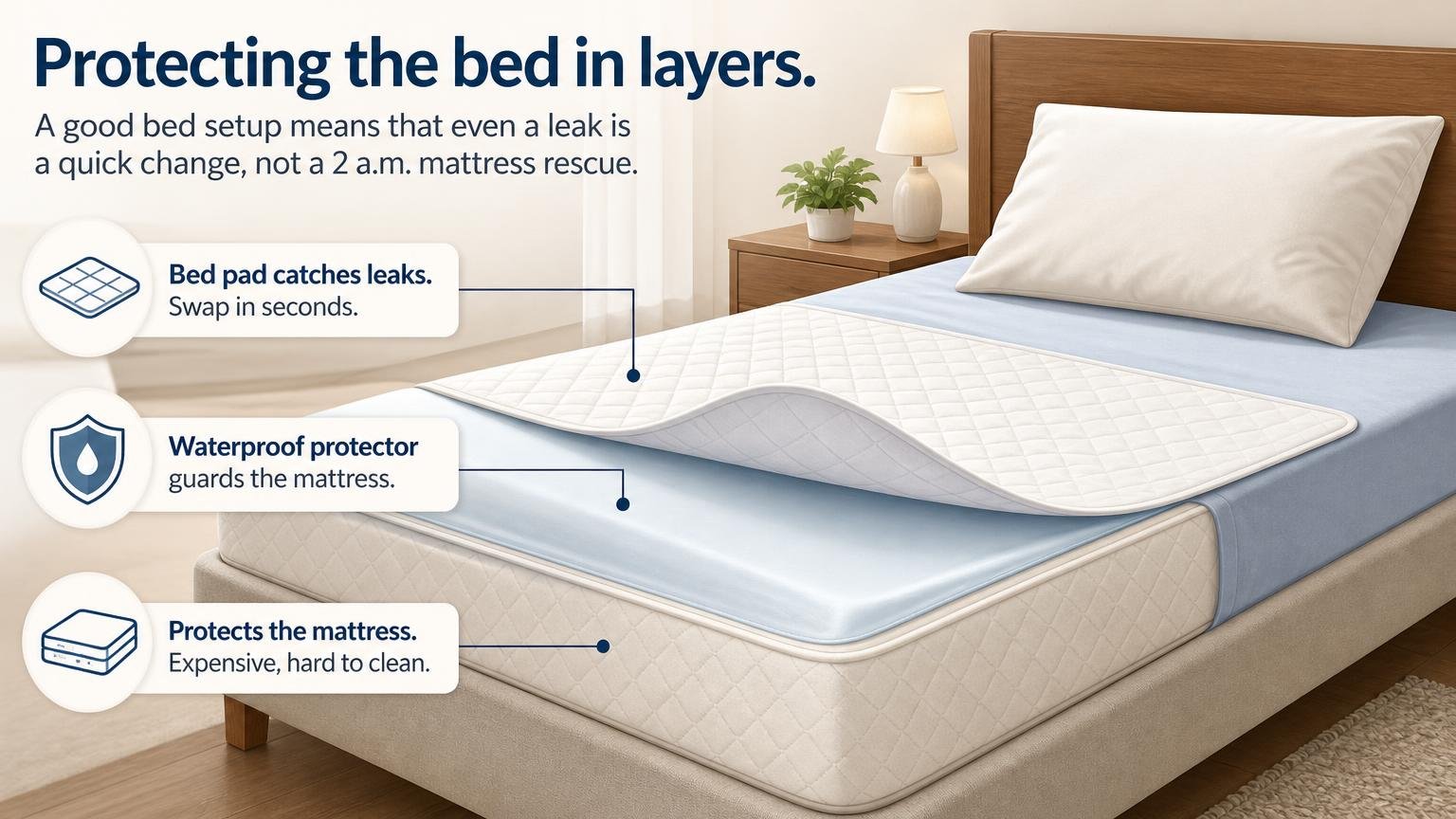
Protecting the mattress and bedding requires a layered approach. This system makes cleanup faster, protects expensive mattresses, and maintains comfort.

The Layered Bed Protection System

Layer 1: Waterproof mattress protector (zippered encasement)
Layer 2: Fitted sheet
Layer 3: Large washable underpad (34x36" minimum)
Layer 4: Disposable bed pad for extra protection
Layer 5: Overnight absorbent product on person

Waterproof Mattress Protection

Why It's Essential

  • Mattresses cost $500-$2,000 to replace
  • Urine soaks deep into foam and springs
  • Odors become permanent without protection
  • Bacteria growth creates health hazards

What to Look For

  • Zippered encasement (covers entire mattress)
  • Breathable waterproof material (prevents heat buildup)
  • Machine washable (easy cleaning)
  • Quiet material (not crinkly plastic)
  • Hypoallergenic (prevents skin irritation)

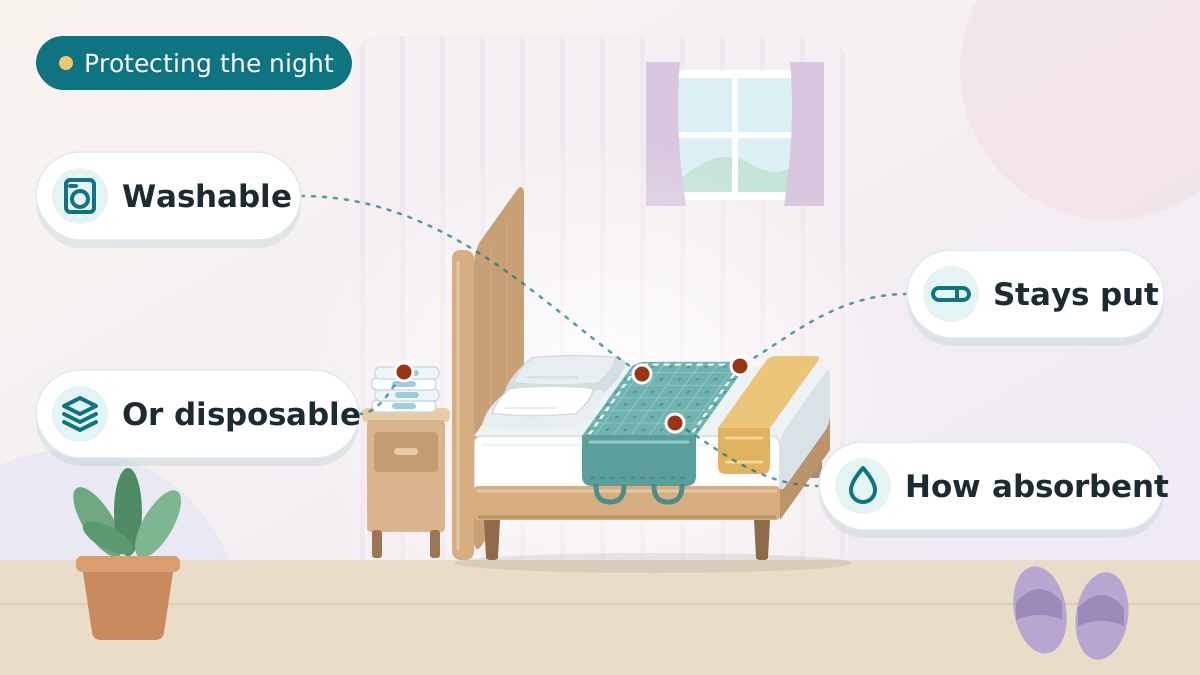
Washable vs. Disposable Bed Pads

Washable Underpads (Reusable)

  • Cost-effective long-term ($15-30 each, lasts 1+ year)
  • Environmentally friendly (less waste)
  • More comfortable (softer, quieter)
  • Requires laundry (need 3-4 in rotation)
  • Initial investment ($60-120 for set)

Disposable Bed Pads

  • No laundry required (throw away after use)
  • Convenient for travel or temporary needs
  • Hygienic disposal (reduces odor)
  • Ongoing cost ($30-60/month)
  • Environmental waste (landfill impact)

Best approach: Use washable underpads as primary protection, with disposable pads on top for extra security during high-risk nights.

Quick Nighttime Change Strategy

When accidents happen, speed and preparation minimize disruption and skin exposure time.

Keep Within Reach

  • Clean absorbent products
  • pH-balanced cleansing wipes
  • Barrier cream or ointment
  • Spare bed pads (2-3 extras)
  • Clean pajamas or nightgown
  • Plastic bag for soiled items

Quick Change Steps

  1. 1.Help them to bedside commode or chair
  2. 2.Remove soiled clothing and products
  3. 3.Cleanse skin gently with wipes (pat dry)
  4. 4.Apply barrier cream to protect skin
  5. 5.Put on clean absorbent product and clothing
  6. 6.Replace soiled bed pad (leave other layers)
  7. 7.Help them back to bed safely

Waterproof Mattress Protector

Purpose: Protects expensive mattress from permanent damage

  • Zippered encasement (covers all sides)
  • Breathable waterproof material
  • Machine washable
  • Quiet (not crinkly)

Cost: $30-80 | Lasts: 2-5 years

Washable Underpads

Purpose: Absorbs accidents, protects sheets, easy to change

  • Large size (34x36" minimum)
  • Absorbent top layer (cotton blend)
  • Waterproof backing
  • Non-slip bottom (stays in place)

Cost: $15-30 each | Buy 3-4 for rotation

Disposable Bed Pads

Purpose: Extra protection layer, quick disposal

  • Place on top of washable pad
  • High absorbency (holds 2-4 cups)
  • Leak-proof backing
  • Quick nighttime changes

Cost: $20-40/month | Use as needed

Best Under Pads for Adults

Compare washable and disposable bed protection options

Pro Tip: Keep Spare Bedding Sets Ready

Have 2-3 complete bedding sets ready to go (sheets, underpads, pillowcases). Store in bedroom closet or nearby for quick 2 AM changes. Pre-make the bed with double layers so you can strip one layer and have a clean bed underneath.

Reducing Fall Risk During Nighttime Bathroom Trips

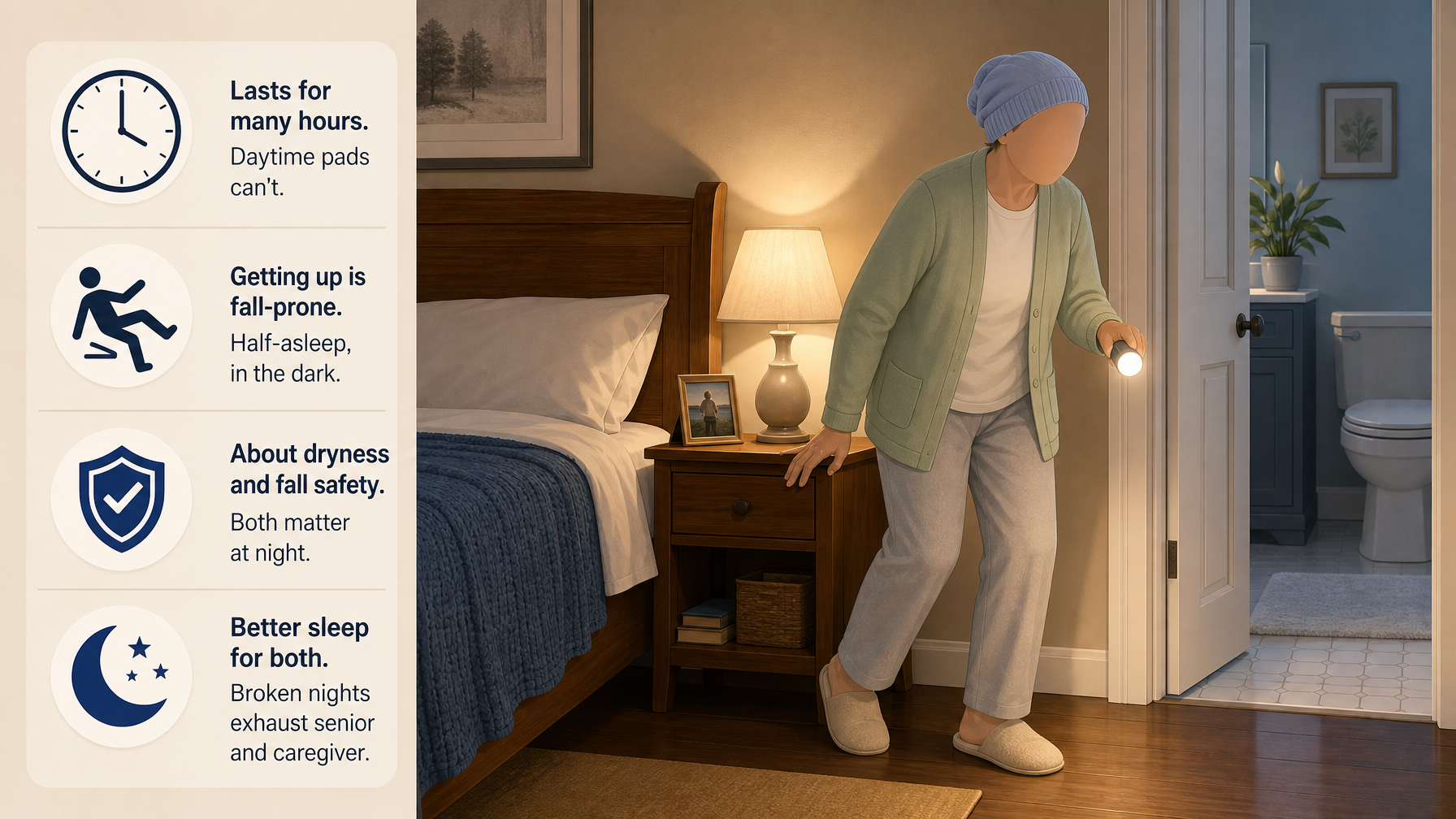
The urgency to reach the bathroom combined with darkness, drowsiness, and mobility limitations creates the perfect storm for falls. These strategies dramatically reduce nighttime fall risk.

Highest Fall Risk Period

80% of nighttime falls happen during bathroom trips between midnight and 6 AM. Seniors are disoriented, rushing, and often attempt trips without proper support. Proper lighting and bedside solutions are non-negotiable.

Motion-Sensor Lighting System

  • Install every 6-8 feet from bed to bathroom
  • Use soft warm light (not bright white—prevents full wake-up)
  • Illuminate entire pathway (no dark gaps)
  • Nightlight in bathroom (leave on all night)
  • Avoid complete darkness (reduces disorientation)
Best Night Lights for Seniors

Clear Pathway Safety

  • Remove ALL rugs (even non-slip ones shift at night)
  • Clear floor completely (no shoes, cords, clutter)
  • Widen pathways (36" clearance minimum)
  • Secure all cords (tape down or use cord covers)
  • Mark edges (glow tape on doorframes if needed)
Preventing Nighttime Falls

Mobility Support Equipment

  • Walker next to bed (within arm's reach)
  • Bed assist handle (helps sit up safely)
  • Grab bars in bathroom (permanent stability)
  • Non-slip footwear (never walk barefoot)

Bedside Commode Solution

  • Eliminates long walks to bathroom
  • Reduces fall risk by 70%
  • Faster access prevents accidents
  • Essential for weak mobility

Supervision & Assistance

  • Sleep in same room (first 4-6 weeks)
  • Use baby monitor to hear movement
  • Assist all nighttime trips (don't let them go alone)
  • Bed alarm alerts when they get up

Proper Footwear

  • Non-slip slippers with back strap
  • Never barefoot or socks (too slippery)
  • Easy to put on (slip-on style)
  • Keep next to bed (put on before standing)

Best Shoes for Seniors to Prevent Falls

Non-slip footwear for nighttime safety

Alternative: Handheld Urinal for Emergencies

When to Consider

  • Severe mobility limitations
  • Post-surgery recovery (first 2-4 weeks)
  • High fall risk during transfers
  • Extreme urgency issues
  • Caregiver cannot wake every 2-3 hours

Important Considerations

  • Requires dexterity to position correctly
  • Not suitable for dementia (confusion with use)
  • Men easier than women (anatomical design)
  • Practice during day first (build confidence)
  • Keep wipes nearby for cleanup

Note: Handheld urinals are a temporary solution for high-risk periods. Bedside commodes are generally more dignified and practical for most seniors.

When Bed Alarms May Help With Nighttime Incontinence

Bed alarms alert you when your parent gets up, allowing you to assist with nighttime bathroom trips before falls or accidents occur. They're especially helpful for seniors with dementia, wandering tendencies, or high fall risk.

When Bed Alarms Are Helpful

  • Dementia or confusion (attempts to get up alone without awareness)
  • Wandering at night (sundowning behavior)
  • High fall risk (history of falls during transfers)
  • Post-hospitalization weakness (first 4-6 weeks home)
  • Caregiver sleeps in different room (needs alert system)
  • Refuses to call for help (tries to be independent)

How Bed Alarms Work

Pressure Sensor Pads

Placed under sheet or mattress pad. Alarm sounds when pressure is removed (when they sit up or get out of bed). Most common type for incontinence monitoring.

Motion Sensor Alarms

Detects movement when they sit up or swing legs over bed. Less intrusive than pressure pads but may have false alarms.

Alert Options

Loud alarm (wakes caregiver), vibrating pager (silent alert), or smartphone notification (remote monitoring). Choose based on your sleep location and hearing.

Important Consideration

Bed alarms are not restraints—they simply alert you so you can assist. The goal is to help them safely reach the bathroom or commode, not to prevent them from getting up. Always respond quickly and calmly to avoid startling them.

Best Bed Alarms for Elderly

Compare pressure sensor and motion detection systems

Protecting Skin Overnight (Preventing Breakdown)

Prolonged moisture exposure during sleep dramatically increases skin breakdown risk. Proper nighttime skin protection prevents painful rashes, infections, and pressure ulcers.

Why Nighttime Is Higher Risk

During sleep, seniors may not wake immediately when accidents occur, resulting in 6-8 hours of moisture exposure. This prolonged contact causes incontinence-associated dermatitis (IAD), fungal infections, and pressure ulcers—especially in immobile seniors.

Before Bed Skin Protection

  1. 1.
    Cleanse thoroughly

    Use pH-balanced cleanser (not soap), pat dry completely

  2. 2.
    Apply barrier cream

    Thick layer of zinc oxide or dimethicone-based cream

  3. 3.
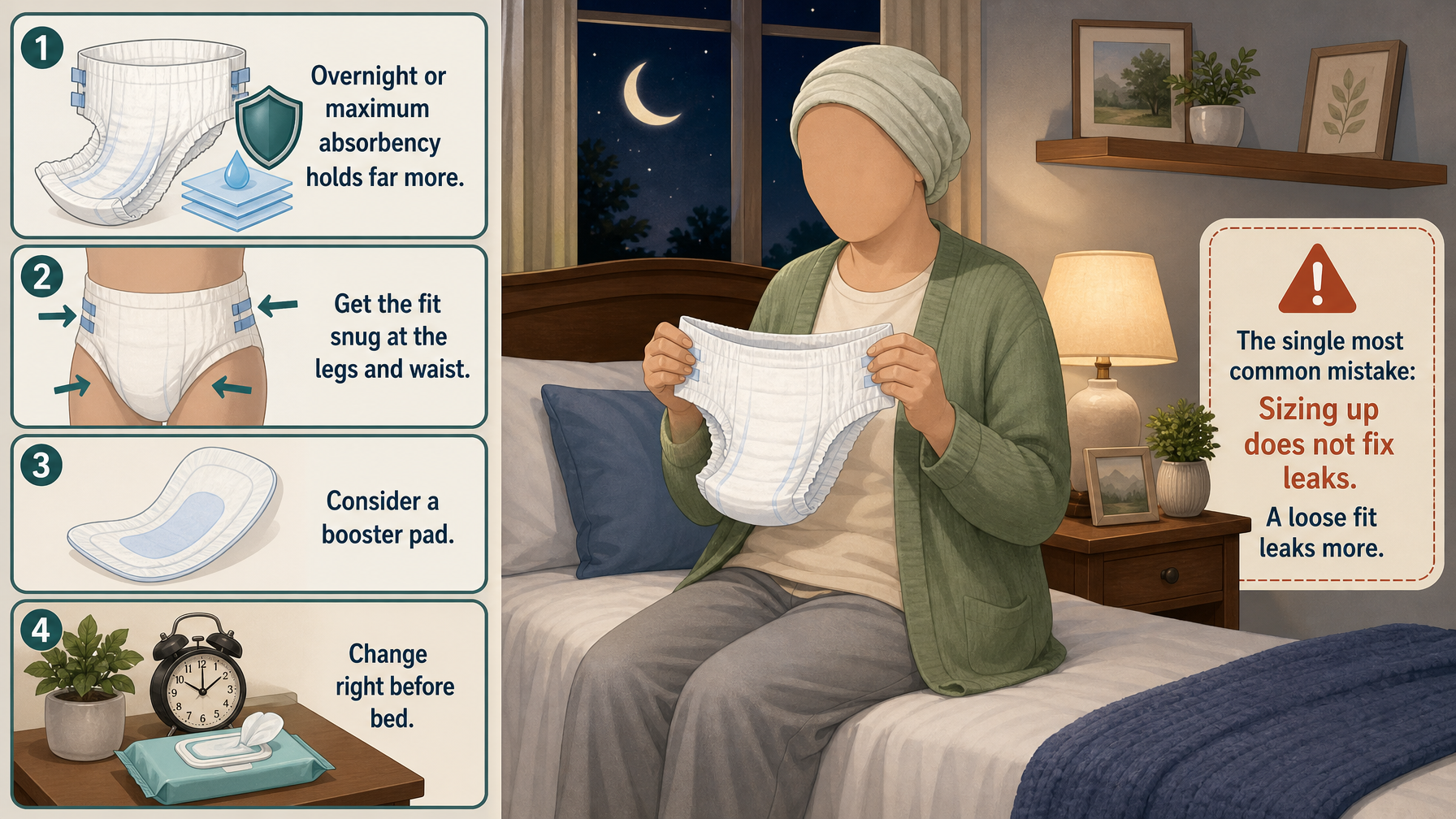
    Use overnight absorbent product

    Higher absorbency than daytime products

  4. 4.
    Breathable materials

    Avoid plastic-backed products that trap heat

  5. 5.
    Proper fit

    Not too tight (restricts circulation) or loose (leaks)

Morning Skin Care Routine

  1. 1.
    Remove products immediately

    Don't delay morning cleanup

  2. 2.
    Gentle cleansing

    pH-balanced cleanser, soft cloths, pat (don't rub)

  3. 3.
    Dry thoroughly

    Pay attention to skin folds

  4. 4.
    Inspect skin daily

    Check for redness, irritation, breakdown

  5. 5.
    Allow air exposure

    15-30 minutes if possible before applying new products

Choosing Overnight Absorbent Products

Higher absorbency than daytime products (holds 12-16 oz)
Breathable outer layer (prevents heat rash)
Moisture-wicking top layer (keeps skin drier)
Odor control technology (maintains dignity)
Comfortable fit (not too tight or bulky)

Sizing tip: Measure waist and hips. When between sizes, choose larger for comfort and better coverage. Too-tight products cause skin irritation and leaks.

Barrier Creams for Overnight Protection

Zinc oxide-based (40% concentration ideal)
Dimethicone formulas (creates waterproof barrier)
Apply thick layer (should be visible on skin)
Cover all vulnerable areas (buttocks, inner thighs, skin folds)
Reapply after nighttime changes

When to apply: After evening cleansing and before putting on overnight absorbent product. Reapply if product is changed during night.

Best Skin Protectant Cleansers

pH-balanced products for incontinence care

Early Warning Signs (Catch Early)

  • Mild redness that fades within 30 minutes
  • Slight warmth to touch
  • Itching or tingling sensation
  • Shiny or tight-looking skin

Action: Increase cleansing frequency, apply barrier cream more liberally, allow more air exposure

Serious Complications (See Doctor)

  • Open sores or blisters
  • Severe redness that doesn't fade
  • Fungal infection (white patches, strong odor)
  • Bleeding or oozing from skin

Action: Call doctor same day—may need prescription treatment

Overnight Skin Protection Checklist

Essential Products

  • pH-balanced cleanser (5.5-7.0 pH)
  • Barrier cream (zinc oxide or dimethicone)
  • Overnight absorbent products (high capacity)
  • Soft cleansing cloths (no rough scrubbing)
  • Disposable gloves (hygiene protection)

Daily Monitoring

  • Inspect skin every morning (check all vulnerable areas)
  • Look for redness that doesn't fade in 30 minutes
  • Check skin folds (moisture traps here)
  • Note any new irritation (document changes)
  • Take photos (track healing or worsening)

Change Frequency Matters

Even with overnight products, change immediately upon waking or if you notice an accident during night. Prolonged exposure—even in "super absorbent" products—still damages skin. Set alarm for 2-3 AM check if accidents are frequent.

When to Call a Doctor About Nighttime Incontinence

While nighttime incontinence is common in aging, certain symptoms require immediate medical attention. Know when to call for help.

Call Doctor Immediately

  • Sudden onset of nighttime incontinence (new problem)
  • Blood in urine (pink, red, or brown color)
  • Pain or burning during urination
  • Fever with incontinence (may indicate UTI)
  • Sudden confusion or delirium (especially with fever)
  • Inability to urinate at all (urinary retention)
  • Severe abdominal or back pain

These symptoms may indicate urinary tract infection, kidney problems, or other serious conditions requiring immediate treatment.

Schedule Doctor Visit If

  • Nighttime incontinence worsening gradually over weeks
  • Frequent UTIs (more than 2-3 per year)
  • Skin breakdown despite proper care routine
  • Severely affecting quality of life (refusing social activities)
  • New medications started recently (may need adjustment)
  • Bowel incontinence develops alongside bladder issues
  • Current strategies not working after 4-6 weeks

Many causes of nighttime incontinence are treatable with medication adjustments, physical therapy, or medical interventions.

What to Tell Your Doctor

Bring this information to your appointment for more accurate diagnosis and treatment:

Track These Details

  • When it started (sudden or gradual)
  • Frequency (how many times per night)
  • Volume (small leaks or full bladder emptying)
  • Timing patterns (specific hours, after medications)
  • Fluid intake (amount and timing)

Additional Information

  • All current medications (including over-the-counter)
  • Recent medication changes (new or adjusted doses)
  • Other symptoms (pain, fever, confusion, weakness)
  • Recent hospitalizations or surgeries
  • Impact on daily life (sleep quality, skin issues, falls)

Common Treatable Causes

Many nighttime incontinence cases improve with treatment: urinary tract infections (antibiotics), medication side effects (timing adjustments), enlarged prostate (medications or procedures), diabetes (blood sugar control), sleep apnea (CPAP therapy), or constipation (dietary changes). Don't assume it's "just aging"—ask for evaluation.

Frequently Asked Questions

Common questions about managing nighttime incontinence in elderly parents

You're Helping Them Sleep Safely

Managing nighttime incontinence takes patience, the right equipment, and a solid routine. You're protecting their dignity, skin, and safety—and that matters.