
Temporary Incontinence After Hospitalization

Educational guidance, not medical advice. New incontinence should be assessed by a doctor to find and treat the cause — much of it is reversible.
New incontinence after a hospital stay alarms many families — but it is often temporary and treatable, a side effect of the stay rather than a permanent change. Understanding why helps you manage it and support recovery.
Key takeaways
- New incontinence after a hospital stay is common and often temporary — a side effect of the stay, not necessarily a permanent change.
- Common causes include catheter after-effects, a UTI, medications, weakness and reduced mobility (not reaching the toilet in time), and constipation — many are treatable.
- Get it assessed — a doctor can identify and treat the cause, and rule out a UTI, which is very common after a hospital stay.
- Management combines treating the cause, a toileting routine, easy toilet access, rebuilding strength, and dignified products and skin care.
- With the cause addressed and recovery, many people regain control — so approach it hopefully, not as a permanent loss.
Quick answer
Is incontinence after a hospital stay permanent?
Often no — new incontinence after a hospital stay is common and frequently temporary, caused by things like catheter after-effects, a UTI, medications, weakness and reduced mobility (not reaching the toilet in time), or constipation. Many of these are treatable, so it should be assessed by a doctor rather than assumed permanent. Manage it with a toileting routine, easy toilet access, rebuilding strength, and dignified products and skin care — and many people regain control as they recover.
Often temporary, not permanent
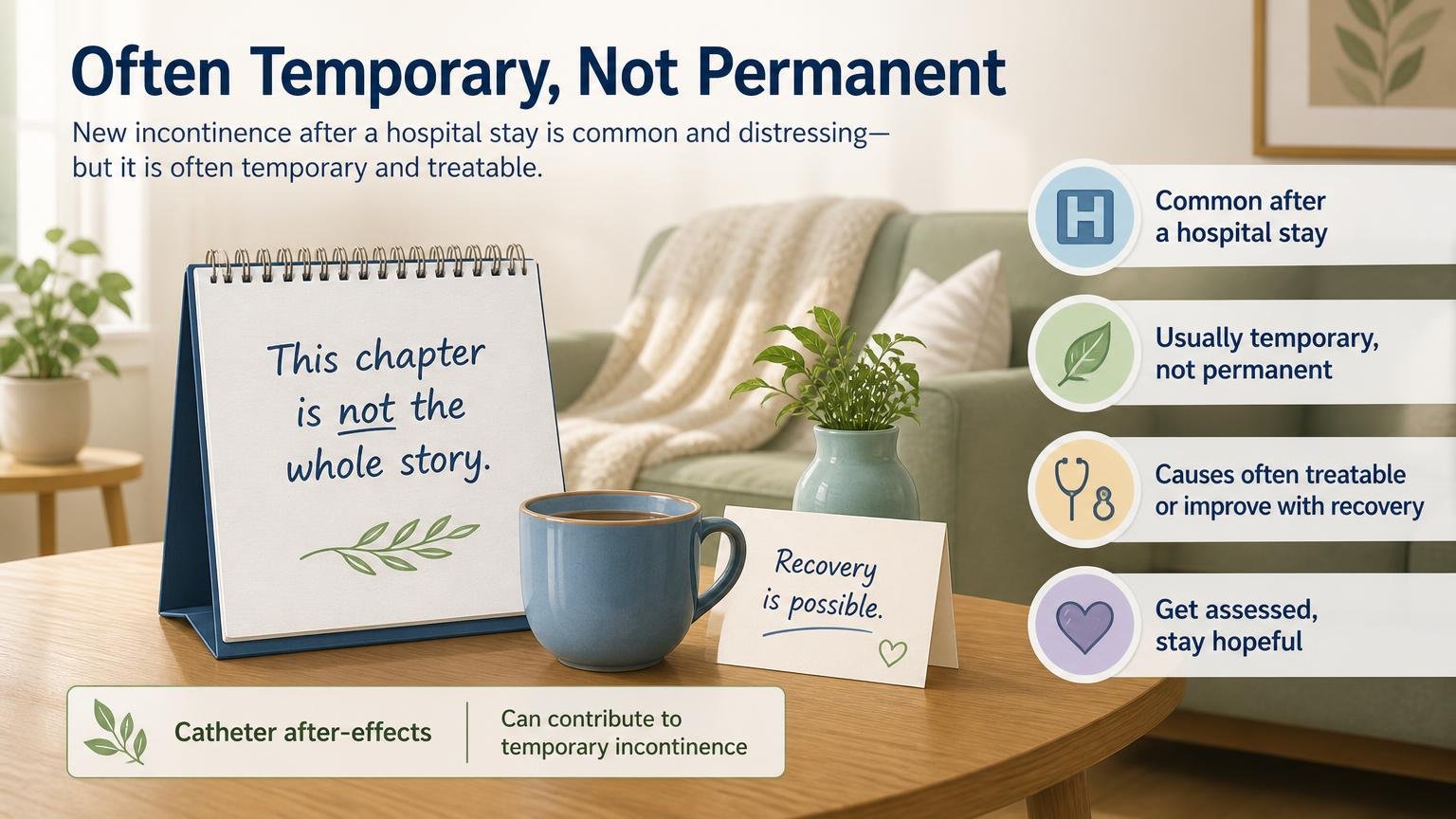
It is common and distressing: a parent who was continent goes into hospital and comes home with new incontinence. Families often fear this is a permanent decline — but frequently it is not. New incontinence after a hospital stay is commonly a temporary side effect of the stay itself, arising from causes that are often treatable or that improve as the person recovers.
The key is to approach it hopefully and get it assessed, rather than accepting it as a permanent new normal. This guide explains the common causes and how to manage it while recovery happens. It complements the broader managing incontinence at home and post-hospital recovery guides.

Sponsored Pick
Scrubzz No-Rinse Foam Cleanser (3-Pack)
Ongoing elder care or hospital stays where you want a hydrating no-rinse foam in a multi-pack
Check PriceWhy it happens after a hospital stay
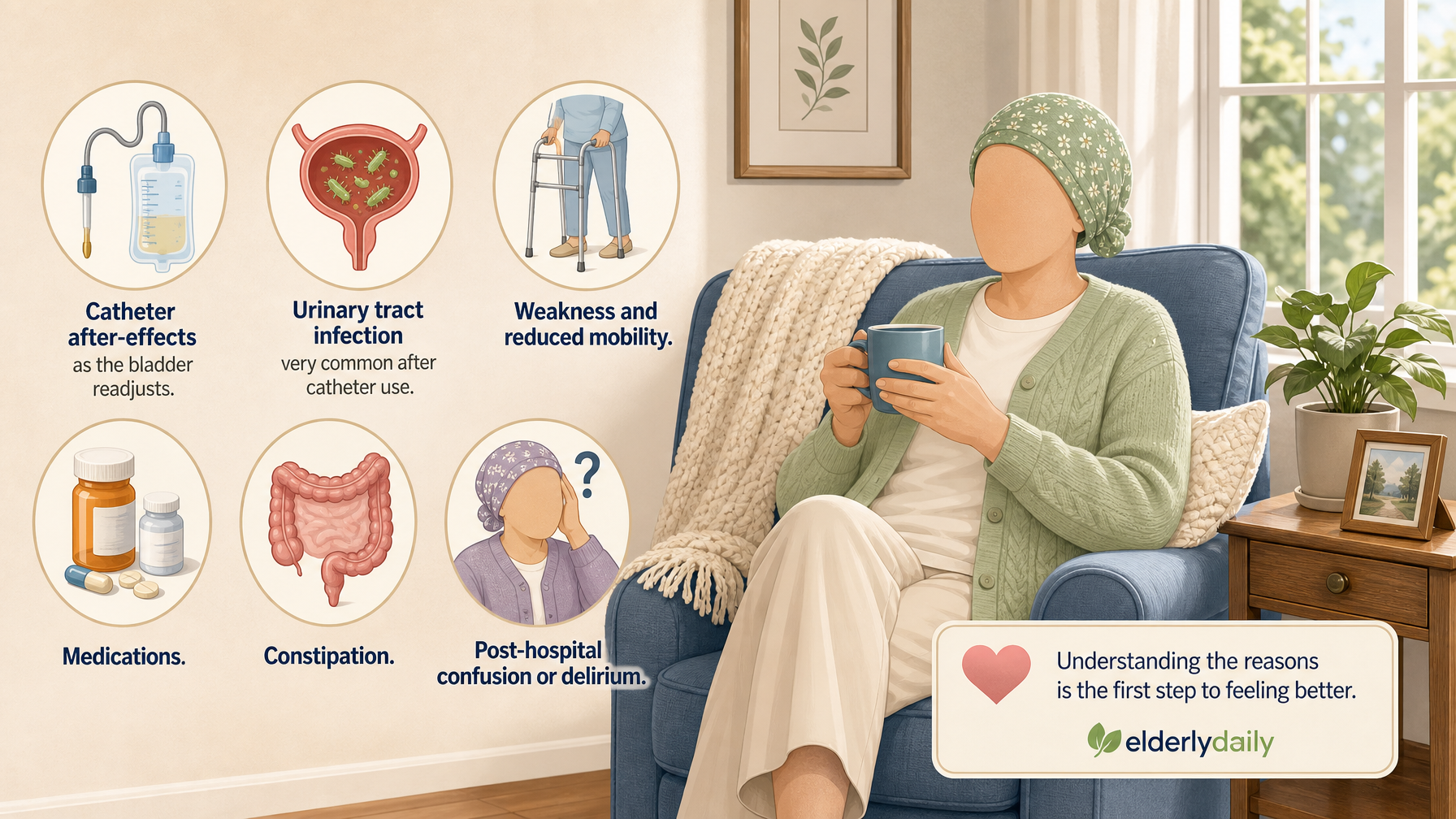
Several stay-related factors, alone or together, commonly cause new incontinence — and understanding them points to the solution:
- Catheter after-effects — if a urinary catheter was used during the stay, the bladder can take time to readjust afterward, causing temporary control problems that often settle.
- Urinary tract infection — UTIs are very common after a hospital stay (especially after catheter use) and are a frequent cause of new or worsened incontinence and urgency, often with confusion. This is treatable — see UTI signs in seniors.
- Weakness and reduced mobility — deconditioning can mean the person simply cannot reach or get onto the toilet in time (functional incontinence), which improves as strength returns.
- Medications — drugs given during or after the stay can affect the bladder or cause drowsiness that reduces awareness.
- Constipation — common after a hospital stay (from reduced mobility and medications) and can cause both bladder problems and bowel leakage from overflow.
- Confusion or delirium — the post-hospital confusion that can follow a stay may reduce awareness of the need to go.
Watch out
A UTI is one of the most common and treatable causes of new incontinence after a hospital stay, and in seniors it often shows as confusion rather than urinary symptoms. Ask the doctor to check for one — treating it may resolve the incontinence.
Get it assessed
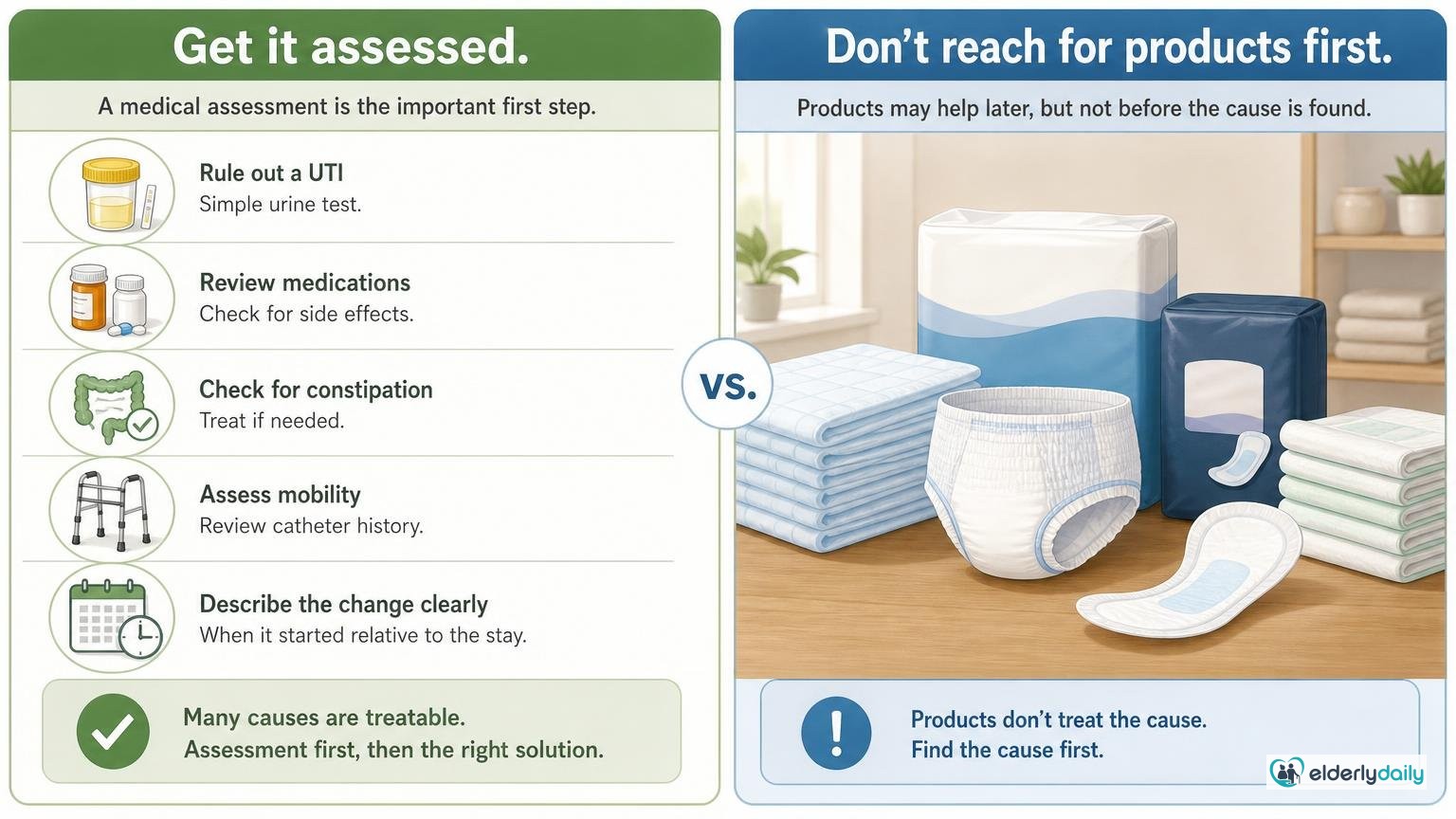
Because so many causes are treatable, a medical assessment is the important first step — not just reaching for products:
- Rule out a UTI — a simple urine test; treating an infection may clear the incontinence.
- Review medications — to identify any contributing to the problem.
- Check for constipation — and treat it, which can resolve overflow issues.
- Assess mobility and the catheter history — to understand functional causes and expected recovery.
- Describe the change clearly — when it started (relative to the stay), and any other symptoms, using how to talk to the doctor about incontinence.
Managing it during recovery
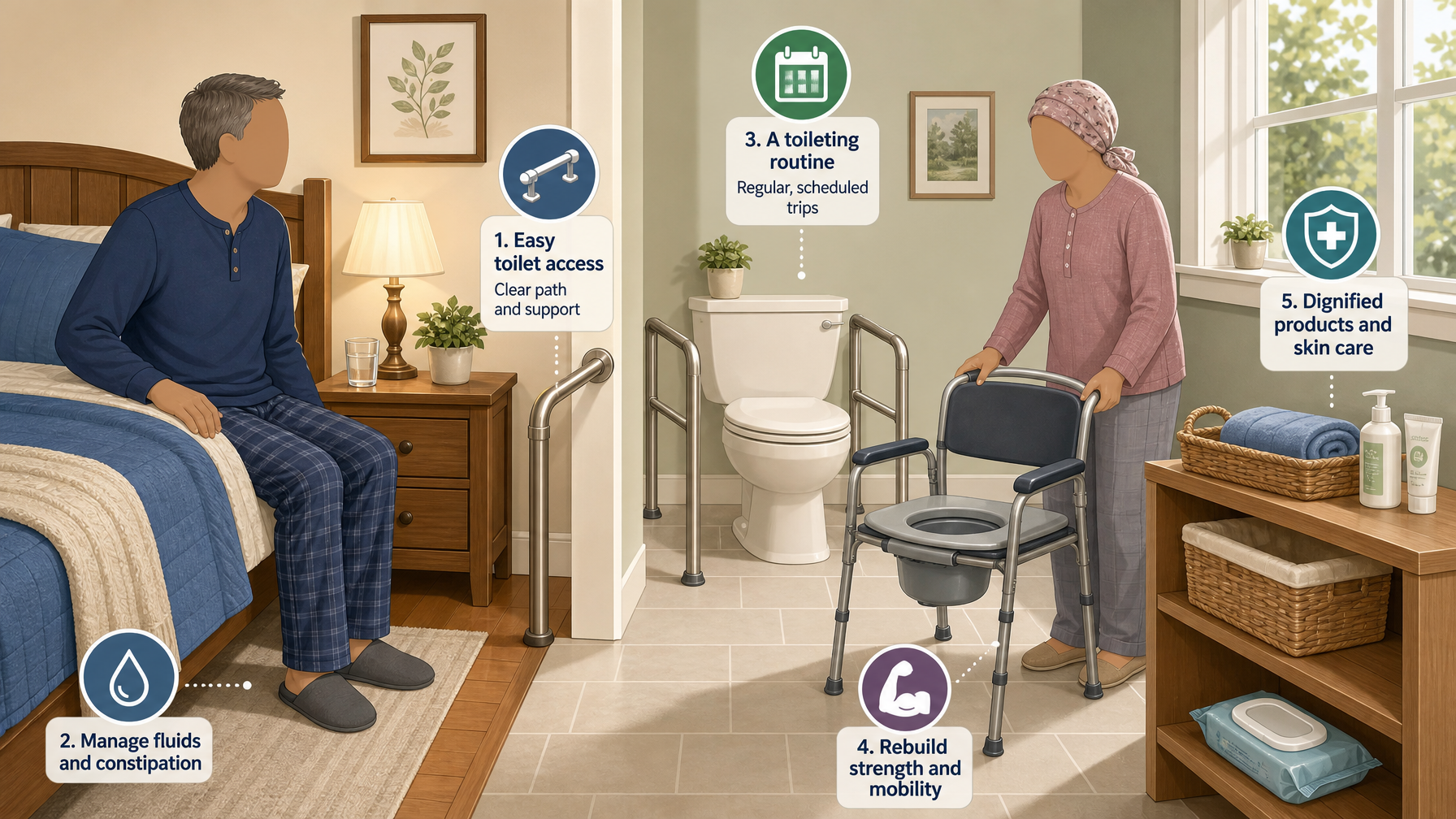
While the cause is addressed and the person recovers, practical management keeps them comfortable and dignified:
- A toileting routine — regular, scheduled toilet trips (and prompts if there is confusion) can help reduce accidents, especially with urgency or mobility problems.
- Easy toilet access — a clear, lit path, a raised toilet seat, or a bedside commode so a weak person can reach and use the toilet in time — crucial when mobility is the issue.
- Rebuild strength and mobility — as the person regains strength, functional incontinence often resolves; safe movement helps.
- Dignified products and skin care — well-fitting absorbent products, bed pads, and diligent skin protection, handled with the dignity emphasized in managing incontinence in elderly parents.
- Manage fluids and constipation — good hydration (unless restricted) and preventing constipation both help.
The outlook: hope and patience

The most important message is one of realistic hope. Because post-hospital incontinence so often has a temporary, treatable cause — an infection that clears, a catheter after-effect that settles, weakness that rebuilds, a medication that is adjusted — many people regain their continence as they recover and the cause is addressed.
- Give it time with active management — treating the cause and supporting recovery, rather than assuming it is permanent.
- Track progress — improvement over the weeks of recovery is reassuring.
- Follow up if it persists — if incontinence does not improve as the person otherwise recovers, return to the doctor; see signs incontinence is getting worse. Some incontinence may be longer-lasting and need ongoing management, but that is determined after addressing the treatable causes, not assumed at the start.
- Approach it with dignity and encouragement — reassurance that this is often part of recovery helps the person’s morale.
Good to know
Frame it hopefully for the person: new incontinence after a hospital stay is often a temporary part of recovery, not a permanent change. That reassurance — while you address the cause — protects their dignity and morale during a vulnerable time.
Frequently asked questions
Is incontinence after a hospital stay permanent?
Often no — new incontinence after a hospital stay is commonly temporary, arising from treatable causes like catheter after-effects, a UTI, medications, weakness and reduced mobility, or constipation. Many people regain control as they recover and the cause is addressed. It should be assessed by a doctor rather than assumed permanent, since much of it is reversible.
Why did my parent become incontinent after being in the hospital?
Common stay-related causes include after-effects of a urinary catheter (the bladder readjusting), a UTI (very common after a stay, often showing as confusion), weakness and reduced mobility meaning they cannot reach the toilet in time, medications affecting the bladder or awareness, constipation, and post-hospital confusion. Many of these are treatable or improve with recovery.
Can a UTI cause incontinence after hospitalization?
Yes — UTIs are very common after a hospital stay, especially after catheter use, and are a frequent cause of new or worsened incontinence and urgency. In seniors a UTI often shows as new confusion rather than typical urinary symptoms. Because it is easily tested and treated, and treatment may resolve the incontinence, a UTI should be checked for promptly.
How do I manage temporary incontinence during recovery?
While the cause is addressed, use a regular toileting routine (with prompts if there is confusion), ensure easy toilet access (a clear path, raised toilet seat, or bedside commode) especially if mobility is limited, support rebuilding strength and mobility, use dignified absorbent products and diligent skin care, and manage fluids and constipation. Many people regain control as they recover.
Will my parent regain bladder control after hospital?
Often, yes — because post-hospital incontinence frequently has a temporary, treatable cause, many people regain their continence as they recover and the cause is addressed (an infection clears, a catheter after-effect settles, strength rebuilds, or a medication is adjusted). Give it time with active management, track progress, and follow up with the doctor if it does not improve as they otherwise recover.
When should I see a doctor about post-hospital incontinence?
Get any new incontinence assessed promptly to find and treat the cause — particularly to rule out a UTI, review medications, and check for constipation, all common and treatable after a stay. Also return to the doctor if it does not improve as the person otherwise recovers, or if there are red-flag symptoms like pain, blood, fever, or a sudden inability to pass urine.
Sources
- Clinical Infectious Diseases (Norman, 2000). Fever in the Elderly
- National Institute on Aging (NIH). Urinary Incontinence in Older Adults
- JAMA (Kortebein et al., 2007). Effect of 10 Days of Bed Rest on Skeletal Muscle in Healthy Older Adults
- National Institute on Aging (NIH). The Dangers of Polypharmacy and the Case for Deprescribing in Older Adults
- MedlinePlus (U.S. National Library of Medicine). Delirium
