Pelvic Floor Exercises for Seniors: A Safe At-Home Routine for Bladder Control
Last Updated: February 2026
Bladder leaks do not have to be permanent. Gentle pelvic floor exercises can strengthen the muscles that control your bladder. With consistent practice, many seniors see real improvement in 6 to 12 weeks.
These exercises are safe, free, and can be done at home. They work for both men and women. You do not need equipment. You just need a few minutes each day.
This guide shows you how to find the right muscles, do the exercises correctly, and build a routine that fits your life.

Simple exercises build bladder control
Caregiver-Reviewed Exercise Guidance
This guide provides educational information about pelvic floor exercises for seniors. It is based on physical therapy principles and caregiver experiences.
Important: This is not medical advice. Consult a healthcare professional or physical therapist before starting any new exercise routine, especially if you have had recent surgery, pelvic organ prolapse, or chronic pain.
Key Points to Remember
They work: Studies show 60-70% of seniors improve bladder control with regular practice.
Takes time: Most people see results in 6-12 weeks with daily practice.
Safe for most: These exercises are gentle and low-risk for seniors.
No equipment needed: You can do these anywhere, anytime.
Works for men too: Pelvic floor exercises help both men and women.
Consistency matters: Daily practice brings the best results.
What Is the Pelvic Floor?
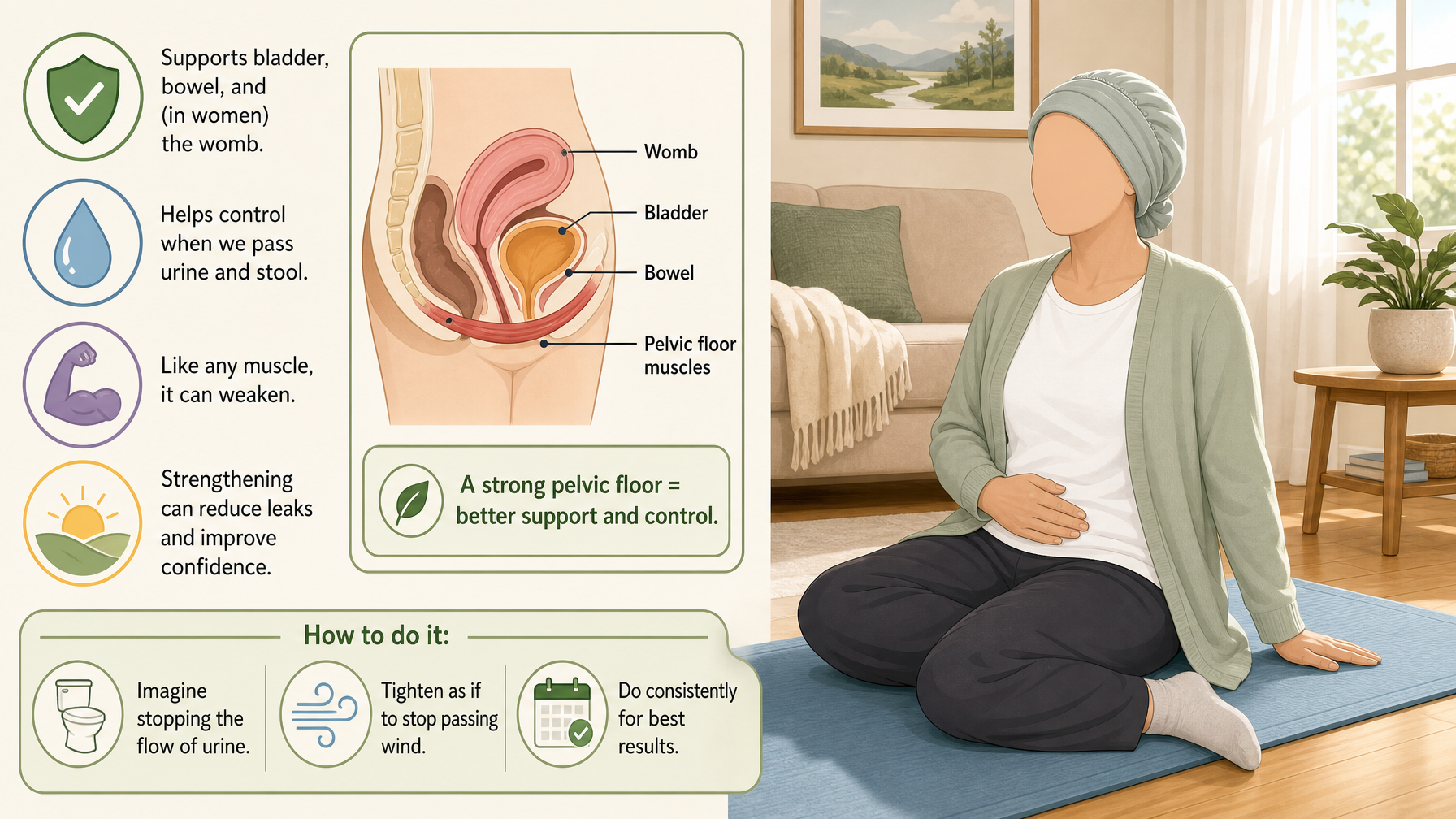
The pelvic floor is a group of muscles at the bottom of your pelvis. Think of them like a hammock that holds up your bladder, bowel, and other organs.
What These Muscles Do
- Control your bladder: They squeeze to stop urine from leaking
- Control your bowel: They help you hold stool until you reach the bathroom
- Support your organs: They keep everything in the right place
- Help with stability: They work with core muscles for balance
Why Weakening Happens With Age
- Natural aging: Muscles lose tone and strength over time
- Childbirth: Pregnancy and delivery stretch these muscles
- Surgery: Prostate or pelvic surgery can damage nerves
- Chronic conditions: Diabetes, obesity, and chronic cough weaken muscles
Good News: Even if your pelvic floor has been weak for years, strengthening exercises can still help. It is never too late to start.
Understanding your pelvic floor helps you exercise it correctly
Who Can Benefit From Pelvic Floor Exercises?
These exercises help many types of bladder and bowel control issues:
Urinary Leakage
You leak when you cough, sneeze, laugh, or lift things. This is called stress incontinence. Pelvic floor exercises are the first treatment doctors recommend.
Success rate: 60-70% of people see improvement
Urgency Issues
You get a sudden strong urge to go and cannot hold it. This is urge incontinence. Pelvic exercises combined with bladder training can help.
Timeline: Most see results in 8-12 weeks
Mild Bowel Leakage
You have small bowel accidents or cannot hold gas. Pelvic floor muscles control both bladder and bowel. Strengthening them helps both issues.
Note: Severe bowel issues need medical evaluation first
Post-Hospital Weakness
You had surgery or a hospital stay. Your bladder control got worse. Pelvic floor exercises help rebuild strength during recovery.
Best time: Start as soon as your doctor approves
Who Should Be Cautious
Talk to a doctor or physical therapist before starting if you have:
- • Recent pelvic or abdominal surgery
- • Pelvic organ prolapse
- • Chronic pelvic pain
- • Active urinary tract infection
- • Catheter in place
How to Identify the Correct Muscles
Before you can strengthen your pelvic floor, you need to find the right muscles. Here are safe ways to identify them:
Three Ways to Find Your Pelvic Floor Muscles
1The Stop-Urine Method (Use Only Once)
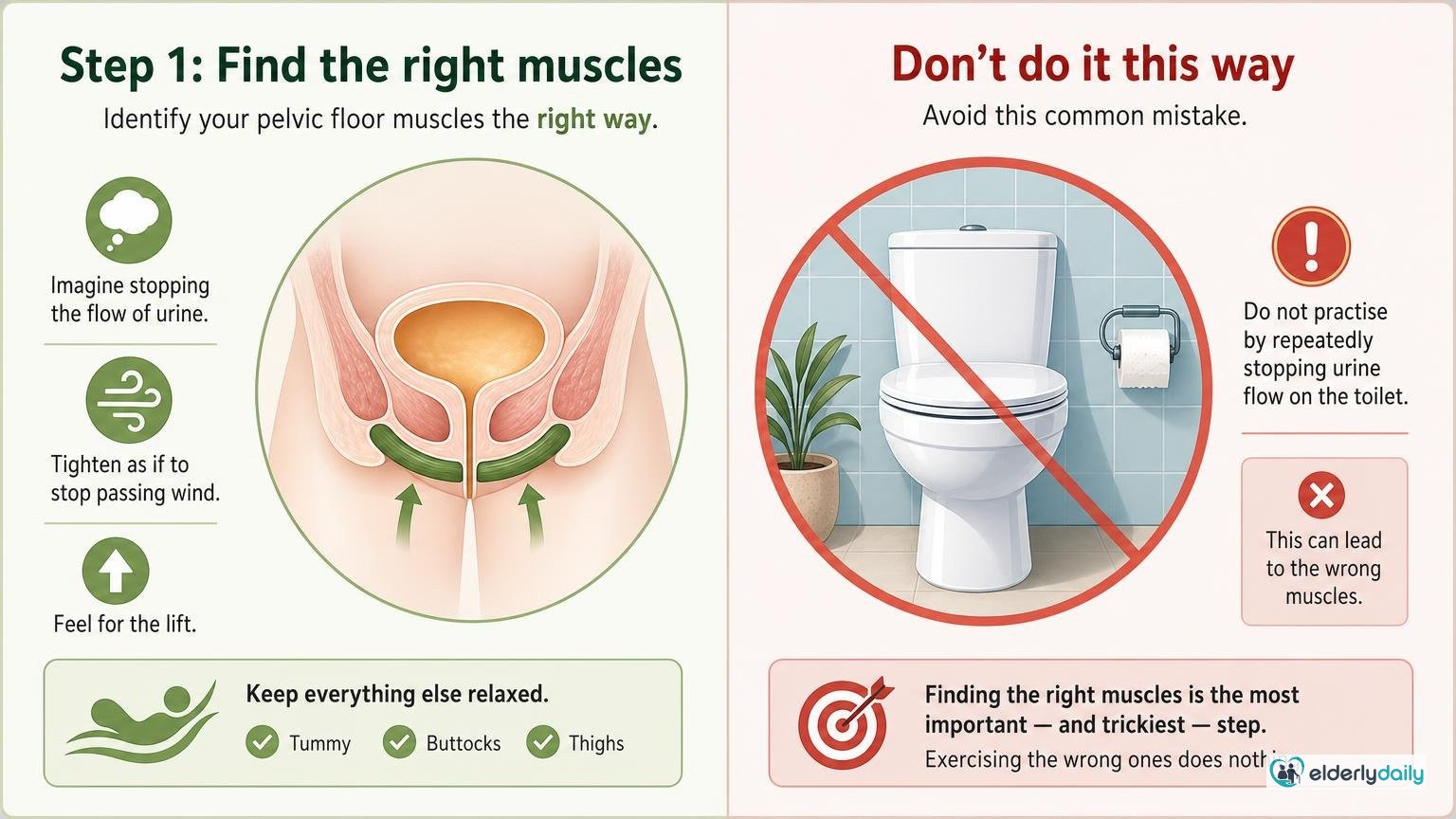
While urinating, try to stop the flow midstream. The muscles you use to stop the flow are your pelvic floor muscles.
Important: Only do this once to identify the muscles. Do not practice exercises while urinating. This can weaken muscles and increase infection risk.
2The Gas-Holding Method
Imagine you need to hold in gas. Squeeze the muscles you would use to prevent gas from passing. You should feel a tightening and lifting sensation inside.
Tip: This method works well for men and is easy to practice anywhere.
3The Lift-and-Squeeze Method
Sit or lie down comfortably. Imagine you are trying to lift your pelvic floor muscles up inside your body, like an elevator going up. You should feel a gentle squeeze and lift, not a push down.
Check: Place one hand on your belly. It should stay relaxed. If your stomach tightens, you are using the wrong muscles.
What NOT to Do
Not sure if you are doing it right? A pelvic floor physical therapist can check your technique and give you personalized guidance. Many insurance plans cover this.
Lying down makes it easier to focus on the right muscles
Step-by-Step Pelvic Floor Exercise Routine
Here are two safe ways to do pelvic floor exercises at home. Start with the lying-down version if you are new to these exercises:
Lying-Down Version (Easiest)
Get Into Position
Lie on your back on a bed or mat. Bend your knees and place your feet flat. Let your arms rest at your sides. Relax your whole body.
Breathe In
Take a slow, deep breath in through your nose. Let your belly rise. This prepares your body.
Squeeze and Lift
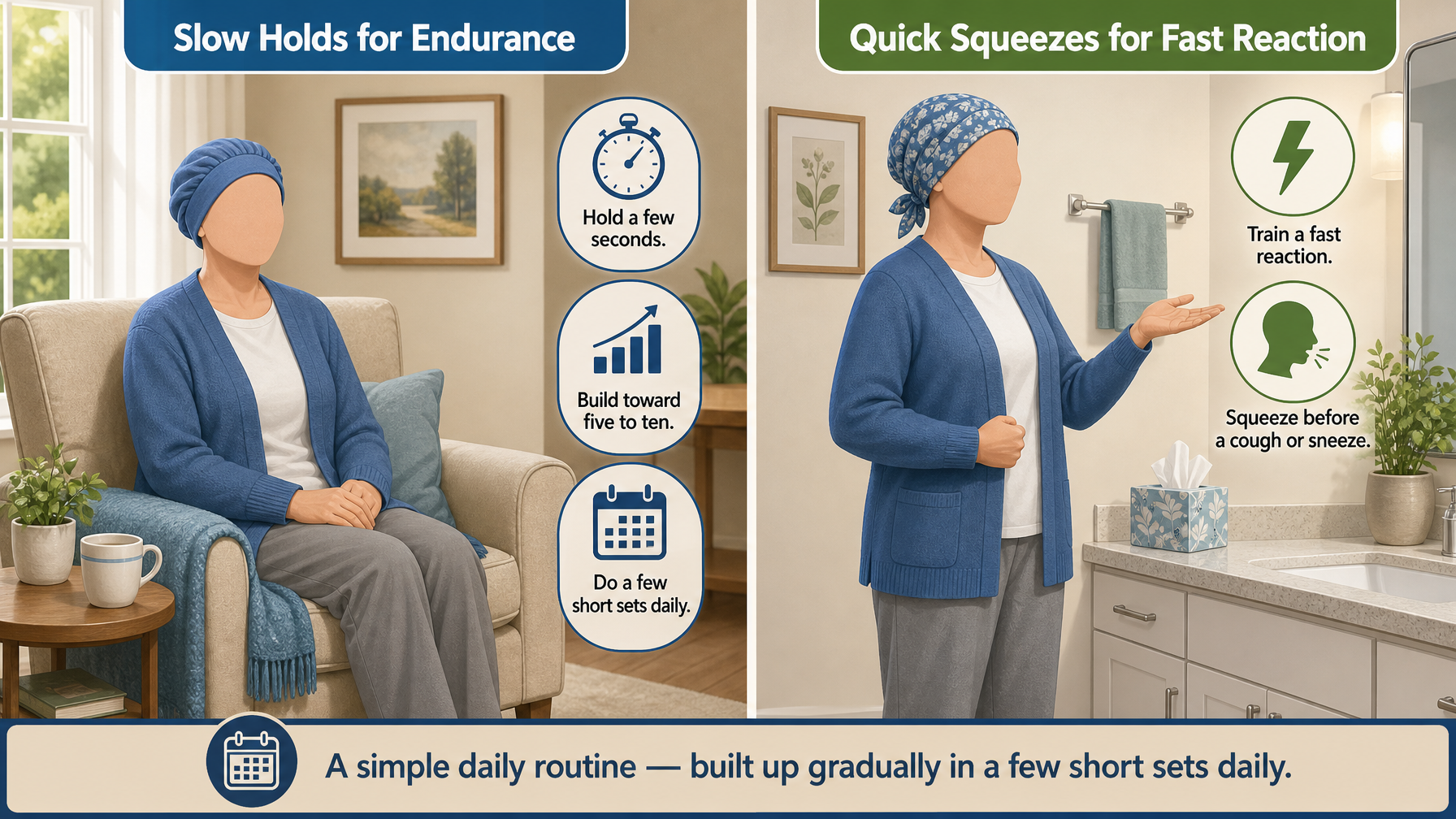
As you breathe out, gently squeeze your pelvic floor muscles. Imagine lifting them up inside your body. Hold this squeeze for 3-5 seconds. Keep breathing normally.
Release and Rest
Slowly release the squeeze. Rest for 5-10 seconds. Let your muscles fully relax before the next repetition.
Repeat
Do 10 repetitions. Rest for 1 minute. Then do another set of 10. Work up to 3 sets of 10 repetitions.
Beginner Tip: Start with 3-second holds. As you get stronger, work up to 10-second holds.
Seated Version (For Daily Life)
Sit Up Straight
Sit in a firm chair with your feet flat on the floor. Keep your back straight but not stiff. Rest your hands on your thighs.
Relax Your Body
Let your shoulders drop. Relax your stomach, buttocks, and thighs. Only your pelvic floor should work.
Squeeze and Hold
Gently squeeze your pelvic floor muscles. Imagine lifting them up toward your belly button. Hold for 3-5 seconds while breathing normally.
Release Slowly
Let the muscles relax completely. Rest for 5-10 seconds. Repeat 10 times.
Daily Life Tip: Do seated exercises while watching TV, reading, or waiting in line. No one can tell you are exercising.
Breathing Cues for Success
Inhale
Breathe in to prepare and relax
Exhale
Breathe out as you squeeze and lift
Hold
Keep breathing normally while holding the squeeze
Real Caregiver Stories
These seniors improved their bladder control with consistent practice:
Dorothy, 74 - Stress Incontinence
"I leaked every time I coughed or laughed. My physical therapist taught me pelvic floor exercises. I did them three times a day while watching TV. After two months, I could sneeze without leaking. After four months, I stopped wearing pads during the day. I wish I had started sooner."
What helped: Doing exercises 3x daily + tracking progress weekly
George, 69 - Post-Prostate Surgery
"After prostate surgery, I had no bladder control. My urologist said pelvic floor exercises were essential. I did them lying down at first, then sitting. It took six months, but I went from wearing diapers to just a light pad. Now I only need protection at night. These exercises gave me my dignity back."
What helped: Starting with lying position + gradually increasing difficulty
Helen, 71 - Urge Incontinence
"I could not make it to the bathroom in time. The urge would hit and I had seconds. My daughter helped me learn pelvic floor exercises. I also did bladder training. After three months, I could hold it longer. Now I can go shopping without worrying about accidents. It changed my life."
What helped: Combining pelvic exercises with bladder training schedule
How Often to Practice
Consistency matters more than intensity. Here is a realistic practice schedule:
Daily Routine Suggestion
Morning (After Waking Up)
Do 10 repetitions lying in bed before you get up. Hold each squeeze for 3-5 seconds. This takes about 2 minutes.
Best time: Before breakfast
Midday (Afternoon)
Do 10 repetitions while sitting. You can do this while watching TV, reading, or resting. Hold each squeeze for 5 seconds.
Best time: After lunch
Evening (Before Bed)
Do 10 repetitions lying down or sitting. Hold each squeeze for 5 seconds. This helps reinforce the day's practice.
Best time: Before bedtime routine
Total Daily Time: About 6-8 minutes spread throughout the day
This small time investment can make a big difference in bladder control over 8-12 weeks.
Realistic Timeline for Improvement
Weeks 2-3: You Start to Feel Stronger
The exercises feel easier. You can hold the squeeze longer. You may not see fewer leaks yet, but your muscles are getting stronger.
Weeks 6-8: Leaks Start to Decrease
You notice fewer accidents. Leaks are smaller. You can hold your bladder a bit longer. This is when most people see real progress.
Week 12+: Maximum Improvement
Most people reach their best results by 12 weeks. Some continue improving for 6 months. Keep practicing to maintain strength.
Importance of Consistency
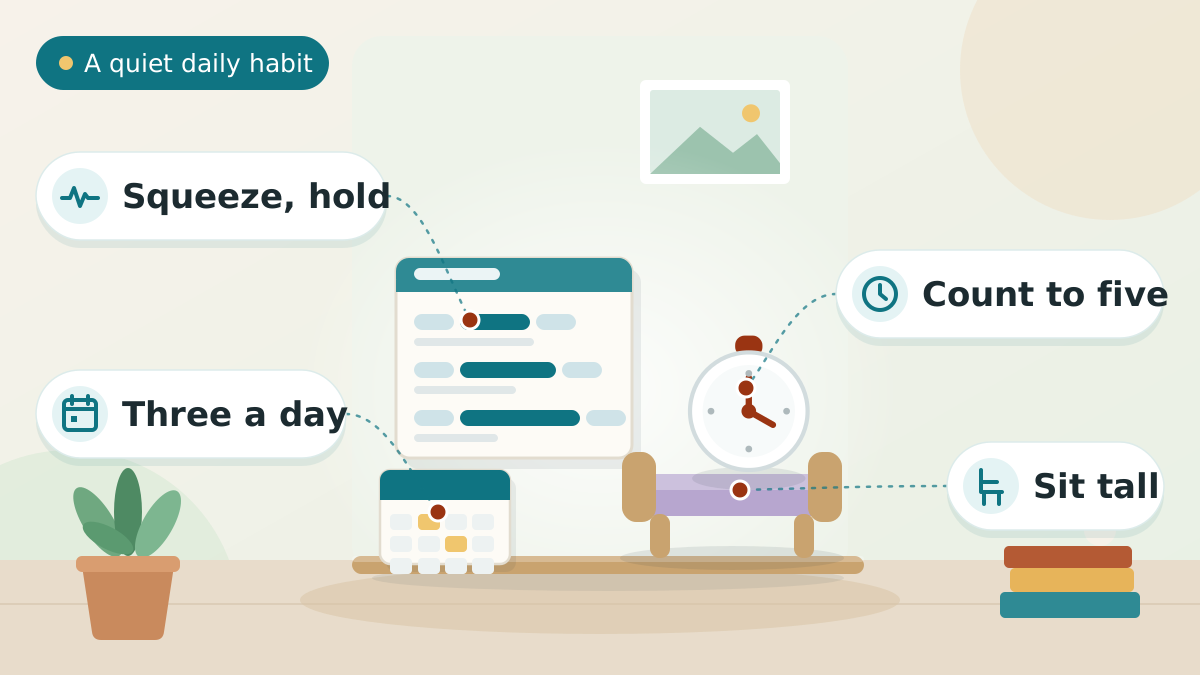
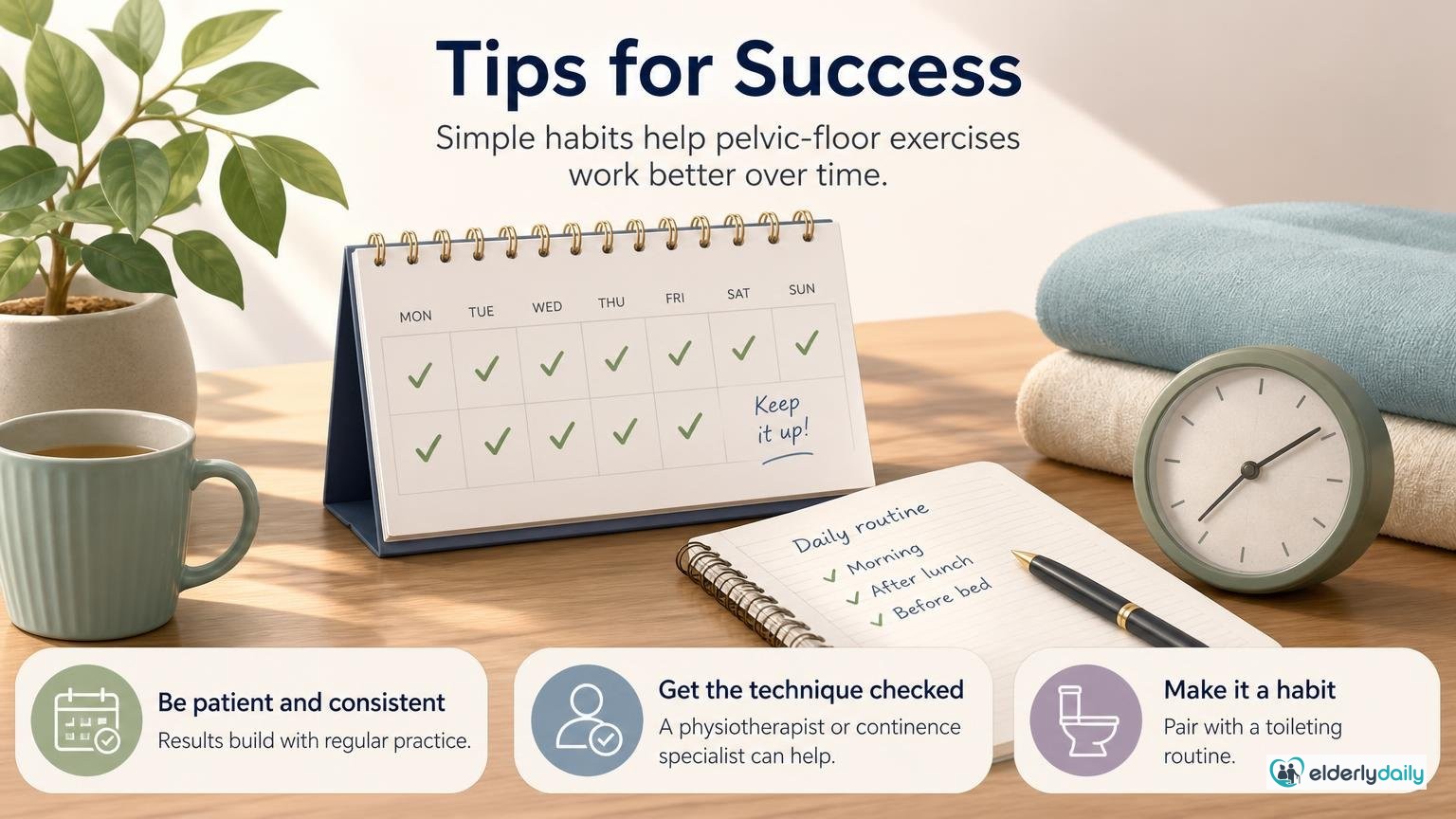
Doing exercises 3 times a day, every day, brings the best results. Missing days slows progress. Think of it like brushing your teeth. It needs to become a daily habit.
Tip: Set phone reminders for morning, afternoon, and evening. Link exercises to existing habits like meals or TV time.
Seated exercises can be done anywhere throughout your day
Combining Pelvic Exercises With Balance Training
Whole-body stability improves continence confidence. When you can move safely and reach the bathroom quickly, accidents decrease.
Why Mobility Matters
Strong pelvic floor muscles help you hold your bladder. But if you cannot walk to the bathroom safely and quickly, you still have accidents.
- Better balance: Reduces fear of falling on the way to bathroom
- Faster walking: Gets you to the bathroom in time
- More confidence: You trust your body to move safely
Gentle Exercises to Add
- Chair yoga: Builds balance and flexibility
- Seated marching: Strengthens legs for faster walking
- Standing balance: Practice standing on one foot briefly
- Walking practice: Short daily walks build endurance
Do pelvic floor exercises first, then add gentle mobility work
Sample Combined Daily Routine
Morning (10 minutes)
Pelvic floor exercises (3 min) + gentle stretching (7 min)
Afternoon (15 minutes)
Pelvic floor exercises (3 min) + short walk or chair yoga (12 min)
Evening (5 minutes)
Pelvic floor exercises (3 min) + gentle breathing (2 min)
Common Mistakes to Avoid
These mistakes can reduce effectiveness or cause discomfort:
Holding Your Breath
Do this instead: Breathe normally throughout the exercise. Holding your breath creates tension and reduces effectiveness. Inhale to prepare, exhale as you squeeze, breathe normally while holding.
Using Stomach or Buttock Muscles
Do this instead: Keep your stomach, buttocks, and thighs relaxed. Place one hand on your belly. If it tightens, you are using the wrong muscles. Focus only on the internal squeeze.
Doing Too Many Too Soon
Do this instead: Start with 5-10 repetitions, three times a day. Gradually increase over weeks. Overdoing it can cause muscle fatigue and soreness. Slow and steady wins.
Stopping and Starting Urine Flow
Do this instead: Never practice pelvic floor exercises while urinating. This can weaken muscles and increase infection risk. Only use the stop-urine method once to identify the muscles, then do exercises separately.
Expecting Instant Results
Do this instead: Be patient. Muscle strengthening takes weeks. Track your progress weekly. Small improvements add up. If you see no change after 8-12 weeks, talk to a physical therapist.
Tracking Your Progress
Keep a simple log to see improvement over time:
Weekly Progress Checklist
What to Track
- • How many times you did exercises each day
- • Number of leaks per day
- • How many pads you used
- • How long you can hold before bathroom urgency
- • Activities that cause leaks (coughing, walking, etc.)
Signs of Improvement
- • Fewer leaks per day
- • Smaller leak amounts
- • Can hold longer before urgency
- • Can cough or sneeze without leaking
- • More confidence leaving home
Caregiver Tip: Take photos of your weekly tracking sheet. This helps you see patterns and share progress with doctors.
Combining pelvic exercises with balance training improves overall confidence
How Often to Practice
Consistency matters more than intensity. Here is a realistic practice schedule:
Daily Routine Suggestion
Morning (After Waking Up)
Do 10 repetitions lying in bed before you get up. Hold each squeeze for 3-5 seconds. This takes about 2 minutes.
Best time: Before breakfast
Midday (Afternoon)
Do 10 repetitions while sitting. You can do this while watching TV, reading, or resting. Hold each squeeze for 5 seconds.
Best time: After lunch
Evening (Before Bed)
Do 10 repetitions lying down or sitting. Hold each squeeze for 5 seconds. This helps reinforce the day's practice.
Best time: Before bedtime routine
Total Daily Time: About 6-8 minutes spread throughout the day
This small time investment can make a big difference in bladder control over 8-12 weeks.
Realistic Timeline for Improvement
Weeks 2-3: You Start to Feel Stronger
The exercises feel easier. You can hold the squeeze longer. You may not see fewer leaks yet, but your muscles are getting stronger.
Weeks 6-8: Leaks Start to Decrease
You notice fewer accidents. Leaks are smaller. You can hold your bladder a bit longer. This is when most people see real progress.
Week 12+: Maximum Improvement
Most people reach their best results by 12 weeks. Some continue improving for 6 months. Keep practicing to maintain strength.
Importance of Consistency
Doing exercises 3 times a day, every day, brings the best results. Missing days slows progress. Think of it like brushing your teeth. It needs to become a daily habit.
Tip: Set phone reminders for morning, afternoon, and evening. Link exercises to existing habits like meals or TV time.
Pelvic Floor Exercises for Men
Men benefit from pelvic floor exercises too, especially after prostate surgery:
When Men Need These Exercises
- After prostate surgery: Most common reason for male incontinence
- Dribbling after urination: Weak pelvic floor cannot empty completely
- Urgency issues: Sudden strong urge to urinate
- Nighttime leaks: Losing control during sleep
How Men Find the Muscles
The technique is the same as for women, but men can also:
- Imagine stopping gas from passing
- Think about lifting the base of the penis internally
- Feel a tightening around the anus and urethra
The exercises are identical for men and women. Only the muscle identification cues differ slightly.
Bladder Training to Combine With Exercises
Pelvic floor exercises work even better when combined with bladder training:
What Is Bladder Training?
Bladder training means going to the bathroom on a schedule instead of waiting for urgency. This retrains your bladder to hold more and reduces accidents.
Start by going every 2 hours, then gradually increase the time between bathroom visits.
Sample Schedule
- Week 1-2: Go every 2 hours
- Week 3-4: Go every 2.5 hours
- Week 5-6: Go every 3 hours
- Week 7+: Go every 3-4 hours
Adjust timing based on your comfort and success rate
What If Exercises Do Not Help?
Pelvic floor exercises help most people, but not everyone:
Possible Reasons
- Severe muscle damage: From childbirth, surgery, or injury
- Nerve damage: From diabetes, stroke, or spinal issues
- Prolapse: Organs have dropped too far
- Wrong technique: Not engaging the correct muscles
Other Treatment Options
- Pelvic floor physical therapy: Specialized therapist with biofeedback
- Medications: Can reduce urgency and frequency
- Pessary device: Supports pelvic organs
- Surgery: For severe cases when other options fail
Important: If you see no improvement after 12 weeks of daily practice, talk to your doctor. You may need specialized help or a different treatment approach.
When to Talk to a Doctor or Physical Therapist
Most seniors can safely do pelvic floor exercises at home. But some situations need professional help:
Call Your Doctor If:
- Severe leakage: You soak through multiple pads per day
- Pain during exercises: Pelvic floor exercises should not hurt
- No improvement after 12 weeks: You practiced daily but see no change
- Blood in urine: This needs immediate medical evaluation
- Feeling of bulge: Something feels like it is falling out
Consider a Pelvic Floor PT If:
- Not sure about technique: You cannot tell if you are using the right muscles
- Post-surgery recovery: You had prostate, bladder, or pelvic surgery
- Want faster results: A therapist can use biofeedback to improve technique
- Complex issues: You have both bladder and bowel problems
- Chronic pain: You have ongoing pelvic or back pain
What a Pelvic Floor Physical Therapist Does
Assessment
- • Evaluates your muscle strength
- • Checks your technique
- • Identifies muscle imbalances
- • Tests your coordination
Treatment
- • Teaches correct exercise form
- • Uses biofeedback devices
- • Creates personalized routine
- • Tracks your progress
Insurance Coverage: Medicare and most insurance plans cover pelvic floor physical therapy when prescribed by a doctor.
More Helpful Guides
Learn more ways to manage incontinence and stay active:
Medical Disclaimer
This guide provides educational information about pelvic floor exercises for seniors. It is not medical advice and should not replace consultation with a healthcare professional.
Always consult your doctor, urologist, or physical therapist before starting any new exercise routine, especially if you have:
- • Recent surgery or medical procedures
- • Pelvic organ prolapse
- • Chronic pelvic pain
- • Active urinary tract infection
- • Catheter or other medical devices
If you experience pain, bleeding, or worsening symptoms while doing these exercises, stop immediately and contact your healthcare provider.
Frequently Asked Questions
Ready to Start Your Routine?
For a complete home care plan, visit our full guide