
Managing Incontinence in Elderly Parents: A Caregiver’s Guide

Practical and compassionate guidance for family caregivers; not medical advice. Incontinence often has treatable causes — always seek a medical assessment.
Helping a parent with incontinence is as much an emotional challenge as a practical one — for both of you. Handled with dignity and the right routines, it becomes manageable, and the relationship stays intact.
Key takeaways
- Incontinence is common, often treatable, and not an inevitable part of aging — the first step is always a medical assessment, not just management.
- Dignity is the priority. How you handle it protects your parent’s self-worth and your relationship — be matter-of-fact, private, and respectful.
- The role reversal is hard on both of you — acknowledge the emotional side rather than pretending it away.
- Practical management is learnable — routines, the right products, and skin care make it manageable.
- Protect yourself too — this is demanding work; get support and guard against burnout.
Quick answer
How do I manage my elderly parent’s incontinence?
Start with a medical assessment — incontinence often has treatable causes and is not just to be managed. Then handle it with dignity: be calm, private, and matter-of-fact to protect your parent’s self-worth and your relationship. Set up practical routines (regular toileting, easy clothing), the right products and diligent skin care, and adapt the home. Acknowledge the emotional side for both of you, and get support to protect yourself.
First: incontinence is not just to be managed
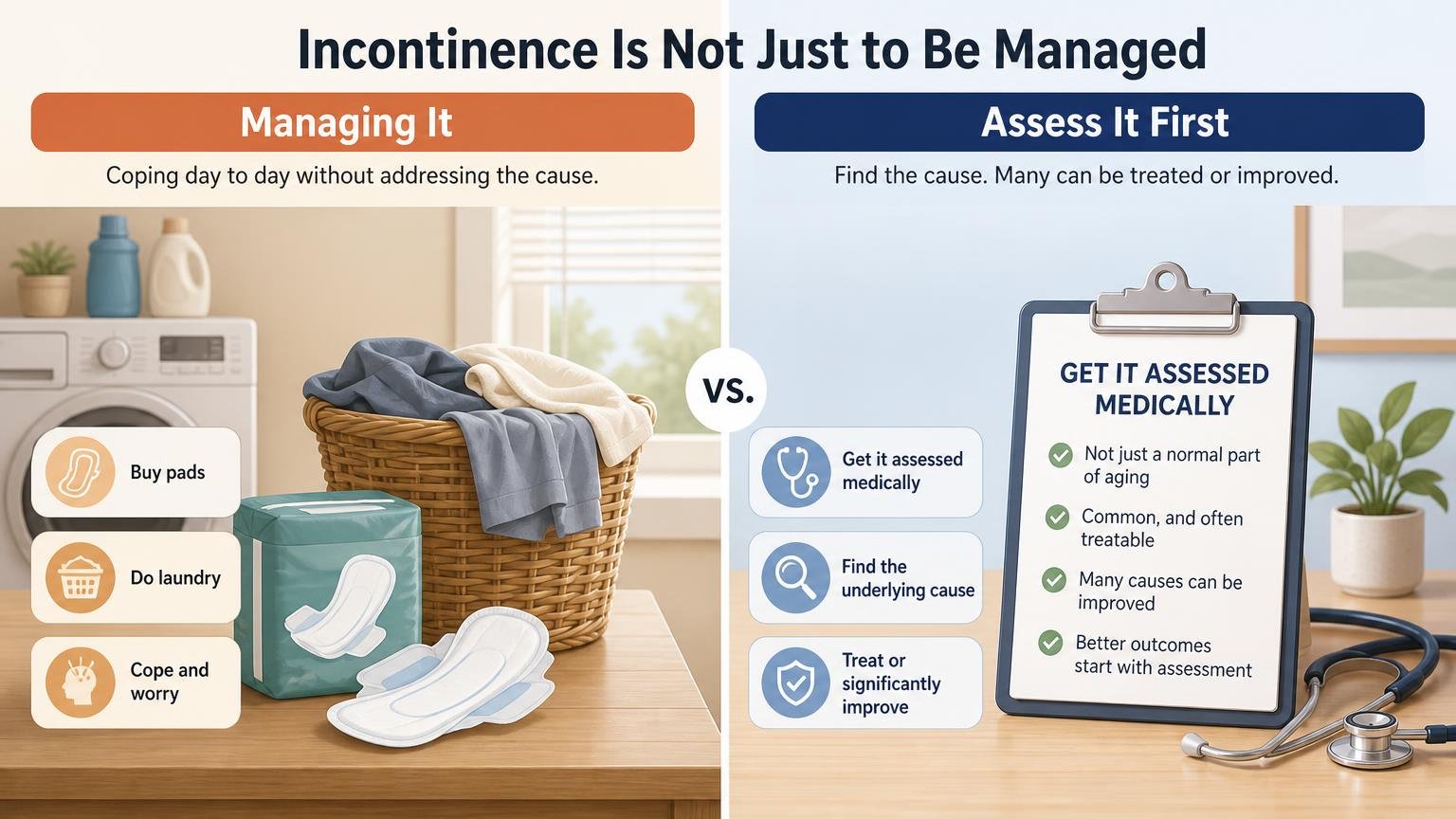
When a parent develops incontinence, families often move straight to managing it — buying pads, doing laundry, coping. But the most important first step is different: get it assessed medically. Incontinence is common in older adults, but it is not an unavoidable part of aging, and it frequently has causes that can be treated or significantly improved — infection, medication effects, constipation, prostate issues, weak pelvic-floor muscles, and more.
So before settling into pure management, ensure a doctor has evaluated the cause; treatment may reduce or resolve it. Our guides on what a sudden change means and how to talk to the doctor about incontinence help. This guide then focuses on the part unique to caring for a *parent*: doing the day-to-day management with dignity, and coping with the emotional weight for both of you.
Watch out
A sudden onset of incontinence, or incontinence with confusion, fever, or pain, can signal a treatable problem like a UTI — see UTI signs in seniors. Get a prompt medical check rather than assuming it is simply age.

Sponsored Pick
Scrubzz No-Rinse Foam Cleanser (3-Pack)
Ongoing elder care or hospital stays where you want a hydrating no-rinse foam in a multi-pack
Check PriceDignity comes first

For most people, incontinence touches something deep — it can feel humiliating and like a loss of adult independence. How you, as their child, handle it profoundly affects your parent’s self-worth and the relationship between you. Leading with dignity is not a nicety; it is the core of good care:
- Be matter-of-fact and calm. Treat it as a practical health matter, without disgust, exasperation, or fuss — your parent takes their emotional cue from you.
- Protect privacy. Handle changes and cleaning discreetly, keep it private from other family or visitors, and never discuss it in front of others.
- Preserve their independence. Let them do whatever they still can for themselves, and involve them in decisions about products and routines rather than taking over.
- Watch your language — many prefer "protective underwear" or "briefs" to "diapers"; small word choices protect dignity, as covered in when a parent refuses adult diapers.
- Never shame or scold over accidents — they are not your parent’s fault, and shame makes everything (including hiding the problem) worse.
The emotional side and role reversal

There is no getting around it: intimate care for a parent who once cared for you is emotionally complex. Both of you may feel it — your parent may feel shame, grief, or a loss of dignity; you may feel awkwardness, sadness, or even resentment, followed by guilt for feeling that way. Pretending none of this exists helps no one.
- Acknowledge the feelings — for both of you. Naming that this is hard, without dwelling, often eases it.
- Respect boundaries. Some parents deeply prefer not to have a particular child do intimate care; where possible, honor that — a paid carer, a different family member, or professional help can preserve both dignity and the relationship.
- Do not take resistance personally. Reluctance is usually about their dignity, not about you.
- Keep the relationship bigger than the caregiving. Protect time together that is not about care — conversation, shared activities — so your parent remains your parent, not just a care recipient.
These feelings are normal and human. If they become heavy, support helps — see preventing caregiver burnout.
Good to know
If intimate care feels too difficult for your relationship — for either of you — that is not a failure. Bringing in a paid carer or another family member for those tasks can protect both your parent’s dignity and your bond as parent and child.
Practical management that works
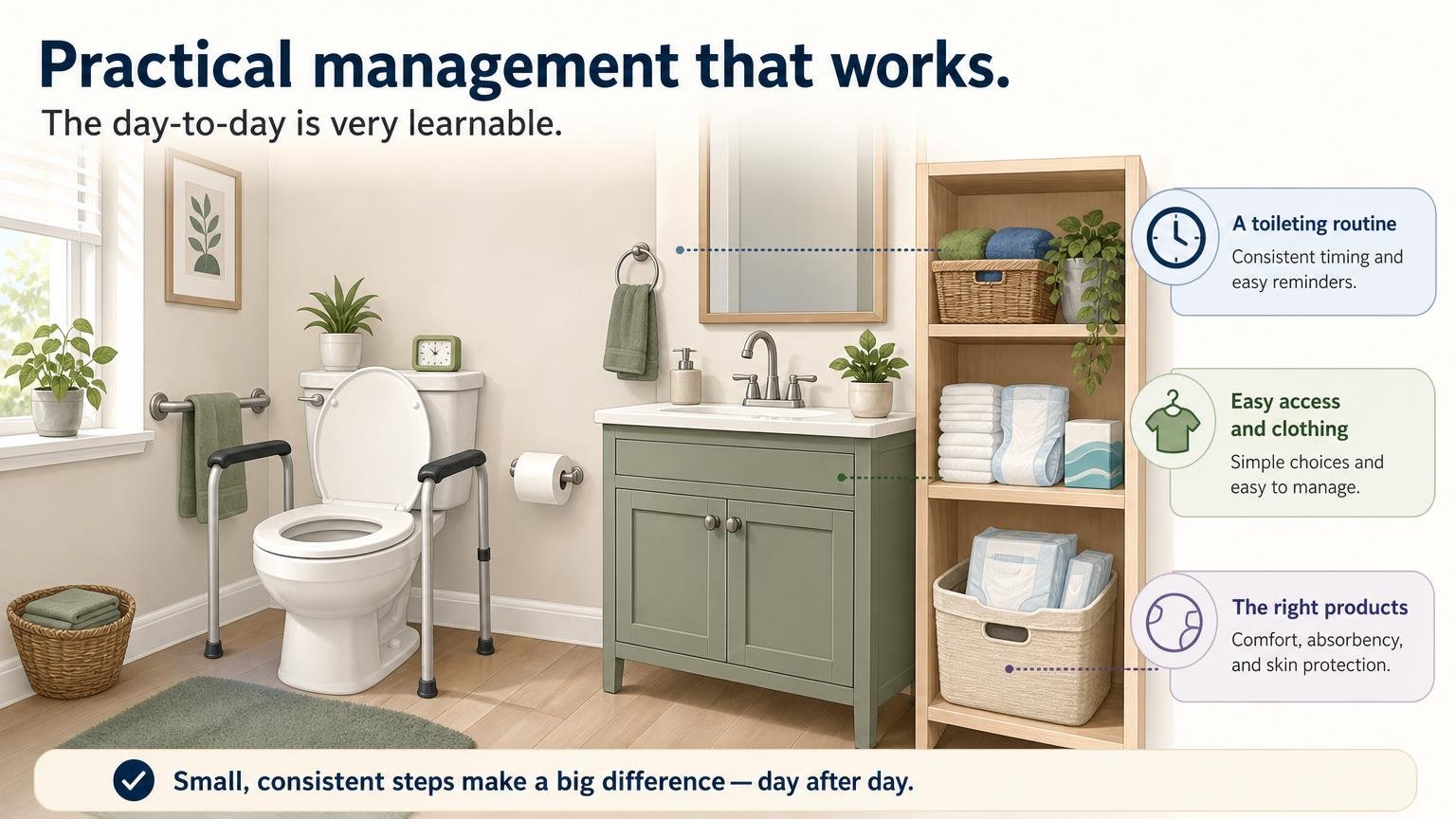
The day-to-day is very learnable. The essentials, covered more fully in managing incontinence at home:
- A toileting routine — regular, scheduled toilet trips (e.g., every few hours and after meals) prevent many accidents, especially with urgency or cognitive decline.
- Easy access and clothing — a clear, lit path to the bathroom, a raised toilet seat or bedside commode if mobility is limited, and easy-to-remove clothing.
- The right products — well-fitting absorbent products matched to the level of need, and bed pads to protect bedding; see nighttime solutions.
- Discreet supplies — keep changes and cleaning items handy but out of sight, and have a low-key system for changes.
Skin care and hygiene
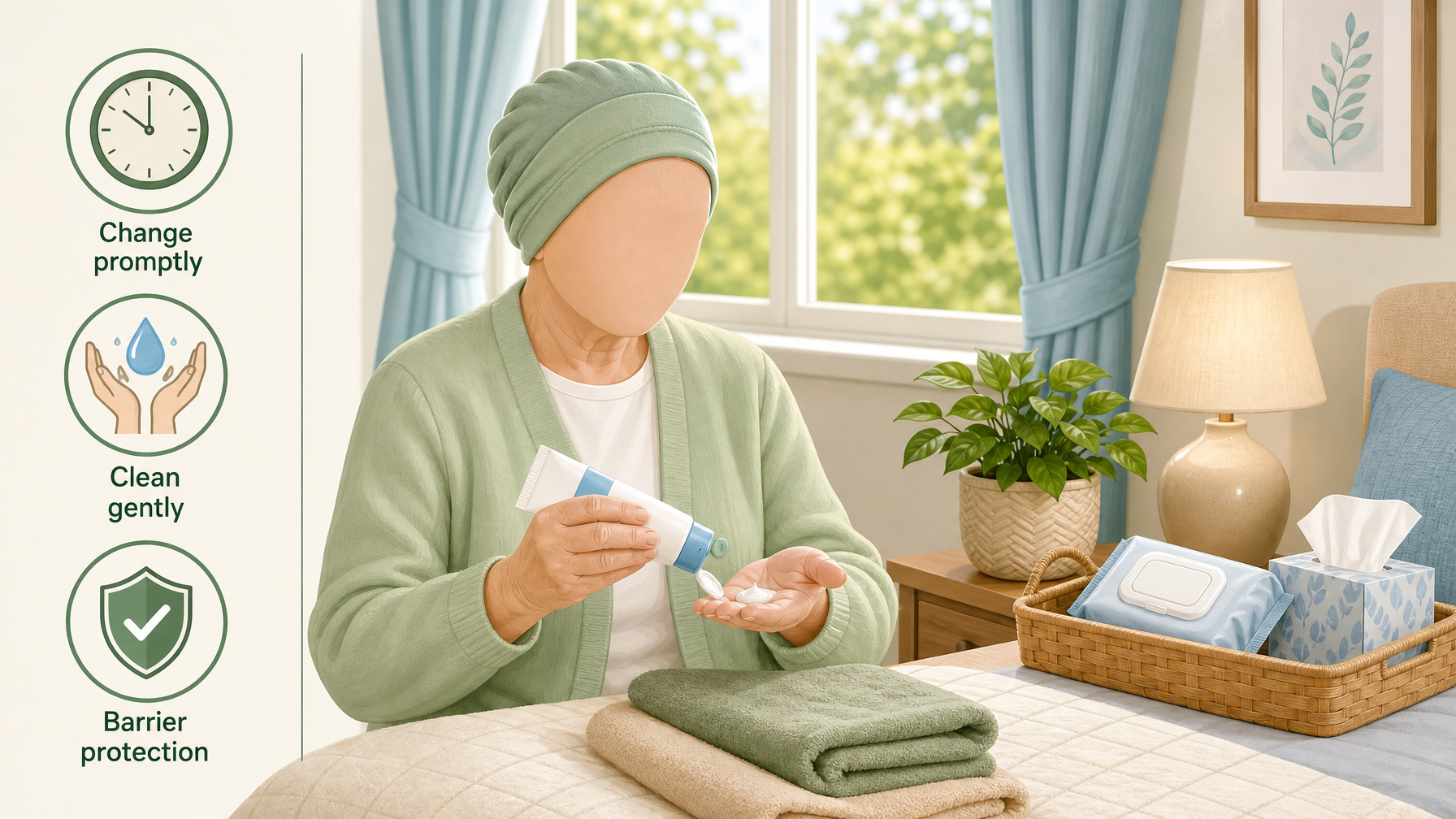
Diligent skin care is essential, because prolonged contact with moisture causes painful skin breakdown, rashes, and pressure sores. Protecting the skin is a real medical priority:
- Change promptly — do not leave the person in a wet or soiled product; change as soon as practical.
- Clean gently — use gentle skin-protectant cleansers or wipes rather than harsh soap, cleaning thoroughly but without scrubbing.
- Barrier protection — apply a barrier cream to protect skin from moisture where advised.
- Watch the skin — check regularly for redness, soreness, or breakdown, and act early; raise persistent problems with a nurse or doctor. For someone spending more time sitting or in bed, also see pressure-relief cushions.
Looking after yourself

Managing a parent’s incontinence is physically and emotionally demanding, and it is easy to shoulder too much silently. Protect your own wellbeing:
- Ask for and accept help — share tasks with family, and use home-care support for intimate care where it helps everyone.
- Set sustainable boundaries on what you can provide.
- Seek support — other caregivers and support groups understand this exact challenge.
- Guard against caregiver burnout, which this kind of intimate, ongoing care can accelerate.
And keep returning to the medical side: if incontinence worsens or is not being helped, revisit the doctor — see signs incontinence is getting worse.
Frequently asked questions
How do I manage my elderly parent’s incontinence?
Start with a medical assessment, since incontinence often has treatable causes. Then manage it with dignity — be calm, private, and matter-of-fact — and set up practical routines (scheduled toileting, easy clothing, clear bathroom access), the right absorbent products, and diligent skin care. Acknowledge the emotional side for both of you, and get support to protect yourself.
Is incontinence a normal part of aging?
No — while it is common in older adults, incontinence is not an inevitable part of aging, and it frequently has causes that can be treated or improved, such as infection, medication effects, constipation, prostate issues, or weak pelvic-floor muscles. This is why a medical assessment should come before settling into pure management; treatment may reduce or resolve it.
How do I preserve my parent’s dignity with incontinence?
Be matter-of-fact and calm without disgust or fuss, handle changes and cleaning discreetly and privately, let them do whatever they still can for themselves and involve them in decisions, use respectful language like "protective underwear" rather than "diapers," and never shame or scold over accidents. Your calm, respectful approach protects their self-worth and your relationship.
What if I find intimate care for my parent too difficult?
That is understandable and not a failure — intimate care for a parent is emotionally complex for both of you, and some parents strongly prefer a particular child not do it. Where possible, bring in a paid carer or another family member for those tasks, which can protect both your parent’s dignity and your relationship as parent and child. Support for the emotional side helps too.
How do I protect my parent’s skin with incontinence?
Change promptly rather than leaving them in a wet or soiled product, clean gently with a skin-protectant cleanser or wipes rather than harsh soap, apply a barrier cream where advised, and check the skin regularly for redness or breakdown, acting early. Prolonged moisture causes painful skin breakdown and pressure sores, so diligent skin care is a genuine medical priority.
When should I see a doctor about my parent’s incontinence?
See a doctor for any new incontinence (to find treatable causes), and urgently if it comes on suddenly or with confusion, fever, or pain, which can signal a UTI or other acute problem. Also return to the doctor if incontinence worsens or is not being helped by current measures — many causes are treatable, so it should not simply be endured.
Sources
- National Institute on Aging (NIH). Urinary Incontinence in Older Adults
- Clinical Infectious Diseases (Norman, 2000). Fever in the Elderly
- National Institute on Aging (NIH). The Dangers of Polypharmacy and the Case for Deprescribing in Older Adults
