Elderly Parent Refuses Adult Diapers? What Caregivers Can Do

Last Updated: February 2026

Caregiver-informed • Focused on dignity & respectful care

Your parent is having frequent accidents. You've gently suggested protective underwear. They refuse—sometimes angrily. You're exhausted from constant laundry, worried about skin breakdown, and feeling stuck between respecting their dignity and keeping them safe.

This resistance is one of the most emotionally difficult challenges caregivers face. It's not about stubbornness—it's about fear, embarrassment, and the profound loss of control that comes with aging.

This guide provides compassionate communication strategies, practical transition approaches, and dignity-preserving solutions that respect your parent's autonomy while addressing real safety and health concerns.

For broader context on daily routines, nighttime care, and skin protection strategies, our full elderly incontinence resource covers the complete spectrum of home care challenges.

elderly parent refuses adult diapers caregiver conversation

Medical Disclaimer: Sudden changes in incontinence patterns may indicate urinary tract infections, medication side effects, or other treatable conditions. Always consult your parent's doctor before assuming incontinence is permanent or requires protective products.

Why Seniors Resist Adult Diapers

Understanding the emotional and practical reasons behind refusal helps you approach the conversation with empathy rather than frustration.

Embarrassment & Loss of Dignity

  • Feels infantilizing and humiliating
  • Associated with loss of adult status
  • Fear of being treated like a child
  • Shame about bodily functions
  • Worry about what others will think

Fear of Losing Independence

  • Sees it as giving up control
  • Worried it means they're "failing"
  • Afraid of needing more help
  • Concerned about nursing home placement
  • Wants to maintain self-sufficiency

Denial About Severity

  • "It only happens occasionally"
  • Minimizes frequency of accidents
  • Believes they can control it
  • Thinks it will improve on its own
  • Doesn't recognize the pattern

Sensory & Physical Discomfort

  • Feels bulky or uncomfortable
  • Worried about visibility under clothing
  • Concerned about noise (crinkling)
  • Sensitive skin reacts to materials
  • Difficulty putting on/removing

Cognitive Decline

  • Doesn't understand why they need them
  • Forgets they agreed to wear them
  • Removes them repeatedly
  • Cannot process the reasoning
  • Reacts with confusion or aggression

Important Context: For many seniors, accepting protective products feels like crossing a line they can never uncross. This resistance often has nothing to do with logic—it's about preserving the last pieces of independence and dignity they feel they have left.

What NOT to Do (Common Mistakes That Make It Worse)

These well-intentioned approaches almost always backfire, increasing resistance and damaging your relationship.

Critical Rule: The more you push, the harder they resist. Forcing protective products often leads to hiding accidents, refusing other care, and complete breakdown of trust. Dignity must come first—even when it's frustrating.

Don't Argue or Debate

❌ Wrong: "You NEED these. You're having accidents every day!"

Why this backfires: Creates defensiveness and power struggle

✓ Instead: Acknowledge their feelings: "I know this is uncomfortable to talk about"

Don't Shame or Embarrass

❌ Wrong: "You wet the bed again. This is getting ridiculous."

Why this backfires: Destroys dignity and increases resistance

✓ Instead: Stay neutral: "Let's get you comfortable and dry"

Don't Threaten Consequences

❌ Wrong: "If you don't wear these, you'll have to go to a nursing home."

Why this backfires: Creates fear and damages trust

✓ Instead: Focus on benefits: "These might help you sleep better"

Don't Force or Trick Them

❌ Wrong: Putting products on while they sleep or telling them they're "just underwear"

Why this backfires: Violates autonomy and breaks trust

✓ Instead: Involve them in decisions: "Would you like to try these at night?"

Don't Discuss With Others in Front of Them

❌ Wrong: Talking to siblings/friends about their incontinence while they're present

Why this backfires: Humiliating and disrespectful

✓ Instead: Have private conversations away from them

Don't Rush the Process

❌ Wrong: Expecting immediate acceptance after one conversation

Why this backfires: Major emotional adjustment takes time

✓ Instead: Plant seeds, revisit gently, allow processing time

Caregiver Insight: Many caregivers report that their parent eventually accepted protective products—but only after they stopped pushing and started listening. Sometimes the best strategy is backing off temporarily and trying a completely different approach weeks later.

How to Start the Conversation (Respectful Scripts)

The words you choose matter enormously. These conversation frameworks preserve dignity while addressing real concerns.

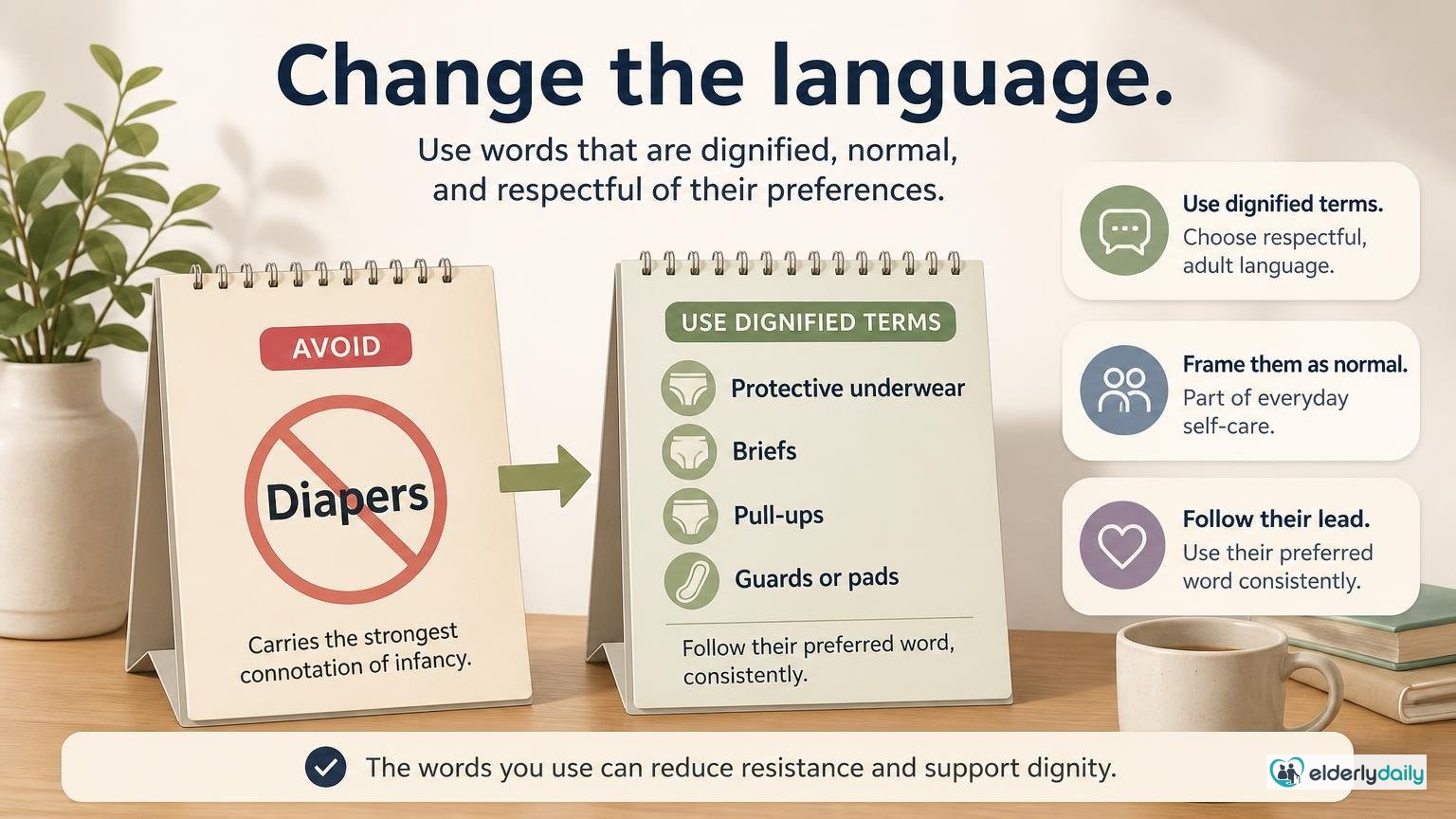
Language Matters: Never use the word "diaper." Always say "protective underwear," "absorbent products," or "incontinence products." This single word choice can make the difference between acceptance and outright refusal.

Health-Focused Framing

When your parent is concerned about skin irritation or infections

What to say: "I noticed your skin is getting irritated from the moisture. The doctor mentioned that staying dry can help prevent infections and rashes."

Focus on medical benefits, not accidents

What to say: "These protective products are designed to keep your skin healthier. Would you be willing to try them for a week to see if the irritation improves?"

Frame as temporary trial, not permanent change

Why this works: Shifts focus from embarrassment to health outcomes they care about

Comfort-Focused Framing

When your parent is frustrated by constant clothing changes

What to say: "I know changing clothes multiple times a day is exhausting. These might help you feel more comfortable and confident throughout the day."

Emphasize their comfort, not your convenience

What to say: "They make ones now that feel just like regular underwear—not bulky at all. Would you like to see a few options and pick what looks most comfortable?"

Give them control over product selection

Why this works: Positions products as comfort solution, not admission of failure

Nighttime Safety Framing

When nighttime bathroom trips are causing falls or exhaustion

What to say: "I'm worried about you falling when you rush to the bathroom at night. These overnight products might help you sleep through the night more safely."

Focus on fall prevention, not accidents

What to say: "You wouldn't have to worry about getting up in the dark. You could rest better, and I'd worry less about you falling. Could we try them just at night?"

Emphasize sleep quality and safety

Why this works: Frames as safety measure rather than incontinence management

Doctor-Recommended Framing

When your parent trusts medical authority more than family

What to say: "The doctor mentioned that protective underwear might help with the bladder control issues you've been having. They said it's very common after [surgery/hospitalization/medication changes]."

Use doctor's authority to normalize

What to say: "They recommended trying them temporarily while we work on strengthening exercises. Would you be willing to follow the doctor's suggestion?"

Frame as temporary medical recommendation

Why this works: Medical authority often reduces emotional resistance

General Conversation Guidelines

Do This

  • Choose a private, calm moment
  • Use "we" language: "Let's try..."
  • Listen to their concerns without dismissing
  • Offer choices to maintain autonomy
  • Frame as temporary trial period
  • Acknowledge how hard this is for them

Avoid This

  • Bringing it up right after an accident
  • Using "you" statements: "You need..."
  • Comparing to others: "Everyone uses them"
  • Making it about your convenience
  • Presenting only one option
  • Expecting immediate agreement

Practical Transition Strategies (Step-by-Step)

Gradual, dignity-preserving approaches that increase acceptance while maintaining your parent's sense of control.

Patience Is Key: Most caregivers report it takes 2-4 weeks of gentle, repeated conversations before their parent accepts protective products. This is normal. Don't expect immediate agreement—you're asking them to accept a major psychological shift.

1

Start With Nighttime Only

Nighttime is less emotionally charged because they're sleeping and no one else sees them.

Why This Works:

  • Reduces laundry and mattress damage
  • Improves sleep quality for both of you
  • Less embarrassing than daytime use
  • Easier to frame as "just for sleeping"
  • Can gradually build acceptance

Caregiver Tip: Say: "Let's try these just at night so you can sleep better without worrying about getting up."

2

Use Pull-Up Style Products

Pull-ups look and feel more like regular underwear, preserving dignity and independence.

Why This Works:

  • Can pull up/down independently
  • Looks like normal underwear
  • Less institutional feeling
  • Maintains toileting routine
  • Easier to accept psychologically

Caregiver Tip: Avoid tab-style products initially—they feel more like "diapers" and increase resistance.

3

Choose Breathable, Comfortable Designs

Comfort matters. If they're physically uncomfortable, they'll refuse to wear them.

What to Look For:

  • Cloth-like outer layer (not plastic)
  • Proper absorbency level (not over-absorbent)
  • Correct size (not too tight or loose)
  • Odor control technology
  • Discreet under clothing

Caregiver Tip: Let them feel the material and choose between 2-3 options. Autonomy increases acceptance.

4

Use Dignity-Preserving Language

Never say "diaper." The word itself triggers resistance and shame.

Language Swaps:

Adult diapers

Protective underwear

You need to wear these

Would you like to try these?

You wet yourself

Let's get you comfortable

You're having accidents

Your bladder control has changed

I'm tired of cleaning up

I want to help you stay comfortable

Caregiver Tip: Language shapes how they perceive the situation. Respectful words preserve dignity.

5

Involve Them in Product Selection

Giving them control over which products to try reduces feelings of helplessness.

How to Approach:

  • Order sample packs of 2-3 different brands
  • Let them feel materials and compare
  • Ask which feels most comfortable
  • Respect their preference even if not your first choice
  • Frame as "finding what works best for you"

Caregiver Tip: When they choose the product, they're more likely to actually wear it.

6

Frame as Temporary Trial

Removing the "forever" pressure makes initial acceptance easier.

What to Say:

"Let's try these for one week and see if they help."

"We can always stop if you hate them."

"This is just while we figure out what's causing the bladder issues."

"The doctor wants us to try this temporarily."

Caregiver Tip: Many seniors who agree to a "trial" eventually accept long-term use once they experience the benefits.

Need More Nighttime Solutions?

If nighttime accidents are the primary concern, explore comprehensive strategies for bed protection, fall prevention, and sleep quality improvement.

Nighttime Incontinence Solutions

Choosing Comfortable Options (Product Types Explained)

Not all protective products are the same. Choosing the right type based on mobility, severity, and emotional comfort increases acceptance.

Sizing Matters: Ill-fitting products leak, feel uncomfortable, and increase refusal. Measure waist and hips accurately. When in doubt, size up—too tight is worse than slightly loose. Most brands offer free samples to test fit before buying in bulk.

Pull-Up Style (Best for Mobile Seniors)

Looks and feels like regular underwear. Can be pulled up and down independently.

Best For:

  • Seniors who can still walk to bathroom
  • Those who want to maintain independence
  • Daytime use with regular toileting
  • Active seniors who go out regularly

Considerations:

  • Requires ability to stand and balance
  • Must be changed in bathroom
  • Lower absorbency than tab-style
  • More expensive per unit

Tab-Style (Best for Bedridden or High Care Needs)

Opens at sides for easy changes. Higher absorbency for overnight or limited mobility.

Best For:

  • Bedridden or wheelchair-bound seniors
  • Those requiring full caregiver assistance
  • Overnight protection
  • Severe incontinence

Considerations:

  • Requires caregiver to change
  • More institutional appearance
  • Can be changed while lying down
  • Higher absorbency capacity

Protective Underwear (Hybrid Option)

Looks like regular underwear but with built-in absorbent layer. Most discreet option.

Best For:

  • Light to moderate incontinence
  • Seniors in denial about severity
  • Those highly concerned about appearance
  • Transitioning from regular underwear

Considerations:

  • Lower absorbency than medical products
  • More expensive long-term
  • May not handle heavy accidents
  • Requires frequent changes

Bed Pads & Furniture Protection

Alternative or supplement to wearable products. Protects surfaces without body contact.

Best For:

  • Seniors who absolutely refuse wearables
  • Nighttime-only protection
  • Supplementing other products
  • Protecting furniture during day

Considerations:

  • Doesn't protect clothing or skin
  • Requires frequent washing (reusable)
  • Can shift during sleep
  • Not suitable for mobile seniors

Key Features to Prioritize

  • Cloth-like feel (not plastic)
  • Breathable materials (prevents rash)
  • Odor control (reduces embarrassment)
  • Discreet under clothing (no visible lines)
  • Proper absorbency (not over-bulky)

Common Product Mistakes

  • Buying cheapest option (uncomfortable)
  • Wrong size (leaks or discomfort)
  • Over-absorbent for needs (bulky)
  • Not trying samples first
  • Ignoring their comfort feedback

When Refusal Signals Bigger Concerns

Sometimes refusal to wear protective products is a symptom of more serious underlying issues that require medical or professional intervention.

When Professional Help Is Needed: If refusal is accompanied by cognitive decline, repeated falls, severe skin breakdown, or unsafe living conditions, it may be time to involve their doctor, a geriatric care manager, or consider higher levels of care. You cannot manage everything alone.

Worsening Confusion

  • Doesn't recognize they've had an accident
  • Forgets conversations about incontinence
  • Removes protective products repeatedly
  • Cannot understand why products are needed
  • Aggressive reactions to assistance

Increased Fall Risk

  • Rushing to bathroom causing falls
  • Getting up 4+ times per night
  • Slipping on wet floors from accidents
  • Refusing mobility aids to reach bathroom faster
  • Already had fall-related injuries

Severe Skin Breakdown

  • Open sores or ulcers developing
  • Persistent redness despite treatment
  • Fungal or bacterial infections
  • Refusing to allow skin care
  • Pain from skin irritation

Unsafe Living Conditions

  • Strong urine odor throughout home
  • Furniture and carpets saturated
  • Hiding soiled clothing around house
  • Refusing to allow cleaning
  • Health department concerns

When Insistence May Be Necessary

In rare situations, protective products become medically necessary despite refusal:

  • Severe skin breakdown occurring despite other interventions
  • Repeated falls during nighttime bathroom trips
  • Advanced dementia preventing understanding of risks
  • Unsafe or unsanitary living conditions developing

In these cases: Consult their doctor, consider professional caregiver support, and explore whether home care is still safe and appropriate.

Protecting Dignity in Daily Care

Even when protective products become necessary, how you provide care determines whether your parent feels respected or humiliated.

Core Principle: Your parent is still the same person they've always been. Incontinence doesn't change their worth, intelligence, or right to be treated with respect. Every interaction should communicate: "You are still a capable adult deserving of dignity."

Maintain Privacy During Changes

  • Close doors and curtains completely
  • Ask others to leave the room
  • Knock before entering bathroom
  • Use towels or blankets for coverage
  • Never discuss details with others in their presence

Keep a Calm, Neutral Tone

  • No sighing, eye-rolling, or frustrated expressions
  • Speak matter-of-factly: "Let's get you dry"
  • Avoid making it a big deal
  • Don't apologize excessively (normalizes it)
  • Stay relaxed—your anxiety increases theirs

Use Respectful, Adult Language

  • Never use baby talk or childish terms
  • Say "protective underwear" not "diapers"
  • Avoid "accident" (use "bladder control issue")
  • Don't say "good job" for wearing them
  • Speak to them as the adult they are

Allow Choices Wherever Possible

  • Let them choose product type/brand
  • Ask which clothing they prefer
  • Respect timing preferences for changes
  • Honor requests for privacy
  • Include them in care decisions

Never Discuss With Others in Their Presence

  • Don't tell siblings/friends about their incontinence
  • Have private conversations away from them
  • Don't joke about it to lighten mood
  • Protect their privacy with healthcare providers
  • Ask permission before discussing with doctor

Focus on Their Comfort, Not Your Convenience

  • Frame products as helping them, not you
  • Prioritize their physical comfort
  • Acknowledge emotional difficulty
  • Don't rush changes for your schedule
  • Validate their feelings throughout

What Dignity-Preserving Care Looks Like

During Changes:

  • Explain what you're doing before touching
  • Cover them with towel for modesty
  • Work quickly but gently
  • Chat about other topics to reduce awkwardness
  • Let them do as much as possible themselves

Throughout the Day:

  • Don't ask about products in front of others
  • Store products discreetly (not on display)
  • Dispose of used products privately
  • Never make jokes about incontinence
  • Treat it as routine, not crisis

Emotional Support for Caregivers

Managing incontinence refusal is emotionally exhausting. Your feelings are valid, and you deserve support too.

It's Normal to Feel:

  • Frustrated

    Constant laundry, repeated accidents, refusal to accept help

  • Overwhelmed

    Managing incontinence on top of everything else

  • Embarrassed

    For yourself and for them—this wasn't how you imagined caregiving

  • Sad

    Grieving their loss of independence and dignity

  • Resentful

    Wishing you didn't have to deal with this aspect of care

  • Guilty

    For feeling frustrated when you "should" be more patient

Ways to Support Yourself:

  • Acknowledge Your Feelings

    You're allowed to feel frustrated—it doesn't make you a bad caregiver

  • Talk to Someone Who Understands

    Caregiver support groups, therapist, or trusted friend

  • Take Breaks When Possible

    Even 30 minutes away helps reset your patience

  • Simplify Where You Can

    Disposable products, waterproof furniture covers, simplified routines

  • Set Realistic Expectations

    Acceptance may take weeks or months—that's normal

  • Know When to Ask for Help

    Home health aides, respite care, or professional support

You're Doing Your Best: Managing incontinence refusal while preserving dignity is one of the hardest aspects of caregiving. There's no perfect solution—only the best you can do with compassion, patience, and respect. That's enough.

Caregiver Burnout Prevention

Incontinence management is physically and emotionally draining. Learn to recognize burnout signs and protect your own health while caring for your parent.

Caregiver Self-Care Guide

Frequently Asked Questions

Common questions from caregivers navigating adult diaper refusal with compassion and respect.

You're Navigating This With Compassion

Resistance to protective products is about preserving dignity, not defiance. With patience, respectful language, and gradual transitions, many seniors eventually accept help—especially when they feel heard and respected throughout the process.