
Signs Incontinence Is Getting Worse in Seniors

Educational guidance, not medical advice. A change in incontinence should be discussed with a doctor — it often has a treatable cause; some signs are emergencies (see below).
Incontinence that is getting worse is a signal, not just an inconvenience. Knowing what a change means — and which signs need a doctor now — helps you catch treatable problems early.
Key takeaways
- Worsening incontinence is a signal worth investigating, not just something to manage more — it often has a treatable cause.
- A sudden change — in frequency, urgency, or new leakage — can indicate a UTI, medication effect, or other treatable problem.
- Watch for more frequent or larger leaks, new urgency or night-time waking, new bowel incontinence, or accidents despite the current routine.
- Some signs need a doctor promptly (blood, pain, retention) and a few are emergencies (sudden bowel/bladder incontinence with back pain or leg weakness).
- Worsening also means reassessing management — products, routines, and skin care may need to step up.
Quick answer
How do I know if a senior’s incontinence is getting worse?
Watch for more frequent or larger leaks, new or stronger urgency, more night-time waking, new bowel incontinence, or accidents despite the usual routine. A sudden worsening is especially important — it often signals a treatable problem like a UTI, medication effect, or constipation, so get a prompt medical check. Some signs need urgent care: blood in urine, pain, inability to pass urine, or sudden incontinence with back pain or leg weakness. Worsening also means stepping up management.

Worsening incontinence is a signal
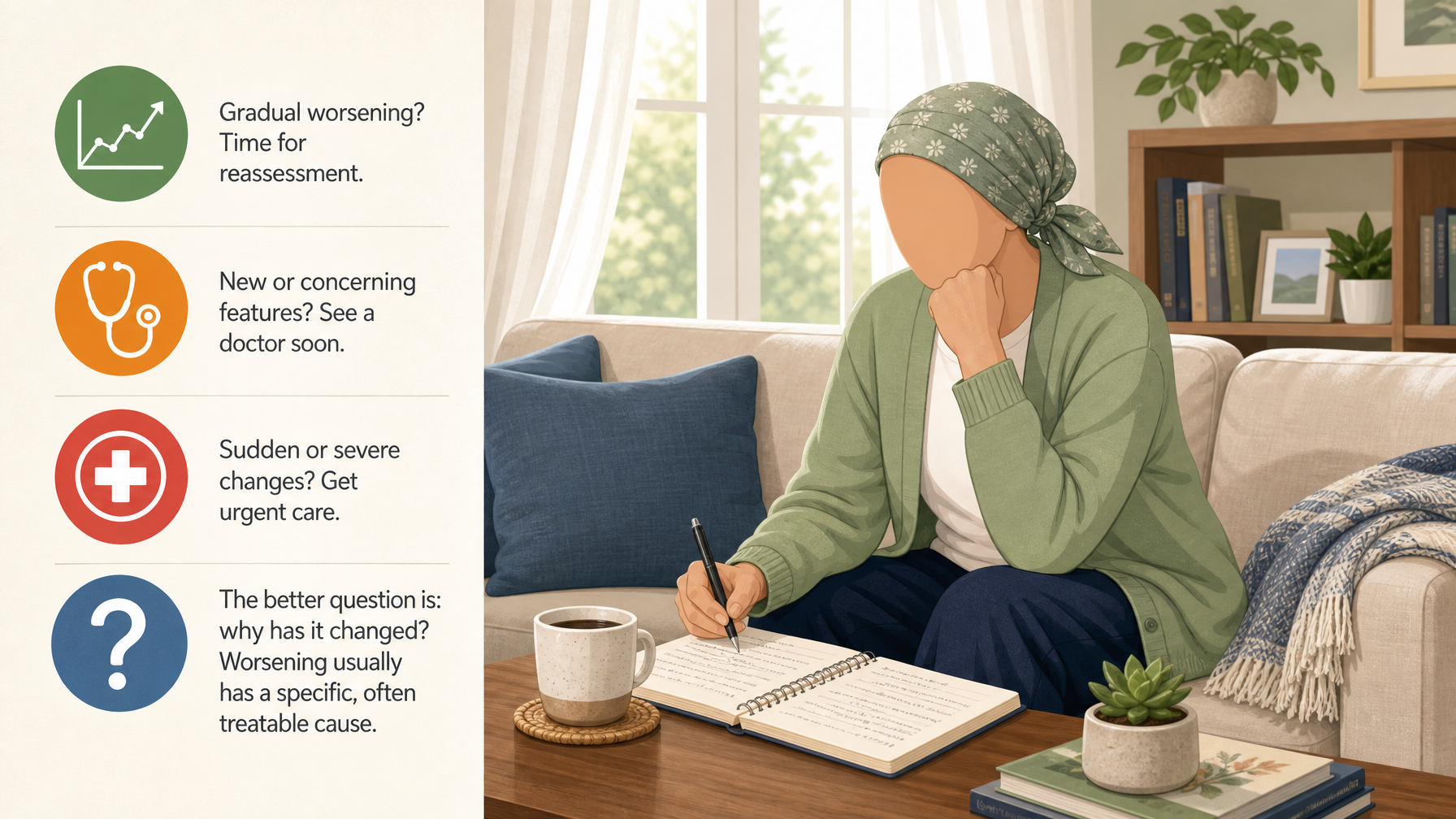
When a senior’s incontinence gets worse, the natural response is to manage it more — more products, more laundry, more vigilance. That is part of the answer, but the more important response is to ask *why* it has changed, because worsening incontinence frequently points to a specific, often treatable, cause rather than just "getting older."
This guide covers the signs that incontinence is worsening, what a change can mean, and — crucially — which signs need a doctor promptly or urgently. It builds on what a sudden change in continence means and incontinence warning signs and emergencies.
A sudden change matters most
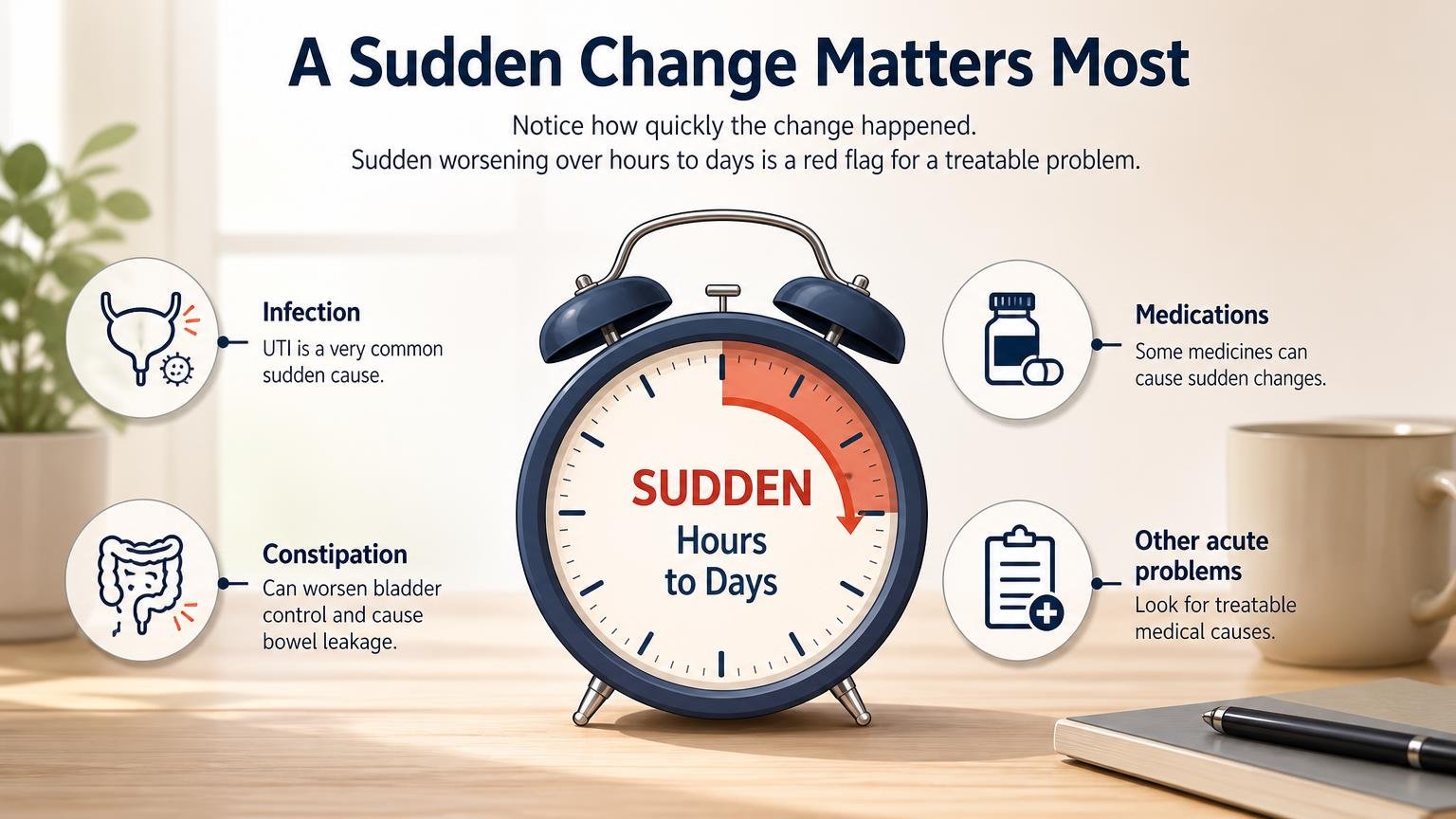
The single most important thing to notice is how quickly the change happened. A sudden worsening — over hours to days — is a red flag for a treatable underlying problem, quite different from a slow drift over months:
- Infection — a UTI is a very common cause of a sudden increase in urgency, frequency, or new leakage in seniors, often with new confusion rather than classic symptoms.
- Constipation — can suddenly worsen both bladder control and cause bowel leakage from overflow.
- Medications — a new drug or dose change can affect the bladder; ask about a review.
- Other acute problems — uncontrolled diabetes, or a new medical issue.
So if incontinence worsens suddenly, treat it as a prompt to get a medical check for a treatable cause — do not just increase the pads.
Watch out
A sudden worsening of incontinence — especially with confusion, fever, or feeling unwell — is a classic sign of a UTI or other treatable problem in seniors. Get it checked promptly rather than assuming the incontinence has simply "progressed."
Signs of gradual worsening
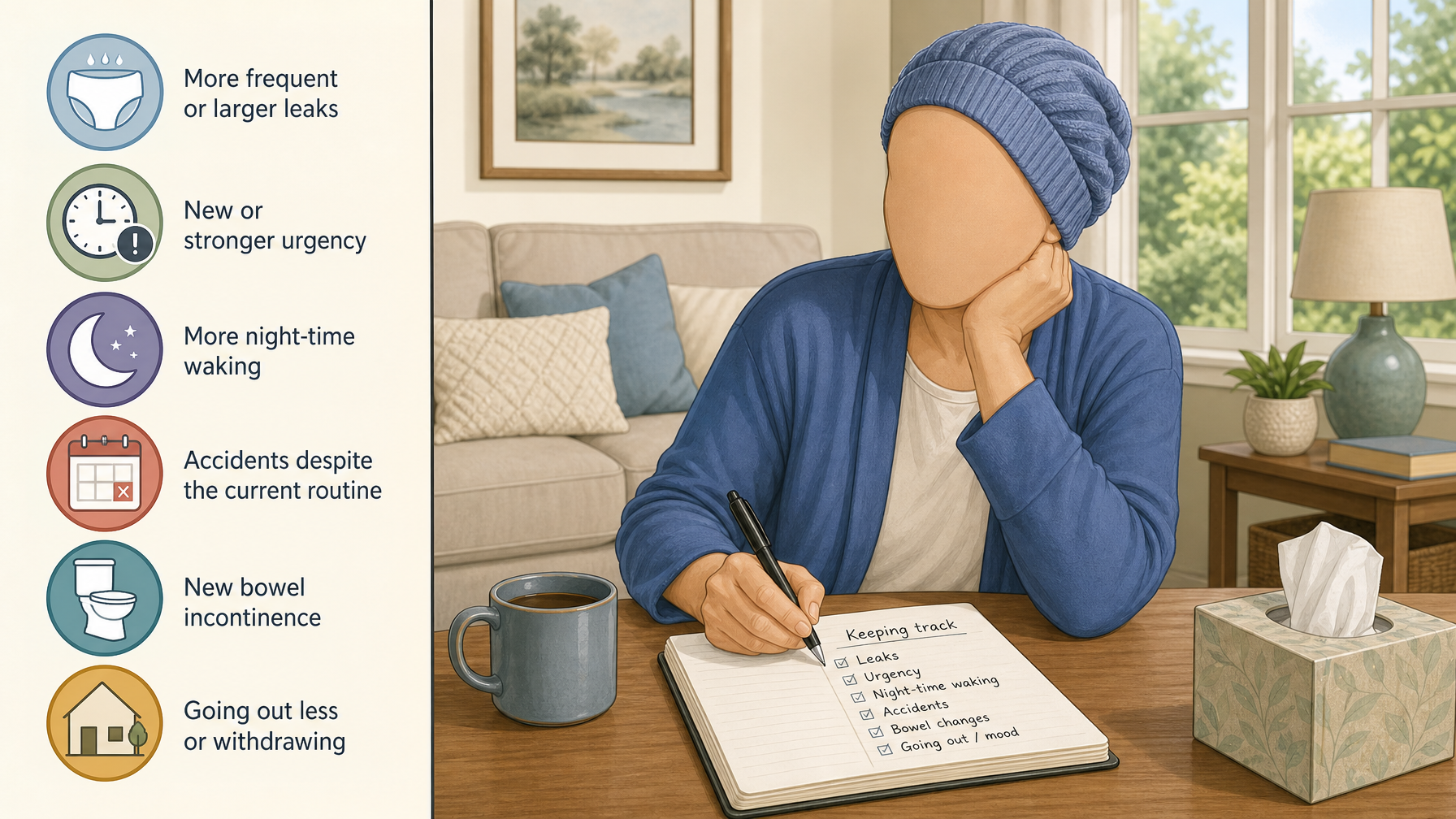
A slower decline over weeks or months also warrants attention and reassessment. Watch for:
- More frequent or larger leaks, or accidents happening where they did not before.
- New or stronger urgency — less warning before needing to go, or being unable to hold on.
- More night-time waking to urinate, or new night-time accidents.
- Accidents despite the current routine — the existing toileting schedule or products no longer keeping up.
- New bowel incontinence appearing alongside bladder issues — see bowel incontinence in the elderly.
- Growing impact — the person avoiding activities, going out less, or becoming withdrawn because of it.
Gradual worsening is still worth a medical review — it may be treatable, and at minimum the management plan needs updating.
Signs that need a doctor promptly

Certain features mean see a doctor soon, not just adjust management:
- Blood in the urine or stool, which always needs medical assessment.
- Pain — on urinating, or in the abdomen, back, or pelvis.
- Signs of infection — fever, or the sudden confusion that signals a UTI in seniors.
- Difficulty passing urine, a weak stream, dribbling, or a feeling of not emptying — possible retention or prostate issue.
- Recurrent UTIs or incontinence that is not responding to treatment.
- Skin breakdown or sores developing from moisture, which need care and may signal that management must step up.
Emergency signs
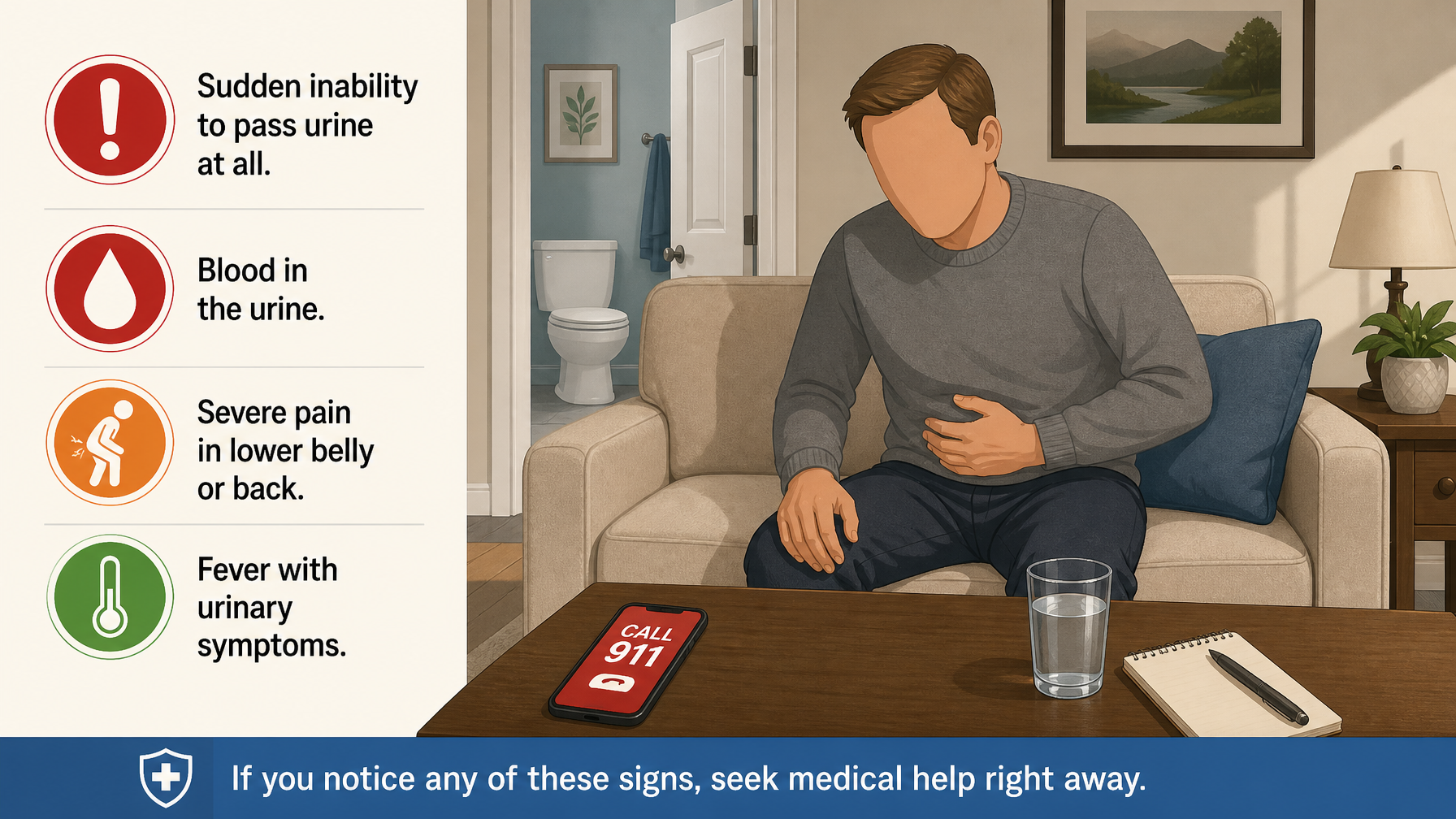
A few situations need urgent or emergency care:
- Sudden inability to pass urine at all (acute urinary retention), with a painful, full bladder — seek urgent care.
- Sudden bowel or bladder incontinence together with back pain, leg weakness, or numbness (including around the groin/buttocks) — a possible serious nerve problem; seek emergency care immediately.
- Incontinence with signs of serious infection/sepsis — high fever, rapid breathing or heart rate, severe confusion, clammy or mottled skin.
- Significant blood, or severe abdominal pain.
See incontinence warning signs and emergencies for the full detail.
Safety first
Sudden incontinence with new back pain, leg weakness, or numbness around the groin or buttocks can indicate a serious nerve problem — seek emergency care immediately. And a sudden complete inability to pass urine needs urgent assessment.
What to do when it worsens
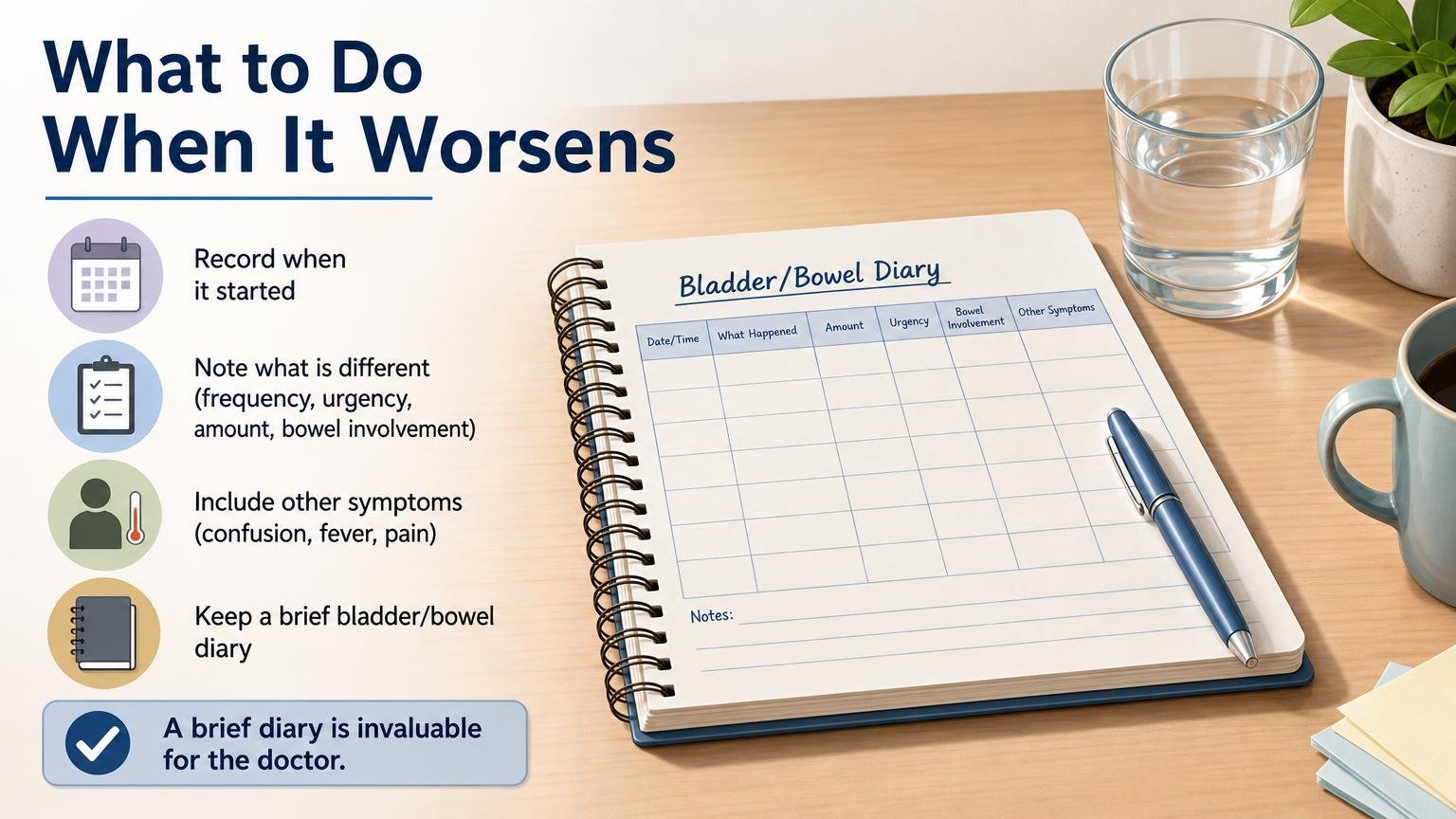
Turn the change into action:
- 1
Note what changed and how fast
Record when it started, what is different (frequency, urgency, amount, bowel involvement), and any other symptoms (confusion, fever, pain). A brief bladder/bowel diary is invaluable for the doctor.
- 2
Get a medical review
Especially for any sudden change, have the doctor check for treatable causes — infection, constipation, medications, retention. Use how to talk to the doctor about incontinence.
- 4
Act urgently on red flags
For the emergency signs above, seek urgent or emergency care without delay.
Frequently asked questions
What are the signs incontinence is getting worse?
Signs include more frequent or larger leaks, new or stronger urgency, more night-time waking or new night accidents, accidents despite the current routine, new bowel incontinence alongside bladder issues, and a growing impact on the person’s activities and mood. A sudden worsening is especially significant, as it often signals a treatable problem rather than simple progression.
What does a sudden worsening of incontinence mean?
A sudden worsening — over hours to days — is a red flag for a treatable underlying cause, most commonly a urinary tract infection (which in seniors often shows as new confusion rather than classic symptoms), but also constipation, a medication change, or another acute problem. It warrants a prompt medical check rather than simply increasing products.
When should I take a senior to the doctor for incontinence?
See a doctor promptly for blood in the urine or stool, pain on urinating or in the abdomen/back/pelvis, signs of infection including sudden confusion, difficulty passing urine or a feeling of not emptying, recurrent UTIs, or incontinence not responding to treatment. Any new or worsening incontinence deserves a review, since the cause is often treatable.
When is worsening incontinence an emergency?
Seek emergency care for a sudden complete inability to pass urine with a painful full bladder, or sudden bowel/bladder incontinence together with new back pain, leg weakness, or numbness around the groin or buttocks (a possible serious nerve problem). Also urgent are signs of serious infection or sepsis (high fever, rapid breathing/heart rate, severe confusion) and significant bleeding or severe pain.
Can a UTI make incontinence worse?
Yes — a urinary tract infection is one of the most common causes of a sudden increase in urgency, frequency, or leakage in older adults, and it often shows as new confusion rather than typical urinary symptoms. Because it is easily treated, a UTI should be checked for whenever incontinence suddenly worsens, especially alongside confusion or feeling unwell.
What should I do if my parent’s incontinence is getting worse?
Note what changed and how quickly, along with any other symptoms, and keep a brief bladder or bowel diary. Get a medical review — especially for a sudden change — to check for treatable causes like infection, constipation, or medication effects. Step up management (routine, product absorbency, and especially skin care) as needed, and act urgently on any emergency red flags.
Sources
- Clinical Infectious Diseases (Norman, 2000). Fever in the Elderly
- American Association of Neurological Surgeons. Cauda Equina Syndrome
- CDC. About Sepsis
- National Institute on Aging (NIH). Urinary Incontinence in Older Adults
- National Institute on Aging (NIH). The Dangers of Polypharmacy and the Case for Deprescribing in Older Adults
