Bowel Incontinence in the Elderly: Causes, Management, and When to Seek Help
Last Updated: February 2026
Bowel accidents are distressing for everyone involved. They can feel embarrassing, isolating, and overwhelming. But you are not alone in this.
Bowel incontinence affects up to 1 in 10 older adults. It has real medical causes. And there are practical ways to manage it at home with dignity and respect.
This guide will help you understand why it happens, how to handle it day-to-day, and when to seek medical help. You will also learn how to protect skin and maintain your loved one's comfort and dignity.

Respectful care makes all the difference
Caregiver-Reviewed Practical Guidance
This guide provides educational information about managing bowel incontinence in elderly adults. It is based on medical research and real caregiver experiences.
Important: This is not medical diagnosis or treatment advice. Always consult with your loved one's doctor for proper evaluation and care planning.
Key Points to Remember
It has medical causes: Bowel incontinence is not a normal part of aging. It needs evaluation.
Constipation is a common trigger: Overflow diarrhea from severe constipation causes many accidents.
Dignity matters most: How you respond affects your loved one's emotional well-being.
Skin protection is critical: Bowel accidents can cause serious skin breakdown quickly.
Management is possible: With the right approach, you can maintain quality of life.
You need support too: Caregiving is hard. Seek help when you need it.
What Is Bowel Incontinence?
Bowel incontinence means losing control of bowel movements. It can range from occasional small leaks to complete loss of control.
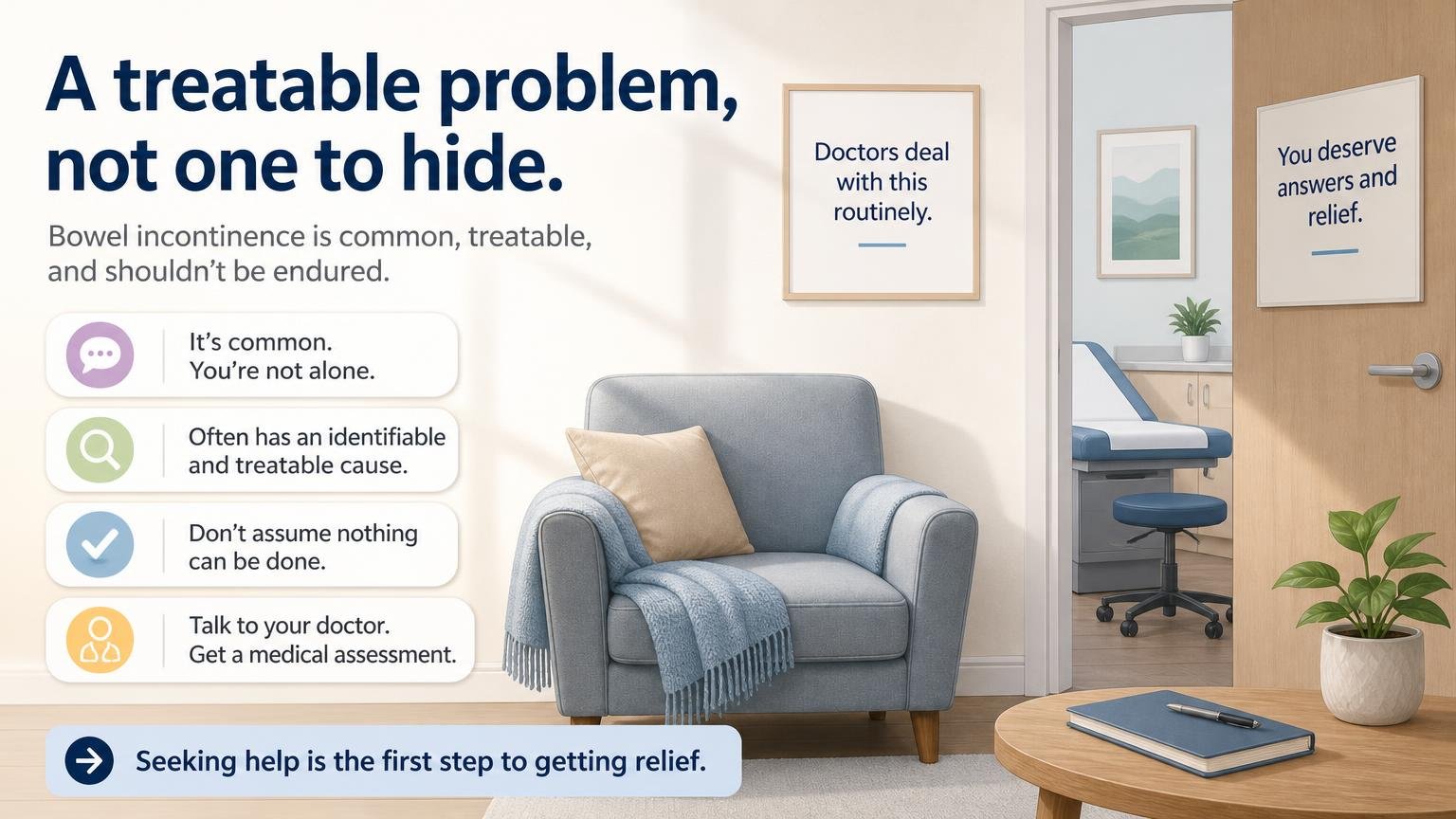
This is not a normal part of aging. It has medical causes that need evaluation and treatment.
Occasional Accidents
Small leaks or staining. May happen once or twice a week. Often related to diarrhea or urgency.
Frequent Accidents
Happens several times a week. May involve larger amounts. Requires daily protective products.
Complete Loss of Control
No warning or sensation. Bowel movements happen without awareness. Needs medical evaluation.
How Common Is It?
Studies show that 7-15% of older adults living at home experience bowel incontinence. The number is higher in nursing homes and hospitals.
Many people do not report it to their doctor because of embarrassment. But bowel incontinence is a medical symptom that deserves proper care.
For broader incontinence management strategies, read: Managing Incontinence at Home
Understanding the causes helps you find solutions
Common Causes in Seniors
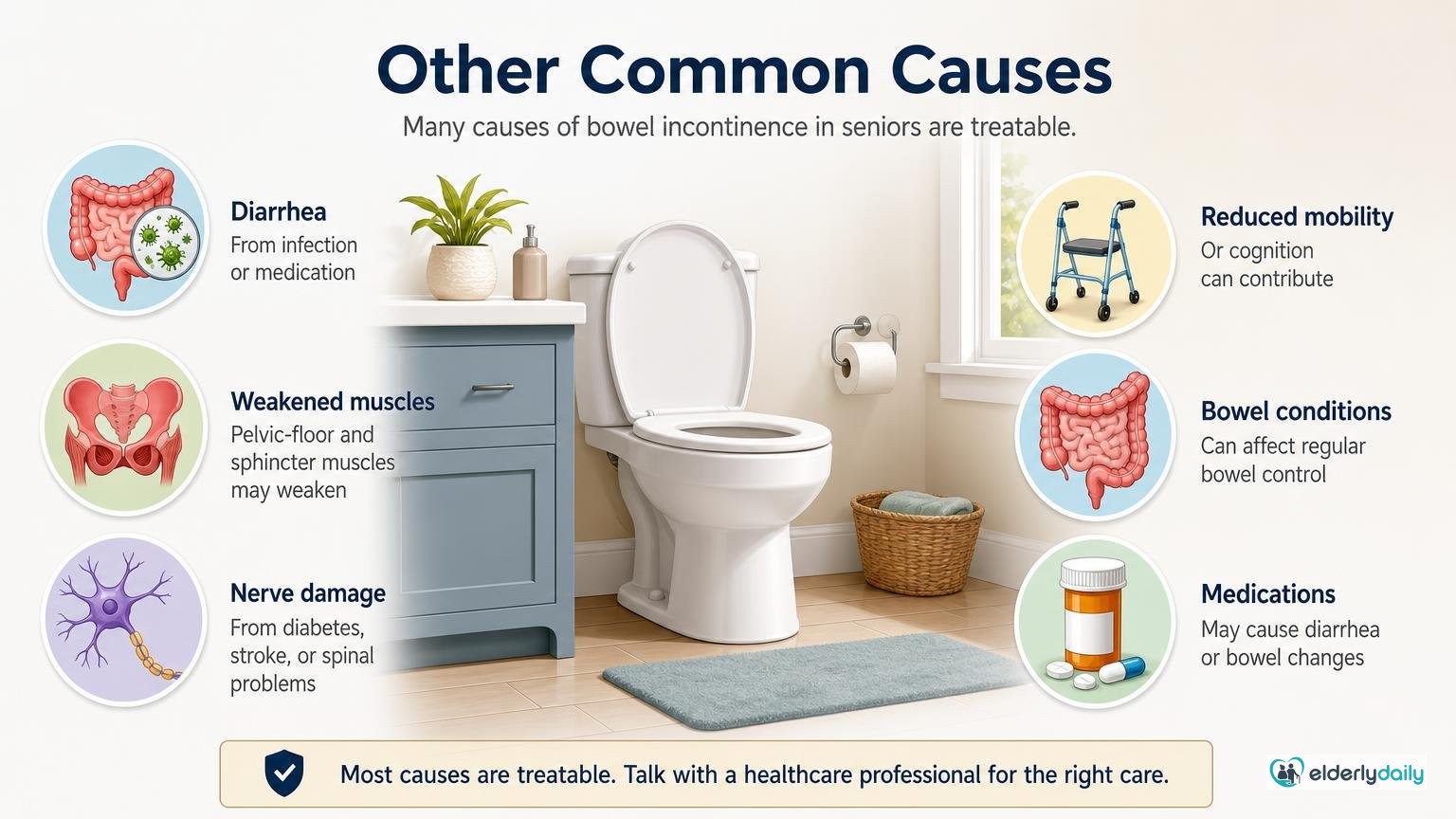
Bowel incontinence has many possible causes. Understanding the reason helps you find the right solution:
Constipation Overflow
Most common cause. Hard stool blocks the rectum. Liquid stool leaks around it. This looks like diarrhea but is actually severe constipation.
What causes it: Low fiber diet, dehydration, pain medications, lack of movement, ignoring the urge to go
Muscle Weakness
The anal sphincter muscles weaken with age, childbirth history, or surgery. Weak muscles cannot hold stool in properly.
What causes it: Aging, multiple childbirths, hemorrhoid surgery, anal fissures, pelvic floor damage
Nerve Damage
Damaged nerves cannot send proper signals between the rectum and brain. Your loved one may not feel the urge to go.
What causes it: Diabetes, stroke, spinal cord injury, multiple sclerosis, Parkinson's disease
Dementia
Brain changes affect awareness of bodily needs. Your loved one may forget where the bathroom is, not recognize the urge, or lose the ability to control muscles.
Common in: Alzheimer's disease, vascular dementia, Lewy body dementia, frontotemporal dementia
Medication Side Effects
Many medications affect bowel control. Pain medications cause constipation. Antibiotics cause diarrhea. Some drugs affect muscle tone.
Common culprits: Opioids, antibiotics, laxatives, diabetes medications, antacids, blood pressure drugs
Reduced Mobility
If your loved one cannot get to the bathroom quickly, accidents happen. Arthritis, weakness, or slow walking speed all increase risk.
Risk factors: Using a walker, wheelchair use, arthritis, post-surgery recovery, fear of falling
For dementia-specific care strategies, read: Dementia Care at Home and Medication Management Guide
Understanding Constipation Overflow
This is the most common cause of bowel accidents in seniors. Here is how it happens:
Hard Stool Builds Up
Constipation causes hard stool to block the rectum. This can happen from low fiber, dehydration, or medications.
Liquid Stool Leaks Around It
New liquid stool from higher in the colon seeps around the blockage. This causes watery accidents that look like diarrhea.
Accidents Happen Without Warning
Your loved one may not feel the urge. The liquid stool just leaks out. This is not their fault.
Important: If your loved one has watery accidents, check for constipation first. A doctor can do a rectal exam to find blockages.
Maintaining dignity is essential to quality care
Signs It May Be Getting Worse
Watch for these warning signs. They mean you need medical help:
Call Doctor Immediately If:
- Blood in stool: Bright red or dark tarry stools
- Severe abdominal pain: Pain that does not go away
- Fever over 101°F: May signal infection
- Vomiting: Especially with abdominal pain
- No bowel movement for 3+ days: With leaking liquid stool
Schedule Appointment If:
- Accidents increasing: Happening more often than before
- Skin breakdown: Redness, rash, or open sores
- Weight loss: Refusing to eat because of fear of accidents
- Social withdrawal: Avoiding activities or visitors
- Depression or anxiety: Emotional distress about accidents
For more warning signs to watch for, read: Signs Incontinence Is Getting Worse
How Dementia Affects Bowel Control
Dementia can make bowel incontinence harder to manage. Here is why:
Forgets the Urge
Your loved one may not recognize the need to use the bathroom. The brain signal gets lost.
Cannot Find the Bathroom
Confusion about location is common. They may not remember where the bathroom is or how to get there.
Struggles With Clothing
Buttons, zippers, and belts become confusing. They cannot undress fast enough.
Loses Track of Time
They may not remember when they last used the bathroom. Regular schedules help prevent accidents.
For more dementia care strategies, read our guide: Dementia Care at Home
Managing Bowel Incontinence at Home
With the right approach, you can manage bowel incontinence while maintaining dignity and comfort:
1. Scheduled Toileting
Take your loved one to the bathroom at regular times. This prevents many accidents.
How to Do It:
- Start with every 2-3 hours during the day
- Always go after meals (eating stimulates bowel movement)
- Keep a log to find patterns
- Adjust timing based on when accidents happen
- Be consistent every day
2. Fiber Balance (Not Extremes)
Too little fiber causes constipation. Too much causes loose stools. Find the middle ground.
What Works:
- Add fiber gradually (one new food every few days)
- Include prunes, oatmeal, cooked vegetables
- Avoid gas-producing foods if they cause urgency
- Track what foods trigger accidents
- Ask doctor about fiber supplements if needed
3. Proper Hydration
Water helps prevent constipation. Do not limit fluids out of fear of accidents.
Hydration Tips:
- Offer water throughout the day
- Aim for 6-8 cups daily (unless doctor says otherwise)
- Reduce intake 2 hours before bedtime
- Include water-rich foods like soup and fruit
- Watch for dehydration signs (dark urine, confusion)
4. Skin Protection
Bowel accidents can cause serious skin breakdown. Protect skin with every cleanup.
Skin Care Steps:
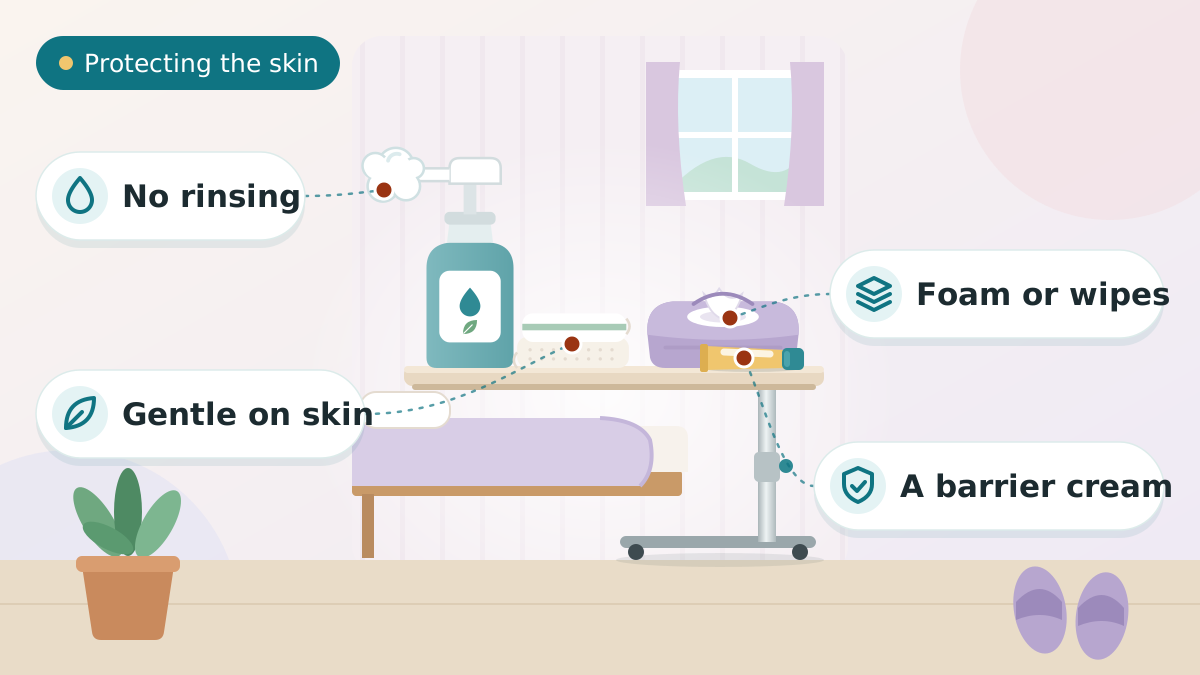
- Clean gently with pH-balanced wipes or cleanser
- Pat dry completely (do not rub)
- Apply barrier cream or ointment
- Change briefs promptly after accidents
- Check skin daily for redness or breakdown
5. Calm, Private Cleanup Routine
How you handle cleanup affects your loved one's dignity and emotional well-being.
Respectful Cleanup:
- Stay calm and use a neutral tone
- Close doors and provide privacy
- Have all supplies ready beforehand
- Work efficiently but gently
- Reassure them it is okay and move on
Keep a Cleanup Kit Ready
Store supplies in an easy-to-reach spot. Include: disposable gloves, wipes, barrier cream, clean briefs, plastic bags, and fresh clothes.
For nighttime-specific strategies, read: Nighttime Incontinence Solutions
A well-organized bathroom makes care easier
Sample Daily Toileting Schedule
A consistent schedule prevents many accidents. Here is a sample routine:
| Time | Activity | Goal |
|---|---|---|
| 7:00 AM | Bathroom visit after waking | Empty bowels before breakfast |
| 8:00 AM | After breakfast | Natural urge often occurs after eating |
| 10:00 AM | Mid-morning check | Prevent accidents before activities |
| 12:30 PM | After lunch | Eating stimulates bowel movement |
| 3:00 PM | Afternoon bathroom visit | Regular check-in |
| 6:00 PM | After dinner | Evening bowel movement common |
| 9:00 PM | Before bed | Reduce nighttime accidents |
Adjust This Schedule
Watch for patterns. Some people have bowel movements at the same time each day. Adjust the schedule to match your loved one's natural rhythm.
Fiber Balance: Not Too Much, Not Too Little
Fiber helps regulate bowel movements. But too much or too little causes problems:
Too Little Fiber
- Causes hard, dry stools
- Leads to constipation
- Can cause overflow accidents
- Makes straining necessary
Too Much Fiber
- Causes loose, urgent stools
- Increases gas and bloating
- Makes accidents more likely
- Can worsen diarrhea
The Right Amount
Most seniors need 20-30 grams of fiber daily. Good sources include:
Fruits
- • Prunes
- • Apples with skin
- • Pears
- • Berries
Vegetables
- • Cooked carrots
- • Sweet potatoes
- • Green beans
- • Squash
Grains
- • Oatmeal
- • Whole wheat bread
- • Brown rice
- • Bran cereal
Important: Increase fiber slowly. Add one new food every few days. Drink plenty of water with fiber.
Preventing Skin Breakdown
Bowel accidents are more damaging to skin than urine. Bacteria in stool cause irritation and infection quickly. Protect skin with every cleanup:
1. Gentle Cleansing
Use pH-balanced cleansers made for incontinence care. Regular soap is too harsh and dries skin.
Best option: No-rinse cleansing foam or wipes
2. Moisture Barrier Creams
Apply barrier cream after every cleanup. It creates a protective layer between skin and moisture.
Look for: Zinc oxide or dimethicone-based creams
3. Prompt Brief Changes
Change soiled briefs immediately. Every minute stool stays on skin increases damage risk.
Check every: 2-3 hours during day, once at night
Signs of Skin Breakdown
Check skin daily. Call a doctor if you see:
Complete Skin Protection Routine
Clean
Use gentle, pH-balanced cleanser. Rinse or wipe thoroughly.
Dry
Pat skin completely dry. Moisture causes breakdown.
Protect
Apply barrier cream generously. Cover all areas that touch briefs.
Monitor
Check skin condition daily. Watch for early signs of irritation.
Real Caregiver Stories
These caregivers found ways to manage bowel incontinence with dignity:
Carol, 58 - Caring for Mother with Dementia
"My mom had accidents every day. I felt helpless. Then her doctor found severe constipation. We started a toileting schedule and added prunes to breakfast. Within two weeks, accidents dropped to once or twice a week. The schedule gave us both peace of mind."
What helped: Treating constipation and scheduled toileting
David, 62 - Caring for Father After Stroke
"Dad had a stroke and lost bowel control. I learned to stay calm and matter-of-fact during cleanup. I got washable bed pads and barrier cream. The neurologist said nerve damage takes time to heal. After six months, he regained most control. Patience and the right supplies made it manageable."
What helped: Calm approach, protective bedding, and medical follow-up
Patricia, 54 - Caring for Husband with Parkinson's
"My husband's Parkinson's medication caused bowel issues. We worked with his doctor to adjust timing. We also put a bedside commode in our room for nighttime. The combination of medication changes and easy bathroom access reduced accidents by 80%. It saved his dignity and my sanity."
What helped: Medication adjustment and bedside commode
Medications That Affect Bowel Control
Many common medications can cause or worsen bowel incontinence:
Medications That Cause Constipation (Leading to Overflow)
Pain Medications
Opioids like oxycodone, hydrocodone, morphine
Antacids
Calcium or aluminum-based products
Blood Pressure Drugs
Calcium channel blockers
Antidepressants
Tricyclic antidepressants
Medications That Cause Loose Stools
Antibiotics
Can disrupt gut bacteria
Diabetes Medications
Metformin commonly causes diarrhea
Laxatives
Overuse leads to dependency and urgency
Magnesium Supplements
High doses cause loose stools
Never stop medications without talking to a doctor. For medication safety tips, read: Medication Management Guide
Hydration: Finding the Right Balance
Proper hydration helps regulate bowel movements. But many caregivers worry about accidents:
Do Not Limit Fluids
Restricting water makes constipation worse. It also causes dehydration, confusion, and UTIs.
Dehydration signs: Dark urine, dry mouth, dizziness, increased confusion
Smart Hydration Strategy
- Offer fluids throughout the day
- Reduce intake 2 hours before bed
- Aim for 6-8 cups daily (unless doctor says otherwise)
- Include water-rich foods like soup and fruit
Protecting Dignity During Cleanup
How you respond to accidents affects your loved one's emotional well-being. Here is what helps:
Do This
Stay calm and matter-of-fact
Use a neutral tone. Say "Let's get you cleaned up."
Provide privacy
Close doors. Limit who helps with cleanup.
Work quickly but gently
Have supplies ready. Make cleanup efficient.
Reassure them
"It's okay. This happens. We'll take care of it."
Move on afterward
Don't dwell on it. Return to normal activities.
Avoid This
Don't show frustration
Sighing, eye-rolling, or harsh words cause shame.
Don't blame them
"Why didn't you tell me?" makes them feel worse.
Don't discuss it with others
Respect their privacy. Don't share details with family or friends.
Don't restrict food
Limiting meals worsens constipation and causes malnutrition.
Don't ignore the problem
Untreated bowel incontinence leads to skin breakdown and isolation.
Having supplies ready makes care easier
Products That Help Manage Bowel Incontinence
The right supplies make daily management easier and protect dignity:
When Bowel Incontinence May Not Improve
Some conditions cause permanent bowel control loss. These include:
Severe Nerve Damage
Spinal cord injury, advanced diabetes, or stroke can permanently damage nerves that control the bowel. Management focuses on scheduled toileting and protective products.
Surgical Complications
Some bowel or rectal surgeries affect sphincter muscles. A colorectal specialist can discuss options like biofeedback therapy or surgical repair.
Advanced Dementia
In late-stage dementia, the brain can no longer signal bowel needs. Focus shifts to comfort care, skin protection, and maintaining dignity.
Even when incontinence is permanent, quality of life can remain high with proper management and compassionate care.
When to Talk to a Doctor
Bowel incontinence always needs medical evaluation. Some situations require urgent care:
Call Doctor Immediately If:
- Blood in stool: Bright red or dark tarry stools
- Severe abdominal pain: Pain that does not go away or gets worse
- Fever over 101°F: May signal serious infection
- Vomiting: Especially with abdominal pain or bloating
- No bowel movement for 3+ days: With leaking liquid stool
- Sudden onset: Bowel incontinence that starts suddenly
Schedule Appointment If:
- Ongoing constipation: Hard stools or straining regularly
- Chronic diarrhea: Loose stools lasting more than a few days
- Weight loss: Refusing to eat because of fear of accidents
- Skin breakdown: Redness, rash, or sores that do not heal
- Social withdrawal: Avoiding activities or visitors
- Depression or anxiety: Emotional distress about accidents
What to Bring to the Appointment
Help your doctor understand the problem by bringing this information:
Symptom Log
- • When accidents happen
- • How often they occur
- • Stool consistency (hard, soft, liquid)
- • Any warning signs
Medication List
- • All prescription medications
- • Over-the-counter drugs
- • Supplements and vitamins
- • Recent medication changes
Diet Information
- • Typical daily meals
- • Fiber intake
- • Fluid intake
- • Foods that trigger problems
Medical History
- • Past surgeries
- • Chronic conditions
- • Previous bowel problems
- • Recent illnesses
For tips on discussing sensitive health topics, read: How to Talk to Your Doctor About Incontinence
Caregiver Self-Care
Managing bowel incontinence is physically and emotionally draining. You need support too:
Join a Support Group
Talking to other caregivers helps. You will learn tips and feel less alone. Look for local or online groups.
Get Respite Care
You cannot do this alone forever. Hire help for a few hours each week. Take breaks to recharge.
Talk to a Counselor
Caregiving brings up hard emotions. Anger, grief, and resentment are normal. A therapist can help you process these feelings.
Protect Your Own Health
Wear gloves during cleanup. Wash hands thoroughly. Get enough sleep. Eat well. You matter too.
For more caregiver support strategies, read: Preventing Caregiver Burnout
Nighttime Management Strategies
Nighttime accidents are especially challenging. Here is how to prepare:
Bedtime Routine
8:00 PM
Last bathroom visit before bed
8:30 PM
Put on overnight protection
9:00 PM
Lights out, motion lights on
As Needed
Bedside commode available
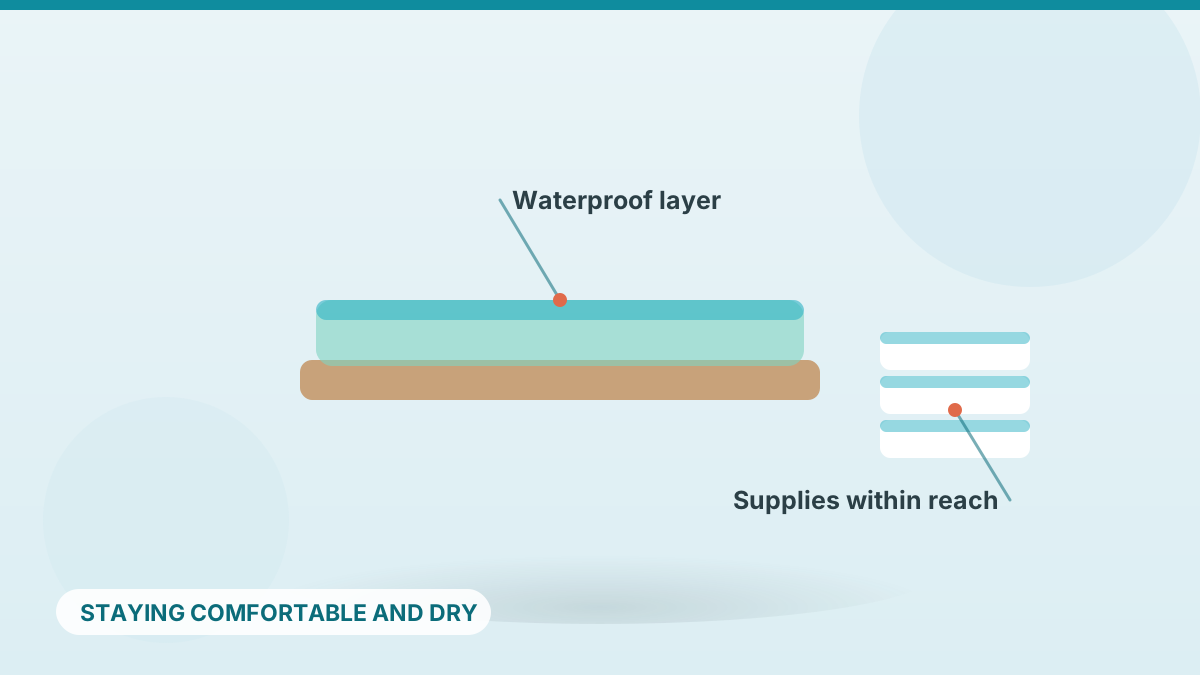
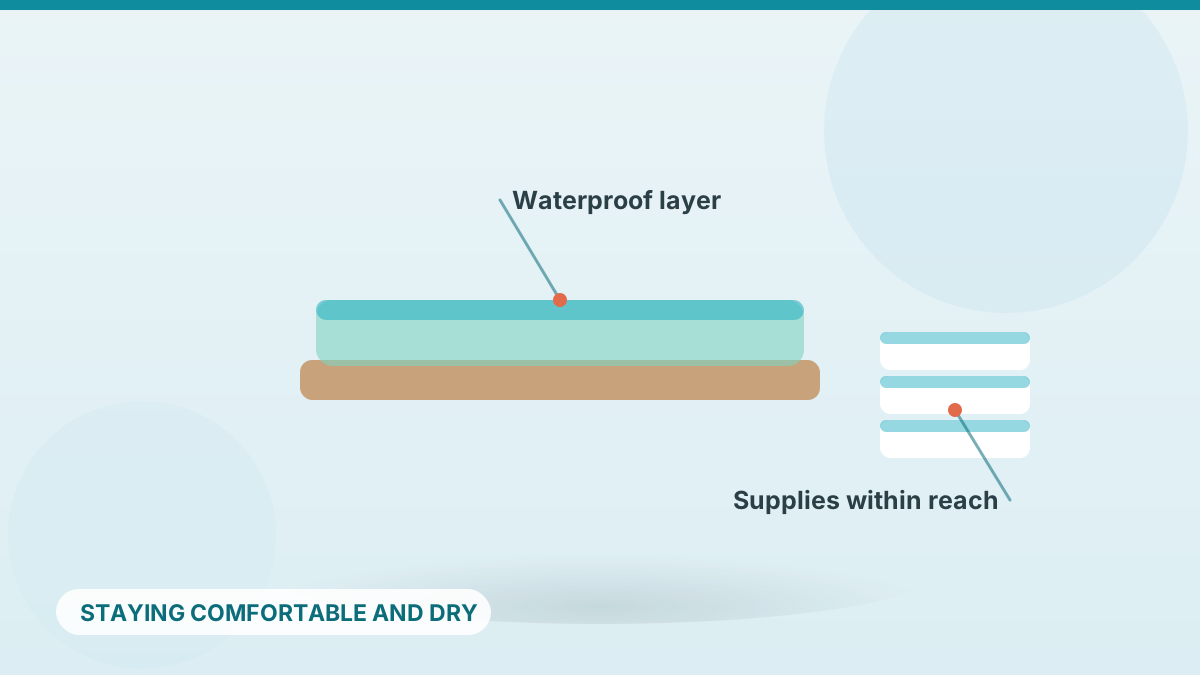
Layered Bed Protection
Why layers work: If an accident happens, you only change the top pad and brief. The bed stays clean.
Talking to Your Loved One About It
This conversation is hard. Here is how to approach it with respect:
What to Say
"I noticed you've had some accidents. This is common, and there are things that can help."
Opens the conversation without blame
"Let's talk to your doctor. There might be a medical reason we can treat."
Frames it as a medical issue, not a personal failure
"I want to help you stay comfortable and keep your skin healthy."
Focuses on their well-being, not the problem
What Not to Say
"Why didn't you tell me you had to go?" — This sounds like blame.
"You need to try harder to make it to the bathroom." — They cannot control it.
"This is getting too hard for me." — Makes them feel like a burden.
What Doctors Can Do to Help
Medical evaluation is essential. Here is what doctors can check and treat:
Tests and Exams
- Rectal exam to check for impaction
- Stool tests for infection or blood
- Colonoscopy if needed
- Medication review
- Neurological assessment
Treatment Options
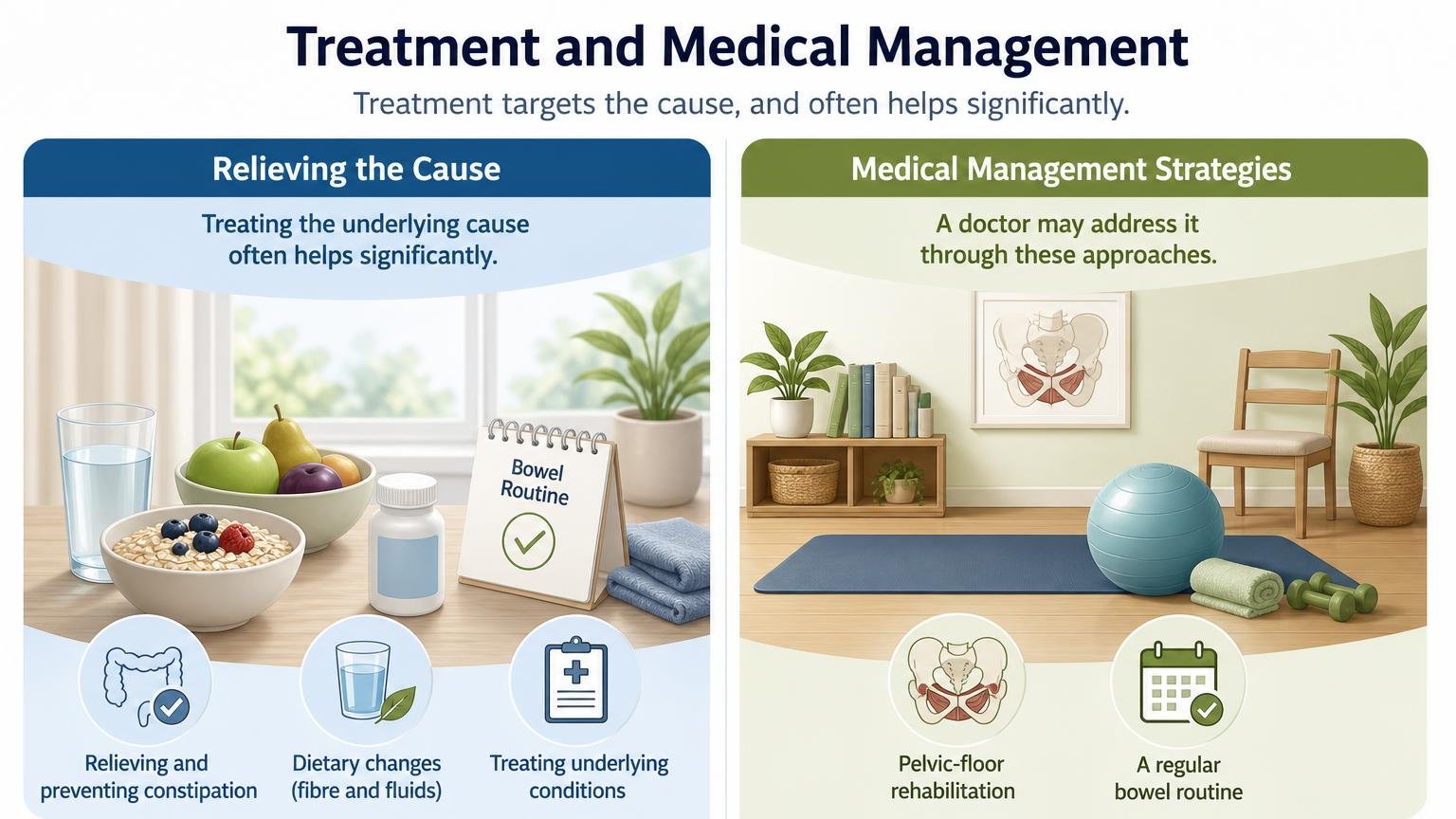
- Treat underlying constipation
- Adjust medications causing problems
- Prescribe bowel-regulating medications
- Refer to physical therapy for pelvic floor exercises
- Refer to gastroenterologist or colorectal specialist
For tips on discussing incontinence with doctors, read: How to Talk to Your Doctor About Incontinence
More Helpful Guides
Explore related topics to support your caregiving journey:
Managing Incontinence at Home
Complete guide to bladder and bowel care
Signs Incontinence Is Getting Worse
Know when to seek medical help
Managing Incontinence in Elderly Parents
Daily care strategies and product recommendations
Dementia Care at Home
Complete dementia caregiving guide
Medication Management
Safe medication practices for seniors
Preventing Caregiver Burnout
Take care of yourself while caring for others
Medical Disclaimer
This guide provides educational information only. It is not medical advice, diagnosis, or treatment.
Bowel incontinence has many medical causes that require professional evaluation. Always consult with your loved one's doctor, gastroenterologist, or colorectal specialist for proper diagnosis and treatment planning.
If you see blood in stool, severe pain, fever, or sudden changes in bowel habits, seek medical care immediately. Do not rely on home management alone for serious symptoms.
Frequently Asked Questions
Need More Incontinence Care Guidance?
For a complete home-care approach, read our comprehensive guide
Managing Incontinence at Home